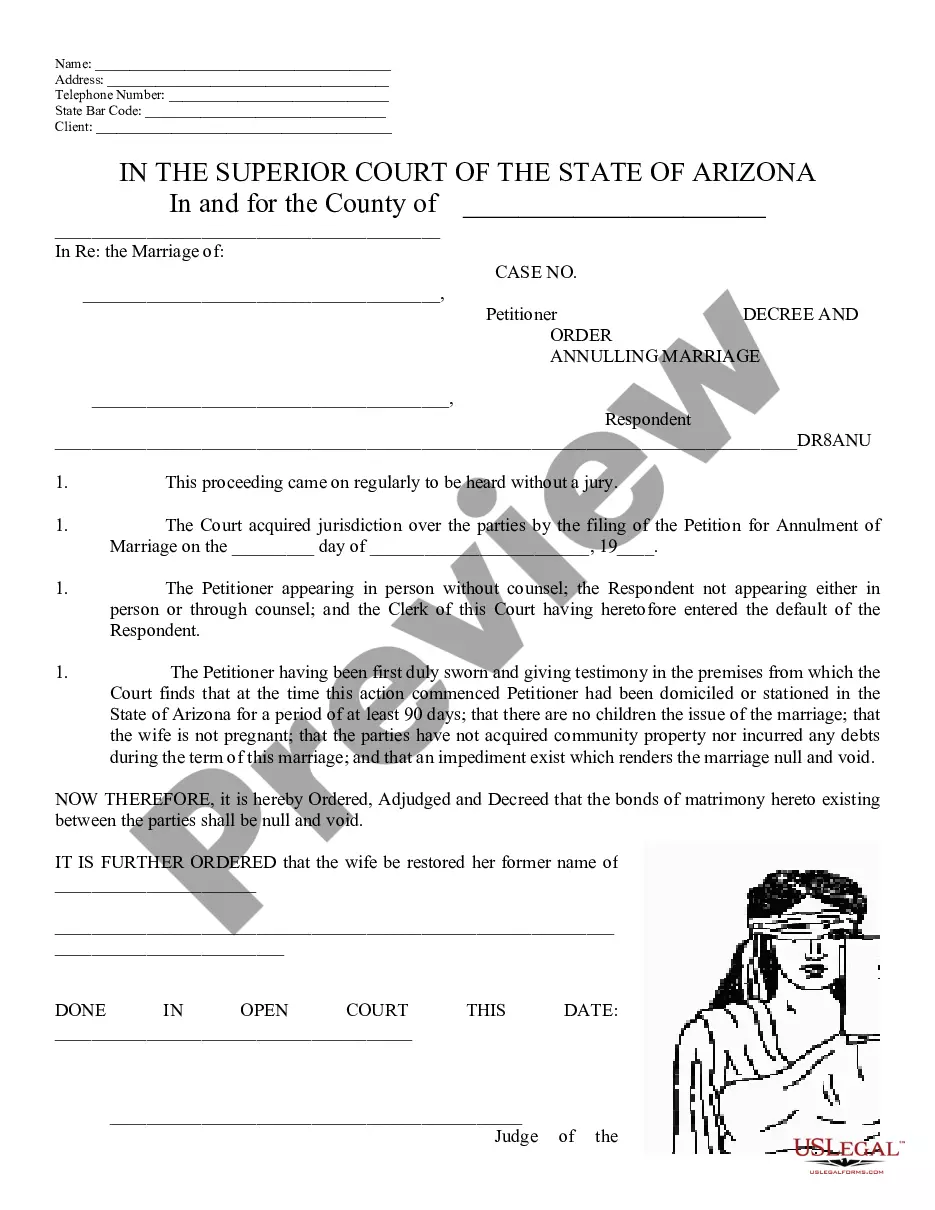
Arizona Decree of Annulment
Overview of this form
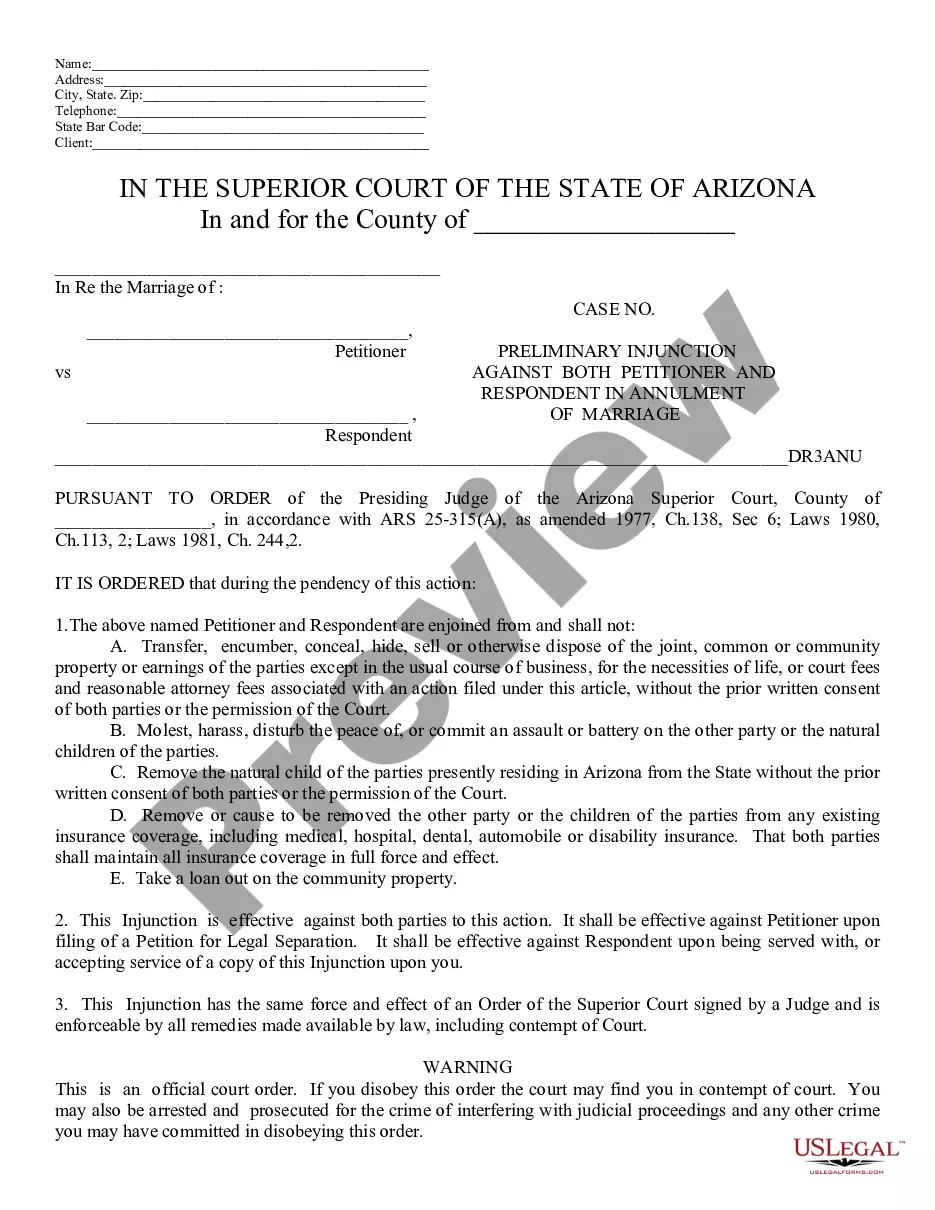
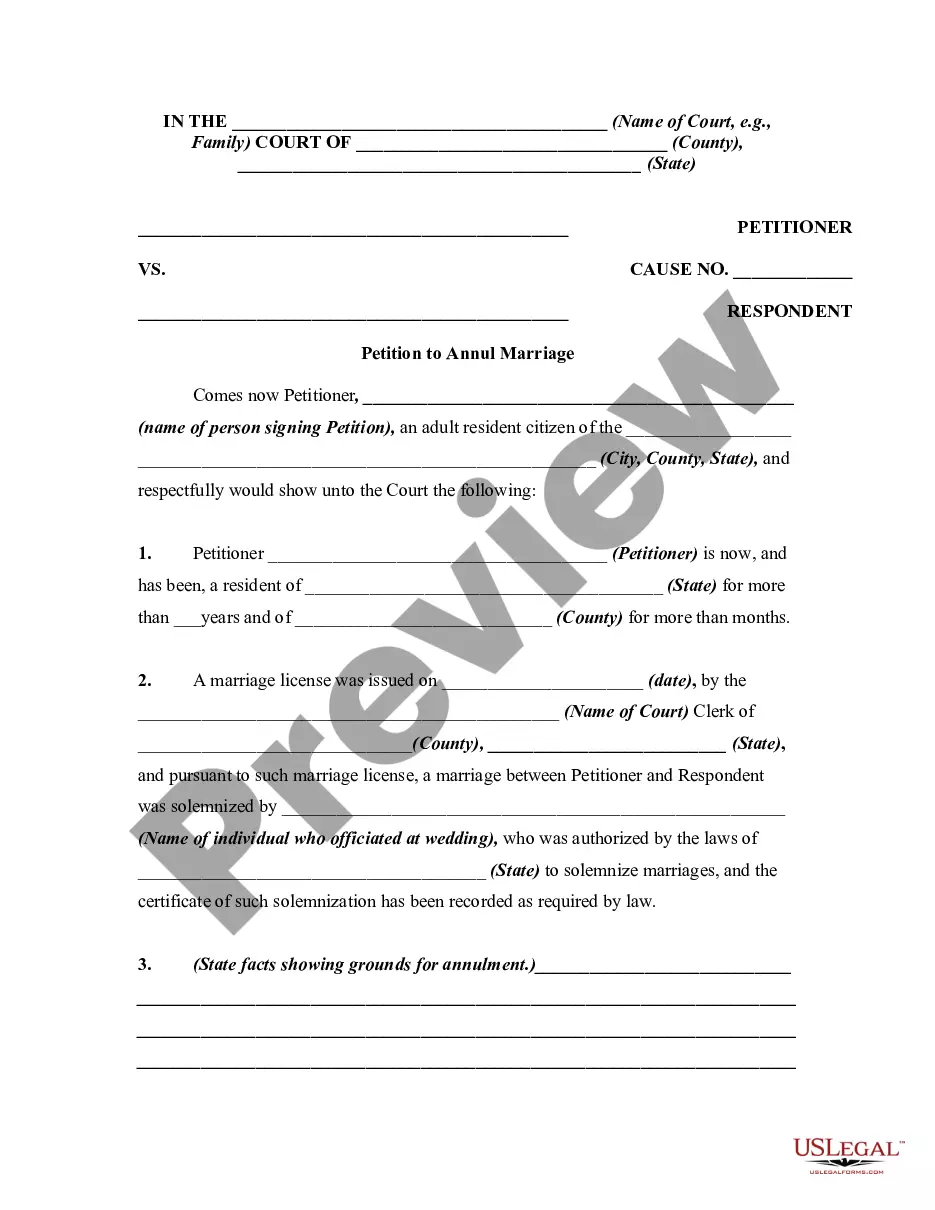
A Decree of Annulment is a legal document issued by a court declaring that a marriage is null and void. This form provides a model for petitioners seeking to annul their marriage, which is distinct from a divorce as it establishes that the marriage never legally existed. This form must be signed by a judge to be valid.
Main sections of this form
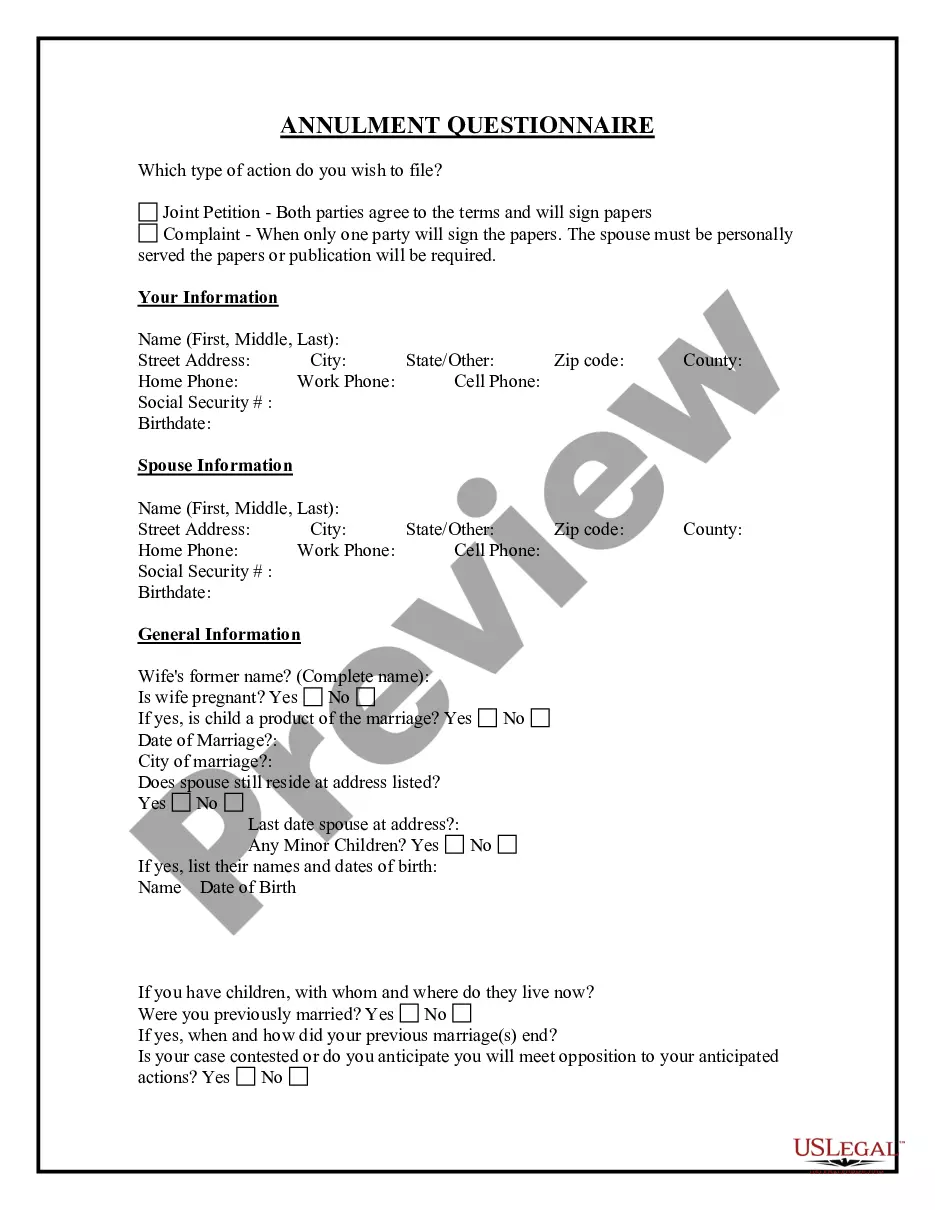
- Petitioner and Respondent names and contact information
- Case number and court details
- Jurisdiction statement confirming residency requirements
- Findings of fact related to the marriage
- Order to annul the marriage and restore former names
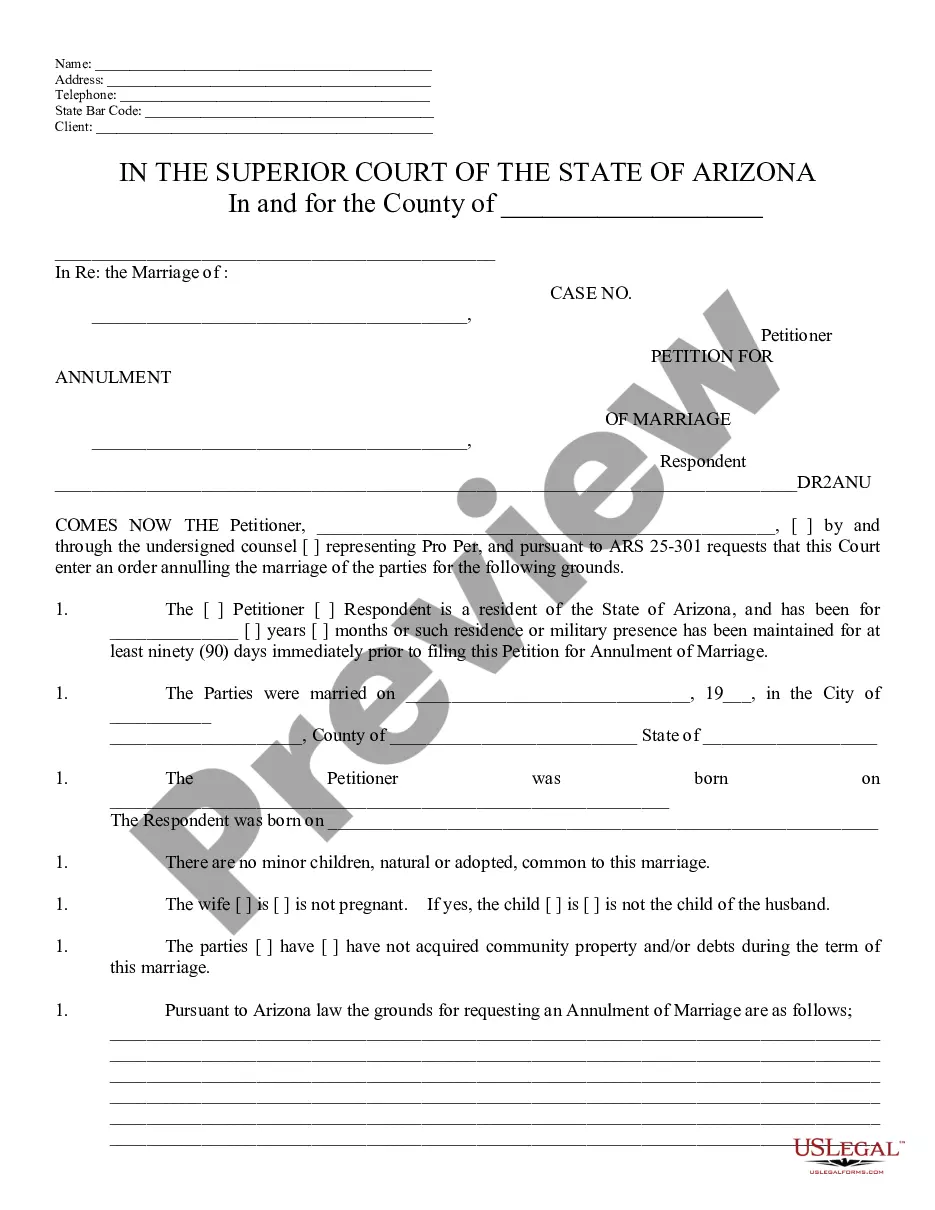
When to use this document
This form should be used when an individual wishes to legally annul their marriage. Scenarios may include marriages entered into under duress, fraud, or those that are not legally valid due to other circumstances. It is often used by parties who realize the marriage was flawed from the beginning and wish to correct their marital status promptly.
Who this form is for
- Individuals seeking to annul a marriage in Arizona
- Petitioners who meet the residency requirements of the state
- Those without children from the marriage and without shared property
How to complete this form
- Identify all parties involved by entering their full names and contact information.
- Fill in the case number and court details as required.
- State the date of filing and confirm residency of at least ninety days in Arizona.
- Clearly outline the reasons and findings supporting the annulment.
- Have the judge sign the document in court to finalize the annulment.
Is notarization required?
In most cases, this form does not require notarization. However, some jurisdictions or signing circumstances might. US Legal Forms offers online notarization powered by Notarize, accessible 24/7 for a quick, remote process.
Get your form ready online
Our built-in tools help you complete, sign, share, and store your documents in one place.
Make edits, fill in missing information, and update formatting in US Legal Forms—just like you would in MS Word.
Download a copy, print it, send it by email, or mail it via USPS—whatever works best for your next step.
Sign and collect signatures with our SignNow integration. Send to multiple recipients, set reminders, and more. Go Premium to unlock E-Sign.
If this form requires notarization, complete it online through a secure video call—no need to meet a notary in person or wait for an appointment.
We protect your documents and personal data by following strict security and privacy standards.

Make edits, fill in missing information, and update formatting in US Legal Forms—just like you would in MS Word.

Download a copy, print it, send it by email, or mail it via USPS—whatever works best for your next step.

Sign and collect signatures with our SignNow integration. Send to multiple recipients, set reminders, and more. Go Premium to unlock E-Sign.

If this form requires notarization, complete it online through a secure video call—no need to meet a notary in person or wait for an appointment.

We protect your documents and personal data by following strict security and privacy standards.
Mistakes to watch out for
- Failing to provide accurate contact information for all parties.
- Omitting required details regarding residency and marriage circumstances.
- Not obtaining the judge's signature or properly filing the document with the court.
Advantages of online completion
- Immediate access to a legally vetted template drafted by licensed attorneys.
- Convenience of downloading and printing the form for easy completion.
- Editability, allowing users to customize fields before submission.
Legal use & context
- This form is enforceable in the State of Arizona once signed by the judge.
- It serves to formally negate the legal effects of a marriage.
- Limitations may apply based on specific circumstances surrounding the marriage.
What to keep in mind
- A Decree of Annulment declares a marriage null and void, differing from divorce.
- Legal requirements and templates may vary by state; this version is for Arizona.
- Ensure all fields are completed and accurately filed to avoid issues in the annulment process.
Looking for another form?
Form popularity
FAQ
To obtain a decree of annulment in the Philippines, you must file a petition in court demonstrating valid grounds, such as psychological incapacity or fraud. The process involves several steps, including gathering documents and presenting evidence. While this process differs from the Arizona Decree of Annulment, understanding the legal requirements is crucial for successful outcomes.
A final decree is the last legal order issued by a court that resolves a case or matter, establishing the outcomes definitively. In the context of annulments, an Arizona Decree of Annulment is a final decree that legally nullifies the marriage, closing the case and eliminating any legal ties. Understanding this is vital to ensuring that all legal matters related to the annulment are settled.
A decree of nullity effectively cancels the legal recognition of a marriage. This means it annuls the marriage as if it never occurred, addressing issues such as fraud, coercion, or incapacity. The Arizona Decree of Annulment serves this purpose, providing individuals with a legal path to restore their personal status.
In Arizona, there is no strict duration requirement for marriage to be eligible for annulment. However, courts generally consider the length of the marriage during the annulment process. If you believe your marriage qualifies, exploring options like the Arizona Decree of Annulment can help clarify your situation.
A preliminary decree is an initial ruling that establishes the basis for the case, addressing crucial issues before moving forward. In contrast, a final decree, such as an Arizona Decree of Annulment, conclusively resolves the matter, declaring the marriage invalid. This distinction is important as it determines the stage of the annulment process and what can be appealed.
In Arizona, there is no specific time limit on how long you must be married to pursue an annulment. However, the grounds for annulment must be established regardless of the duration. Many people successfully obtain an Arizona Decree of Annulment shortly after marriage if valid grounds are present. If you're unsure if your situation qualifies, consulting with an expert can provide clarity.
No, an annulment is not the same as a divorce in Arizona. A divorce ends a legally valid marriage, while an annulment declares that the marriage was never valid from the start. This distinction is crucial, as an Arizona Decree of Annulment can erase the legal effects of the marriage entirely. If you're confused about these terms, it's beneficial to seek guidance from legal professionals.
In Arizona, the most common grounds for an annulment include a lack of legal capacity, fraud, and marriage under duress. If one party was not of legal age or did not have the mental capacity to consent, these factors can invalidate the marriage. Additionally, if one spouse misrepresented important information, such as hiding an existing marriage, it may lead to an Arizona Decree of Annulment. Understanding these grounds is essential for anyone considering this option.
Grounds for annulment in Arizona include lack of capacity, fraud, and situations involving a voidable marriage. For example, if one party was underage or if marriage occurred under duress, these factors may qualify for an annulment. Utilizing resources like US Legal Forms can provide additional guidance on navigating the details related to obtaining an Arizona Decree of Annulment.
The final decree of divorce in Arizona is a court-issued document that concludes the divorce process. This decree outlines the terms regarding custody, property division, and other marital matters. It is important to note that an Arizona Decree of Annulment serves a different purpose; it declares the marriage void rather than ending it like a divorce does.