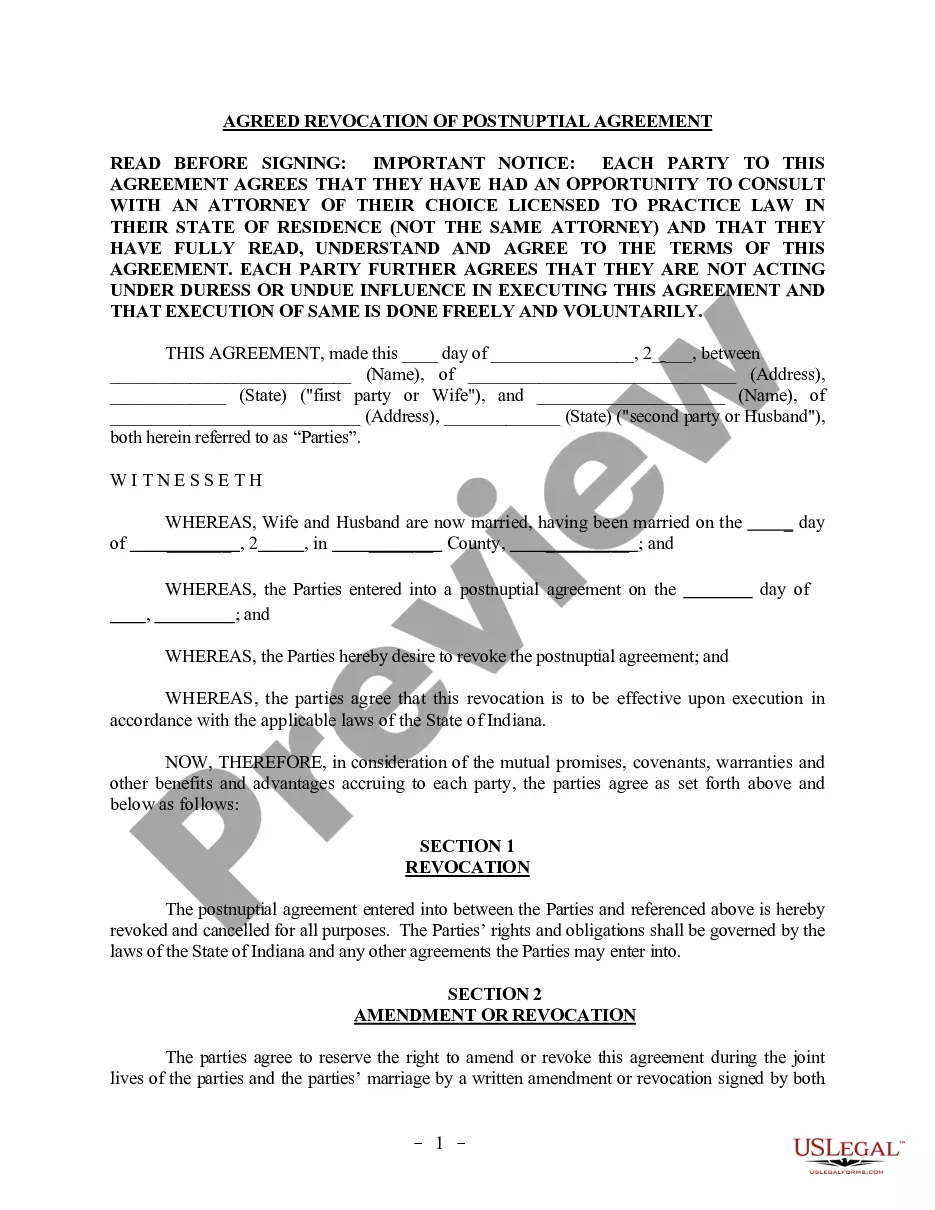
Arizona Brick Mason Contract for Contractor
Overview of this form
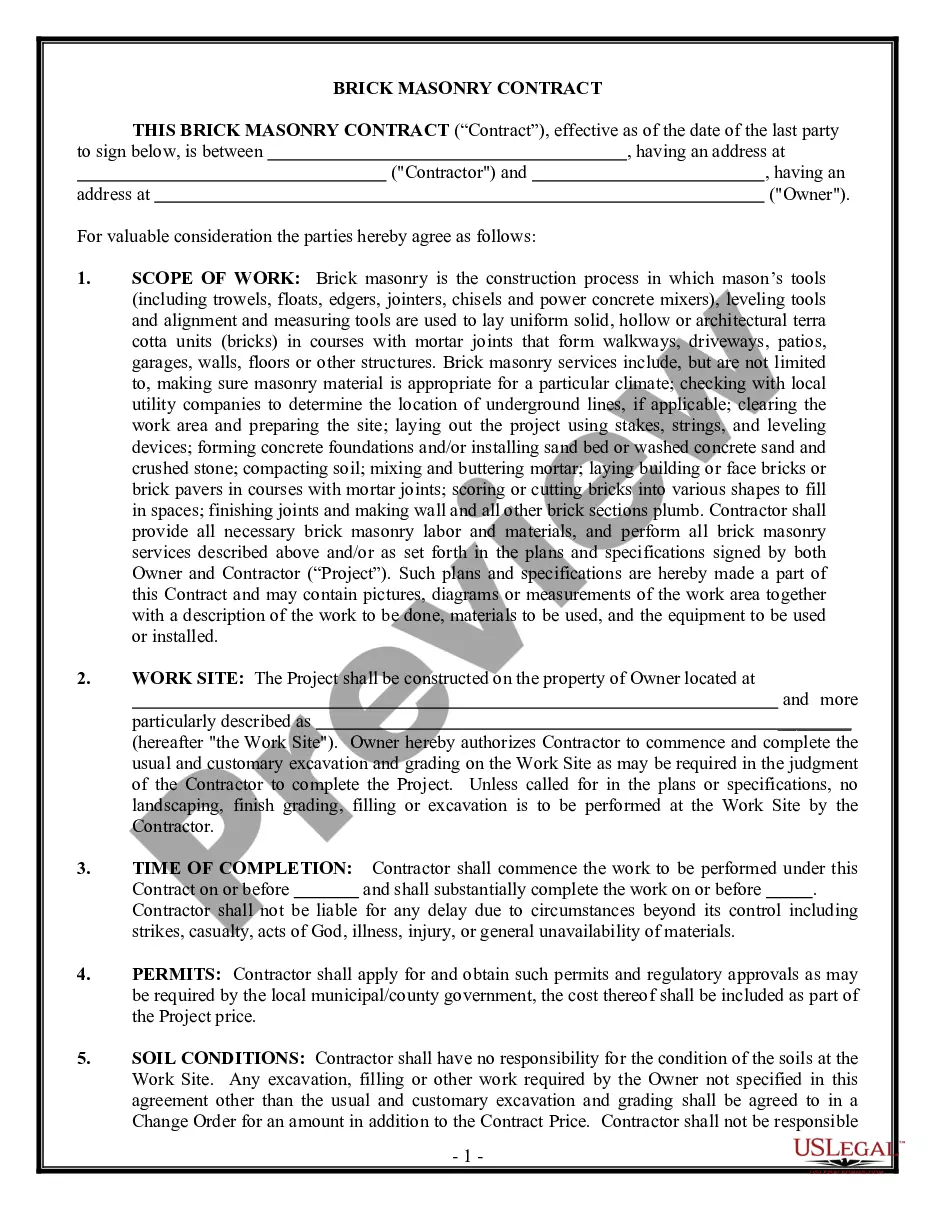
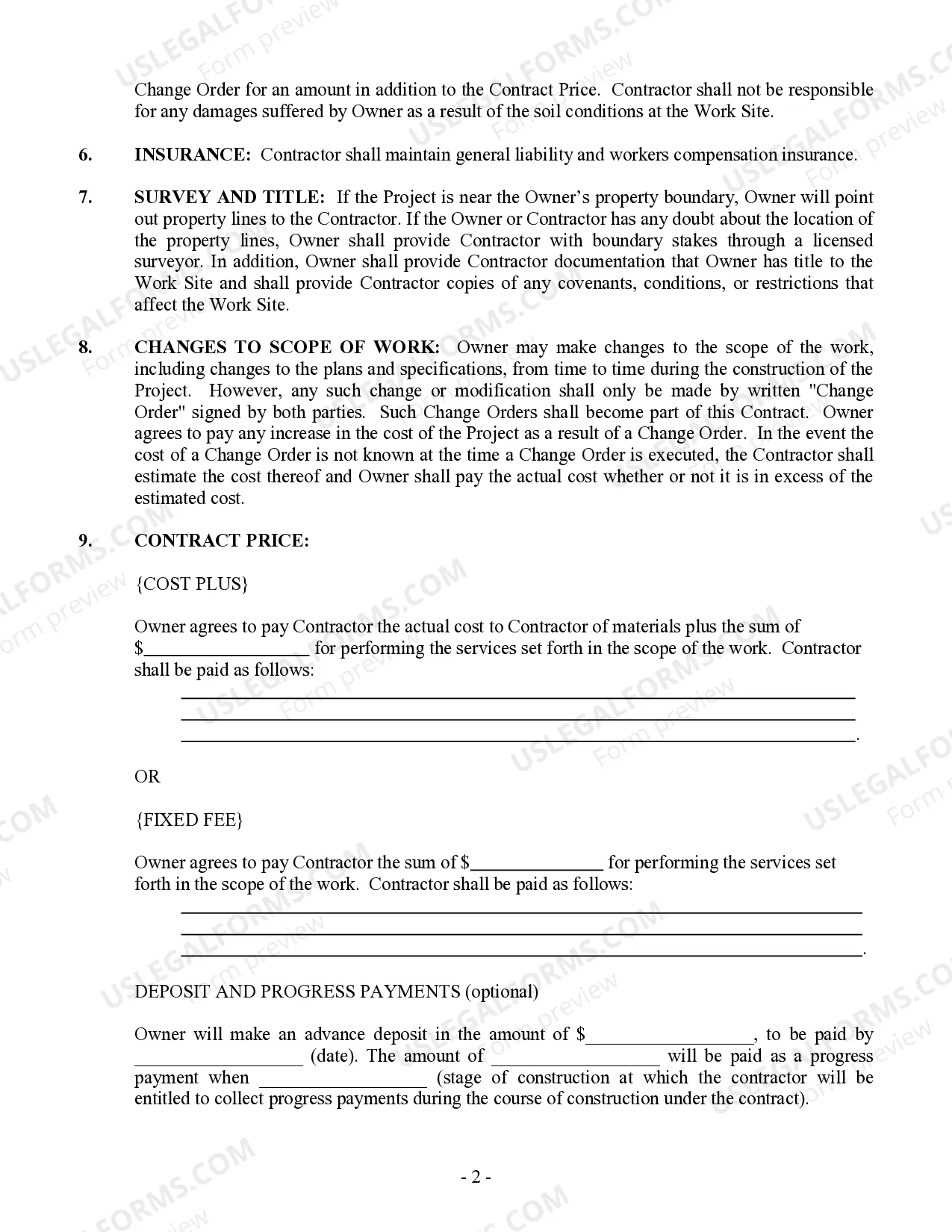
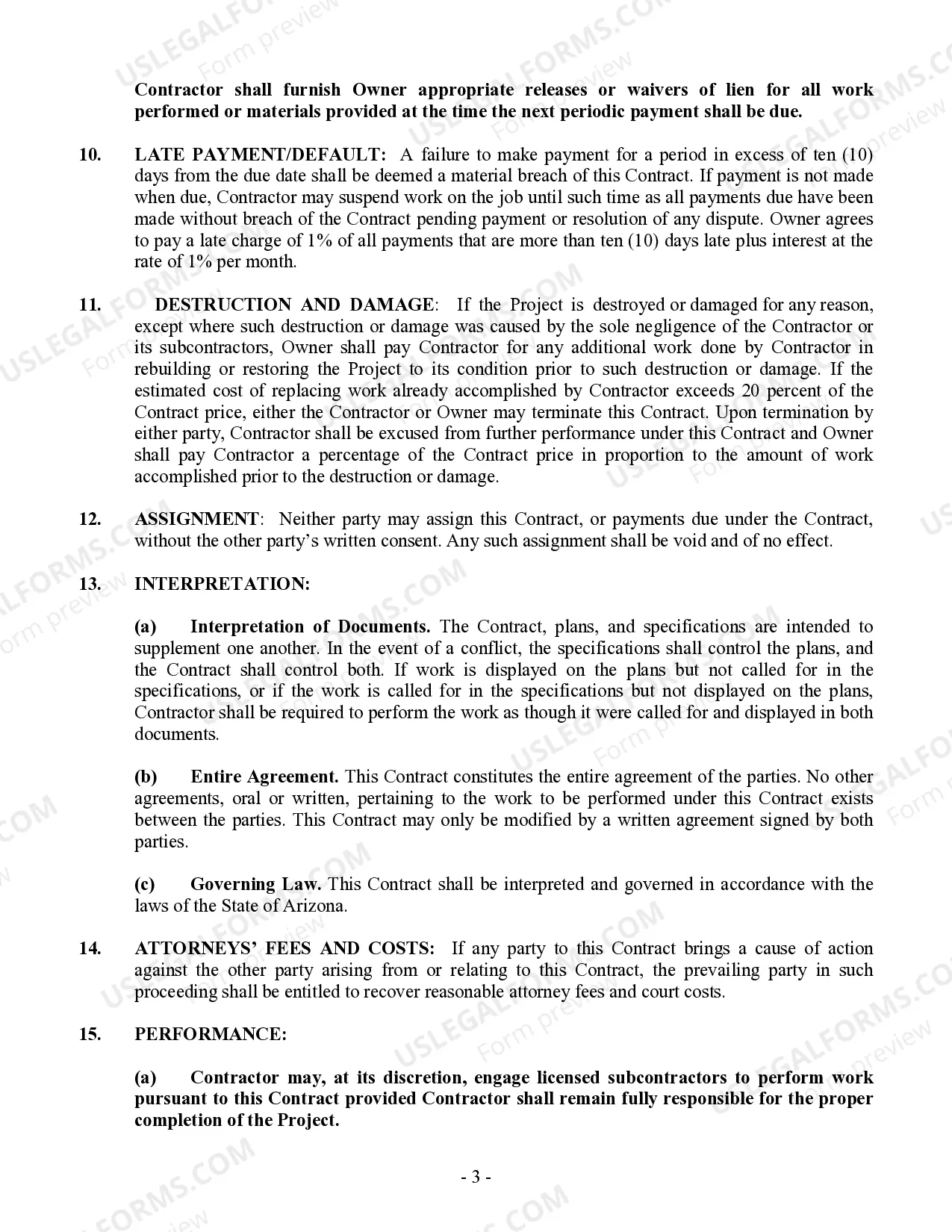
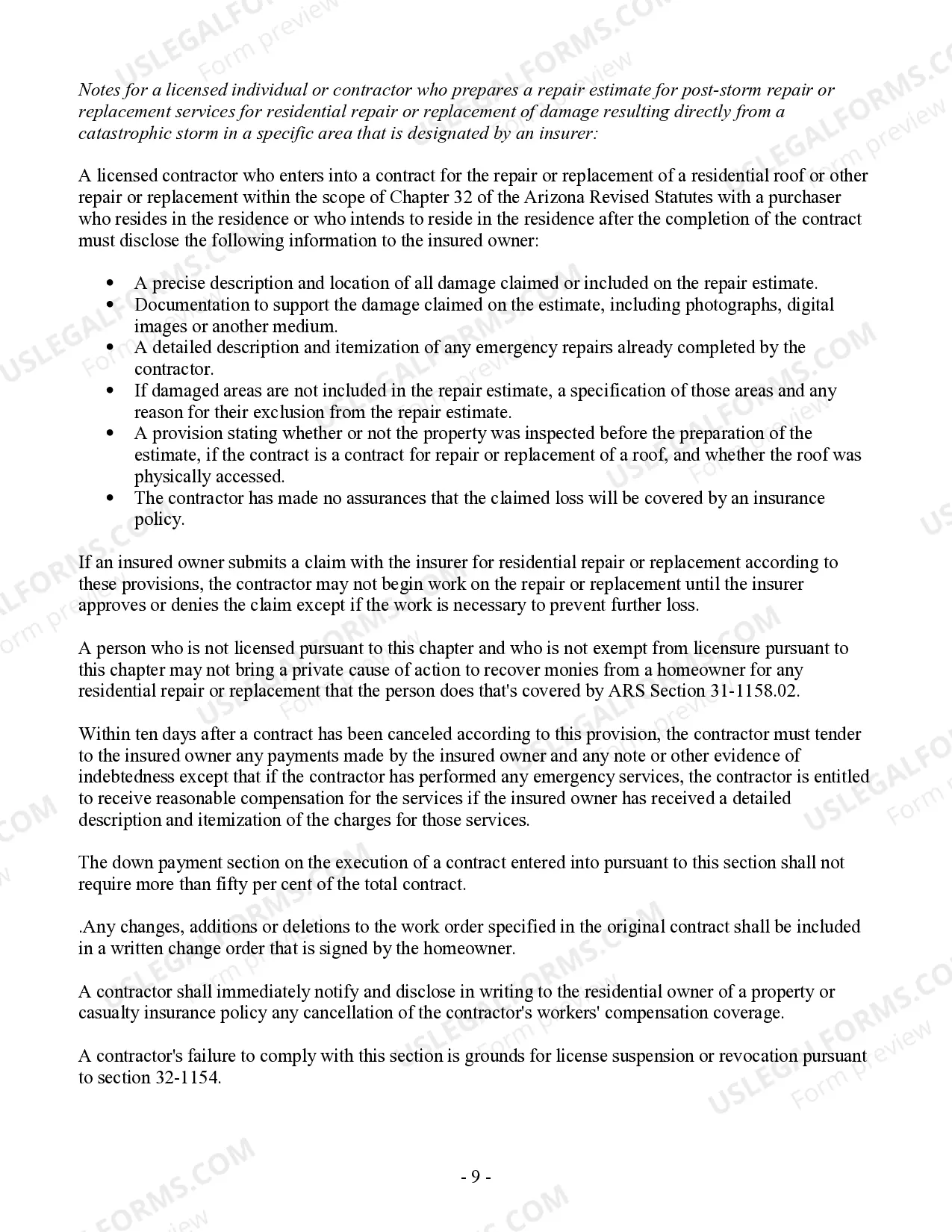
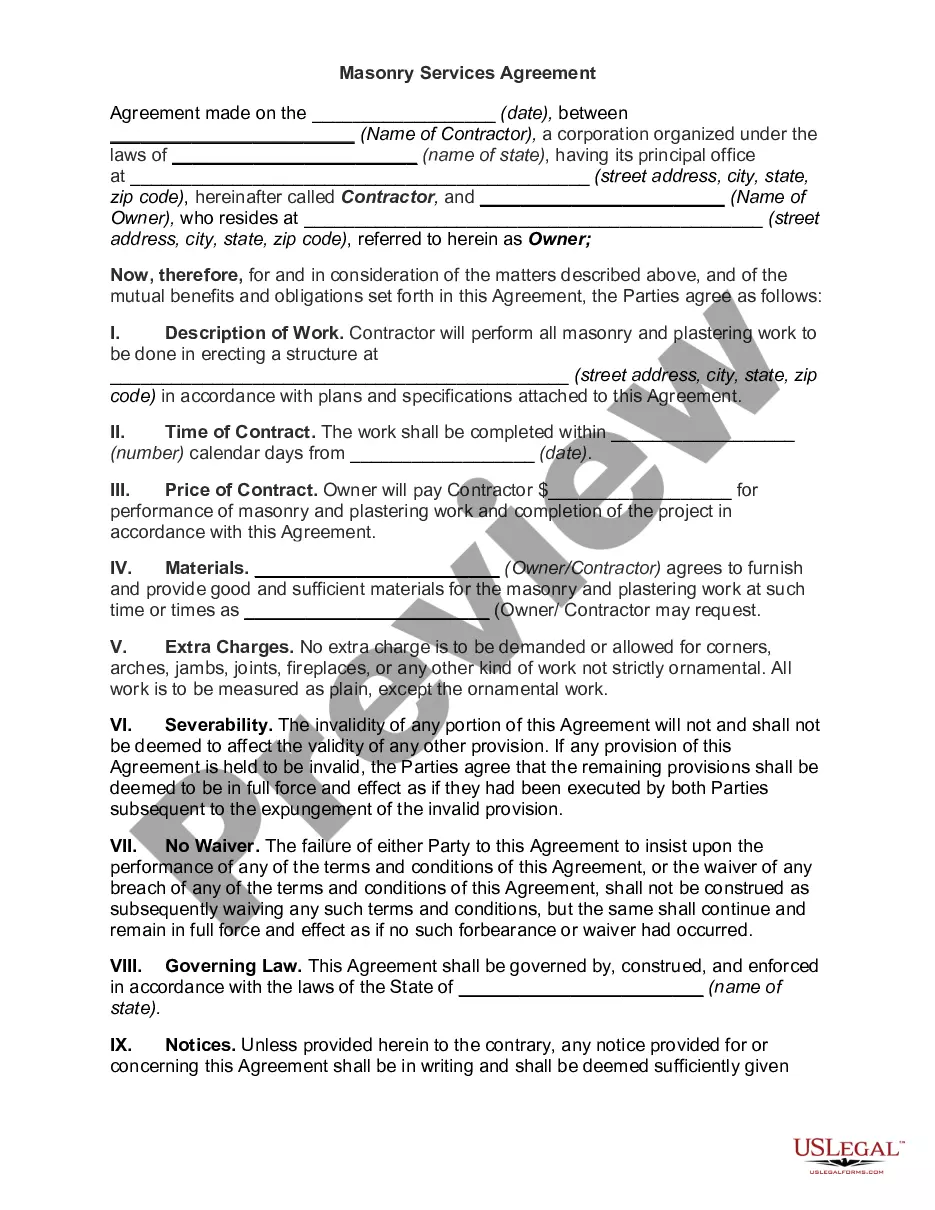
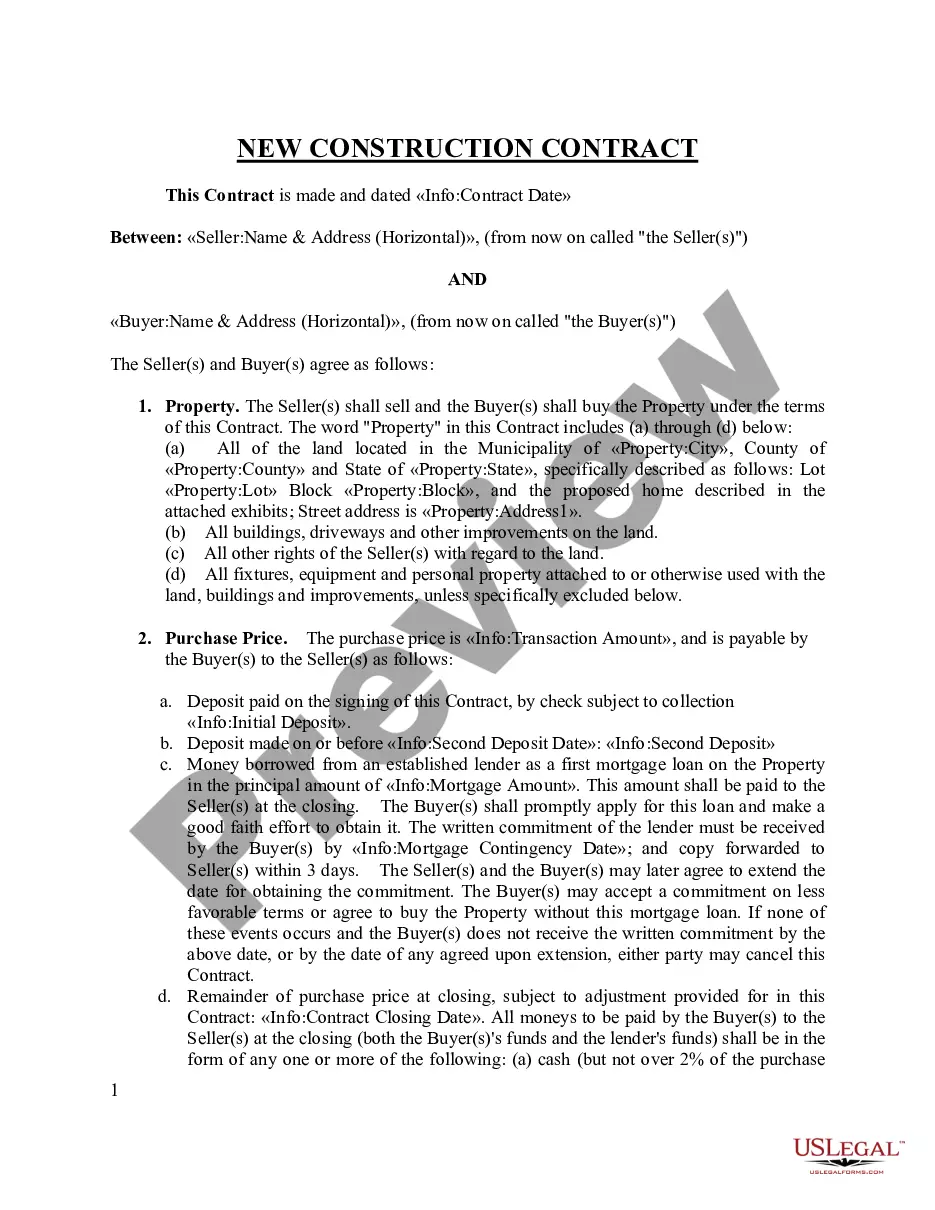
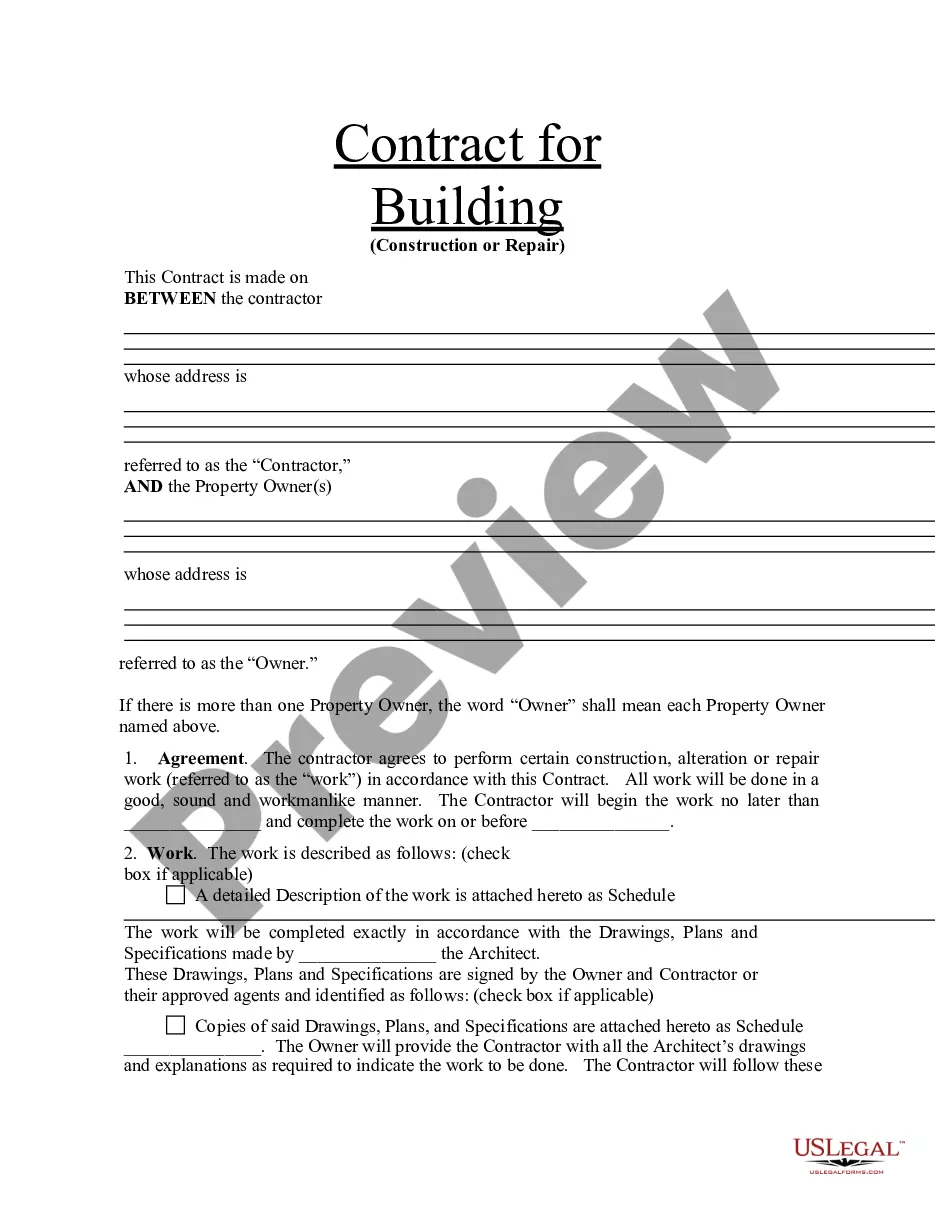
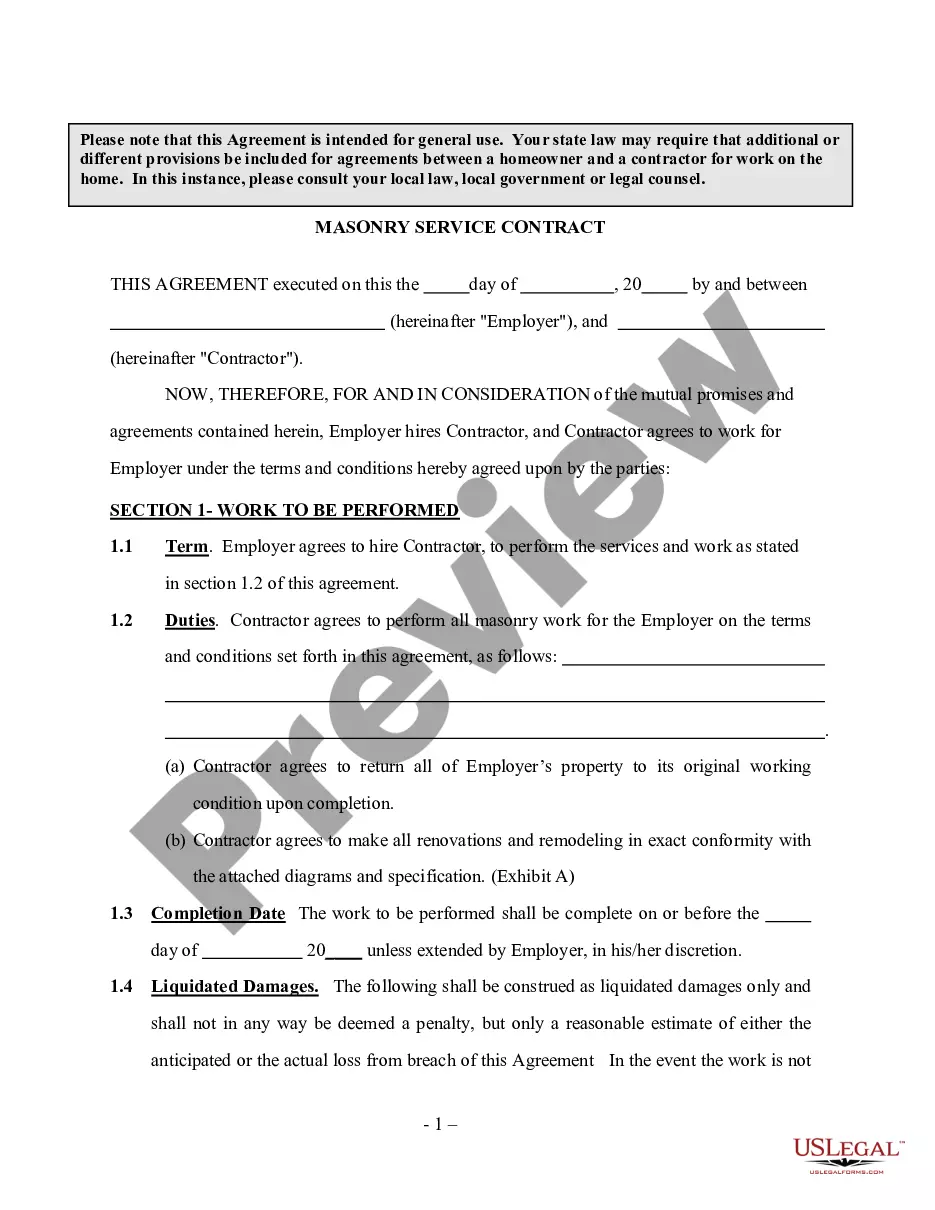
The Brick Mason Contract for Contractor is a legal document used between brick mason contractors and property owners. It outlines the terms of the masonry project, including payment arrangements (cost plus or fixed fee), change orders, and warranty information. This contract ensures clarity in responsibilities and expectations, making it essential for managing masonry work in compliance with Arizona state laws.
What’s included in this form
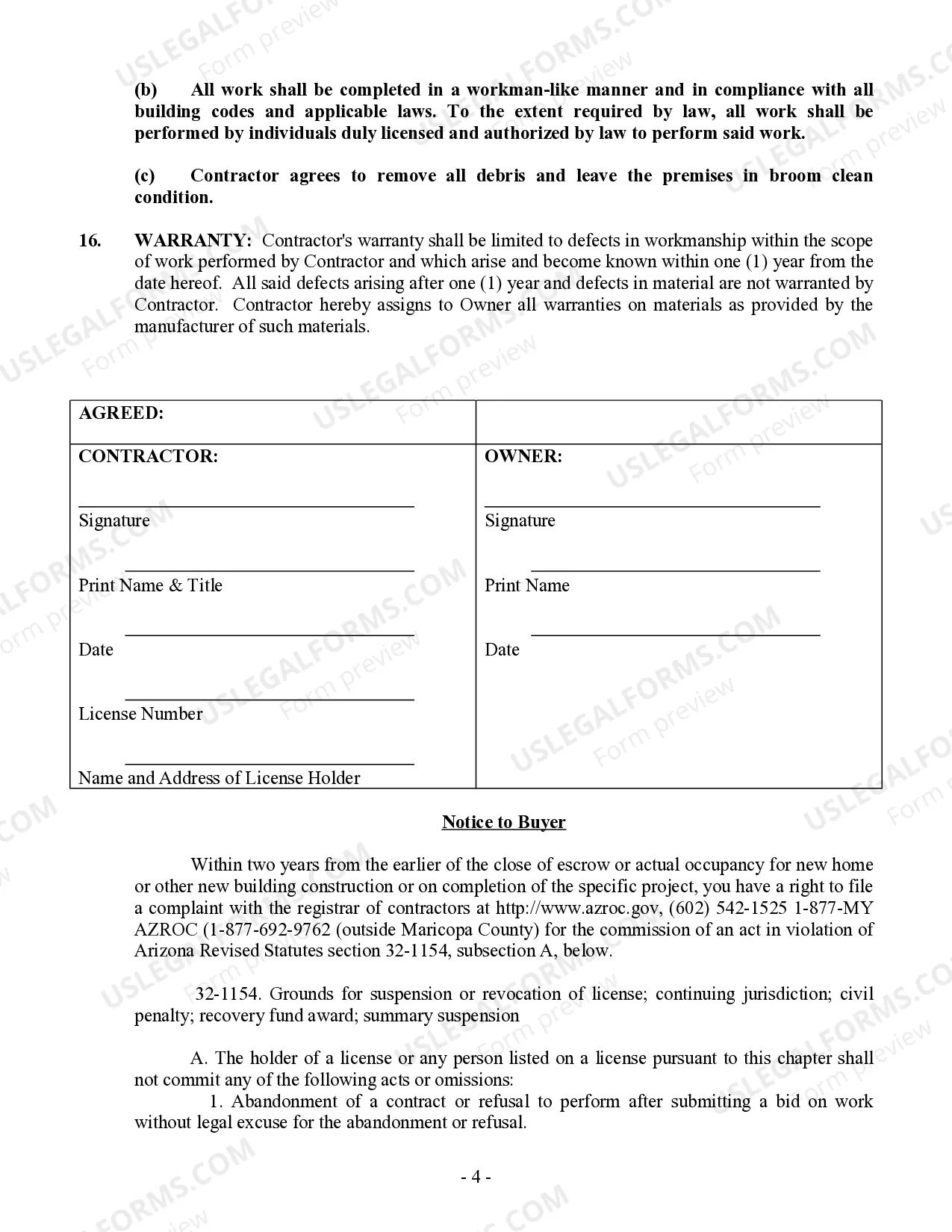
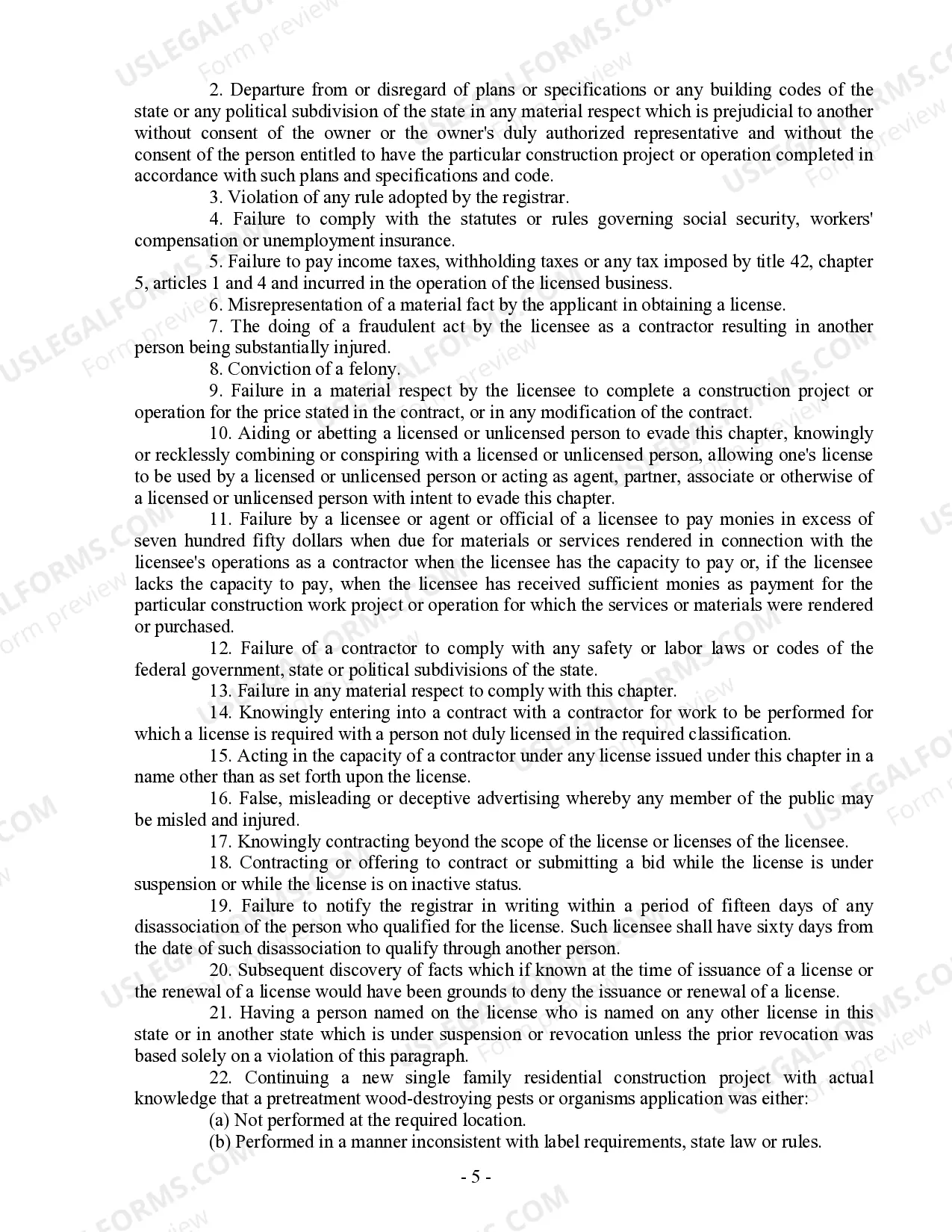
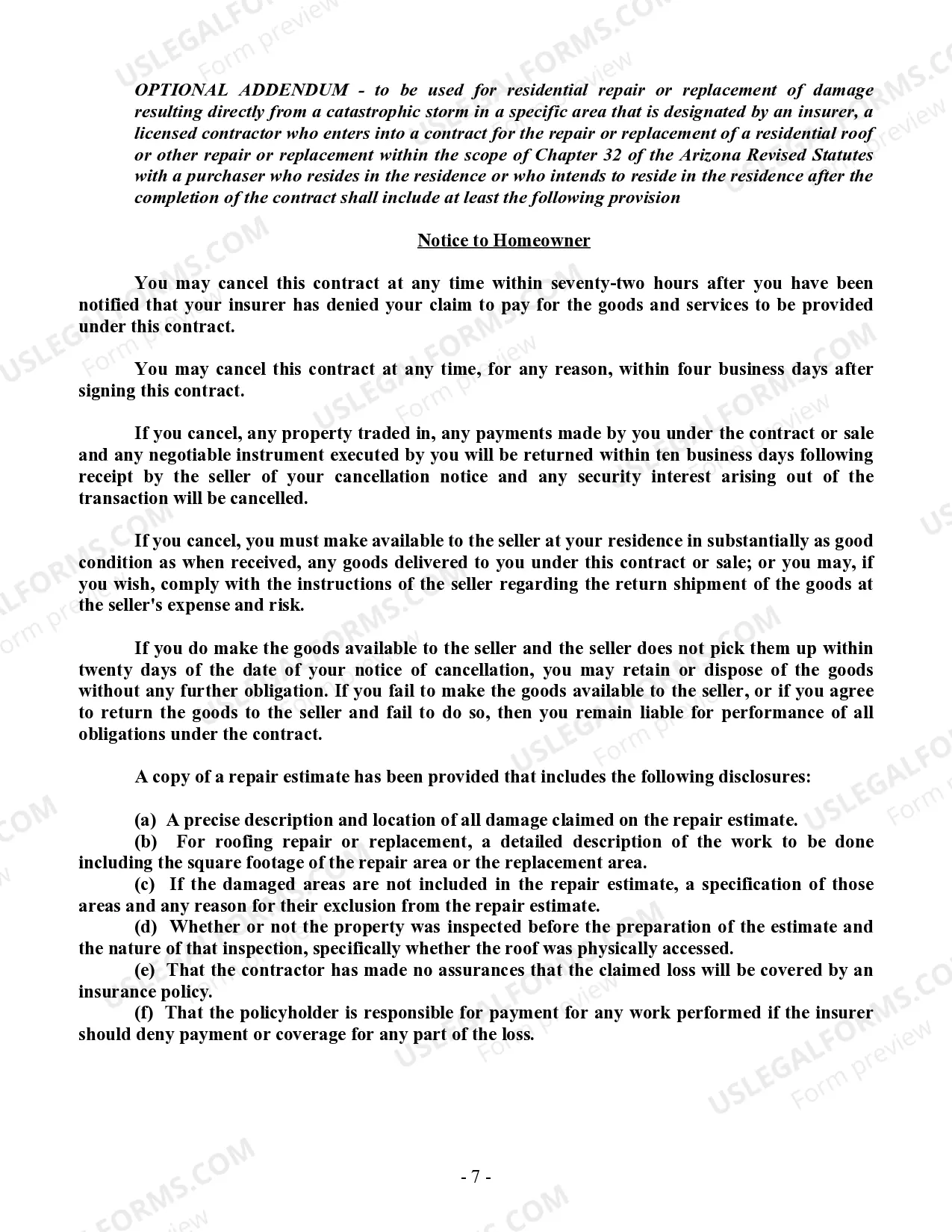
- Work Site Information: Defines the location where the masonry project will take place.
- Permit Requirements: Specifies the contractor's responsibility to apply for necessary permits.
- Soil Conditions: Clarifies that the contractor is not liable for soil-related issues.
- Insurance Obligations: Details the insurance coverage that the contractor must maintain.
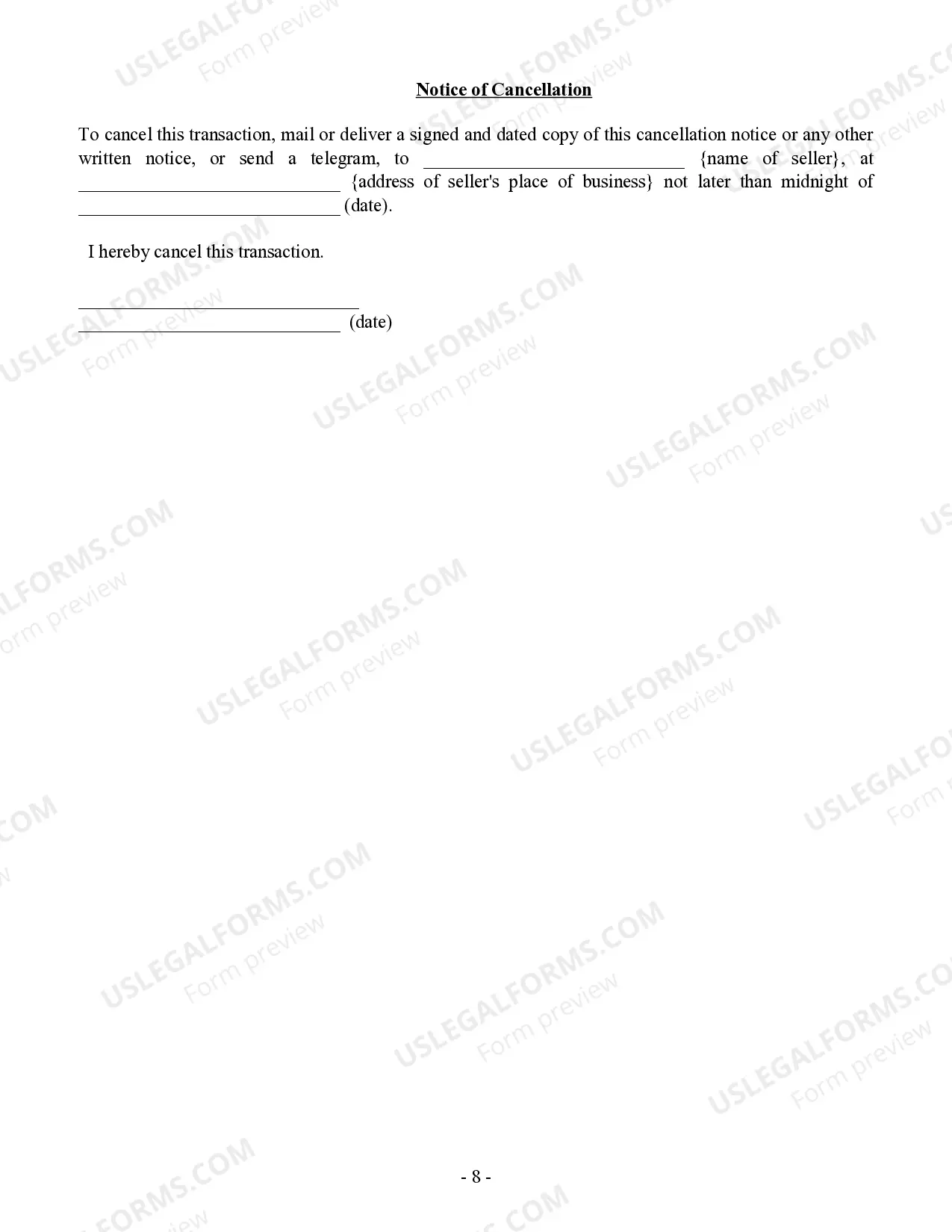
- Change Orders: Explains procedures for adjusting the scope of work and associated costs.
- Contract Price Terms: Outlines the payment structure, including deposits and progress payments.

When to use this document
This form should be used when a property owner hires a brick mason contractor for a construction project that involves brick masonry work. It is particularly beneficial when the parties want to establish clear terms regarding payment, project scope, and responsibilities, ensuring that both sides are protected throughout the process.
Intended users of this form
- Property owners seeking to engage a brick mason for construction or repair projects.
- Brick mason contractors looking for a formal agreement to outline project details and payment terms.
- Individuals and businesses involved in construction projects that require masonry work.
How to complete this form
- Identify the parties involved: Fill in the names of the contractor and property owner.
- Specify the work site: Clearly label the address where the masonry work will occur.
- Outline payment terms: Indicate the payment structure, including any required deposits and progress payment stages.
- Document change order procedures: Ensure that both parties know how to handle potential changes to the project scope.
- Sign and date: Both parties must sign the contract to confirm agreement on the terms.
Notarization requirements for this form
In most cases, this form does not require notarization. However, some jurisdictions or signing circumstances might. US Legal Forms offers online notarization powered by Notarize, accessible 24/7 for a quick, remote process.
Get your form ready online
Our built-in tools help you complete, sign, share, and store your documents in one place.
Make edits, fill in missing information, and update formatting in US Legal Forms—just like you would in MS Word.
Download a copy, print it, send it by email, or mail it via USPS—whatever works best for your next step.
Sign and collect signatures with our SignNow integration. Send to multiple recipients, set reminders, and more. Go Premium to unlock E-Sign.
If this form requires notarization, complete it online through a secure video call—no need to meet a notary in person or wait for an appointment.
We protect your documents and personal data by following strict security and privacy standards.

Make edits, fill in missing information, and update formatting in US Legal Forms—just like you would in MS Word.

Download a copy, print it, send it by email, or mail it via USPS—whatever works best for your next step.

Sign and collect signatures with our SignNow integration. Send to multiple recipients, set reminders, and more. Go Premium to unlock E-Sign.

If this form requires notarization, complete it online through a secure video call—no need to meet a notary in person or wait for an appointment.

We protect your documents and personal data by following strict security and privacy standards.
Avoid these common issues
- Failing to specify clear terms for change orders, leading to disputes.
- Not including all necessary permits, which could result in project delays.
- Neglecting to document the initial deposit and payment schedule.
Advantages of online completion
- Convenience of immediate access and downloading from any location.
- Editability allows for customization to fit specific project needs.
- Reliability from forms drafted by licensed attorneys, ensuring legal compliance.
Looking for another form?




Form popularity
FAQ
To sue a contractor in Arizona, start by preparing your case. Collect all relevant documents, including your Arizona Brick Mason Contract for Contractor and evidence of the contractor's failure to meet their obligations. After compiling your materials, file a lawsuit in the appropriate court and ensure you follow local rules and procedures. Consulting with legal experts can aid you in understanding the complexities of the law and bolster your position.
Suing a contractor in Arizona involves several steps. Begin by gathering all necessary documentation related to your Arizona Brick Mason Contract for Contractor and any evidence supporting your claims. Next, you will need to file a complaint in the appropriate court. It’s wise to consider legal advice to navigate the process efficiently and maximize your chances for a favorable outcome.
Deciding whether to sue a contractor often depends on the extent of your damages and the likelihood of recovery. If your contractor failed to uphold the terms of the Arizona Brick Mason Contract for Contractor, assessing the potential costs, time, and emotional impact is important. For minor disputes, mediation or negotiation can sometimes yield better results than litigation. Weigh your options carefully before proceeding.
In Arizona, the liability period for contractors can vary based on the type of work performed. Generally, the statute of limitations for construction defects is seven years from the completion date of the project. This timeframe is crucial for valid claims arising from an Arizona Brick Mason Contract for Contractor, ensuring you take action before the deadline. To protect your rights, keep accurate records of all work and agreements.
Winning a lawsuit against a contractor begins with strong documentation. Collect all relevant documents, including the Arizona Brick Mason Contract for Contractor, communication records, and any evidence of dissatisfaction or injury. Having solid proof strengthens your case and helps demonstrate the contractor's failure to meet obligations. Additionally, consider consulting with a legal professional who understands Arizona laws and can guide you through the process.
Yes, it is mandatory to have a license to operate as a general contractor in Arizona. This requirement exists to ensure that contractors meet necessary qualifications and standards. By acquiring this license and using documents like the Arizona Brick Mason Contract for Contractor, you can enhance your professional credibility in the construction industry.
In Arizona, several business types can apply for a contractor license, including sole proprietorships, partnerships, and corporations. It's crucial to select the right business structure that aligns with your goals and complies with state regulations. Using tools like US Legal Forms can help you draft and manage your Arizona Brick Mason Contract for Contractor based on your business model.
Yes, masonry contractors must be licensed in Florida to operate legally. Obtaining this license requires meeting specific education and experience criteria. If you are considering an Arizona Brick Mason Contract for Contractor, understanding licensing in different states can help you make informed decisions.
Yes, you can be your own contractor in Arizona if you obtain the appropriate licensing. However, it's essential to be aware of the responsibilities that come with this role, including financial management and ensuring the quality of work. Leveraging an Arizona Brick Mason Contract for Contractor from resources like US Legal Forms can assist you in this endeavor.
In Florida, you typically need a license to perform concrete work professionally. This requirement varies by county, so it's imperative to check local regulations. For contractors in Arizona looking to expand their services, like providing an Arizona Brick Mason Contract for Contractor, understanding licensure is equally crucial.