Arkansas Last Will and Testament for a Widow or Widower with Adult Children
Understanding this form
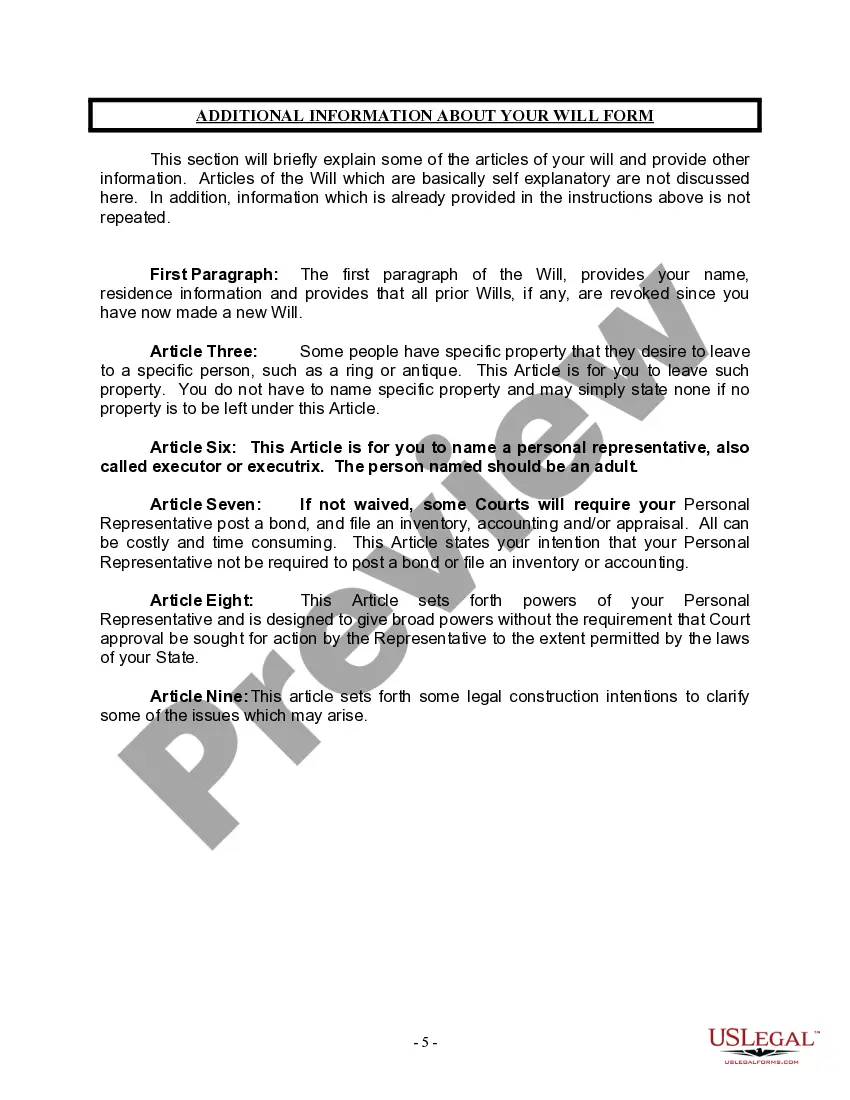
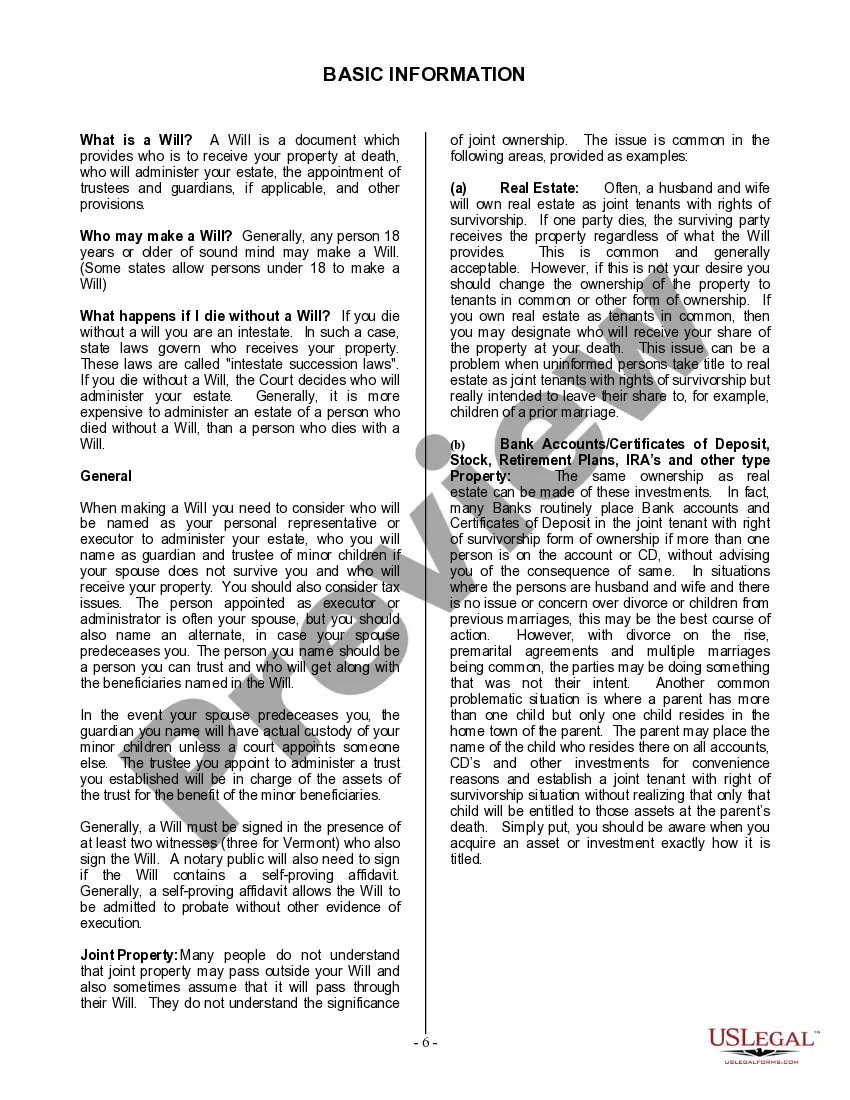
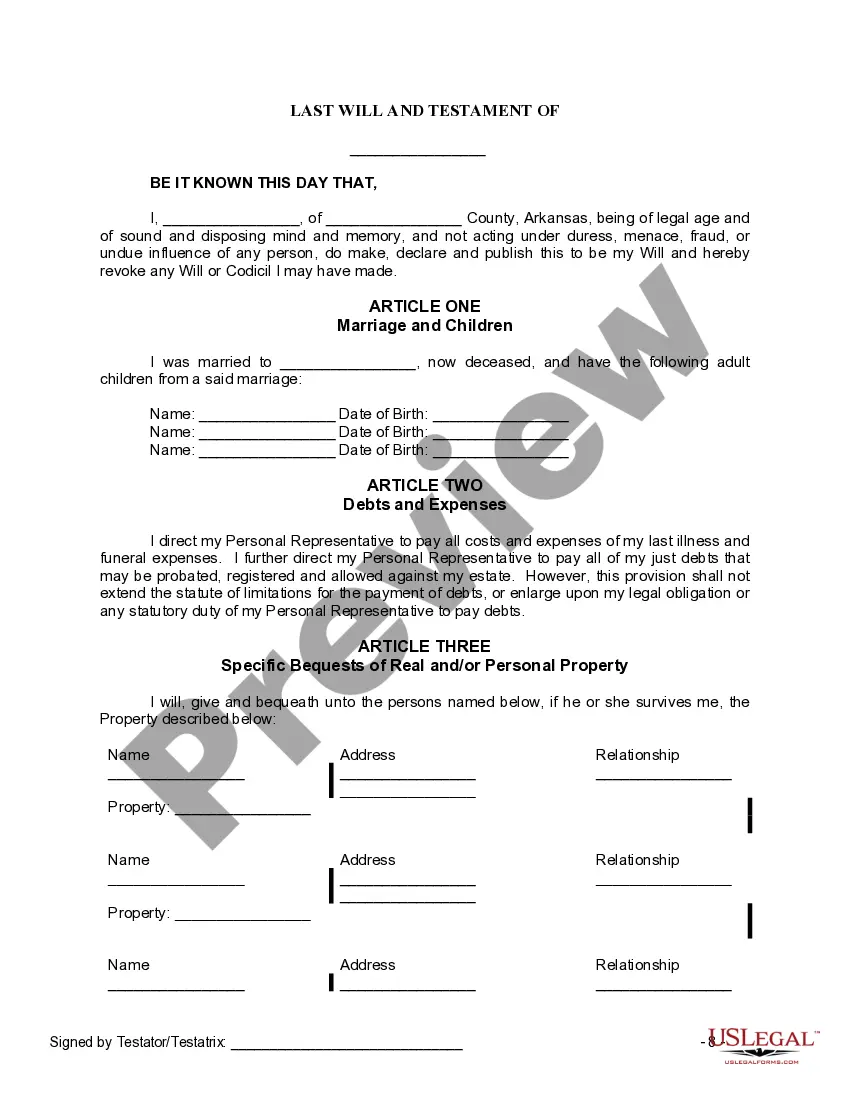
The Last Will and Testament for a Widow or Widower with Adult Children is a legal document that outlines how your property and assets will be distributed upon your death. This form is specifically designed for individuals who are widowed or widowers and have adult children. It allows you to designate beneficiaries, appoint an executor to manage your estate, and include specific provisions for your adult children, ensuring your wishes are clearly documented and legally binding.
What’s included in this form
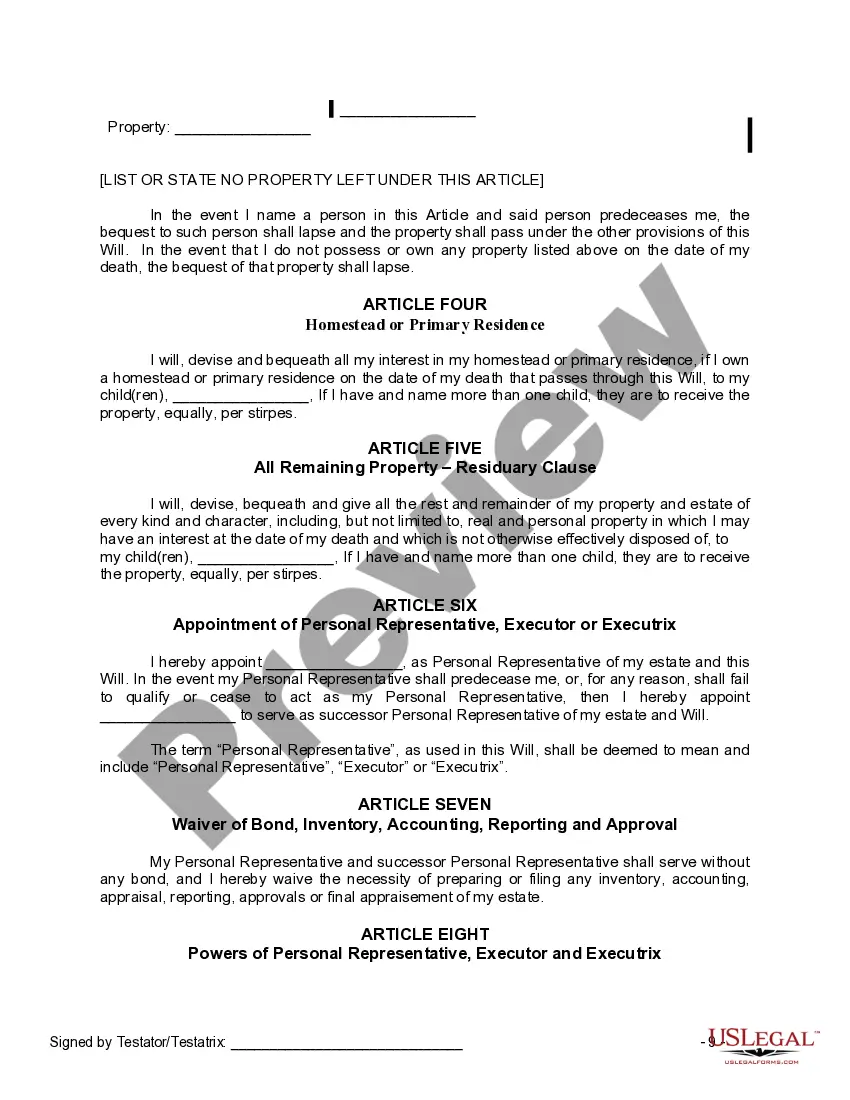
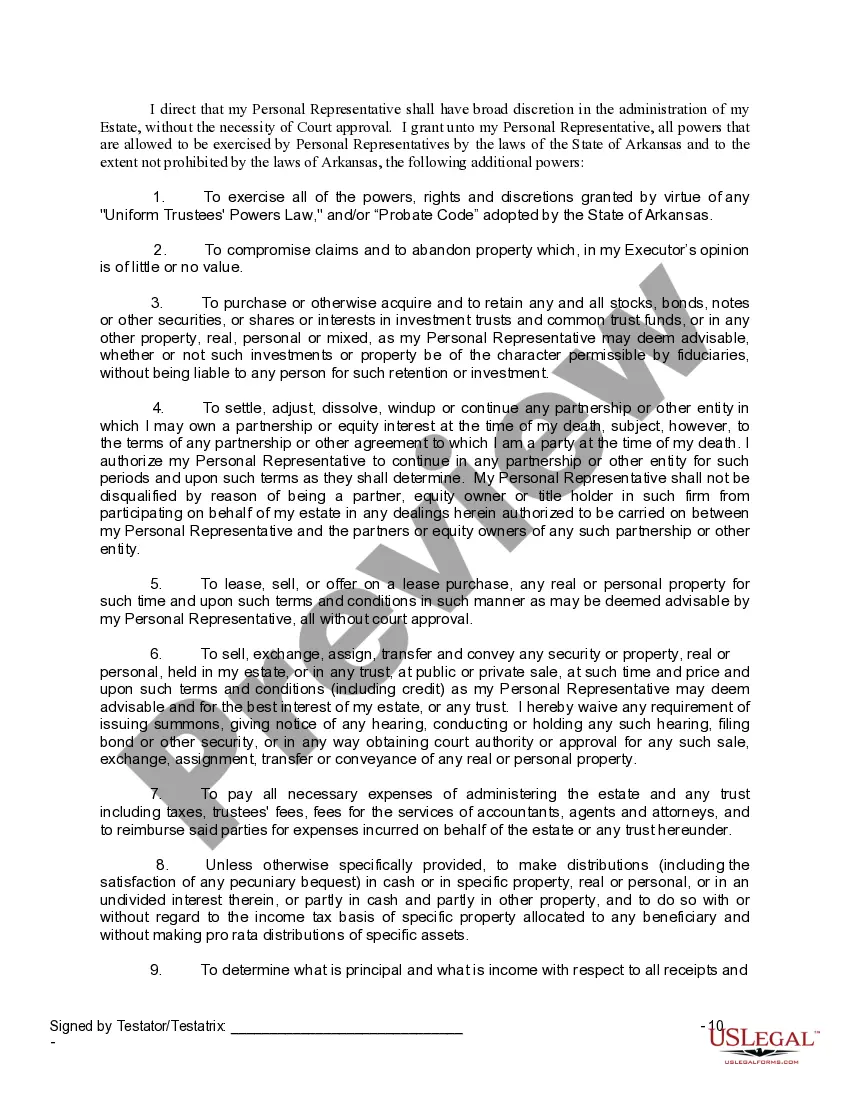
- Appointment of a personal representative or executor to manage the estate
- Designations of beneficiaries, specifically including adult children
- Provisions for specific property bequests
- Instructions for the execution of the Will, including witness requirements
- Self-proving affidavit for easier probate process in some states






When this form is needed
This form should be used when a widow or widower wants to make their wishes clear regarding the distribution of their assets after their death. It is particularly important if you have adult children and want to ensure that they receive your property according to your preferences, or if you have specific assets that you want to designate to certain individuals. Additionally, utilizing this form can help minimize disputes among heirs and facilitate a smoother probate process.
Who this form is for
- Individuals who are widowed or widowers
- Individuals with adult children who wish to include them in their estate planning
- People looking to clearly outline their wishes regarding their estate
- Anyone wanting to ensure a legally valid transfer of property upon their passing
How to complete this form
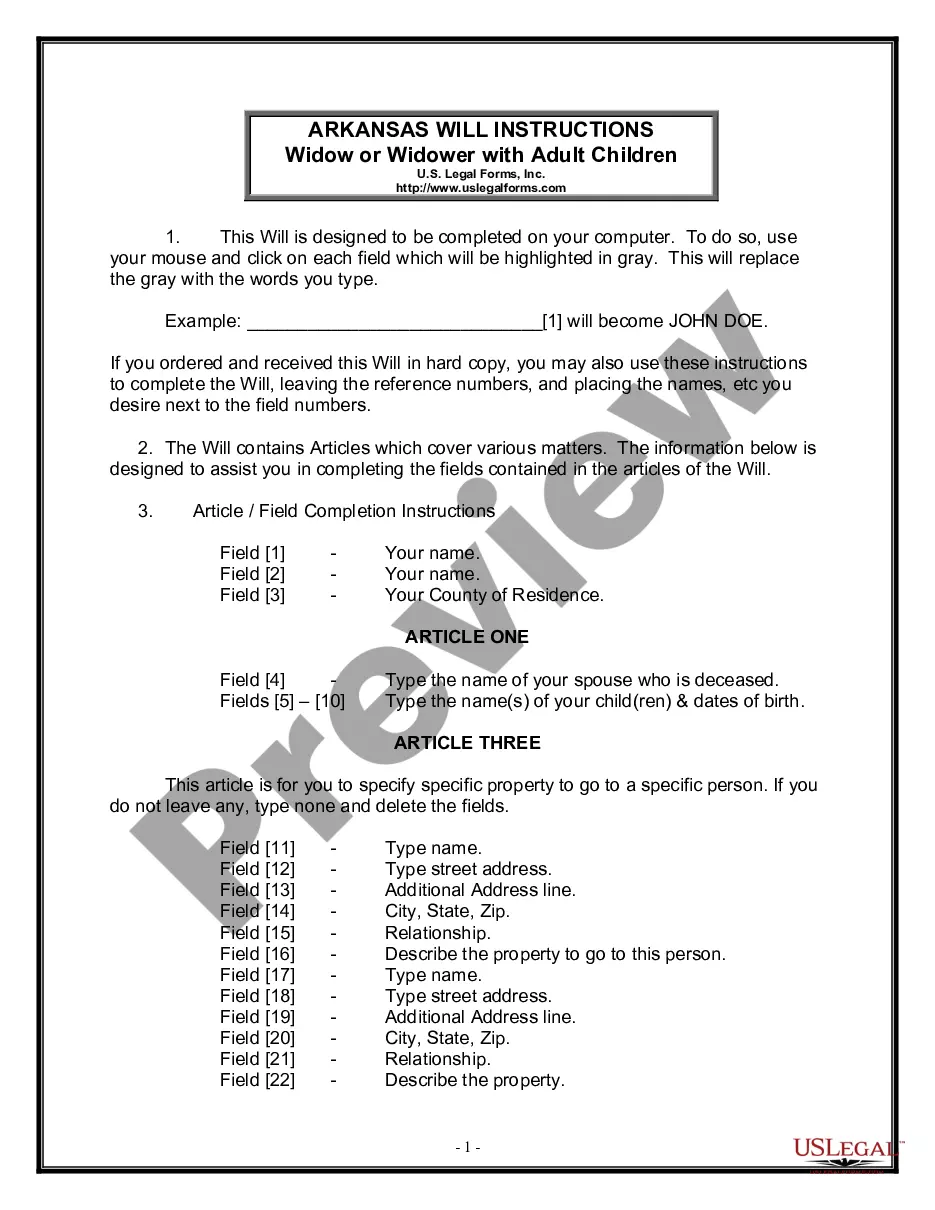
- Identify and enter your name and county of residence.
- Specify the name of your deceased spouse and your adult children along with their dates of birth.
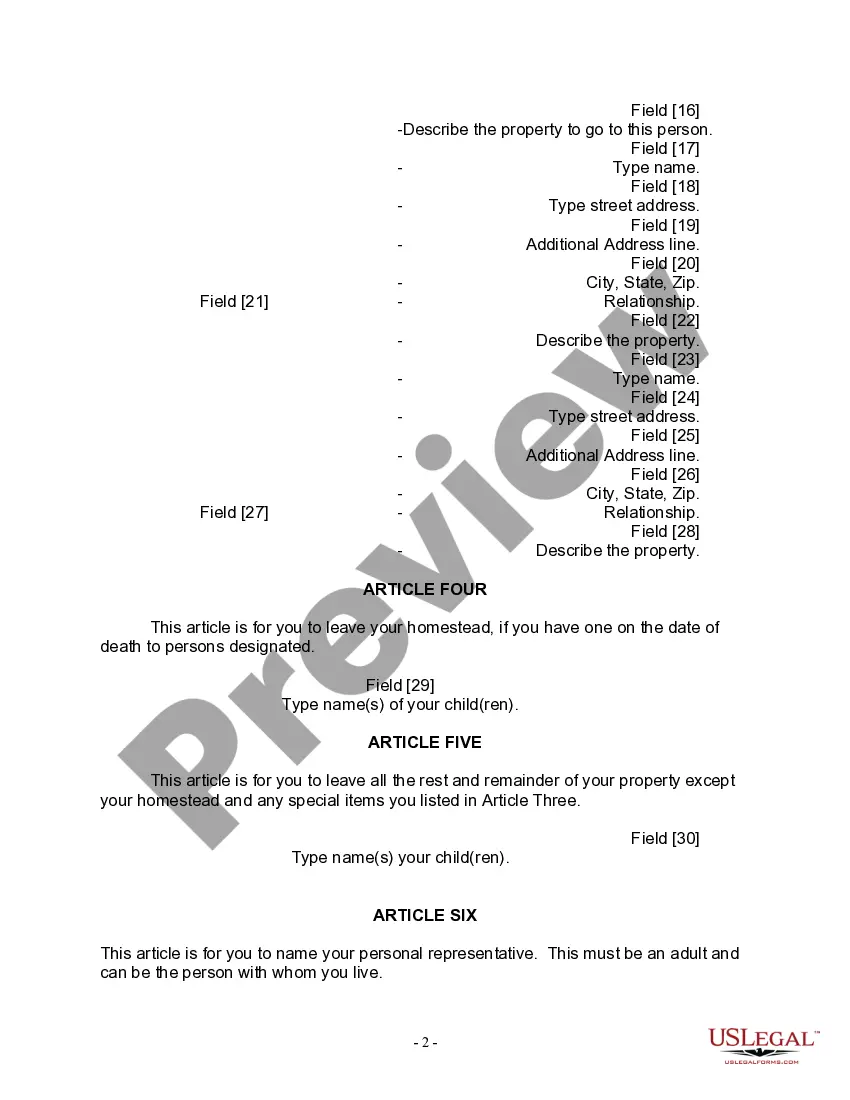
- Designate any specific property you want to bequeath to individuals.
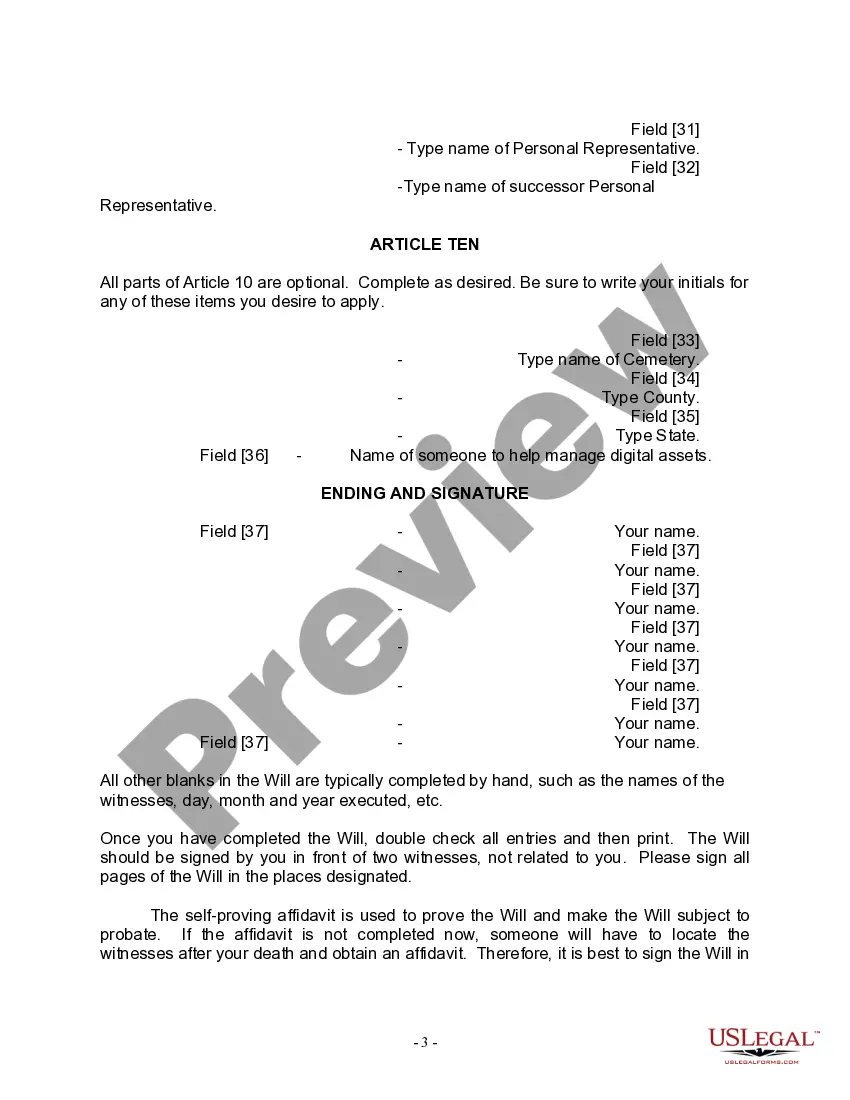
- Appoint a personal representative who will be responsible for executing your wishes.
- Include the necessary witness signatures and notary, if required.
- Store the executed Will in a safe place and inform your executor or trusted individual of its location.
Notarization guidance
Notarization is required for this form to take effect. Our online notarization service, powered by Notarize, lets you verify and sign documents remotely through an encrypted video session, available 24/7.
Get your form ready online
Our built-in tools help you complete, sign, share, and store your documents in one place.
Make edits, fill in missing information, and update formatting in US Legal Forms—just like you would in MS Word.
Download a copy, print it, send it by email, or mail it via USPS—whatever works best for your next step.
Sign and collect signatures with our SignNow integration. Send to multiple recipients, set reminders, and more. Go Premium to unlock E-Sign.
If this form requires notarization, complete it online through a secure video call—no need to meet a notary in person or wait for an appointment.
We protect your documents and personal data by following strict security and privacy standards.

Make edits, fill in missing information, and update formatting in US Legal Forms—just like you would in MS Word.

Download a copy, print it, send it by email, or mail it via USPS—whatever works best for your next step.

Sign and collect signatures with our SignNow integration. Send to multiple recipients, set reminders, and more. Go Premium to unlock E-Sign.

If this form requires notarization, complete it online through a secure video call—no need to meet a notary in person or wait for an appointment.

We protect your documents and personal data by following strict security and privacy standards.
Common mistakes
- Failing to sign the Will in the presence of two witnesses.
- Not including a self-proving affidavit when desired, potentially complicating the probate process.
- Leaving property to someone who may predecease you without additional provisions.
Benefits of completing this form online
- Conveniently complete the form at your own pace, with clear instructions for each section.
- Easily edit and customize the document to reflect your specific wishes and circumstances.
- Access a legally vetted form created by attorneys, ensuring compliance with state laws.
Looking for another form?


Form popularity
FAQ
In Arkansas, the will must be filed in probate court within 30 days after the decedent’s death. Failing to file within this timeframe can lead to complications regarding the estate's distribution. Utilizing an Arkansas Last Will and Testament for a Widow or Widower with Adult Children can help streamline this process and ensure timely compliance with state laws.
In Arkansas, a living will does not have to be notarized; however, it must be signed by the individual and two witnesses. Having a notary public acknowledge the living will can add an extra layer of authenticity, but it is not required. Nevertheless, it's important to ensure that your wishes are clearly stated in an Arkansas Last Will and Testament for a Widow or Widower with Adult Children.
To avoid probate in Arkansas, you can use various methods, such as establishing a living trust, designating beneficiaries on accounts, or holding property jointly with rights of survivorship. These strategies help ensure your assets pass directly to your heirs without going through the probate court. An Arkansas Last Will and Testament for a Widow or Widower with Adult Children can serve as supplemental guidance within this planning.
In Arkansas, the surviving spouse is entitled to a share of the marital estate, which generally includes community property and any separate property the deceased spouse owned. Specifically, if the deceased had children, the surviving spouse typically inherits one-third of the estate, while the children inherit the remainder. An Arkansas Last Will and Testament for a Widow or Widower with Adult Children can clarify these entitlements.
Yes, in Arkansas, you must file a will with the probate court to begin the probate process after the testator has passed away. This is a crucial step to ensure the wishes outlined in the Arkansas Last Will and Testament for a Widow or Widower with Adult Children are honored. Filing also helps to notify beneficiaries and creditors of the decedent's passing.
In Arkansas, a will is considered legal when it is in writing, signed by the testator, and attested by at least two witnesses. Additionally, the testator must be at least 18 years old and of sound mind when creating the Arkansas Last Will and Testament for a Widow or Widower with Adult Children. This ensures that the will reflects the true intentions of the individual.
In Arkansas, a will does not need to be notarized to be valid. However, a notarized will can simplify the probate process later on. Nevertheless, an Arkansas Last Will and Testament for a Widow or Widower with Adult Children should always be carefully drafted and signed to ensure it reflects your desires accurately.
Creating a legal will can be budget-friendly, especially when you use online resources like USLegalForms. They offer affordable templates for an Arkansas Last Will and Testament for a Widow or Widower with Adult Children, allowing you to ensure your will is legally sound without breaking the bank. Utilizing these services often serves as the most economical and efficient way to secure your final wishes.
Yes, you can write your own will in Arkansas without hiring a lawyer. Many individuals opt to create their Arkansas Last Will and Testament for a Widow or Widower with Adult Children through DIY methods. However, it's crucial to ensure your will meets all legal requirements; otherwise, it may not be enforceable.
Setting up a will in Arkansas involves several straightforward steps. First, you should gather information on your assets and decide how you want them distributed. Once this is done, you can draft your Arkansas Last Will and Testament for a Widow or Widower with Adult Children using templates or services like USLegalForms, which provide user-friendly options to guide you through the process.