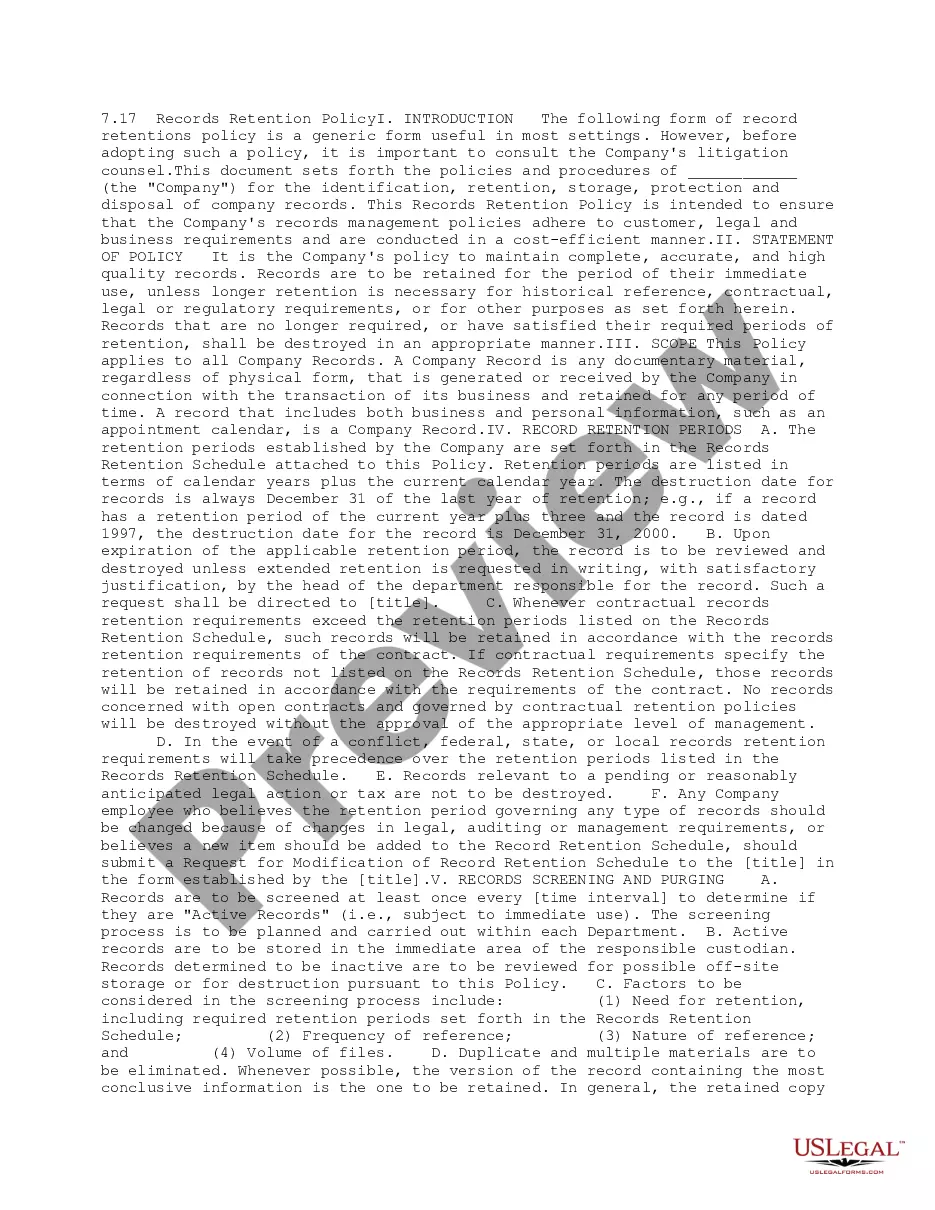
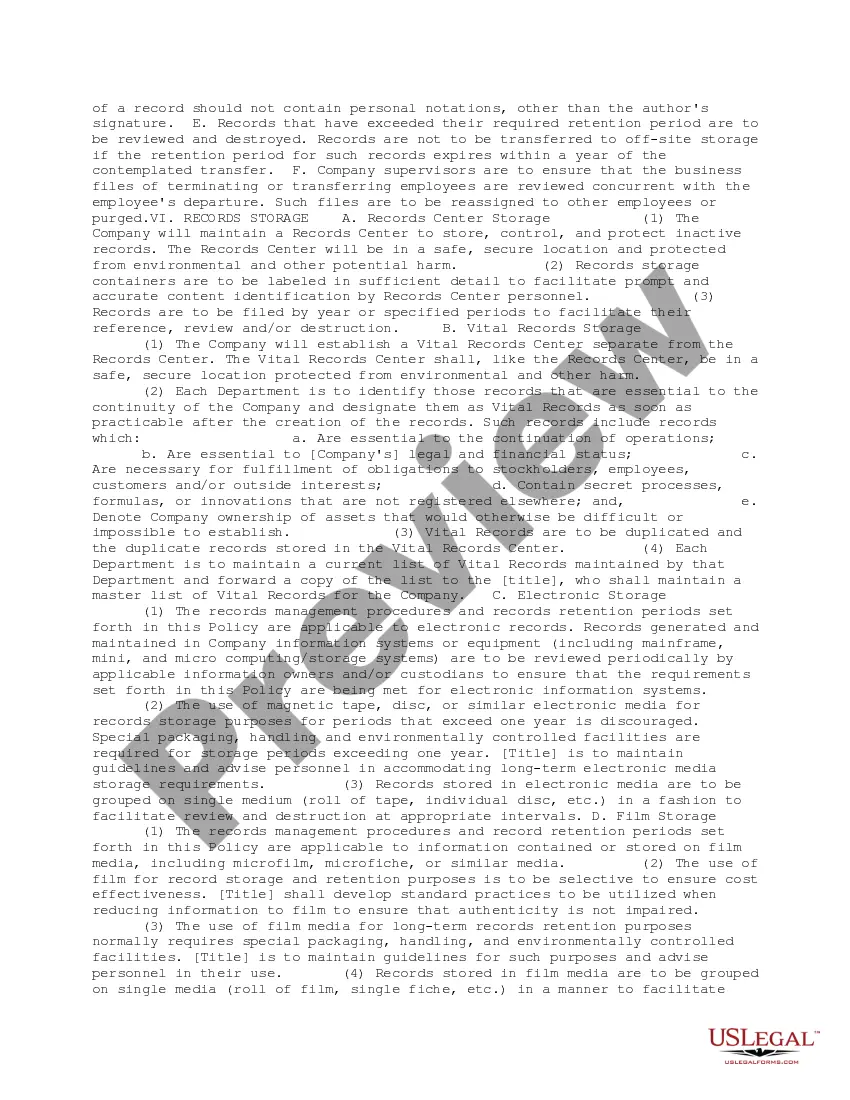
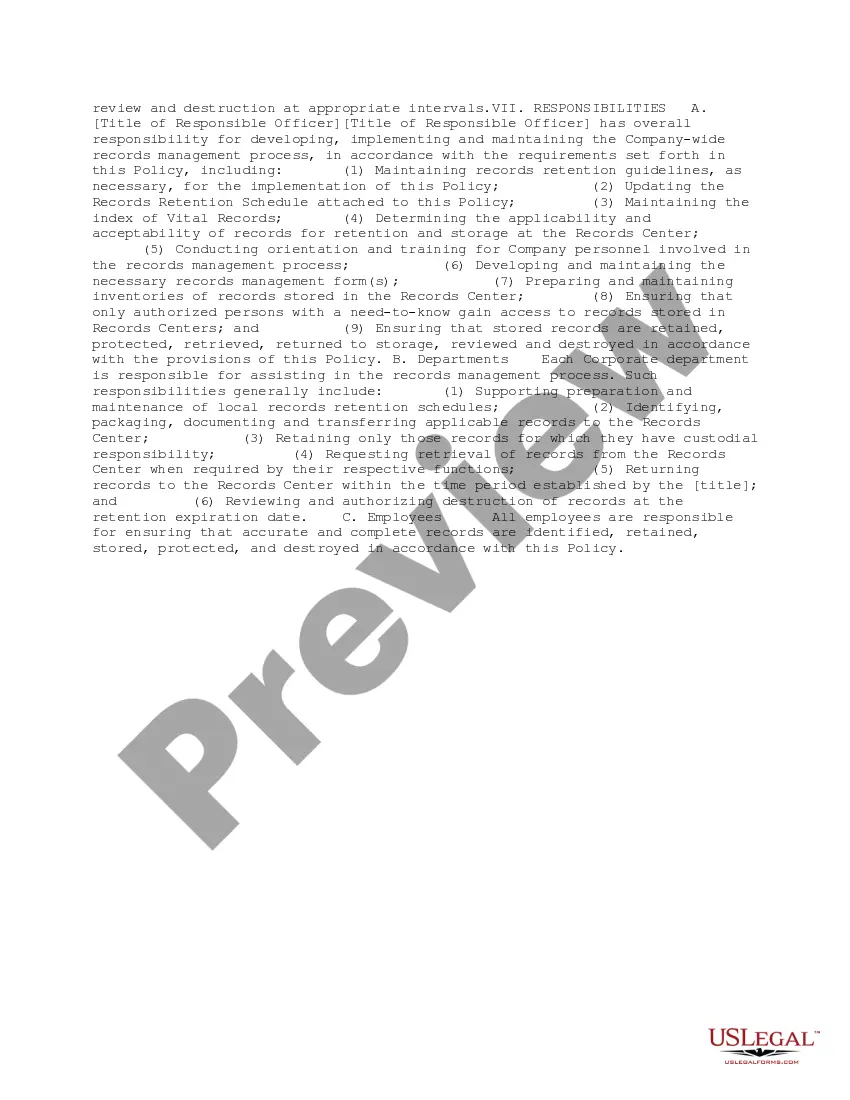
This due diligence form entails policies and procedures for the identification, retention, storage, protection and disposal of company records. This Records Retention Policy is intended to ensure that the company's records management policies adhere to customer, legal and business requirements and are conducted in a cost-efficient manner.
Arkansas Records Retention Policy
Category:
State:
Multi-State
Control #:
US-DD0717
Format:
Word;
PDF;
Rich Text
Instant download
Description
Free preview
Get your form ready online
Our built-in tools help you complete, sign, share, and store your documents in one place.
Built-in online Word editor
Make edits, fill in missing information, and update formatting in US Legal Forms—just like you would in MS Word.
Export easily
Download a copy, print it, send it by email, or mail it via USPS—whatever works best for your next step.
E-sign your document
Sign and collect signatures with our SignNow integration. Send to multiple recipients, set reminders, and more. Go Premium to unlock E-Sign.
Notarize online 24/7
If this form requires notarization, complete it online through a secure video call—no need to meet a notary in person or wait for an appointment.
Store your document securely
We protect your documents and personal data by following strict security and privacy standards.

Make edits, fill in missing information, and update formatting in US Legal Forms—just like you would in MS Word.

Download a copy, print it, send it by email, or mail it via USPS—whatever works best for your next step.

Sign and collect signatures with our SignNow integration. Send to multiple recipients, set reminders, and more. Go Premium to unlock E-Sign.

If this form requires notarization, complete it online through a secure video call—no need to meet a notary in person or wait for an appointment.

We protect your documents and personal data by following strict security and privacy standards.
Looking for another form?



How to fill out Records Retention Policy?
Have you found yourself in a situation where you require documents for both business and personal purposes almost daily.
There are numerous reputable document templates available online, but finding forms you can trust isn’t straightforward.
US Legal Forms provides a vast array of template forms, such as the Arkansas Records Retention Policy, which are designed to comply with federal and state regulations.
Once you find the correct form, click Buy now.
Select the pricing option you prefer, provide the necessary information to process your payment, and pay for your order using PayPal or a credit card.
- If you are already familiar with the US Legal Forms website and possess an account, simply Log In.
- After logging in, you can download the Arkansas Records Retention Policy template.
- If you do not have an account and wish to utilize US Legal Forms, follow these steps.
- Find the form you need and ensure it's for the correct region/county.
- Use the Review button to examine the form.
- Check the information to confirm that you have selected the appropriate form.
- If the form isn’t what you are looking for, use the Search field to locate the form that meets your needs and requirements.
Form popularity
FAQ
The seven-year retention policy generally suggests keeping financial and tax records for seven years after filing. This timeframe allows individuals and businesses to adequately address any audits or inquiries concerning their financial history. Following the Arkansas Records Retention Policy helps navigate these obligations effectively. For streamlined compliance, uslegalforms provides excellent tools to manage and preserve your essential documents.
You should maintain various financial records for seven years, including tax returns, bank statements, and receipts. This duration helps protect against possible audits and ensures you have proof of income and expenses. The Arkansas Records Retention Policy reinforces the importance of this practice. Utilizing uslegalforms can simplify your record management and help you stay organized.
The IRS does not automatically destroy tax records after seven years; however, they recommend keeping records for at least that long. This period accommodates audits and clarifications regarding past returns. It is essential to understand that the Arkansas Records Retention Policy aligns with these recommendations, ensuring you have the necessary documentation accessible when needed. To stay compliant, consider using uslegalforms for record-keeping solutions.
The initial step in establishing a records retention program involves assessing your current records and determining what needs to be retained or eliminated. Understanding the Arkansas Records Retention Policy is vital at this stage to ensure compliance and best practices. After identifying the records, you should create a comprehensive plan that outlines retention timelines and destruction protocols. Using resources from uslegalforms can provide you with templates and guidance to establish a solid foundation for your records retention program.
You may destroy employee records in Arkansas once the retention period has expired, and the records no longer hold any legal or business value. It is crucial to have a clear understanding of the Arkansas Records Retention Policy to ascertain the appropriate timing for destruction. Before proceeding, consider reviewing the nature of the documents to ensure compliance with any industry-specific regulations. With tools from uslegalforms, you can maintain organized records that indicate when destruction can take place.
In Arkansas, the retention period for employee records generally spans at least three years from the date of termination or resignation. However, certain documents may need to be kept for longer, depending on the type of record and compliance with federal regulations. To ensure compliance with the Arkansas Records Retention Policy, you should consult the specific guidelines applicable to your industry. Utilizing platforms like uslegalforms can help streamline this process by offering tailored records retention templates.
To create a retention policy, start by conducting a thorough inventory of all types of records your organization manages. Define how long each record type should be retained based on legal obligations and practical needs. Incorporating an Arkansas Records Retention Policy framework ensures that your policy is structured, compliant, and effectively communicated throughout your organization.
The 7-year retention rule typically refers to the guideline that records pertaining to financial documents, such as tax filings and investments, should be retained for at least seven years. This rule is based on the potential for audits or legal actions that may arise from these documents. Following an Arkansas Records Retention Policy will clarify which records apply under this rule and help mitigate risks.
An example of a data retention policy may include sections such as a list of record categories, detailed retention periods, and secure disposal methods. For instance, employee records could be kept for three years post-employment, while financial statements might require a ten-year retention. Implementing an Arkansas Records Retention Policy not only helps in organizing your documents but also ensures proper legal compliance.
Records that should be kept for 10 years often include tax returns, financial statements, and employee personnel files. Additionally, any documentation related to legal proceedings or those that may have significant impact on your business should also be retained for this duration. An Arkansas Records Retention Policy can help clarify which records fall into this category and ensure you maintain compliance.