Alabama Codicil to Will Form for Amending Your Will - Will Changes or Amendments
What this document covers
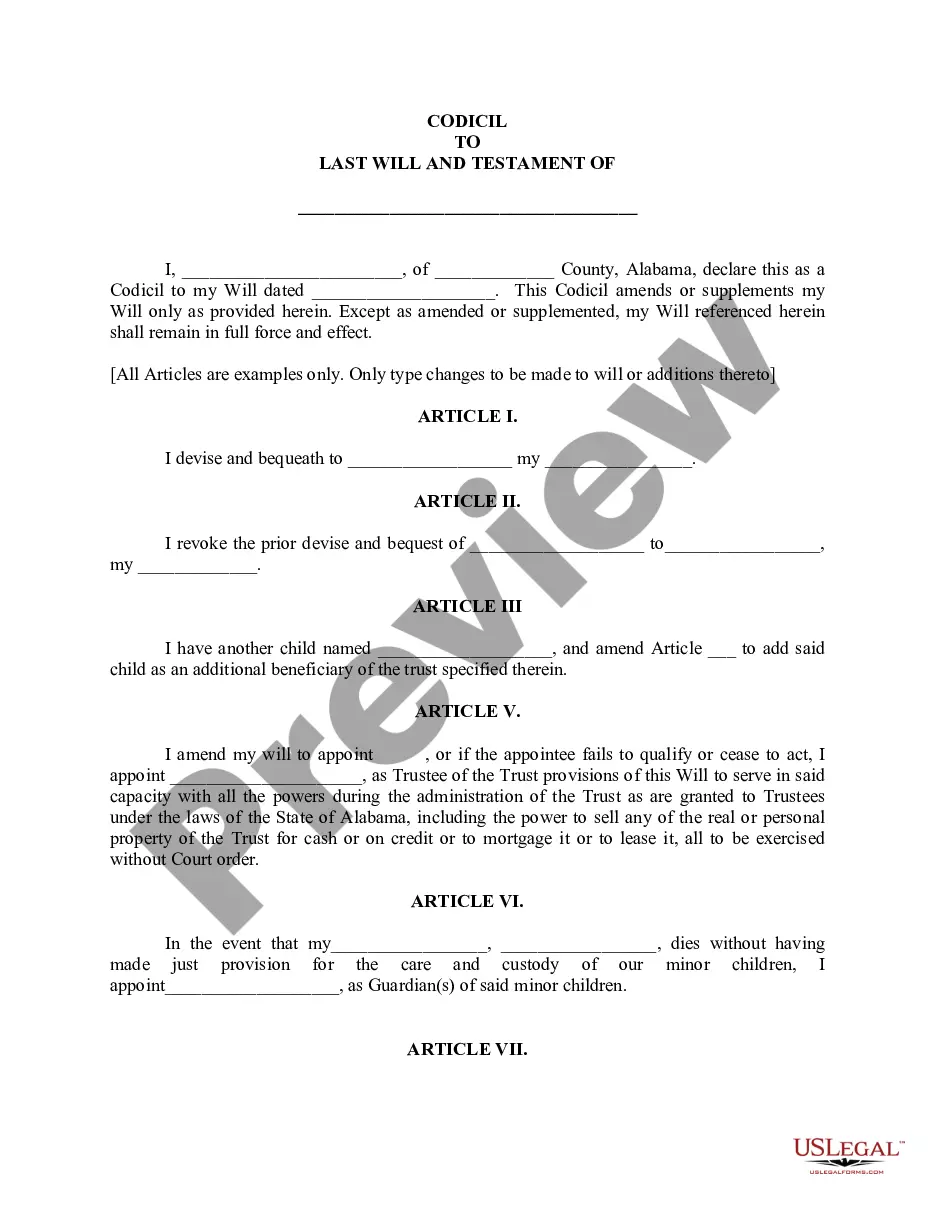
The Codicil to Will Form allows an individual to amend their existing will without the need to create an entirely new document. This form serves to modify specific provisions of the original will while ensuring that the remaining document remains valid, except as changed by the codicil. It provides a streamlined way to implement changes in estate planning, particularly for individuals who already have a comprehensive will in place.
Key parts of this document
- Personal Information: Spaces to enter the testatorâs name, date of the original will, and county of residence.
- Amendments: Articles that specify changes to be made to the original will, such as adding or removing beneficiaries.
- Appointment of Guardians: Provision for appointing guardians for minor children if necessary.
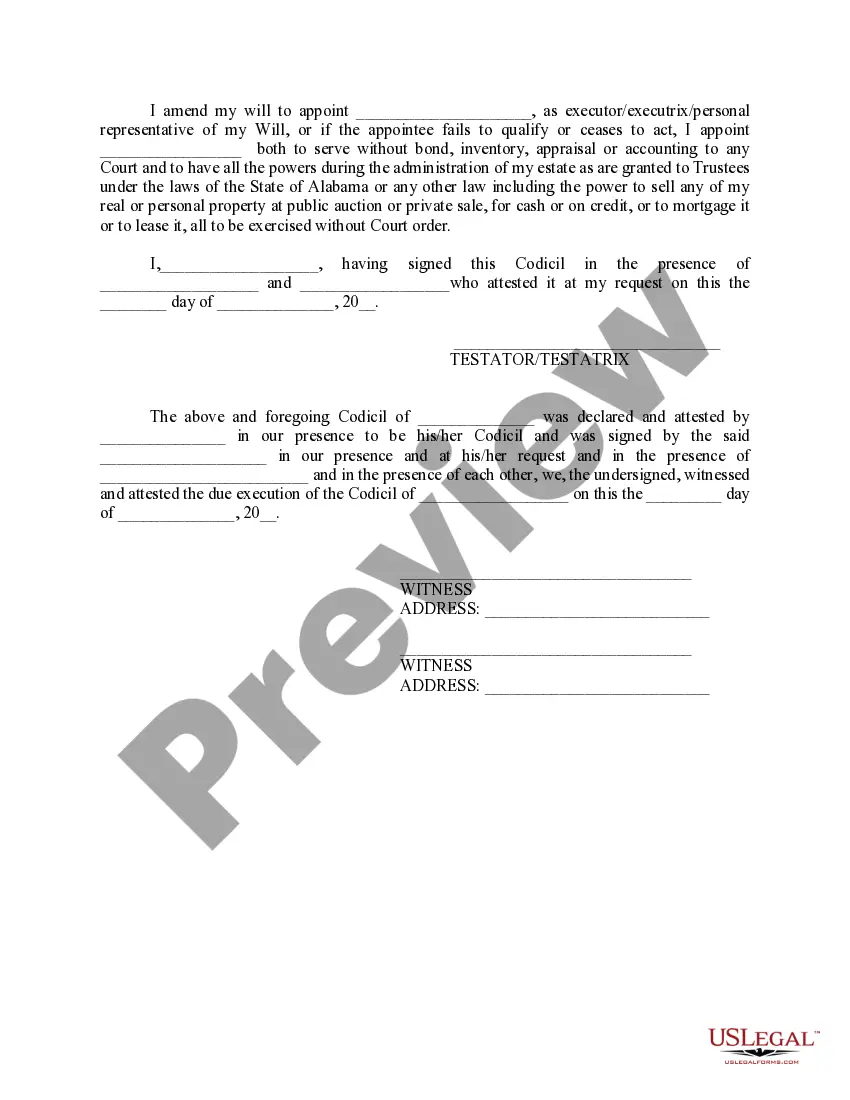
- Executor Appointment: Designation of the executor or personal representative for the estate.
- Witness Statements: Sections for witnesses to attest the signature of the testator, reinforcing the document's validity.
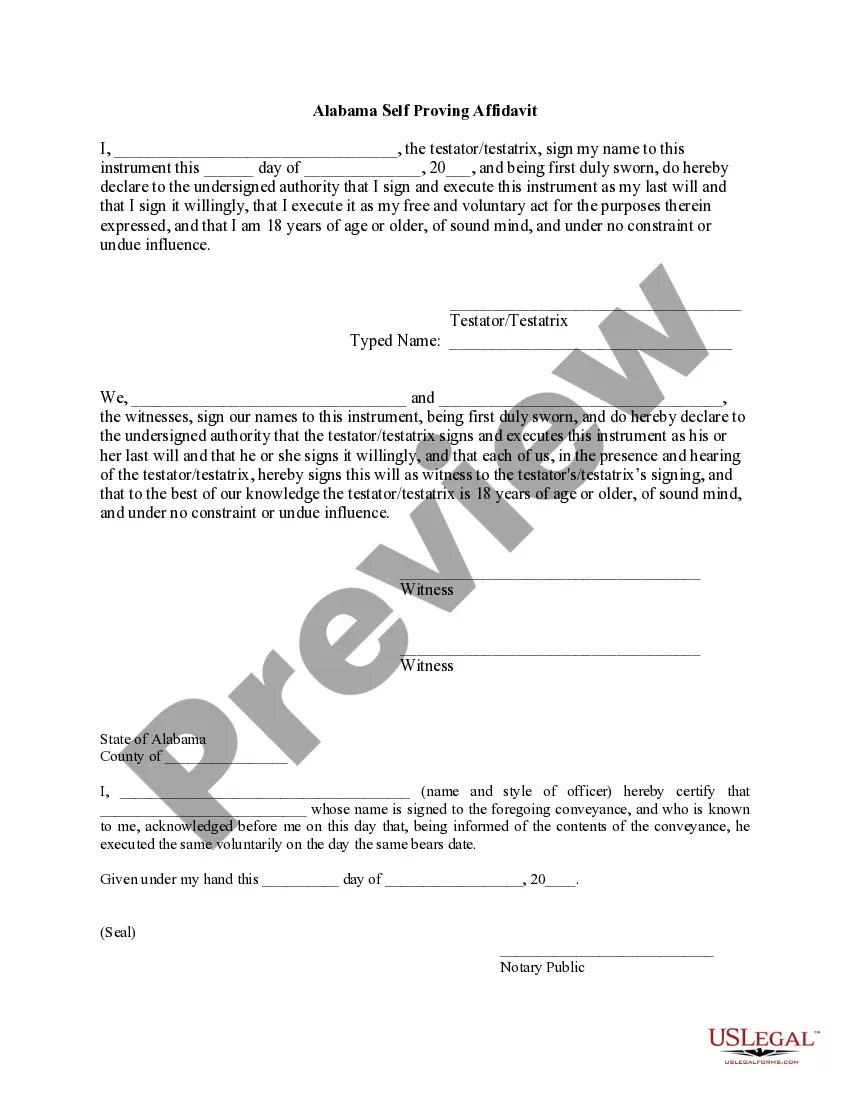
- Self-Proving Affidavit: Affirmation by the testator and witnesses stating that the will was executed voluntarily and correctly.

When to use this form
This form is essential when a person wishes to make changes to their existing will, such as adding or updating beneficiaries, changing executors, or addressing new family circumstances like the birth of a child. It is particularly helpful for those who want to avoid the time and expense involved in drafting a completely new will while ensuring their estate planning remains accurate and up-to-date.
Who should use this form
- Individuals with an existing will who need to make minor amendments.
- Those experiencing significant life changes, such as marriage, divorce, or having children.
- People who wish to clarify or correct details in their will, like beneficiaries or property distributions.
Completing this form step by step
- Enter your personal details, including your name and the date of your current will.
- Specify the amendments you wish to make by completing the articles, detailing changes to beneficiaries, executors, or other provisions.
- Designate guardians for any minor children if applicable.
- Sign the codicil in the presence of at least two witnesses.
- Ensure the witnesses sign the document, which is crucial for validating the codicil.
- Consider completing the self-proving affidavit to simplify future validation of the will.
Does this document require notarization?
This form does not typically require notarization unless specified by local law. However, using the self-proving affidavit included can simplify any future verification process regarding the validity of the will.
Get your form ready online
Our built-in tools help you complete, sign, share, and store your documents in one place.
Make edits, fill in missing information, and update formatting in US Legal Forms—just like you would in MS Word.
Download a copy, print it, send it by email, or mail it via USPS—whatever works best for your next step.
Sign and collect signatures with our SignNow integration. Send to multiple recipients, set reminders, and more. Go Premium to unlock E-Sign.
If this form requires notarization, complete it online through a secure video call—no need to meet a notary in person or wait for an appointment.
We protect your documents and personal data by following strict security and privacy standards.

Make edits, fill in missing information, and update formatting in US Legal Forms—just like you would in MS Word.

Download a copy, print it, send it by email, or mail it via USPS—whatever works best for your next step.

Sign and collect signatures with our SignNow integration. Send to multiple recipients, set reminders, and more. Go Premium to unlock E-Sign.

If this form requires notarization, complete it online through a secure video call—no need to meet a notary in person or wait for an appointment.

We protect your documents and personal data by following strict security and privacy standards.
Common mistakes to avoid
- Failing to have the codicil witnessed properly, which can invalidate the entire document.
- Not specifying clear changes, leading to confusion about the testator's intentions.
- Neglecting to update the original will's date, causing potential conflicts with previous provisions.
Why complete this form online
- Immediate access to a reliable and professionally drafted legal document.
- The ability to customize the form easily to reflect specific changes in your will.
- A secure platform that ensures your information is protected while you create your documents.
Looking for another form?
Form popularity
FAQ
It lets you amend an existing will without drafting a new document. The form records the testator’s name, the date of the original will, and the county of residence, then sets out the specific amendments (such as changes to beneficiaries or the executor). It also includes guardian provisions, witness statements, and a self-proving affidavit to support validity.
Yes. A codicil is a formal amendment to an existing will, and the Alabama Codicil to Will Form is used to make specific changes while the rest of the will remains valid. It includes amendment sections, a provision for appointing guardians and an executor, plus witness statements and a self-proving affidavit to reinforce the document’s validity.
This form is designed for individuals who want to amend their will without drafting a new document, and can be used without an attorney. However, proper execution—signatures, witnesses, and the self-proving affidavit—matters. For complex estates, consulting a licensed attorney is advisable to ensure the codicil reflects your wishes and complies with Alabama practice.
Yes. The Alabama Codicil to Will Form is available as a downloadable template. It provides all required parts—Personal Information, Amendments, Guardians, Executor, Witness Statements, and a Self-Proving Affidavit—so you can complete it and use it to amend your existing will. Follow the form’s prompts to ensure proper execution.
Use the Alabama Codicil to Will Form as a guided template. You fill the Personal Information, specify the amendments, and, if needed, appoint guardians or an executor. Have witnesses sign, and complete the Self-Proving Affidavit to help validate the codicil.
This form is a codicil designed to amend an existing will with defined amendment sections and formal attestations, including guardian and executor provisions, witness statements, and a self-proving affidavit. A will addendum is a separate document that may not follow the same formal execution steps and is not necessarily integrated as an amendment to the will.