Hawaii Discovery Interrogatories from Plaintiff to Defendant with Production Requests
What is this form?
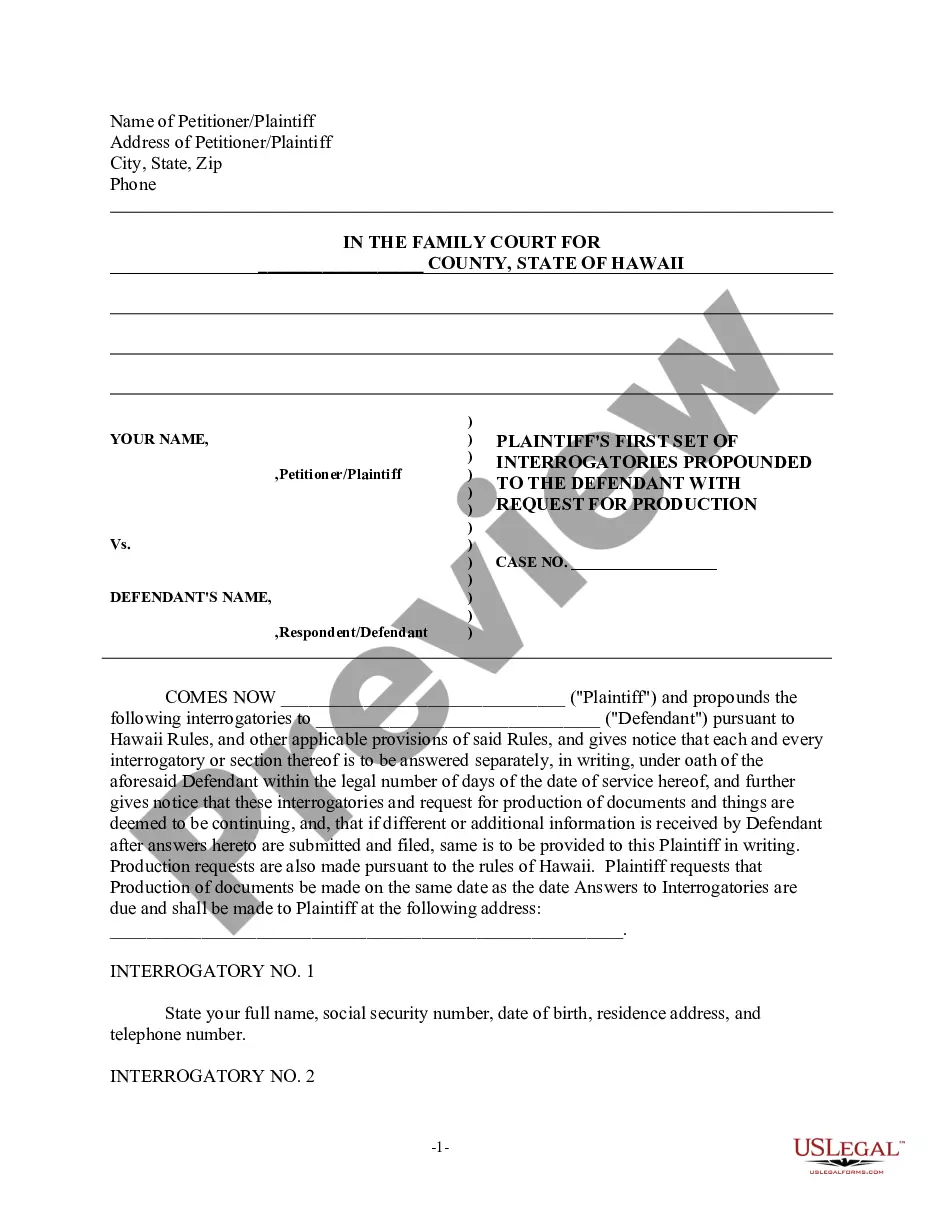
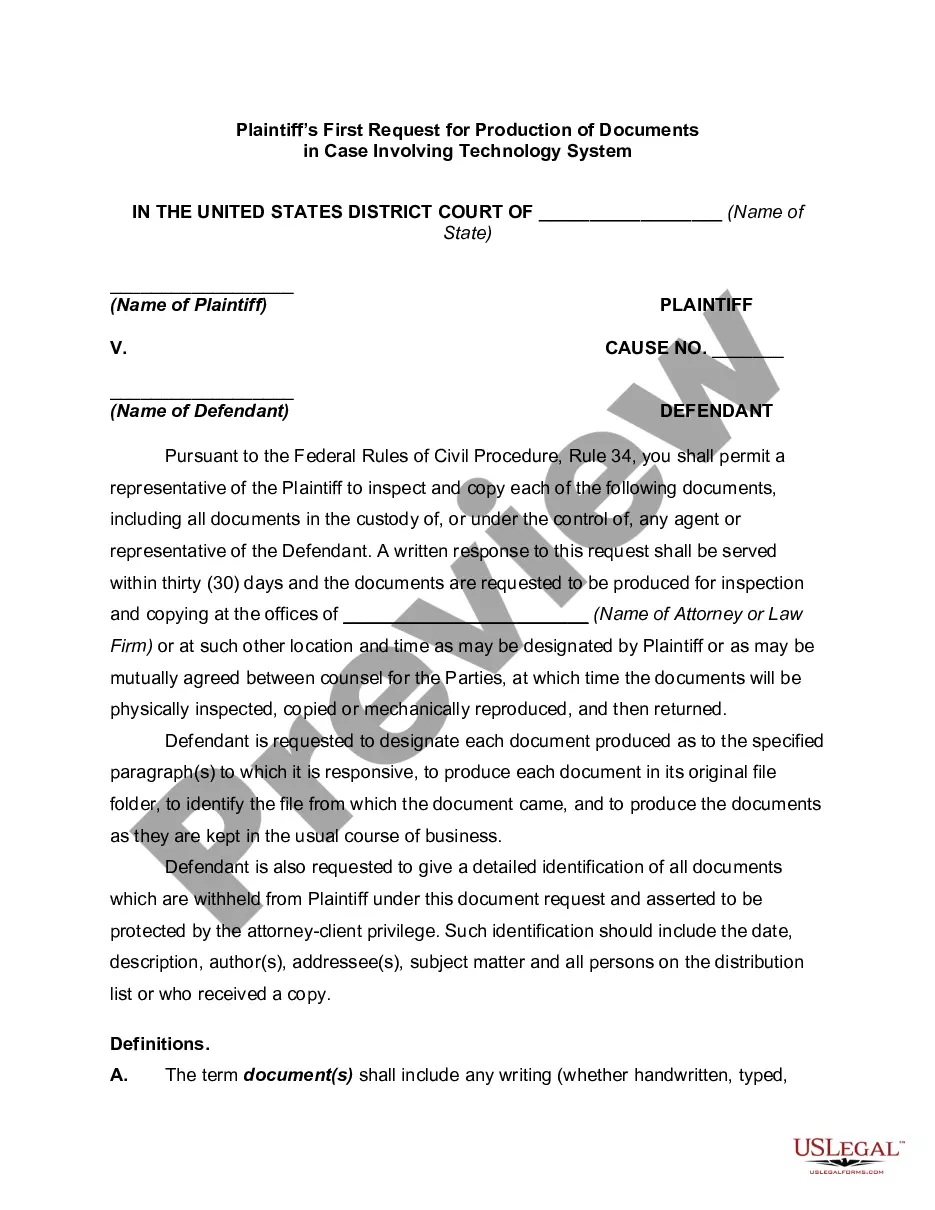
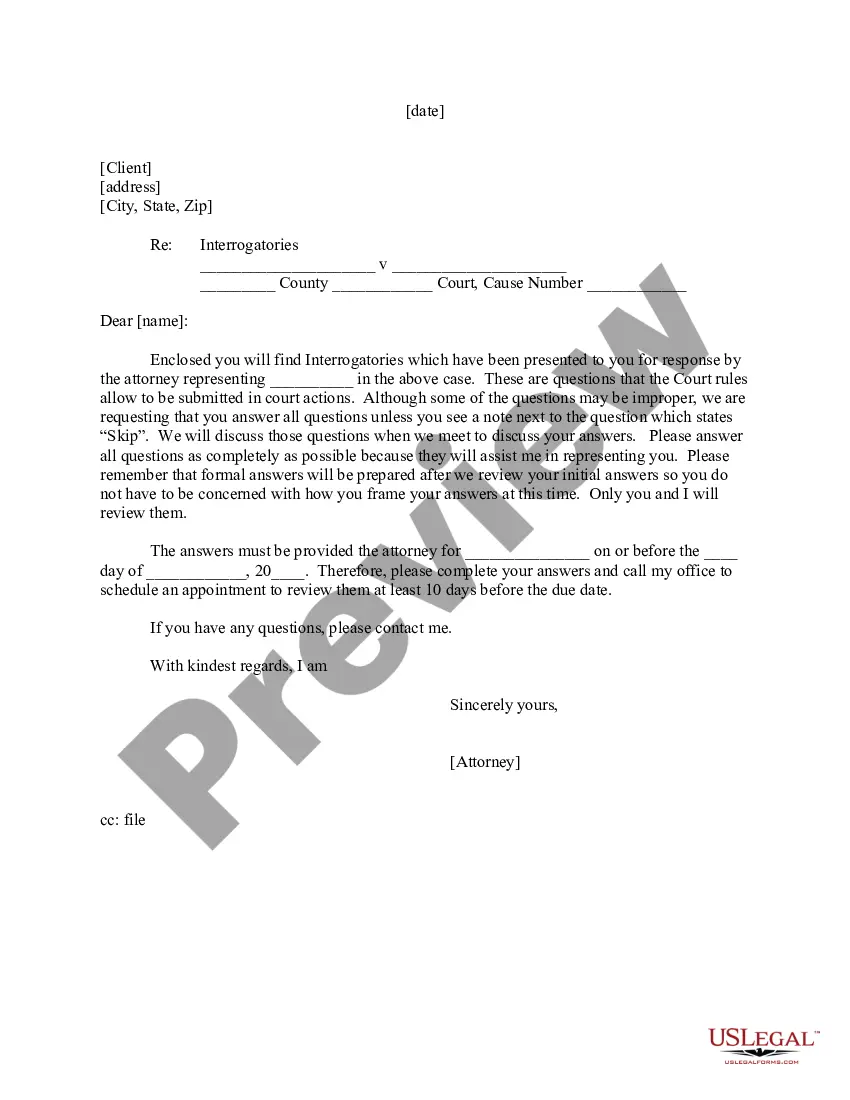
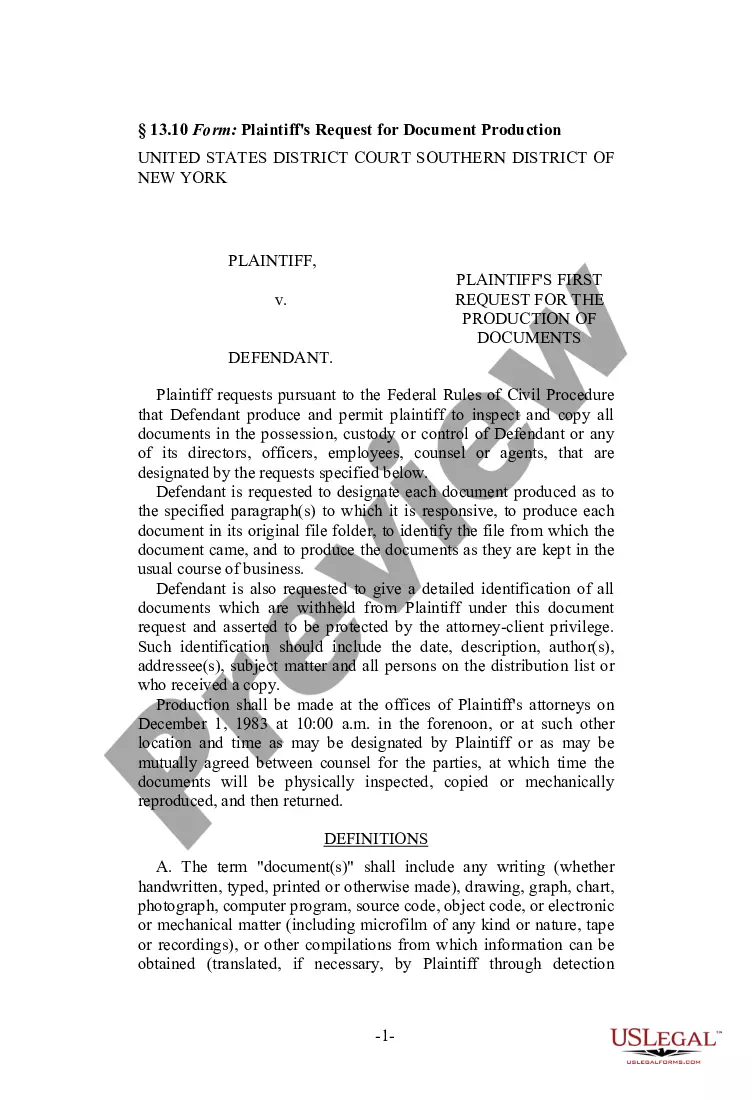
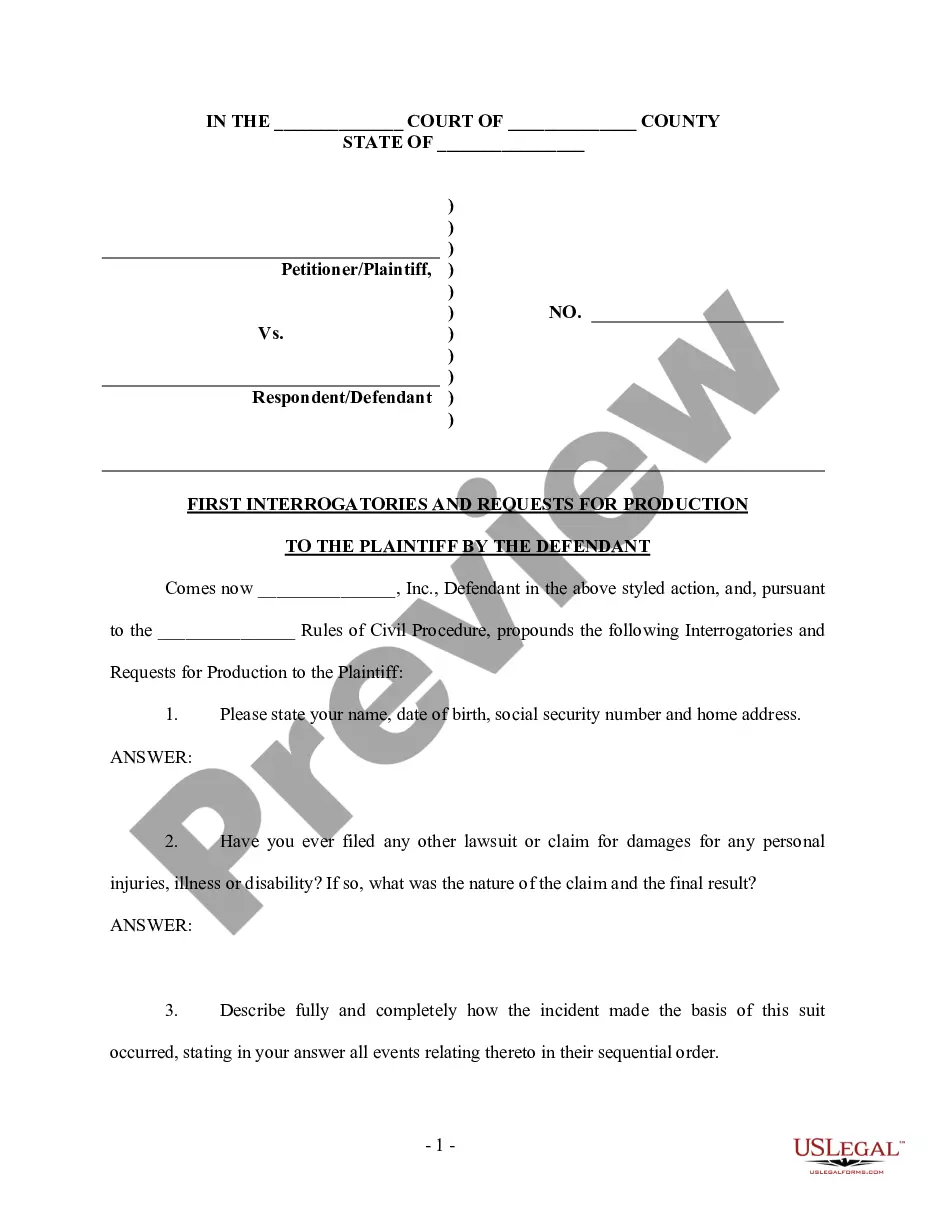
The Discovery Interrogatories from Plaintiff to Defendant with Production Requests is a legal document utilized in divorce proceedings. This form enables the plaintiff to formally request information and documents from the defendant to gather essential facts about the case. This form differs from standard interrogatories by including specific requests for document production, making it an integral tool in the discovery phase of litigation.
Key parts of this document
- Full identification of parties including names, addresses, and contact information.
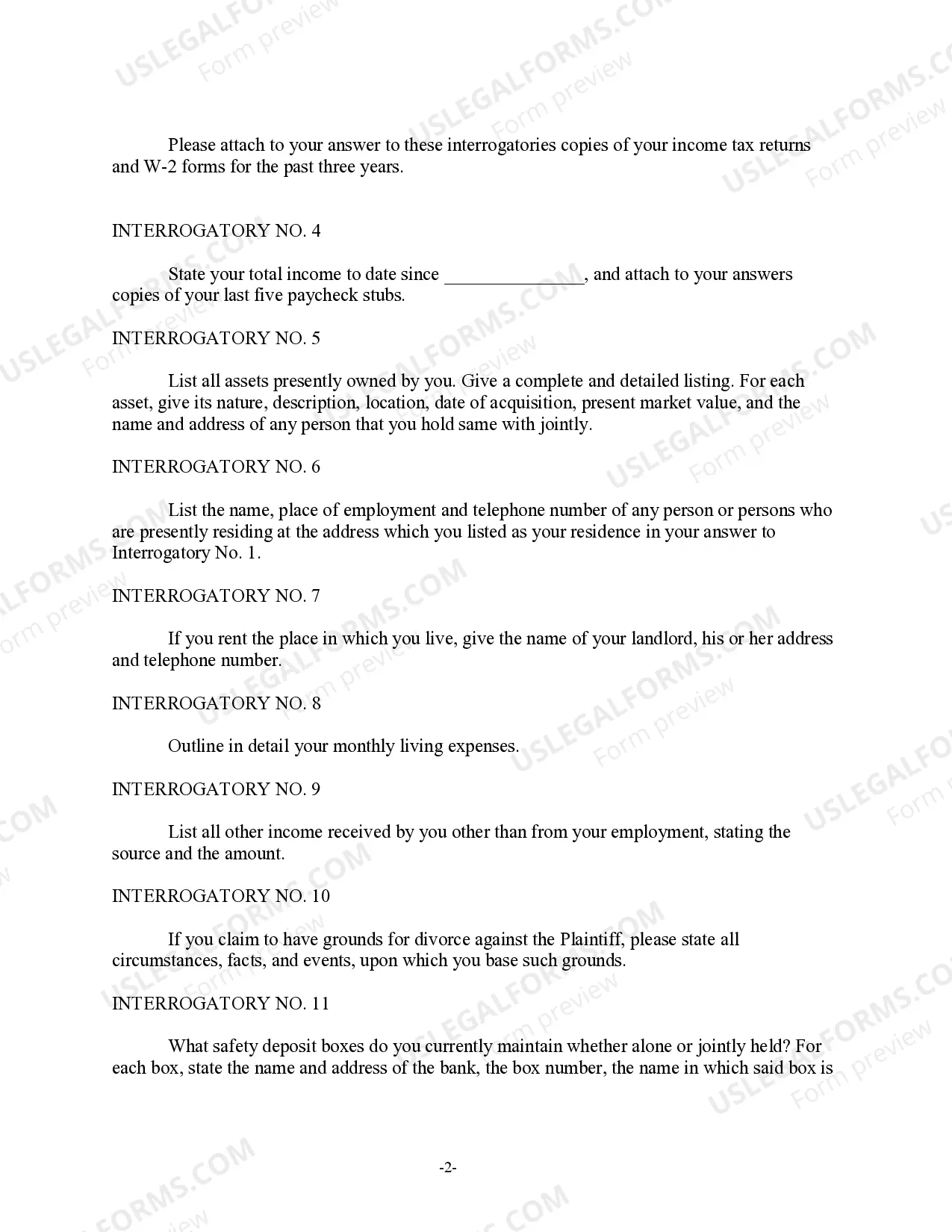
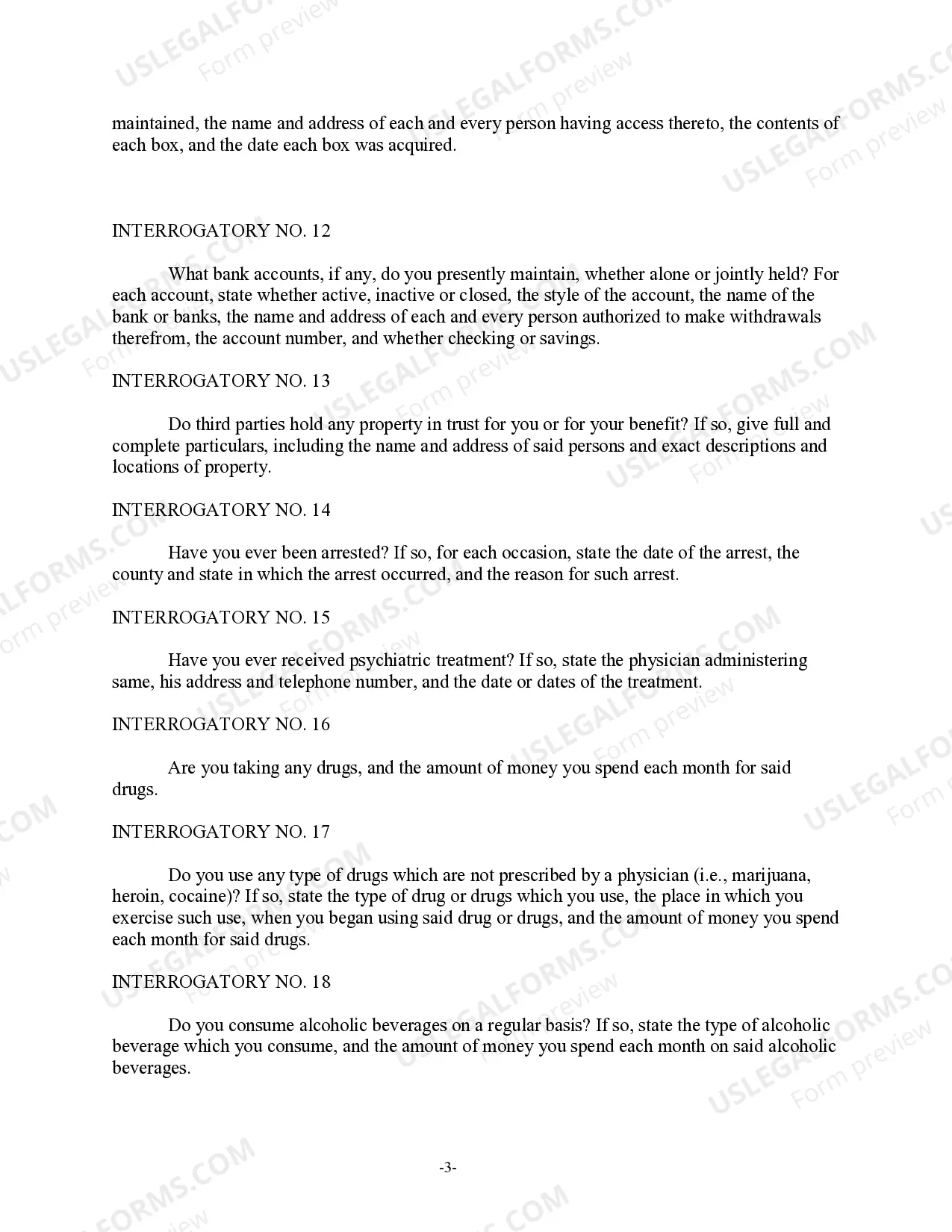
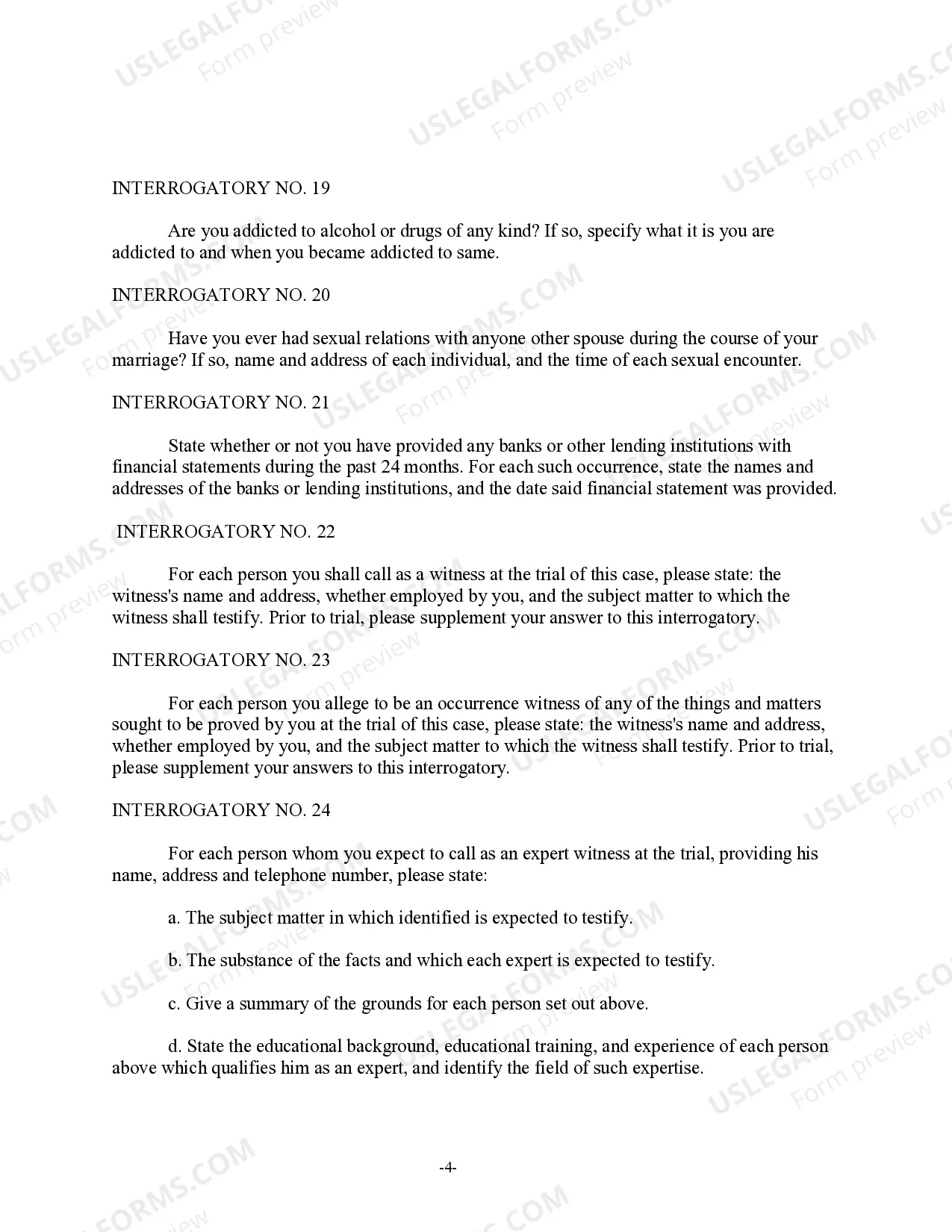
- A series of interrogatories that ask the defendant to provide personal, financial, and asset-related information.
- Requests for the production of relevant documents to support the plaintiff's claims.
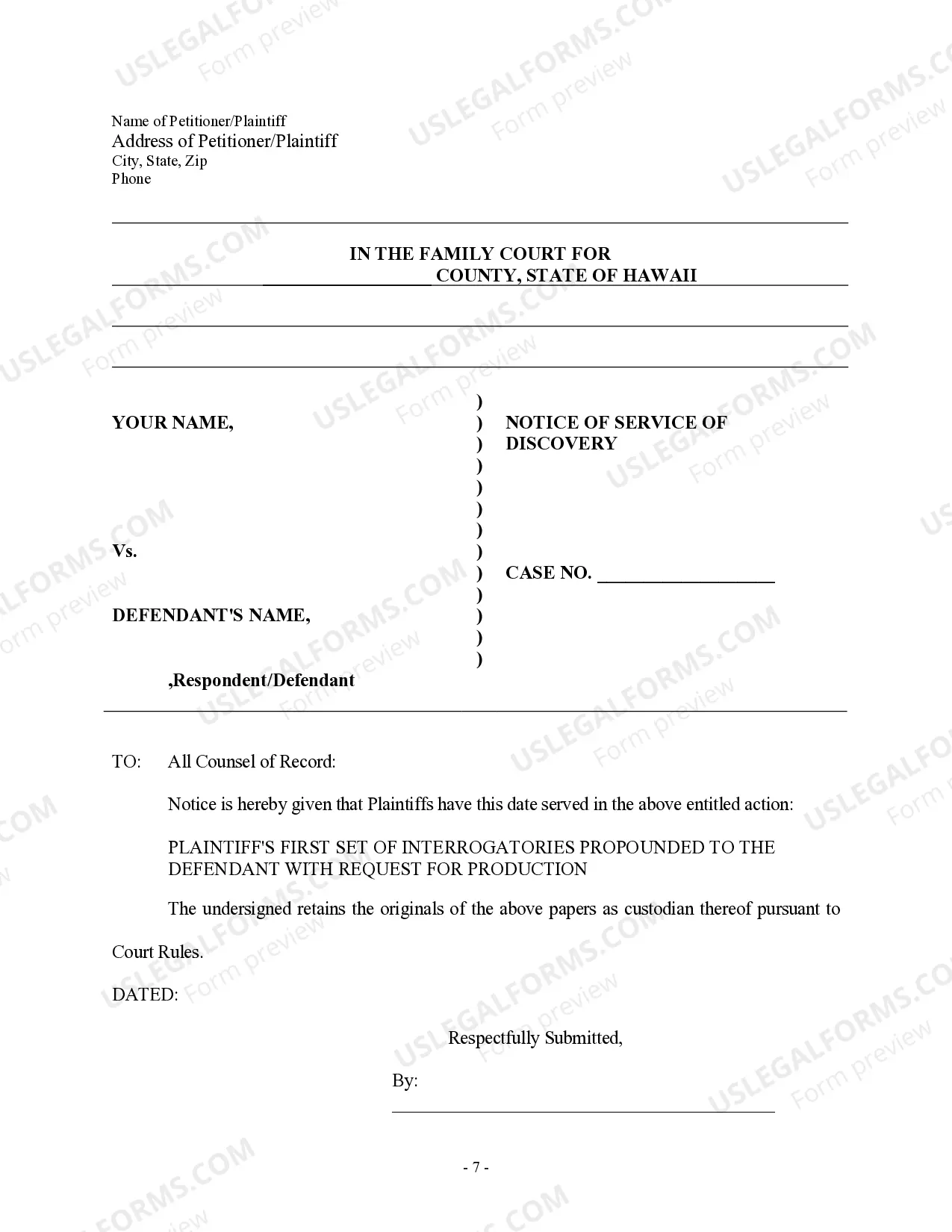
- Notice of service to inform the court and other parties that interrogatories have been served.
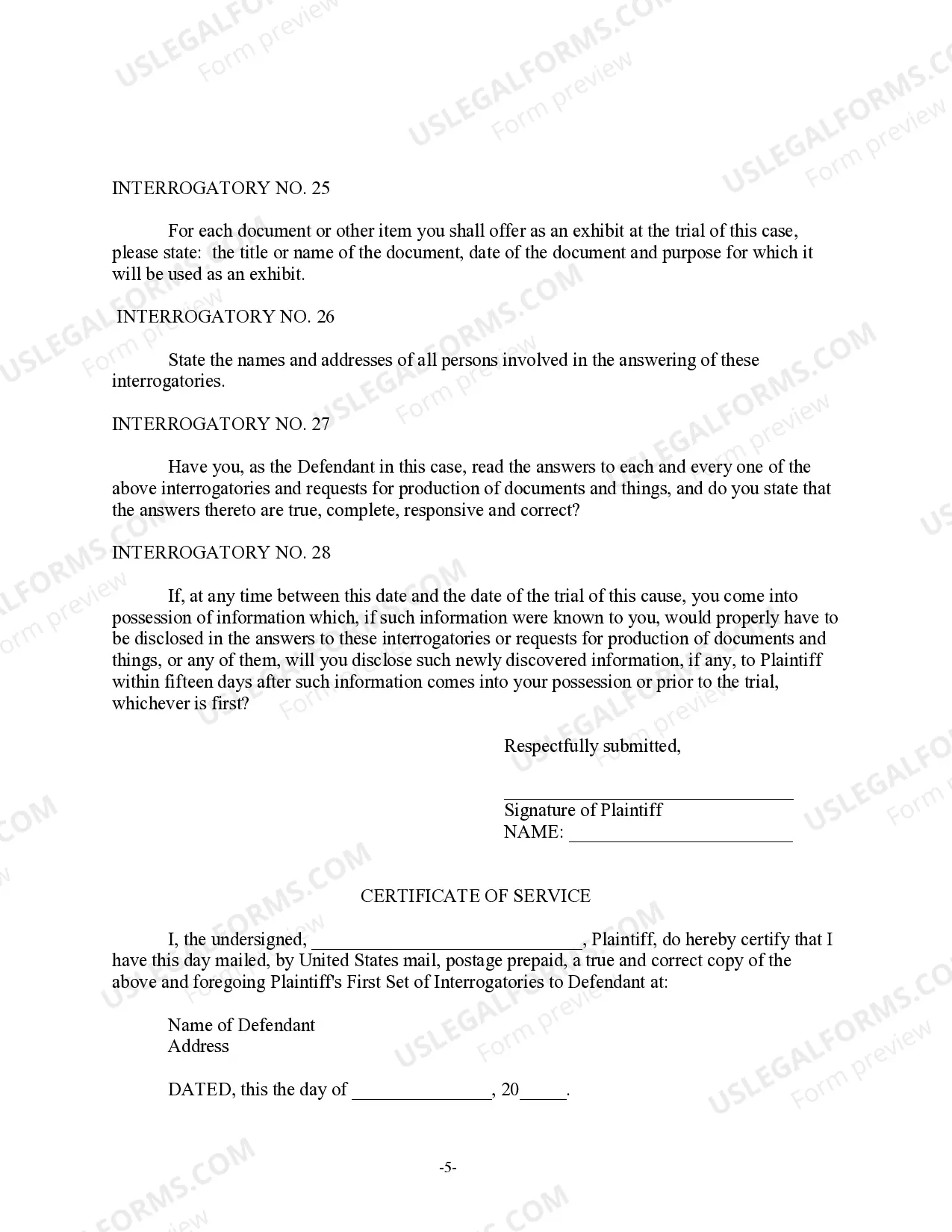
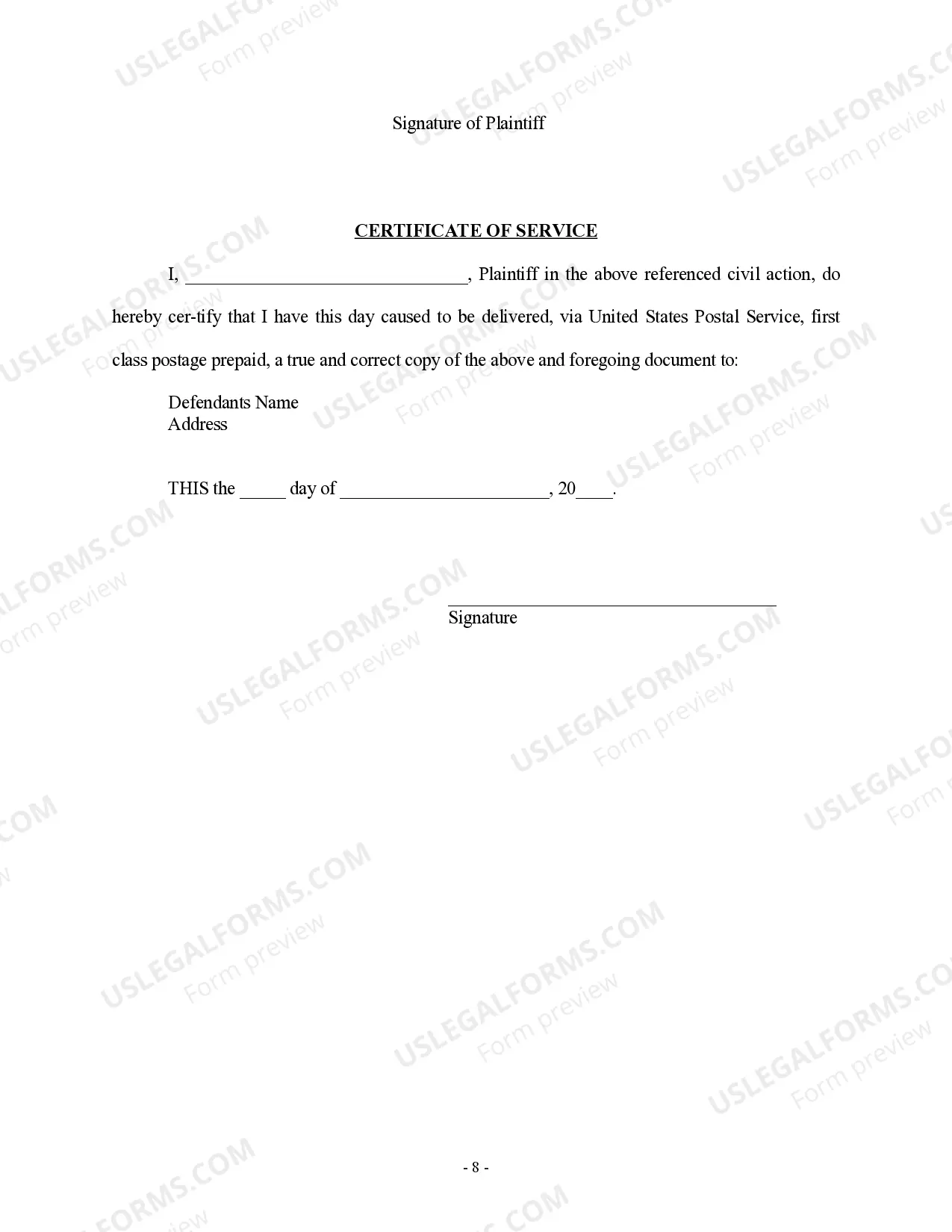
- Signature lines for the plaintiff and certificates of service to ensure proper legal procedure.


When to use this form
This form should be used when the plaintiff in a divorce case needs to obtain detailed information from the defendant to support their claims. It is particularly useful in gathering financial data, identifying assets, and understanding the defendant's claims in the divorce. The form is essential during the discovery phase, where both parties exchange relevant information before trial.
Who this form is for
- Individuals filing for divorce who need to obtain information from their spouse.
- Any plaintiff in a family court case seeking discovery from the opposing party.
- Legal professionals representing clients in divorce or family court matters.
How to prepare this document
- Identify yourself as the plaintiff by filling in your name and address at the top of the form.
- Provide the name and address of the defendant in the designated section.
- Complete each interrogatory by providing the questions you wish to ask the defendant and delete any that are not applicable.
- List the documents you are requesting the defendant to produce, ensuring they are relevant to your case.
- Sign and date the form, and make copies for your records and for service to the defendant and court.
Notarization requirements for this form
Notarization is not commonly needed for this form. However, certain documents or local rules may make it necessary. Our notarization service, powered by Notarize, allows you to finalize it securely online anytime, day or night.
Get your form ready online
Our built-in tools help you complete, sign, share, and store your documents in one place.
Make edits, fill in missing information, and update formatting in US Legal Forms—just like you would in MS Word.
Download a copy, print it, send it by email, or mail it via USPS—whatever works best for your next step.
Sign and collect signatures with our SignNow integration. Send to multiple recipients, set reminders, and more. Go Premium to unlock E-Sign.
If this form requires notarization, complete it online through a secure video call—no need to meet a notary in person or wait for an appointment.
We protect your documents and personal data by following strict security and privacy standards.

Make edits, fill in missing information, and update formatting in US Legal Forms—just like you would in MS Word.

Download a copy, print it, send it by email, or mail it via USPS—whatever works best for your next step.

Sign and collect signatures with our SignNow integration. Send to multiple recipients, set reminders, and more. Go Premium to unlock E-Sign.

If this form requires notarization, complete it online through a secure video call—no need to meet a notary in person or wait for an appointment.

We protect your documents and personal data by following strict security and privacy standards.
Common mistakes
- Failing to properly identify all parties involved by incomplete addresses or misidentifications.
- Omitting relevant interrogatories or document requests that could aid in the case.
- Not adhering to the time limits for responses set by local rules.
Benefits of using this form online
- Convenience of downloading and completing the form at your own pace.
- Editability allows you to customize the form to suit the specifics of your case.
- Access to professionally drafted forms ensures compliance with legal standards.
Looking for another form?

Form popularity
FAQ
The two main types of interrogatories are standard interrogatories and contention interrogatories. Standard interrogatories require basic factual information while contention interrogatories seek clarification of a party's legal positions or theories. Utilizing both types effectively enhances your understanding of the case and enriches the disclosing party’s insights into Hawaii Discovery Interrogatories from Plaintiff to Defendant with Production Requests.
Responding to plaintiff's first set of interrogatories requires careful attention to detail. Start by reviewing each question thoroughly and providing honest, clear answers within the time frame specified. Utilize Hawaii Discovery Interrogatories from Plaintiff to Defendant with Production Requests as part of your strategy to produce accurate and relevant information. If you're unsure about how to proceed, consider consulting with legal software solutions like uslegalforms to streamline your process.
Requests for admission are not classified as interrogatories, though both are tools in the discovery process. Requests for admission encourage one party to admit or deny certain facts, while interrogatories require detailed written answers to specific questions. By understanding these distinctions, you can effectively use Hawaii Discovery Interrogatories from Plaintiff to Defendant with Production Requests in your case strategy.
No, a request for production is distinct from interrogatories. While interrogatories ask for written answers to questions, a request for production seeks documents, objects, or other tangible evidence. Recognizing these differences is crucial in the context of Hawaii Discovery Interrogatories from Plaintiff to Defendant with Production Requests. This knowledge will aid you in making well-informed legal decisions.
Hawaii Discovery Interrogatories from Plaintiff to Defendant with Production Requests are questions that one party sends to another to gather specific information. In contrast, Requests for Admission (RFA) seek confirmation or denial of facts rather than soliciting information. Understanding the difference helps you effectively navigate the discovery process. Use these tools strategically to build a stronger case.
Rule 37 of the Hawaii Rules of Civil Procedure outlines the consequences of failing to comply with discovery requests. This rule specifically addresses issues related to Hawaii Discovery Interrogatories from Plaintiff to Defendant with Production Requests. It allows a party to file a motion to compel discovery if the other party does not respond adequately. Understanding this rule is crucial for ensuring compliance and avoiding potential sanctions during the litigation process.
An example of an interrogatory sentence could be, 'Please describe in detail the events leading to the accident on January 1, 2021.' This type of question directly seeks specific information. Utilizing Hawaii Discovery Interrogatories from Plaintiff to Defendant with Production Requests can significantly enhance the quality of responses you receive.
Filling out an interrogatories form involves addressing each question methodically. Start by reviewing the form to understand what is being asked, then provide clear and concise answers. Familiarizing yourself with examples can help, and platforms like uslegalforms offer resources that guide you through completing Hawaii Discovery Interrogatories from Plaintiff to Defendant with Production Requests.
When answering interrogatories and requests for production, make sure to read each question carefully and respond thoroughly. Provide accurate information and include any relevant documents requested. Remember, Hawaii Discovery Interrogatories from Plaintiff to Defendant with Production Requests are a vital part of the legal process, so your responses should be honest and precise.
To write a good interrogatory, begin with a clear objective of what information you seek. Use straightforward language and focus each question on a single point. Furthermore, consider using the uslegalforms platform, which offers templates specifically designed for Hawaii Discovery Interrogatories from Plaintiff to Defendant with Production Requests.