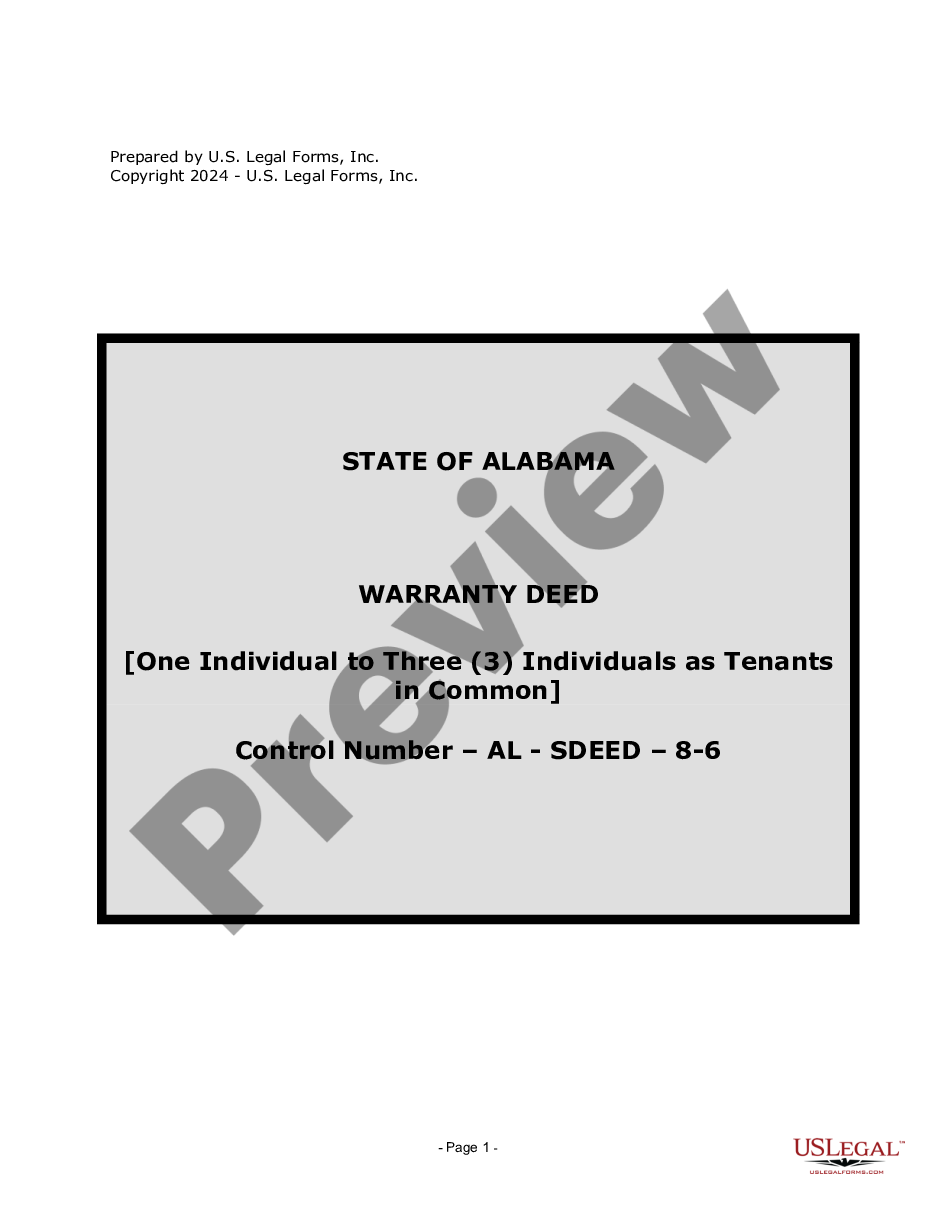
Alabama Warranty Deed from One Individual to Three Individuals as Joint Tenants
What this document covers
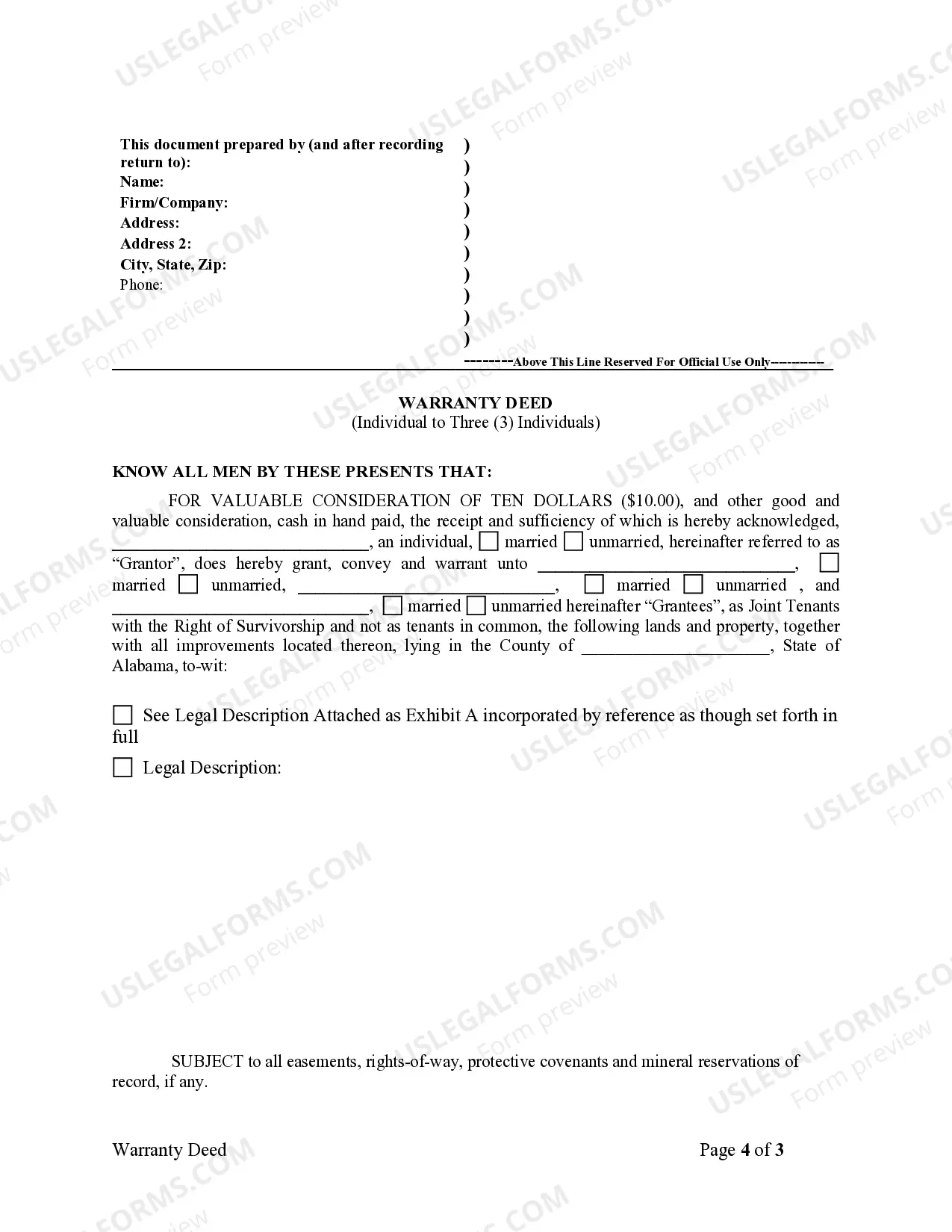
This form is a Warranty Deed from One Individual to Three Individuals as Joint Tenants. It is used to transfer property ownership, where the grantor conveys their interest in the property to three grantees who will hold title equally and without right of survivorship. This differs from other deed types, such as quitclaim deeds, as it provides guarantees regarding the title's validity.
Form components explained
- Identification of the grantor (the individual transferring the property).
- Names of the three grantees (the individuals receiving the property).
- Legal description of the property being conveyed.
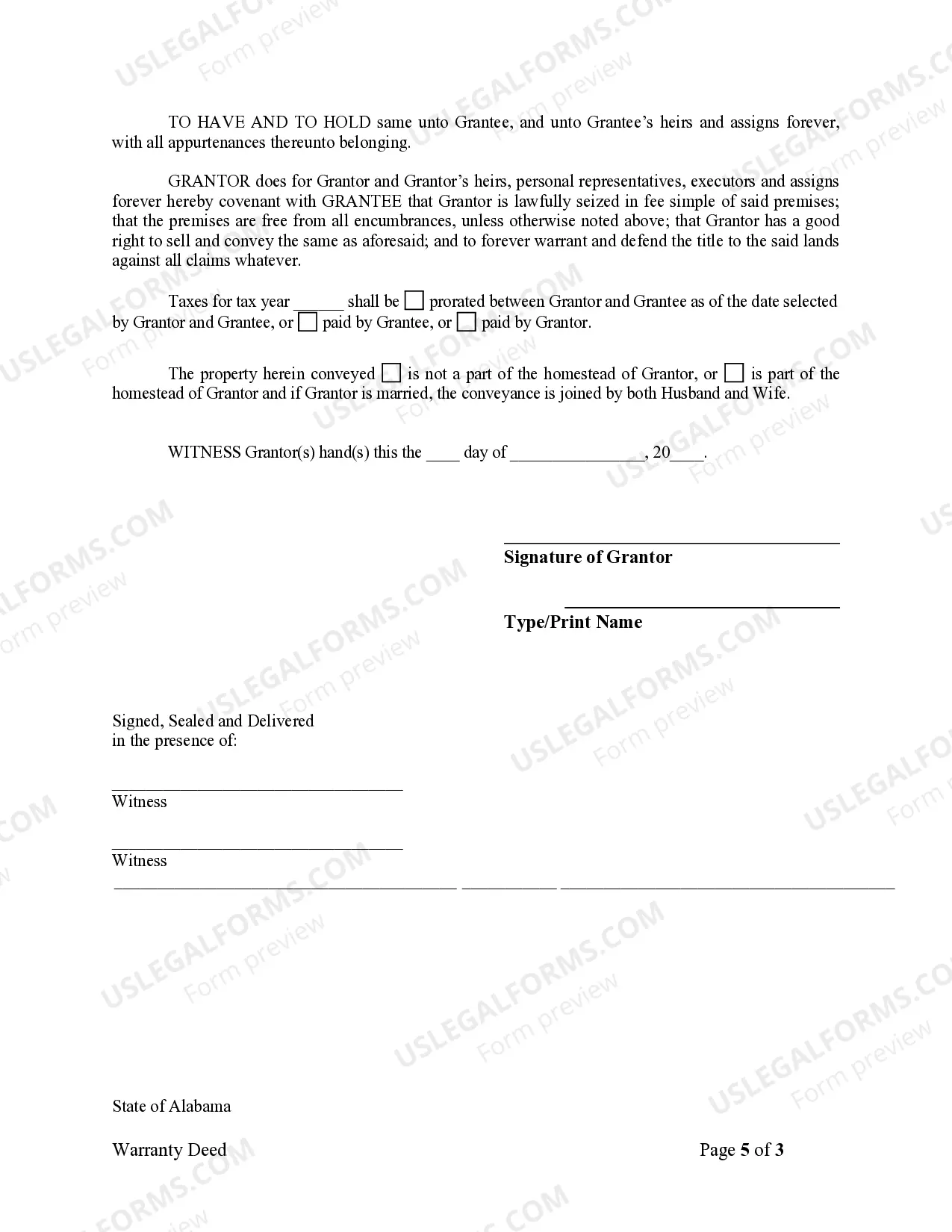
- Provisions regarding tax payments, including proration and responsibility for taxes.
- Declaration of whether the property is part of the grantor's homestead.
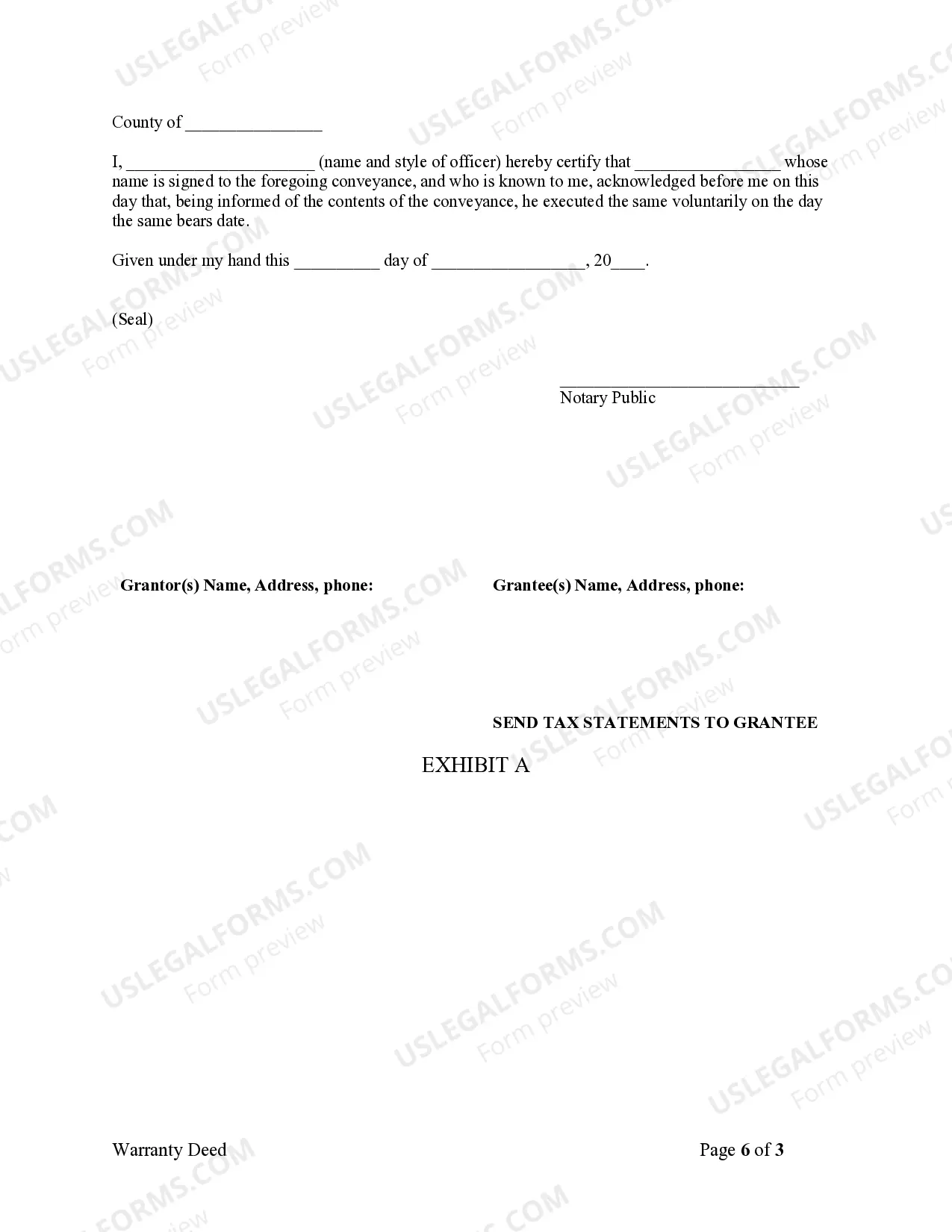
- Signature spaces for the grantor and witnesses, along with notary acknowledgment.




When this form is needed
This form should be used when an individual wishes to transfer their property ownership to three people as joint tenants. This is common in family situations or when multiple individuals want to share property ownership without survivorship rights. It is essential to accurately reflect the nature of the ownership and responsibilities associated with the property.
Who needs this form
This form is intended for:
- Individuals who own property in their name and wish to transfer it to three other individuals.
- Families or groups looking to establish joint ownership of property in Alabama.
- Anyone needing a legally binding document to formalize a property transfer to multiple owners under joint tenancy.
Instructions for completing this form
- Identify the grantor by entering their full legal name in the designated field.
- List the names of all three grantees, ensuring accurate spelling and order.
- Provide the legal description of the property being transferred, which may be found in existing property records.
- Indicate how property taxes will be divided among the parties.
- Sign the deed in the presence of the required witnesses and notary public.
Is notarization required?
Yes, this form must be notarized to be legally valid in Alabama. The notary public will verify the identities of the signatories and ensure that the deed is executed voluntarily. U.S. Legal Forms offers integrated online notarization services that provide secure video calls for this purpose.
Get your form ready online
Our built-in tools help you complete, sign, share, and store your documents in one place.
Make edits, fill in missing information, and update formatting in US Legal Forms—just like you would in MS Word.
Download a copy, print it, send it by email, or mail it via USPS—whatever works best for your next step.
Sign and collect signatures with our SignNow integration. Send to multiple recipients, set reminders, and more. Go Premium to unlock E-Sign.
If this form requires notarization, complete it online through a secure video call—no need to meet a notary in person or wait for an appointment.
We protect your documents and personal data by following strict security and privacy standards.

Make edits, fill in missing information, and update formatting in US Legal Forms—just like you would in MS Word.

Download a copy, print it, send it by email, or mail it via USPS—whatever works best for your next step.

Sign and collect signatures with our SignNow integration. Send to multiple recipients, set reminders, and more. Go Premium to unlock E-Sign.

If this form requires notarization, complete it online through a secure video call—no need to meet a notary in person or wait for an appointment.

We protect your documents and personal data by following strict security and privacy standards.
Typical mistakes to avoid
- Failing to accurately describe the property being transferred.
- Not fully understanding the implications of joint tenancy versus other forms of ownership.
- Omitting the necessary signatures or notary acknowledgment.
- Incorrectly indicating tax responsibilities among parties.
Advantages of online completion
- Convenient access to legal forms 24/7 from the comfort of your home.
- Ability to fill out the form digitally, ensuring neatness and legibility.
- Immediate downloading options, allowing for quick use.
- Forms designed by licensed attorneys, ensuring adherence to legal standards.
Looking for another form?

Form popularity
FAQ
To transfer ownership of a property in Alabama, you generally need to execute a deed, such as a warranty deed. This legal document should include the necessary details about the property and the parties involved. If you choose to use an Alabama Warranty Deed from One Individual to Three Individuals as Joint Tenants, it is important to ensure proper filing with the local probate court. For a seamless process, consider using uslegalforms, which offers resources and templates to guide you.
Yes, a warranty deed serves as proof of ownership in Alabama. This legal document includes specific details about the property and the parties involved in the transaction. By executing an Alabama Warranty Deed from One Individual to Three Individuals as Joint Tenants, you are affirming that ownership is shared and protected. It is an important step in establishing clear ownership in property transactions.
The strongest type of deed in Alabama is the warranty deed. A warranty deed guarantees that the seller holds clear title to the property and has the right to transfer it. This deed includes assurances against any future claims on the property. When dealing with an Alabama Warranty Deed from One Individual to Three Individuals as Joint Tenants, a warranty deed provides peace of mind for all parties involved.
Joint tenancy with rights of survivorship in Alabama means that two or more individuals own property together. When one owner passes away, their share automatically transfers to the surviving owners. This arrangement ensures that the property doesn't go through probate, making it a straightforward option for transferring ownership. If you're considering an Alabama Warranty Deed from One Individual to Three Individuals as Joint Tenants, understanding this concept is crucial for effective estate planning.
In Alabama, if one owner of a jointly owned property dies, the property typically passes to the surviving owners through the right of survivorship. This is particularly relevant with an Alabama Warranty Deed from One Individual to Three Individuals as Joint Tenants. It's important for owners to understand these rights to ensure a smooth transfer of property after death.
When two people are on a deed, it is often referred to as joint ownership. This can be structured in various ways, including an Alabama Warranty Deed from One Individual to Three Individuals as Joint Tenants. Joint ownership provides equal rights to the property for both parties, which can be beneficial for estate planning.
You can add someone to a warranty deed by drafting a new deed that includes all current and new owners. An entry like an Alabama Warranty Deed from One Individual to Three Individuals as Joint Tenants is ideal for this process. Make sure to secure proper documentation and notarization, and record the updated deed appropriately.
Adding someone to a deed can come with several disadvantages. For example, it alters ownership rights, which may complicate future sales or transfers, and can lead to potential disagreements. Additionally, under an Alabama Warranty Deed from One Individual to Three Individuals as Joint Tenants, any debts of one owner could affect the property, putting it at risk.
Yes, a warranty deed can be transferred to new owners. This transfer often involves preparing a new deed that outlines the change in ownership, like an Alabama Warranty Deed from One Individual to Three Individuals as Joint Tenants. It’s important to follow local laws and record the transfer to protect all parties involved.
To transfer a house deed to a family member in Alabama, you typically need to prepare a new deed, such as a warranty deed. You can use an Alabama Warranty Deed from One Individual to Three Individuals as Joint Tenants to facilitate this transfer. Once the deed is completed, sign it in front of a notary and then record it with the county's probate court to make the transfer official.