Duty to Follow Instructions
What this document covers
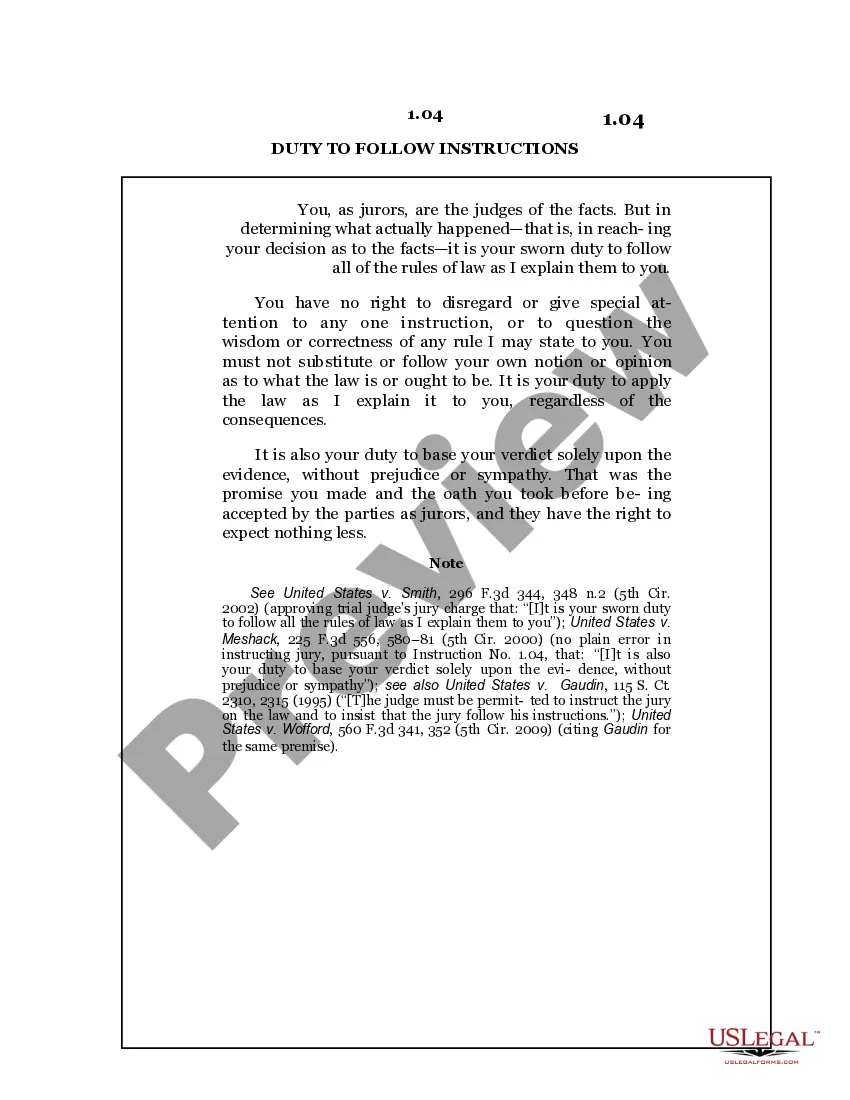
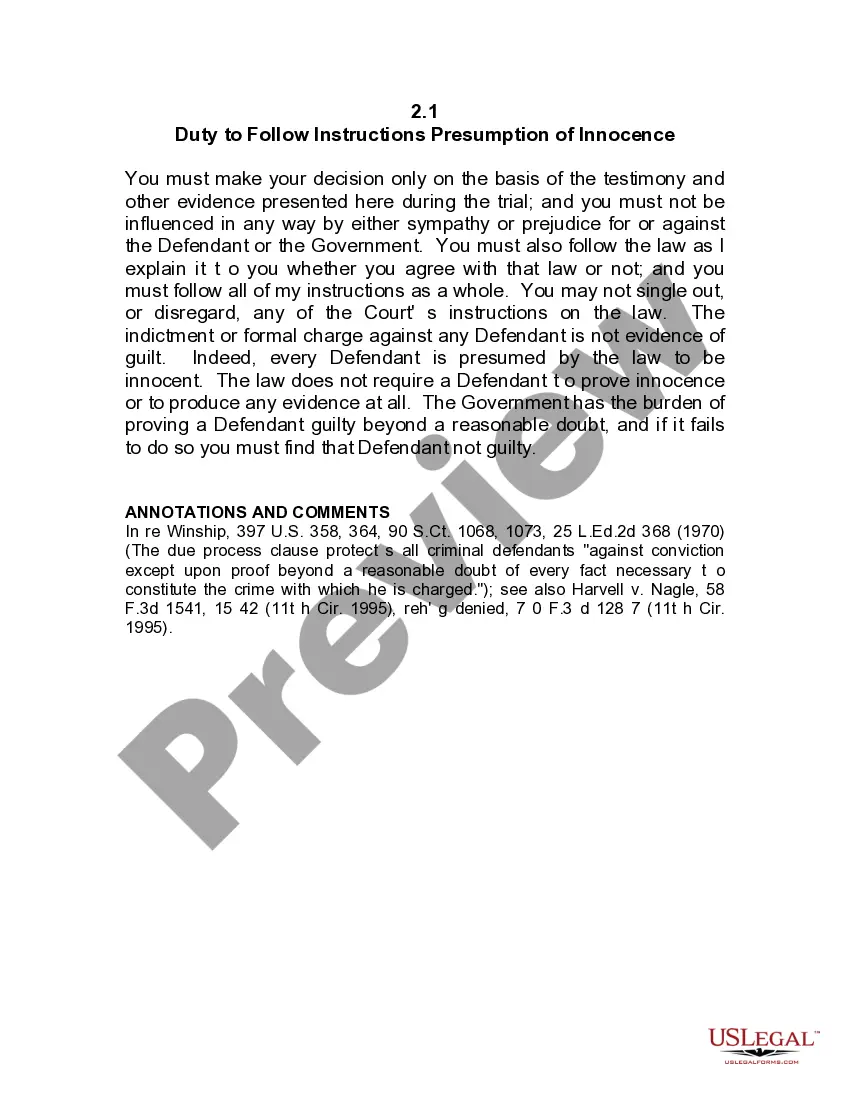
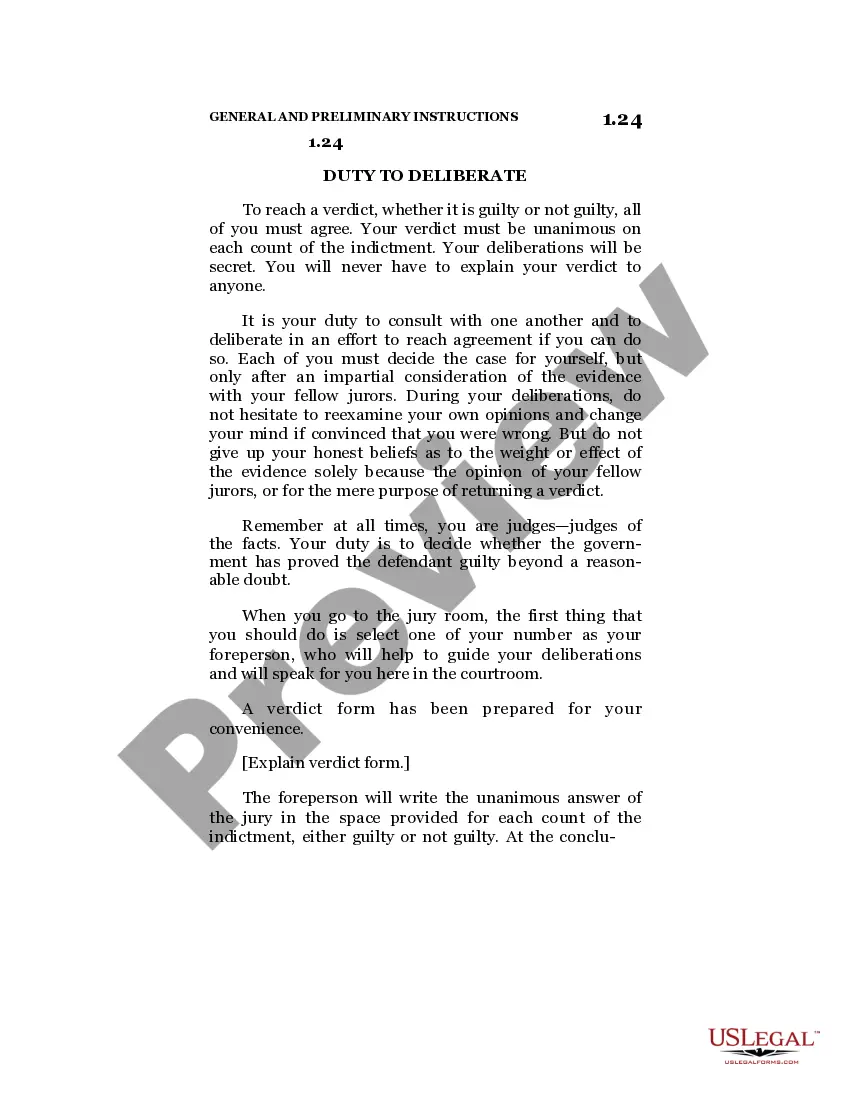
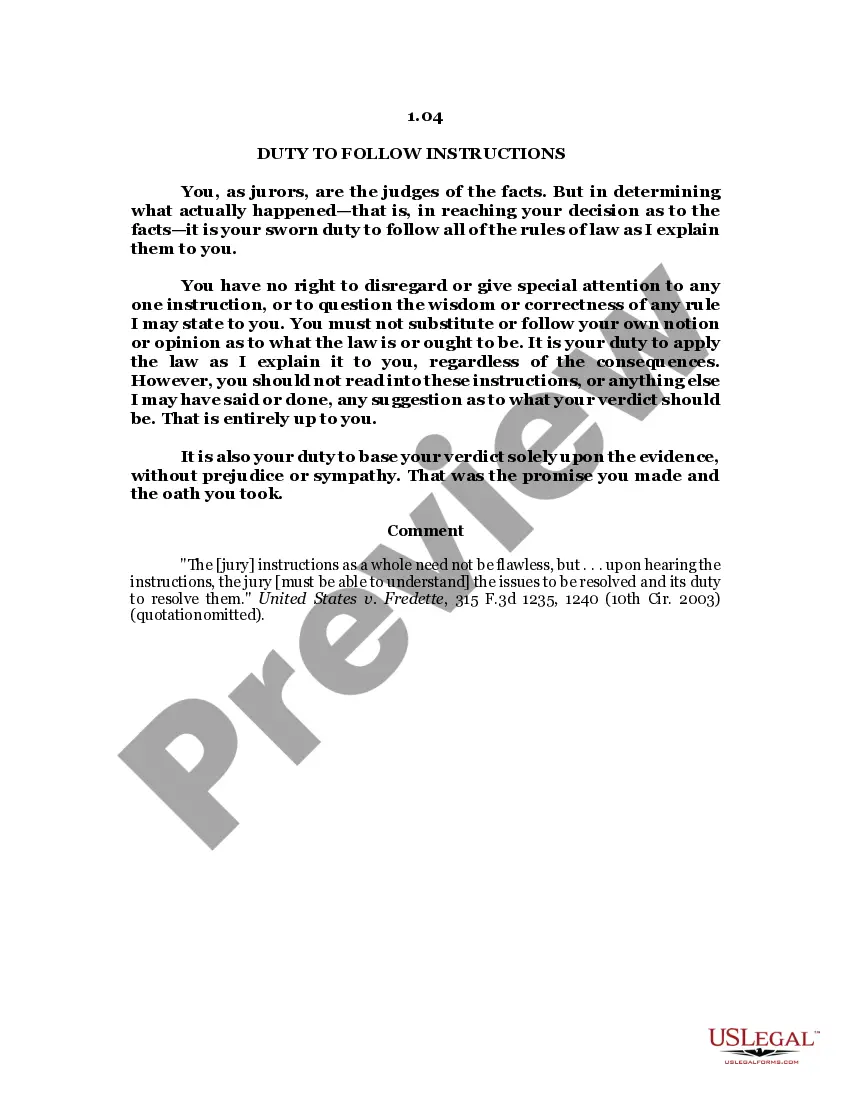
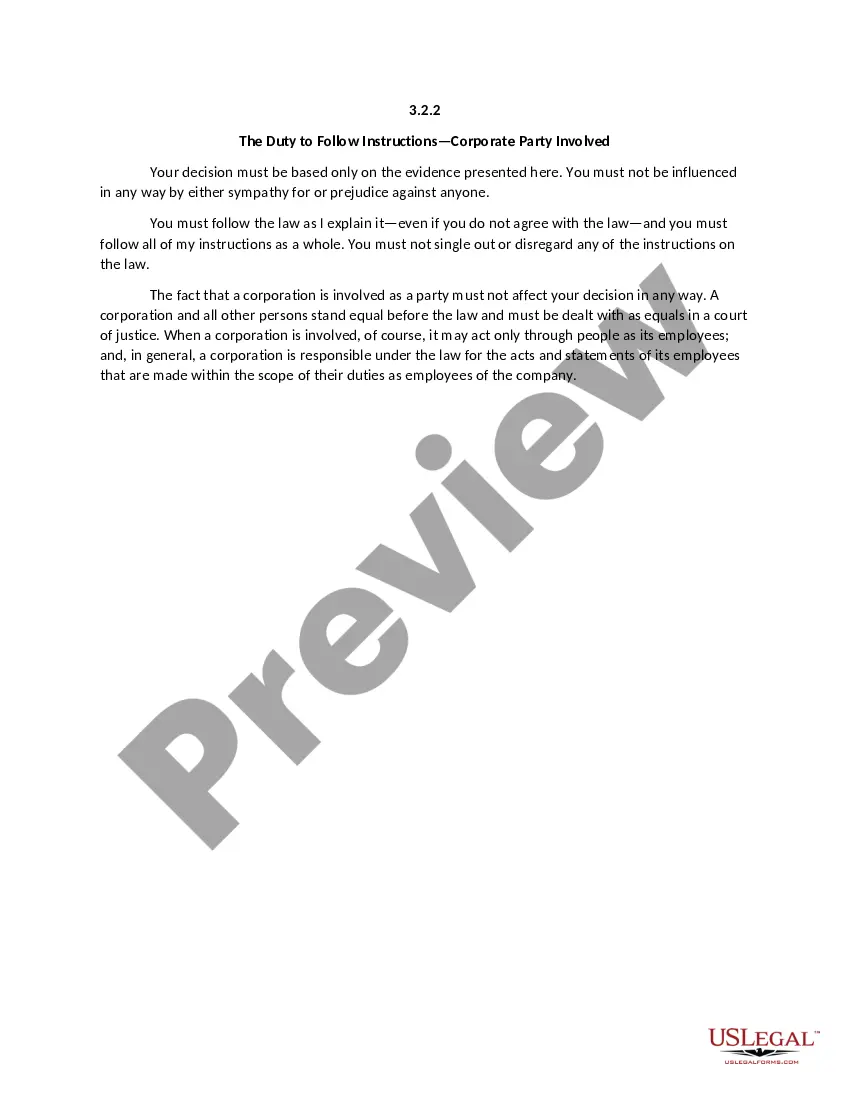
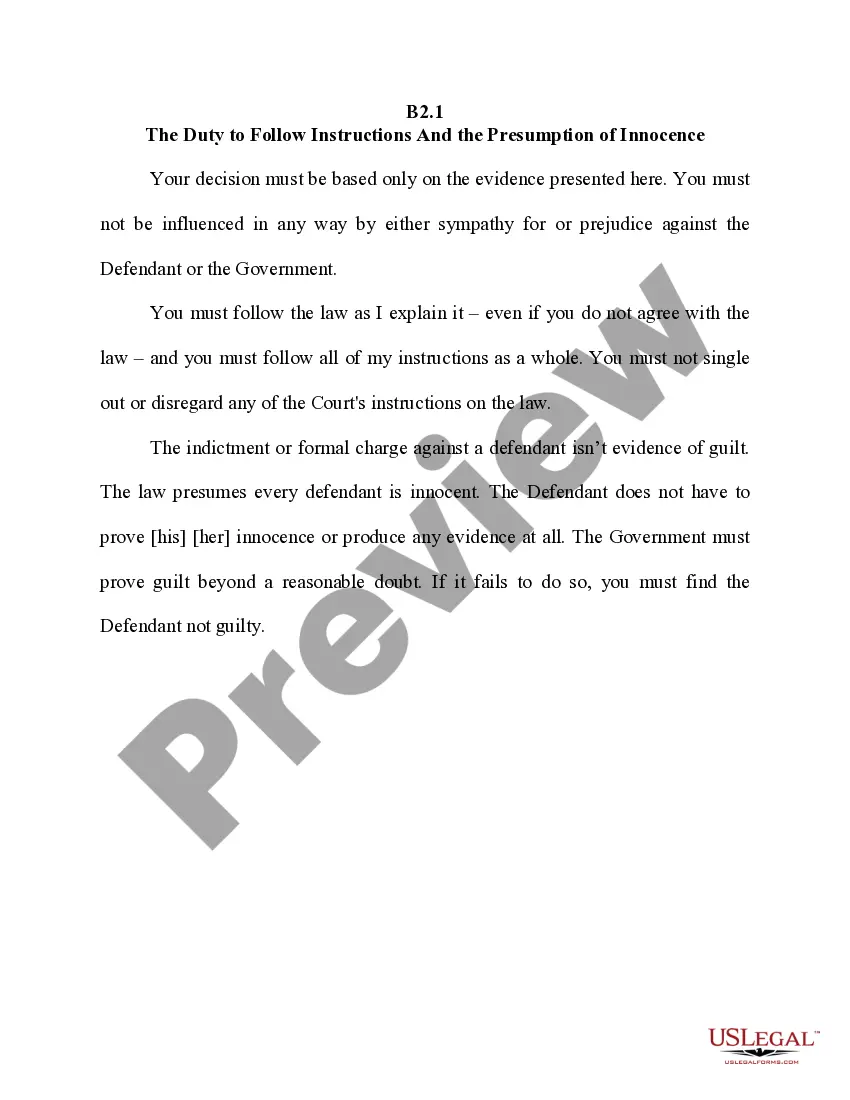
The Duty to Follow Instructions form is a key document used in legal trials, particularly in criminal and civil cases. It serves as a guideline for jurors, outlining their responsibility to adhere strictly to the legal instructions given by the judge. This form emphasizes the importance of basing verdicts solely on the evidence presented and the legal rules communicated by the court, without allowing personal biases or opinions to interfere.
Main sections of this form
- Clarification of jurors' role as judges of the facts.
- Emphasis on the obligation to follow the law as stated by the judge.
- Instructions to base the verdict solely on evidence, without bias.
- Warnings against substituting personal opinions for legal directives.
- Reminders of jurors' oath and the expectations of the parties involved in the case.

When to use this document
This form is used during jury instructions in court cases. It is provided by the judge to jurors as they begin deliberations in a trial. Whenever jurors are tasked with interpreting evidence and determining a verdict, this form reinforces their legal obligations and the proper conduct expected of them throughout the process.
Who should use this form
- Jurors involved in a trial.
- Judges who need to instruct jurors on their duties.
- Legal professionals who prepare jury instructions.
Steps to complete this form
- Read the jury instructions thoroughly as provided by the judge.
- Understand your role as a juror and the duty to adhere to the law.
- Discuss the evidence presented objectively with fellow jurors.
- Base your verdict solely on the evidence, free from personal bias.
- Follow all legal instructions as specified, ensuring compliance with your oath.
Is notarization required?
This form does not typically require notarization unless specified by local law. It is primarily for jury instruction purposes and does not involve signatures that would necessitate notarization.
Get your form ready online
Our built-in tools help you complete, sign, share, and store your documents in one place.
Make edits, fill in missing information, and update formatting in US Legal Forms—just like you would in MS Word.
Download a copy, print it, send it by email, or mail it via USPS—whatever works best for your next step.
Sign and collect signatures with our SignNow integration. Send to multiple recipients, set reminders, and more. Go Premium to unlock E-Sign.
If this form requires notarization, complete it online through a secure video call—no need to meet a notary in person or wait for an appointment.
We protect your documents and personal data by following strict security and privacy standards.

Make edits, fill in missing information, and update formatting in US Legal Forms—just like you would in MS Word.

Download a copy, print it, send it by email, or mail it via USPS—whatever works best for your next step.

Sign and collect signatures with our SignNow integration. Send to multiple recipients, set reminders, and more. Go Premium to unlock E-Sign.

If this form requires notarization, complete it online through a secure video call—no need to meet a notary in person or wait for an appointment.

We protect your documents and personal data by following strict security and privacy standards.
Typical mistakes to avoid
- Disregarding the judge's instructions and relying on personal beliefs.
- Allowing emotions or pre-existing biases to influence the verdict.
- Failing to consider all evidence presented before making a decision.
Benefits of completing this form online
- Convenience of access to the form at any time and from anywhere.
- Editability allows tailoring jury instructions to specific case needs.
- Reliability from professionally drafted content by licensed attorneys.
Main things to remember
- Jurors have a legal obligation to follow instructions as presented by the judge.
- The verdict must be based solely on evidence, devoid of bias.
- This form serves to remind jurors of their duties and the importance of upholding legal standards.
Looking for another form?
Form popularity
FAQ
Obedience. One fiduciary duty of a real estate agent is to adhere to the lawful requests of their clients. If your client asked you to take a break from marketing their home for a week, then you are legally obligated to follow their instructions.
Under the duty of obedience, an agent must obey all instructions of the principal, even if the principal's instruction may be considered illegal.
The agent has a duty to obey the reasonable instructions from the principal.
A. Generally, agents are under a duty to obey the lawful and reasonable instructions of the principal.
Duties of Agent Duty not to delegate his authority. Duty to protect and preserve the interest. Duty to execute the mandate. Duty to act with care and skill. Duty to render proper account. Duty to communicate with the principal. Duty not to deal on his account. Duty not to make a secret profit.
Which duty requires that the agent act in good faith and obey the principal's directions? Obedience.
A duty of loyalty is one of the most fundamental fiduciary duties owed by an agent to his principal.