Alabama Petition for Rule Nisi
Overview of this form
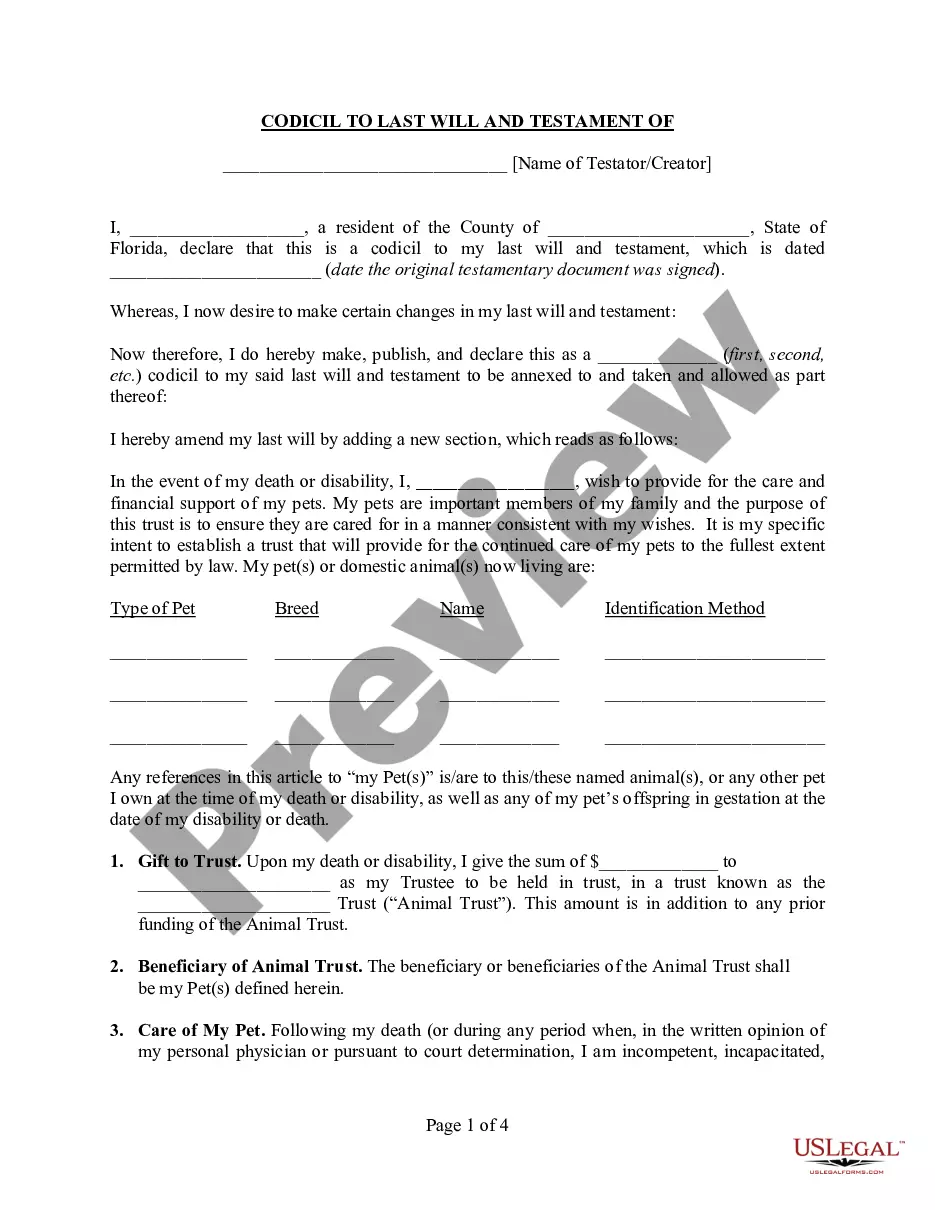
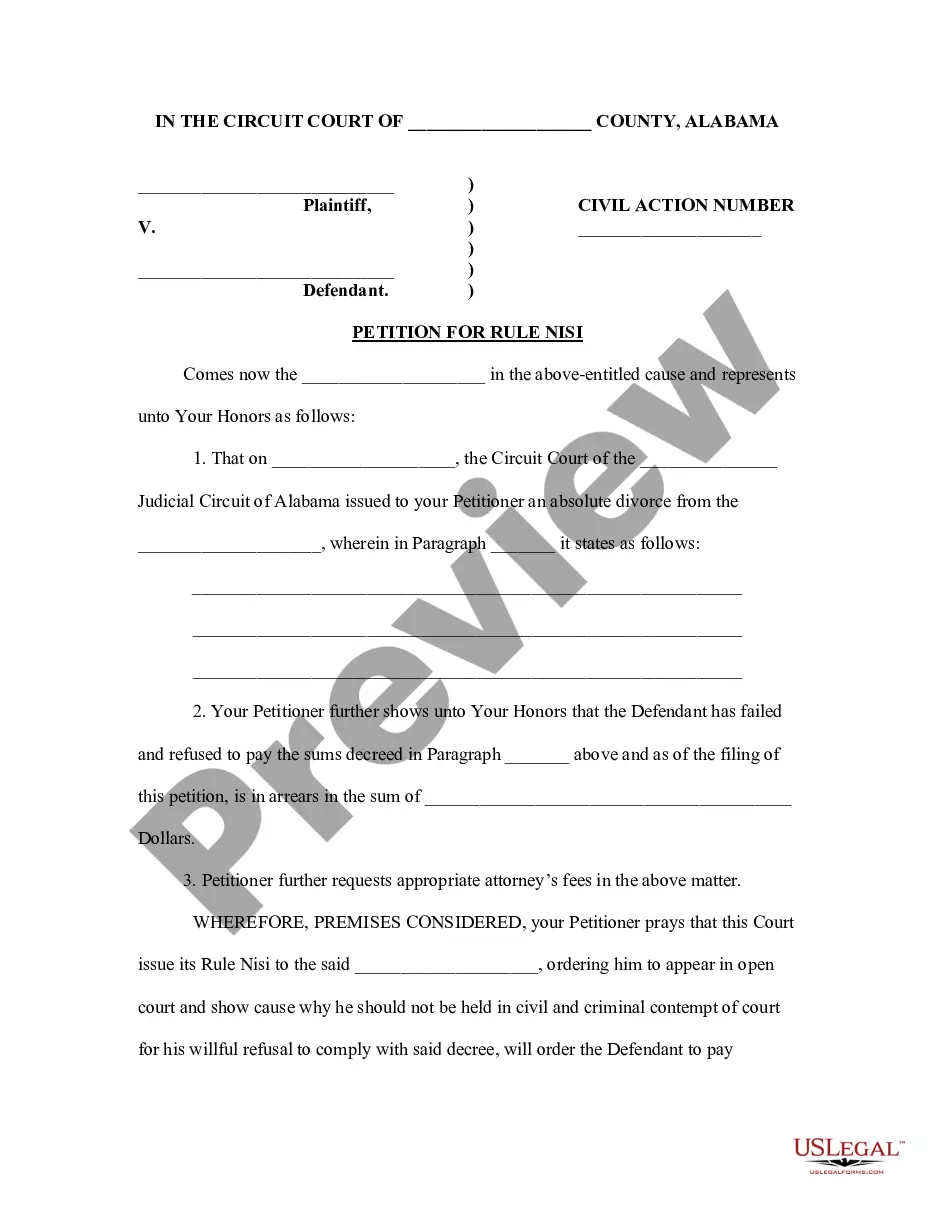
The Petition for Rule Nisi is a legal document used in divorce cases to address situations where one party is not complying with court-ordered support payments. This form specifies the amount owed and requests that the non-compliant party appear in court to explain their failure to pay, potentially leading to civil or criminal contempt proceedings. Unlike other divorce documents, this petition focuses specifically on enforcing payment orders.
What’s included in this form
- Identification of the Plaintiff and Defendant
- CIVIL ACTION NUMBER for tracking the case
- Details of the divorce order, including date and specific requirements
- Statement of the Defendant's arrearage, specifying the amount owed
- Request for attorney's fees associated with the proceedings
- Prayer for the court to issue a Rule Nisi against the Defendant
When this form is needed
This form should be utilized when a party in a divorce case has missed court-ordered support payments. If you have obtained a divorce decree that requires one party to make payments but they are in default, filing a Petition for Rule Nisi is appropriate. This can compel them to appear in court and resolve the failure to comply.
Who can use this document
- Individuals who are involved in a divorce where support payments have not been made
- Parties seeking to enforce court orders regarding alimony or child support
- Attorneys representing clients in analogous situations
How to complete this form
- Identify yourself as the Plaintiff and fill in your details at the top of the form.
- Enter the Defendant's name and the CIVIL ACTION NUMBER from your divorce decree.
- Include the date of the divorce order along with the specific paragraph detailing payment obligations.
- State the amount the Defendant is in arrears and calculate any additional requested attorney's fees.
- Sign the petition at the end to confirm its accuracy and your request for a Rule Nisi.
Notarization guidance
This form does not typically require notarization unless specified by local law. However, you should verify any specific requirements in your jurisdiction before filing.
Get your form ready online
Our built-in tools help you complete, sign, share, and store your documents in one place.
Make edits, fill in missing information, and update formatting in US Legal Forms—just like you would in MS Word.
Download a copy, print it, send it by email, or mail it via USPS—whatever works best for your next step.
Sign and collect signatures with our SignNow integration. Send to multiple recipients, set reminders, and more. Go Premium to unlock E-Sign.
If this form requires notarization, complete it online through a secure video call—no need to meet a notary in person or wait for an appointment.
We protect your documents and personal data by following strict security and privacy standards.

Make edits, fill in missing information, and update formatting in US Legal Forms—just like you would in MS Word.

Download a copy, print it, send it by email, or mail it via USPS—whatever works best for your next step.

Sign and collect signatures with our SignNow integration. Send to multiple recipients, set reminders, and more. Go Premium to unlock E-Sign.

If this form requires notarization, complete it online through a secure video call—no need to meet a notary in person or wait for an appointment.

We protect your documents and personal data by following strict security and privacy standards.
Avoid these common issues
- Failing to include the full details of the arrearage amount.
- Not specifying the correct paragraph from the divorce decree.
- Omitting signatures or dates on the petition.
Why use this form online
- Convenient: Download the form instantly without the need for physical travel.
- Editability: Customize the template according to your specific situation.
- Reliability: Forms are drafted by licensed attorneys, ensuring compliance with legal standards.
Legal use & context
- This form serves as a legal mechanism to enforce court-ordered support payments.
- Failure to appear in court after the issuance of a Rule Nisi can lead to civil or criminal penalties.
- Compliance with the legal process is crucial for the enforceability of the order.
Quick recap
- The Petition for Rule Nisi is essential for enforcing court-ordered support payments.
- Accurate and complete information is critical for the effective use of this form.
- Utilizing this form can help compel compliance from non-paying parties in divorce cases.
Looking for another form?
Form popularity
FAQ
A petition to modify a divorce decree in Alabama, often referred to as an Alabama Petition for Rule Nisi, allows individuals to request changes to the terms of their divorce agreement. This can include adjustments related to child custody, child support, or alimony. Filing this petition is vital when there are significant changes in circumstances that warrant a reevaluation of the original decree. For those unfamiliar with the process, using a platform like US Legal Forms can simplify the creation and filing of such petitions.
A rule nisi essentially means that a legal order will remain in effect until someone challenges it, requiring a response. In the context of the Alabama Petition for Rule Nisi, this legal tool is vital when a court seeks to ensure compliance while allowing the opportunity for objections. It acts as a safeguard within the justice system, providing parties the chance to present their cases before a decision is final. By comprehending the implications of rule nisi, you empower yourself to navigate legal processes more effectively.
A simple yet effective way to use 'rule nisi' in a sentence could be: 'The attorney filed an Alabama Petition for Rule Nisi to ensure that the court would proceed unless the opposing party provided a valid argument against the interim decision.' This usage highlights how the term operates within legal processes, demonstrating its significance in ensuring fairness and proper course of action in court matters. By using the term correctly, you can convey clear meaning in legal discussions.
In legal terms, 'nisi' refers to a type of court order that is conditional. Specifically, it implies that an order will become absolute unless a party shows cause to demonstrate why it should not take effect. The phrase often appears in legal documents, such as the Alabama Petition for Rule Nisi, which allows for a court's decision to be finalized unless challenged. Understanding this term helps in grasping the specific nature of legal proceedings.
A rule nisi in Alabama represents a judicial directive that temporarily orders a party to take an action or appear in court. This legal mechanism allows for issues to be addressed before a final ruling is made, often ensuring that justice is served effectively. For those navigating the court system, leveraging the Alabama Petition for Rule Nisi can be a vital step in achieving favorable outcomes.
An example of a rule nisi could include a court order that mandates a parent to comply with a visitation schedule. If the parent fails to comply, the court may then hold a hearing to determine if the order should be made final or modified. By understanding these examples, you can better appreciate the implications when filing an Alabama Petition for Rule Nisi.
A petition for rule nisi in Alabama is a legal request asking the court to issue an order that will become effective unless the other party provides sufficient reasons against it. This petition is commonly used to enforce compliance with court orders, such as child support or alimony. When you file an Alabama Petition for Rule Nisi, you are effectively seeking the court's intervention to resolve an important matter.
In court, 'rule nisi' means that the order is provisional and will become permanent unless the party involved takes action to contest it. This concept signifies that the court is allowing an opportunity for a response before making a final judgment. Knowing how this works is crucial for anyone preparing an Alabama Petition for Rule Nisi, as it sets the legal framework for their case.
The term 'rule nisi' translates to a temporary order that requires someone to act or show cause why a specific action should not be taken. In the context of legal proceedings, it indicates that a court is considering a matter but has not yet issued a final decision. Understanding this term is essential when discussing legal processes, especially when filing an Alabama Petition for Rule Nisi.