Alabama Request for Production
What is this form?
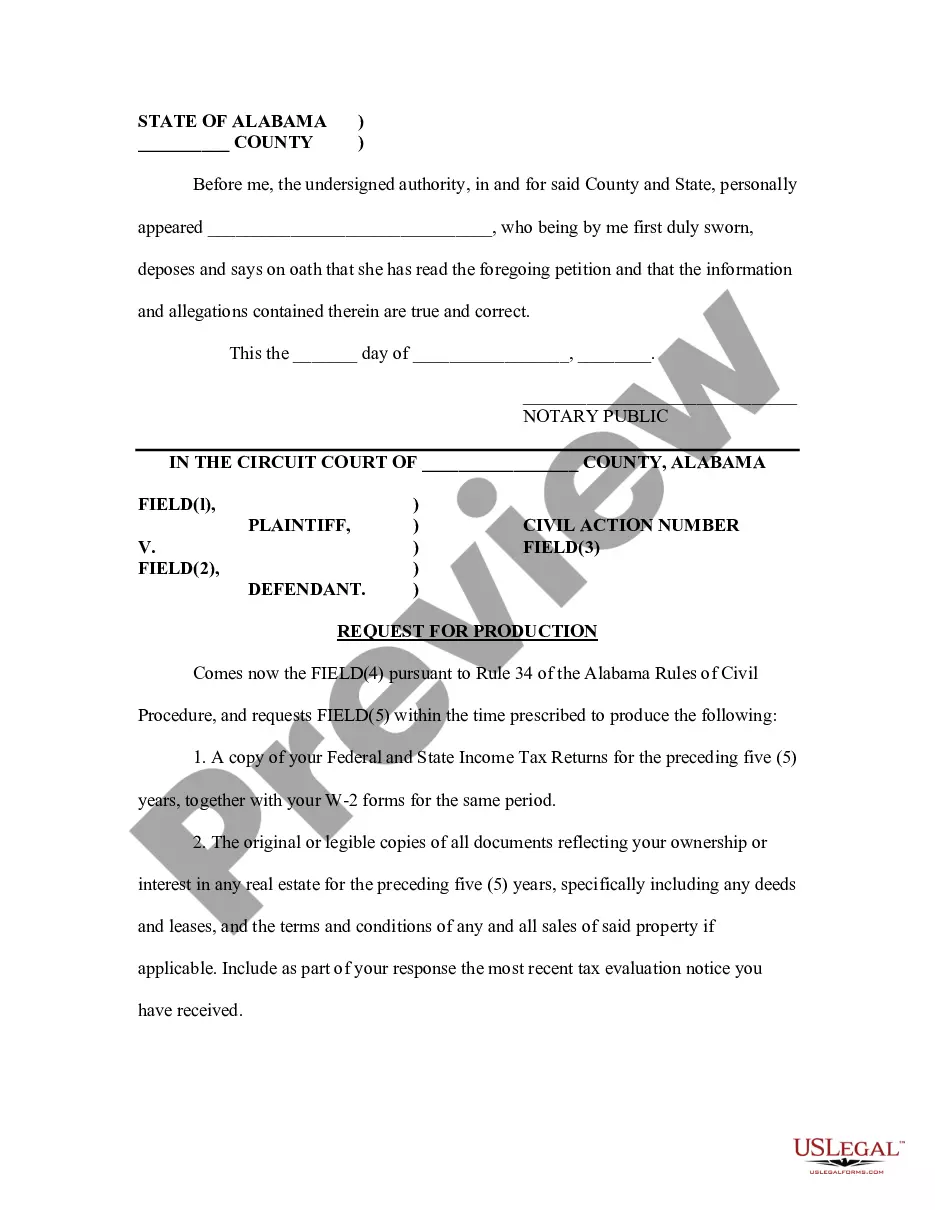
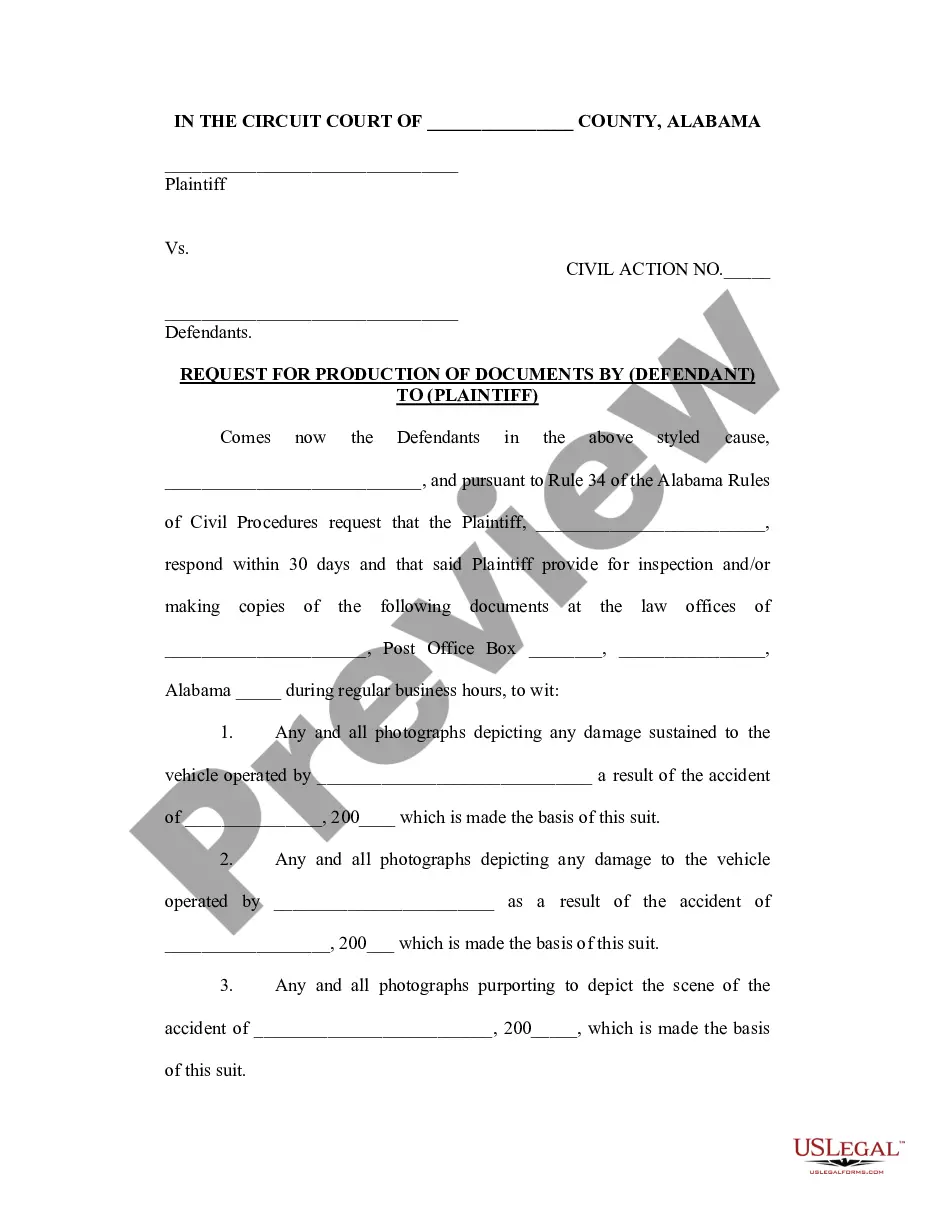
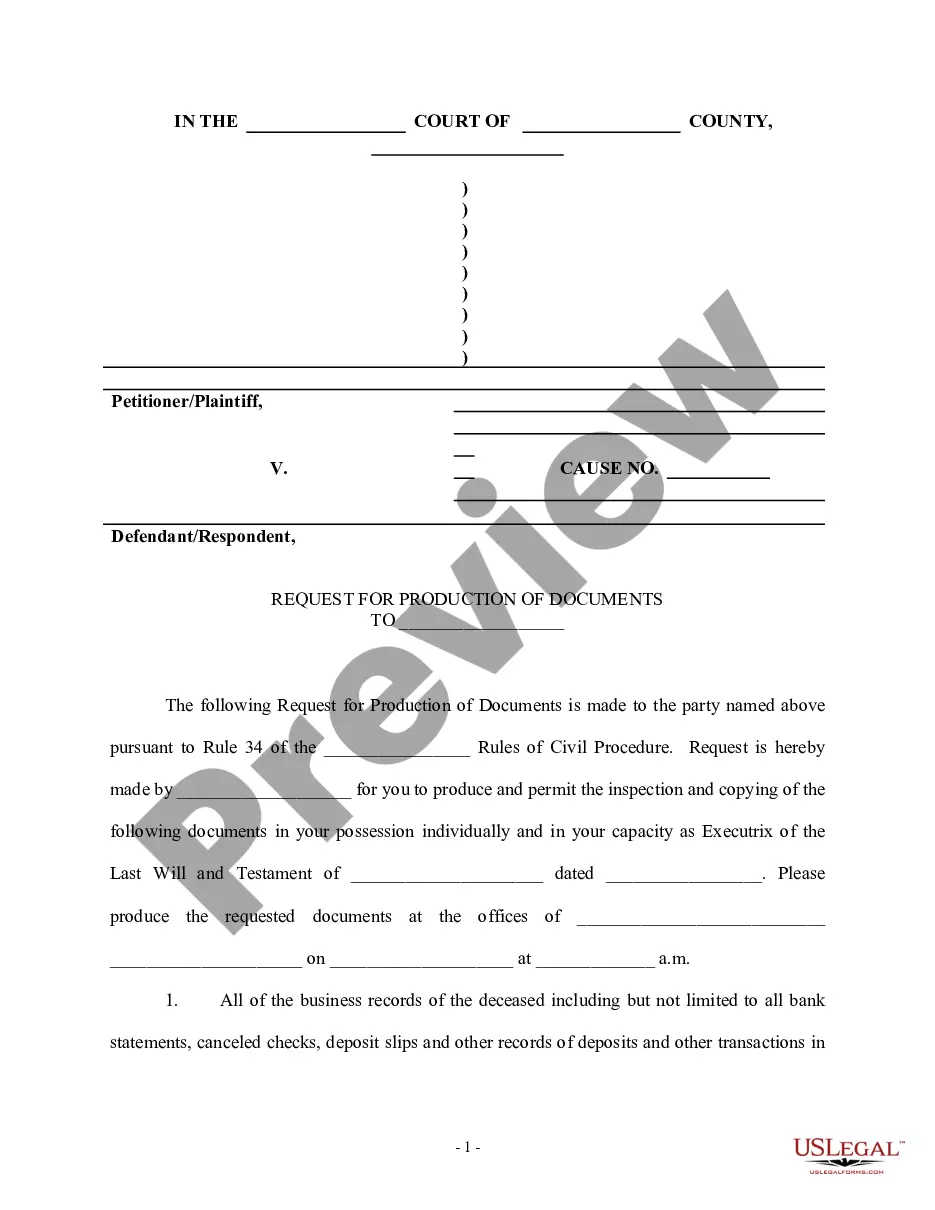
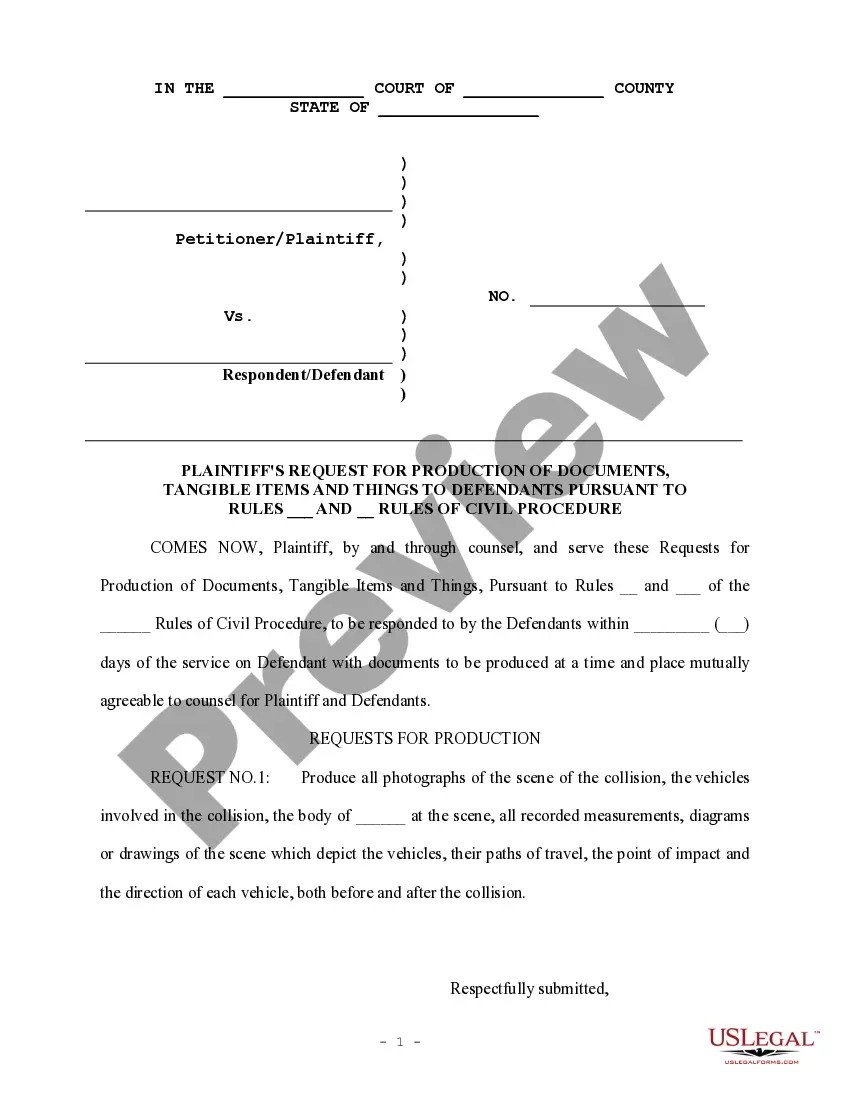
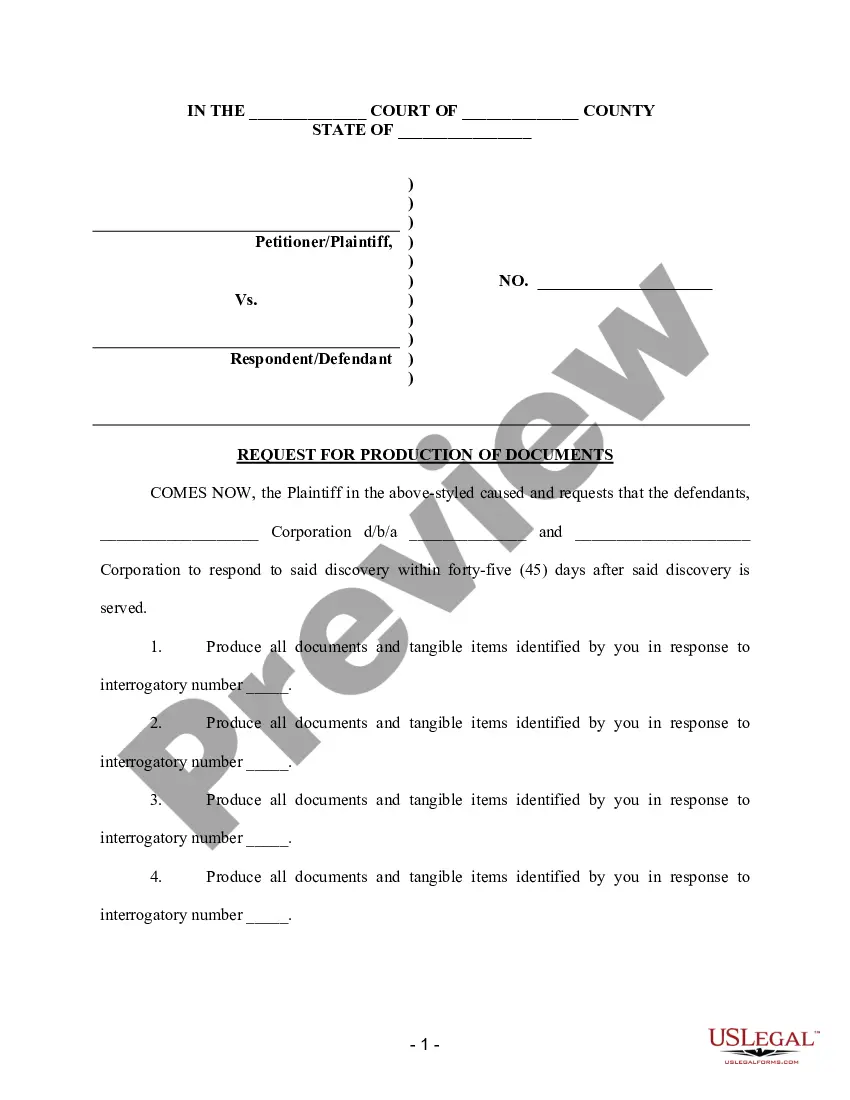
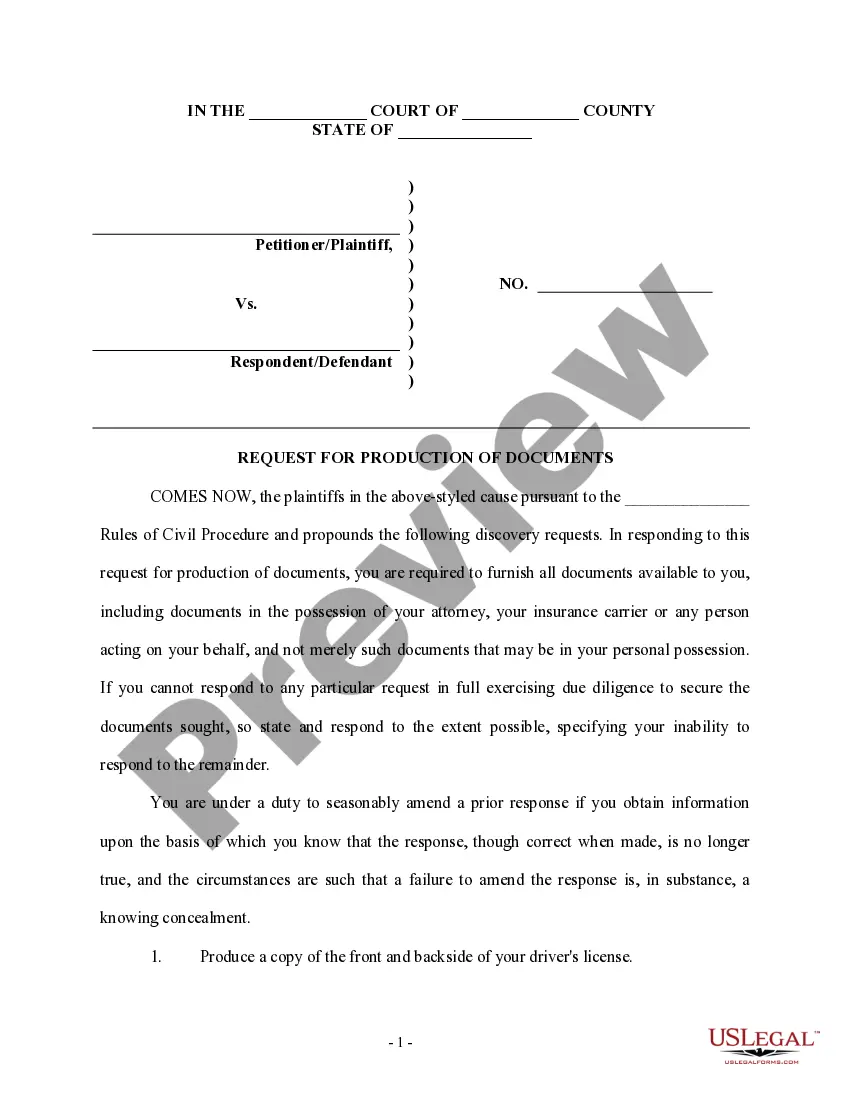
The Request for Production is a legal document used in divorce or domestic relations cases. It allows one party to request the opposing party to provide specific documents and information related to financial matters. This form is crucial in gathering evidence during legal proceedings, differentiating it from other forms that may focus solely on pleadings or motions.
What’s included in this form
- Identification of the parties involved in the case.
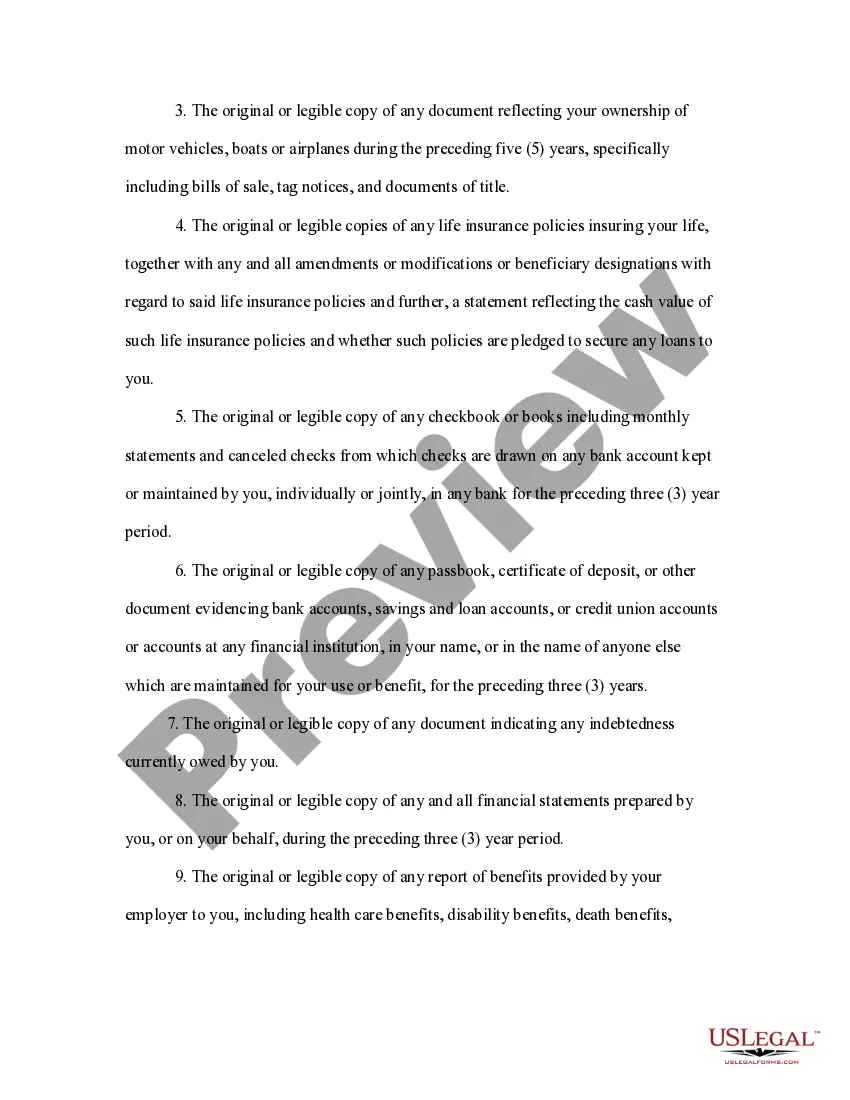
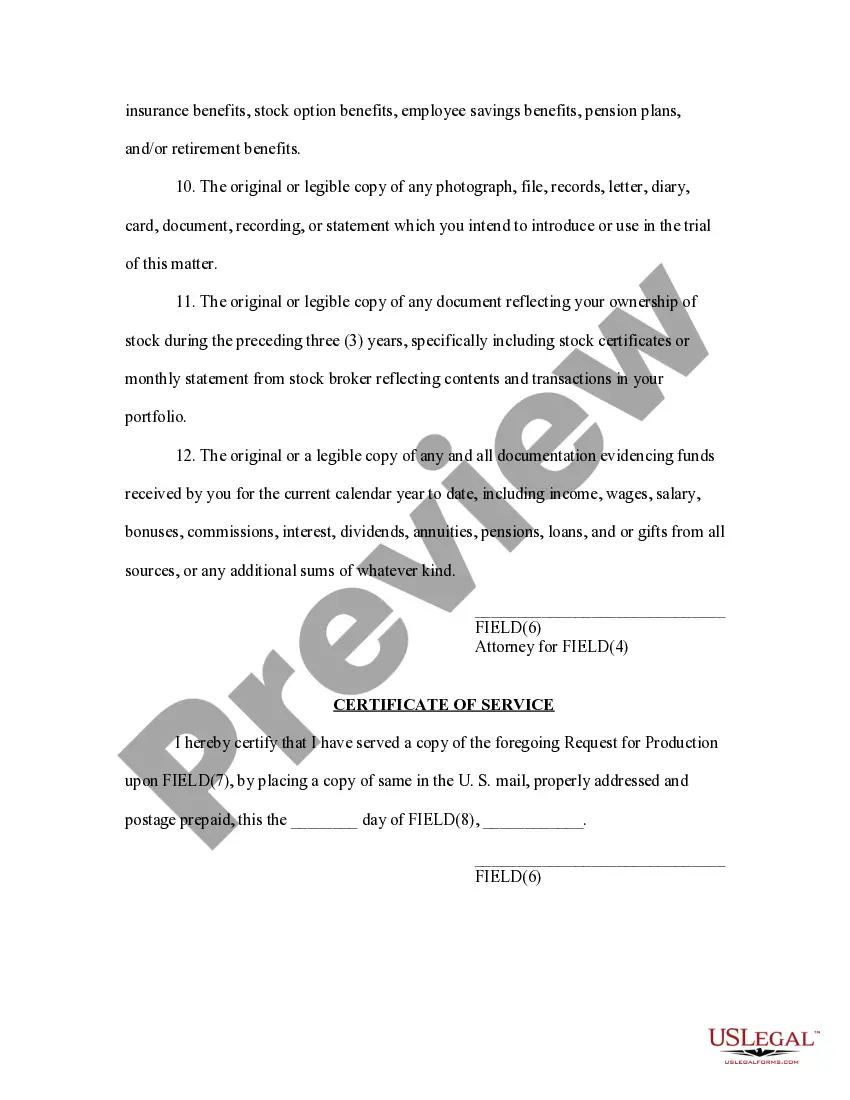
- List of requested documents, including tax returns, financial statements, and ownership records.
- Instructions for responding to the request within a specified timeframe.
- A section for notarization to verify the authenticity of the declaration.
Common use cases
This form is used when you need to collect financial documentation from the other party involved in a divorce or domestic relations case. It is particularly beneficial for revealing assets, incomes, debts, and other financial matters that may impact the outcome of the case.
Who should use this form
This form is suitable for:
- Individuals going through a divorce or legal separation.
- Parties in domestic relations disputes seeking financial transparency.
- Attorneys representing clients in civil actions related to family law.
How to complete this form
- Identify the parties by placing their names in the designated fields.
- Clearly list each document that is being requested for production.
- Specify the timeframe for the requested documents, adhering to court rules.
- Sign the form in front of a notary public to validate the declaration.
- Ensure a copy is served to the opposing party as per legal requirements.
Does this document require notarization?
Yes, this form must be notarized to be legally valid. US Legal Forms offers integrated online notarization services, available 24/7 through secure video calls, ensuring your documents are promptly and legally confirmed without the need for travel.
Get your form ready online
Our built-in tools help you complete, sign, share, and store your documents in one place.
Make edits, fill in missing information, and update formatting in US Legal Forms—just like you would in MS Word.
Download a copy, print it, send it by email, or mail it via USPS—whatever works best for your next step.
Sign and collect signatures with our SignNow integration. Send to multiple recipients, set reminders, and more. Go Premium to unlock E-Sign.
If this form requires notarization, complete it online through a secure video call—no need to meet a notary in person or wait for an appointment.
We protect your documents and personal data by following strict security and privacy standards.

Make edits, fill in missing information, and update formatting in US Legal Forms—just like you would in MS Word.

Download a copy, print it, send it by email, or mail it via USPS—whatever works best for your next step.

Sign and collect signatures with our SignNow integration. Send to multiple recipients, set reminders, and more. Go Premium to unlock E-Sign.

If this form requires notarization, complete it online through a secure video call—no need to meet a notary in person or wait for an appointment.

We protect your documents and personal data by following strict security and privacy standards.
Common mistakes to avoid
- Failing to specify exactly what documents are being requested.
- Neglecting to sign the document in front of a notary public.
- Missing the deadline for serving the request to the opposing party.
- Overlooking the need to keep copies of all correspondence related to the request.
Why complete this form online
- Convenience of instant download and access to the form.
- Ability to modify the templates to suit specific legal needs.
- Reliability of professionally drafted forms reviewed by licensed attorneys.
Looking for another form?
Form popularity
FAQ
A request for production in law refers to a legal demand for documents, records, or other evidence pertinent to an ongoing legal dispute. This request is an integral part of the discovery phase, allowing parties to collect information necessary to support their claims or defenses. When you make an Alabama Request for Production, you enhance your case's preparation. To ensure your document requests are crafted correctly, consider leveraging USLegalForms to guide you through the process.
In Alabama, the number of requests for production a party can issue is typically governed by the case's specific rules and context, often allowing multiple requests within reason. It is essential to maintain relevance and specificity with each request to comply with legal standards. Therefore, when making an Alabama Request for Production, focus on the quality rather than quantity. Platforms such as USLegalForms can guide you in developing a focused and effective production request.
Requests for Production fall under Rule 34 of the Federal Rules of Civil Procedure. This rule outlines the ability of one party to request document production from another party relevant to the case. In Alabama, you should tailor your Alabama Request for Production according to both federal and state-specific rules. To ensure you meet all criteria, consider using USLegalForms for guidance on drafting effective requests.
Rule 37 in Alabama addresses the consequences for failing to comply with discovery requests, including Requests for Production. It provides sanctions that the court may impose for noncompliance, such as monetary fines or exclusion of evidence. Being aware of these rules is essential when making an Alabama Request for Production. With USLegalForms, you can access compliant forms that help you follow these rules accurately and avoid potential pitfalls.
A Request for Production is a formal request issued by one party in a lawsuit, asking the other party to produce documents relevant to the case. This request serves as a powerful tool in the discovery process, enabling parties to gather necessary evidence and information. In Alabama, submitting an Alabama Request for Production follows specific guidelines that you must adhere to. To navigate these rules effectively, USLegalForms offers resources that can simplify the process.
Requests for production of documents are primarily governed by Rule 34 of the Federal Rules of Civil Procedure. This rule allows one party to request another to provide specific documents or evidence relevant to the case. In Alabama, similar rules apply, particularly concerning the Alabama Request for Production. To ensure your requests are on point, consider using services like USLegalForms, which provide tailored templates.
Rule 34 of the FRCP specifically allows parties to request the production of documents, electronically stored information, and tangible things. This rule is crucial in the discovery phase, as it facilitates the exchange of relevant information that supports claims or defenses. By utilizing the Alabama Request for Production, you ensure compliance with this rule. USLegalForms can assist in creating effective requests to enhance your legal strategy.
Rule 36 of the Federal Rules of Civil Procedure (FRCP) deals with requests for admission, allowing a party to request the other party to admit the truth of certain matters. Although it does not specifically address requests for production, it complements the information-gathering process in litigation. Understanding these rules can benefit you when handling an Alabama Request for Production. If you want to streamline your process, platforms like USLegalForms can provide valuable templates.
An interrogatory is a set of written questions that one party sends to another, requiring written answers, while a request for production focuses specifically on obtaining documents. Both are crucial tools in the discovery phase, but they serve different purposes. The Alabama Request for Production targets tangible evidence, whereas interrogatories seek clarifying information from the opposing party.
In Alabama, a request for production of documents serves as a formal request for parties to disclose relevant evidence during litigation. This process is essential for gathering materials that support each party's claims or defenses. Using this mechanism, you can ensure comprehensive exchange of information, making it easier to prepare your case.