Alabama Commercial Sublease
Understanding this form
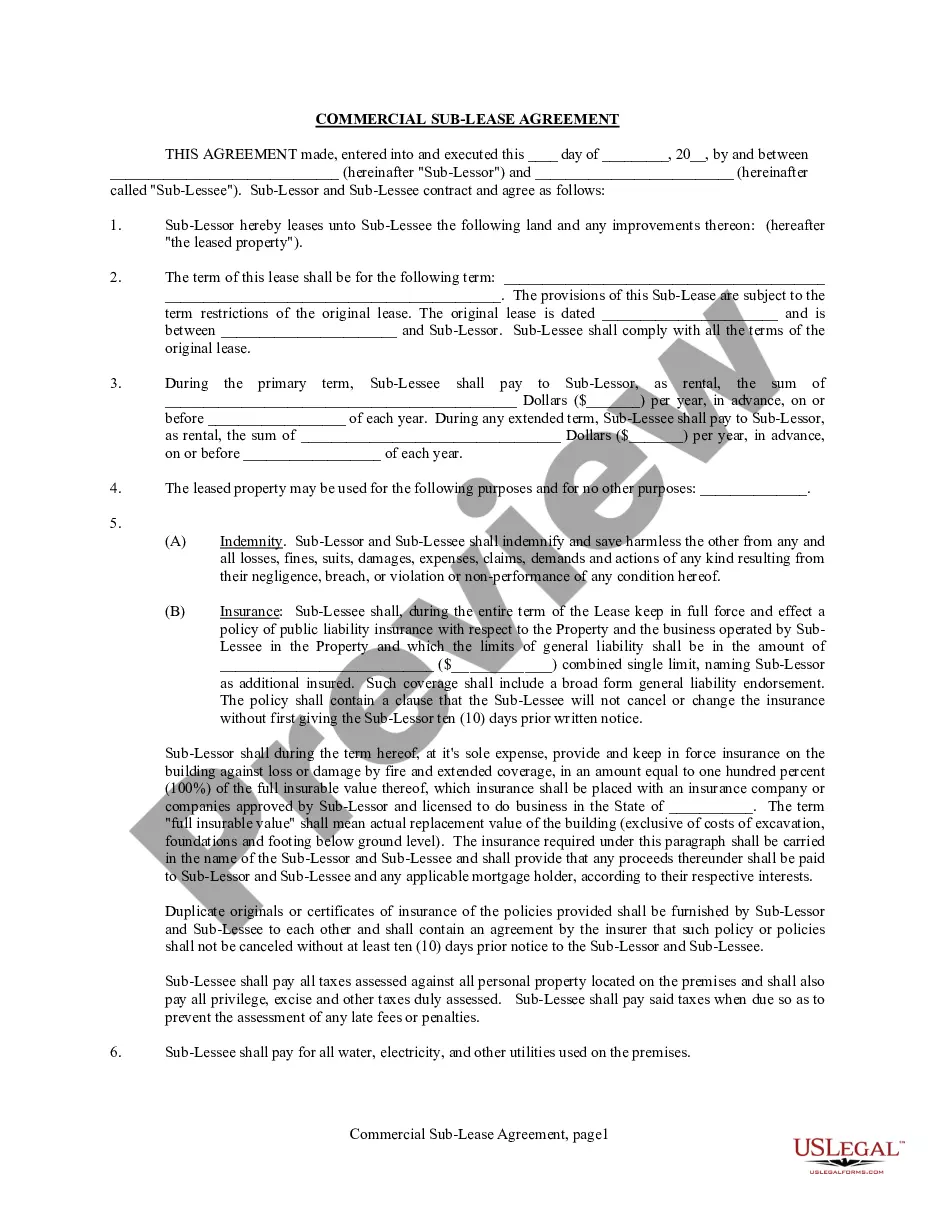
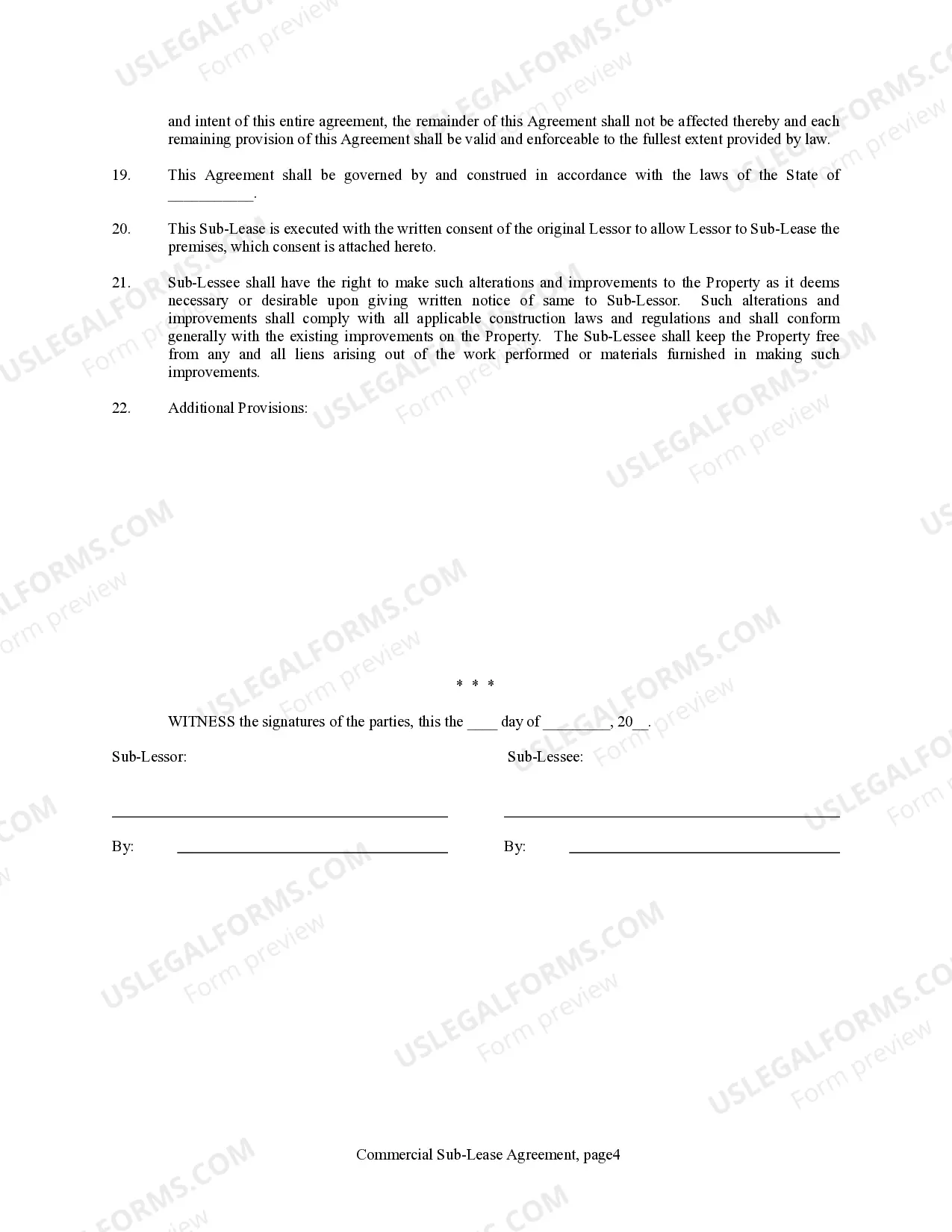
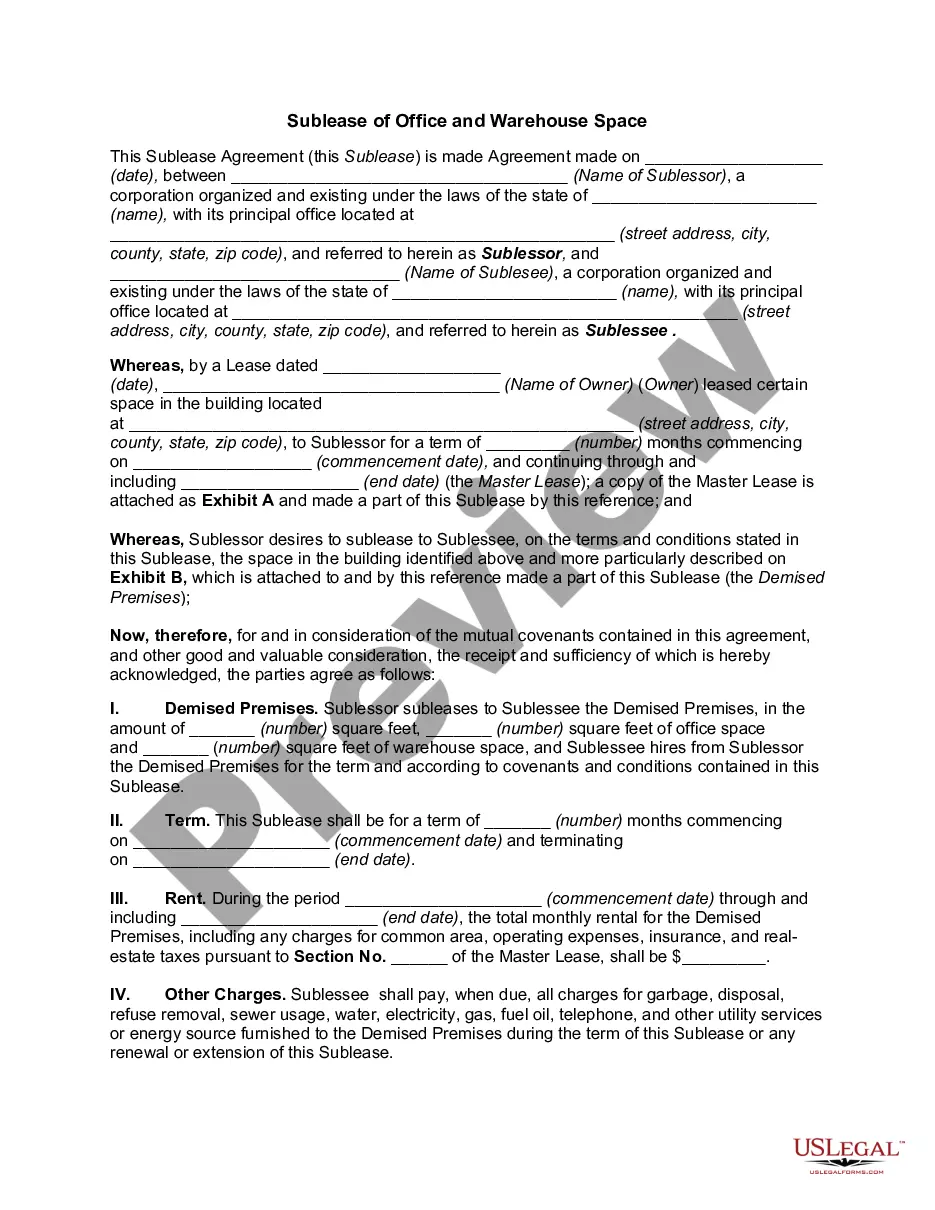
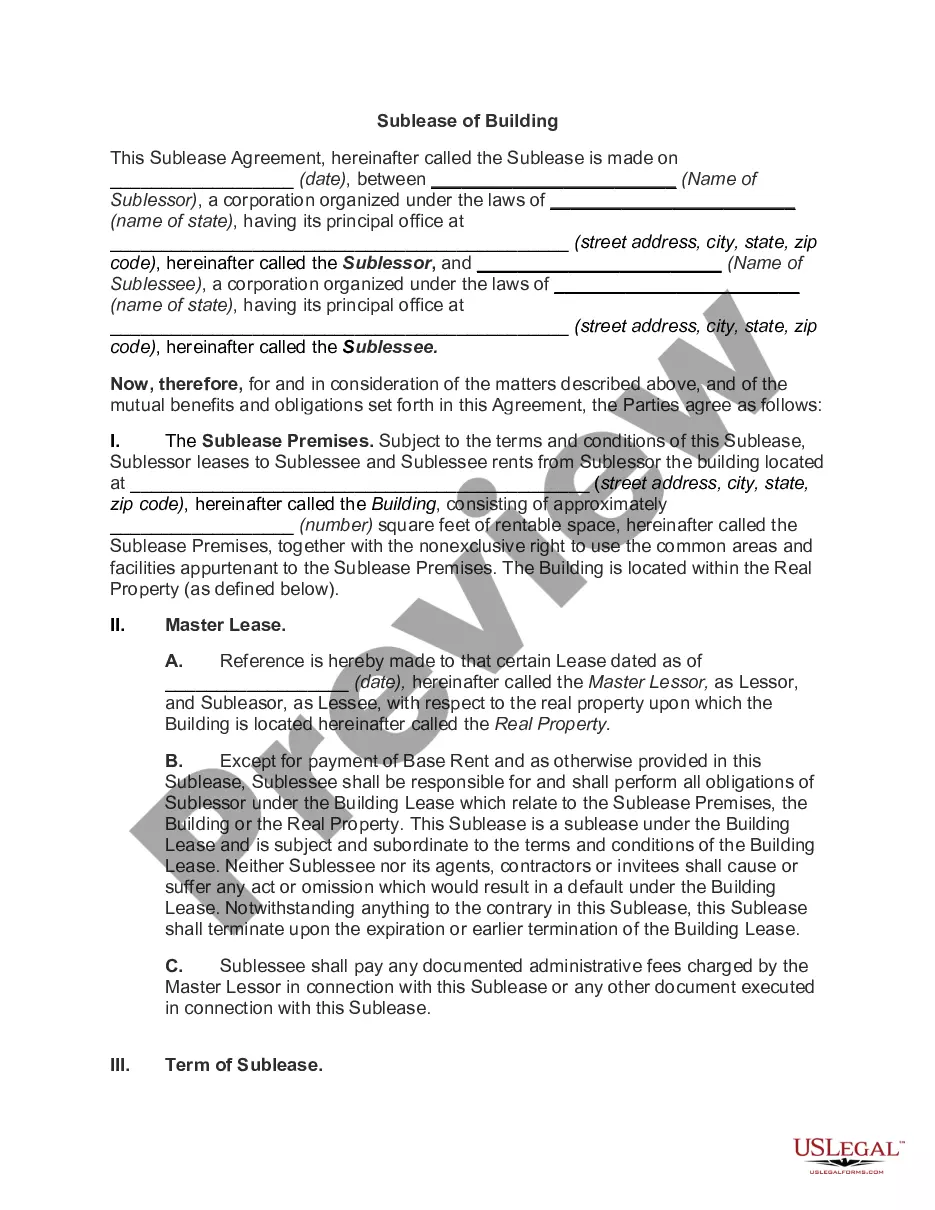
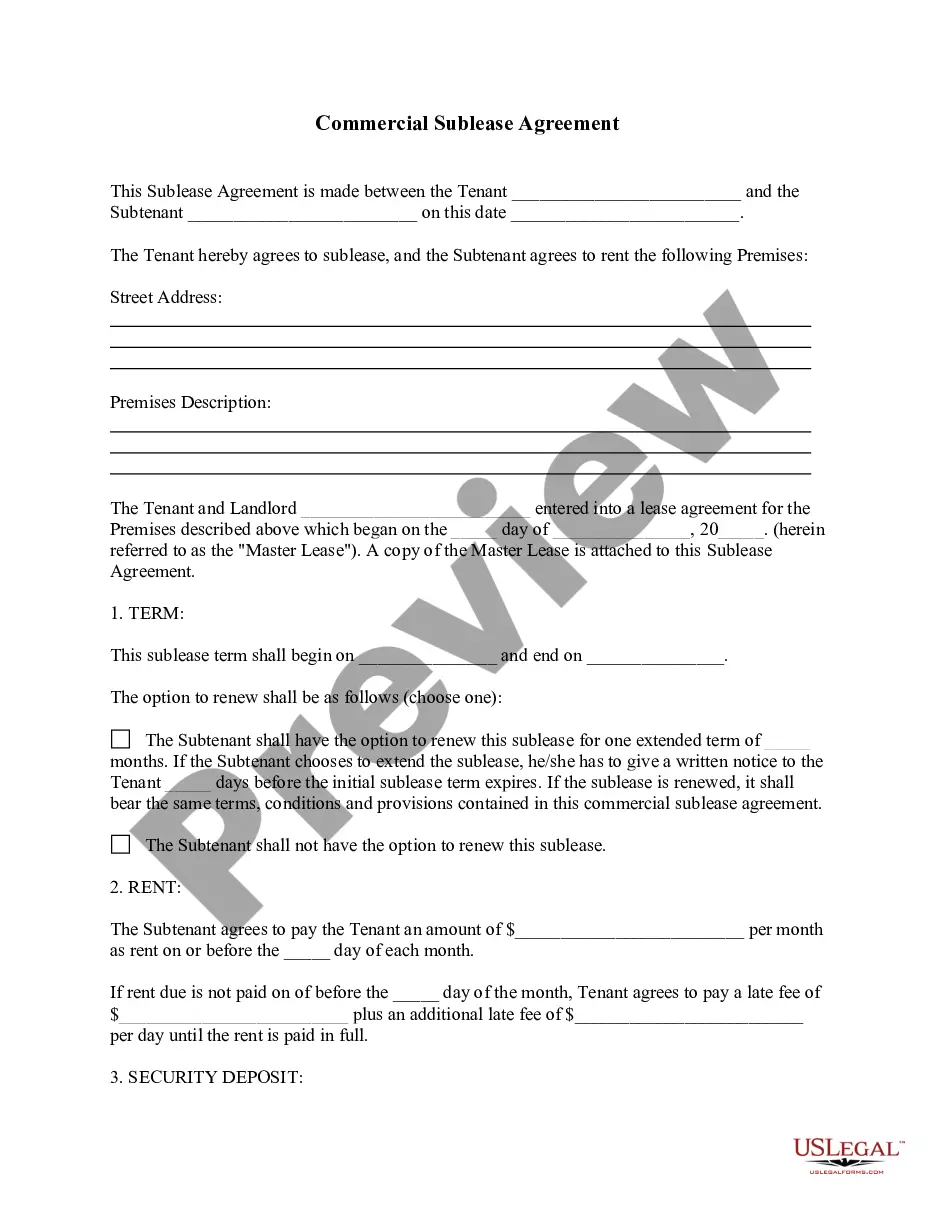
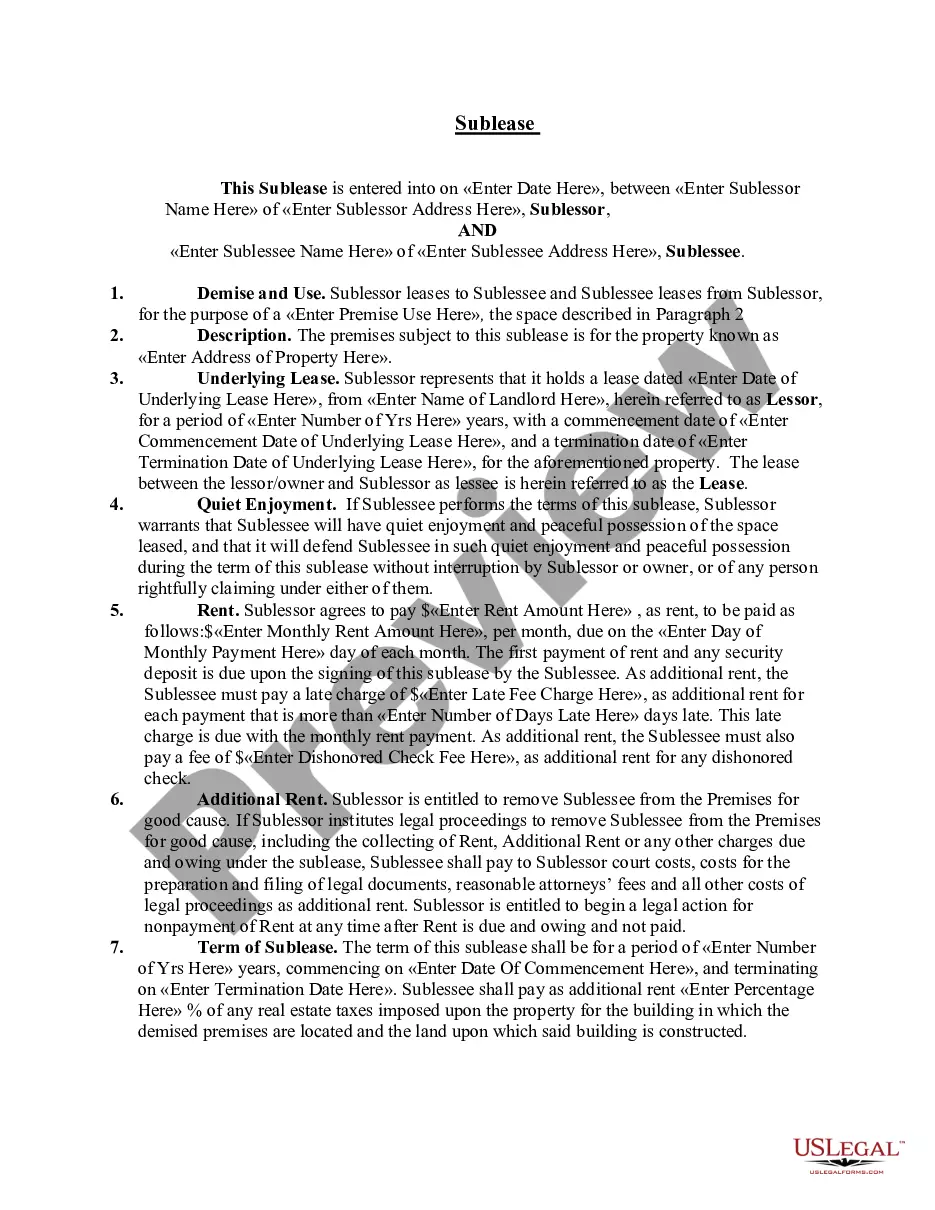
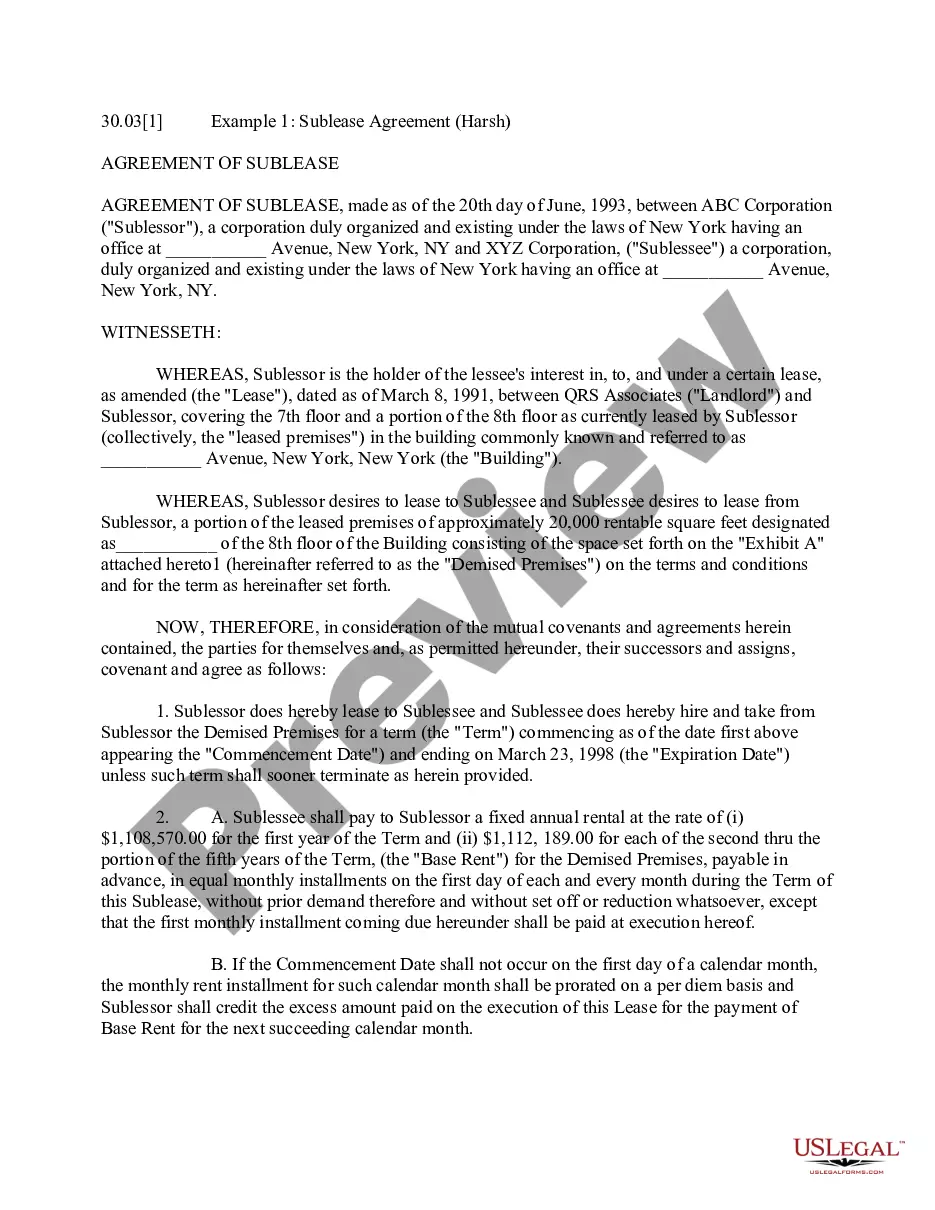
The Commercial Sublease is a legal document that allows a tenant (Sub-Lessor) to lease their rented commercial property to another party (Sub-Lessee). This form outlines the specific rights and responsibilities of both the Sub-Lessor and Sub-Lessee, ensuring adherence to the original lease agreement. Unlike a standard lease agreement, this sublease form is specifically designed for situations where the original tenant wishes to transfer their leasing rights temporarily while maintaining the obligations of the primary lease.
Key components of this form
- Parties involved: Clearly identifies the Sub-Lessor and Sub-Lessee.
- Description of leased property: Specifies the property being subleased along with any improvements.
- Term of the lease: Defines the duration of the sublease agreement.
- Rental payment details: Outlines the amount and frequency of rent payments due from the Sub-Lessee.
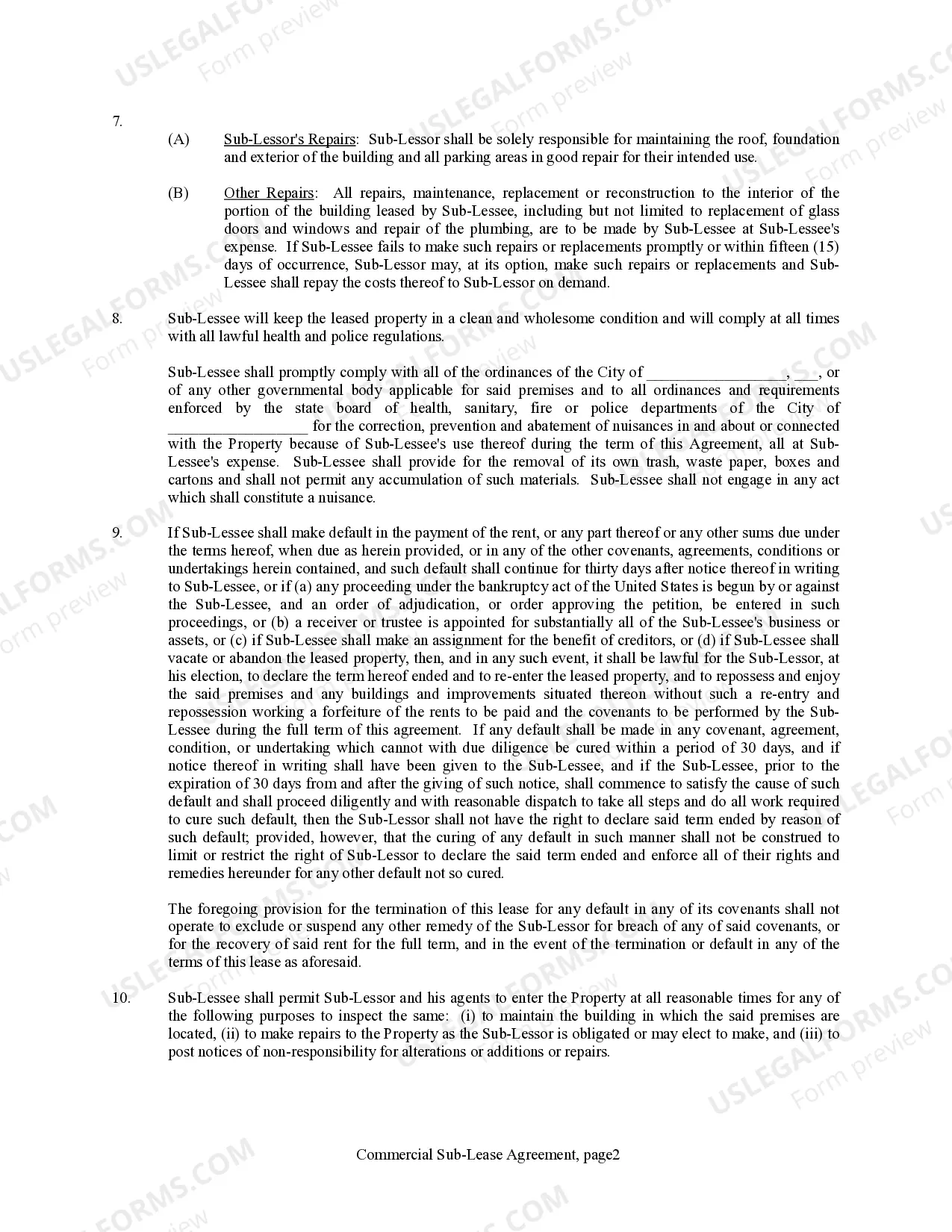
- Indemnity and insurance clauses: Addresses liability and insurance requirements for both parties.
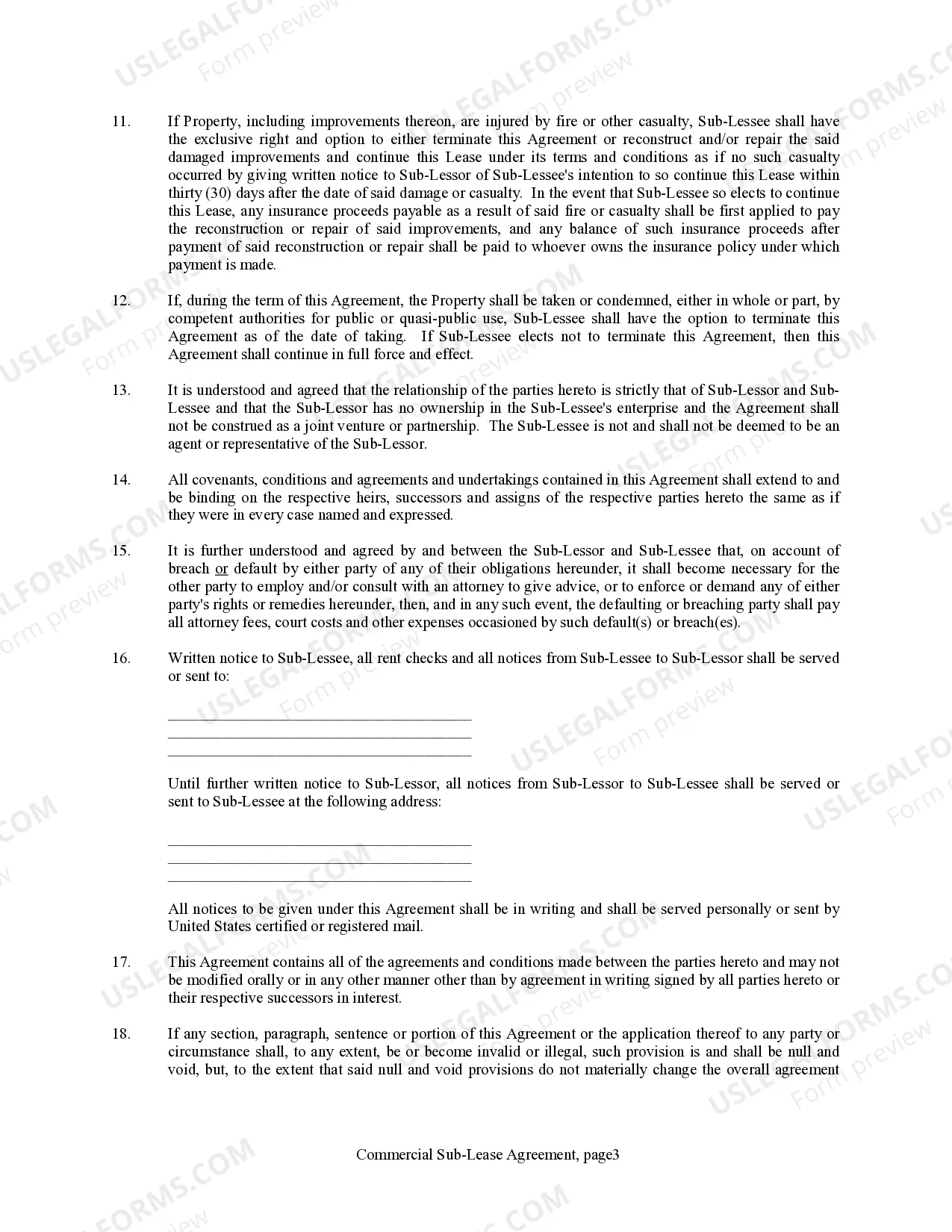
- Default provisions: Clarifies the conditions under which the agreement may be terminated by the Sub-Lessor.
When this form is needed
This form should be used when a tenant wishes to temporarily lease their commercial space to another party while still being responsible for the terms of the original lease. Common scenarios include businesses needing to downsize, relocate, or sublet unused space to reduce operating costs. It ensures both parties have a clear understanding of their obligations and rights during the sublease period.
Who can use this document
This form is ideal for:
- Current tenants looking to sublet their commercial property.
- Business owners needing to temporarily lease their space for financial reasons.
- Landlords who want to ensure their tenant's subleasing is legally documented.
How to prepare this document
- Identify the parties: Enter the names and addresses of the Sub-Lessor and Sub-Lessee.
- Specify the property: Describe the commercial property being leased.
- Enter the lease term: Clearly note the start and end dates of the sublease.
- Detail rental payments: Include rental amounts and payment schedule.
- Review indemnity and insurance clauses: Ensure both parties understand their liabilities.
Does this form need to be notarized?
This form does not typically require notarization unless specified by local law. However, having the signatures notarized may add an extra layer of legal validation.
Get your form ready online
Our built-in tools help you complete, sign, share, and store your documents in one place.
Make edits, fill in missing information, and update formatting in US Legal Forms—just like you would in MS Word.
Download a copy, print it, send it by email, or mail it via USPS—whatever works best for your next step.
Sign and collect signatures with our SignNow integration. Send to multiple recipients, set reminders, and more. Go Premium to unlock E-Sign.
If this form requires notarization, complete it online through a secure video call—no need to meet a notary in person or wait for an appointment.
We protect your documents and personal data by following strict security and privacy standards.

Make edits, fill in missing information, and update formatting in US Legal Forms—just like you would in MS Word.

Download a copy, print it, send it by email, or mail it via USPS—whatever works best for your next step.

Sign and collect signatures with our SignNow integration. Send to multiple recipients, set reminders, and more. Go Premium to unlock E-Sign.

If this form requires notarization, complete it online through a secure video call—no need to meet a notary in person or wait for an appointment.

We protect your documents and personal data by following strict security and privacy standards.
Typical mistakes to avoid
- Failing to obtain the original landlord's consent for the sublease.
- Not specifying the duration of the sublease clearly.
- Omitting insurance requirements for the Sub-Lessee.
Benefits of completing this form online
- Convenience: Downloadable format allows immediate access to the form.
- Editability: Tailor the template to your specific circumstances easily.
- Reliability: Form drafted by licensed attorneys ensures legal soundness.
Legal use & context
- The Commercial Sublease is legally binding, provided all parties agree to its terms.
- Sub-Lessees assume obligations per the original lease, making it important to review that document before proceeding.
- Non-compliance with the terms can lead to disputes or potential eviction by the original landlord.
Summary of main points
- The Commercial Sublease form allows for flexible leasing arrangements for business tenants.
- Clearly outlining terms helps to avoid misunderstandings between the Sub-Lessor and Sub-Lessee.
- Compliance with local laws and the original lease agreement is essential for enforceability.
Looking for another form?
Form popularity
FAQ
Subletting rules can vary by state and lease agreement, but generally, tenants must get their landlord’s approval before subletting their space. In Alabama, specific guidelines govern commercial subleases, such as notifying the landlord and documenting the agreement. To ensure you understand these rules thoroughly, refer to expert resources or platforms like US Legal Forms, which offer tailored information for Alabama Commercial Sublease scenarios.
Starting a subleasing business involves understanding the legalities of subletting in your area. First, research local laws and regulations, particularly those related to Alabama Commercial Sublease. Next, acquire a suitable property to lease, then draft the necessary agreements ensuring compliance with lease terms and local laws. Utilizing resources like US Legal Forms can simplify this process, providing templates and guidance to help you succeed.
A commercial sublease agreement is a legal contract that allows a tenant to lease their rented space to another party. This document outlines the terms, rent amounts, duration, and responsibilities of both parties involved in the sublease. Creating a well-defined commercial sublease agreement is vital for any Alabama Commercial Sublease, as it protects all parties and clarifies expectations.
The subletting clause detail the specific terms regarding the subleasing of a rented commercial space. It often includes requirements such as obtaining landlord approval and providing notice before subleasing. When navigating an Alabama Commercial Sublease, it’s crucial to comprehend this clause to ensure adherence to contractual obligations and to avoid potential disputes.
A sublet clause in a commercial lease allows a tenant to rent out their leased space to another party. This clause outlines the conditions under which subletting can occur, protecting both the tenant’s and landlord’s interests. Understanding this clause is essential when forming an Alabama Commercial Sublease, as it dictates the permissible actions and responsibilities involved in the subleasing process.
To secure a commercial lease, start by researching potential properties and understanding the local market. Engaging a real estate agent can also provide valuable insights and help you navigate the leasing process. For an Alabama Commercial Sublease, utilizing platforms like uslegalforms can assist in generating the necessary legal documents and making sure that everything is in order.
The required credit score for a commercial lease can vary, but many landlords prefer scores above 650. A strong credit score indicates financial stability and reduces the risk for landlords. If you are considering an Alabama Commercial Sublease, improving your credit score can enhance your chances of approval.
To get a commercial lease, you typically start by identifying suitable properties that meet your business needs. After you find a potential space, you will need to submit a rental application, which may require financial documents and references. By approaching an Alabama Commercial Sublease with proper preparation, you can streamline the leasing process.
The difficulty of getting approved for a commercial lease can depend on various factors, including your credit history and business financials. Many landlords look for reliable tenants, and understanding key requirements can make the process smoother. For those seeking an Alabama Commercial Sublease, addressing these factors early can increase your approval chances.
The three main types of commercial leases are gross leases, net leases, and modified gross leases. In a gross lease, the landlord covers most expenses, while in a net lease, the tenant takes on additional costs. Knowing these lease types can guide you in selecting the right option for your Alabama Commercial Sublease transactions.