Deductions from Royalty
Understanding this form
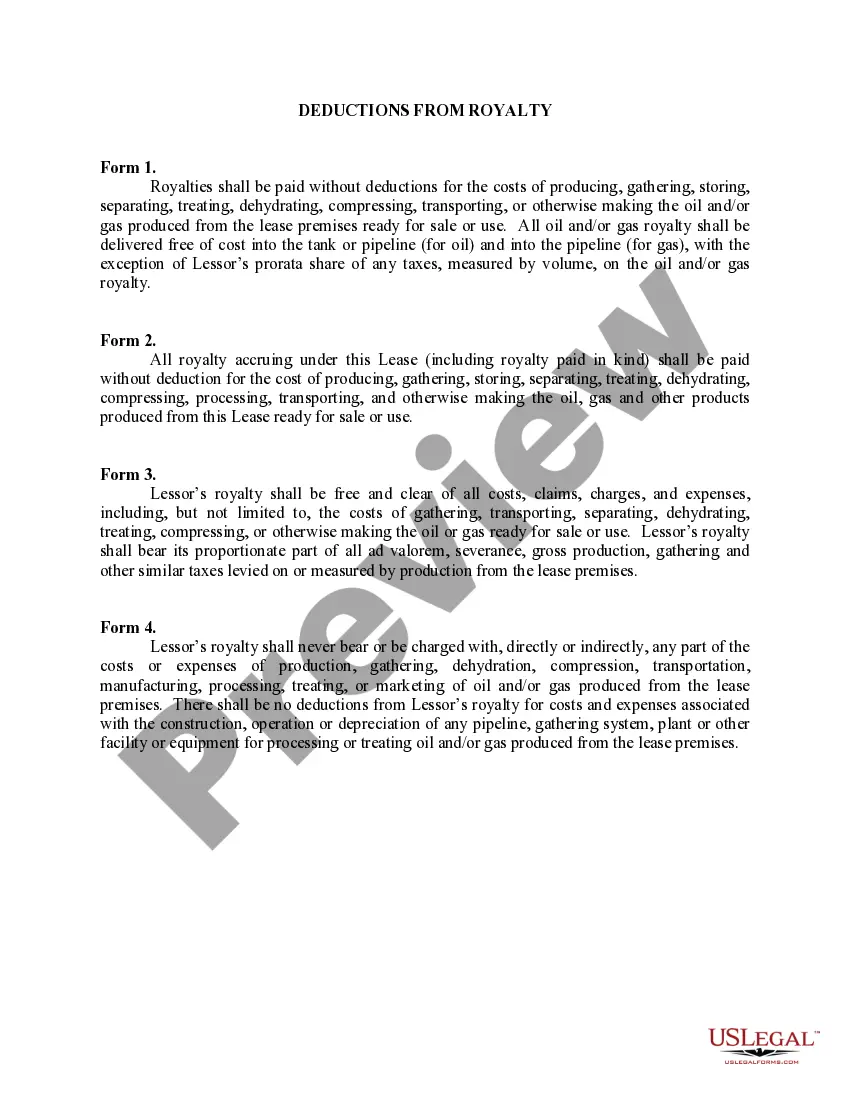
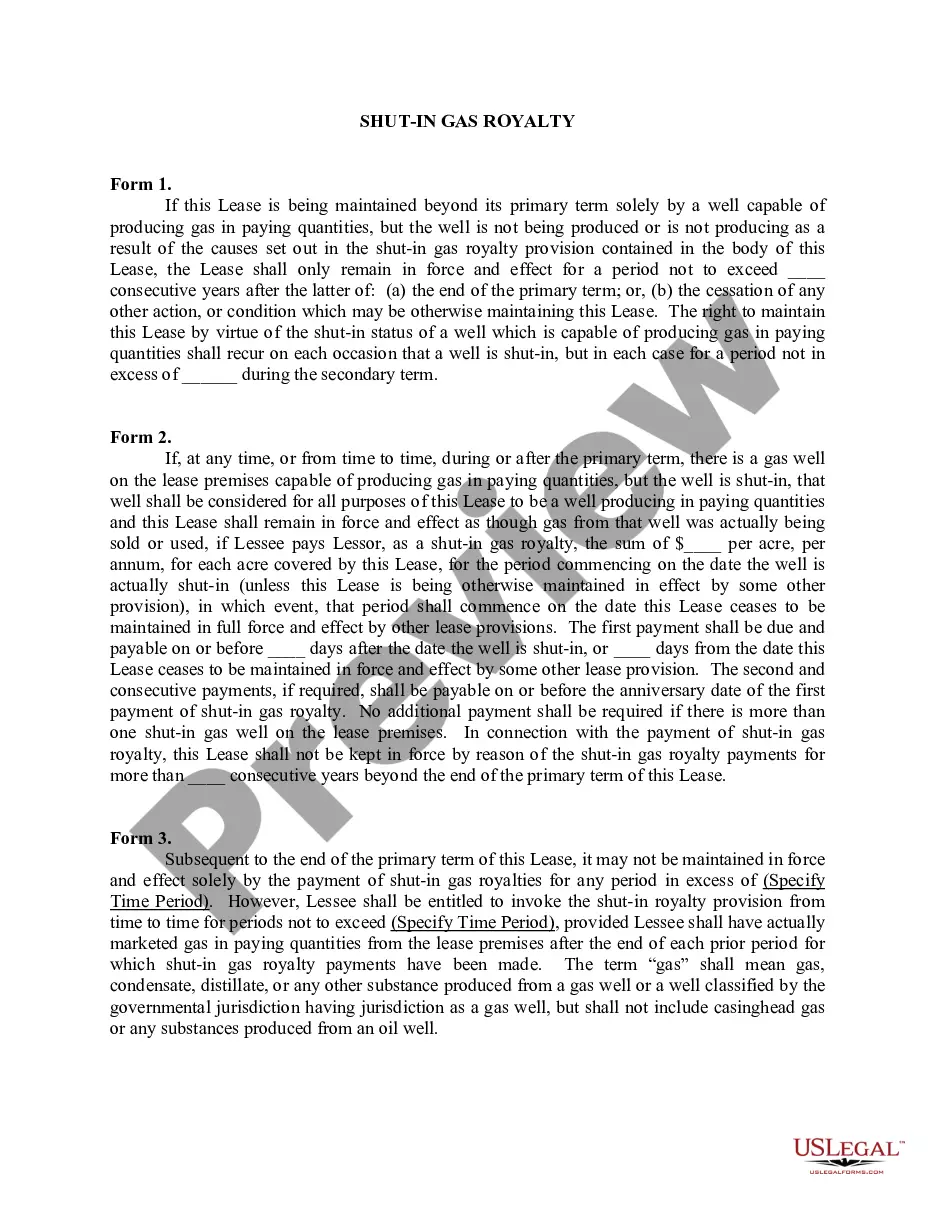
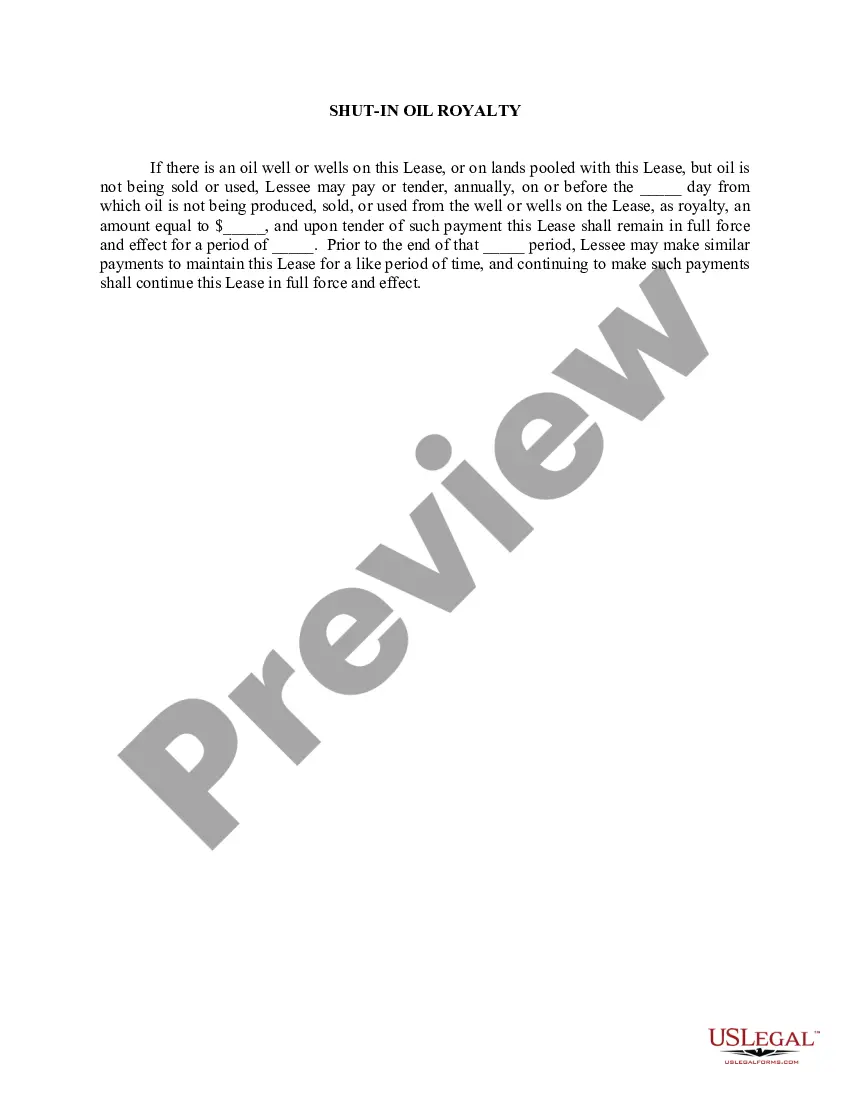
The Deductions from Royalty form is a lease rider specifically designed for oil and gas leasing transactions. This form allows lessors to ensure that their royalty payments are made without deductions for production costs or other expenses, differentiating it from standard lease forms. By using this rider, lessors can protect their financial interests when leasing their mineral rights, addressing concerns about costs associated with the production and transportation of oil and gas.
What’s included in this form
- Royalties paid without deductions for production-related costs.
- Clear stipulation that lessors only bear a prorated share of applicable taxes.
- Exclusions of costs related to transportation and processing of oil and gas.
- Definition of responsibilities regarding expenses associated with production facilities.

When this form is needed
This form should be used in situations where a lessor is entering into or modifying an oil and gas lease. It is particularly relevant when the lessor wants to clarify or restrict the lessee's ability to deduct costs related to the handling and selling of oil and gas, ensuring they receive the full royalty payment without items deducted.
Who can use this document
- Individuals or entities leasing mineral rights in an oil and gas transaction.
- Lessees seeking to clarify terms of royalty payments in their lease agreements.
- Landowners looking to protect their financial rights regarding mineral royalties.
How to complete this form
- Identify the parties involved in the lease agreement: lessor and lessee.
- Specify the terms of the royalties, making sure to address deductions clearly.
- Enter any specific exemptions or limitations as applicable to the lease.
- Review and ensure that all necessary fields are adequately filled out.
- Sign and date the form to finalize the agreement.
Notarization guidance
Notarization is generally not required for this form. However, certain states or situations might demand it. You can complete notarization online through US Legal Forms, powered by Notarize, using a verified video call available anytime.
Get your form ready online
Our built-in tools help you complete, sign, share, and store your documents in one place.
Make edits, fill in missing information, and update formatting in US Legal Forms—just like you would in MS Word.
Download a copy, print it, send it by email, or mail it via USPS—whatever works best for your next step.
Sign and collect signatures with our SignNow integration. Send to multiple recipients, set reminders, and more. Go Premium to unlock E-Sign.
If this form requires notarization, complete it online through a secure video call—no need to meet a notary in person or wait for an appointment.
We protect your documents and personal data by following strict security and privacy standards.

Make edits, fill in missing information, and update formatting in US Legal Forms—just like you would in MS Word.

Download a copy, print it, send it by email, or mail it via USPS—whatever works best for your next step.

Sign and collect signatures with our SignNow integration. Send to multiple recipients, set reminders, and more. Go Premium to unlock E-Sign.

If this form requires notarization, complete it online through a secure video call—no need to meet a notary in person or wait for an appointment.

We protect your documents and personal data by following strict security and privacy standards.
Avoid these common issues
- Failing to clearly define costs that should not be deducted from royalties.
- Not specifying the applicable taxes to be prorated among lessors and lessees.
- Omitting signatures, which can render the form ineffective.
Why use this form online
- Convenience of downloading and completing the form at your own pace.
- Editability allows for adjustments to fit specific legal needs.
- Access to attorney-drafted forms ensures legality and reliability.
Looking for another form?
Form popularity
FAQ
Royalties proceeds from the sale of intellectual property are considered earned income.
Royalties from copyrights, patents, and oil, gas and mineral properties are taxable as ordinary income. You generally report royalties in Part I of Schedule E (Form 1040 or Form 1040-SR), Supplemental Income and Loss.
Royalty income is considered a form of normal taxable income by the Internal Revenue Service and must be reported on your income tax return.
All royalties are subject to ordinary tax rates, and they depend on the tax bracket that you are in. For instance, if you earn $100,000 in total and need to pay tax on roughly $80,000 after all adjustments and deductions, the IRS will levy a 22% tax on your royalty income for 2020.
Regarding royalty income, can we add what the company has taken from the gross income to our expenses? You are indeed allowed to deduct those expenses. Not only do you get to deduct the production taxes and management fees, you also get to deduct a 15% depletion allowance, which TurboTax will calculate for you.
In most cases, you report royalties on Schedule E (Form 1040), Supplemental Income and Loss. However, if you hold an operating oil, gas, or mineral interest or are in business as a self-employed writer, inventor, artist, etc., report your income and expenses on Schedule C or Schedule C-EZ (Form 1040).
Royalty income is considered a form of normal taxable income by the Internal Revenue Service and must be reported on your income tax return.
Royalty owners can take an income tax deduction from federal taxable income for a portion of their royalty income on account of natural gas royalties attributable to gas produced from their property.
Tax Court Rules Royalty Income from Popular Author's Brand is Subject to Self-Employment Tax. Section 1401 of the Internal Revenue Code imposes a separate tax on income resulting from personal services performed in a trade or business.