Alabama Temporary Restraining Order and Family Violence Protection Order
About this form
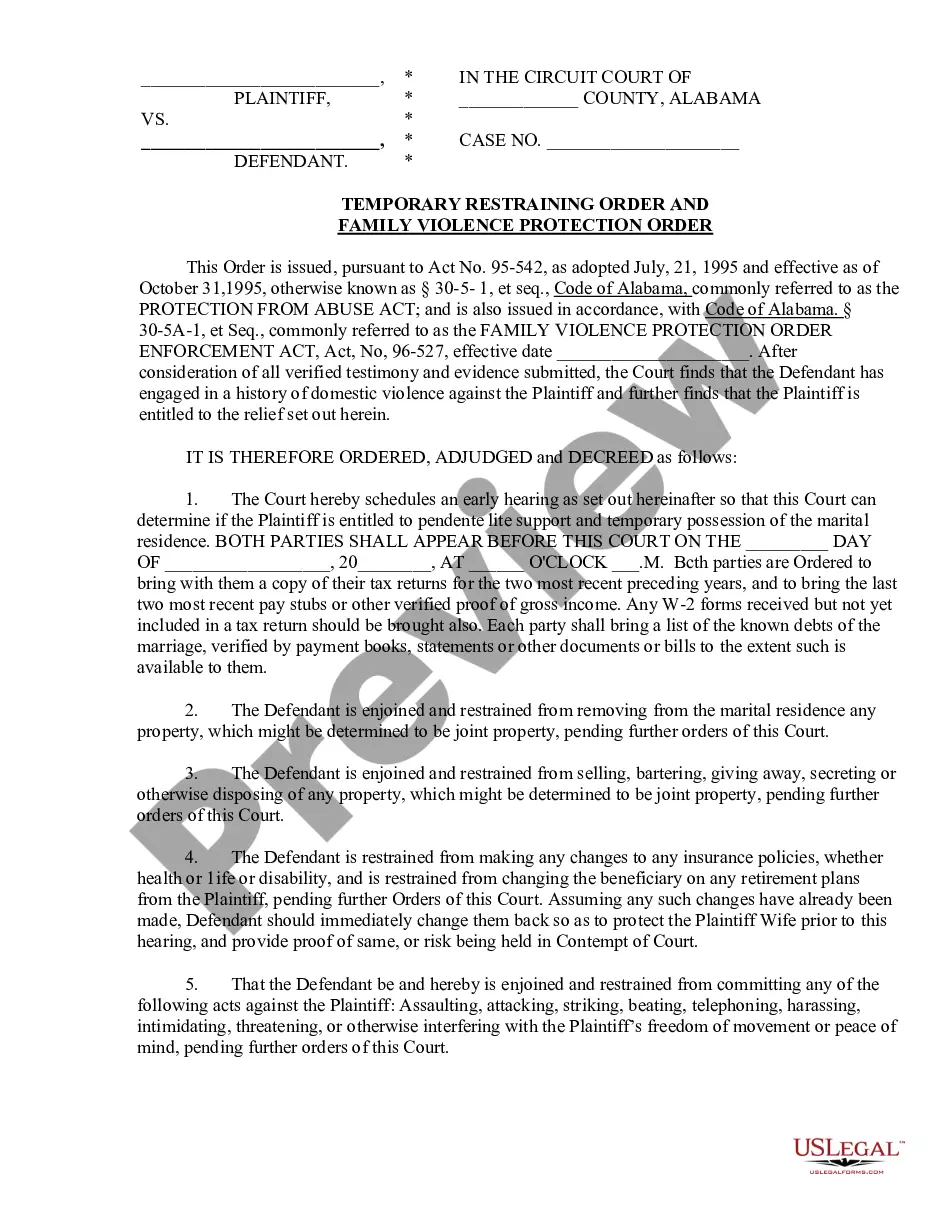
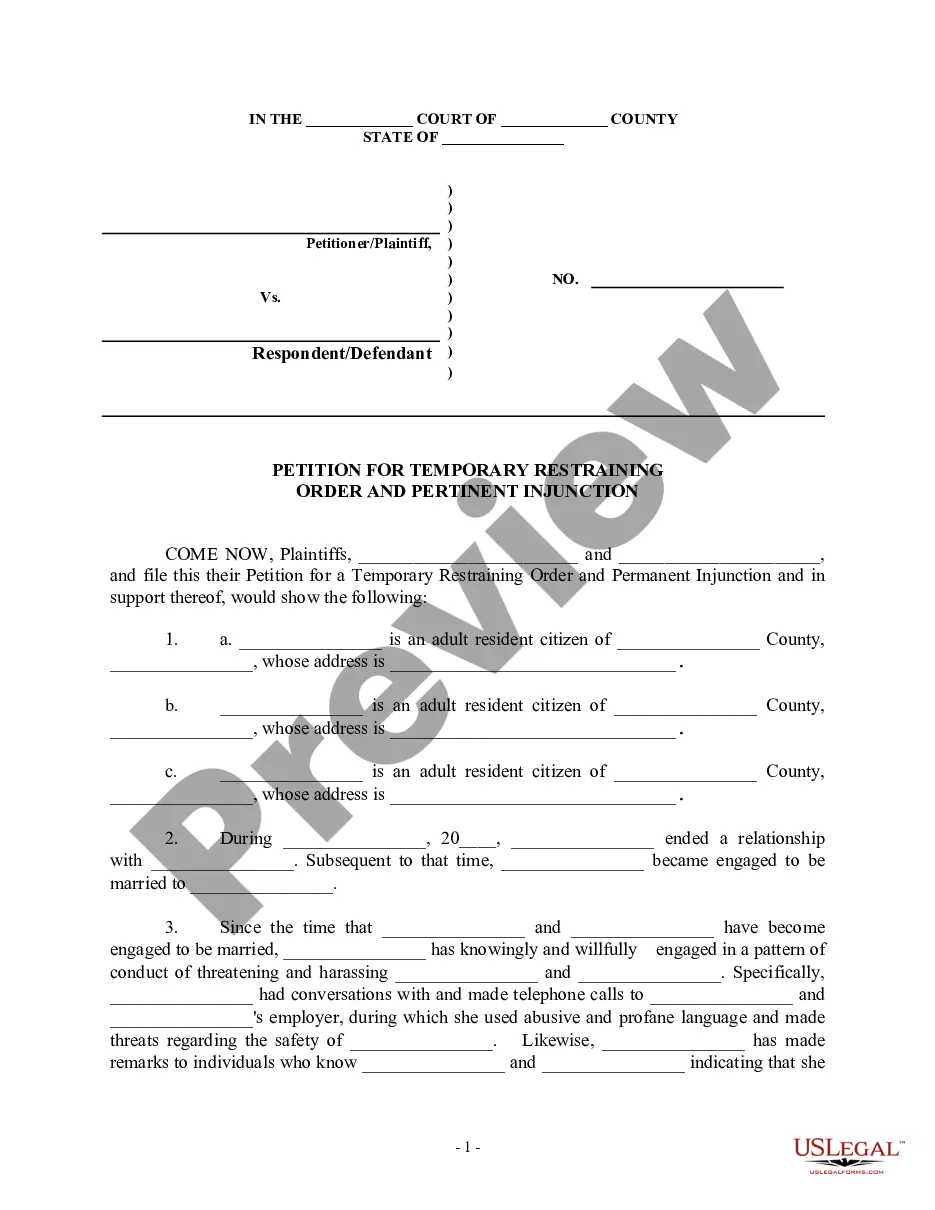
The Temporary Restraining Order and Family Violence Protection Order is a legal document designed to provide immediate protection to individuals experiencing domestic violence or threats from a partner or family member. This form is distinct as it not only restrains the abuser from making contact but also protects the victim's rights concerning joint property and other related issues while legal proceedings are pending.
Main sections of this form
- Identification of the plaintiff and defendant involved in the case.
- Court orders related to possession of marital property and financial support.
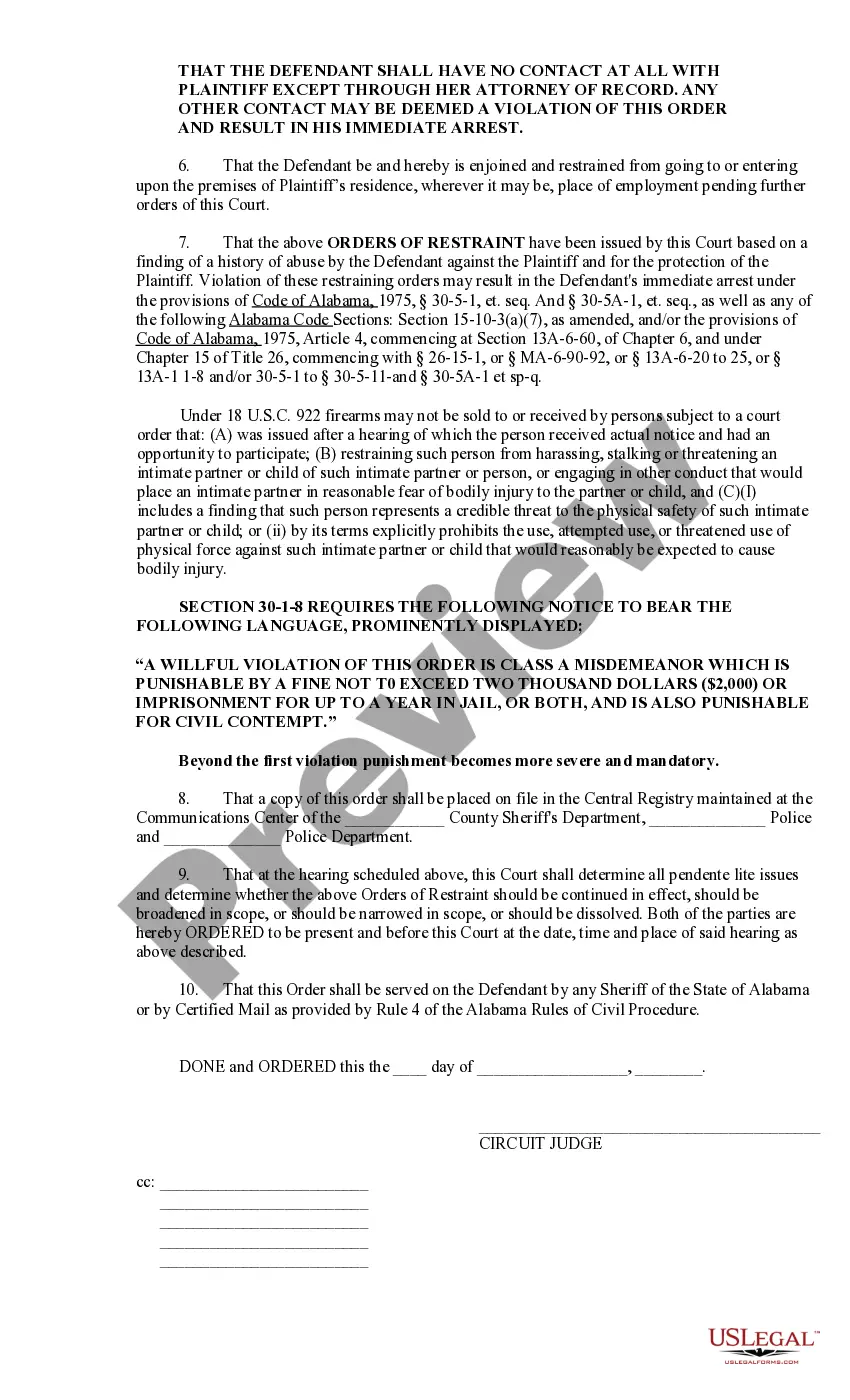
- Prohibitions against harassment and contact between the parties, including entry to residences and workplaces.
- Consequences for violating the order, including potential criminal charges and civil contempt.
- Requirements for both parties to appear in court for further hearings.
Common use cases
This form should be used when an individual feels threatened or has been a victim of domestic violence. It is typically filed in situations where there is a need for immediate protection from an abusive partner, ensuring safety and security while legal proceedings, such as divorce or custody battles, are ongoing.
Who should use this form
- Individuals who are victims of domestic violence or abuse.
- People seeking legal protection from a partner or family member.
- Anyone involved in a family division case related to violence or abuse.
Steps to complete this form
- Identify the parties: Fill in the names of the plaintiff and defendant, including their addresses.
- Detail the relationship: Describe the nature of the relationship between the parties involved.
- Specify the incidents: Document specific acts of violence or threats that necessitate the restraining order.
- Complete financial disclosures: Include relevant financial information, such as income and joint debts.
- Sign the form: Ensure that the form is signed and dated in front of a notary if applicable.
Is notarization required?
This form does not typically require notarization to be legally valid. However, some jurisdictions or document types may still require it. US Legal Forms provides secure online notarization powered by Notarize, available 24/7 for added convenience.
Get your form ready online
Our built-in tools help you complete, sign, share, and store your documents in one place.
Make edits, fill in missing information, and update formatting in US Legal Forms—just like you would in MS Word.
Download a copy, print it, send it by email, or mail it via USPS—whatever works best for your next step.
Sign and collect signatures with our SignNow integration. Send to multiple recipients, set reminders, and more. Go Premium to unlock E-Sign.
If this form requires notarization, complete it online through a secure video call—no need to meet a notary in person or wait for an appointment.
We protect your documents and personal data by following strict security and privacy standards.

Make edits, fill in missing information, and update formatting in US Legal Forms—just like you would in MS Word.

Download a copy, print it, send it by email, or mail it via USPS—whatever works best for your next step.

Sign and collect signatures with our SignNow integration. Send to multiple recipients, set reminders, and more. Go Premium to unlock E-Sign.

If this form requires notarization, complete it online through a secure video call—no need to meet a notary in person or wait for an appointment.

We protect your documents and personal data by following strict security and privacy standards.
Common mistakes to avoid
- Failing to provide complete and accurate information about the incidents of abuse.
- Not disclosing all relevant financial information or joint property.
- Leaving sections of the form blank which may cause delays in processing.
- Not ensuring both parties appear for the scheduled hearing.
Benefits of using this form online
- Convenience of completing the form from home without needing to visit a legal office.
- Editable format allows for easy updates and corrections before submission.
- Access to professionally drafted templates increases confidence in legal accuracy.
Legal use & context
- This order serves as a legal protection mechanism for individuals facing domestic violence.
- Violations can lead to arrest and additional legal consequences for the abuser.
- The order remains in effect until modified or dissolved by the court.
Summary of main points
- The Temporary Restraining Order is crucial for protecting victims of domestic violence.
- Accurate completion of the form is essential for legal effectiveness.
- Consult legal advice if unsure about the process or requirements.
Looking for another form?
Form popularity
FAQ
Violating the protection order by committing an act of abuse (assault, child abuse, harassment, sexual abuse, stalking, theft, trespassing, unlawful imprisonment, etc.) will be punished as a Class A misdemeanor. Additionally, a person can be found in civil contempt of court for not following the order.
Temporary restraining orders usually last between 20 and 25 days, until the court hearing date. When you go to court for the hearing that was scheduled for your TRO, the judge may issue a permanent restraining order. They are not really permanent because they usually last up to 5 years.
A temporary restraining order (TRO) is a legal document issued by a judge before trial that forces or prevents an action for a specified time frame. During court cases that involve trademark infringement or the use of a trade secret, a TRO can halt patent, copyright, or trademark infringement in the short term.
If you believe the protection order was granted improperly or that it is no longer needed, you can file a motion asking the court to dissolve (terminate or cancel) the protection order.If the court schedules a hearing and grants the motion, the protection order will become immediately void and unenforceable.
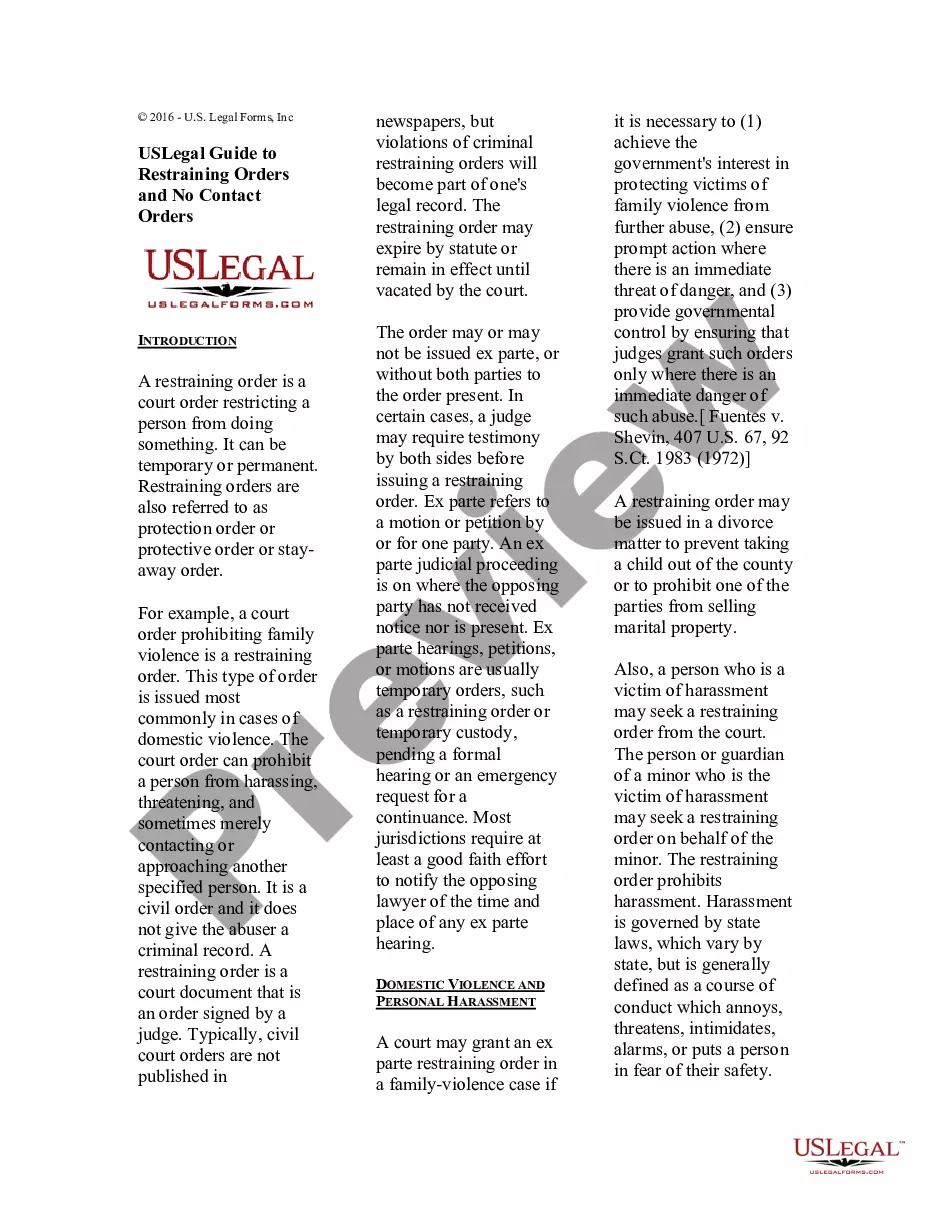
A restraining order can be issued by either a criminal or civil court in Alabama. If it is issued by a criminal court, this means that the perpetrator also has criminal charges pending. With a civil court case, you aren't asking that the person be jailed, but rather that they stay away from you and stop the abuse.
No. A victim who has an order of protection (temporary or final) cannot violate his/her own order or be arrested for violating such order.
A court order that lasts only until the court can hear further evidence. A Temporary Restraining Order (TRO) is a court order of limited duration. A TRO commands the parties in the case to maintain a certain status until the court can hear further evidence and decide whether to issue a preliminary injunction.
A criminal no contact order will typically prevent the defendant from any contact with the victim or witnesses. The defendant will not be permitted to contact the victim or witnesses in person, via telephone, email, text messages, written mail, or through third party contact.
If a person is subject to a restraining order and violates it, he or she can face serious penalties.Even if the parties no longer desire the restraining order to be in effect, the restraining order is still valid and enforceable while in effect. In order to remove it, the restraining order must be lifted by the court.