Alabama Interviewing Insurance Fraud Form
About this form
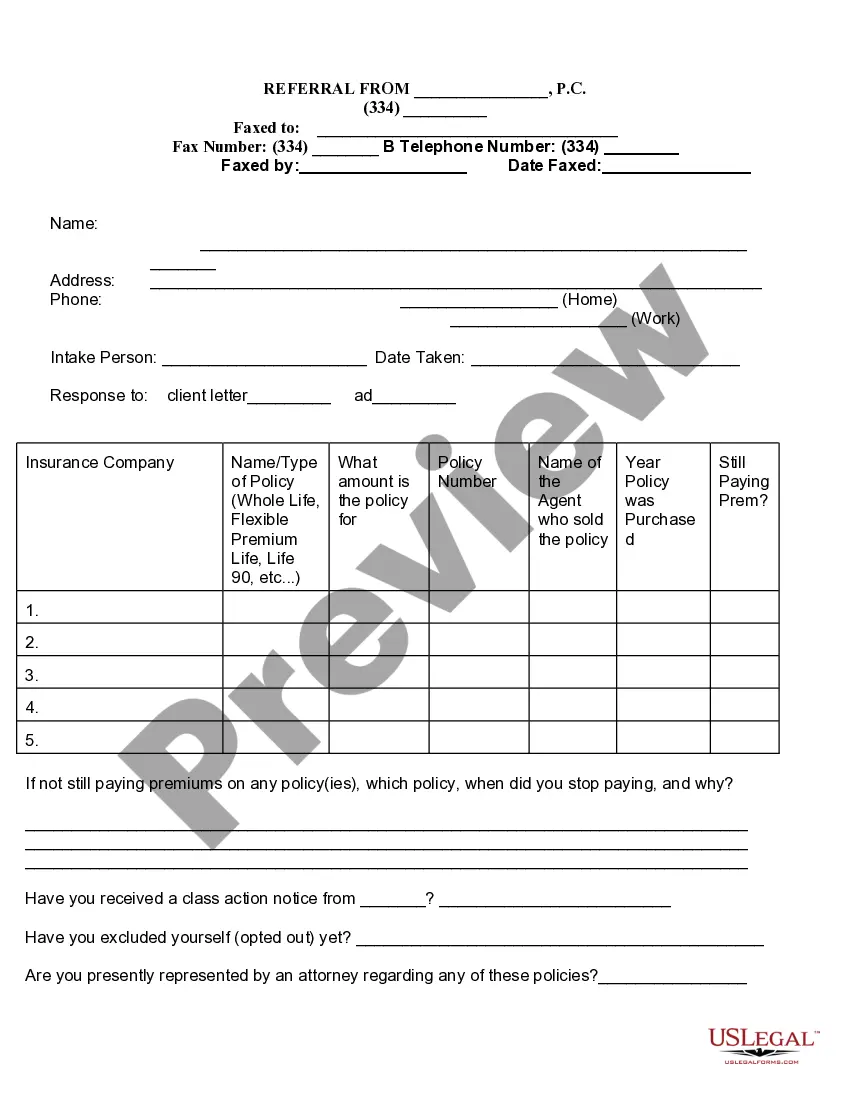
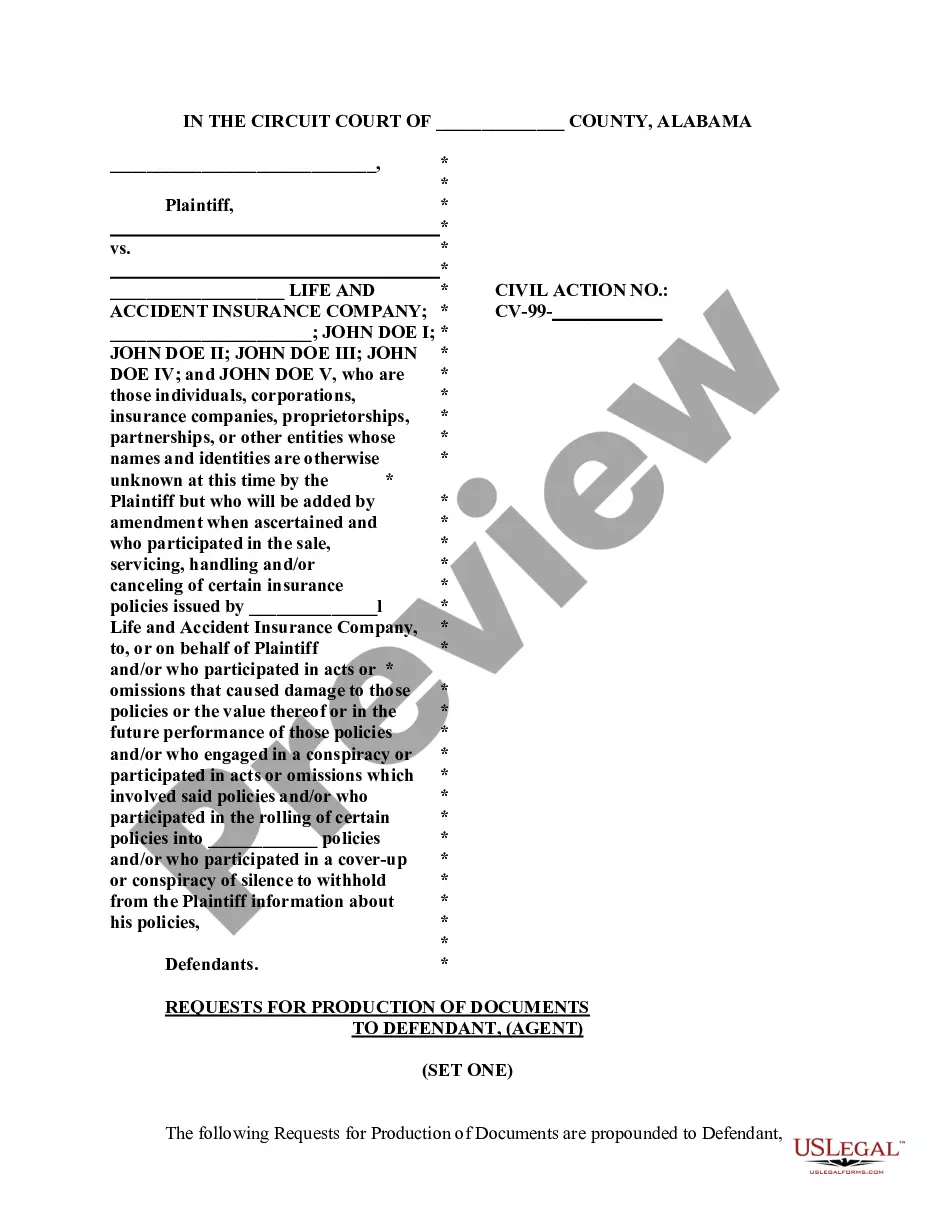
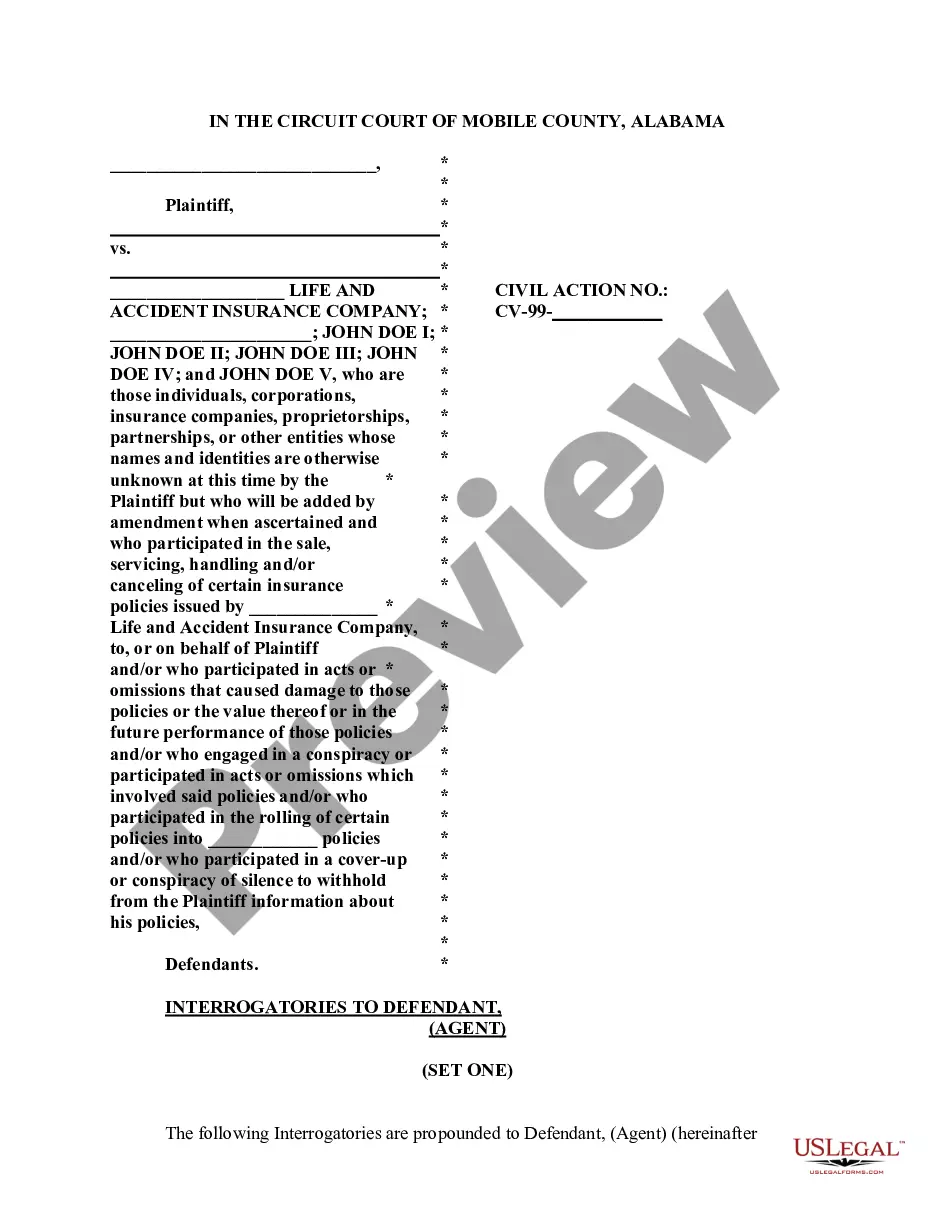
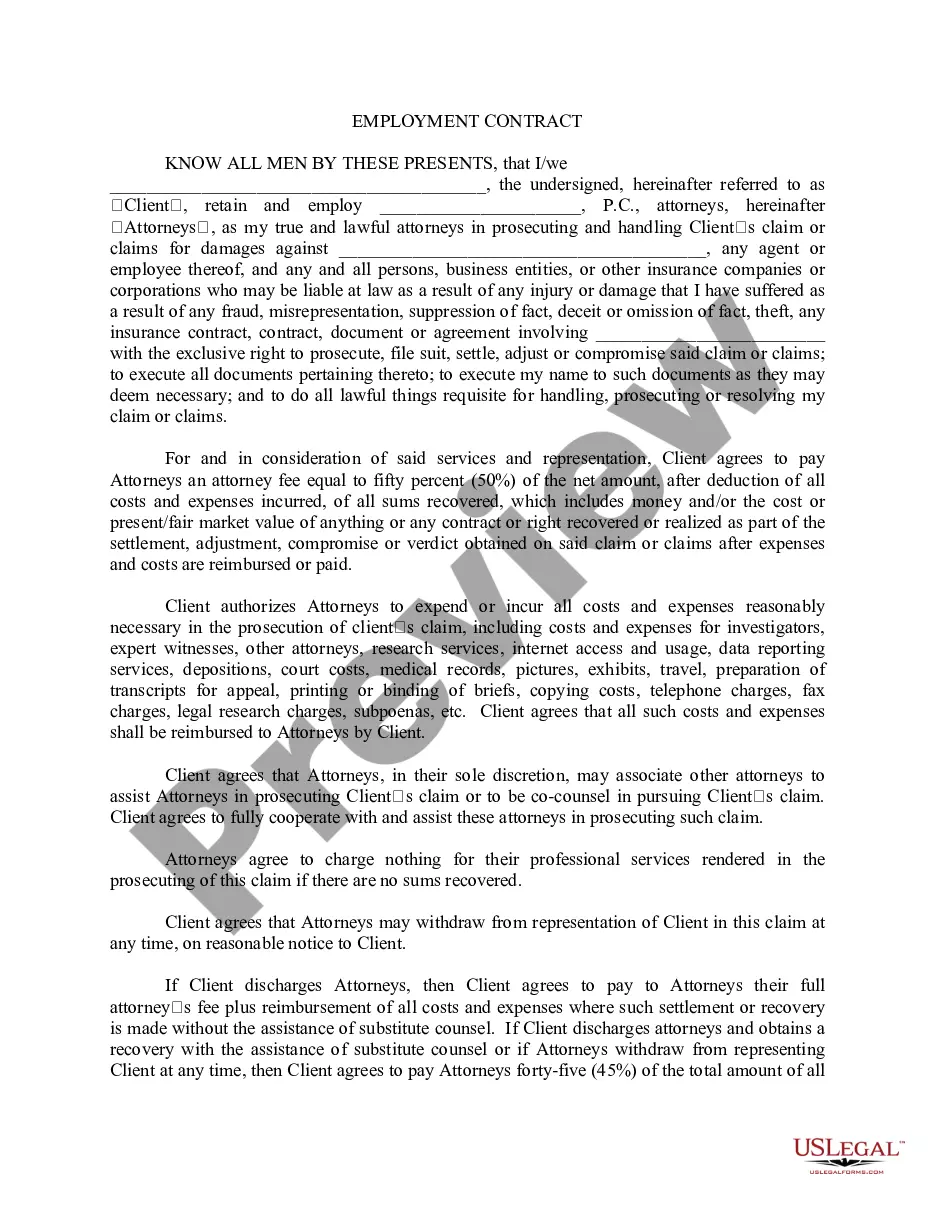
The Interviewing Insurance Fraud Form is a specialized document used to assist attorneys in evaluating claims of insurance fraud. This form is designed for use when a client alleges fraudulent activity by their insurance provider. It differs from general client intake forms by focusing specifically on details related to insurance policies and potential fraud issues.
Key components of this form
- Contact information for both the client and attorney.
- Details of the insurance company and types of policies involved.
- Policy number and amount covered by the insurance policy.
- Information regarding the agent who sold the policy.
- History of premium payments including any lapses.
- Responses to class action notices related to the policy.

Situations where this form applies
This form should be utilized when clients suspect that their insurance company has committed fraud. It is particularly important in cases where the client has received communications regarding class action lawsuits or if there are issues regarding non-payment of claims. Attorneys will use the information gathered through this form to assess the validity of the fraud claim and to prepare for potential legal actions.
Who can use this document
Eligibility to use the Interviewing Insurance Fraud Form includes:
- Attorneys representing clients alleging insurance fraud.
- Individuals who have concerns about fraudulent activities by their insurance company.
- Clients who have received class action notices related to their insurance policies.
Steps to complete this form
- Fill in your contact information including phone number and address.
- Provide details about the insurance company and the type of policy involved.
- Enter the policy number along with the coverage amount.
- Document the agent's name who sold you the policy and the year it was purchased.
- Indicate your history of premium payments, noting any lapses and reasons for cessation.
- Respond to questions about class action notices as applicable.
Is notarization required?
Notarization is not commonly needed for this form. However, certain documents or local rules may make it necessary. Our notarization service, powered by Notarize, allows you to finalize it securely online anytime, day or night.
Get your form ready online
Our built-in tools help you complete, sign, share, and store your documents in one place.
Make edits, fill in missing information, and update formatting in US Legal Forms—just like you would in MS Word.
Download a copy, print it, send it by email, or mail it via USPS—whatever works best for your next step.
Sign and collect signatures with our SignNow integration. Send to multiple recipients, set reminders, and more. Go Premium to unlock E-Sign.
If this form requires notarization, complete it online through a secure video call—no need to meet a notary in person or wait for an appointment.
We protect your documents and personal data by following strict security and privacy standards.

Make edits, fill in missing information, and update formatting in US Legal Forms—just like you would in MS Word.

Download a copy, print it, send it by email, or mail it via USPS—whatever works best for your next step.

Sign and collect signatures with our SignNow integration. Send to multiple recipients, set reminders, and more. Go Premium to unlock E-Sign.

If this form requires notarization, complete it online through a secure video call—no need to meet a notary in person or wait for an appointment.

We protect your documents and personal data by following strict security and privacy standards.
Common mistakes to avoid
- Leaving out crucial contact information.
- Not specifying the correct policy number or details.
- Failing to document compliance with class action notices.
- Providing incomplete histories of premium payments.
Advantages of online completion
- Convenience of completing the form from the comfort of your home.
- Editability allows users to make changes before finalizing the submission.
- Access to reliable templates created by licensed attorneys ensures compliance with legal standards.
Looking for another form?
Form popularity
FAQ
Report Suspected Fraud. The State Fire Marshals Office invites anyone with information regarding Insurance Fraud to submit information about the crime through this website online tip form. The information will be relayed directly to the Insurance Fraud Bureau.
Insurance fraud is considered a serious crime by federal prosecutors. Many people don't realize they are under insurance fraud criminal investigation.
The new law defines Alabama criminal insurance fraud in which the loss or potential loss exceeds $1,000.00 as a Class B Felony, punishable by 2 to 20 years in prison. Loss or potential loss less than $1,000.00 is a Class C felony which carries a penalty of up to 10 years in prison.
Penal Code 548 damaging, destroying, hiding or abandoning an insured vehicle with intent to defraud the insurance company is a California felony. The potential penalties are: Felony (formal) probation; Two (2), three (3) or five (5) years in jail; and/or.
Federal law does not address insurance fraud as a distinct offense, but it is covered by the mail fraud and wire fraud statutes, which give the federal government jurisdiction over insurance fraud that affects interstate commerce. State statutes often include specific prohibitions on different types of insurance fraud.
In federal court the crime of insurance fraud is usually prosecuted as mail fraud, criminal racketeering or other federal offenses.
A final note: fraud of all types (including auto insurance fraud) has legal consequences in the U.S. If you're caught in a fraudulent lie, you'll not only be on the hook for any costs your insurer would have otherwise covered, you may be facing hefty fines, community service, probation, or even jail time.
Federal law defines fraud as any intentional deception or misrepresentation used to benefit yourself or someone else. The federal government, through its prosecutors in the United States Attorneys' Office, penalizes various kinds of fraud specifically identified under federal laws.