Alabama HVAC Contract for Contractor
What this document covers
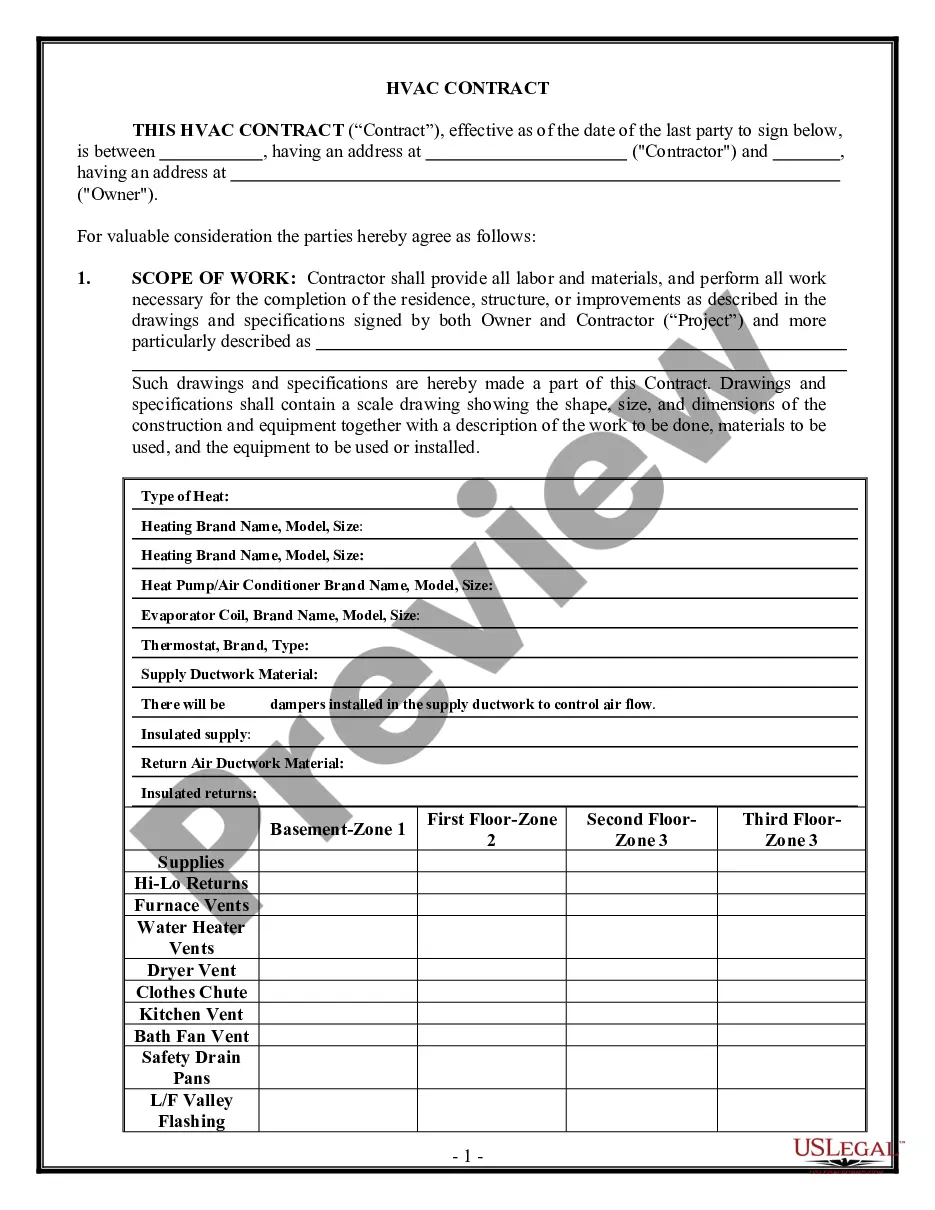
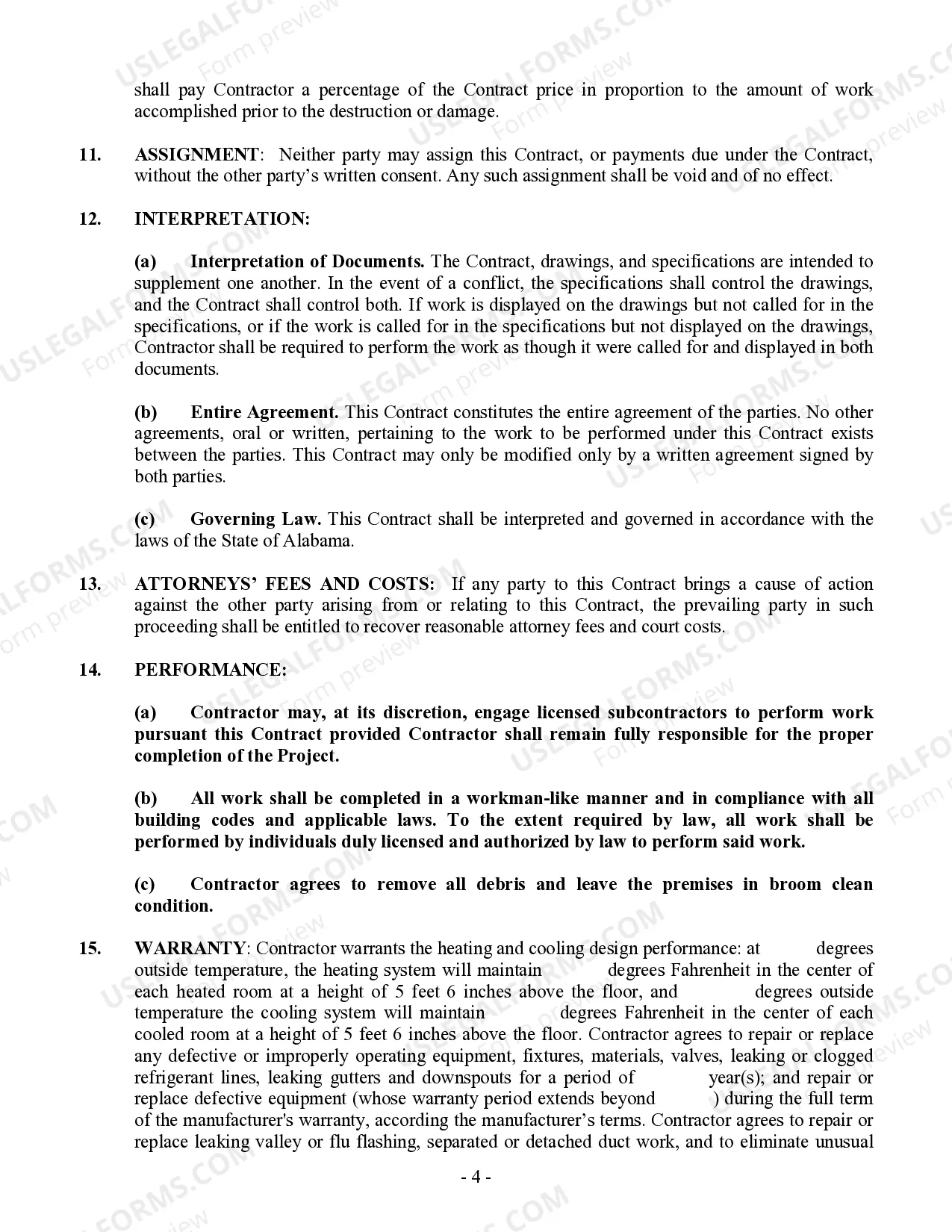
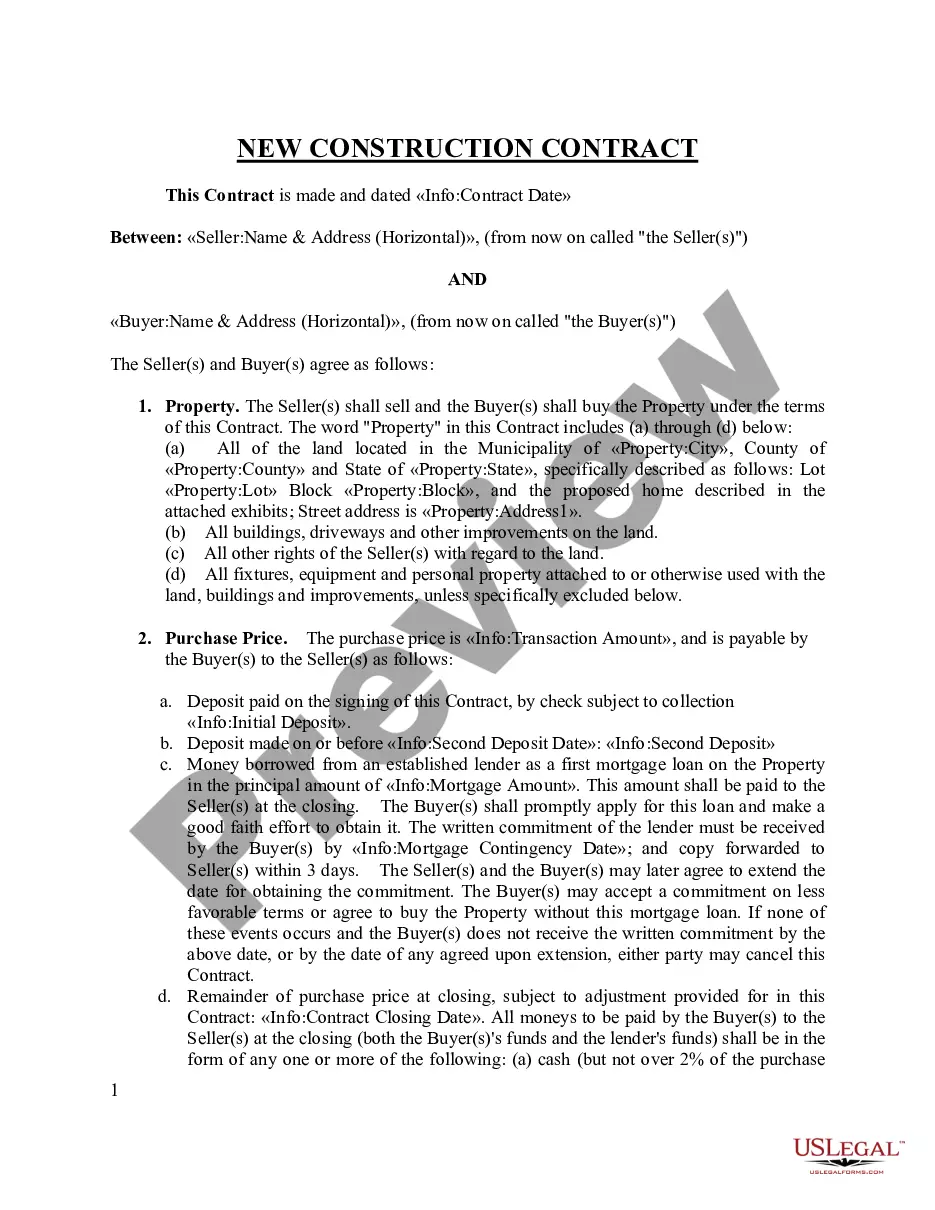
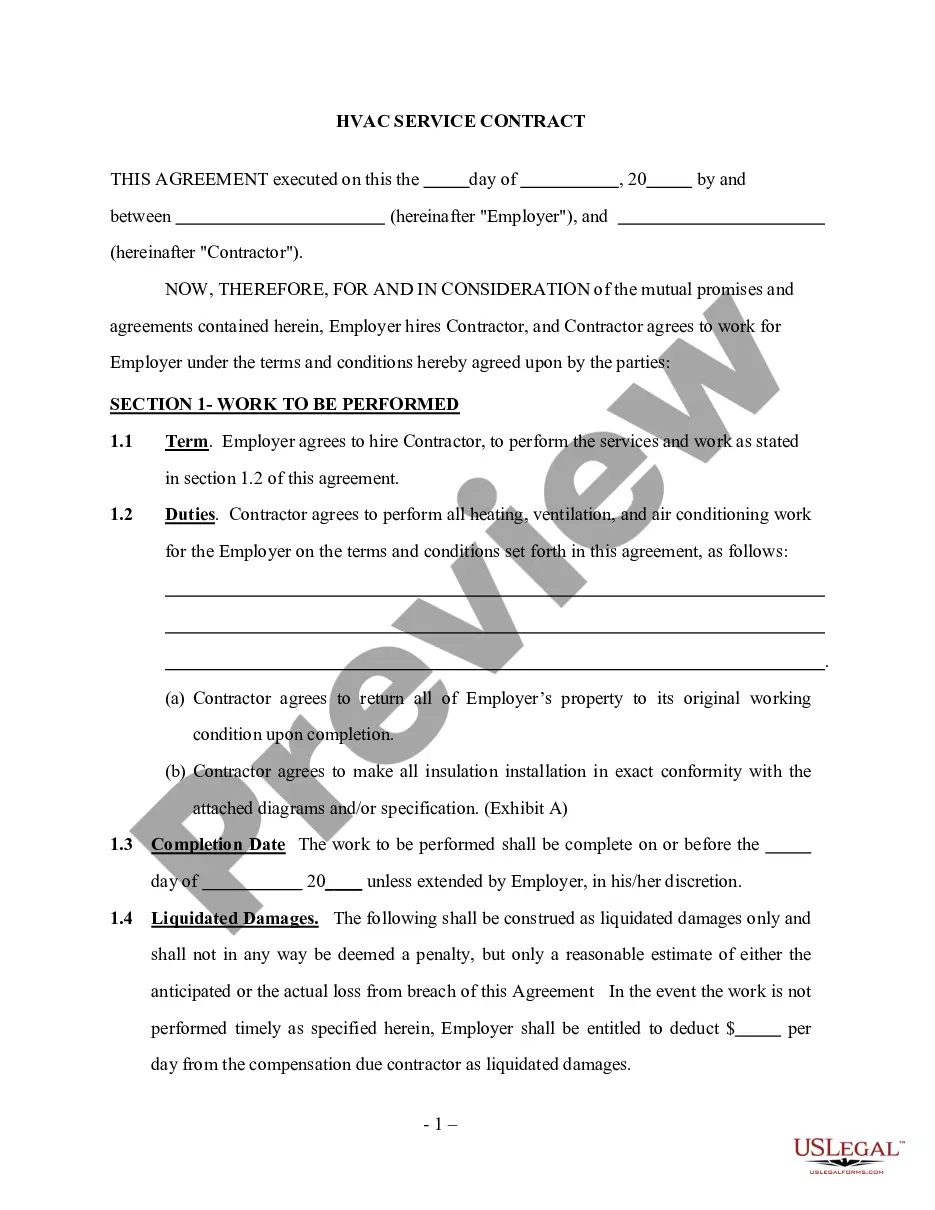
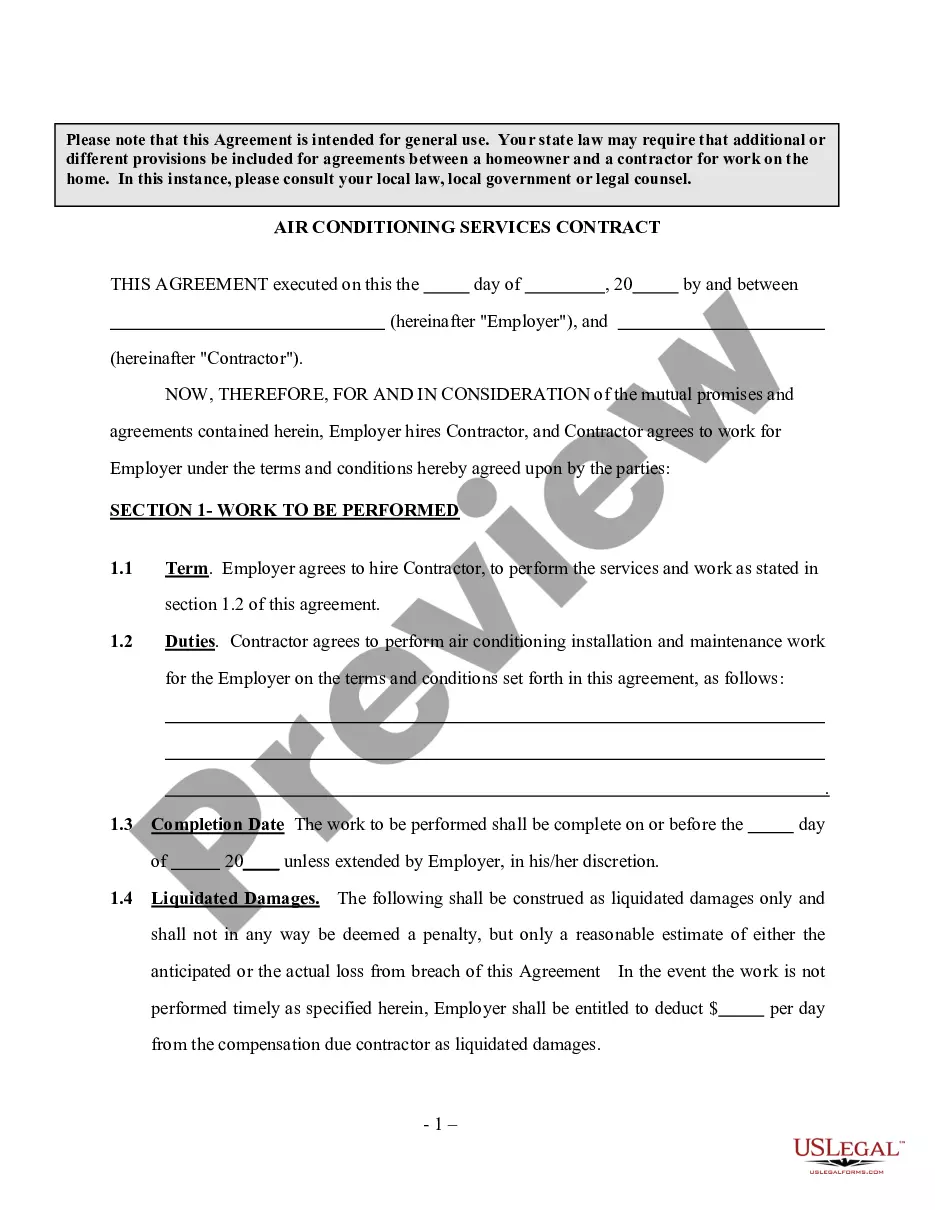
The HVAC Contract for Contractor is a legal document designed for use between HVAC contractors and property owners. This contract allows parties to establish terms for their working relationship, including payment arrangements, change orders, and insurance responsibilities. It is specifically tailored to comply with Alabama state laws, ensuring that both parties have a clear understanding of their rights and obligations in the HVAC project. This form differs from other contracts by addressing the unique aspects of HVAC work, making it essential for a successful project outcome.
Key parts of this document
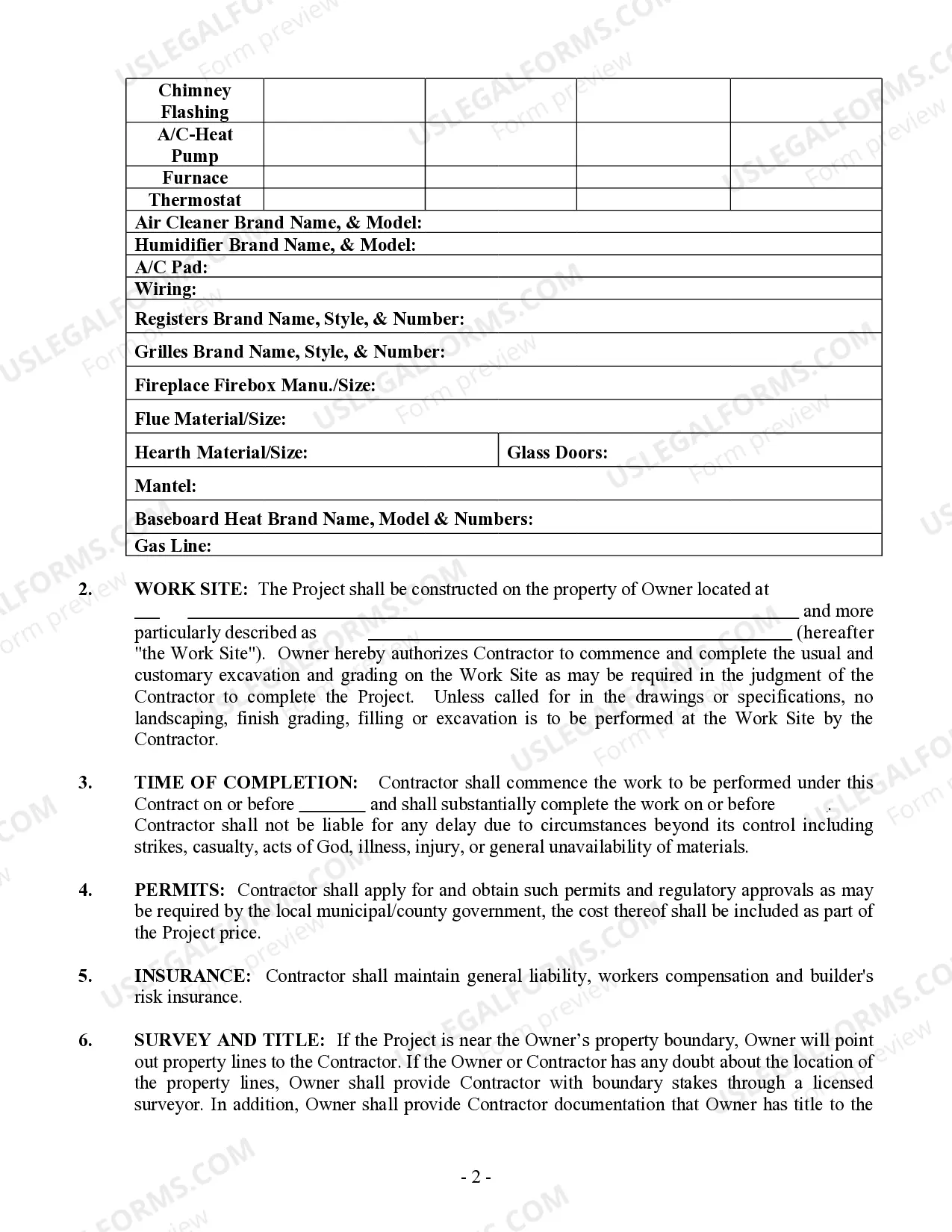
- Permits: Specifies the contractor's responsibility for obtaining necessary permits for the project.
- Insurance: Outlines the types of insurance the contractor must maintain, including liability and workers' compensation.
- Survey and Title: Addresses the need for property boundaries and documentation of ownership.
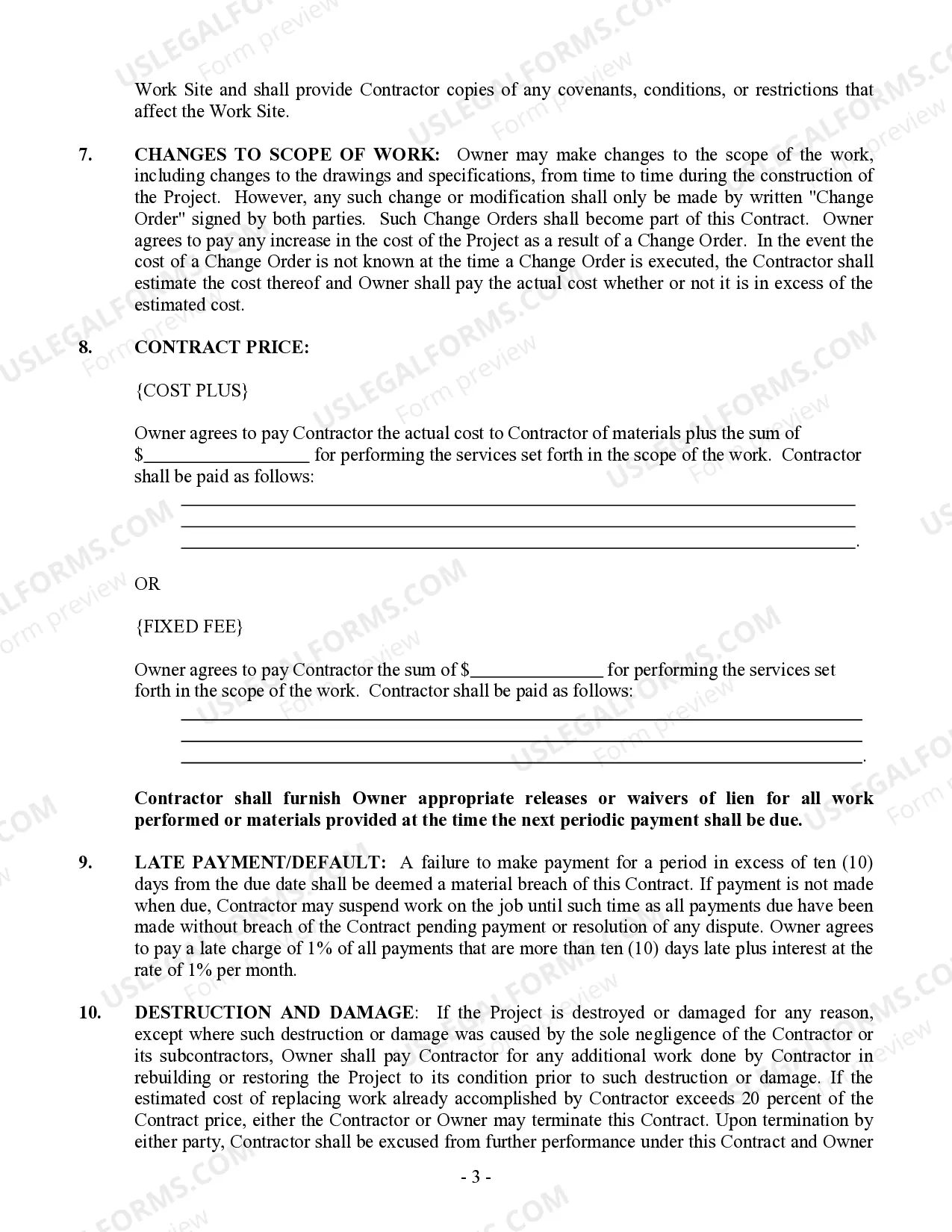
- Changes to Scope of Work: Describes the process for making changes to the project's parameters, requiring written change orders.

When to use this form
This HVAC Contract for Contractor should be used when a property owner wishes to hire an HVAC contractor for installation, maintenance, or repair work. It is appropriate in scenarios where clear terms regarding project scope, payment structure, and responsibilities are necessary to avoid misunderstandings. Whether the payment is based on a fixed fee or cost plus arrangement, this contract ensures all parties are on the same page about the project execution.
Who should use this form
- HVAC contractors looking to formalize their service agreements with property owners.
- Property owners seeking reliable terms for hiring HVAC services.
- Parties involved in HVAC projects in Alabama who require a clear contractual framework.
How to prepare this document
- Identify the parties involved: Enter the names and contact information of the contractor and property owner.
- Specify the project details: Clearly outline the scope of work, including installation or repair specifics.
- Detail the payment arrangement: Indicate whether the payment will be cost plus or fixed fee, and include amounts.
- Include insurance information: Confirm that the contractor maintains necessary insurance types.
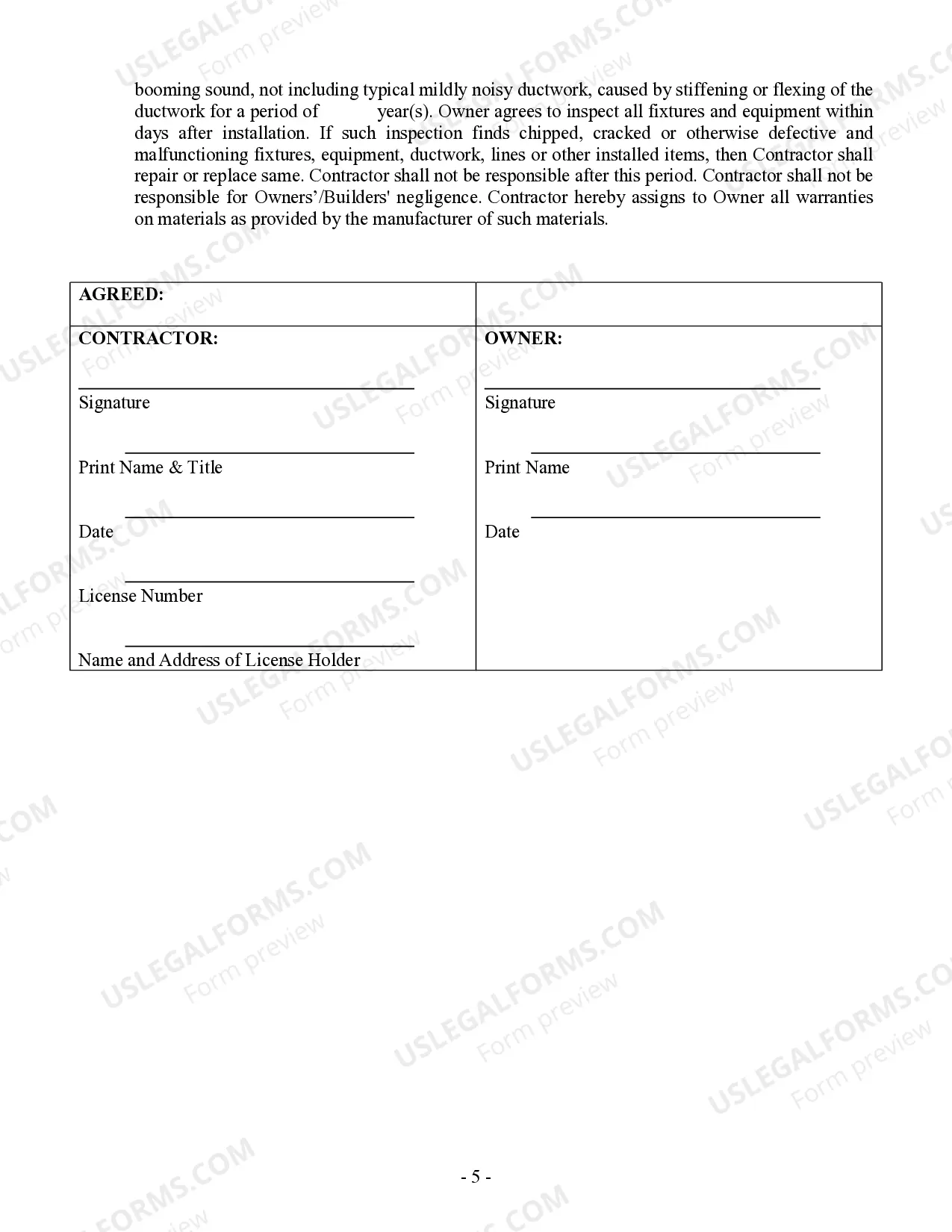
- Sign and date the contract: Both parties should review and sign the document to make it legally binding.
Does this document require notarization?
This form does not typically require notarization unless specified by local law. Always verify local requirements to ensure legal compliance.
Get your form ready online
Our built-in tools help you complete, sign, share, and store your documents in one place.
Make edits, fill in missing information, and update formatting in US Legal Forms—just like you would in MS Word.
Download a copy, print it, send it by email, or mail it via USPS—whatever works best for your next step.
Sign and collect signatures with our SignNow integration. Send to multiple recipients, set reminders, and more. Go Premium to unlock E-Sign.
If this form requires notarization, complete it online through a secure video call—no need to meet a notary in person or wait for an appointment.
We protect your documents and personal data by following strict security and privacy standards.

Make edits, fill in missing information, and update formatting in US Legal Forms—just like you would in MS Word.

Download a copy, print it, send it by email, or mail it via USPS—whatever works best for your next step.

Sign and collect signatures with our SignNow integration. Send to multiple recipients, set reminders, and more. Go Premium to unlock E-Sign.

If this form requires notarization, complete it online through a secure video call—no need to meet a notary in person or wait for an appointment.

We protect your documents and personal data by following strict security and privacy standards.
Mistakes to watch out for
- Failing to specify the project scope clearly, which can lead to disputes.
- Not obtaining necessary permits before commencing work.
- Neglecting to include a clause for change orders, which can complicate adjustments.
- Overlooking insurance requirements, potentially leaving parties vulnerable.
Benefits of completing this form online
- Convenient access: Download the HVAC Contract at any time from your device.
- Editability: Customize the form to fit your specific project needs easily.
- Legal reliability: Ensure adherence to Alabama state laws with professionally drafted templates.
Legal use & context
- This contract outlines clear responsibilities, helping to establish enforceable agreements between the parties.
- It is crucial for setting expectations around costs, responsibilities, and project timelines.
- Legal protections are increased when both parties adhere to the terms specified in the contract.
Quick recap
- The HVAC Contract facilitates clear communication between contractors and property owners.
- It includes essential components that protect both partiesâ interests.
- Completing the form accurately is vital for legal enforceability and successful project execution.
Looking for another form?

Form popularity
FAQ
The Alabama HVAC Contract for Contractor is a standard agreement designed for use between an HVAC contractor and a property owner in Alabama. It formalizes the working relationship, clarifies project scope and payment terms, and specifies how changes are approved. It also covers permits, insurance responsibilities, and, when needed, survey/title issues to ensure compliance with Alabama law for installation, maintenance, or repair work.
Use the Alabama HVAC Contract for Contractor as the template, start by naming the contractor and property owner, and describe the project scope (installation, maintenance, or repair). Add payment terms (fixed fee or cost-plus), assign permit responsibilities, include required insurance terms, and add written change orders for any scope changes. Sign and date to bind the agreement.
This contract supports compliance with Alabama law but does not grant or verify any license. Licensing requirements are set by state authorities—verify the contractor is properly licensed and that permits and insurance provisions in this agreement meet Alabama rules before work begins.
Licensing and certification requirements are determined by Alabama authorities and are not defined by this contract. The form presumes licensed professionals operate under applicable rules. For specific obligations, consult the Alabama licensing board or a qualified attorney and confirm the contractor’s license before starting work.
The contract is between the property owner and the HVAC contractor. If subcontractors are used, terms should be clarified in the project agreement. This form focuses on permits, insurance, changes to the scope of work, and payment terms, so ensure any subcontractor arrangement complies with this contract and Alabama law.
This form is tailored to Alabama state law, with built-in references to permits, insurance, and survey/title issues, plus a clear process for written change orders. Its language reflects Alabama’s requirements for HVAC installation, maintenance, or repair projects, providing state-specific protections not found in a generic contract.