Alaska Revocation of Advance Health Care Directive
What is this form?
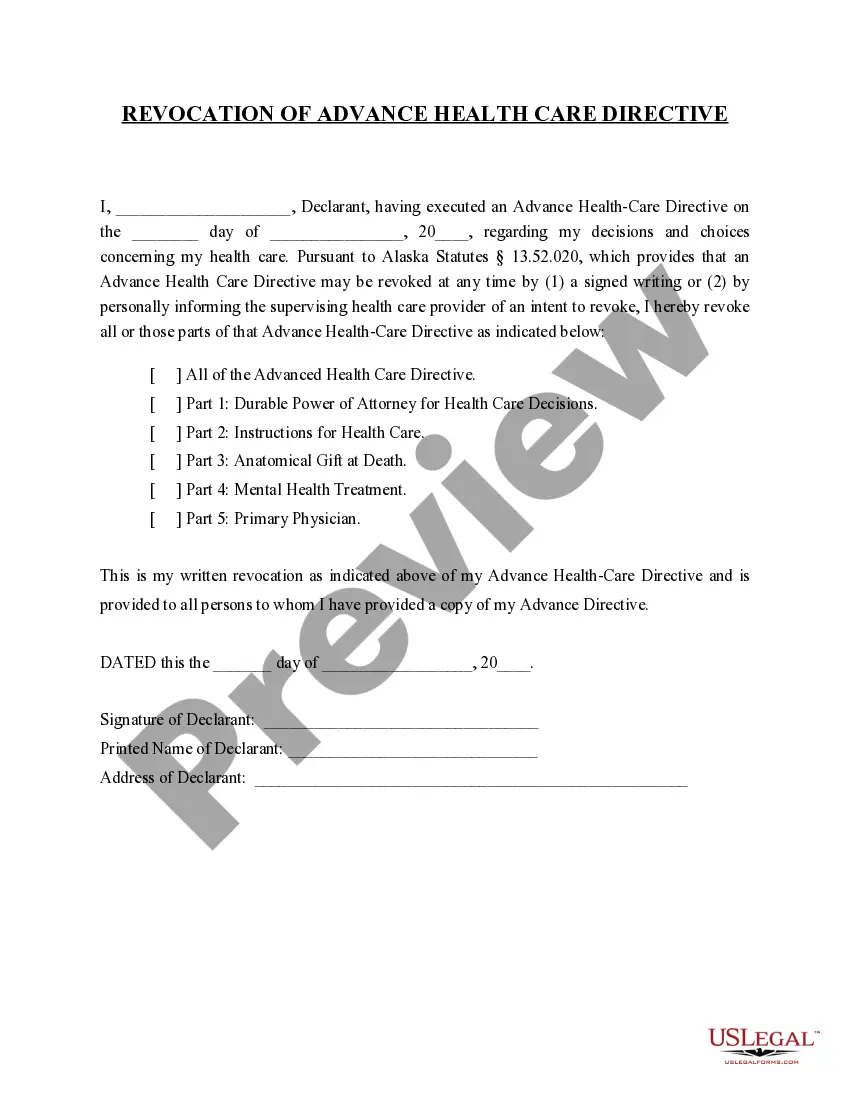
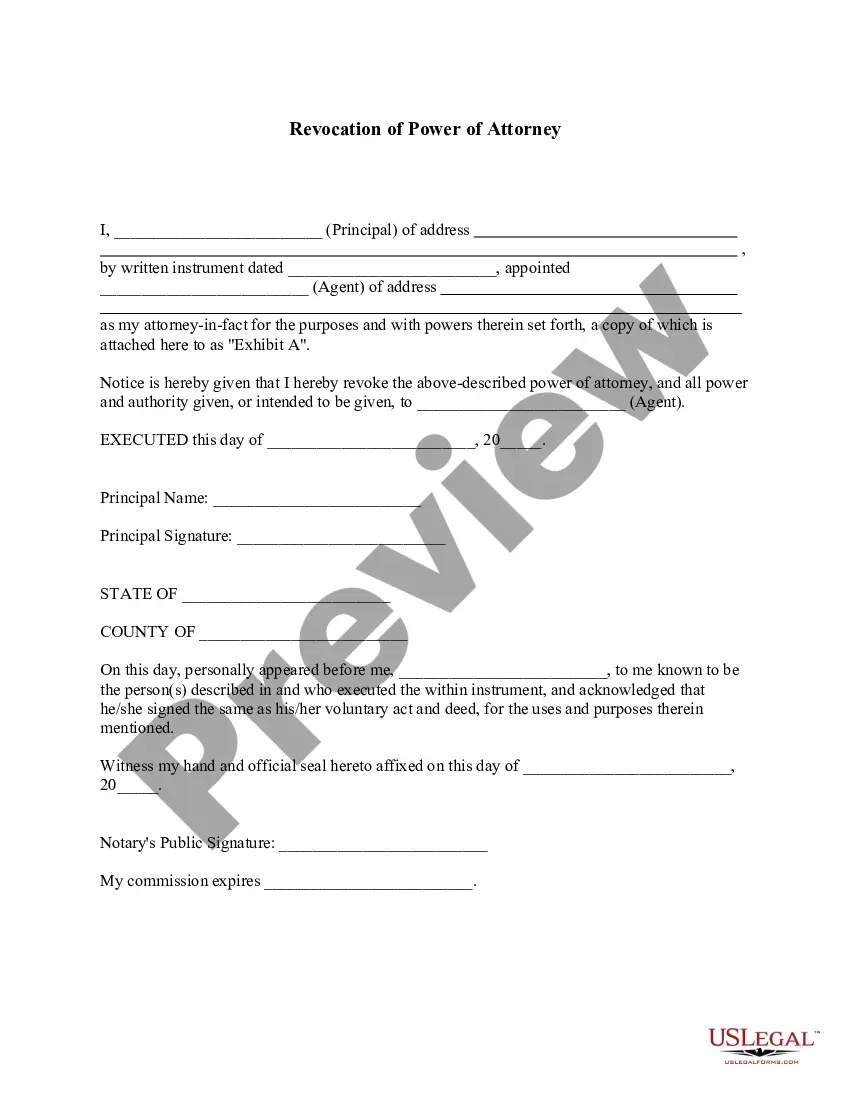
The Revocation of Advance Health Care Directive is a legal document that allows you to revoke any previously expressed wishes regarding your health care, specifically those outlined in an Advance Health Care Directive. This form is essential for individuals who wish to change or eliminate their earlier decisions about medical treatments and interventions in the event of terminal illness or incapacity. By using this form, you ensure that your current wishes are clearly documented and legally recognized, differentiating it from other medical directives and living wills.
Main sections of this form
- Declarant's personal information, including name and address.
- Date of the original Advance Health Care Directive that is being revoked.
- Clear declaration of which parts of the original directive are being revoked.
- Signature of the declarant to validate the revocation.
- Effective date of the revocation.
When to use this form
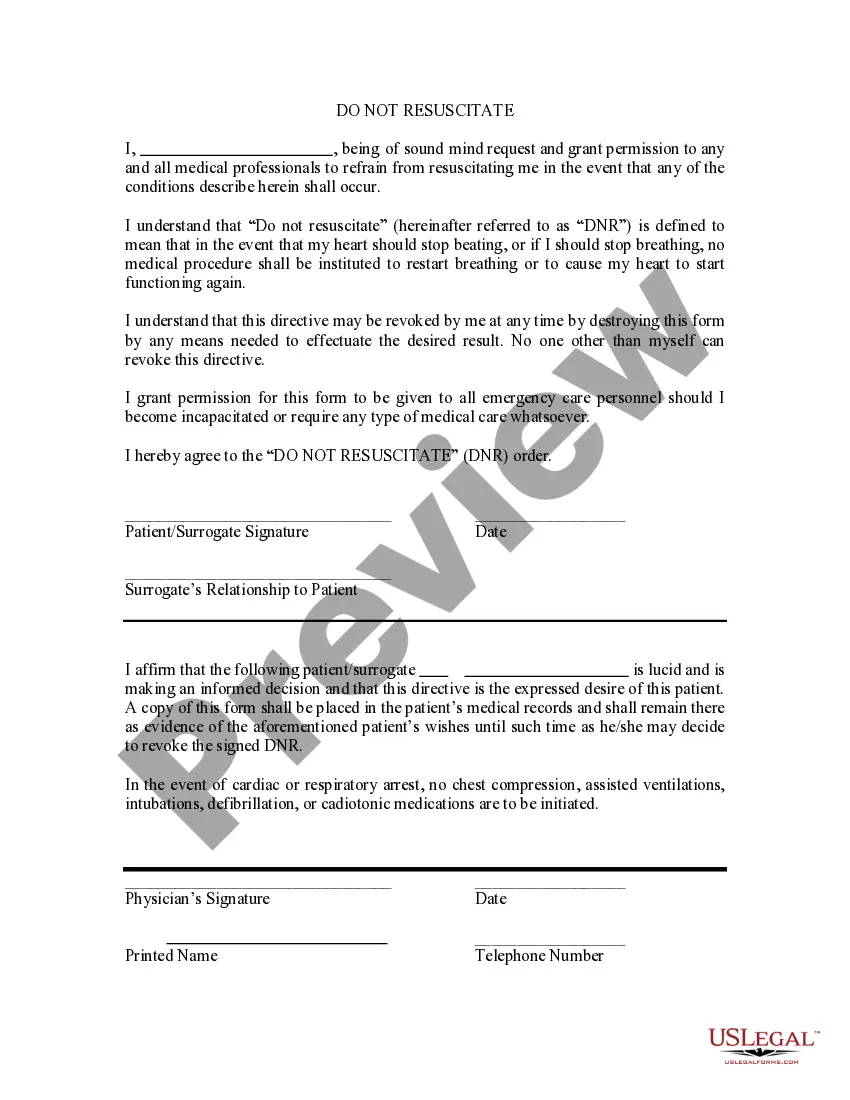
This form should be used when you want to cancel a prior Advance Health Care Directive due to changes in your health beliefs, specific medical situations, or personal choices about how you wish to be treated in case of serious illness. It is especially important to use this form to clarify your wishes if circumstances have changed since the original directive was executed.
Who should use this form
- Individuals who have previously completed an Advance Health Care Directive.
- Any person who wants to change their health care decisions due to changes in their life or health status.
- People who need to ensure their current medical wishes are documented and recognized legally.
- Patients facing new medical conditions requiring a revision of health care preferences.
How to prepare this document
- Begin by filling out your name and relevant personal information at the start of the document.
- State the date on which your original Advance Health Care Directive was executed.
- Clearly indicate whether you are revoking the entire directive or specific parts, such as particular health care instructions or powers of attorney.
- Sign the document to validate your revocation.
- Complete the date at which the revocation is signed to confirm its effectiveness.
Does this document require notarization?
Notarization is not commonly needed for this form. However, certain documents or local rules may make it necessary. Our notarization service, powered by Notarize, allows you to finalize it securely online anytime, day or night.
Get your form ready online
Our built-in tools help you complete, sign, share, and store your documents in one place.
Make edits, fill in missing information, and update formatting in US Legal Forms—just like you would in MS Word.
Download a copy, print it, send it by email, or mail it via USPS—whatever works best for your next step.
Sign and collect signatures with our SignNow integration. Send to multiple recipients, set reminders, and more. Go Premium to unlock E-Sign.
If this form requires notarization, complete it online through a secure video call—no need to meet a notary in person or wait for an appointment.
We protect your documents and personal data by following strict security and privacy standards.

Make edits, fill in missing information, and update formatting in US Legal Forms—just like you would in MS Word.

Download a copy, print it, send it by email, or mail it via USPS—whatever works best for your next step.

Sign and collect signatures with our SignNow integration. Send to multiple recipients, set reminders, and more. Go Premium to unlock E-Sign.

If this form requires notarization, complete it online through a secure video call—no need to meet a notary in person or wait for an appointment.

We protect your documents and personal data by following strict security and privacy standards.
Common mistakes
- Failing to sign the revocation form, which makes it legally invalid.
- Not clearly specifying which parts of the original directive are being revoked.
- Using an outdated version of the form that does not comply with current state laws.
- Neglecting to notify relevant healthcare providers about the revocation.
Benefits of completing this form online
- Convenient access from home, saving time and effort in obtaining legal forms.
- Easy editing and customization to reflect your specific health care preferences.
- Reliable templates crafted by licensed attorneys, ensuring legal compliance.
Quick recap
- The Revocation of Advance Health Care Directive is essential for expressing current health care preferences.
- Always ensure that a copy of the revocation is provided where necessary.
- Follow the legal requirements of your state for revocation to maintain its enforceability.
Looking for another form?
Form popularity
FAQ
Advance Directives are referred to by different names depending on the state where you reside: advance directive, living will, declaration, power of attorney, patient advocate designation, etc.If someone disputes the validity of your health care directive, it may be challenged in court.
A person can also revoke their Advance Directive orally, by telling their healthcare provider that they no longer want either the entire document or any parts of it enforced.
An advance directive, alone, may not be sufficient to stop all forms of life-saving treatment.You retain the right to override the decisions or your representative, change the terms of your living will or POA, or completely revoke an advance directive.
The name and contact information of your healthcare agent/proxy. Answers to specific questions about your preferences for care if you become unable to speak for yourself. Names and signatures of individuals who witness your signing your advance directive, if required.
Advance directives do not expire. An advance directive remains in effect until you change it. If you complete a new advance directive, it invalidates the previous one.
Reviewing and changing advance directives You can change your directives at any time. If you want to make changes, you must create a new form, distribute new copies and destroy all old copies. Specific requirements for changing directives may vary by state.
First, you can revoke the previous living will. A living will can be canceled or revoked at any time. You can cancel your living will by indicating, in writing, that it has been cancelled. Destroying your original living will may cancel the will, but revoking the will in writing is more formal.
The name and contact information of your healthcare agent/proxy. Answers to specific questions about your preferences for care if you become unable to speak for yourself. Names and signatures of individuals who witness your signing your advance directive, if required.
You can change your directives at any time. If you want to make changes, you must create a new form, distribute new copies and destroy all old copies. Specific requirements for changing directives may vary by state.