Alaska Assignment to Living Trust
About this form
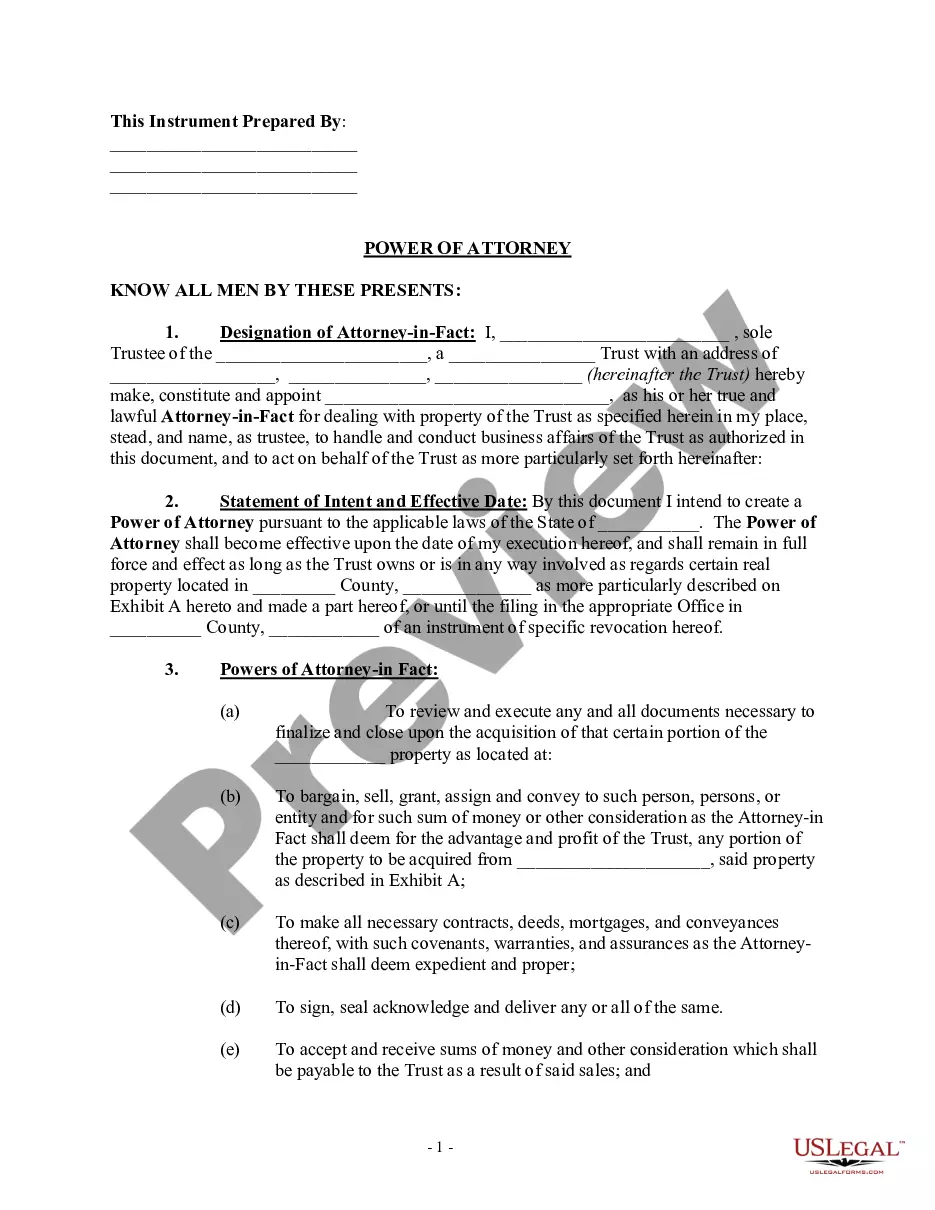
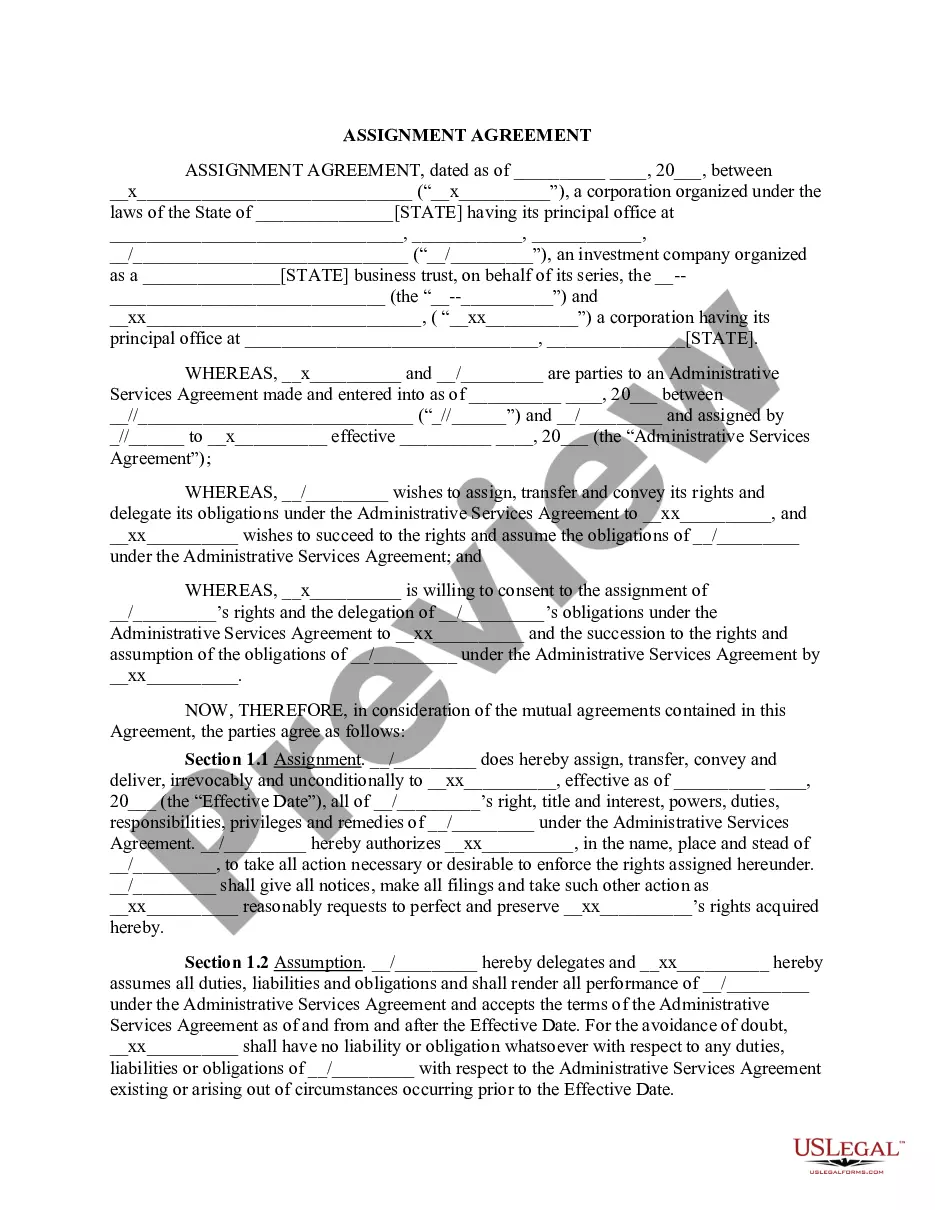
The Assignment to Living Trust form is a legal document used to transfer ownership rights, title, and interest in specific property to a living trust. This type of trust is established during an individual's lifetime to manage assets for estate planning purposes. Unlike wills, living trusts can help avoid probate and ensure a smoother transition of assets after death.
Main sections of this form
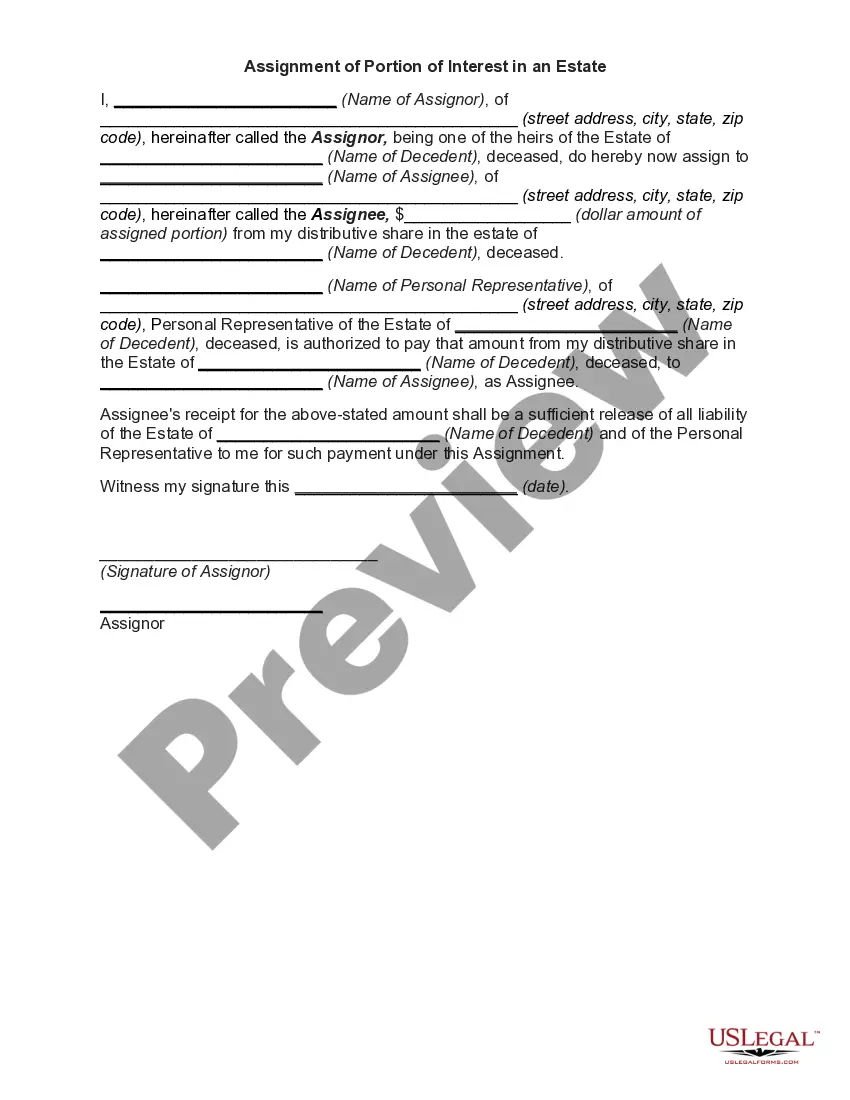
- Date of assignment.
- Name and address of the Assignor (the person transferring the property).
- Name of the Trustee representing the Living Trust.
- Name of the Living Trust and its establishment date.


Situations where this form applies
This form should be used when an individual wants to assign their property to a living trust to facilitate estate planning. It is particularly useful when an individual has accumulated assets that they wish to manage during their lifetime and pass on to beneficiaries without going through probate after death. Examples include assigning real estate, bank accounts, or other valuable property to a trust.
Who this form is for
This form is ideal for:
- Individuals who are setting up a living trust for estate planning.
- Trustees who are managing assets within a living trust.
- Anyone transferring ownership of property into a trust.
Instructions for completing this form
- Identify the parties involved: the Assignor and the Trustee.
- Specify the property being assigned to the living trust.
- Enter the date of the assignment.
- Gather signatures from the Assignor and Trustee.
- Have the document notarized to ensure its legality.
Does this document require notarization?
Yes, this form must be notarized to be legally valid. The signatures of the Assignor and Trustee need to be acknowledged in front of a notary public to help confirm authenticity and prevent disputes in the future. US Legal Forms offers integrated online notarization services, providing 24/7 availability through secure video calls for added convenience.
Get your form ready online
Our built-in tools help you complete, sign, share, and store your documents in one place.
Make edits, fill in missing information, and update formatting in US Legal Forms—just like you would in MS Word.
Download a copy, print it, send it by email, or mail it via USPS—whatever works best for your next step.
Sign and collect signatures with our SignNow integration. Send to multiple recipients, set reminders, and more. Go Premium to unlock E-Sign.
If this form requires notarization, complete it online through a secure video call—no need to meet a notary in person or wait for an appointment.
We protect your documents and personal data by following strict security and privacy standards.

Make edits, fill in missing information, and update formatting in US Legal Forms—just like you would in MS Word.

Download a copy, print it, send it by email, or mail it via USPS—whatever works best for your next step.

Sign and collect signatures with our SignNow integration. Send to multiple recipients, set reminders, and more. Go Premium to unlock E-Sign.

If this form requires notarization, complete it online through a secure video call—no need to meet a notary in person or wait for an appointment.

We protect your documents and personal data by following strict security and privacy standards.
Mistakes to watch out for
- Failing to accurately identify the property being assigned.
- Not having the document notarized, if required.
- Omitting signatures from the Assignor or Trustee.
- Incorrectly assuming that the trust is established without proper documentation.
Why use this form online
- Convenient access: download the form anytime, anywhere.
- Editability allows for easy customization based on individual needs.
- Reliability: forms are drafted by licensed attorneys, ensuring legal compliance.
Key takeaways
- The Assignment to Living Trust is critical for ensuring property is transferred into a living trust.
- Completing this form correctly can simplify estate management and expedite property distribution after death.
- Notarization is a mandatory step in the process to ensure legal validity.
Looking for another form?
Form popularity
FAQ
Qualified retirement accounts 401ks, IRAs, 403(b)s, qualified annuities. Health saving accounts (HSAs) Medical saving accounts (MSAs) Uniform Transfers to Minors (UTMAs) Uniform Gifts to Minors (UGMAs) Life insurance. Motor vehicles.
If you have a revocable living trust, it should still be valid in your new state, or in any state for that matter. The main consideration with your trust when you move is to make sure it is funded with all of the assets you want to pass directly to a beneficiary.
Trusts are transferrable from state to state, but it always makes sense to have your estate plan reviewed when you move.
Assuming you decide you want a revocable living trust, how much should you expect to pay? If you are willing to do it yourself, it will cost you about $30 for a book, or $70 for living trust software. If you hire a lawyer to do the job for you, get ready to pay between $1,200 and $2,000.
Due to these different definitions, it is possible for a trust to fall within more than one state resident trust definition and be subject to state income taxes in multiple states. It is also possible for a trust to not be a resident trust of any state and thereby avoid paying any state income taxes.
If your will and revocable trusts were properly executed in accordance with the laws of one state, they are usually valid in other states.Your heirs might need to rely on the laws of another state to establish the validity of your will and trusts, and opinions from attorneys in two separate states may be required.
Pick a type of living trust. If you're married, you'll first need to decide whether you want a single or joint trust. Take stock of your property. Choose a trustee. Draw up the trust document. Sign the trust. Transfer your property to the trust.
Out-of-State Trustees The successor trustee does not have to live in the same state as you do.But for transfers of property such as securities and bank accounts, it usually won't make much difference where the successor trustee lives.
As of 2019, attorney fees can range from $1,000 to $2,500 to set up a trust, depending upon the complexity of the document and where you live. You can also hire an online service provider to set up your trust. As of 2019, you can expect to pay about $300 for an online trust.