Wyoming 3 Day Notice to Pay Rent or Quit Prior to Eviction for Residential Property
What this document covers
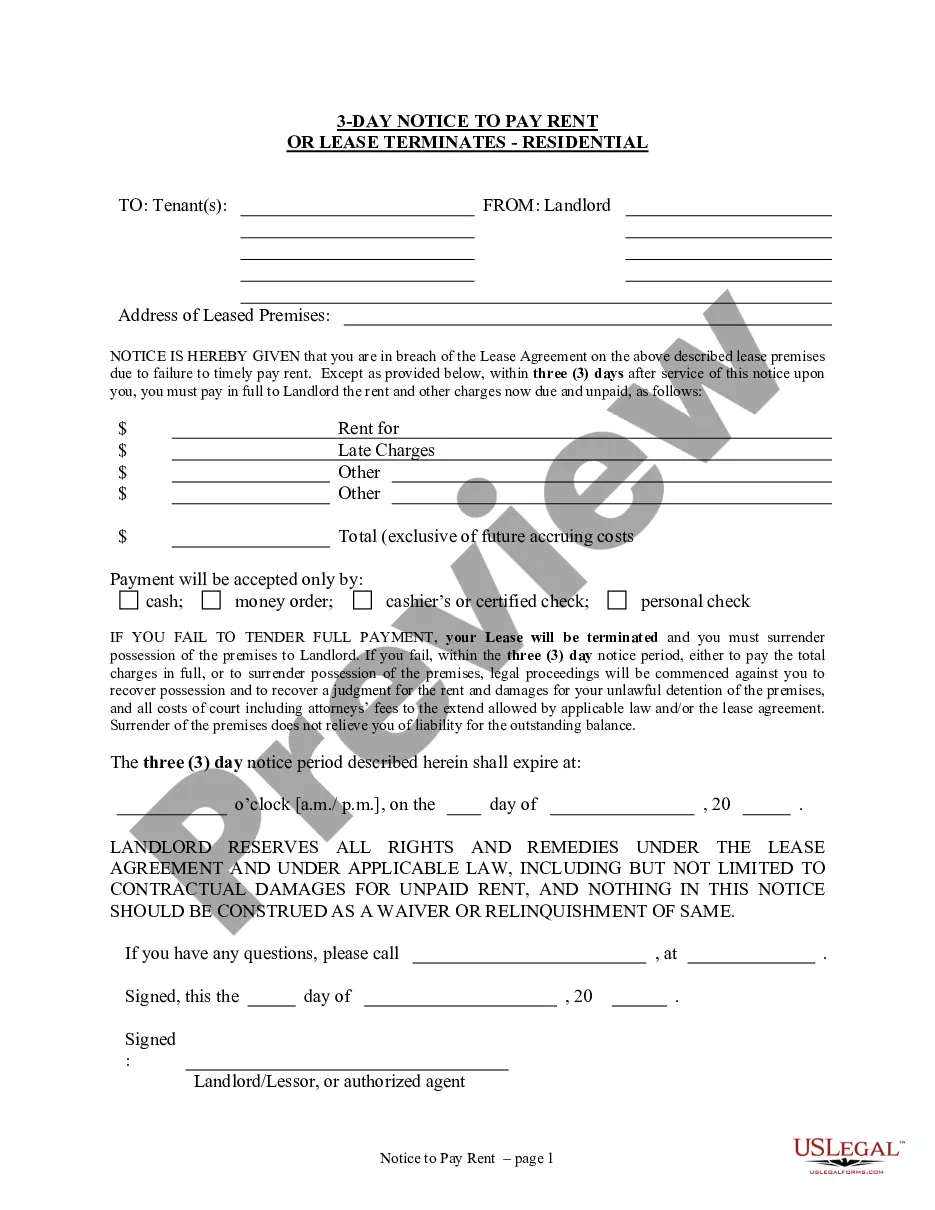
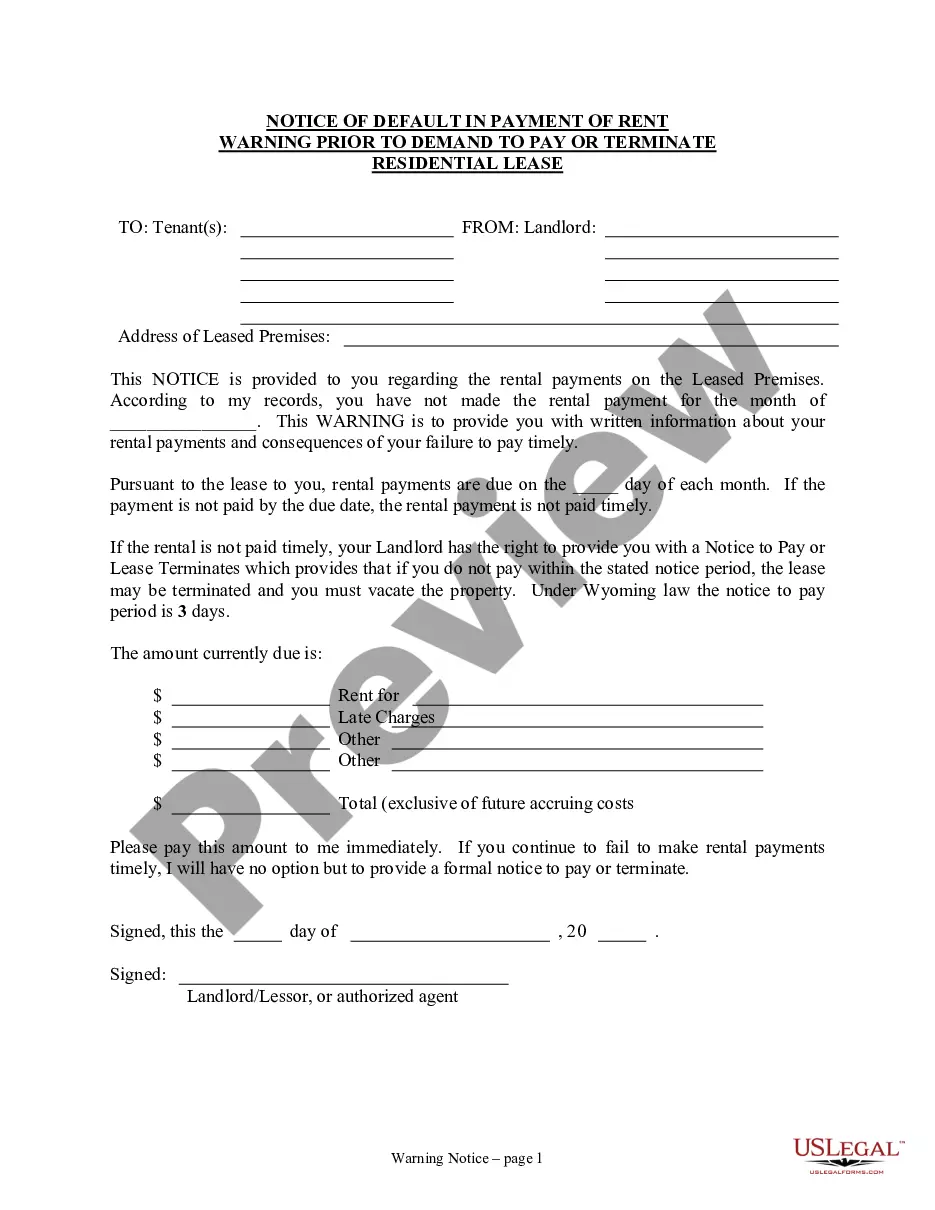
The 3 Day Notice to Pay Rent or Quit Prior to Eviction for Residential Property is a legal document used by landlords to formally demand payment of overdue rent from tenants. This notice gives tenants a three-day period to pay the outstanding rent or vacate the premises before eviction proceedings may begin. This form is essential for landlords seeking to adhere to state laws when dealing with residential rental properties, such as houses, apartments, or condos. Unlike other notices, this specific format emphasizes a strict three-day time frame, allowing landlords to reinforce lease terms effectively.
Key parts of this document
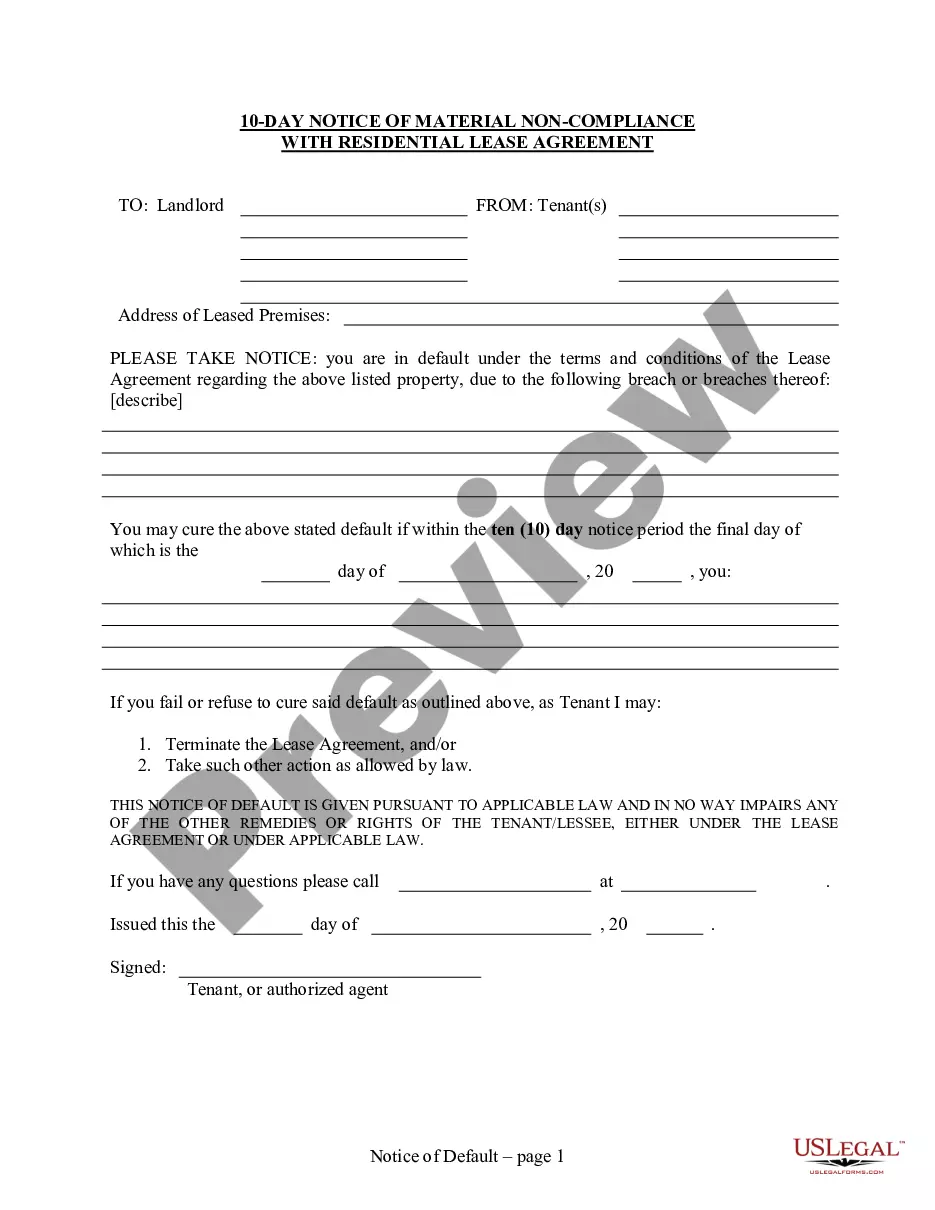
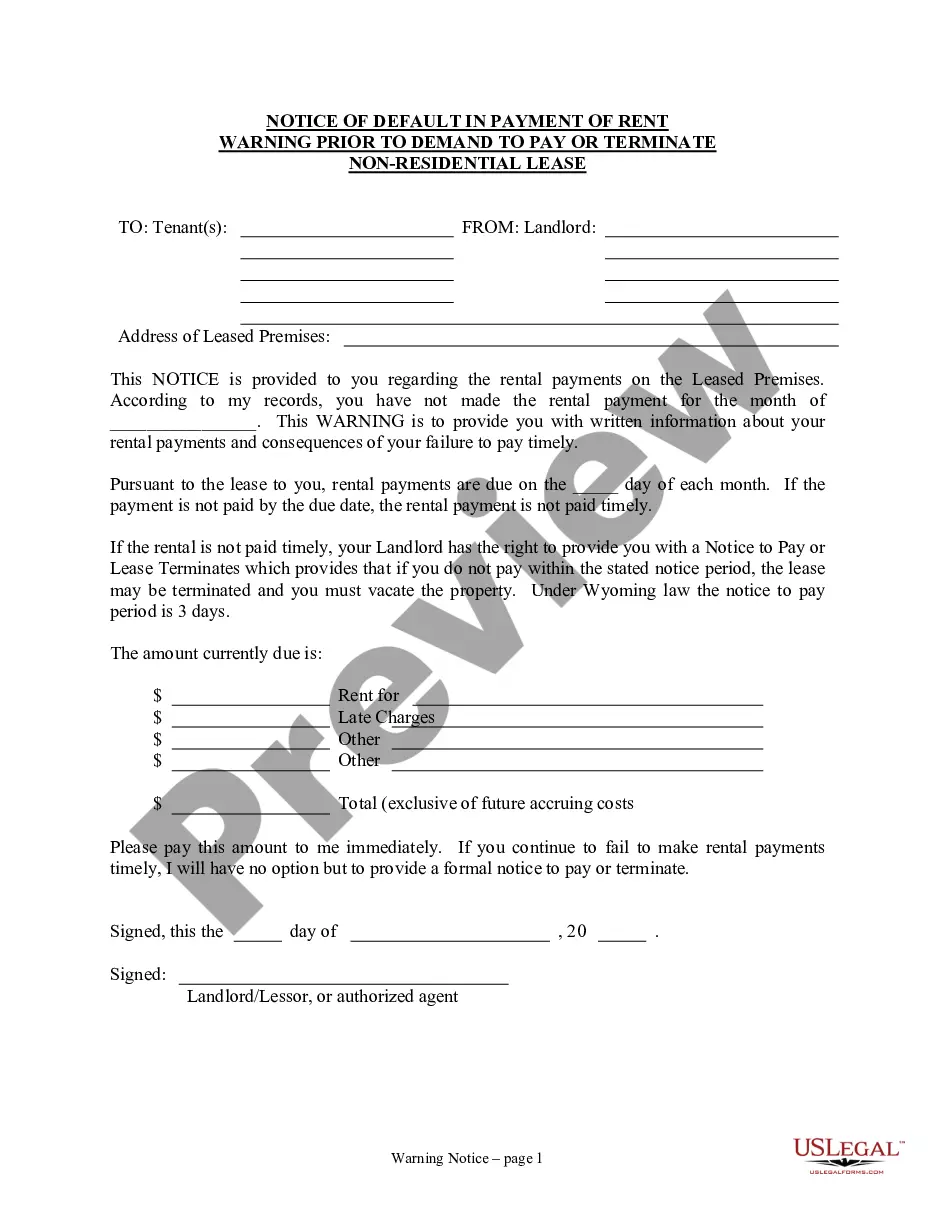
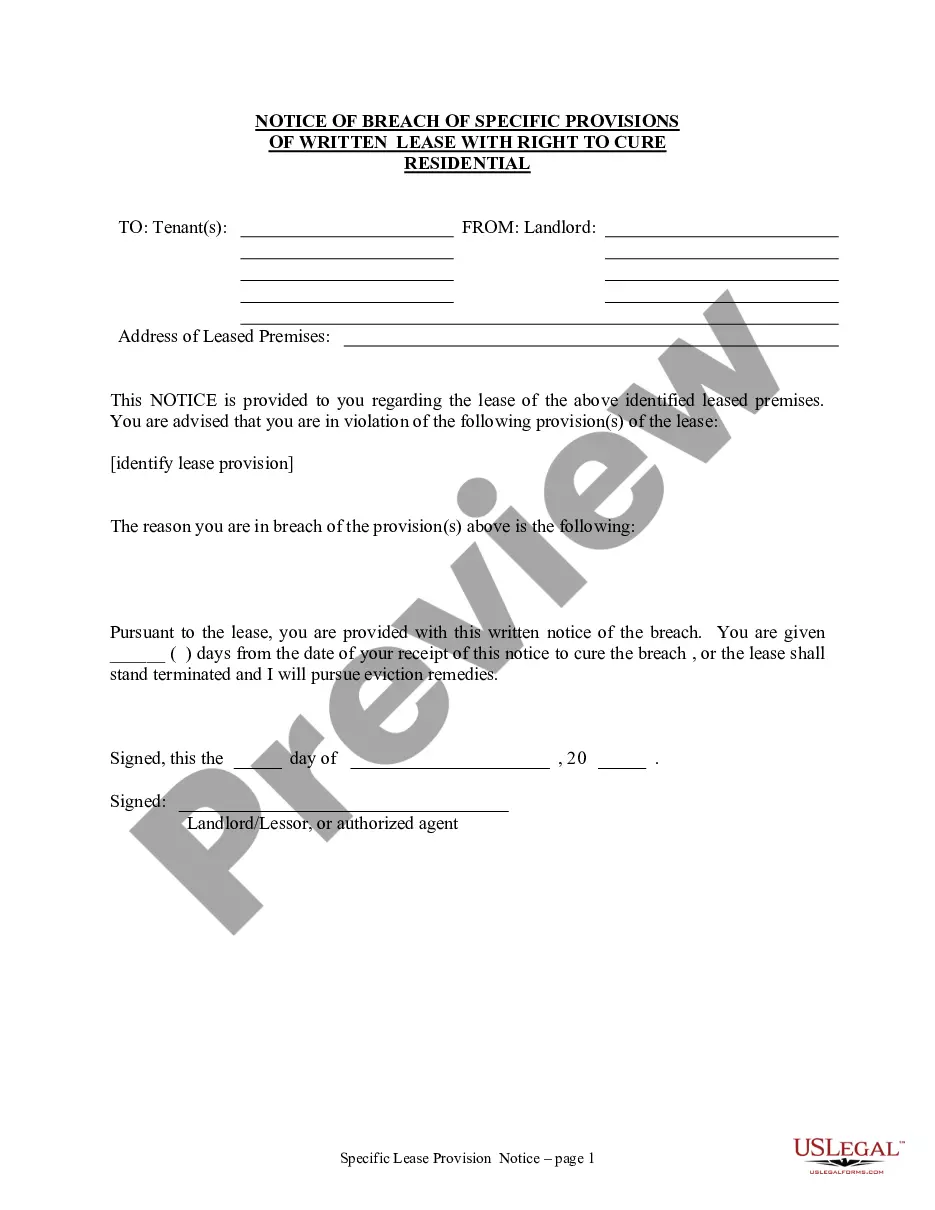
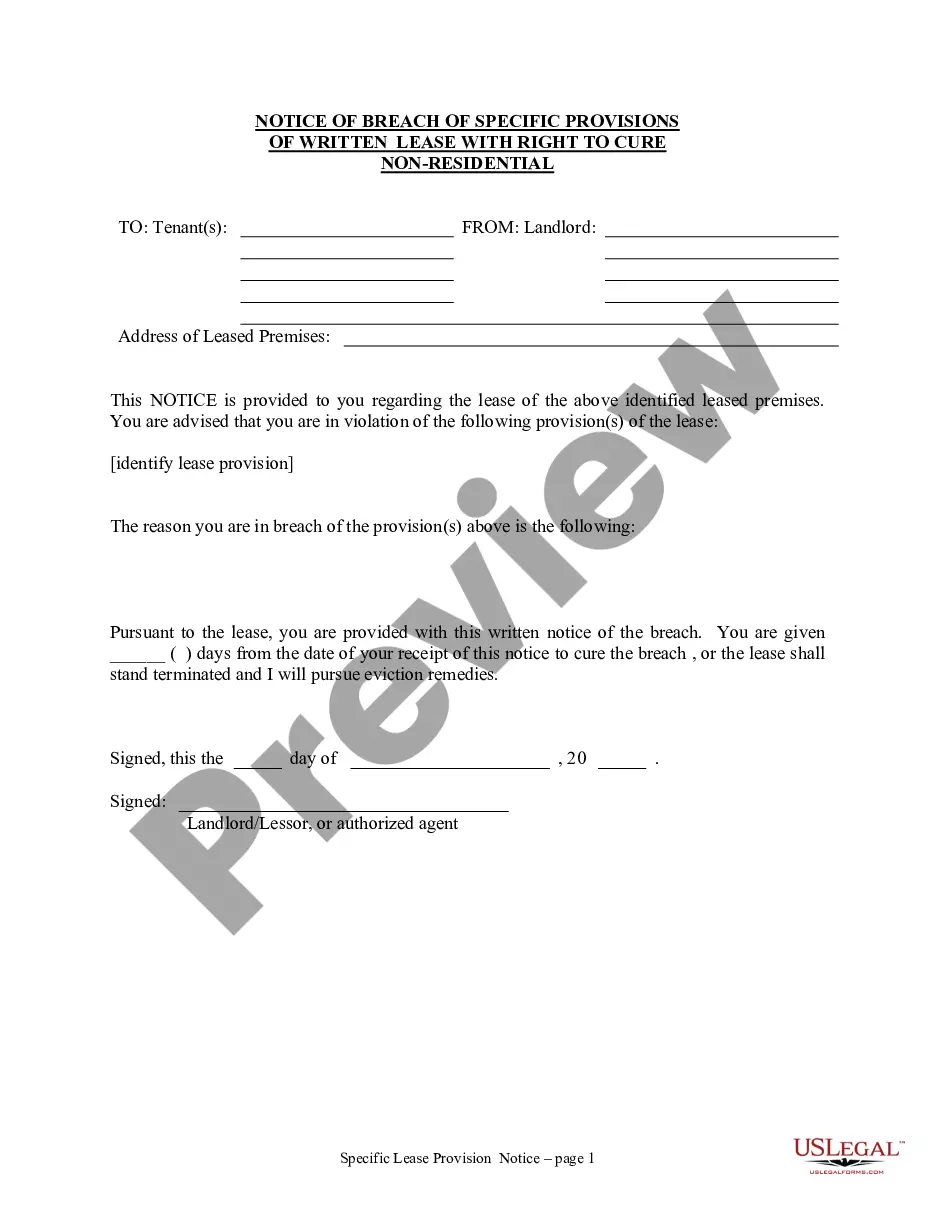
- Landlord and tenant identification: Includes names and addresses of both parties.
- Details of the breach: Specifies the overdue rent and additional charges, if applicable.
- Payment instructions: Outlines acceptable payment methods and amounts due.
- Consequences of non-payment: States that failure to pay may result in eviction and lease termination.
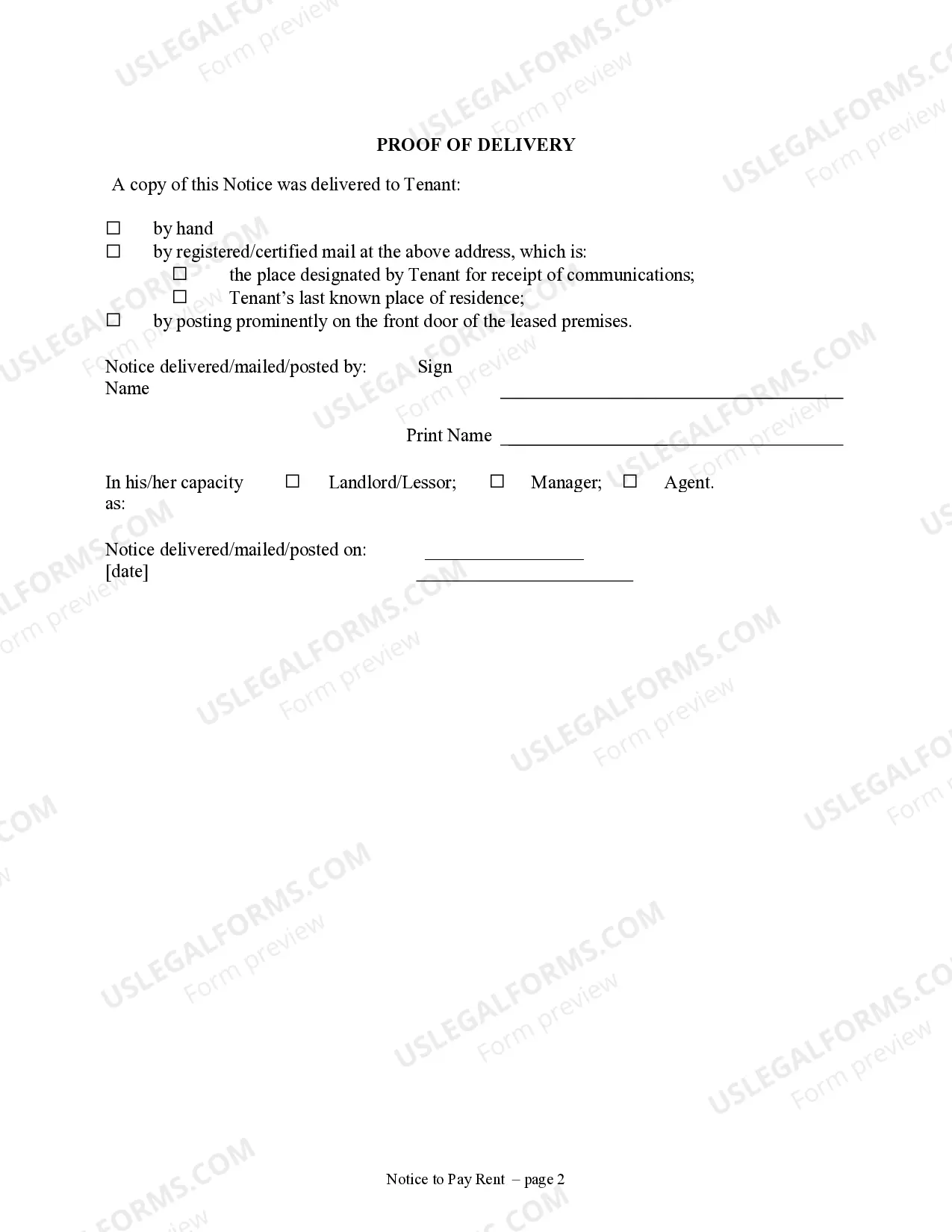
- Delivery proof: Provides options for serving the notice to the tenant.
- Signatures: Requires signatures from the landlord or authorized agent.
When this form is needed
This form should be used when a landlord has not received rent payments from a residential tenant and wishes to formally notify them of their overdue rent. It is ideal in situations where payment is not made by the agreed-upon date, and the landlord intends to initiate eviction proceedings if the rent is not paid promptly. This notice serves as a necessary step before taking legal action, ensuring compliance with state eviction laws.
Who needs this form
- Landlords seeking to collect overdue rent from tenants.
- Property managers managing rental properties on behalf of landlords.
- Real estate professionals advising landlords on eviction processes.
- Tenants receiving a notice seeking clarification of their obligations.
Steps to complete this form
- Identify the parties: Enter the names and contact information for both the landlord and tenant.
- Specify the property: Clearly indicate the address of the leased premises.
- List overdue charges: Detail the unpaid rent and any associated late fees.
- State payment methods: Indicate acceptable forms of payment, such as cash or check.
- Set delivery method: Choose how the notice will be served to the tenant and include proof of delivery.
- Sign and date the notice: Ensure the landlord or authorized agent signs and dates the document to validate it.
Notarization guidance
Notarization is not commonly needed for this form. However, certain documents or local rules may make it necessary. Our notarization service, powered by Notarize, allows you to finalize it securely online anytime, day or night.
Get your form ready online
Our built-in tools help you complete, sign, share, and store your documents in one place.
Make edits, fill in missing information, and update formatting in US Legal Forms—just like you would in MS Word.
Download a copy, print it, send it by email, or mail it via USPS—whatever works best for your next step.
Sign and collect signatures with our SignNow integration. Send to multiple recipients, set reminders, and more. Go Premium to unlock E-Sign.
If this form requires notarization, complete it online through a secure video call—no need to meet a notary in person or wait for an appointment.
We protect your documents and personal data by following strict security and privacy standards.

Make edits, fill in missing information, and update formatting in US Legal Forms—just like you would in MS Word.

Download a copy, print it, send it by email, or mail it via USPS—whatever works best for your next step.

Sign and collect signatures with our SignNow integration. Send to multiple recipients, set reminders, and more. Go Premium to unlock E-Sign.

If this form requires notarization, complete it online through a secure video call—no need to meet a notary in person or wait for an appointment.

We protect your documents and personal data by following strict security and privacy standards.
Avoid these common issues
- Failing to provide the correct tenant address.
- Not specifying the exact amount of overdue rent.
- Using incorrect payment instructions that do not align with local practices.
- Not signing or dating the notice, rendering it invalid.
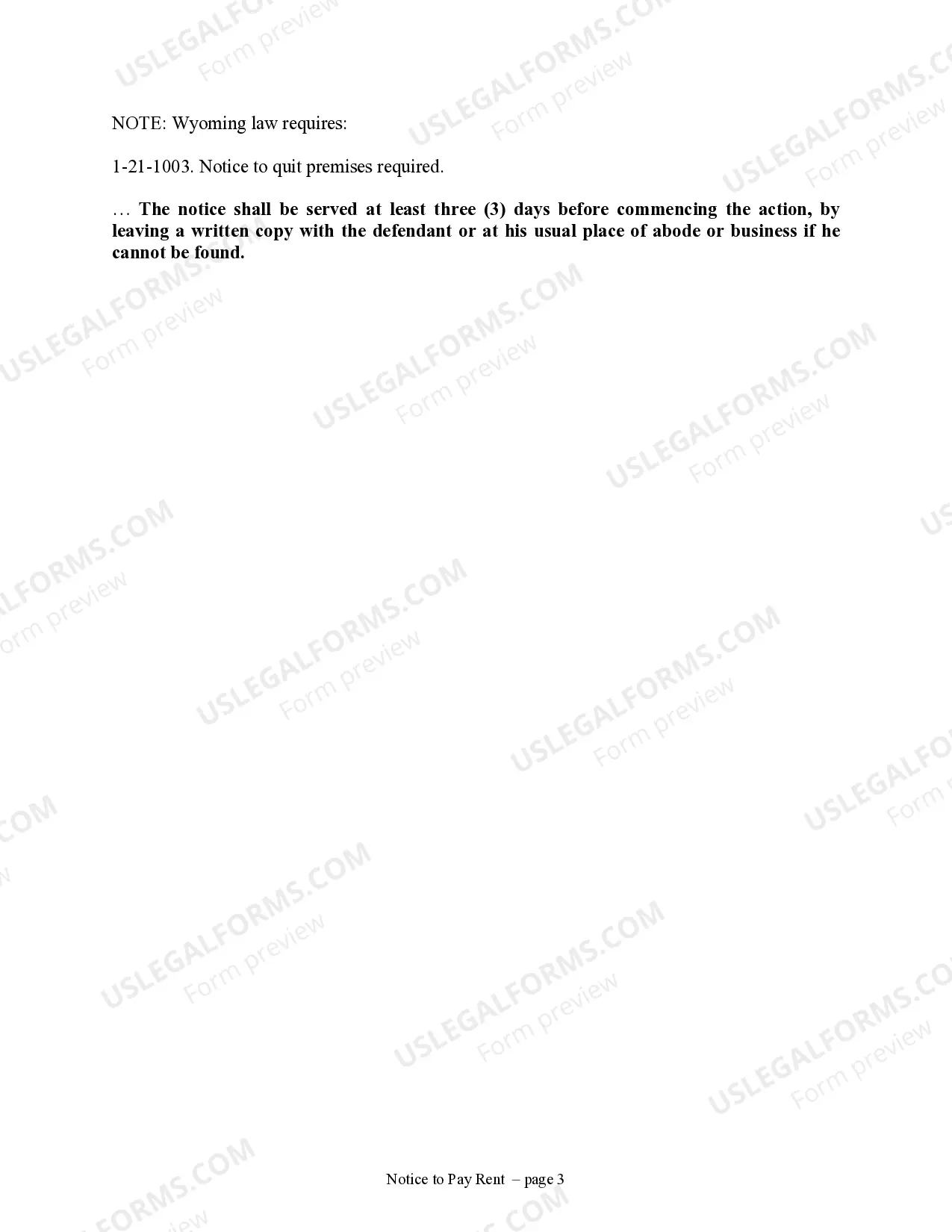
- Ignoring state-specific requirements for notice delivery.
Why complete this form online
- Convenience: Download and complete the form from anywhere at any time.
- Editability: Easily customize the form to meet specific needs and legal requirements.
- Reliability: Ensure the use of forms drafted by licensed attorneys, providing peace of mind.
What to keep in mind
- The 3 Day Notice to Pay Rent or Quit is a crucial step in the eviction process.
- Timely delivery of the notice is essential for legal validity.
- Landlords must ensure compliance with state laws regarding the notice.
- Failure to pay within the notice period can lead to eviction proceedings.
Looking for another form?
Form popularity
FAQ
An eviction is a legal proceeding in which a landlord asks a court to order the tenant to leave the property. Giving a tenant a notice to terminate is often a first step in the eviction process, but it isn't the same as an eviction.
Eviction notices When written by a landlord, a notice to vacate is commonly known as an "eviction notice," which tells the tenant they must move out of the rental property.
When responding to the notice to quit, there are several options available to the tenant: Pay any delinquent rent that is due to the landlord within the allotted time of the notice. Move out of the premises within the allotted time of the notice. File an answer with the judicial court.
Evicting a tenant in Colorado can take around 2 weeks to 4 months, depending on whether the eviction is for illegal activity or another type of eviction. If the tenant files an answer with the court, the process could take longer (read more).
In Illinois, if there is no lease or if the lease does not specify a move out date, the Landlord must give at least 30 days of notice to a tenant that the landlord wants to move out. This notice must be in writing and must arrive to the tenant at least 30 days prior to their move out date.
Substantial Violation If the landlord is evicting the tenant for any of these reasons, the landlord must give the tenant a three-day notice to quit. (Colo. Rev.If the tenant does not move out of the rental unit by the end of three days, then the landlord can file an eviction lawsuit against the tenant.
In Colorado, evictions are sometimes referred to as forcible entry & detainer (FED). Before you can file for eviction, you must generally provide 10 days' notice (increased from 3 days prior) for tenants to correct a deficiency or leave the property, except in certain circumstances.
A Notice to Vacate is a notice written by the landlord or property manager giving a notice to leave the premises within a specified time frame. This type of notice is typically given during the end of a lease period, or due to an infringement of the lease agreement.
Step 1: Notice is Posted. Step 2: Complaint is Filed and Served. Step 3: Court Hearing and Judgment. Step 4: Writ of Restitution Is Issued. Step 5: Possession of Property is Returned.