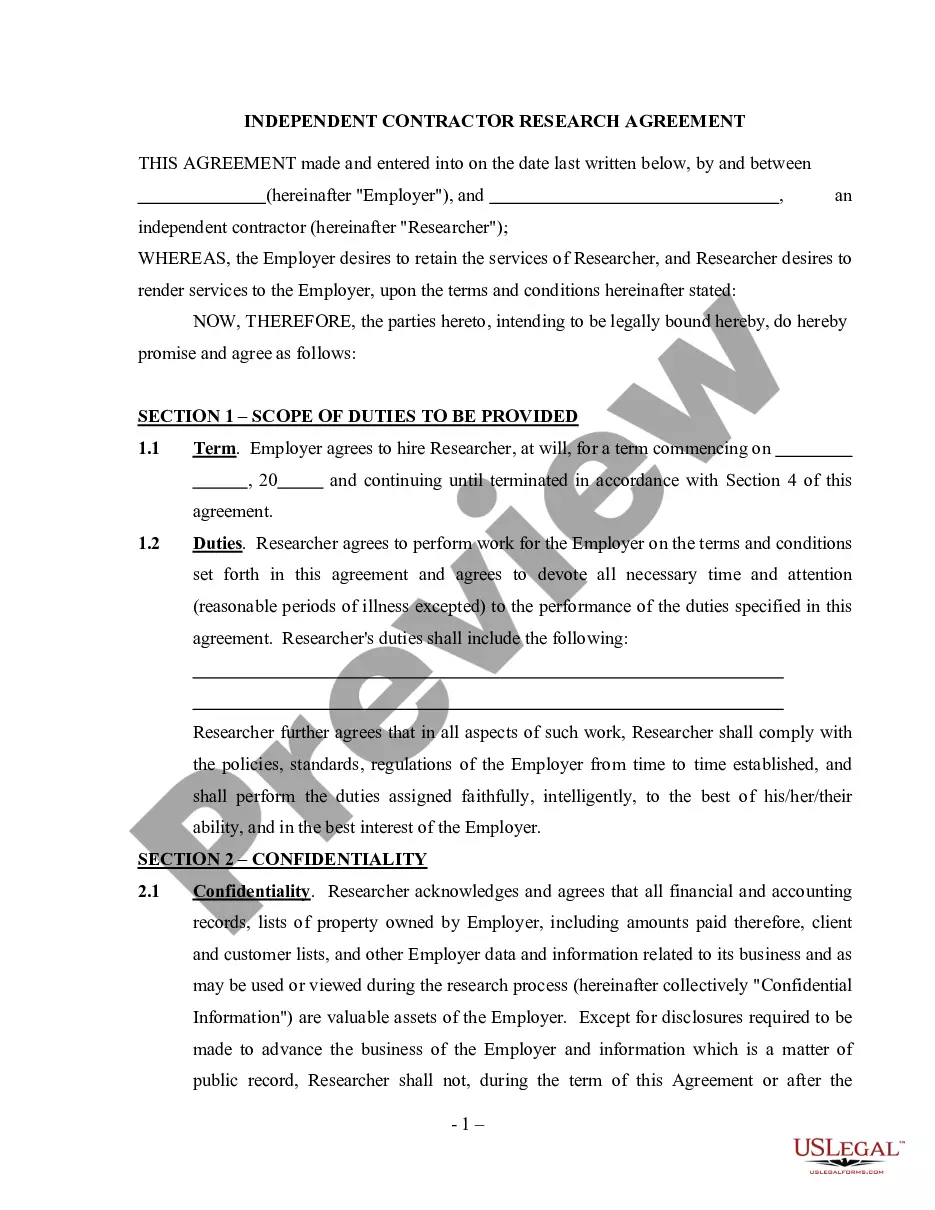
Texas Last Will and Testament for a Widow or Widower with Adult Children

Overview of this form
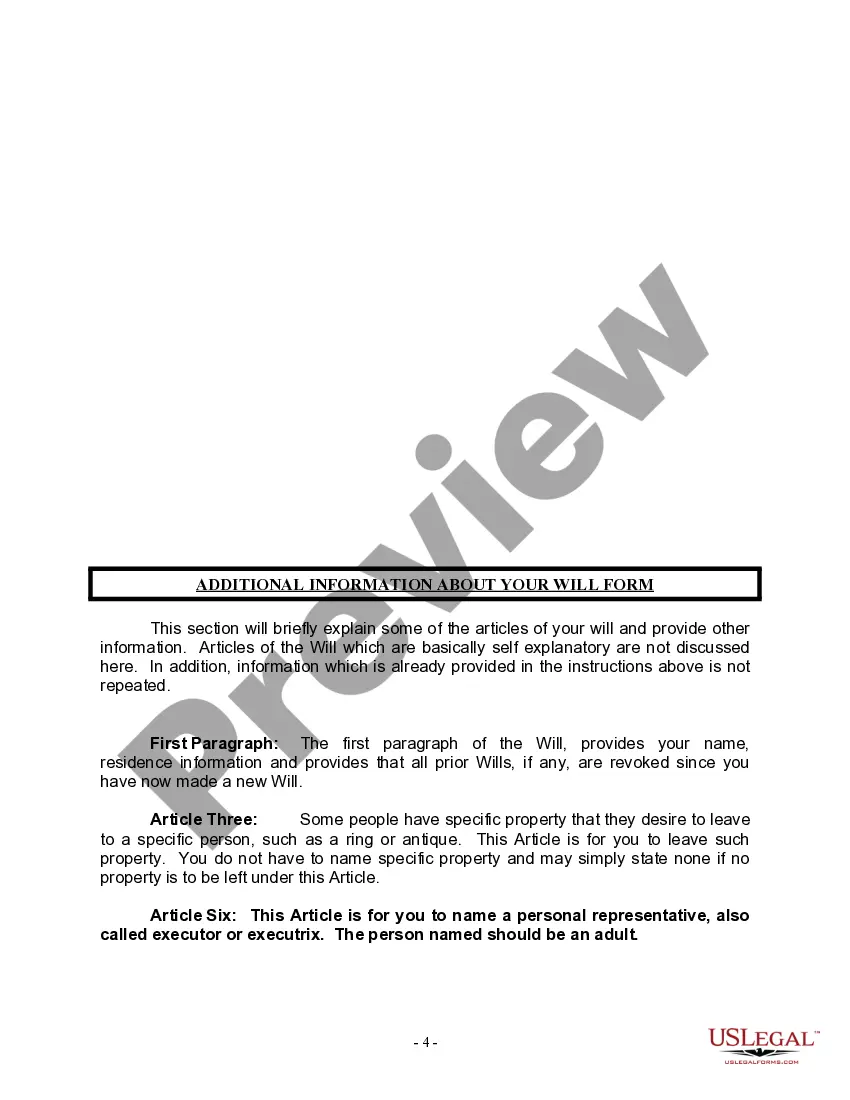
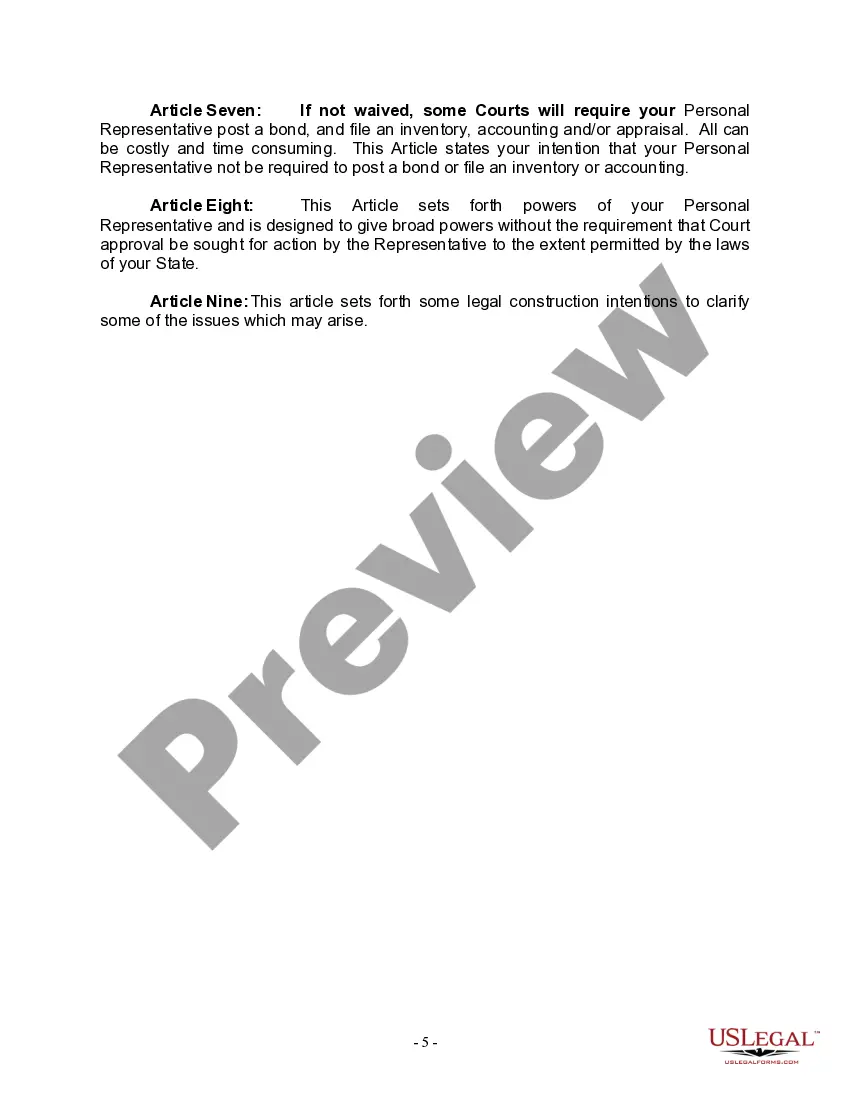
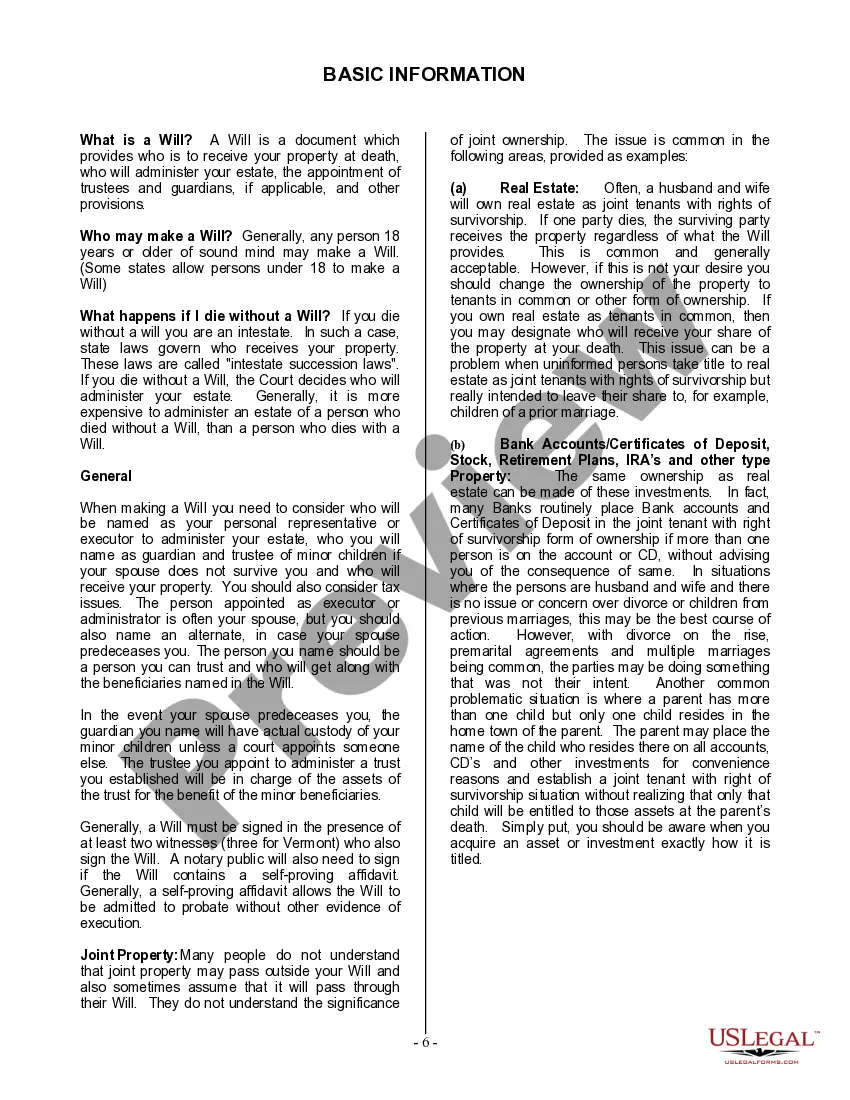
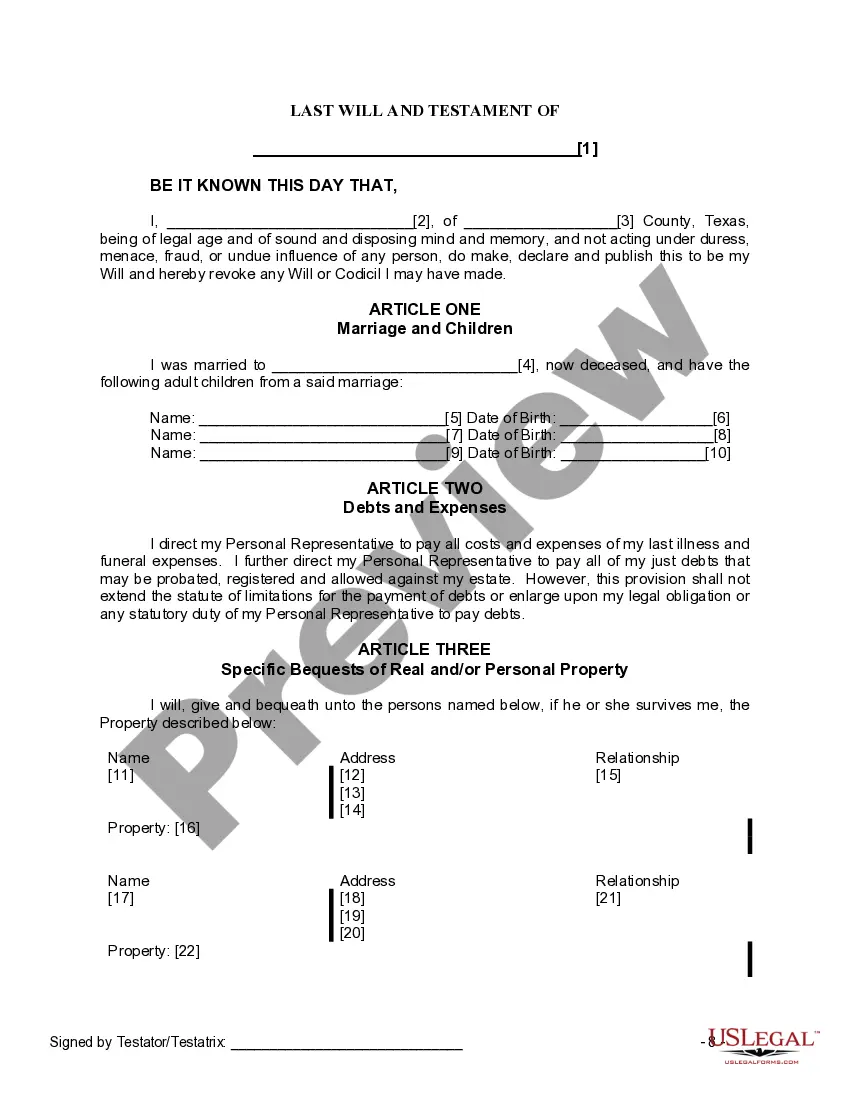
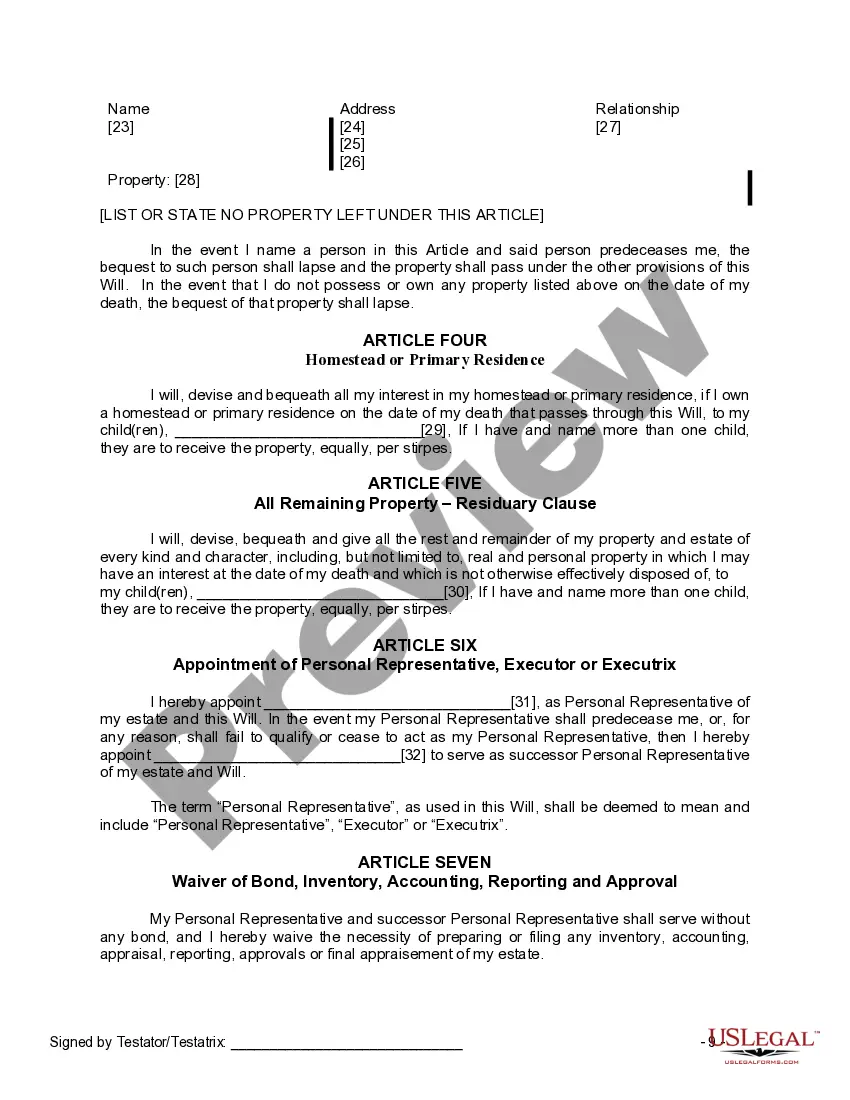
The Last Will and Testament for a Widow or Widower with Adult Children is a legal document that outlines your wishes regarding the distribution of your property after your death. This will is specifically tailored for those who have lost a spouse and have adult children, allowing you to designate beneficiaries and appoint an executor to manage your estate. Unlike other wills, it addresses the unique needs of widowed individuals and ensures that your assets are distributed according to your wishes while taking into consideration your adult children's interests.
Key components of this form
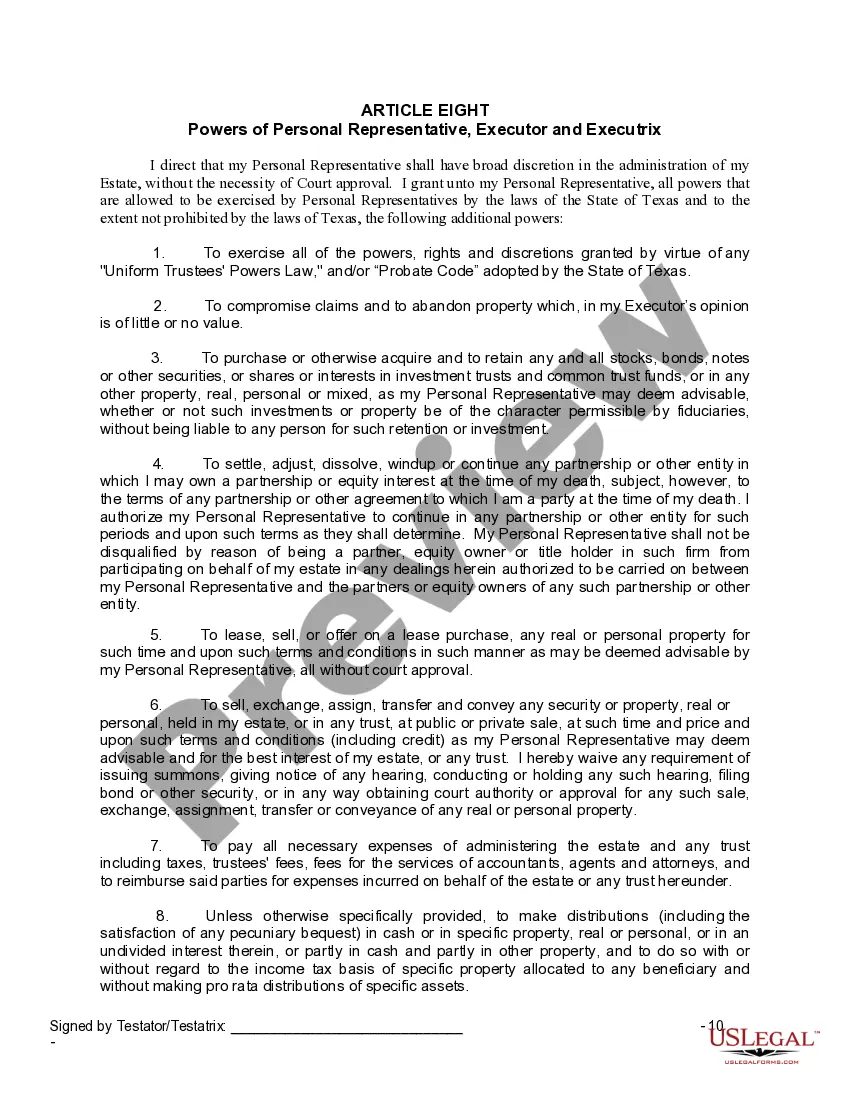
- Appointment of a personal representative or executor responsible for managing your estate.
- Designation of beneficiaries, including your adult children, for specific and general assets.
- Provisions for payment of debts, funeral expenses, and taxes from your estate.
- Options to include specific bequests of personal property or real estate.
- Instructions for signing the will in the presence of witnesses.
- Possible inclusion of a self-proving affidavit if required by state law.




When to use this document
This form is necessary when you want to ensure your assets are distributed in accordance with your wishes following your death. It is especially important if you are a widow or widower with adult children, as it allows you to provide for them explicitly. This will is also relevant if you have previously created a will and wish to revoke it to reflect your current circumstances and intentions.
Who should use this form
- Individuals who are widowed and have adult children.
- Those seeking to clearly outline their wishes regarding the distribution of their assets.
- Anyone wishing to appoint an executor to manage their estate after death.
- People who have previously made a will that they want to revoke and replace with a new one.
How to prepare this document
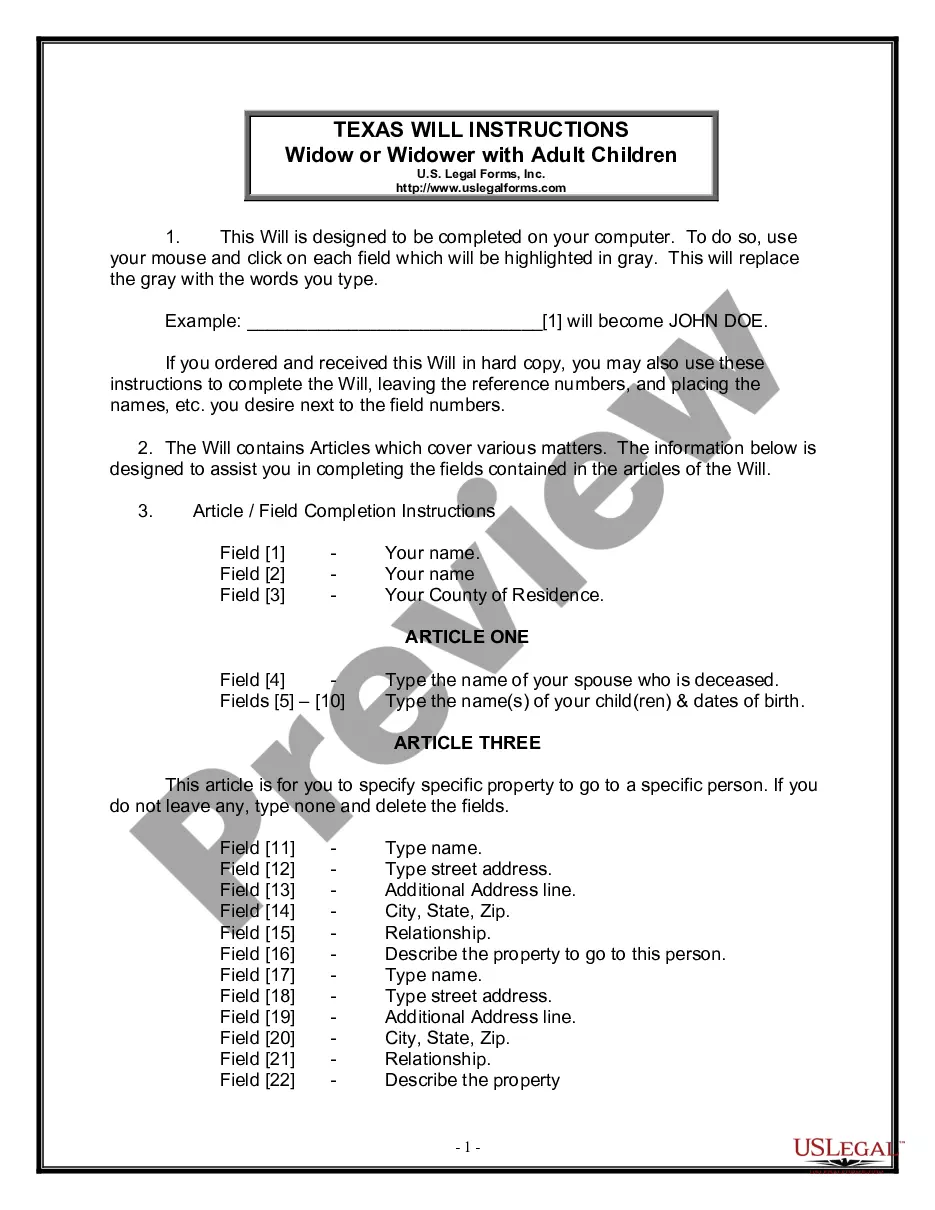
- Identify your full name and county of residence.
- Provide the name of your deceased spouse and the names and birthdates of your adult children.
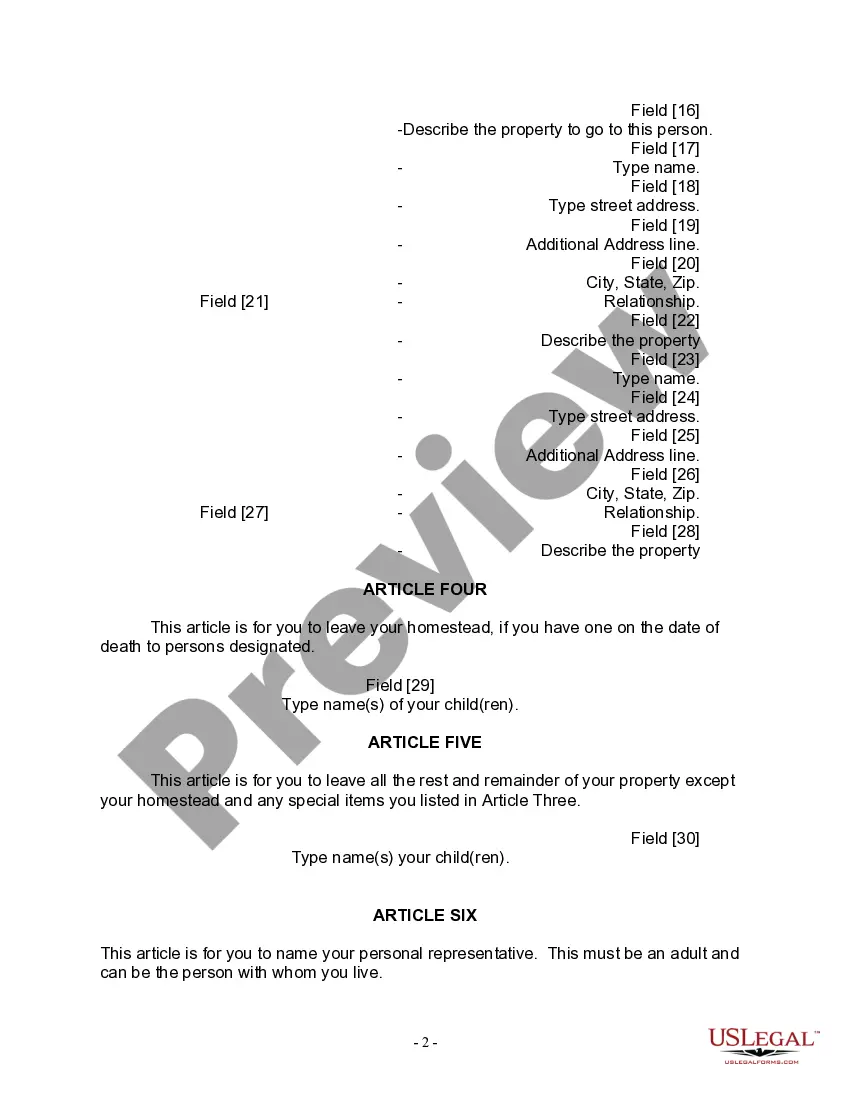
- Specify any specific property bequests to individuals, listing names and addresses.
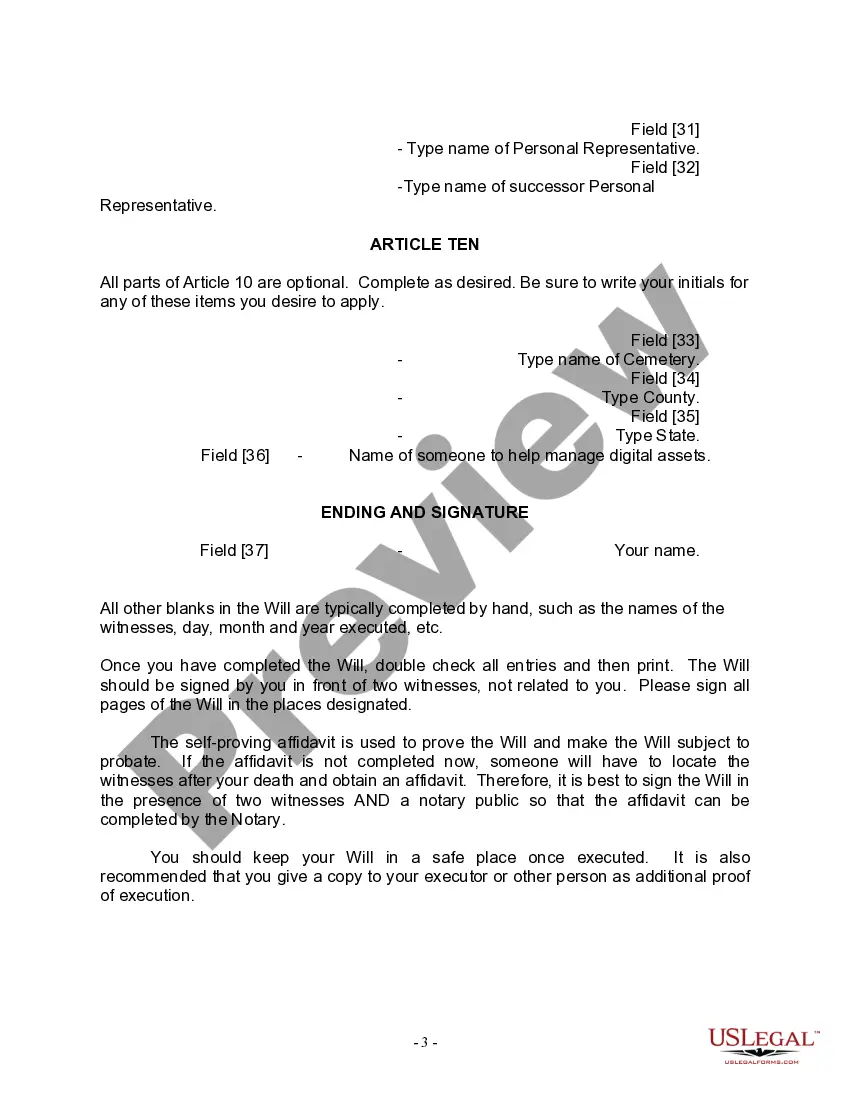
- Name your personal representative and an alternate representative.
- Sign the will in the presence of two unrelated witnesses, ensuring they also sign the document.
Notarization requirements for this form
Yes, this form must be notarized to be legally valid if your state has adopted a self-proving affidavit statute. Notarization can provide an additional layer of authenticity and helps to streamline the probate process. US Legal Forms offers options for online notarization for your convenience.
Get your form ready online
Our built-in tools help you complete, sign, share, and store your documents in one place.
Make edits, fill in missing information, and update formatting in US Legal Forms—just like you would in MS Word.
Download a copy, print it, send it by email, or mail it via USPS—whatever works best for your next step.
Sign and collect signatures with our SignNow integration. Send to multiple recipients, set reminders, and more. Go Premium to unlock E-Sign.
If this form requires notarization, complete it online through a secure video call—no need to meet a notary in person or wait for an appointment.
We protect your documents and personal data by following strict security and privacy standards.

Make edits, fill in missing information, and update formatting in US Legal Forms—just like you would in MS Word.

Download a copy, print it, send it by email, or mail it via USPS—whatever works best for your next step.

Sign and collect signatures with our SignNow integration. Send to multiple recipients, set reminders, and more. Go Premium to unlock E-Sign.

If this form requires notarization, complete it online through a secure video call—no need to meet a notary in person or wait for an appointment.

We protect your documents and personal data by following strict security and privacy standards.
Avoid these common issues
- Failing to have the will signed by two qualifying witnesses.
- Not appointing an alternate personal representative in case the primary cannot serve.
- Leaving out essential property or beneficiaries from the will.
- Assuming that oral instructions about your estate are legally binding.
Benefits of using this form online
- Convenient access to complete your will from home.
- Editable form allows you to personalize your will easily.
- Secure handling of your sensitive information.
- Instant download option ensures you have your will ready when you need it.
Legal use & context
- This will legally dictates how your assets are distributed after your death, ensuring that your wishes are honored.
- Wills are essential for preventing disputes among heirs over the distribution of your estate.
- Your will must comply with local laws and regulations to be enforceable in probate court.
Main things to remember
- This form is specifically designed for widowed individuals with adult children.
- Proper execution with witnesses and potential notarization is necessary for validity.
- Clearly stating your wishes can minimize conflicts among beneficiaries.
- Utilizing online forms allows for easier completion and storage.
Definitions you should know
- Personal representative: The individual appointed to manage and distribute the deceasedâs estate.
- Bequest: A specific gift of personal property or money provided in a will.
- Estate: The total assets owned by an individual at the time of their death.
- Testator: A person who has made a will or given a legacy.
Looking for another form?
Form popularity
FAQ
1) Yes, she means grandmother has full rights in her husband's property. 2) You also have rights in ancestral property. 3) Please check the WILL is registered or not with registrar and yes your grandmother has rights to make of her share WILL, but you have to check whether WILL is valid or not.
California is a community property state. What this means, barring a written agreement to the contrary, is that the surviving spouse automatically owns half of what either spouse earned during the marriage. Upon one spouse's death, the surviving spouse is entitled to decedent's one-half of the community property.
Texas will forms are documents that will help guide a user through the process of both, division of their estate as well as preparation of a living will. A last will and testament is a document that a Testator would use to establish division of their estate, by an executor (representative) between their
In order to make a valid handwritten will in Texas, the entire document must be in your own handwriting. No one can write any part of it except for you and no part of it can be typed. You can write in cursive or print, but the entire will must be in your handwriting only.
Are 18 years of age or older, have been lawfully married, or. are a member of the armed forces of the United States.
You can either download a template (many are free) and write your Will at your own pace offline using your word processor, or tell us your wishes in our online questionnaire and let us write it for you.
A widow's will must meet her state's standards in order to be considered legally valid. Typically, this means the will must be in writing and signed. States generally require the signatures of two neutral witnesses who watch the widow sign the document, and a notary may also be required.
Yes, under some circumstances. If no consideration is provided for the mutual wills, except the mutual agreement of the spouses, either spouse can change the will prior to the death of the first spouse.After the first spouse dies, however, the surviving spouse cannot change the will.
No, in Texas, you do not need to notarize your will to make it legal. However, Texas allows you to make your will "self-proving" and you'll need to go to a notary if you want to do that. A self-proving will speeds up probate because the court can accept the will without contacting the witnesses who signed it.