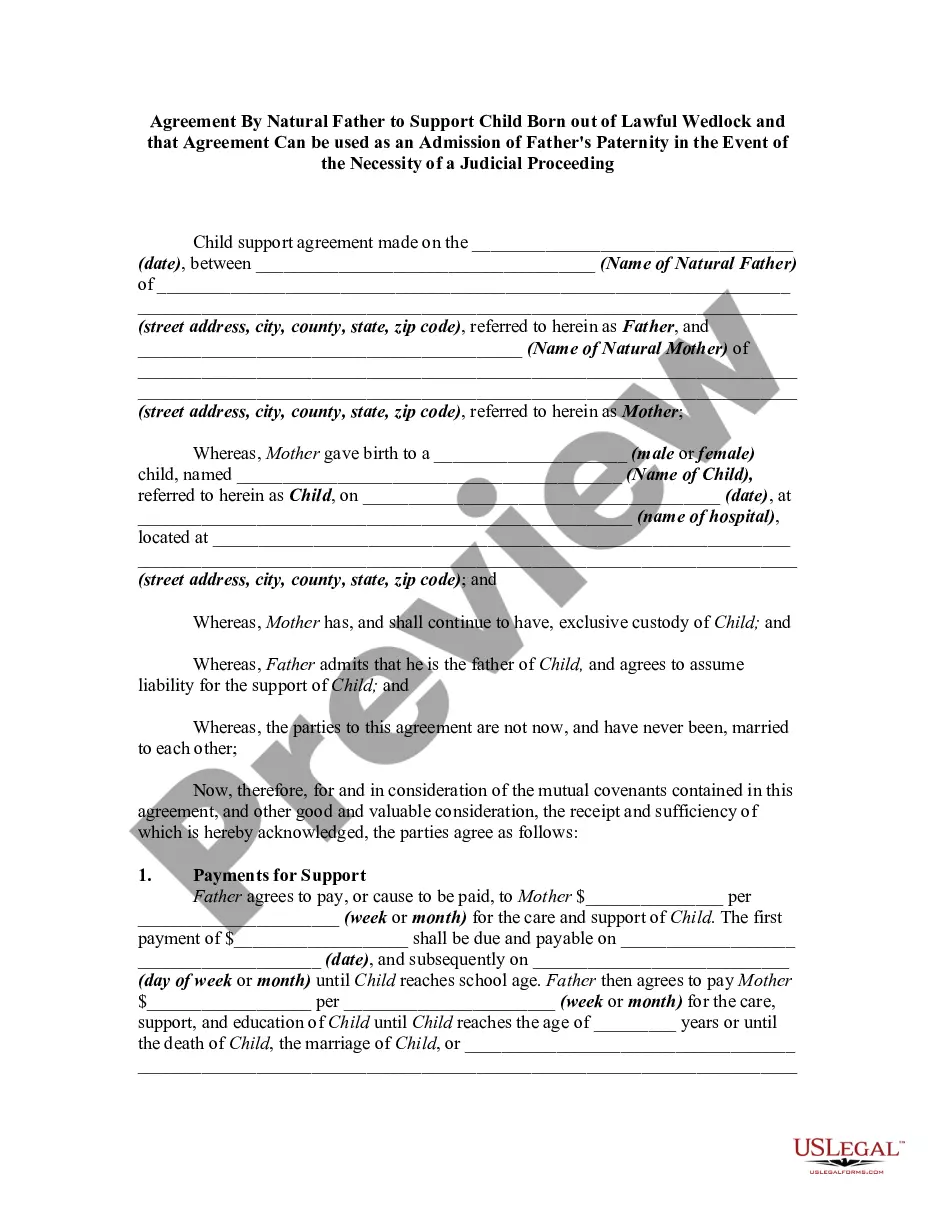
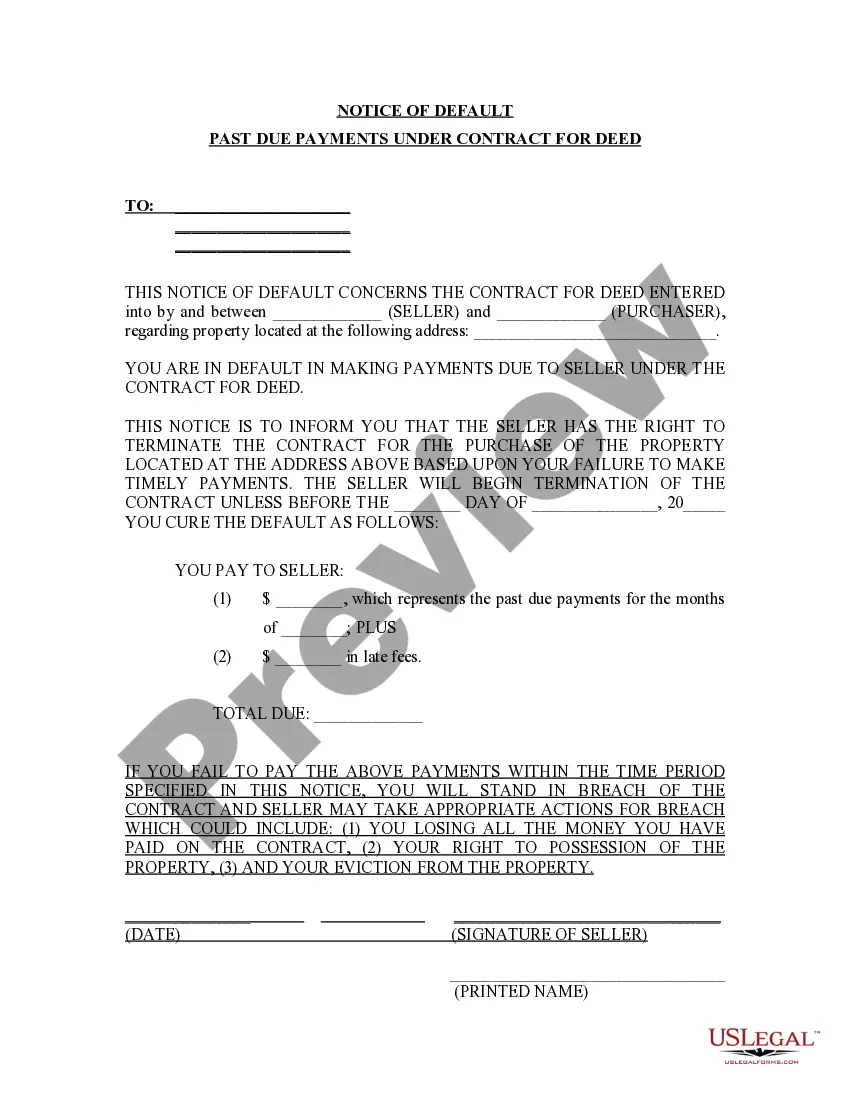
Wyoming Notice of Default for Past Due Payments in connection with Contract for Deed
What this document covers
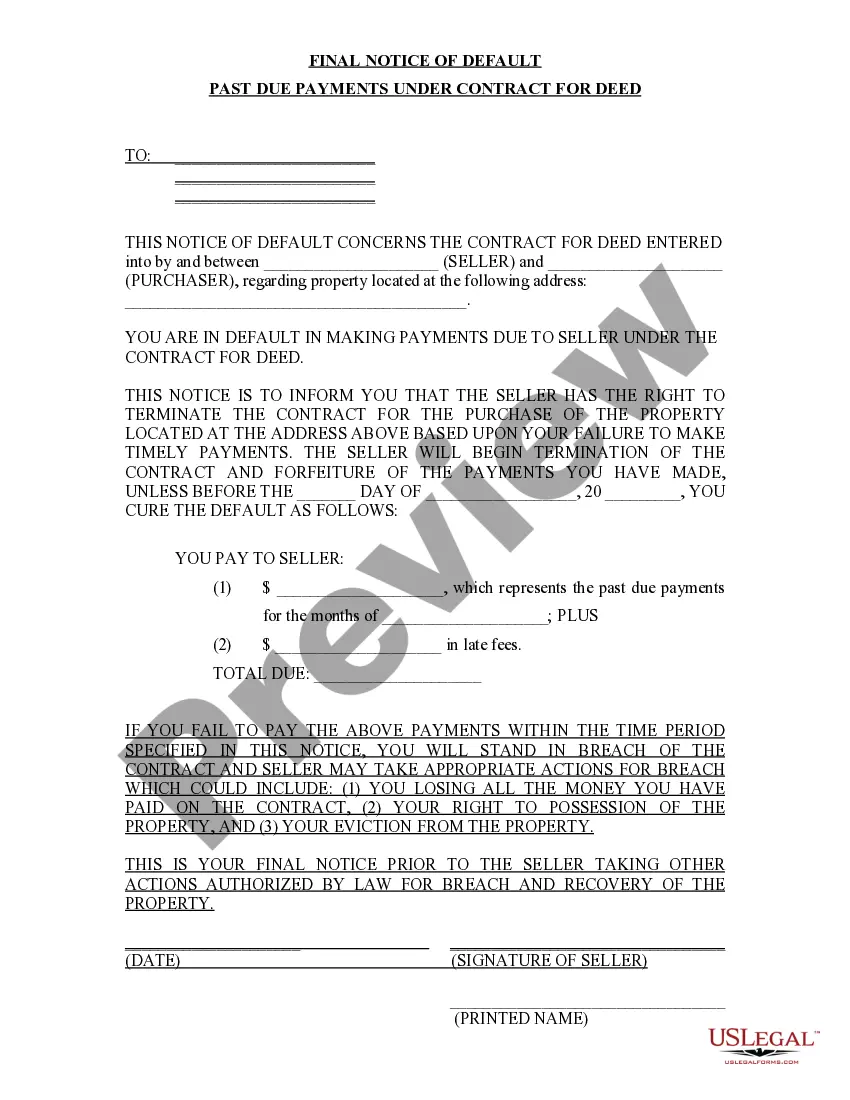
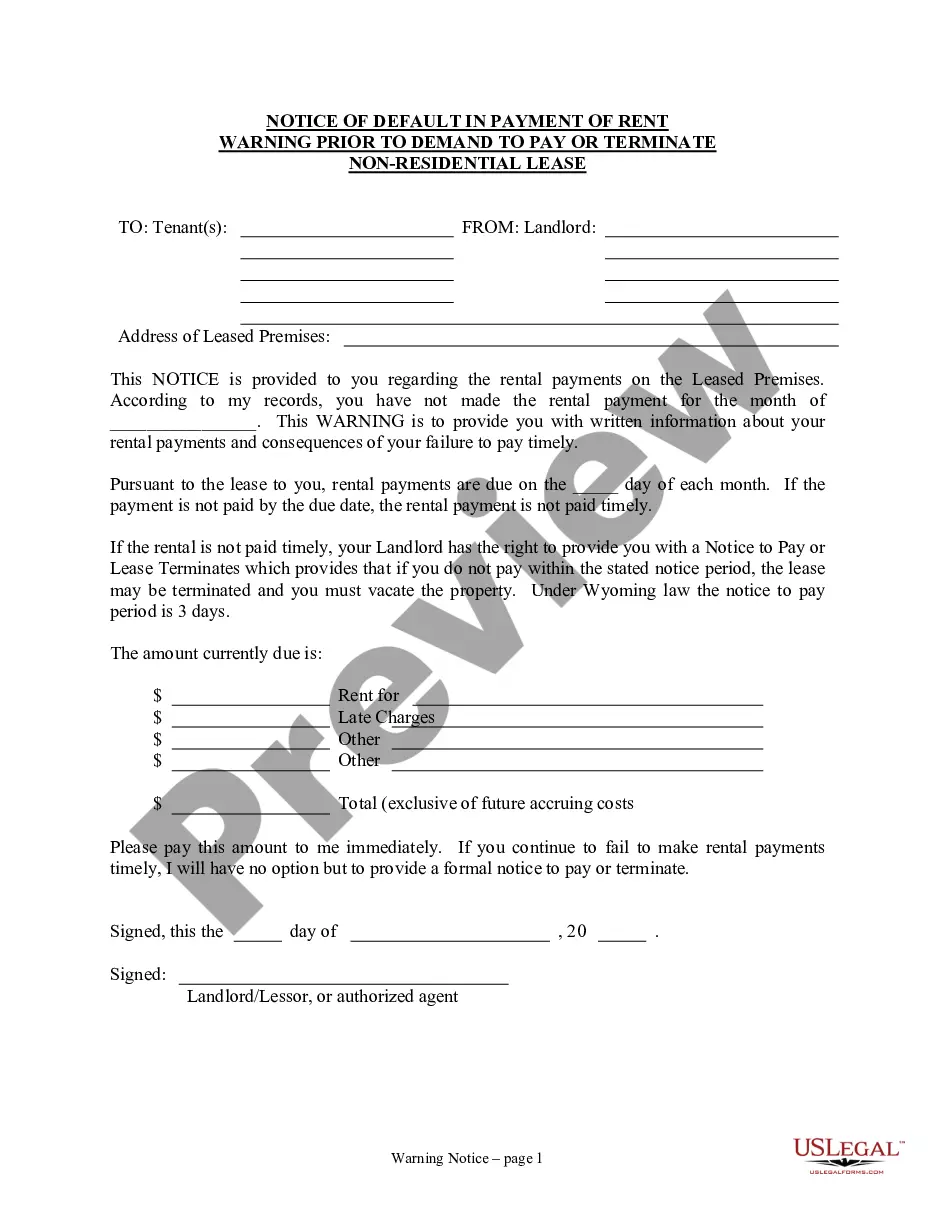
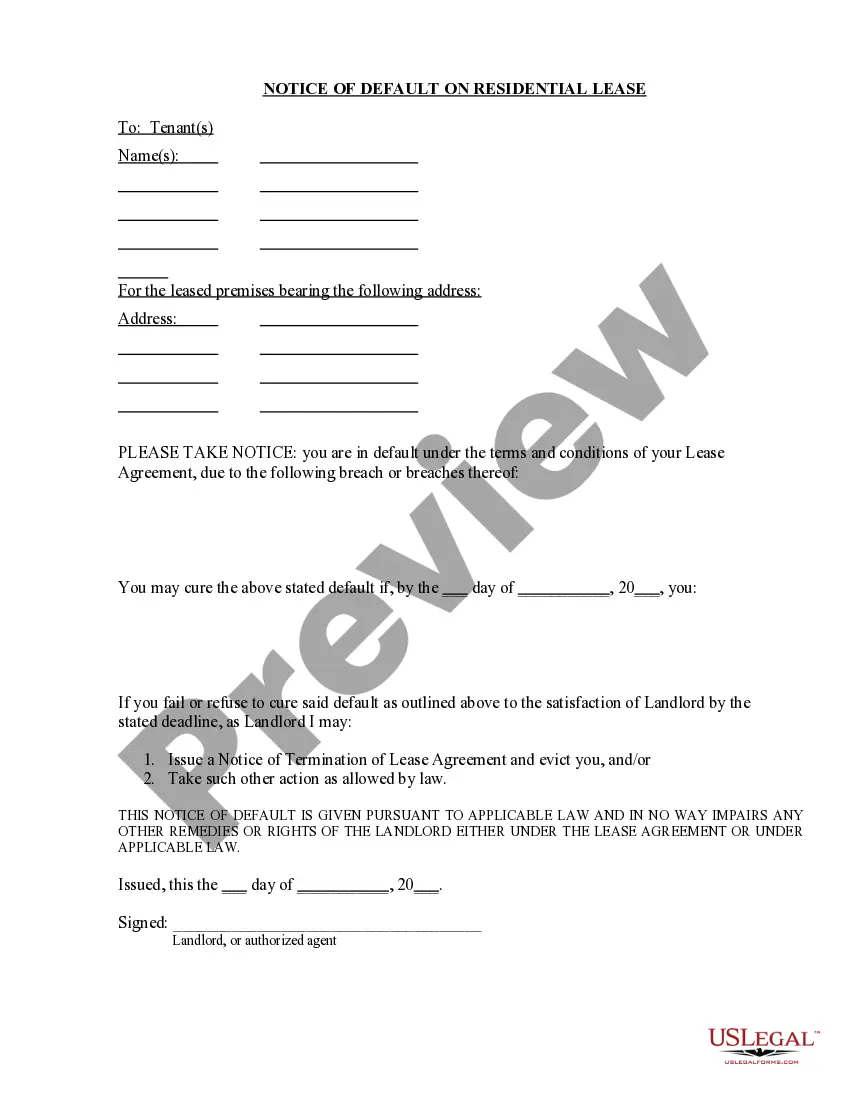
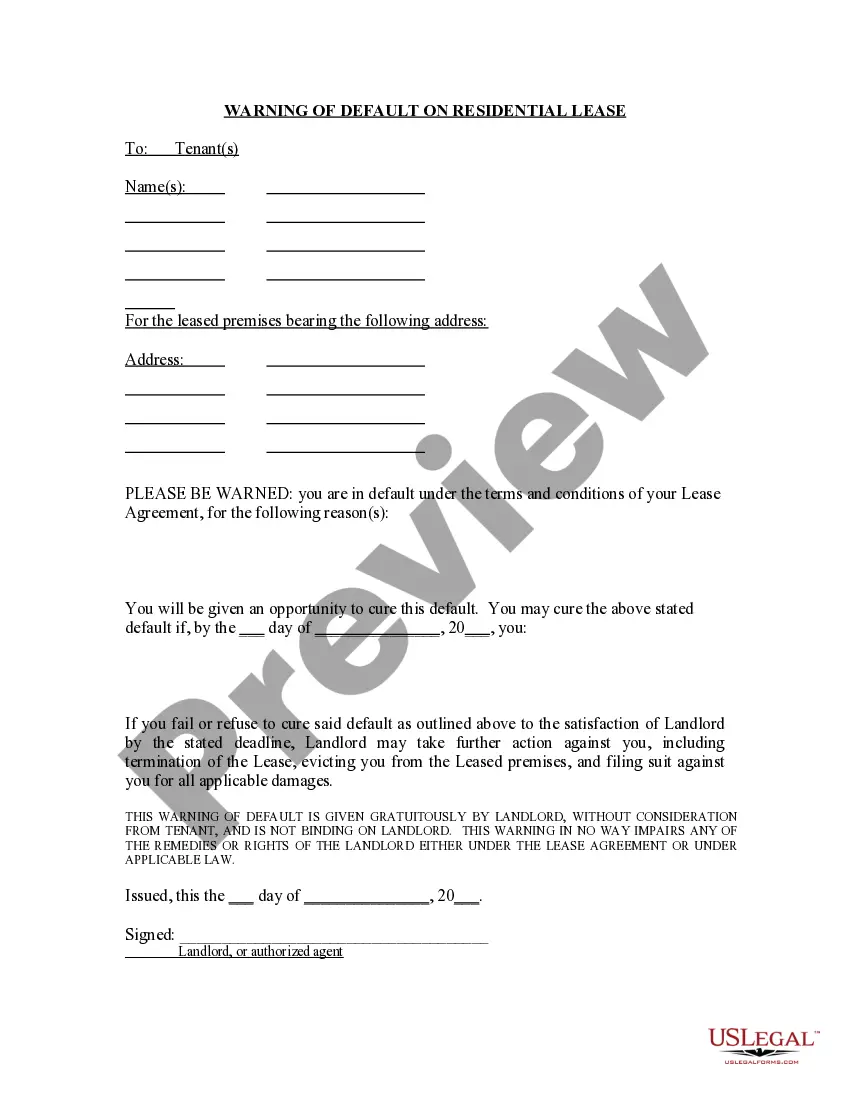
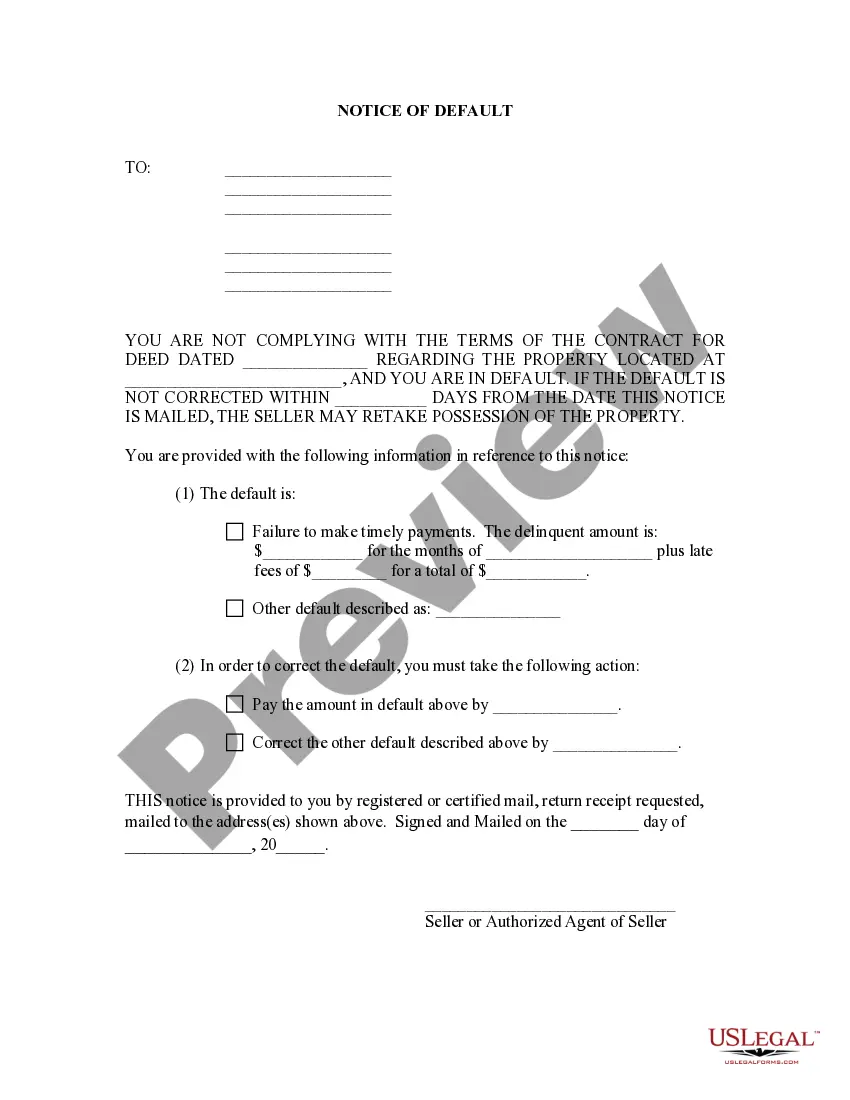
This Notice of Default for Past Due Payments in connection with Contract for Deed form serves as the Seller's formal notice to the Purchaser about missed payments toward the purchase price of the property under the contract for deed. This document is essential for notifying the Purchaser that they have not adhered to the payment terms stipulated in the agreement. If the Purchaser fails to respond adequately to this notice, it could lead to a default on the contract for deed.
Key parts of this document
- Identification of the Seller and Purchaser involved in the contract.
- Details regarding the property subject to the contract for deed.
- Specific payment terms that have not been met.
- A clear statement of the default and the required actions to remedy it.
- Warning of potential consequences if the default is not addressed.
When this form is needed
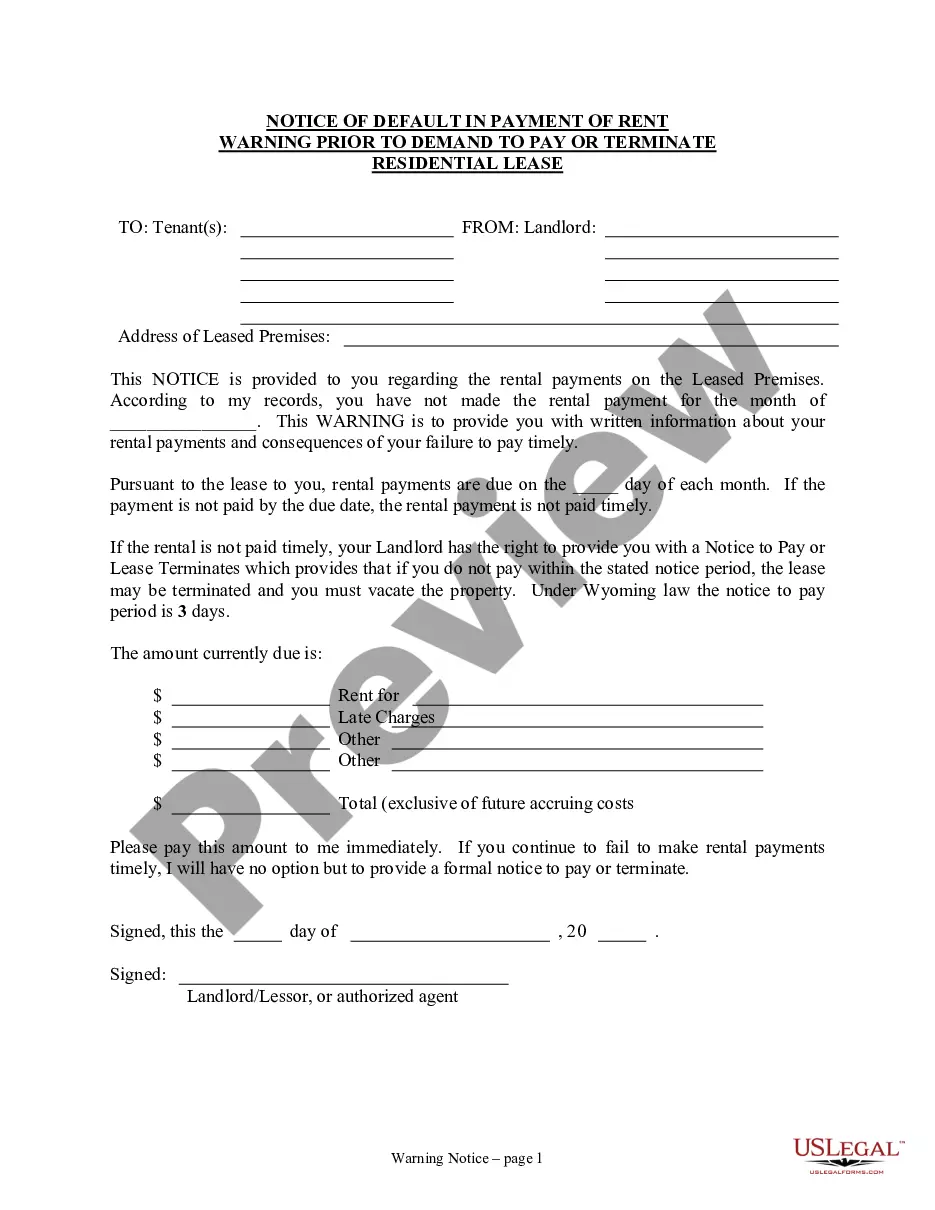
This form should be used when the Purchaser has failed to make timely payments as outlined in the contract for deed. It acts as a preliminary step for the Seller to communicate the default, allowing the Purchaser an opportunity to rectify the situation before more severe actions, such as foreclosure, are considered.
Intended users of this form
This form is intended for:
- Sellers of property under a contract for deed.
- Purchasers who have fallen behind on their payment obligations.
- Real estate professionals assisting clients in contract for deed transactions.
Completing this form step by step
- Identify the Seller and Purchaser by entering their legal names.
- Provide the property address and details of the contract for deed.
- Clearly state the payment terms that have not been complied with.
- Specify the actions the Purchaser must take to address the default.
- Sign and date the notice to validate the document.
Does this document require notarization?
To make this form legally binding, it must be notarized. Our online notarization service, powered by Notarize, lets you verify and sign documents remotely through an encrypted video session.
Get your form ready online
Our built-in tools help you complete, sign, share, and store your documents in one place.
Make edits, fill in missing information, and update formatting in US Legal Forms—just like you would in MS Word.
Download a copy, print it, send it by email, or mail it via USPS—whatever works best for your next step.
Sign and collect signatures with our SignNow integration. Send to multiple recipients, set reminders, and more. Go Premium to unlock E-Sign.
If this form requires notarization, complete it online through a secure video call—no need to meet a notary in person or wait for an appointment.
We protect your documents and personal data by following strict security and privacy standards.

Make edits, fill in missing information, and update formatting in US Legal Forms—just like you would in MS Word.

Download a copy, print it, send it by email, or mail it via USPS—whatever works best for your next step.

Sign and collect signatures with our SignNow integration. Send to multiple recipients, set reminders, and more. Go Premium to unlock E-Sign.

If this form requires notarization, complete it online through a secure video call—no need to meet a notary in person or wait for an appointment.

We protect your documents and personal data by following strict security and privacy standards.
Avoid these common issues
- Failing to provide clear details of the defaulted payment.
- Neglecting to send the notice by a method that provides proof of delivery.
- Not keeping a copy of the notice for personal records.
Advantages of online completion
- Immediate access to a legally drafted template that is easy to download and edit.
- Cost-effective compared to hiring an attorney for document preparation.
- Secure and efficient process for managing your legal paperwork.
Legal use & context
- The notice serves as a formal record of the seller's intention to declare default.
- It is a protective measure for the seller to enforce their rights under the contract for deed.
What to keep in mind
- The Notice of Default is vital for sellers dealing with late payments in contract for deed transactions.
- Proper completion and issuance of this form can help prevent further legal complications.
- Always ensure compliance with state-specific regulations when using this form.
Looking for another form?


Form popularity
FAQ
A disadvantage to the seller is that a contract for deed is frequently characterized by a low down payment and the purchase price is paid in installments instead of one lump sum. If a seller needs funds from the sale to buy another property, this would not be a beneficial method of selling real estate.
The buyer should record the contract for deed with the county recorder where the land is located and does so normally within four months after the contract is signed, though the time may vary depending on state law.
This means that if you default and can?t make your payments, you lose the property and all of the money you have already paid into it (often including repairs and improvements). Unlike a traditional mortgage, a defaulting buyer in a contact for deed may only have 30-60 days to cure the default or move out.
If a buyer backs out of a transaction without invoking her rights under a contingency, the seller could sue her to force the sale to move forward or for damages. To avoid this risk, most contracts contain a clause that allows the seller to keep the buyer's deposit if the buyer backs out.
Monetary Damages If the Seller decides to breach the contract and keep their home, they may do so, but the court may order the Buyer receive money for the resulting breach. Generally, the money owed to Buyer may include reimbursing the Buyer with: The buyer's temporary housing costs.
If a seller defaults, he must return all deposits, plus added reasonable expenses, to the buyer. The other party may also seek to compel the erring party to complete the deal under specific performance. From a buyer's point of view, it is advisable to get the sale agreement registered.
Contact the other party and ask whether they are willing to negotiate the cancellation of the contract. Offer the other party an incentive to cancel the contract for deed.
In the first instance, if your deed is not recorded, there is nothing in the public record to stop the seller from conveying the property to another person.The second situation could happen if your seller fails to pay his or her debts and the seller's creditors file liens or judgments against your property.