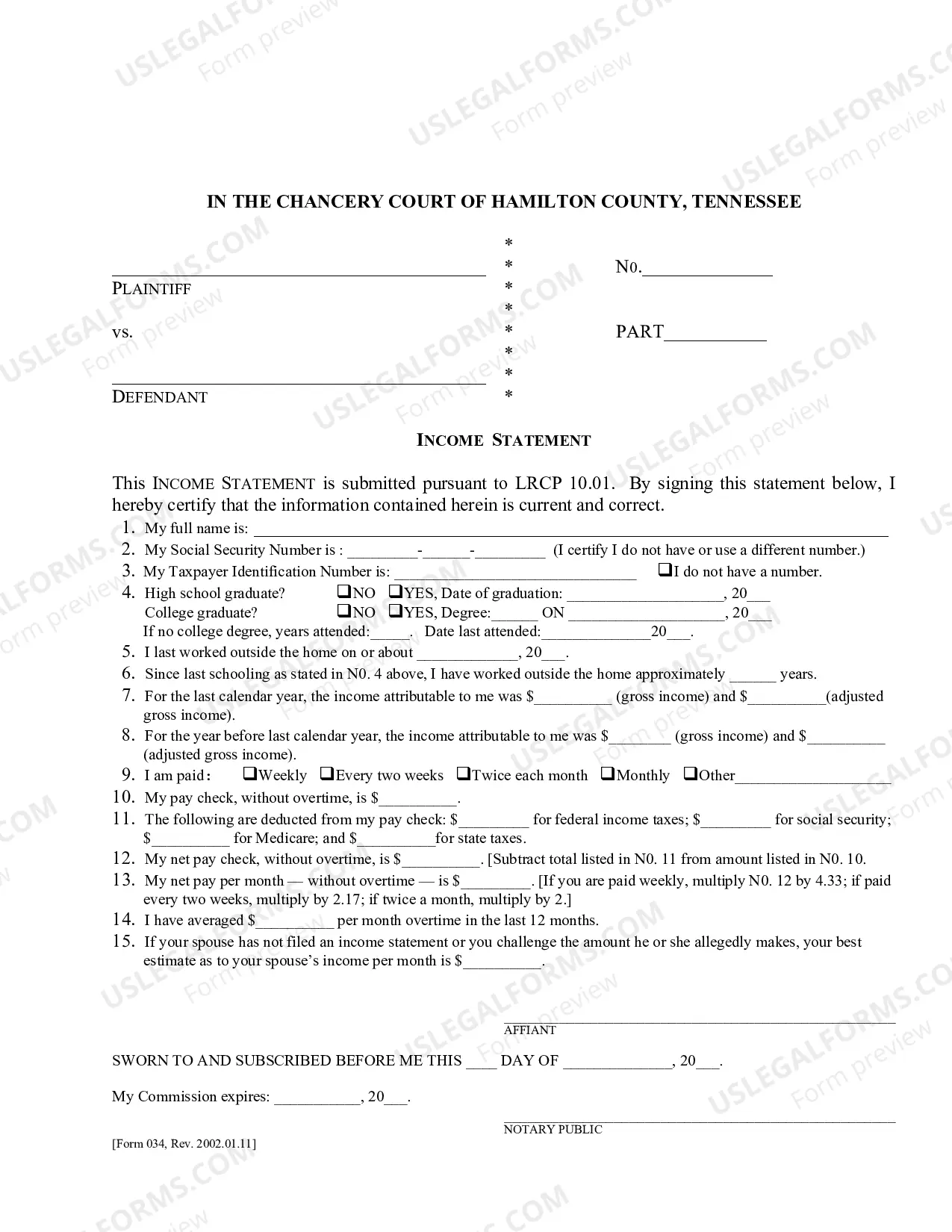
Wisconsin Living Trust for Individual Who is Single, Divorced or Widow or Widower with Children
About this form
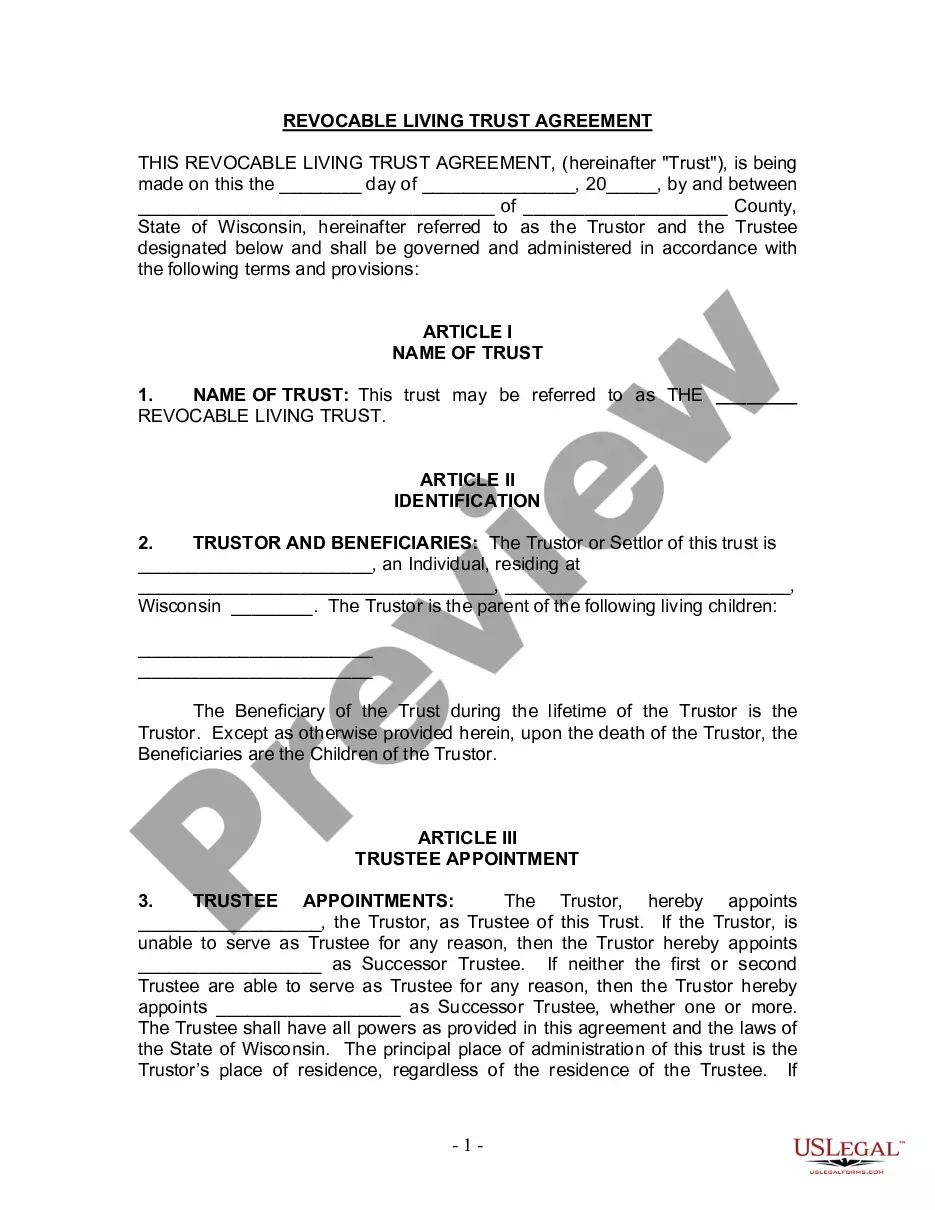
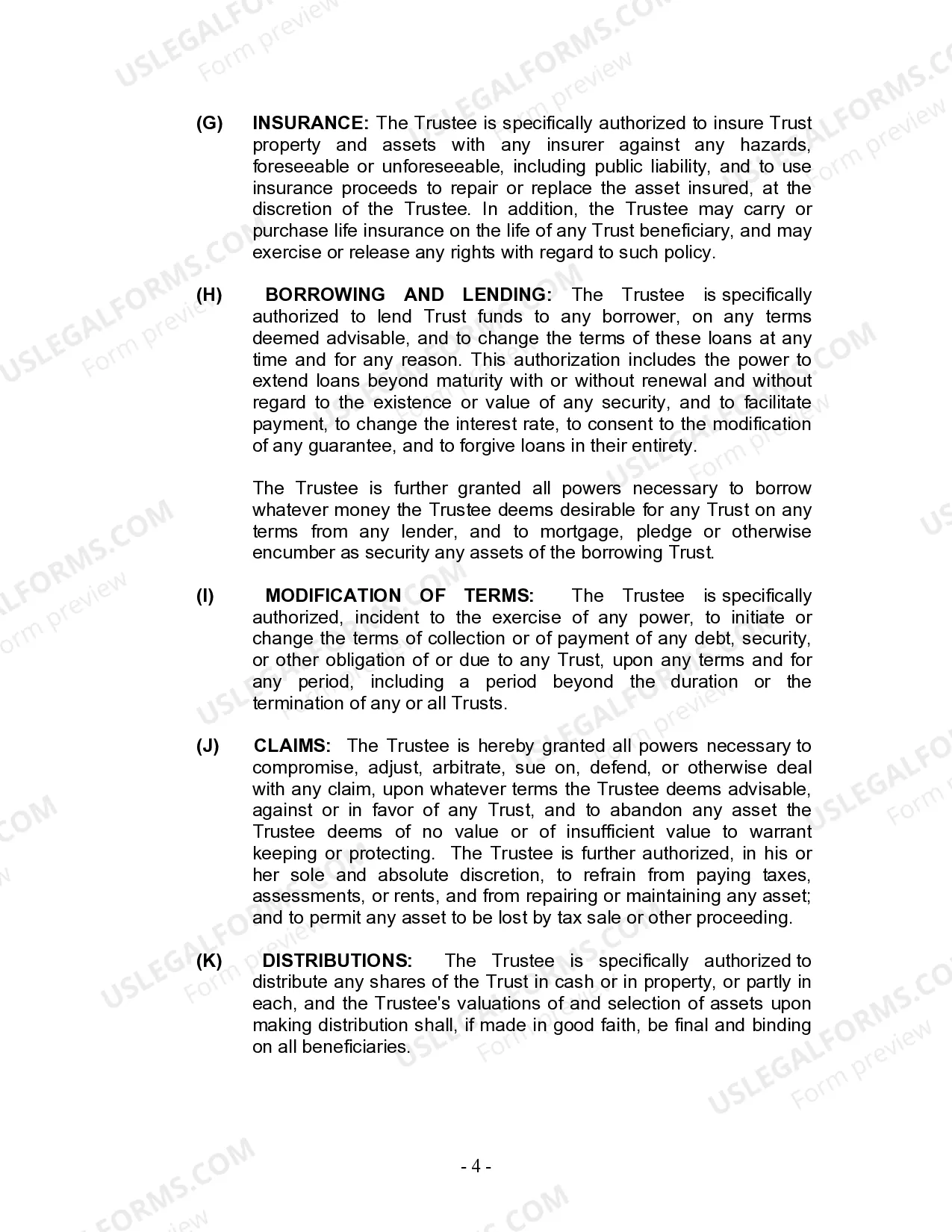
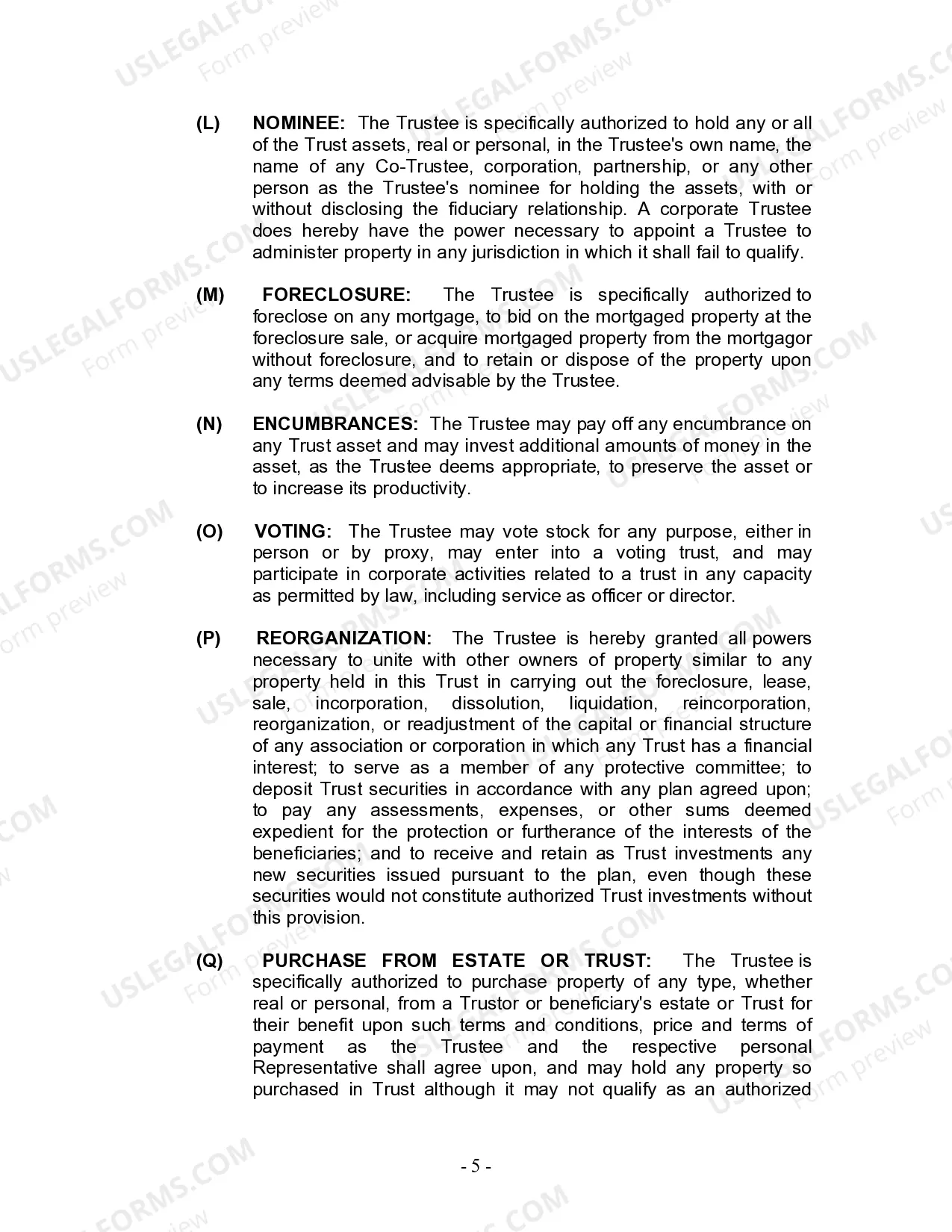
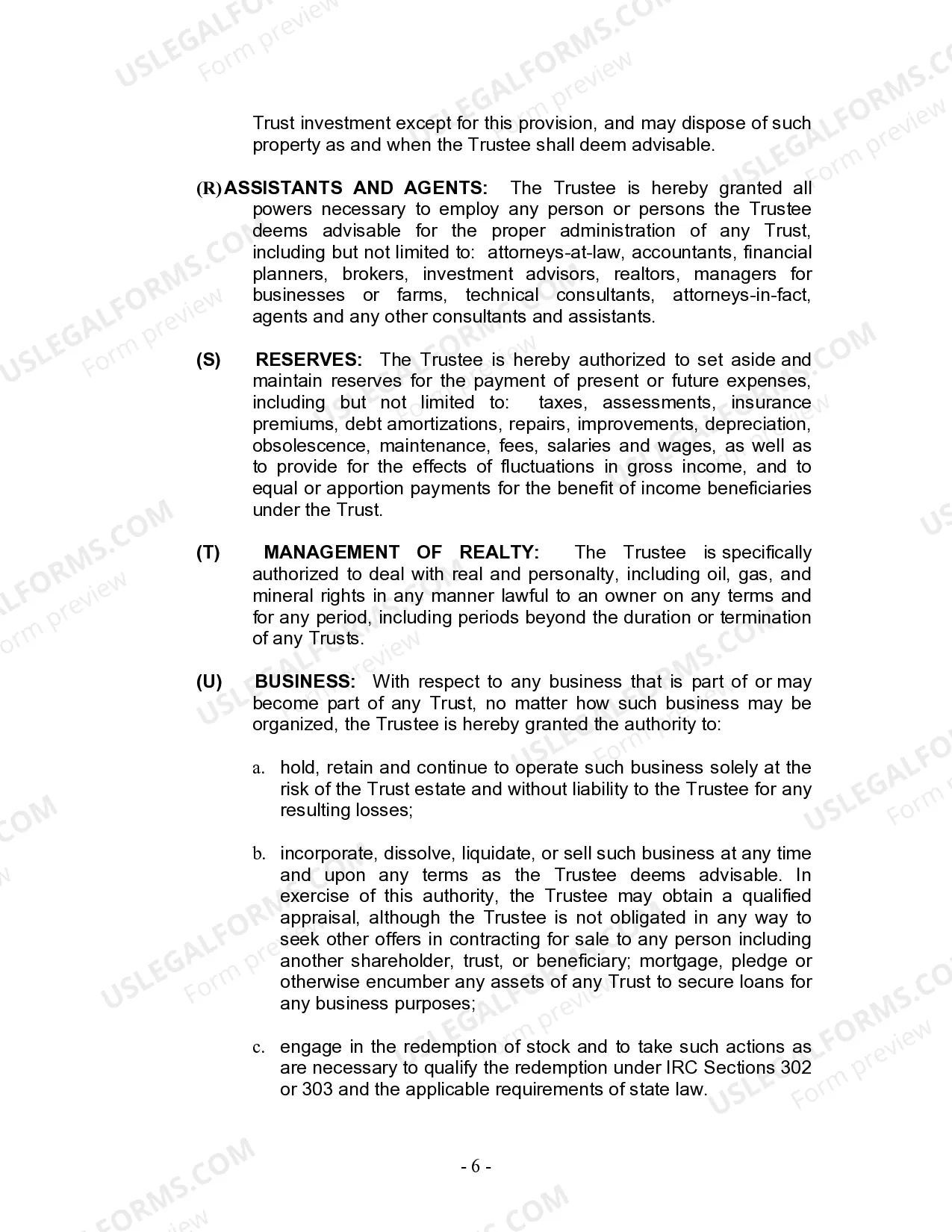
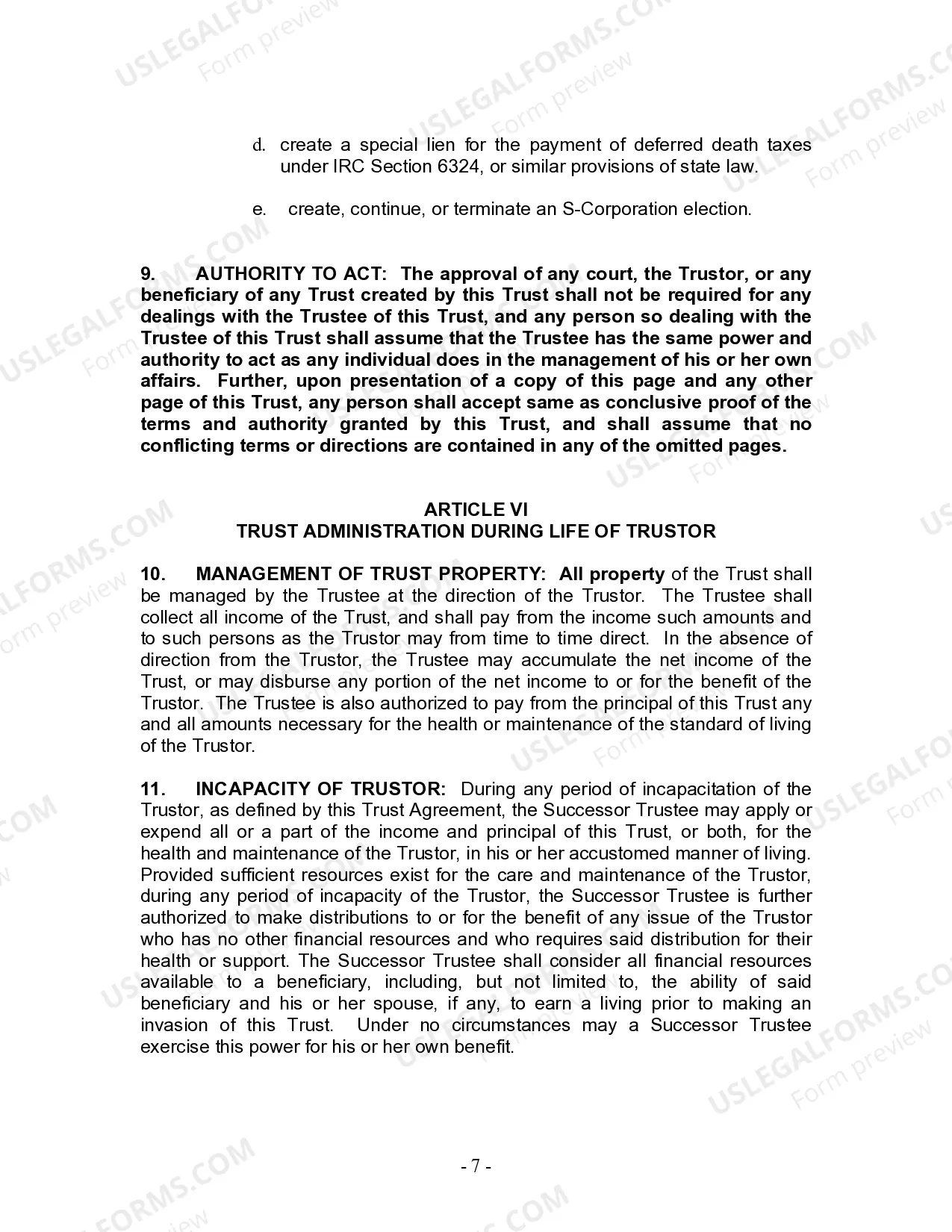
This form is a Living Trust designed for individuals who are single, divorced, or widowed and have children. Unlike a simple will, a living trust allows you to manage your assets during your lifetime and ensures that your children inherit directly without going through probate after your death. This trust maintains your control while providing financial security for your beneficiaries, making it an essential tool for effective estate planning.
Key parts of this document
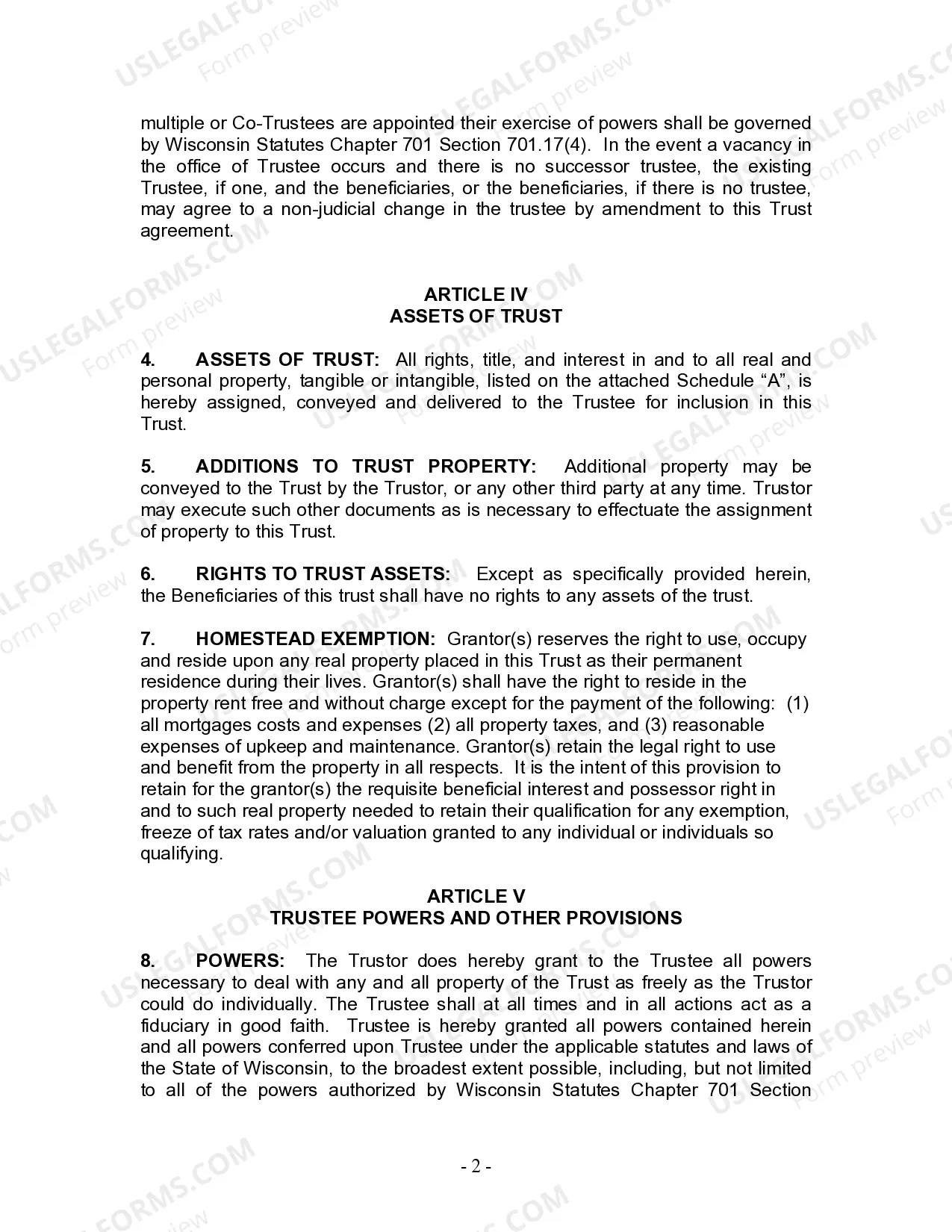
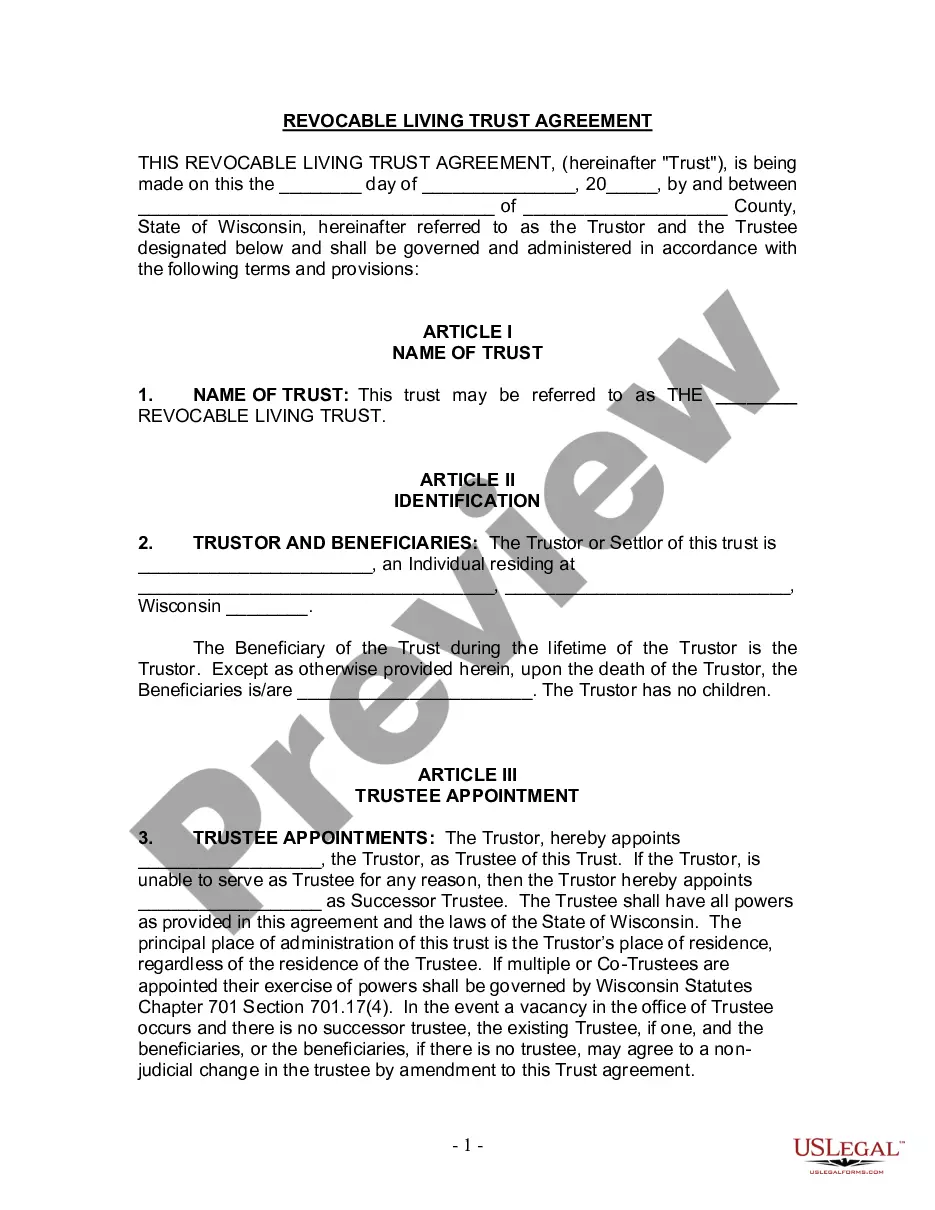
- Name of Trust: Allows you to designate a name for your living trust.
- Trustor and Beneficiaries: Identifies the person creating the trust and lists the children as beneficiaries.
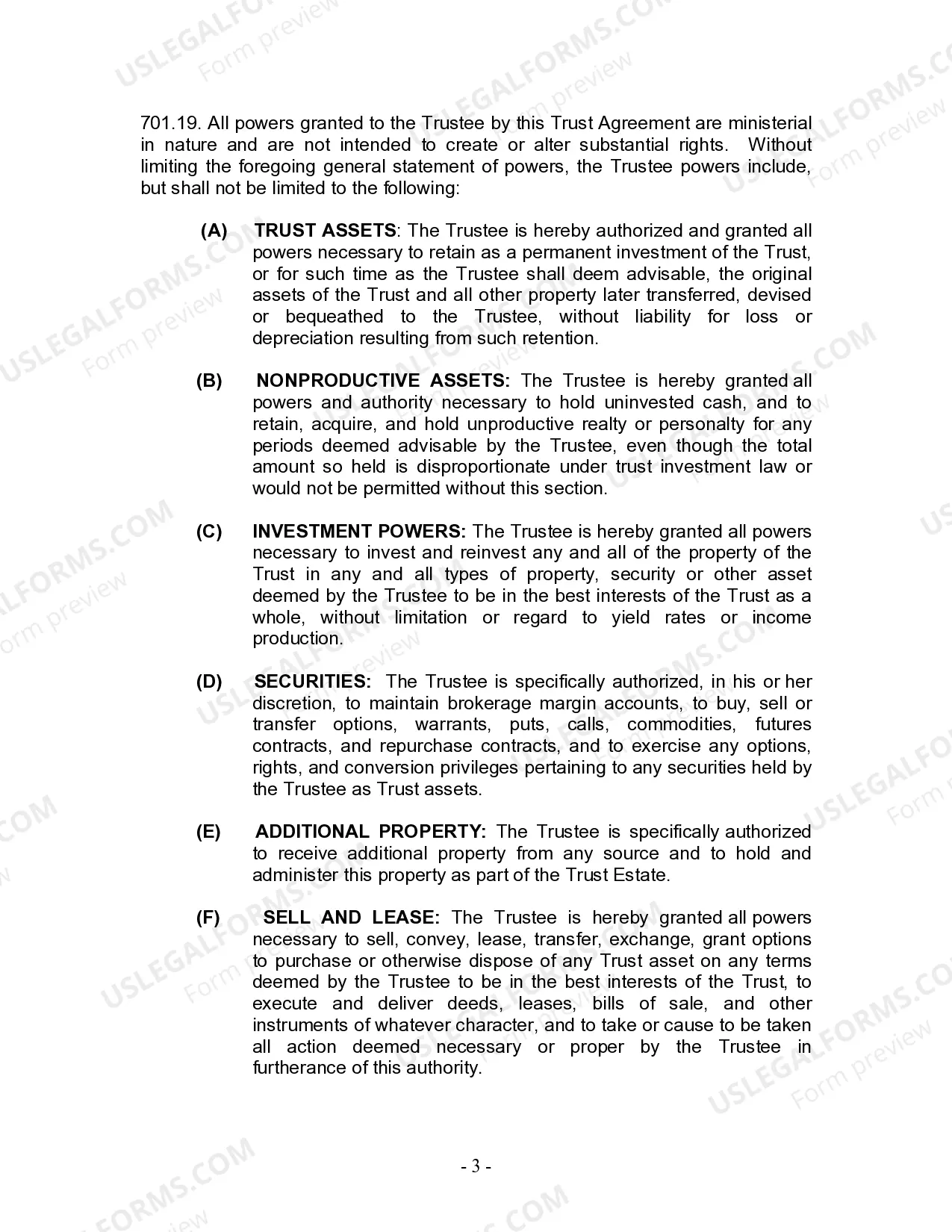
- Trustee Appointment: Specifies who will manage the trust assets, with provisions for successor trustees.
- Assets of Trust: Details on what properties and assets will be included in the trust.
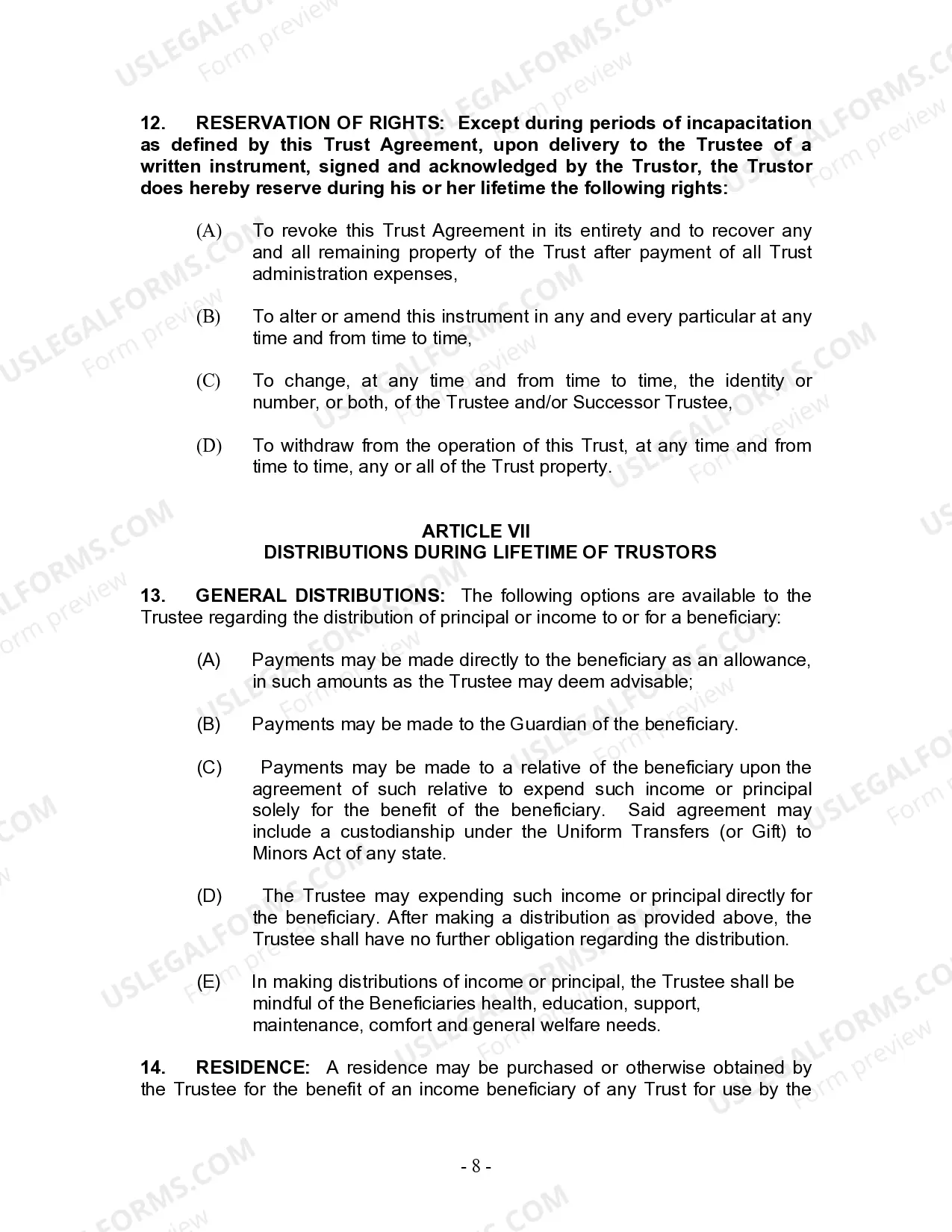
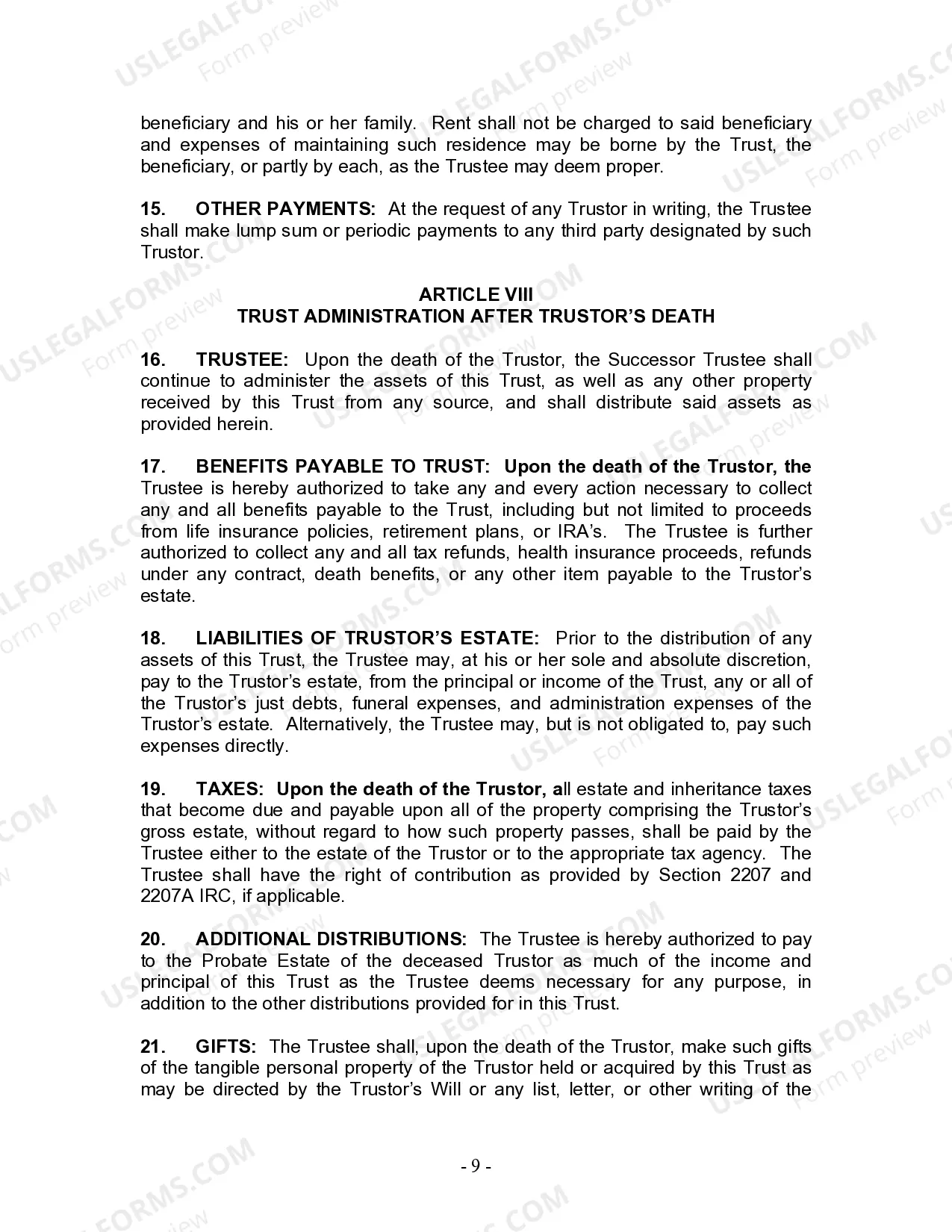
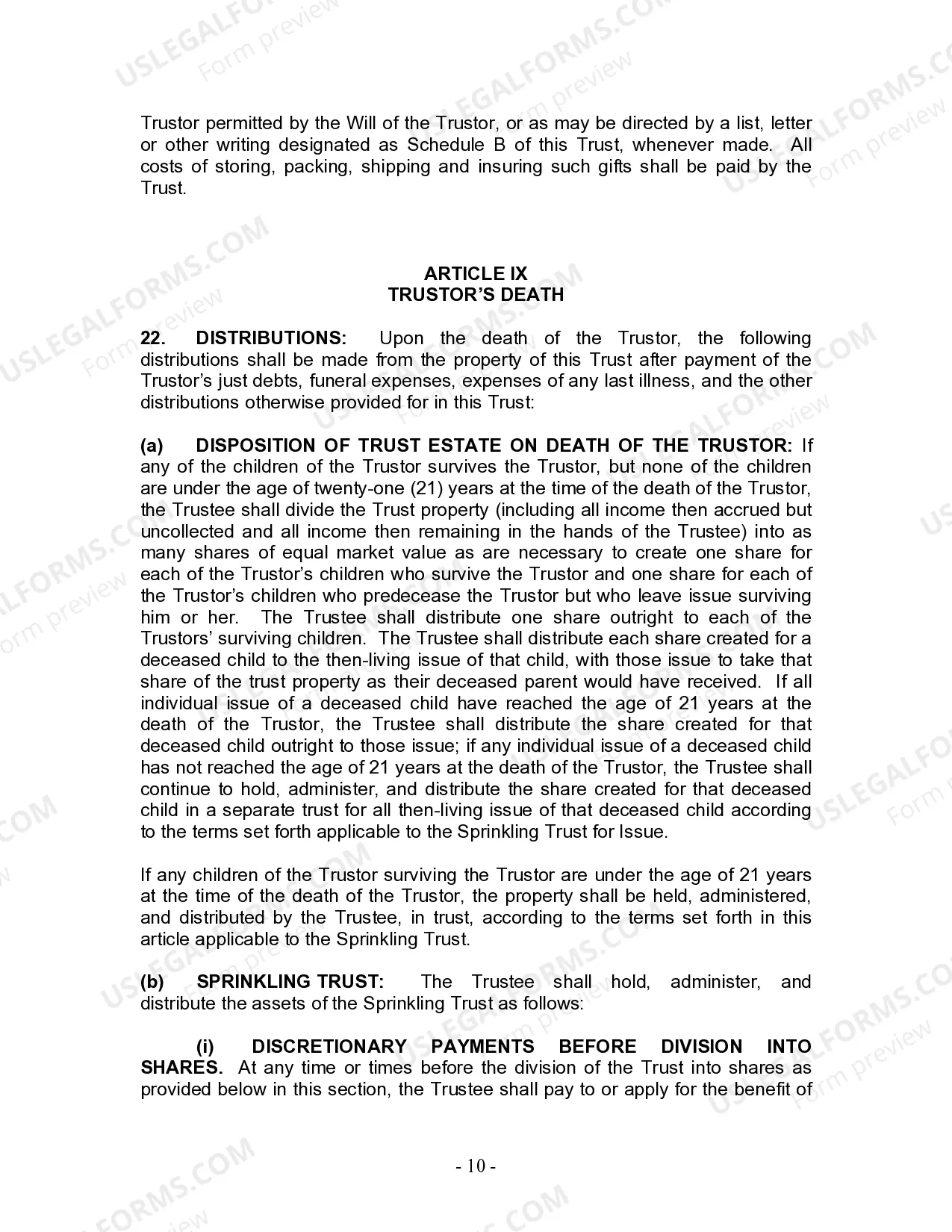
- Distribution Terms: Outlines how and when the trust assets will be distributed to the beneficiaries upon the Trustor's death.


Common use cases
You should consider using this form when you want to establish a living trust to simplify the transfer of your assets to your children after your passing. It is particularly useful if you desire to avoid the lengthy and often costly probate process, which can delay your beneficiaries' access to their inheritance. It is also a suitable option if you have specific wishes about how your assets should be managed during your incapacity or after your death.
Who can use this document
This form is intended for:
- Individuals who are single, divorced, or widowed.
- Parents with one or more children who rely on them for financial support.
- Those looking to manage and protect their assets while ensuring a smooth transfer to their beneficiaries.
- Individuals wishing to avoid probate and simplify the estate administration process.
How to prepare this document
Follow these steps to complete the Living Trust:
- Identify the parties: Enter your name as the Trustor and list the names of any appointed trustees.
- Specify the property: Outline the assets and properties that will be included in your trust.
- Designate beneficiaries: Clearly state the names of your children who will inherit your assets.
- Sign and date: Ensure the Trustor and any witnesses sign the document in accordance with state requirements.
- Consider notarization: Depending on your local laws, notarize the document to enhance its enforceability.
Notarization requirements for this form
This form does not typically require notarization unless specified by local law. However, notarization can enhance the document's validity and prevent potential disputes in the future.
Get your form ready online
Our built-in tools help you complete, sign, share, and store your documents in one place.
Make edits, fill in missing information, and update formatting in US Legal Forms—just like you would in MS Word.
Download a copy, print it, send it by email, or mail it via USPS—whatever works best for your next step.
Sign and collect signatures with our SignNow integration. Send to multiple recipients, set reminders, and more. Go Premium to unlock E-Sign.
If this form requires notarization, complete it online through a secure video call—no need to meet a notary in person or wait for an appointment.
We protect your documents and personal data by following strict security and privacy standards.

Make edits, fill in missing information, and update formatting in US Legal Forms—just like you would in MS Word.

Download a copy, print it, send it by email, or mail it via USPS—whatever works best for your next step.

Sign and collect signatures with our SignNow integration. Send to multiple recipients, set reminders, and more. Go Premium to unlock E-Sign.

If this form requires notarization, complete it online through a secure video call—no need to meet a notary in person or wait for an appointment.

We protect your documents and personal data by following strict security and privacy standards.
Avoid these common issues
- Failing to list all assets: Ensure you include all relevant properties and assets in your trust.
- Not updating the trust: After major life changes (like marriage, divorce, or the birth of a child), review and update your trust accordingly.
- Choosing an unqualified trustee: Select someone who understands their responsibilities and can handle trust management effectively.
Why use this form online
- Convenience: You can create and manage the trust online without the need for meetings with a lawyer.
- Editability: Make changes to your trust easily as your circumstances or wishes evolve.
- Reliability: Access professionally drafted forms reviewed by licensed attorneys for your peace of mind.
What to keep in mind
- A Living Trust allows for the effective management and transfer of assets without going through probate.
- The trust is suitable for single, divorced, or widowed individuals with children.
- Complete the trust carefully and update it as needed, especially after significant life events.
Looking for another form?


Form popularity
FAQ
Generally, trusts are considered the separate property of the beneficiary spouse and the assets in a trust are not subject to equitable distribution unless they contain marital property.Putting marital assets into a trust does not make those assets separate property.
Aside from being used as an estate planning tool, trusts can be used for asset protection in divorce.If a spouse established a trust prior to the marriage, the assets placed in that trust are typically considered separate property as long as the funds are not combined with marital funds at any point.
As the grantor or creator of an irrevocable trust, if you place assets into one before your marriage, these are never marital property and are never at risk in a divorce.You can't get these assets back later if you decide you don't mind sharing them with your spouse or after you divorce.
Some Trusts Protect Assets from Divorce. In California, trusts established before marriage are considered separate property. Other trusts including domestic or foreign asset protection trusts, revocable trusts and irrevocable trusts also protect assets in the event of divorce.
Aside from being used as an estate planning tool, trusts can be used for asset protection in divorce.If a spouse established a trust prior to the marriage, the assets placed in that trust are typically considered separate property as long as the funds are not combined with marital funds at any point.
Some Trusts Protect Assets from Divorce. In California, trusts established before marriage are considered separate property. Other trusts including domestic or foreign asset protection trusts, revocable trusts and irrevocable trusts also protect assets in the event of divorce.
Under California law, a marriage automatically invalidates any pre-existing will or trust as to the new spouse's inheritance rights, unless the documents provide for a new spouse, or clearly indicate a new spouse will receive nothing.
If marital property is placed in an irrevocable trust, that trust cannot be changed and the assets in it cannot be removed and divided in the divorce. The trust assets remain in the trust until after the death of the grantor, when they are distributed to the beneficiaries in accordance with the trust's terms.