Wisconsin Letter from Tenant to Landlord about Sexual Harassment
About this form
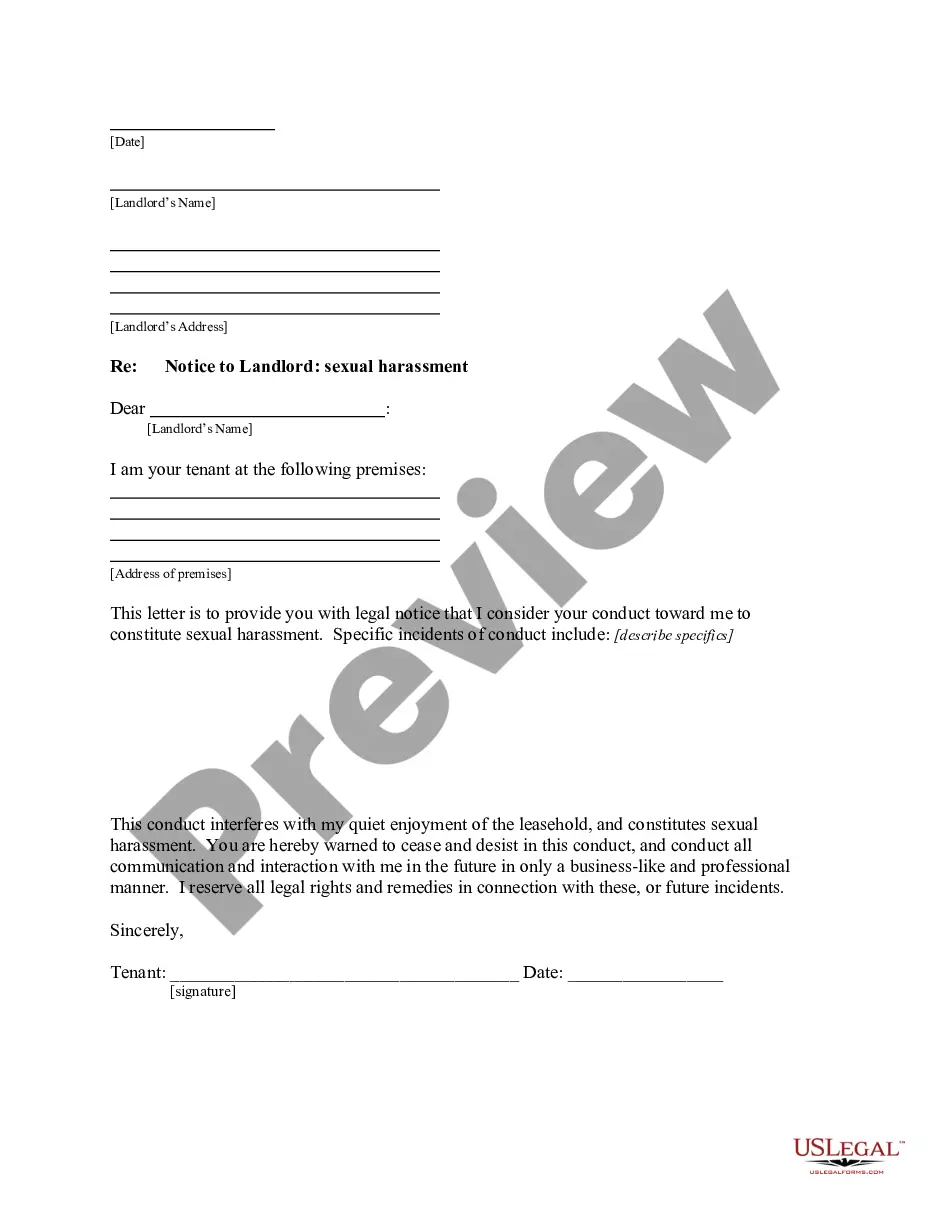
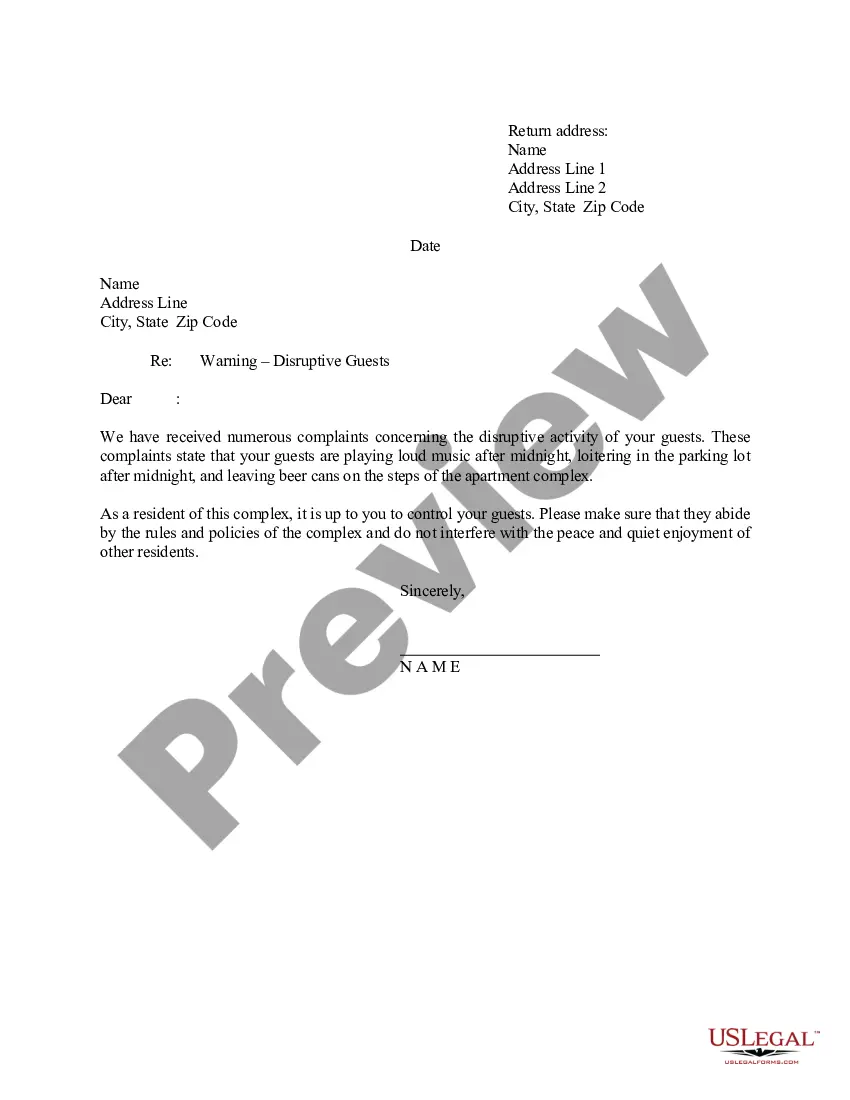
This form is a Letter from Tenant to Landlord about Sexual Harassment, informing the landlord of harassment behavior that disrupts the tenant's right to quiet enjoyment. It serves as an official warning for the landlord to cease such conduct and mandates that all future communications be conducted professionally and respectfully.
Key parts of this document
- Identification of the tenant and landlord
- Detailed description of the alleged sexual harassment conduct
- Statement on the impact of the harassment on the tenant's living conditions
- A demand for the landlord to stop the unwanted behavior
- Instructions on how the landlord should conduct future communications
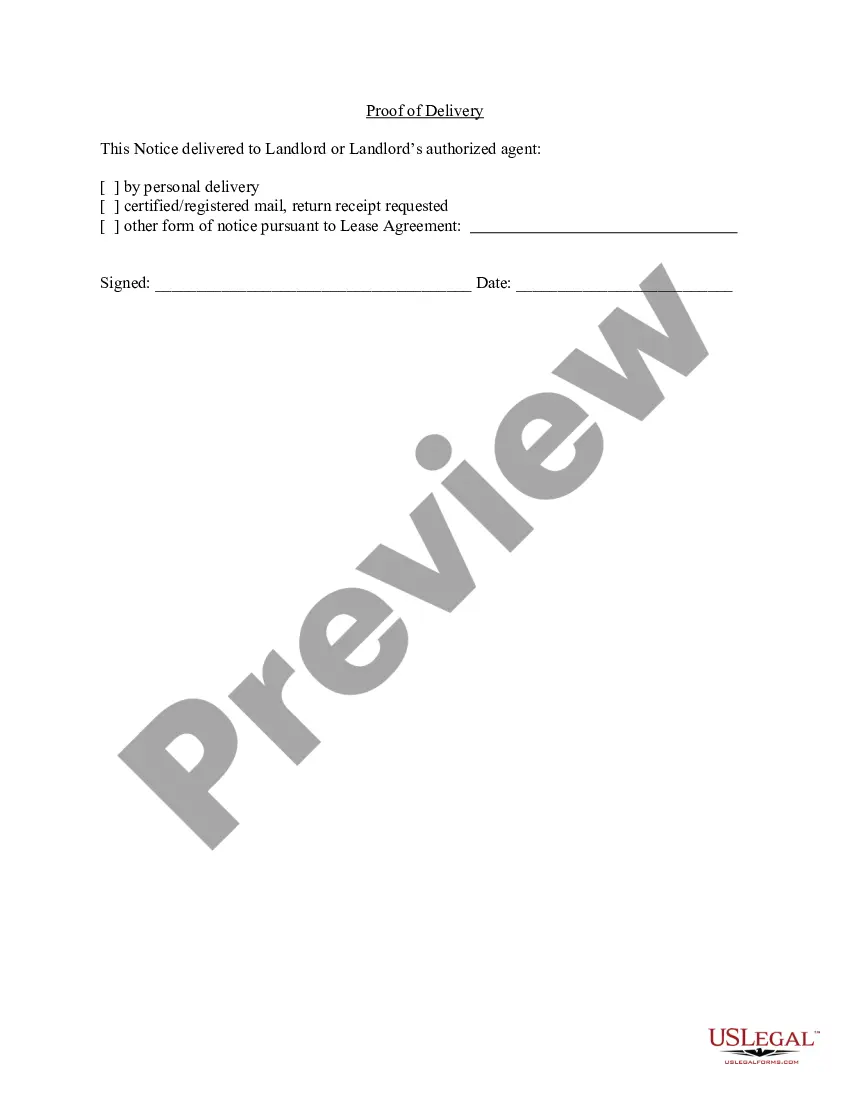
- Proof of delivery options

When this form is needed
This form should be used when a tenant has experienced sexual harassment from their landlord and wishes to formally document the behavior. It is appropriate in situations where direct communication has failed or when the tenant feels uncomfortable addressing the issue verbally. This letter serves as both a record and a legal notice to the landlord.
Who can use this document
This form is intended for:
- Tenants who have experienced sexual harassment from their landlords
- Individuals seeking to formally address harassment in a professional manner
- Those looking to ensure a record of their complaints for possible legal action
Completing this form step by step
- Identify the parties by providing your name and the landlord's name.
- Clearly describe the incidents of sexual harassment you have experienced.
- Include details about how the harassment has affected your living situation.
- Sign and date the letter to authenticate it.
- Select a method of delivery and indicate how this notice was delivered.
Notarization guidance
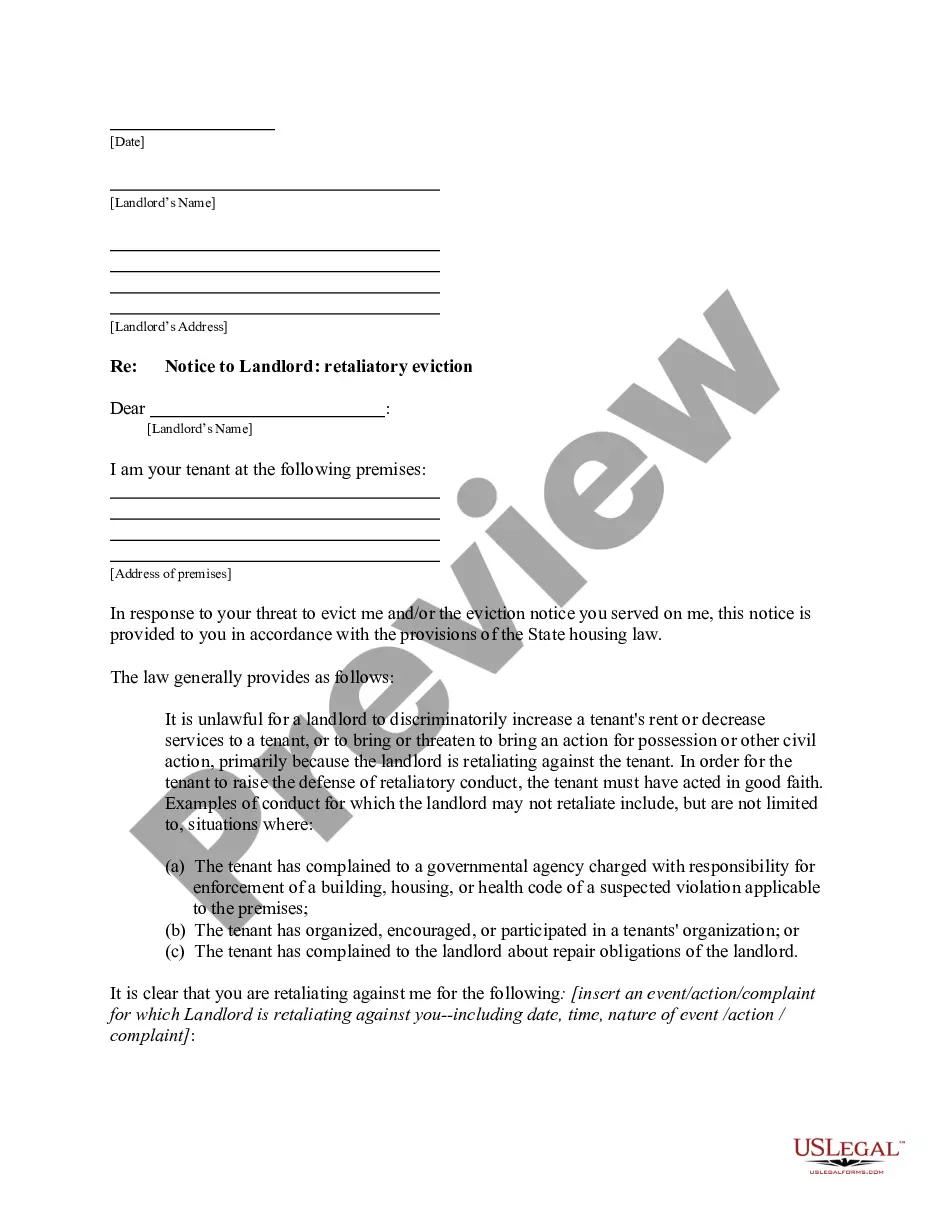
Notarization is generally not required for this form. However, certain states or situations might demand it. You can complete notarization online through US Legal Forms, powered by Notarize, using a verified video call available anytime.
Get your form ready online
Our built-in tools help you complete, sign, share, and store your documents in one place.
Make edits, fill in missing information, and update formatting in US Legal Forms—just like you would in MS Word.
Download a copy, print it, send it by email, or mail it via USPS—whatever works best for your next step.
Sign and collect signatures with our SignNow integration. Send to multiple recipients, set reminders, and more. Go Premium to unlock E-Sign.
If this form requires notarization, complete it online through a secure video call—no need to meet a notary in person or wait for an appointment.
We protect your documents and personal data by following strict security and privacy standards.

Make edits, fill in missing information, and update formatting in US Legal Forms—just like you would in MS Word.

Download a copy, print it, send it by email, or mail it via USPS—whatever works best for your next step.

Sign and collect signatures with our SignNow integration. Send to multiple recipients, set reminders, and more. Go Premium to unlock E-Sign.

If this form requires notarization, complete it online through a secure video call—no need to meet a notary in person or wait for an appointment.

We protect your documents and personal data by following strict security and privacy standards.
Common mistakes
- Not providing specific details about the harassment incidents.
- Failing to sign and date the letter.
- Using vague language that may not convey the seriousness of the situation.
- Neglecting to choose a proof of delivery method.
Why complete this form online
- Convenient access to reliable, attorney-drafted templates.
- Easy to fill out and customize for your specific situation.
- Immediate download for quick submission.
- Ensures compliance with legal standards in your state.
Quick recap
- This form allows tenants to formally address sexual harassment by their landlords.
- It is essential to document the behavior clearly and maintain professionalism.
- Always keep a copy of the letter and proof of delivery for future reference.
Looking for another form?
Form popularity
FAQ
If you're seeking damages for emotional distress caused by a landlord's discrimination, or punitive damages for especially blatant and intentional discrimination, a lawsuit may well be your best bet. Understand what's involved in suing your landlord. You may file a lawsuit in either federal or state court.
A landlord cannot evict a tenant without an adequately obtained eviction notice and sufficient time. A landlord cannot retaliate against a tenant for a complaint. A landlord cannot forego completing necessary repairs or force a tenant to do their own repairs.A landlord cannot remove a tenant's personal belongings.
Landlords are prohibited from harassing or retaliating against tenants who exercise their legal rights. In Wisconsin, the landlord must not terminate, refuse to renew a lease, or fine a tenant for complaining to the landlord regarding the deposit, complaining to a government agency, or exercising a legal right.
Get an Injunctive Order from the Court to Stop the Behavior: A tenant can go to court to get a legal order from the court for the landlord to stop the harassing behavior. 12feff Sue the Landlord: A tenant could also sue the landlord for damages due to the harassment.
Harassment is unwelcome conduct that is based on race, color, religion, sex (including pregnancy), national origin, age (40 or older), disability or genetic information.The victim does not have to be the person harassed, but can be anyone affected by the offensive conduct.
Write a letter to your landlord asking for the harassment to stop. Send the letter with proof of mailing and keep a copy of the letter. Ask a witness to be there for landlord interactions. Witness accounts and video recordings of your interactions can be used in court as long as they were done legally.
In Wisconsin, tenants are legally able to withhold rent. The tenant may withhold rent for failure to provide essential services, including, but not limited to: The landlord failing to repair.
Respectfully state that you are making a complaint. Explain the reason behind you making the complaint, making sure to put in the various reasons why you are making the complaint. Relate to the reader what you wish to be done about your complaint. End on a positive tone.