Wisconsin Renunciation And Disclaimer of Joint Tenant or Tenancy Interest
What is this form?
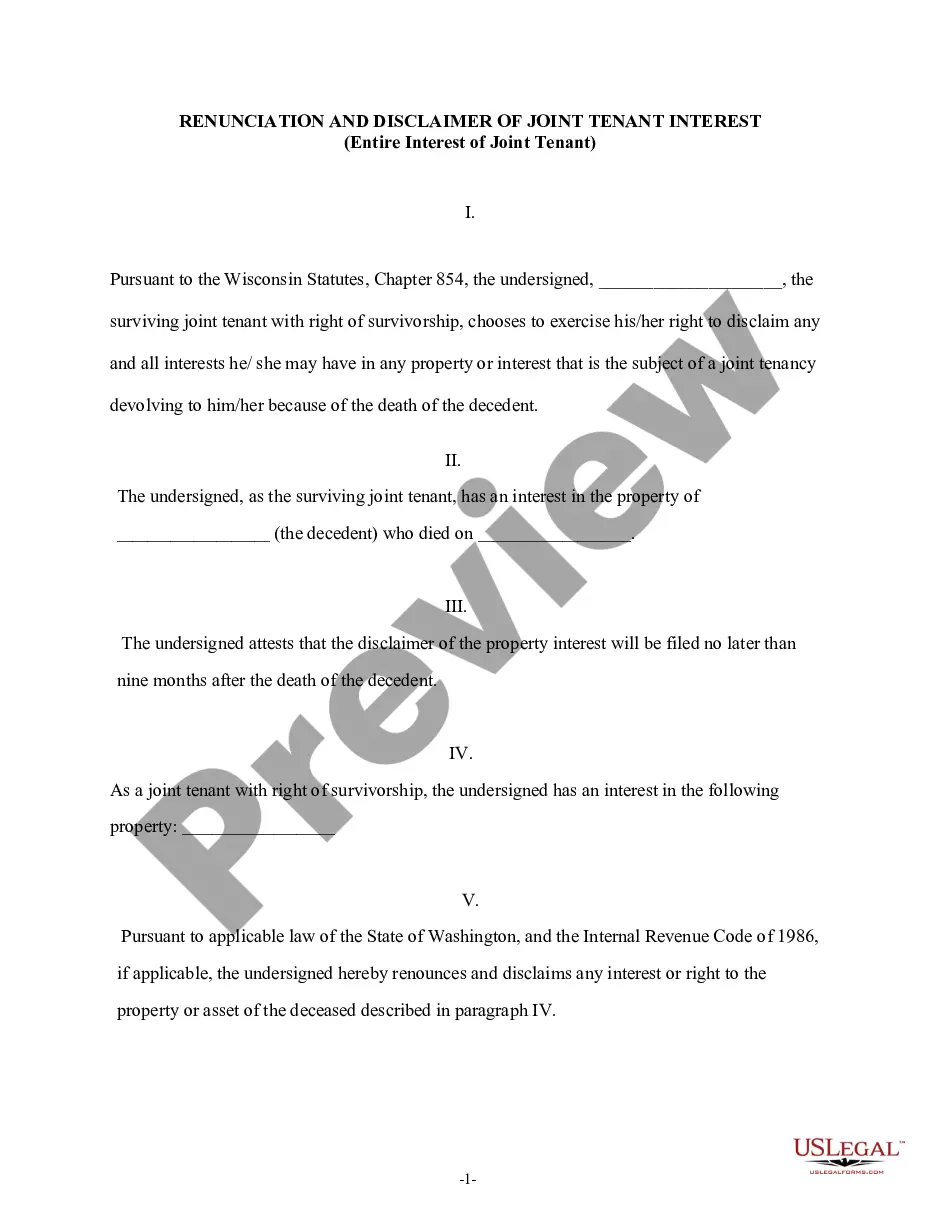
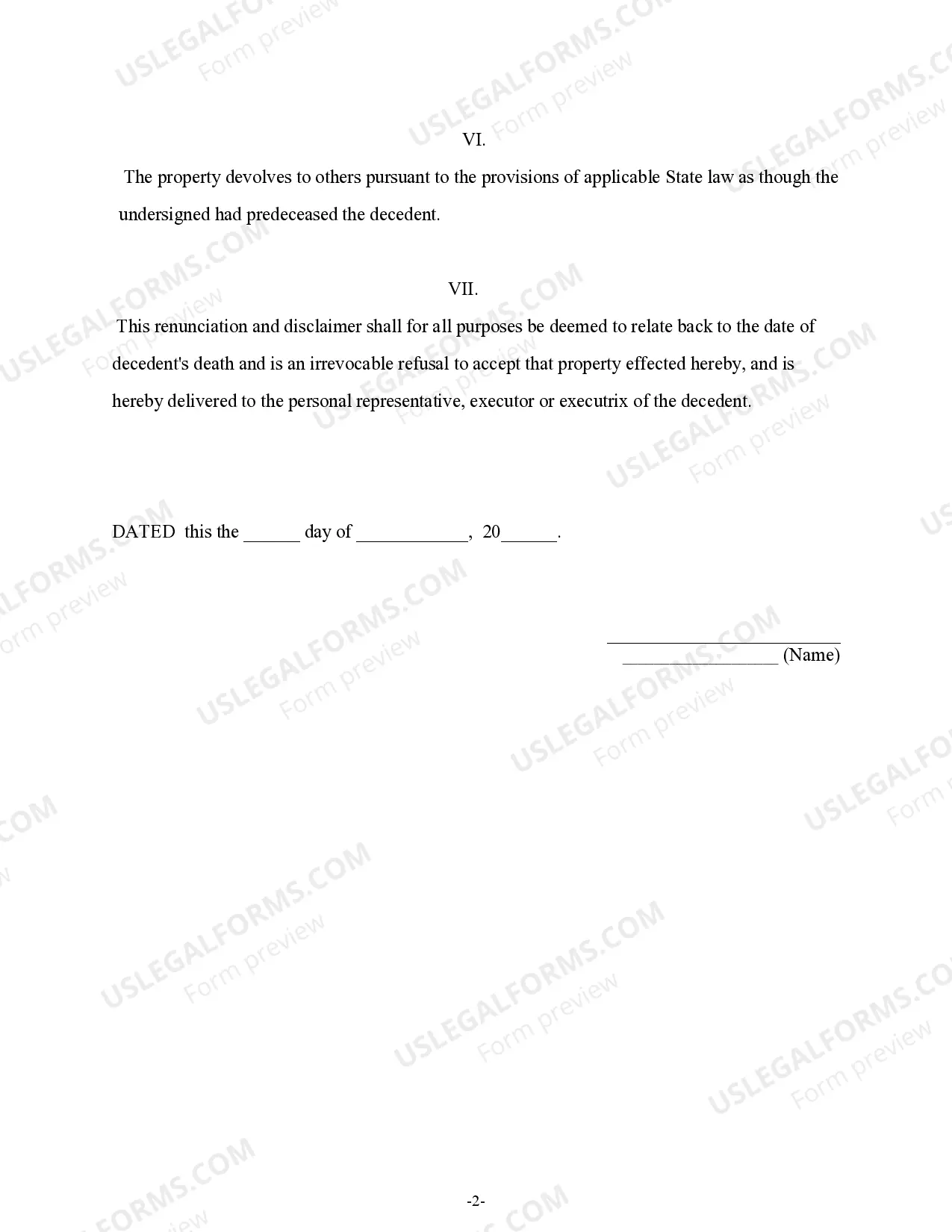
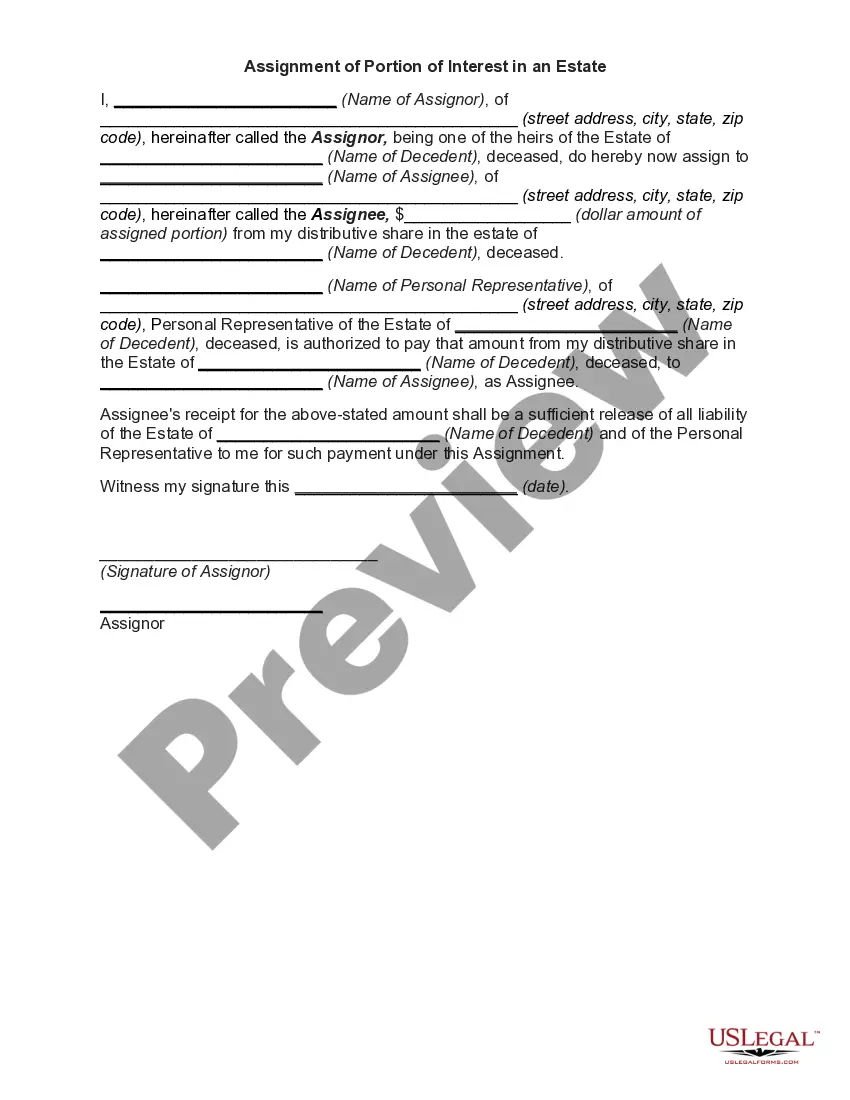
The Renunciation and Disclaimer of Joint Tenant or Tenancy Interest form is a legal document used by surviving joint tenants who wish to renounce their interest in a property following the death of a co-owner. Unlike other forms of property transfer, this specific form allows the surviving tenant to disclaim their interest, resulting in the property being treated as if they predeceased the deceased joint tenant. This form ensures that property rights are clearly defined and respected according to Wisconsin law.
Key parts of this document
- The declaration of the surviving joint tenant choosing to disclaim their interest.
- Identification of the decedent and the property involved.
- Certification that the disclaimer will be filed within nine months after the decedent's death.
- Specification of the property to which the disclaimer applies.
- An irrevocable declaration that the disclaimer applies retroactively to the date of death.
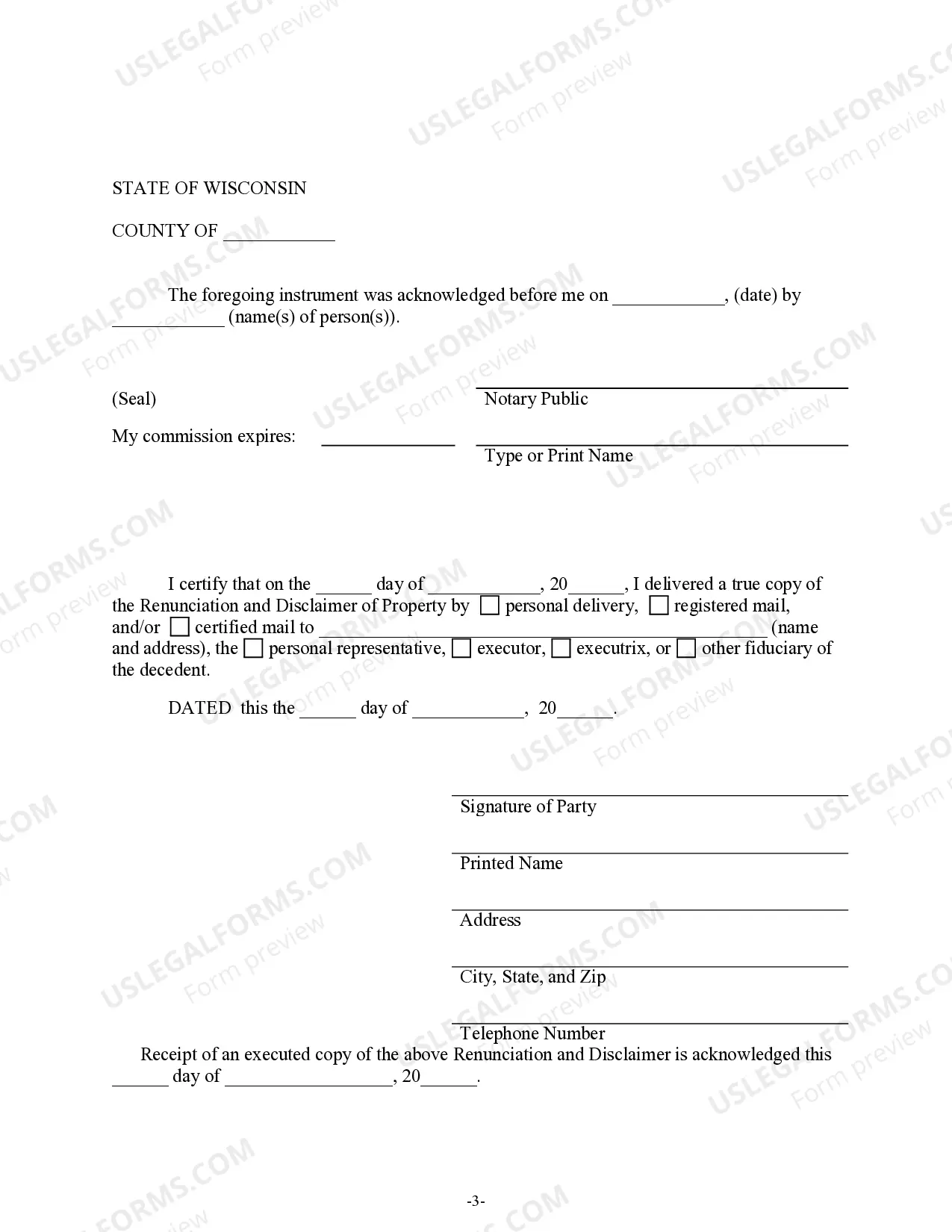
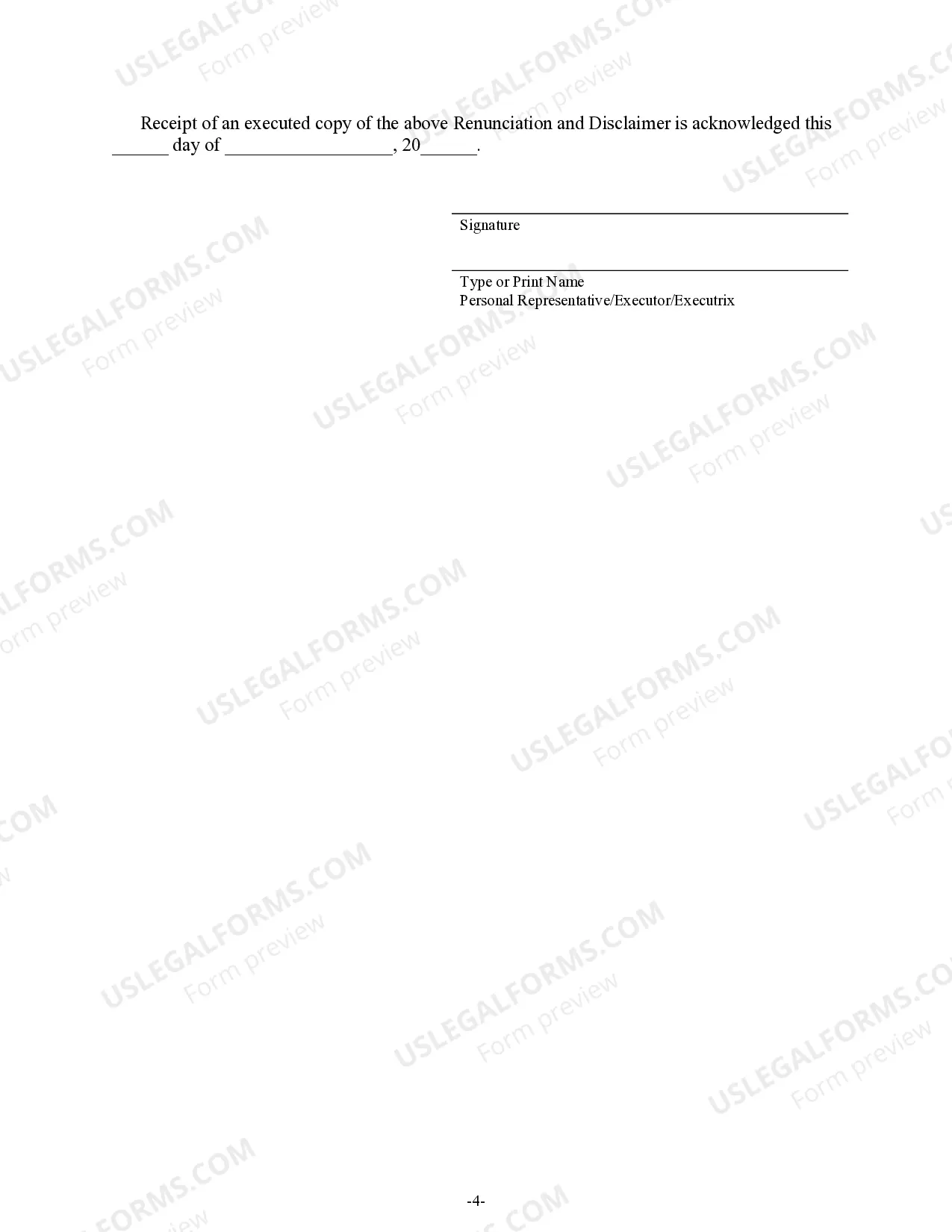
- A requirement for delivery of the form to the personal representative or executor of the decedent.


When this form is needed
This form should be used when a surviving joint tenant decides to waive their rights to an interest in property upon the death of the other tenant. It is essential in situations where the surviving tenant does not wish to inherit the property and wants to prevent the property from being passed on to them, thus redirecting it to other heirs according to the decedent's wishes or state law.
Who this form is for
- Surviving joint tenants in Wisconsin looking to renounce their inherited property interest.
- Individuals who wish to ensure that property is distributed according to their legal rights after death.
- Heirs who may want to disclaim their inheritance for personal or financial reasons.
How to complete this form
- Identify the surviving joint tenant who wishes to disclaim their interest.
- Specify the decedent's name and the date of their death.
- Fill in the property details to which the disclaimer applies.
- Ensure the form is signed and dated within the required nine months of the decedent's death.
- Deliver the completed form to the appropriate personal representative, executor, or executrix of the decedent.
Does this form need to be notarized?
To make this form legally binding, it must be notarized. Our online notarization service, powered by Notarize, lets you verify and sign documents remotely through an encrypted video session.
Get your form ready online
Our built-in tools help you complete, sign, share, and store your documents in one place.
Make edits, fill in missing information, and update formatting in US Legal Forms—just like you would in MS Word.
Download a copy, print it, send it by email, or mail it via USPS—whatever works best for your next step.
Sign and collect signatures with our SignNow integration. Send to multiple recipients, set reminders, and more. Go Premium to unlock E-Sign.
If this form requires notarization, complete it online through a secure video call—no need to meet a notary in person or wait for an appointment.
We protect your documents and personal data by following strict security and privacy standards.
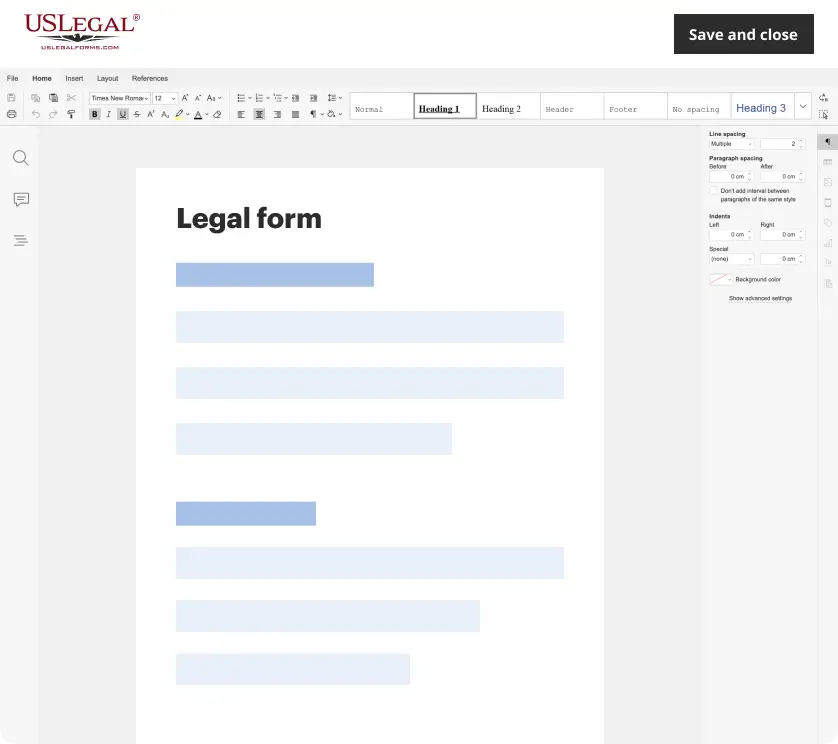
Make edits, fill in missing information, and update formatting in US Legal Forms—just like you would in MS Word.
Download a copy, print it, send it by email, or mail it via USPS—whatever works best for your next step.
Sign and collect signatures with our SignNow integration. Send to multiple recipients, set reminders, and more. Go Premium to unlock E-Sign.

If this form requires notarization, complete it online through a secure video call—no need to meet a notary in person or wait for an appointment.

We protect your documents and personal data by following strict security and privacy standards.
Mistakes to watch out for
- Failing to complete the form within nine months of the decedent's death.
- Not accurately identifying the property to which the disclaimer applies.
- Neglecting to deliver the form to the correct representative.
Why use this form online
- Convenience of filling out the form from home without the need for in-person meetings.
- Access to templates drafted by licensed attorneys to ensure accuracy and compliance with state laws.
- Ability to edit and customize the form before finalizing it.
Looking for another form?
Form popularity
FAQ
As joint tenants (sometimes called 'beneficial joint tenants'): you have equal rights to the whole property. the property automatically goes to the other owners if you die. you cannot pass on your ownership of the property in your will.
Generally, property held as community property with right of survivorship has tax advantages over a joint tenancy.Whereas, community property with right of survivorship is not subject to capital gains tax when sold.
A type of ownership of real or Personal Property by two or more persons in which each owns an undivided interest in the whole best describes Joint Tenancy.
Danger #1: Only delays probate. Danger #2: Probate when both owners die together. Danger #3: Unintentional disinheriting. Danger #4: Gift taxes. Danger #5: Loss of income tax benefits. Danger #6: Right to sell or encumber. Danger #7: Financial problems.
In California, most married couples hold real property (such as land and buildings) as joint tenants with right of survivorship.For instance, many married couples share real property as joint tenants. This way, upon the death of a spouse, the surviving spouse will own 100% share of the property.
In estate law, joint tenancy is a special form of ownership by two or more persons of the same property. The individuals, who are called joint tenants, share equal ownership of the property and have the equal, undivided right to keep or dispose of the property. Joint tenancy creates a Right of Survivorship.
The primary advantage of joint tenancy is it allows you to avoid probate of the property. Upon a joint tenant's death, the surviving joint tenant immediately owns the entire interest in the property and this takes place without any probate process.
Joint tenancy is ideal for spousesJoint tenancy might look like an appealing shortcut in estate planning because it contains a right of survivorship, meaning assets avoid the probate process and surviving joint tenants assume immediate control. However, joint tenancy does have substantial risk associated with it.