Washington Last Will and Testament for Single Person with No Children
Understanding this form
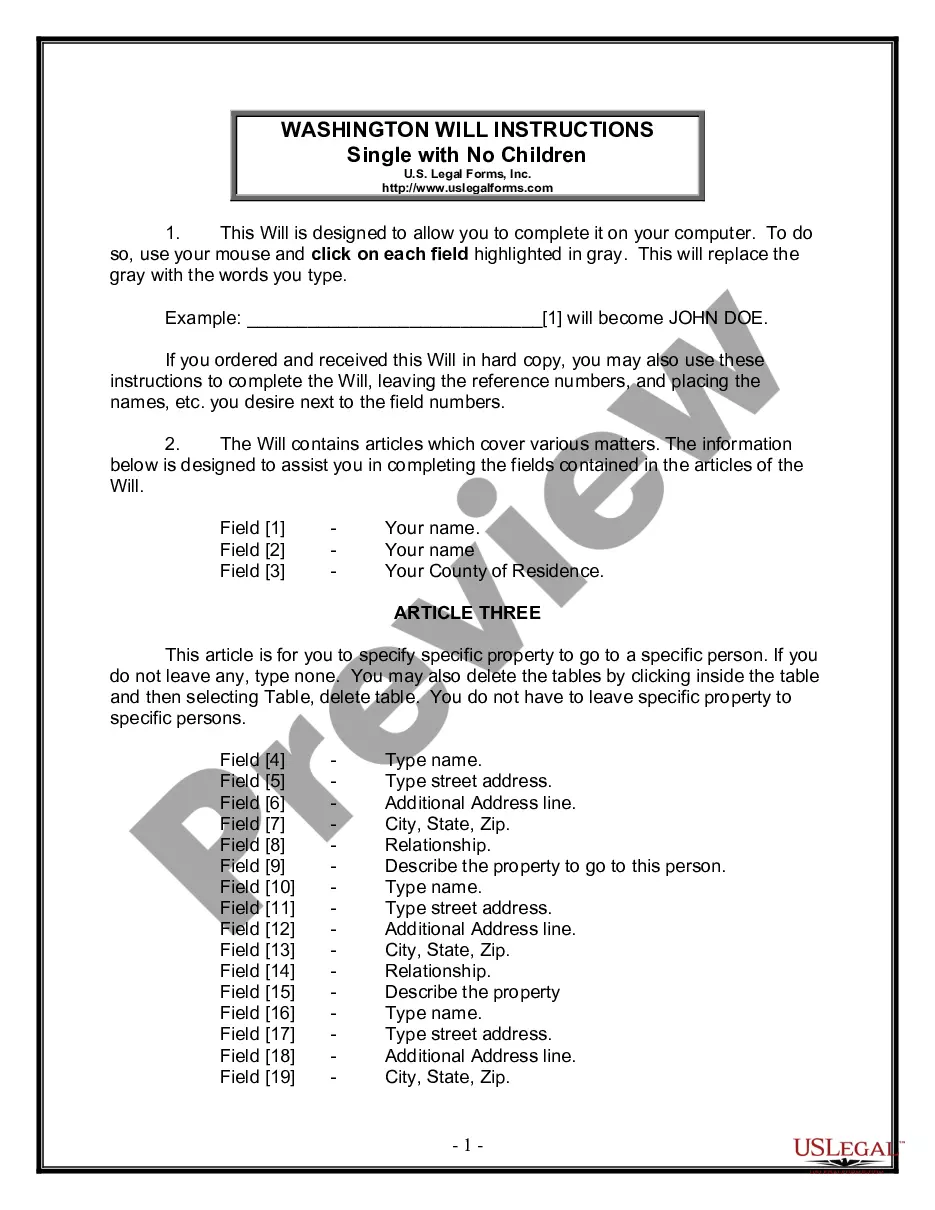
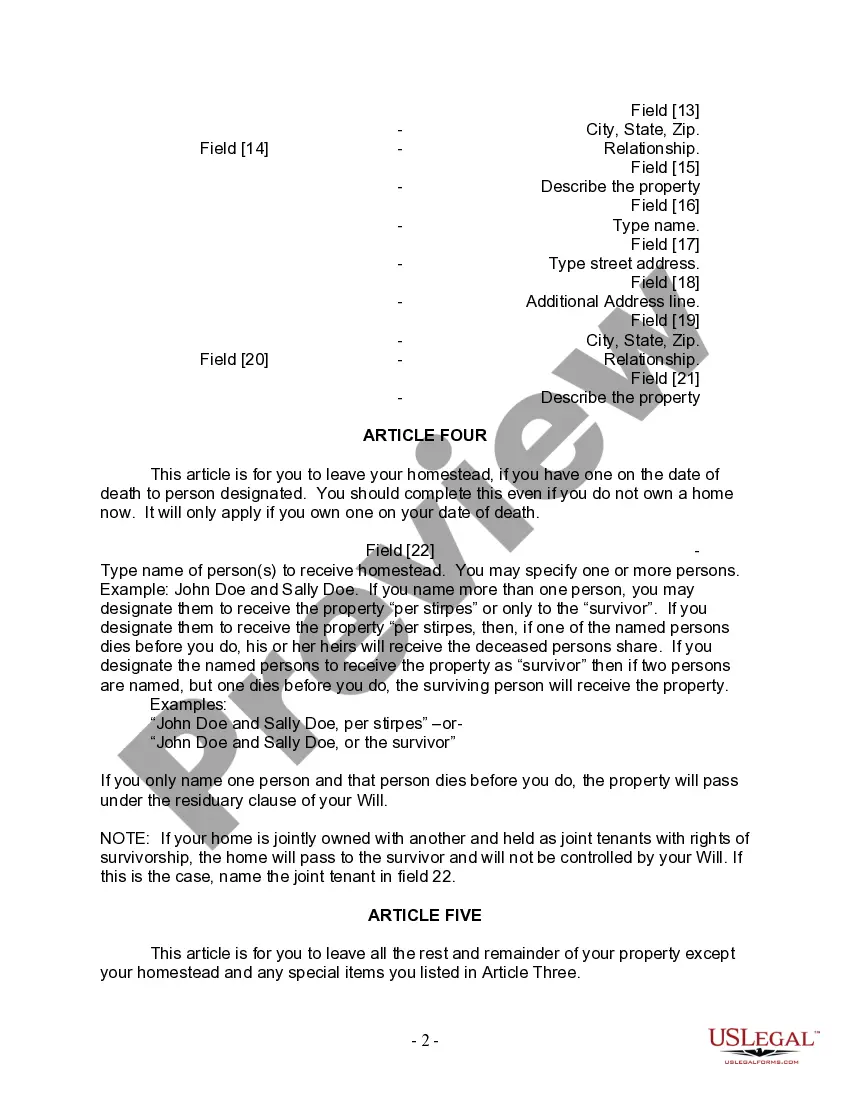
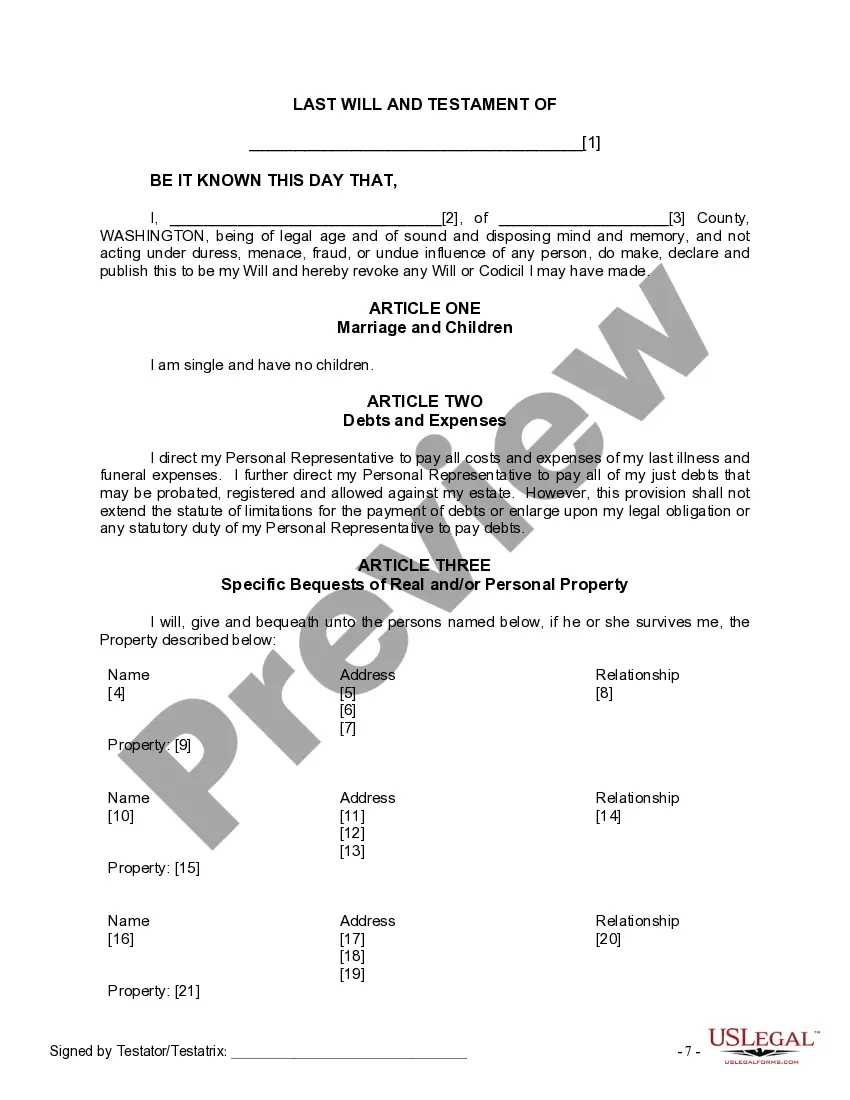
The Last Will and Testament for a Single Person with No Children is a legal document that outlines how a single individual wishes to distribute their property and assets upon death. This form is tailored for those without children, allowing them to designate someone to handle their estate and specify beneficiaries for their belongings. Unlike other wills, this particular form does not necessitate child guardianship provisions, simplifying the overall process for single individuals.
Main sections of this form
- Your identification, including name and county of residence.
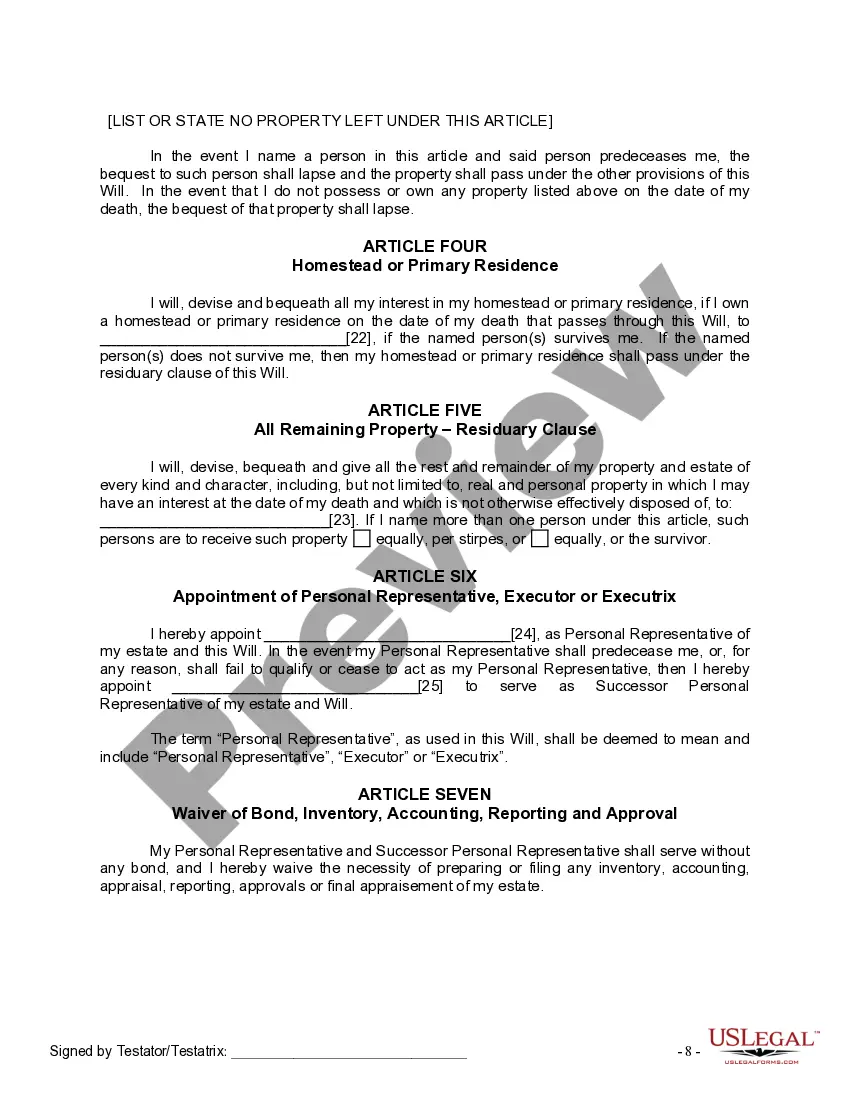
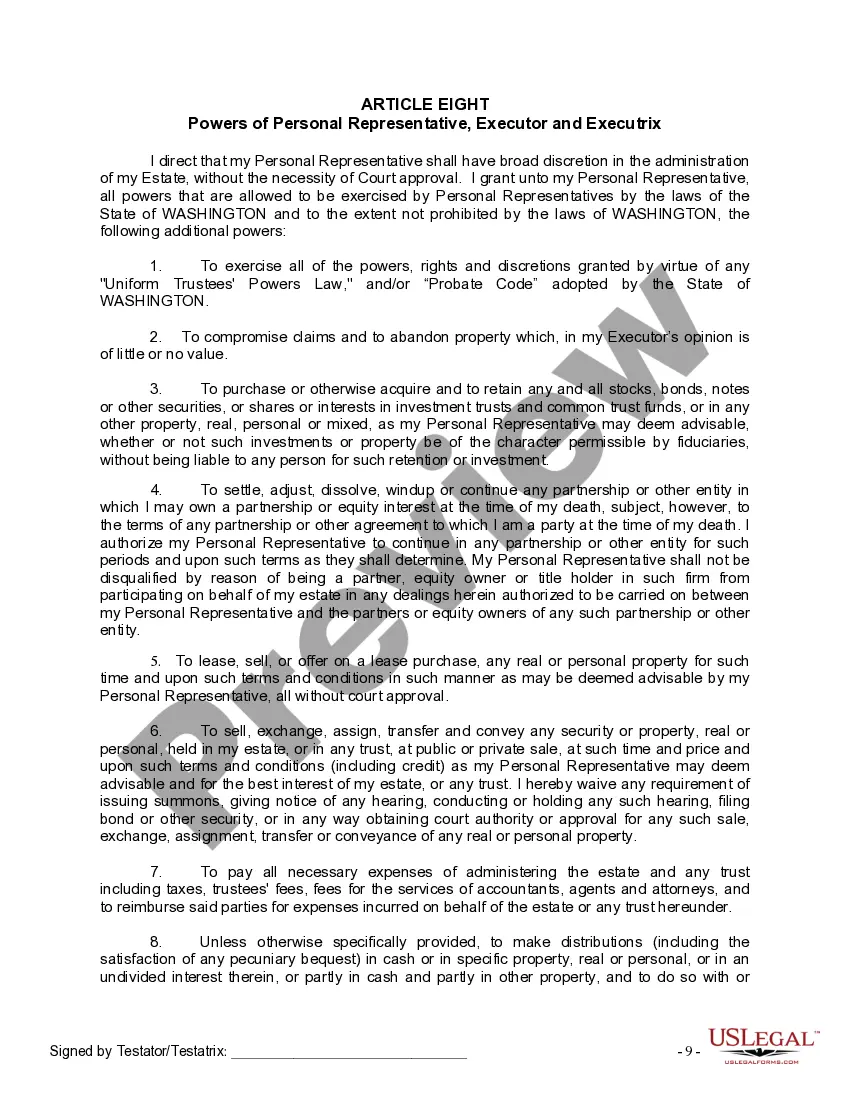
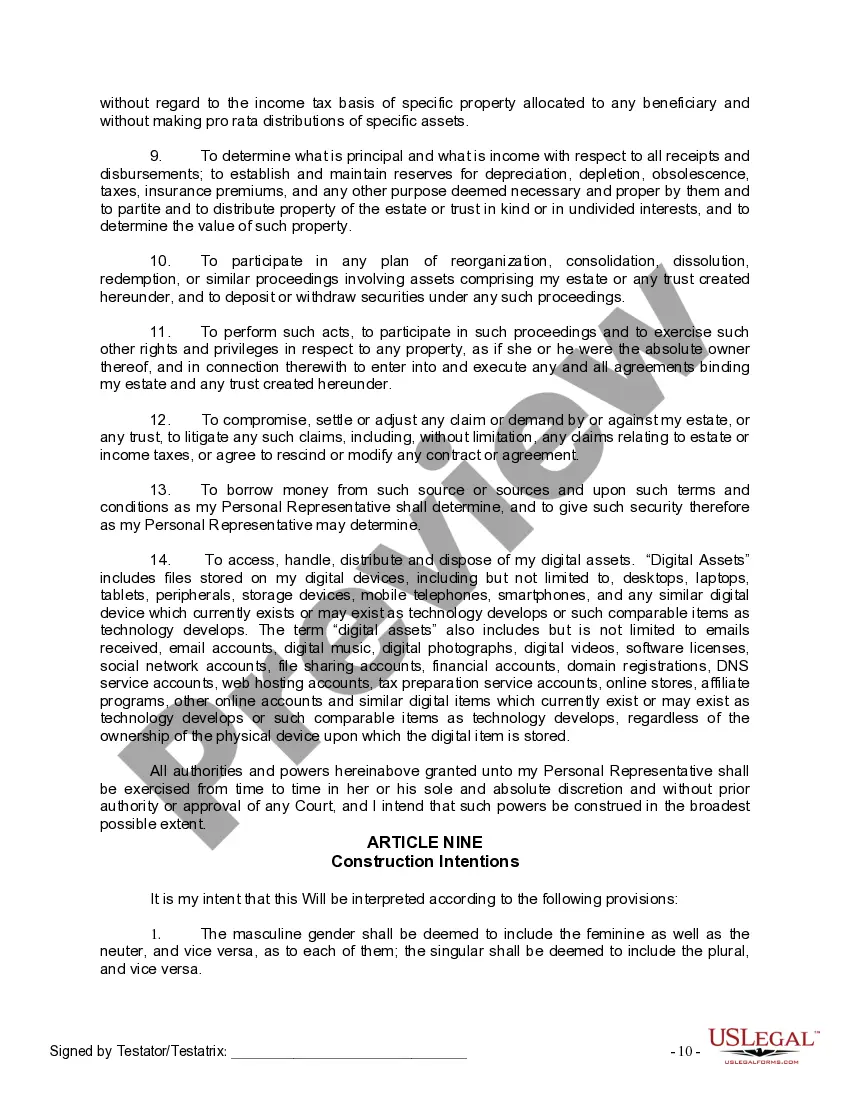
- Appointment of a personal representative or executor to manage your estate.
- Designation of beneficiaries for specific property and assets.
- Provisions regarding your homestead or primary residence.
- Residuary clause for the remainder of your estate.
- Signature requirements in front of witnesses and potentially a notary.




Situations where this form applies
This Last Will and Testament form should be used when a single person with no children wants to ensure that their assets are distributed according to their wishes after death. It is especially important if you have specific items of sentimental or financial value that you wish to assign to certain individuals. This form becomes essential in preventing disputes among family or friends and can also streamline the probate process.
Intended users of this form
- Single individuals with no children who wish to create a formal will.
- Persons wanting to designate an executor to handle their estate after death.
- Individuals with specific property to be distributed to named beneficiaries.
- People seeking to ensure that their final wishes are documented and respected.
How to complete this form
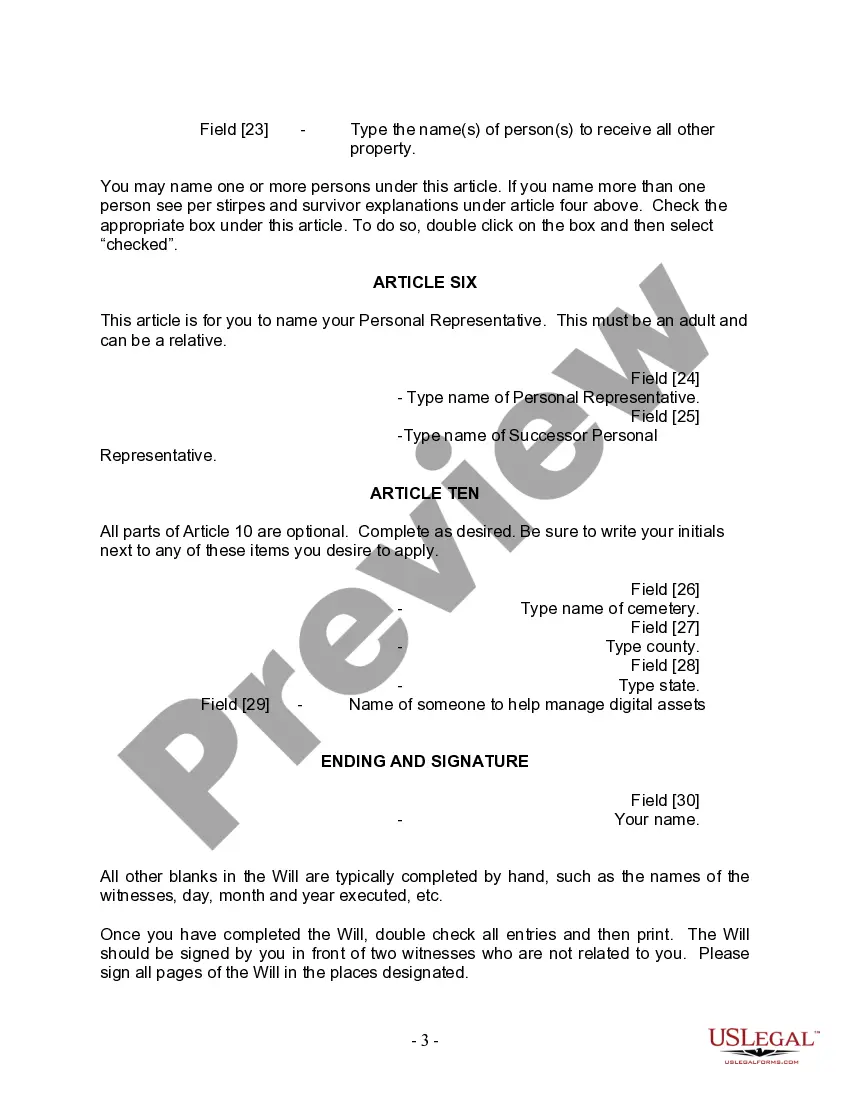
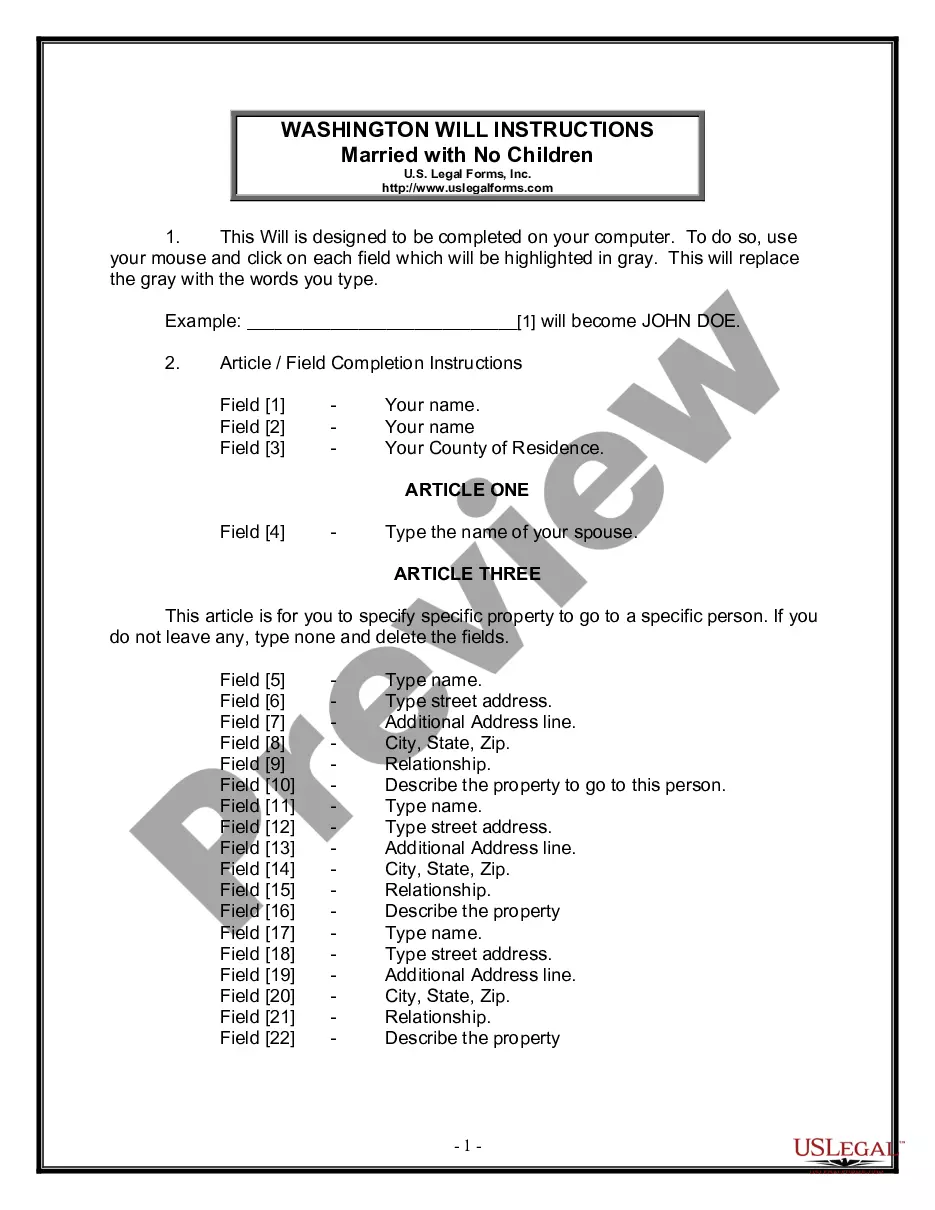
- Start by entering your full name and county of residence in the designated fields.
- Designate a personal representative who will administer your estate.
- Specify any specific belongings and their intended beneficiaries in the designated sections.
- Complete the homestead clause if applicable, indicating who should inherit your primary residence.
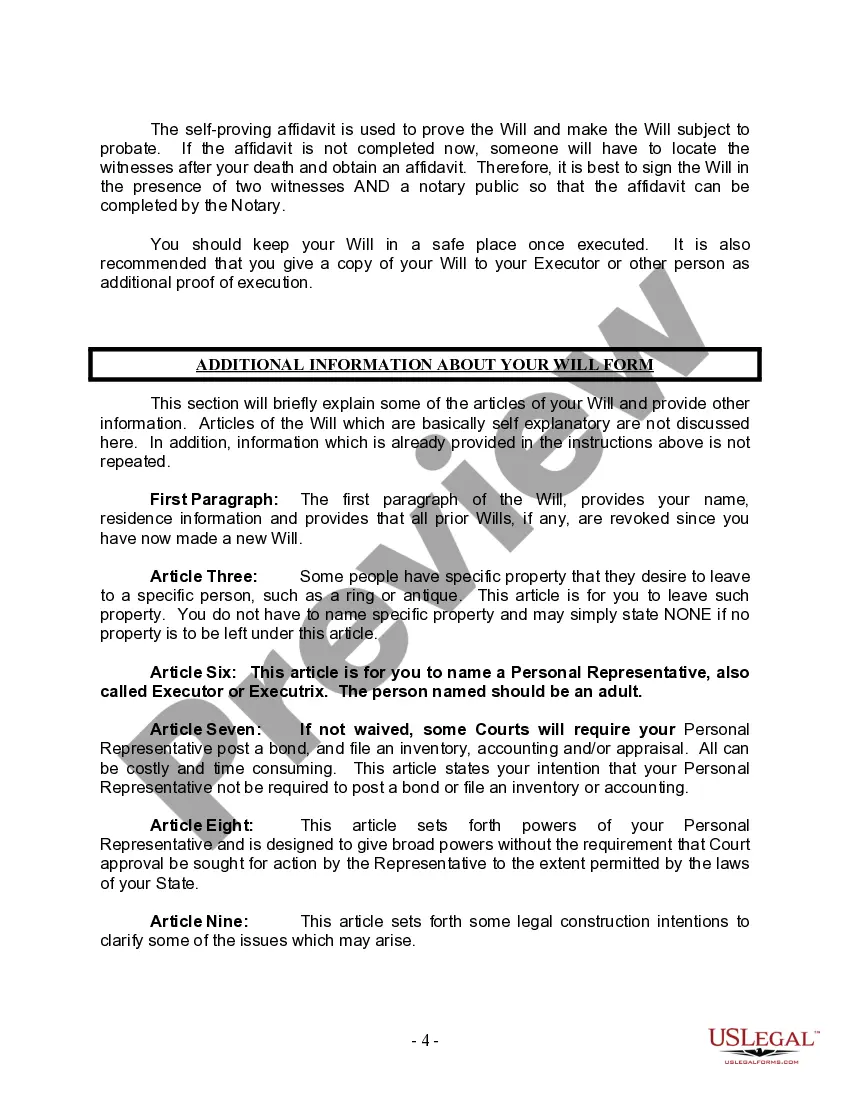
- Sign the will in the presence of two witnesses who are not related to you, ensuring they also sign the document.
- Consider notarizing the document to facilitate a "self-proving" status for easier probate administration.
Does this form need to be notarized?
Yes, this form must be notarized to be legally valid. It is recommended to sign the will in the presence of a notary public to facilitate the self-proving affidavit, which may ease the probate process. Using online notarization services from US Legal Forms offers 24/7 availability, secure video calls, and legal equivalence without the need for travel.
Get your form ready online
Our built-in tools help you complete, sign, share, and store your documents in one place.
Make edits, fill in missing information, and update formatting in US Legal Forms—just like you would in MS Word.
Download a copy, print it, send it by email, or mail it via USPS—whatever works best for your next step.
Sign and collect signatures with our SignNow integration. Send to multiple recipients, set reminders, and more. Go Premium to unlock E-Sign.
If this form requires notarization, complete it online through a secure video call—no need to meet a notary in person or wait for an appointment.
We protect your documents and personal data by following strict security and privacy standards.

Make edits, fill in missing information, and update formatting in US Legal Forms—just like you would in MS Word.

Download a copy, print it, send it by email, or mail it via USPS—whatever works best for your next step.

Sign and collect signatures with our SignNow integration. Send to multiple recipients, set reminders, and more. Go Premium to unlock E-Sign.

If this form requires notarization, complete it online through a secure video call—no need to meet a notary in person or wait for an appointment.

We protect your documents and personal data by following strict security and privacy standards.
Avoid these common issues
- Failing to have the will signed in the presence of two unrelated witnesses.
- Not properly designating a personal representative, leaving estate management unclear.
- Failing to keep the will in a safe place or not informing the executor about its location.
- Leaving out important property details or beneficiaries, creating confusion after death.
Benefits of completing this form online
- Convenient access to customizable templates that can be filled out online.
- Editable forms allow you to make changes easily as circumstances in your life change.
- Reliable resources provided by licensed attorneys ensure compliance with legal standards.
Legal use & context
- A properly executed will clearly outlines your wishes, minimizing potential disputes among heirs.
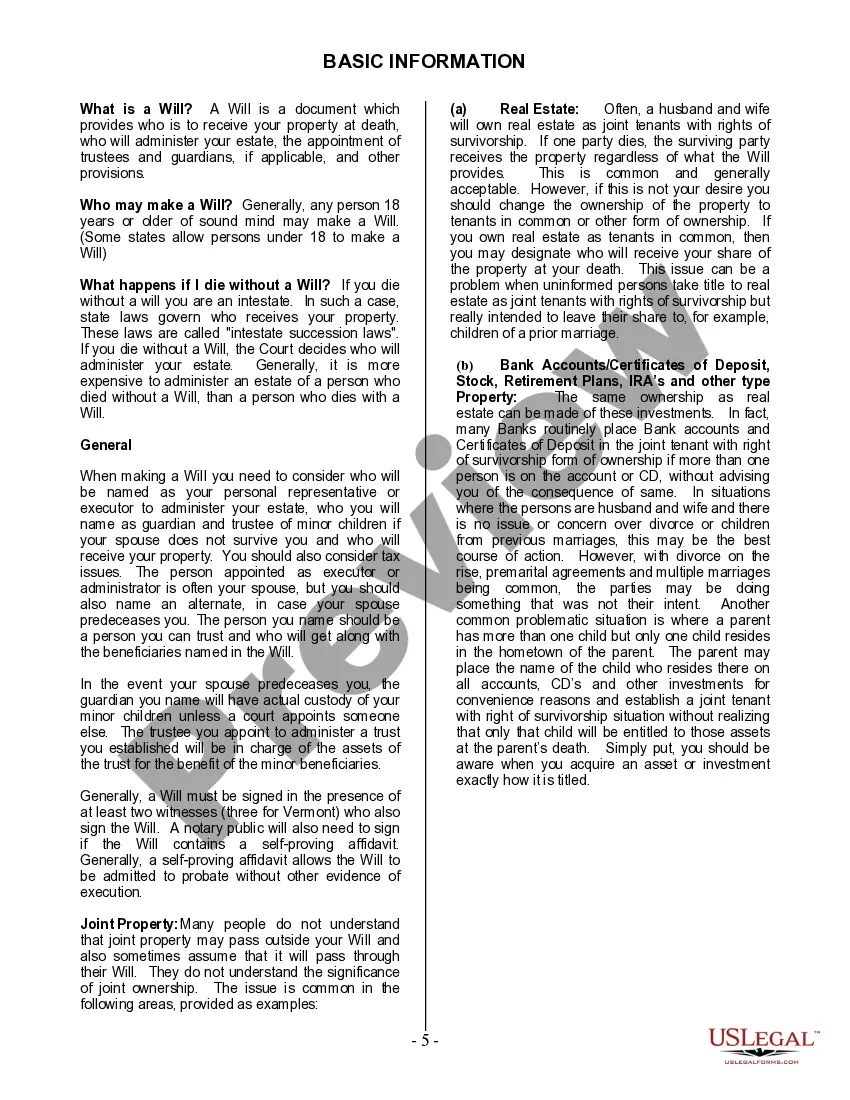
- Without a will, state intestacy laws dictate asset distribution, which may not align with your desires.
- Providing for specific bequests can ensure that personal treasures go to intended individuals.
- A will can simplify the probate process, making estate management easier for your heirs.
Quick recap
- This Last Will and Testament is especially designed for single individuals without children.
- Ensure it is signed with the required witnesses and notarized to maintain its legality.
- Customizing the form allows you to express your specific desires for your property after death.
- Review and update your will regularly to reflect changes in your circumstances.
Looking for another form?

Form popularity
FAQ
Include personal identifying information. Include a statement about your age and mental status. Designate an executor. Decide who will take care of your children. Choose your beneficiaries. List your funeral details. Sign and date your Last Will and Testament.
In the state of Washington, handwritten wills may be accepted for probate, provided the handwritten will meets all other requirements under Washington law.
No, in Washington, you do not need to notarize your will to make it legal. However, Washington allows you to make your will "self-proving" and you'll need to go to a notary if you want to do that. A self-proving will speeds up probate because the court can accept the will without contacting the witnesses who signed it.
Notarization is not required in California to make your will legal. Some states allow you to make your will self-proving by signing a special affidavit in front of a notary that accompanies the will. However, California allows your will to be self-proved without a self-proving affidavit.
No, in Washington, you do not need to notarize your will to make it legal. However, Washington allows you to make your will "self-proving" and you'll need to go to a notary if you want to do that. A self-proving will speeds up probate because the court can accept the will without contacting the witnesses who signed it.
At a minimum, the document itself must be: In writing; Signed by the testator (or by someone else at the testator's direction and in the testator's presence) in the presence of two competent witnesses; AND.
Contrary to popular belief, you do not need to have an attorney draft a will for you. Anyone can write this document on their own, and as long as it meets all of the legal requirements of the state, courts will recognize one you wrote yourself.
Choose an online legal services provider or locate a will template. Carefully consider your distribution wishes. Identify a personal representative/executor. Understand the requirements to make your will legal. Make sure someone else knows about your will. Consult a lawyer if you have a more complicated estate.