Washington Inventory and Condition of Leased Premises for Pre Lease and Post Lease
What is this form?
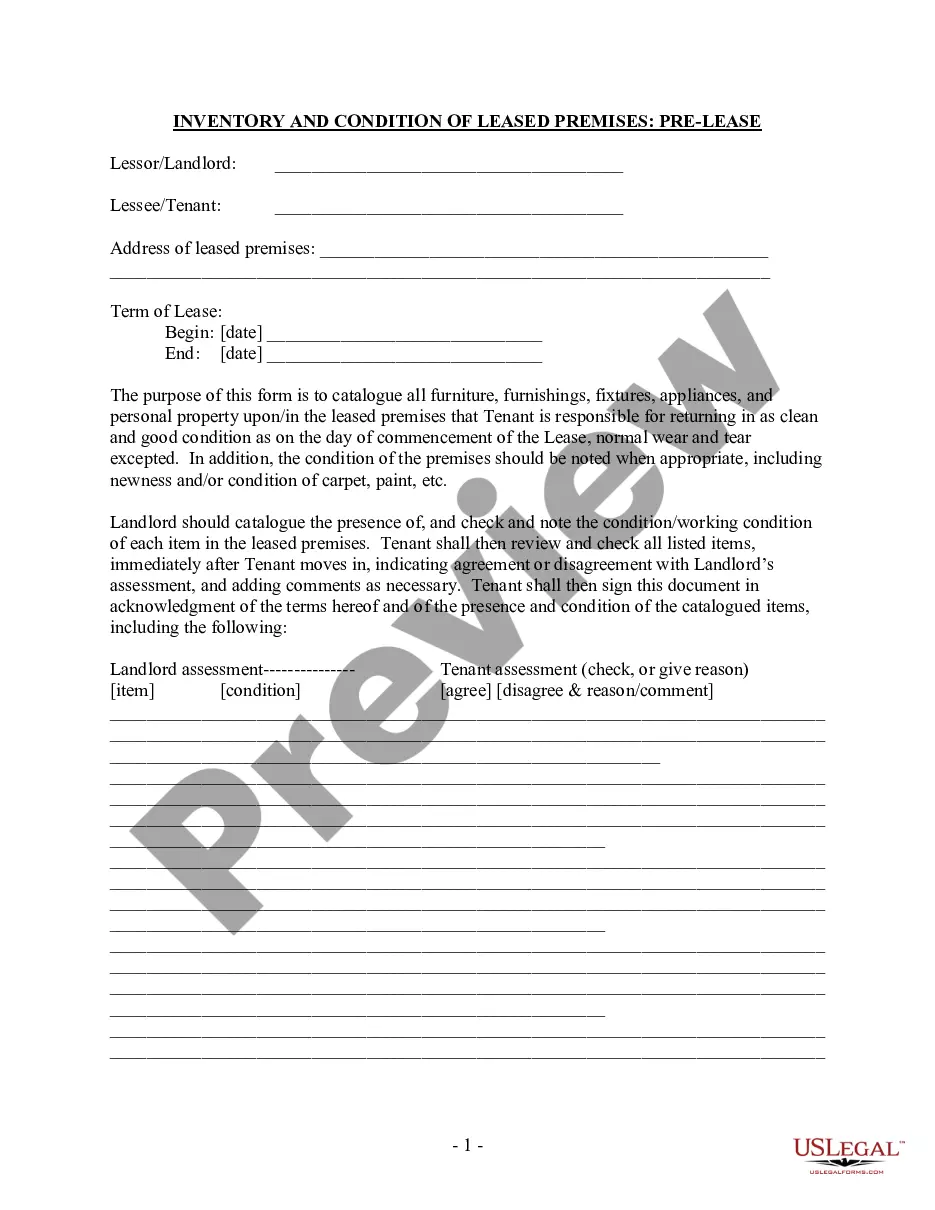
The Inventory and Condition of Leased Premises for Pre Lease and Post Lease is a crucial document for tenants and landlords. This form serves to record the condition of a rental property before and after a lease term, helping to establish accountability. It includes detailed inventories of furniture, appliances, and fixtures that must be maintained in good condition by the tenant. Unlike standard rental agreements, this form focuses specifically on documenting the state of the leased premises, which aids in dispute resolution at the end of the lease.
Key parts of this document
- Identification of Lessor (Landlord) and Lessee (Tenant).
- Address of the leased premises.
- Lease term including start and end dates.
- Inventory of items within the premises with condition assessments.
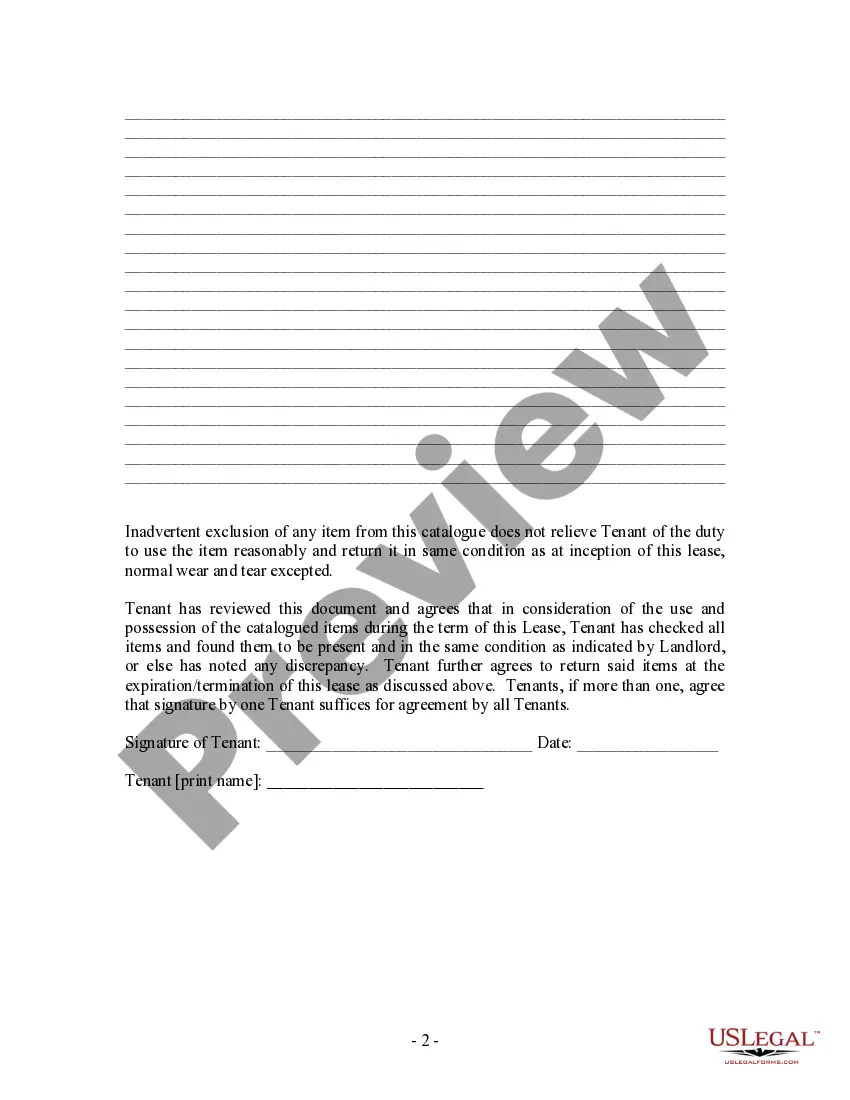
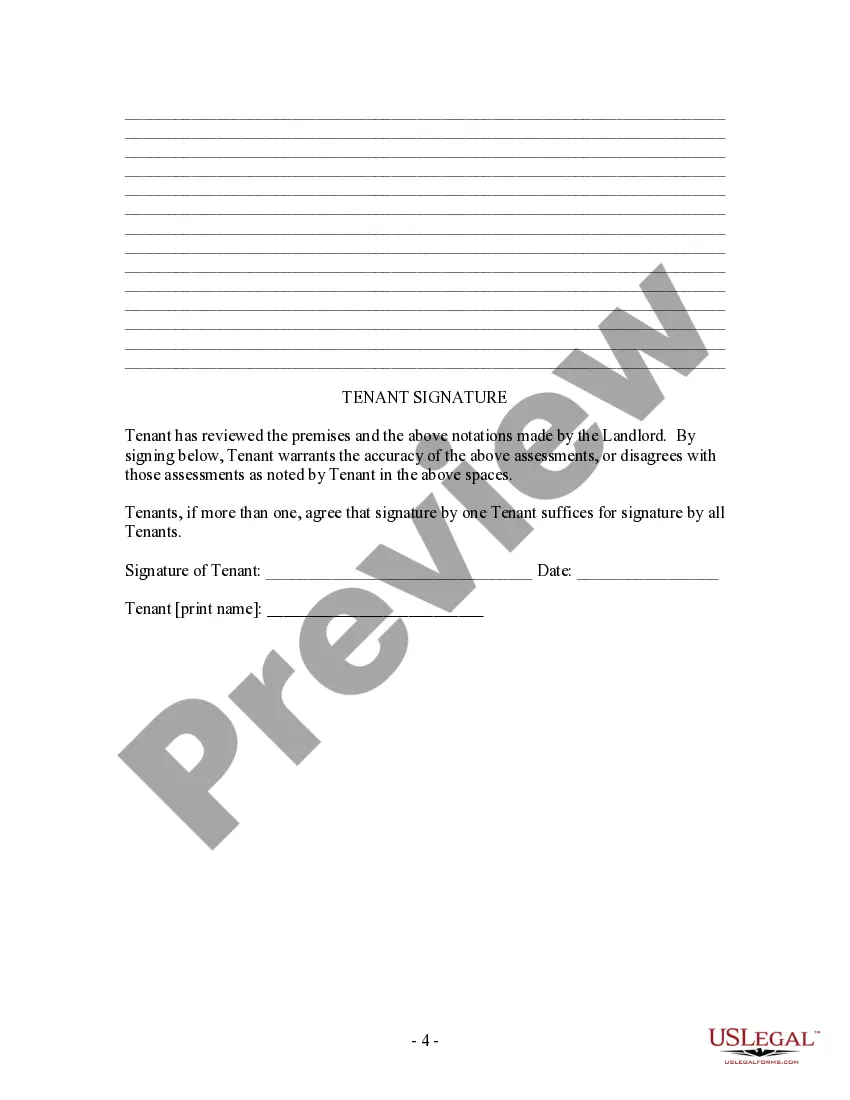
- Tenant's agreement or disagreement with the landlord's condition assessments.
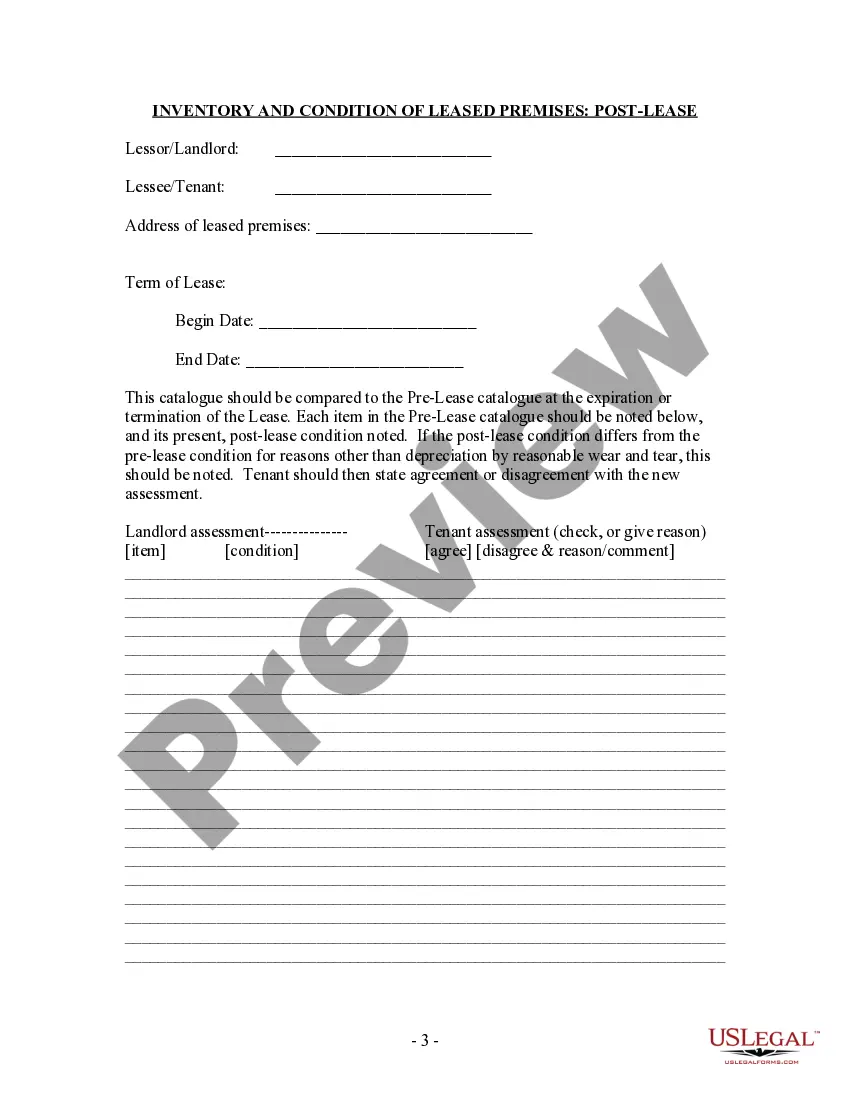
- Sections for documenting post-lease condition assessments.
When to use this form
This form should be used at the beginning of a lease to document the condition of the property and its contents. It is essential for protecting the tenant's interests and ensuring that they are not held responsible for pre-existing damages. Additionally, this inventory should be revisited at the end of the lease to assess any changes in condition, making this form invaluable in disputes regarding security deposits or property damage claims.
Who should use this form
This form is designed for:
- Tenants renting residential properties.
- Landlords managing rental properties.
- Property management companies overseeing multiple leases.
Steps to complete this form
- Identify the parties involved: the landlord and tenant.
- Enter the address of the leased premises accurately.
- Record the dates for the lease's commencement and termination.
- Document each item present in the property along with its condition as evaluated by the landlord.
- After reviewing, the tenant should indicate their agreement or disagreement with the assessment.
- Sign and date the document to finalize the agreement.
Does this document require notarization?
This form usually doesn’t need to be notarized. However, local laws or specific transactions may require it. Our online notarization service, powered by Notarize, lets you complete it remotely through a secure video session, available 24/7.
Get your form ready online
Our built-in tools help you complete, sign, share, and store your documents in one place.
Make edits, fill in missing information, and update formatting in US Legal Forms—just like you would in MS Word.
Download a copy, print it, send it by email, or mail it via USPS—whatever works best for your next step.
Sign and collect signatures with our SignNow integration. Send to multiple recipients, set reminders, and more. Go Premium to unlock E-Sign.
If this form requires notarization, complete it online through a secure video call—no need to meet a notary in person or wait for an appointment.
We protect your documents and personal data by following strict security and privacy standards.

Make edits, fill in missing information, and update formatting in US Legal Forms—just like you would in MS Word.

Download a copy, print it, send it by email, or mail it via USPS—whatever works best for your next step.

Sign and collect signatures with our SignNow integration. Send to multiple recipients, set reminders, and more. Go Premium to unlock E-Sign.

If this form requires notarization, complete it online through a secure video call—no need to meet a notary in person or wait for an appointment.

We protect your documents and personal data by following strict security and privacy standards.
Typical mistakes to avoid
- Failing to document all items in the inventory.
- Not noting the condition of items accurately.
- Overlooking discrepancies between pre-lease and post-lease conditions.
- Not obtaining both parties' signatures on the completed form.
Benefits of using this form online
- Convenience of immediate access and completion from anywhere.
- Editability to ensure accuracy before finalizing.
- Reliability of forms drafted by licensed attorneys, ensuring legality and comprehensiveness.
Key takeaways
- The form is essential for documenting the condition of a leased property and its items.
- It protects both landlords and tenants by establishing a clear record before and after a lease term.
- Completing this form accurately can prevent disputes and protect security deposits.
Looking for another form?
Form popularity
FAQ
Inspect the Property and Record Any Current Damages. Know What's Included in the Rent. Can You Make Adjustments and Customizations? Clearly Understand the Terms Within the Agreement and Anticipate Problems. Communicate with Your Landlord About Your Expectations.
Start by making any minor repairs caused by you. Give the shower and bath a good scrub. Thoroughly clean the kitchen. Clean the patio and sweep or wash down the driveway. Tidy up the garden and mow the lawn. Leave vacuuming and cleaning floors until a day or so before the inspection.
Consider other options for getting out of your lease early. Figure out if you can break your lease under Washington law. Re-read your lease agreement. Negotiate with your landlord. Move out and hope your landlord re-rents quickly. Make it official with paperwork.
Can a tenant claim for improvements made during the lease? The position differs in the case of immovable and movable property. Tenant can claim for:The claim arises only once the lease is terminated and lessee vacated the property.
#1: Know your rights as an American. #2: Know tenants' rights in your state. #3: Investigate buildings and properties. #4: Get a lease -- and read it. #5: Expect a background check. #6: Keep records and receipts. #7: Use renters insurance. #8: Communicate.
A rental inspection checklist is a tool used by landlords or property managers to ensure that rental properties are in good condition before, during, and after the tenant's occupation. Conducting a rental inspection involves a thorough visual check of the property's rooms and exterior.
Tenant's Name. Tenant's Address, Including Unit Number. Date of Move-In. Date of Move-Out (When Occurs). Date of Move-In Inspection. Date of Move-Out Inspection.
Tenant's name & address. Move-in date. Date of move-in inspection. Move-out date. Date of move-out inspection. Tenant signature. Landlord name & address. Landlord contact information.
How does a fixed-term lease protect tenants and owners or managers? When a tenant signs a lease, s/he is signing a legally enforceable contract. All the terms and conditions stated in the lease remain valid throughout the period specified. These constraints also apply to the owner or manager.