Washington Warranty Deed - Three Individuals to a Trust
Understanding this form
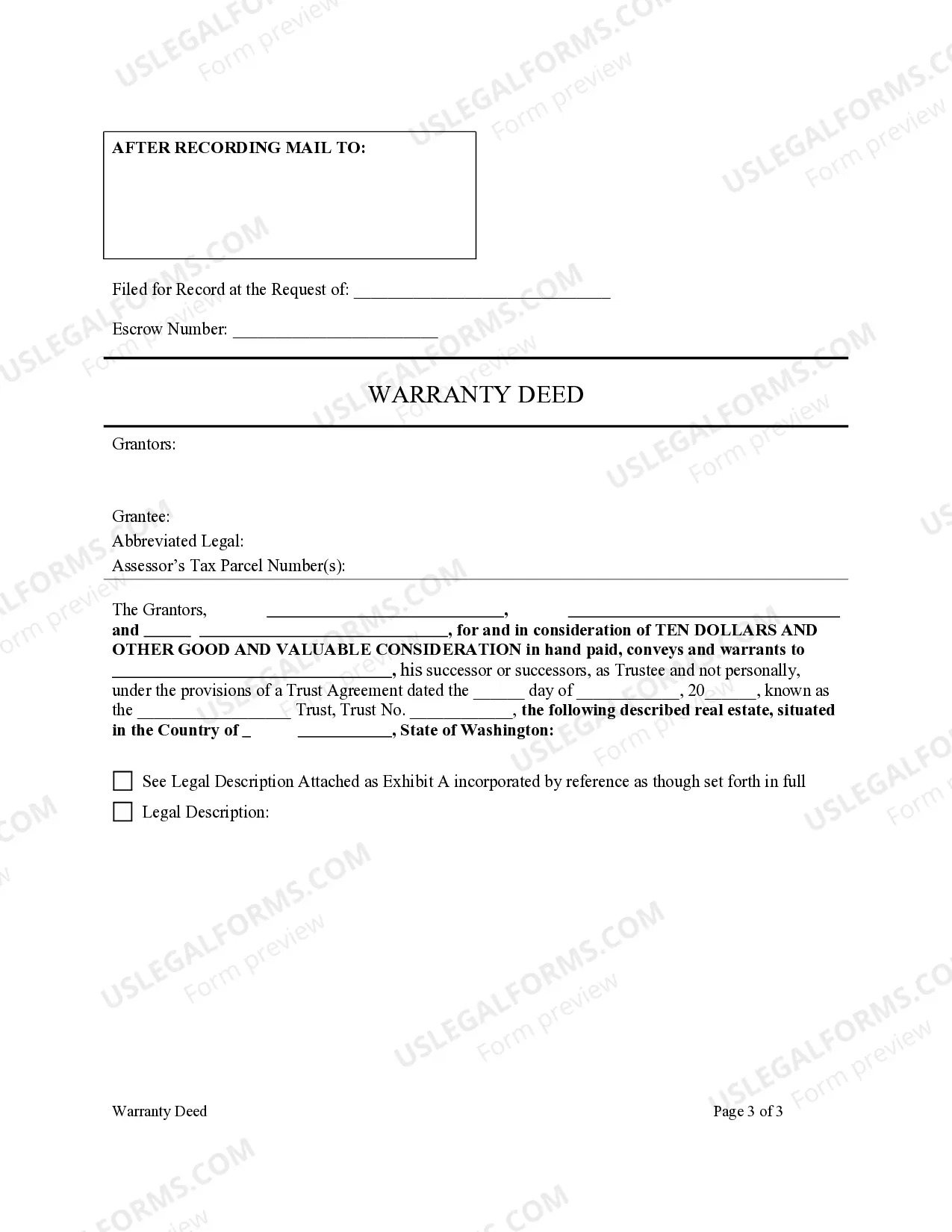
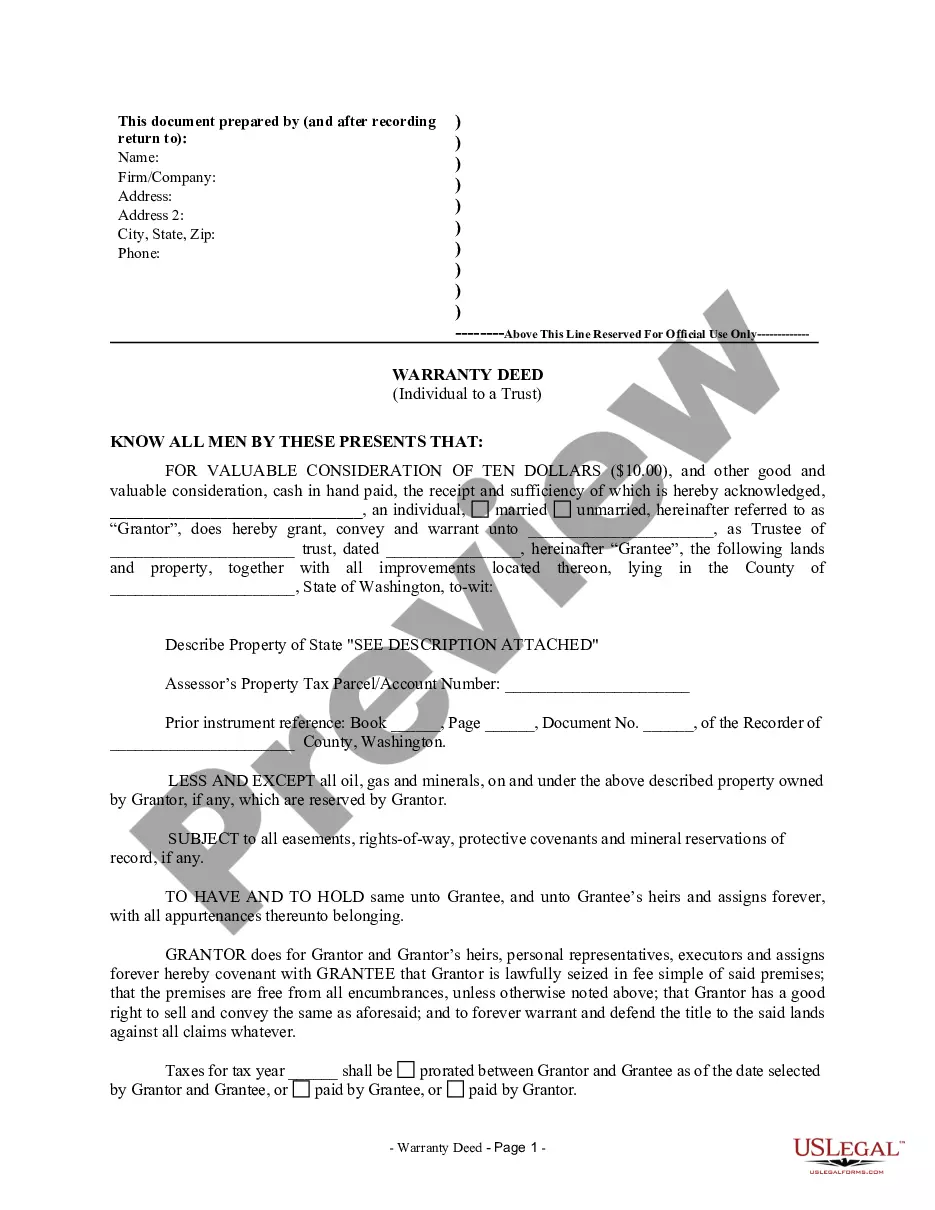
The Warranty Deed - Three Individuals to a Trust is a legal document that transfers property ownership from three individuals (grantors) to a trust (grantee). This type of deed provides a warranty that the grantors hold clear title to the property being transferred, which distinguishes it from quitclaim deeds that offer no warranties. It is essential for formal property transfers where the grantors want to ensure that the trust receives assurance of the title's validity.
Key components of this form
- Names and addresses of the three grantors providing the property.
- Name and details of the trust receiving the property.
- Legal description of the property being conveyed.
- Warranties and covenants made by the grantors regarding title.
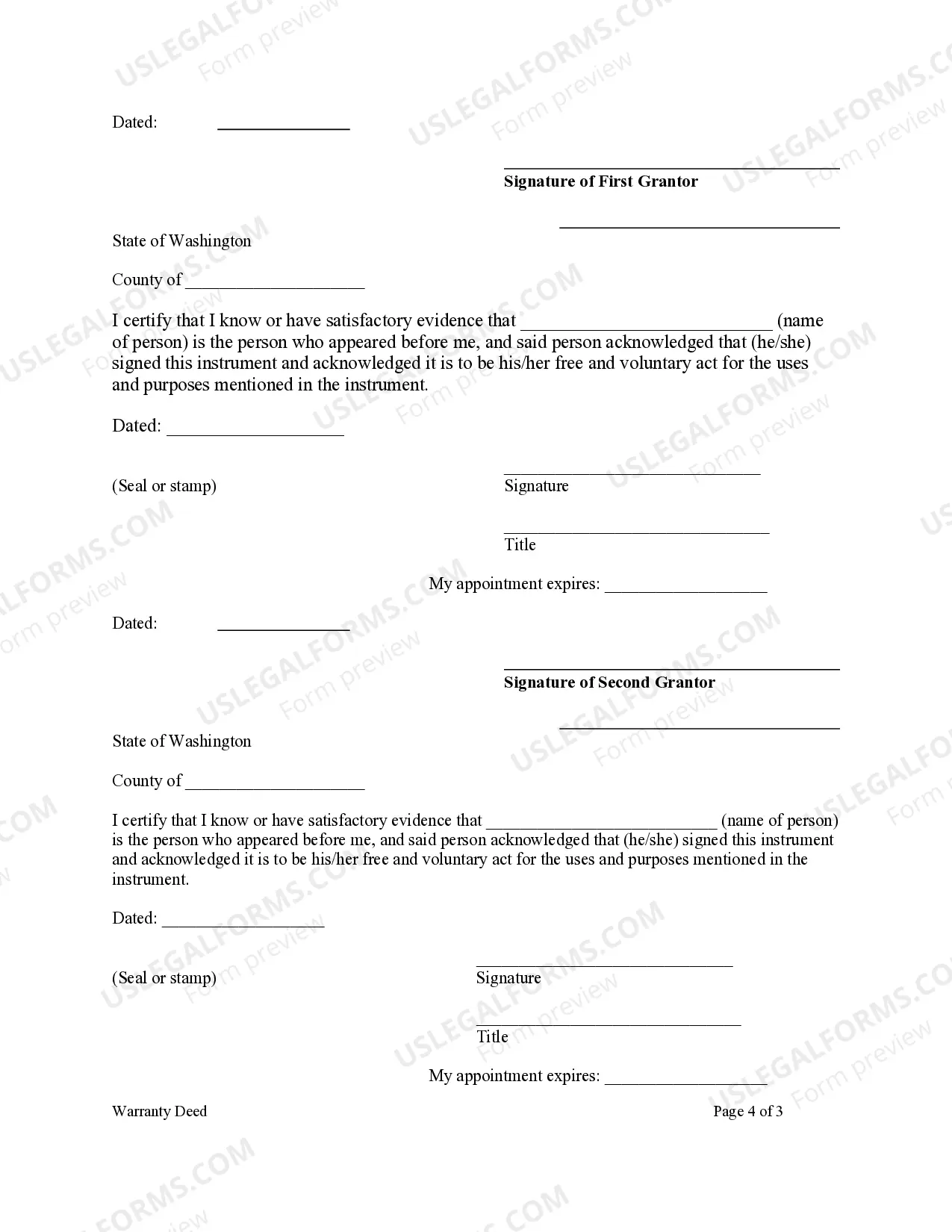
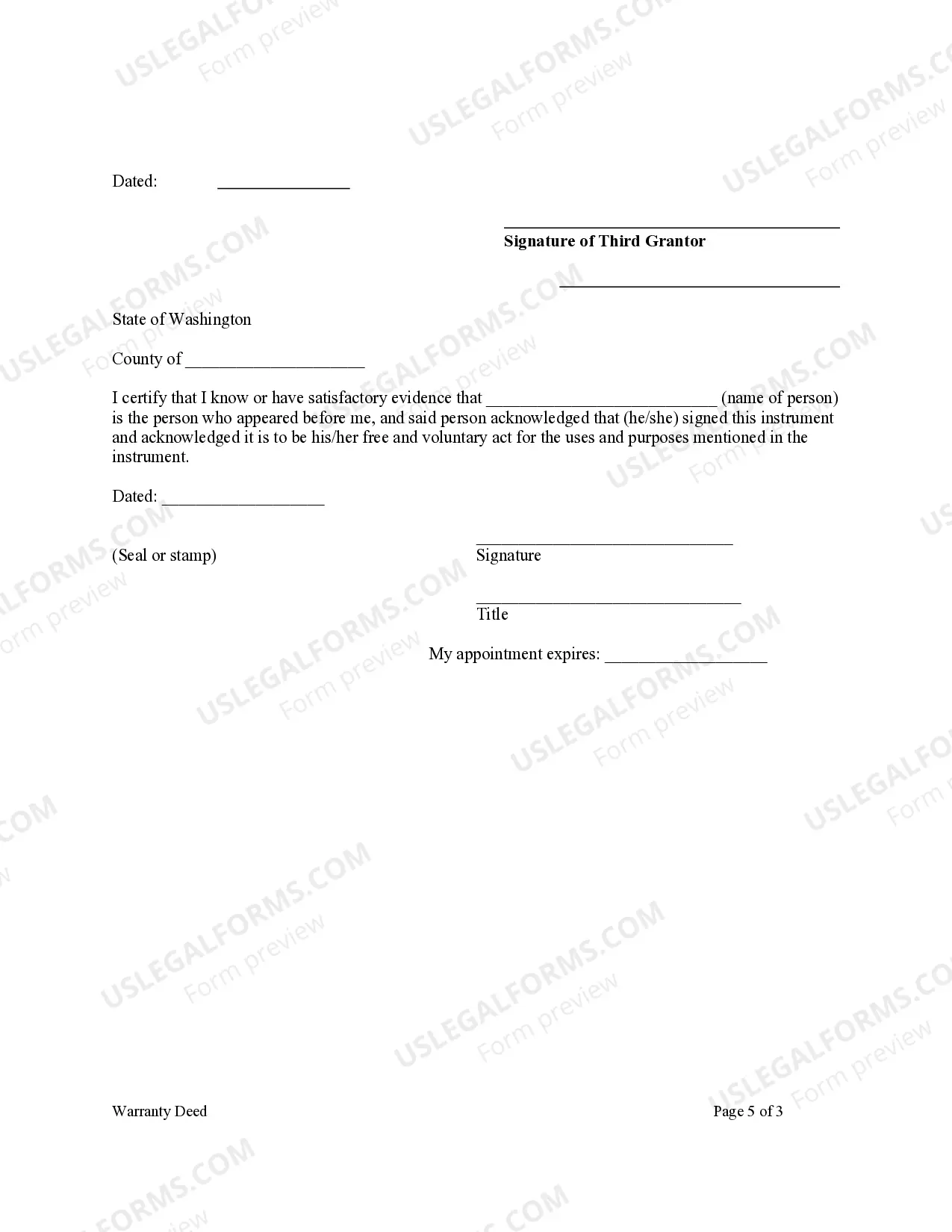
- Space for signatures and notarization of the document.




When to use this document
This form is needed when three individuals wish to transfer real estate they own into a trust. This scenario often arises during estate planning, where property is moved into a trust for management and distribution purposes. It can also be utilized when individuals want to ensure their property's management follows specific wishes outlined in the trust's terms.
Who should use this form
This form is suitable for:
- Homeowners who want to transfer property ownership to a trust.
- Individuals involved in estate planning processes.
- Real estate professionals facilitating property transfers to trusts.
Instructions for completing this form
- Identify the three grantors and enter their full names and addresses in the designated fields.
- Specify the name of the trust that will be the grantee, including any identifying details.
- Provide a legal description of the property being conveyed, which may require a title deed reference.
- Review and confirm the warranties and covenants to ensure they reflect the grantorsâ intentions.
- Sign and date the form in the presence of a notary public if required.
Is notarization required?
This form needs to be notarized to ensure legal validity. US Legal Forms provides secure online notarization powered by Notarize, allowing you to complete the process through a verified video call, available anytime.
Get your form ready online
Our built-in tools help you complete, sign, share, and store your documents in one place.
Make edits, fill in missing information, and update formatting in US Legal Forms—just like you would in MS Word.
Download a copy, print it, send it by email, or mail it via USPS—whatever works best for your next step.
Sign and collect signatures with our SignNow integration. Send to multiple recipients, set reminders, and more. Go Premium to unlock E-Sign.
If this form requires notarization, complete it online through a secure video call—no need to meet a notary in person or wait for an appointment.
We protect your documents and personal data by following strict security and privacy standards.
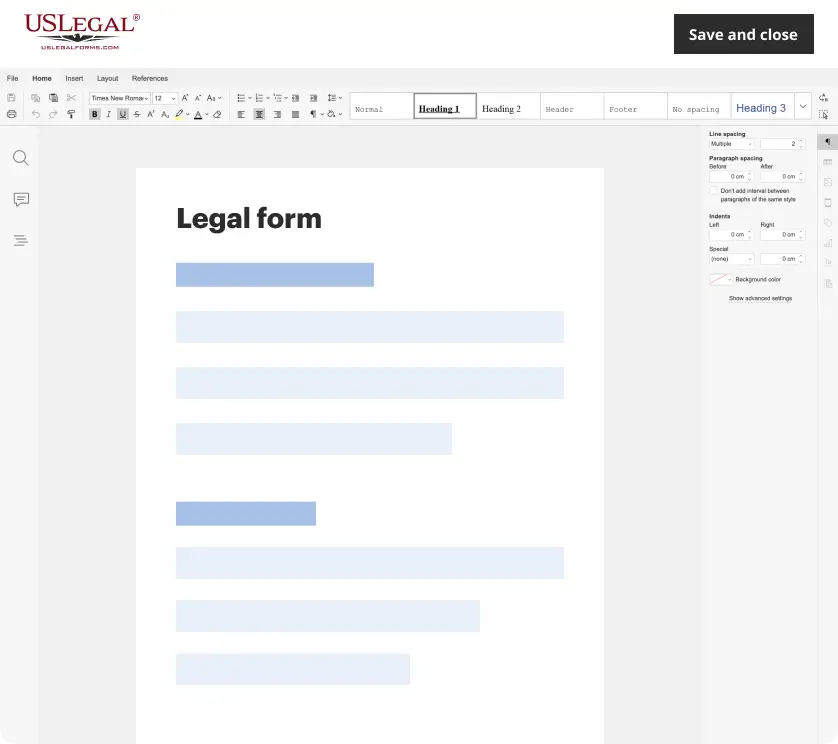
Make edits, fill in missing information, and update formatting in US Legal Forms—just like you would in MS Word.
Download a copy, print it, send it by email, or mail it via USPS—whatever works best for your next step.
Sign and collect signatures with our SignNow integration. Send to multiple recipients, set reminders, and more. Go Premium to unlock E-Sign.

If this form requires notarization, complete it online through a secure video call—no need to meet a notary in person or wait for an appointment.
We protect your documents and personal data by following strict security and privacy standards.
Typical mistakes to avoid
- Failing to include all grantorsâ names, which can invalidate the deed.
- Not providing a complete legal description of the property.
- Omitting the necessary signatures or notarization.
- Using outdated forms not compliant with current state laws.
Advantages of online completion
- Convenient access to a legally prepared document without the need for a lawyer.
- Editability to customize fields as needed before printing.
- Reliable and compliant with state statutory requirements.
Looking for another form?

Form popularity
FAQ
2. Organize your paperwork. Gather together documentation pertaining to your assets. This should include the titles and deeds to real property, bank account information, investment accounts, stock certificates, life insurance policies, and other assets you will be using to fund the trust.
If the Trust list you both as Co-Trustees, both signature are required. Make sure you have the right, as specified in the Trust Agreement, to sell the real property. Equally important, is the party entitled to the proceeds.
1Determine the Current Title and Vesting to Your Property.2Prepare a Deed.3Be Aware of Your Lender and Title Insurance.4Prepare a Preliminary Change of Ownership Report.5Execute Your Deed.6Record Your Deed.7Wait for the Deed to be Returned.8Keep the Property in the Trust.
1Locate your current deed.2Use the proper deed.3Check with your title insurance company and lender.4Prepare a new deed.5Sign in the presence of a notary.6Record the deed in the county clerk's office.7Locate the deed that's in trust.8Use the proper deed.How to Transfer a Deed in a Living Trust .com\ninfo..com > article > how-transfer-deed-living-trust
You can put jointly held property in a living trust. However, what you end up placing in the trust depends on the structure by which the property is held jointly as well as the structure of the trust. In some cases, it might be unnecessary to put the property in a trust at all.
Obtain a California grant deed from a local office supply store or your county recorder's office. Complete the top line of the deed. Indicate the grantee on the second line. Enter the trustees' names and addresses.
1Obtain a California grant deed from a local office supply store or your county recorder's office.2Complete the top line of the deed.3Indicate the grantee on the second line.4Enter the trustees' names and addresses.How to Put My House in a Trust\nhomeguides.sfgate.com > put-house-trust-46549
To transfer real estate (also called real property) into your living trust, you must prepare and sign a new deed, transferring ownership. You can usually fill out a new deed yourself.
Transferring Real Property to a Trust You can transfer your home (or any real property) to the trust with a deed, a document that transfers ownership to the trust. A quitclaim deed is the most common and simplest method (and one you can do yourself).