Washington Commercial Contract for Contractor
Understanding this form
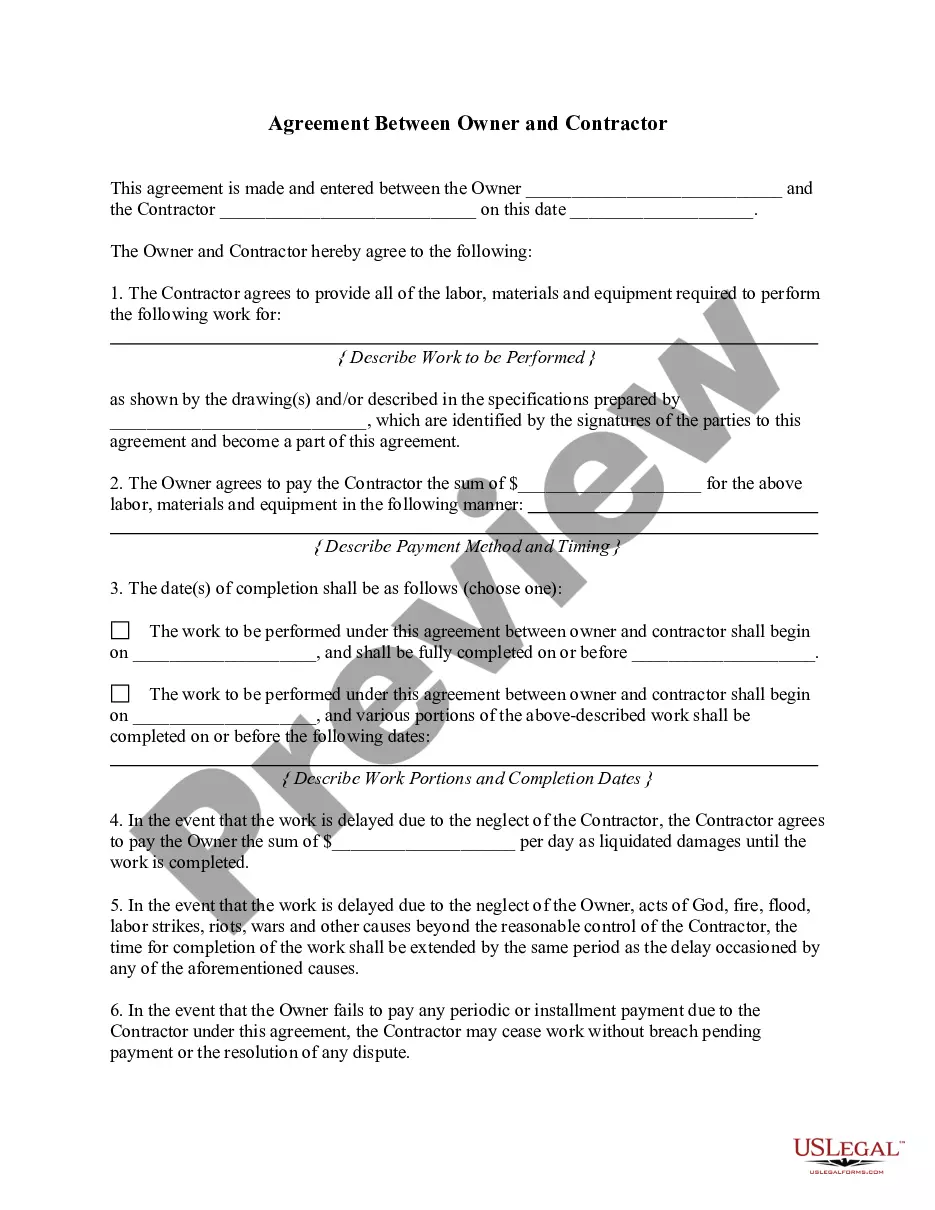
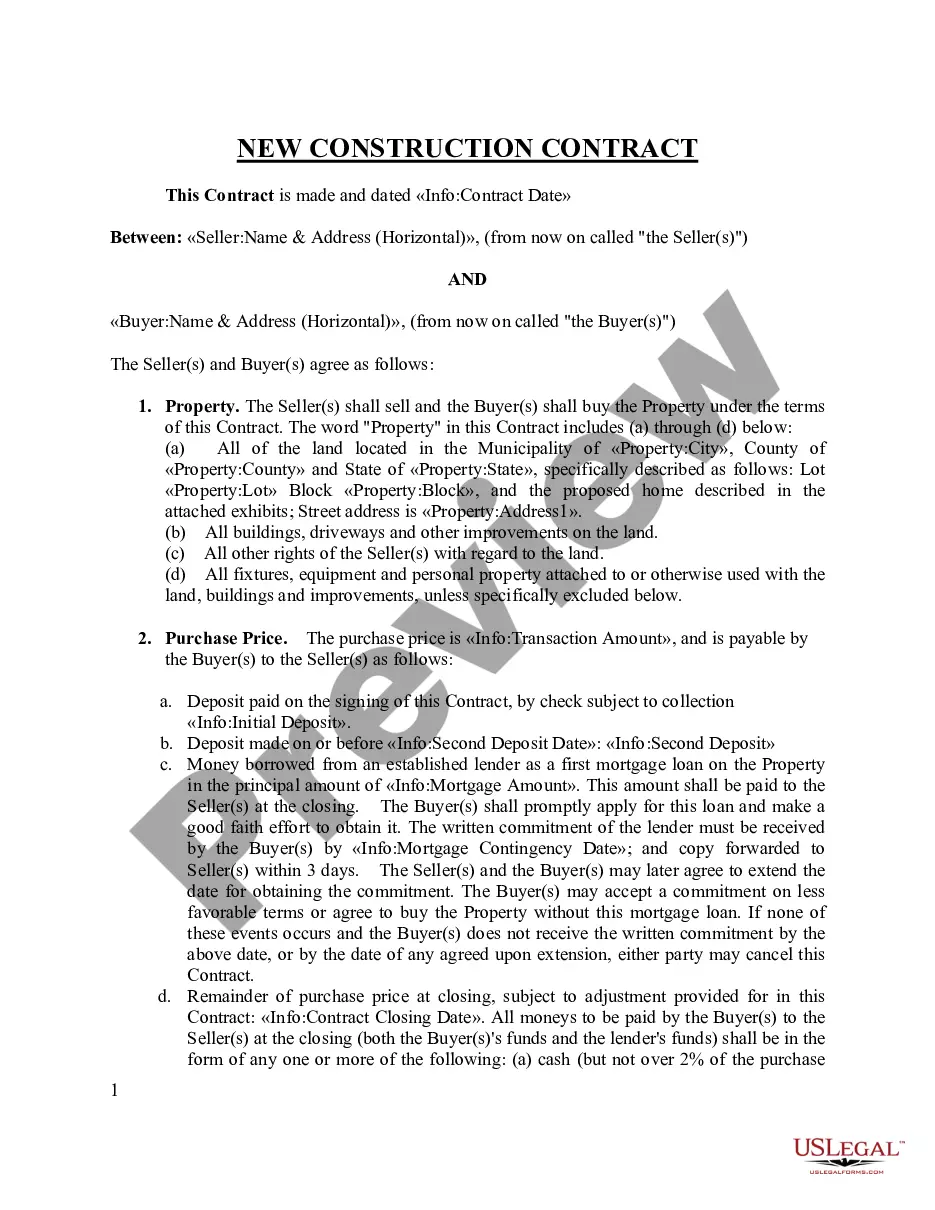
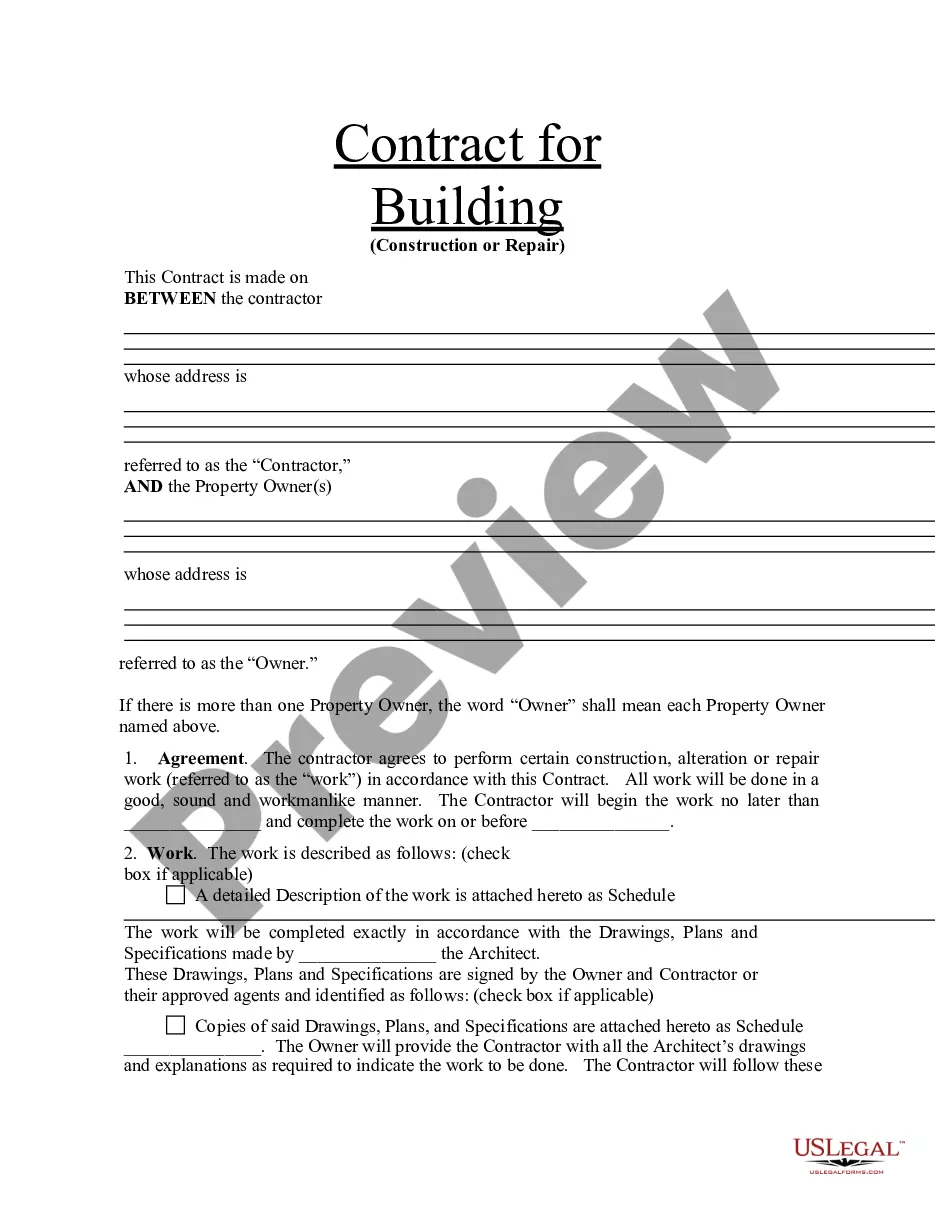
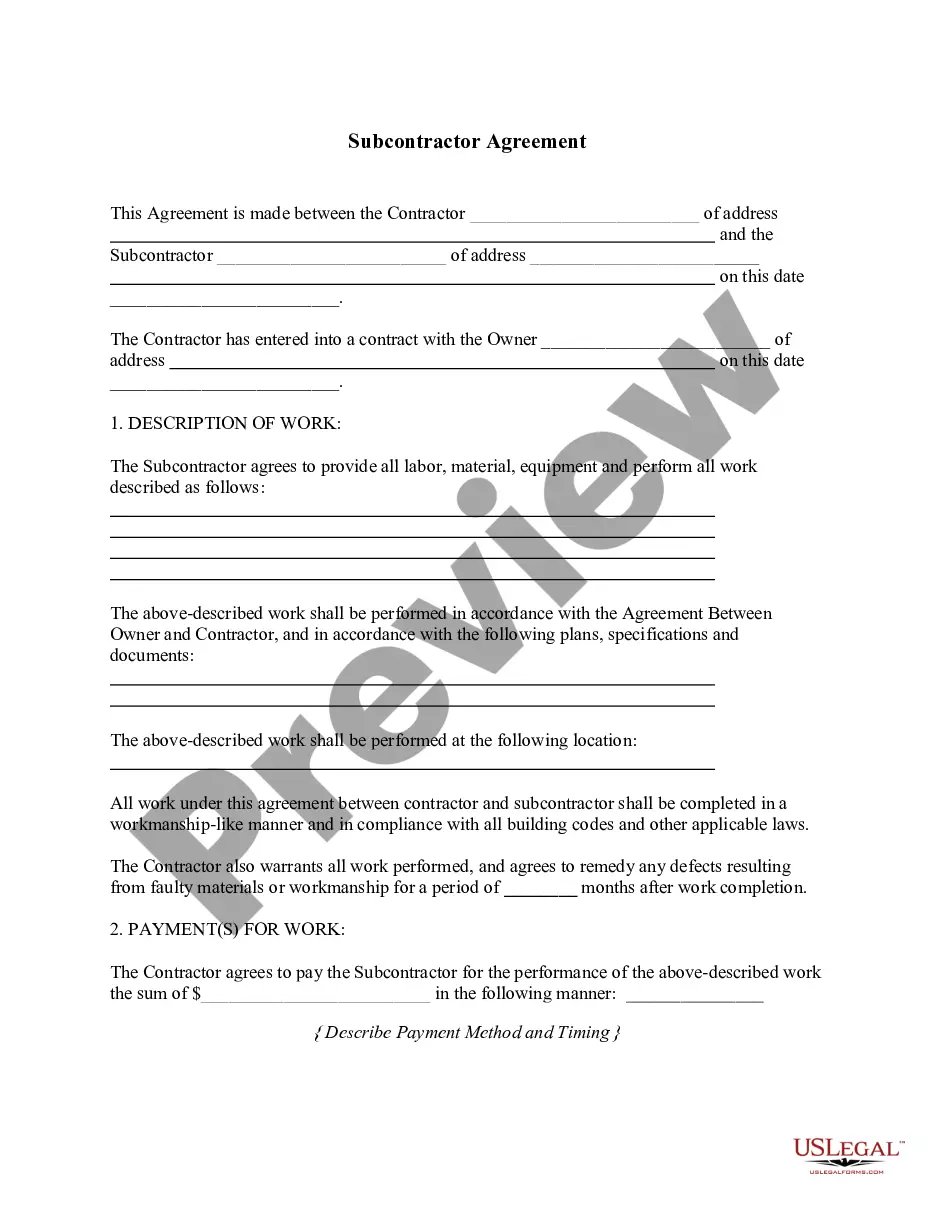
The Commercial Contract for Contractor is a legal document that establishes a binding agreement between a contractor and a property owner for commercial construction projects. This contract outlines payment arrangement options, such as cost-plus or fixed fee, and addresses crucial topics including change orders, work site specifics, warranty, and insurance. It is specifically tailored to comply with the laws of the State of Washington, differentiating it from other construction contracts that may not include this jurisdiction-specific detail.
Form components explained
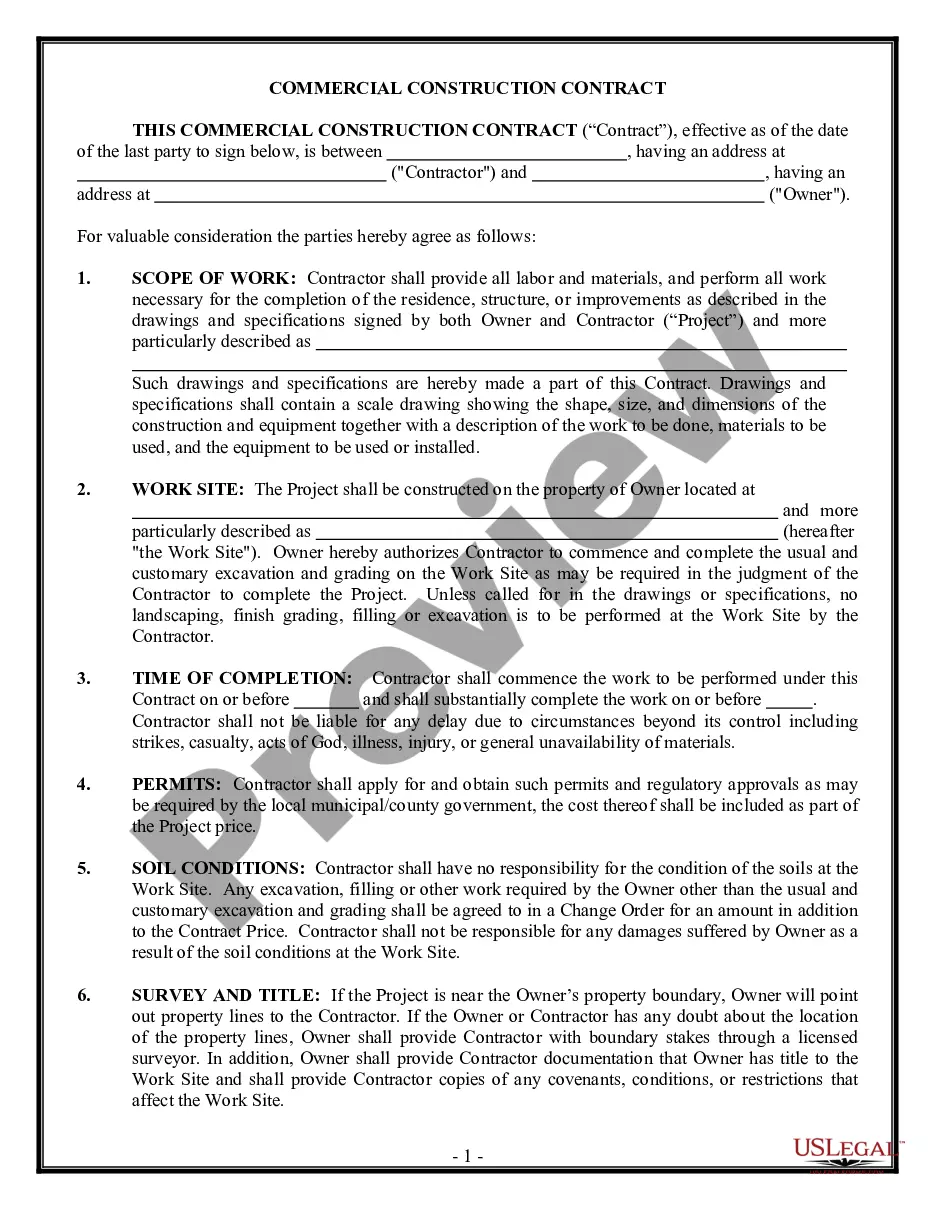
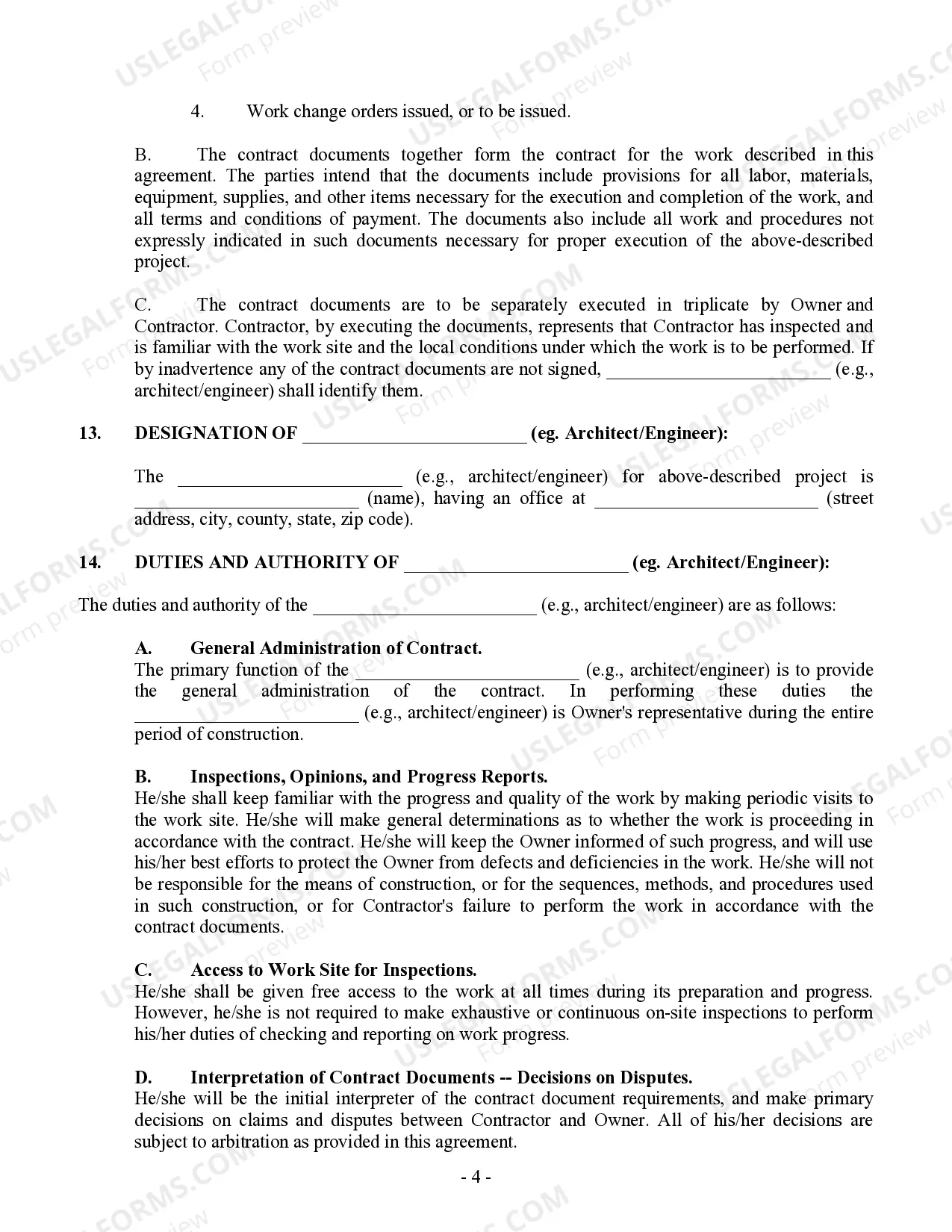
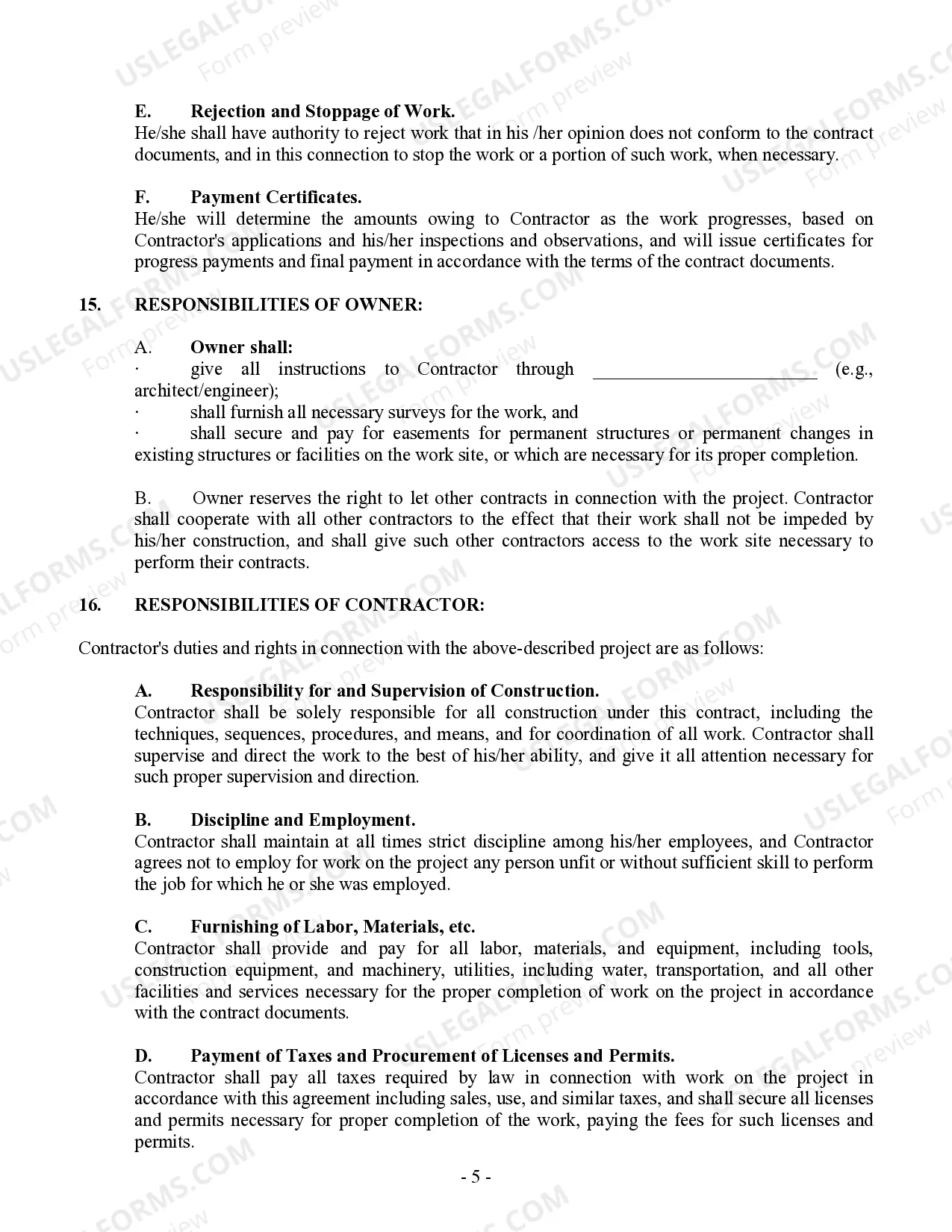
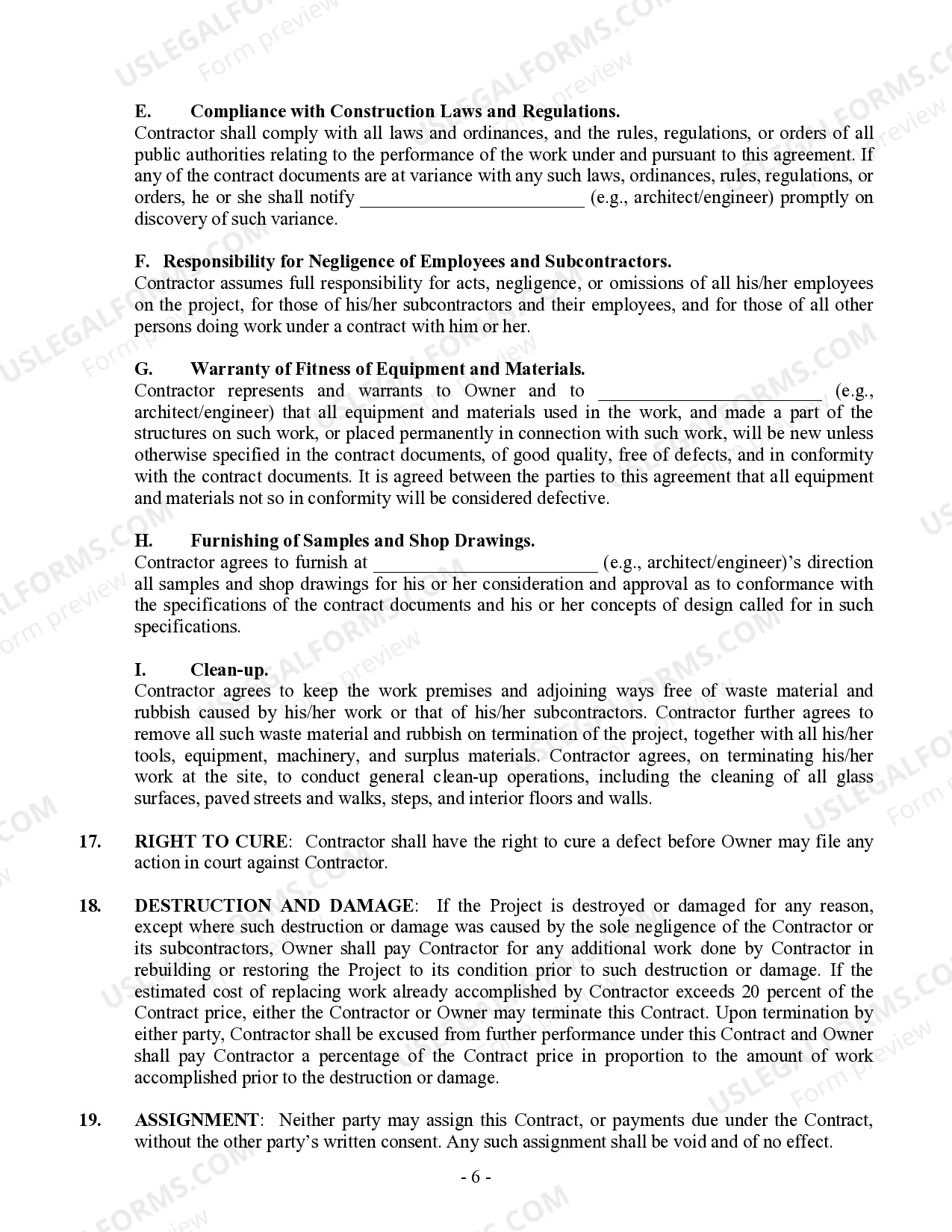
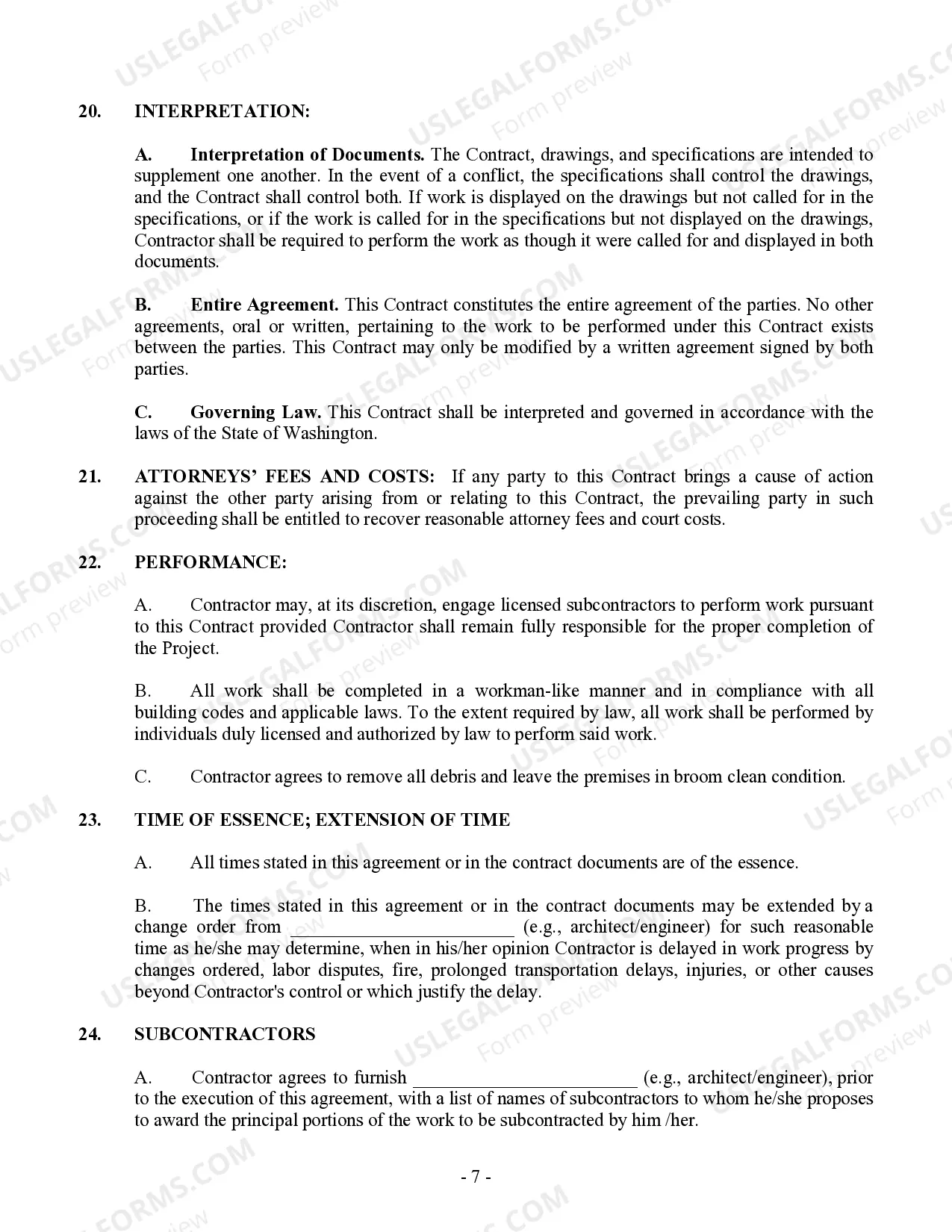
- Work site specifications, including property boundary identification.
- Permitting responsibilities of the contractor.
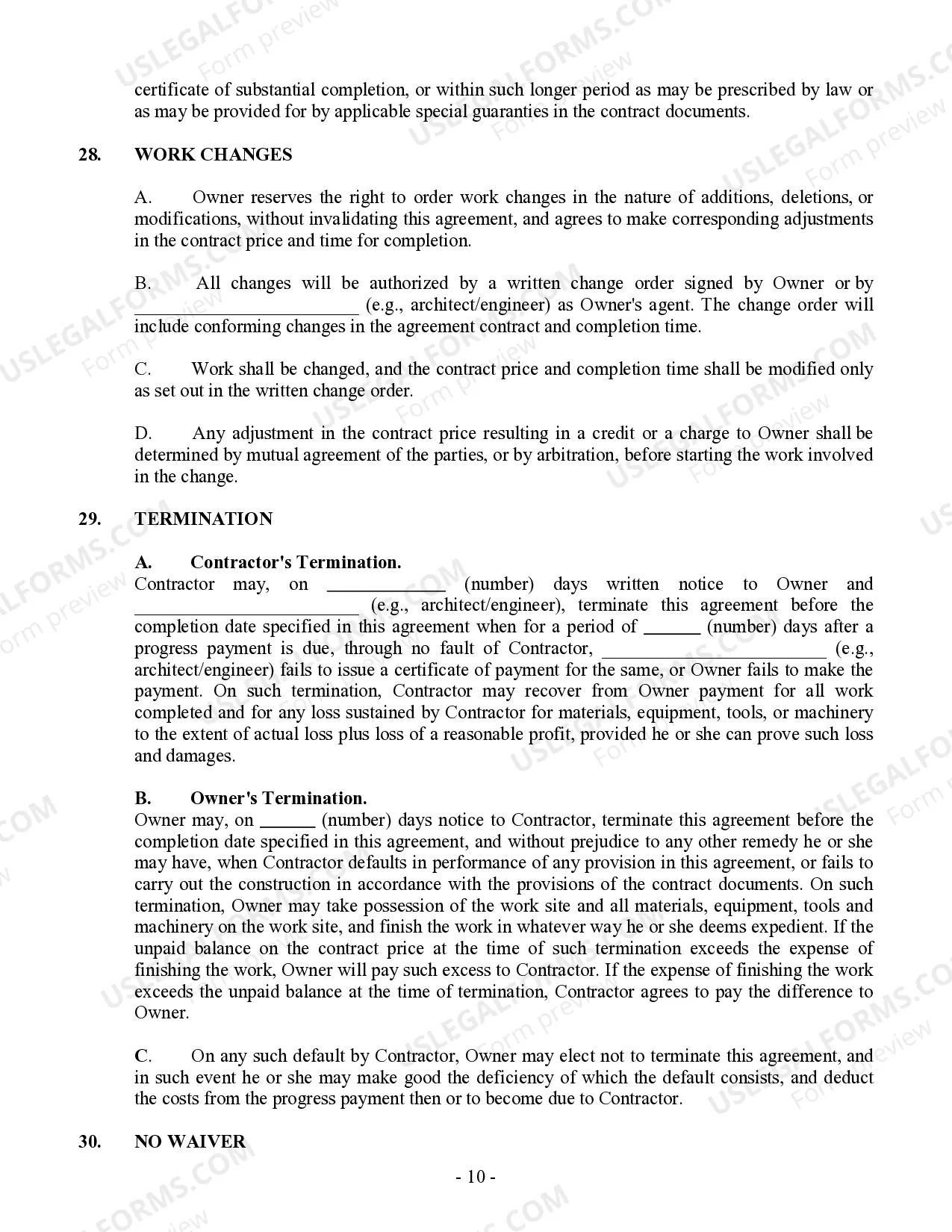
- Conditions related to soil responsibilities and change orders.
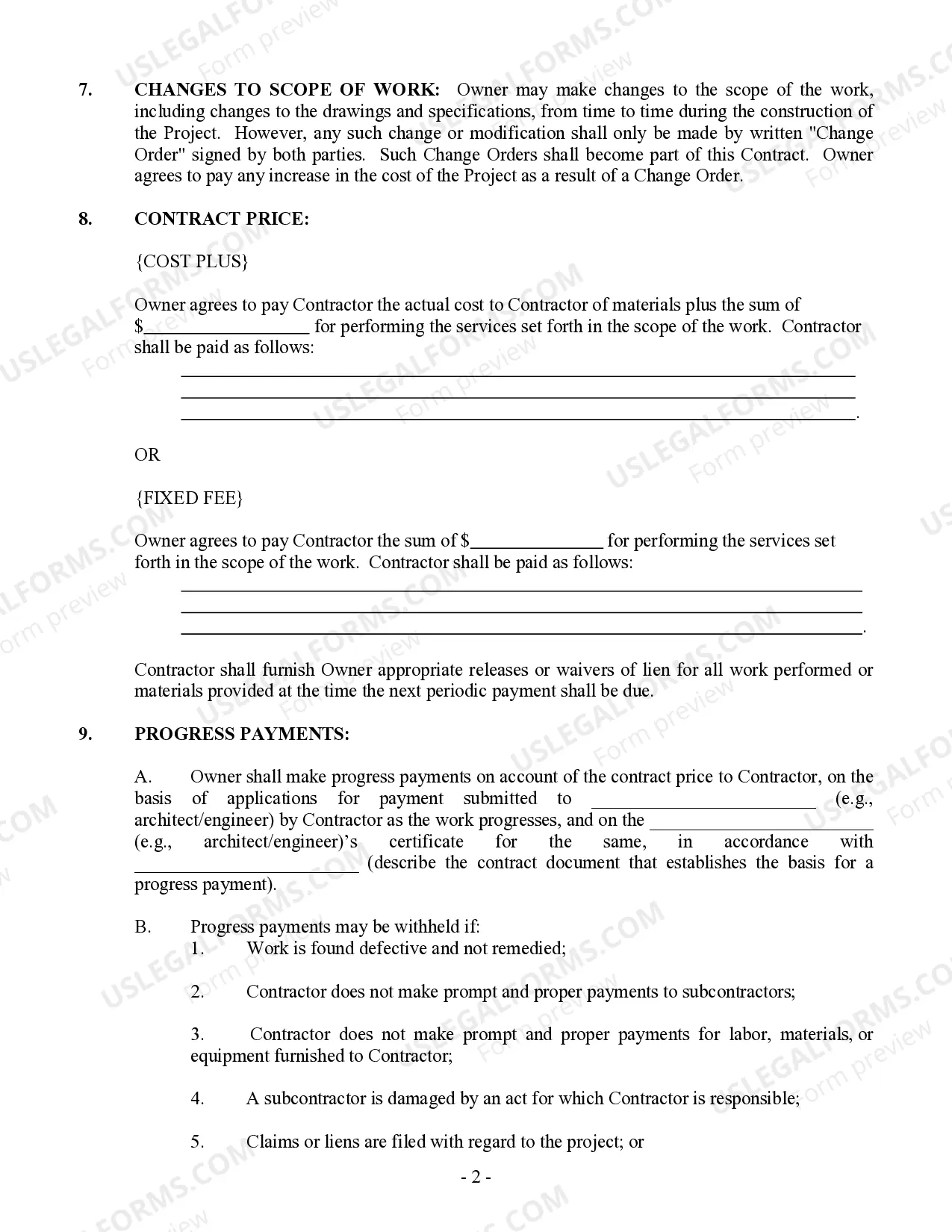
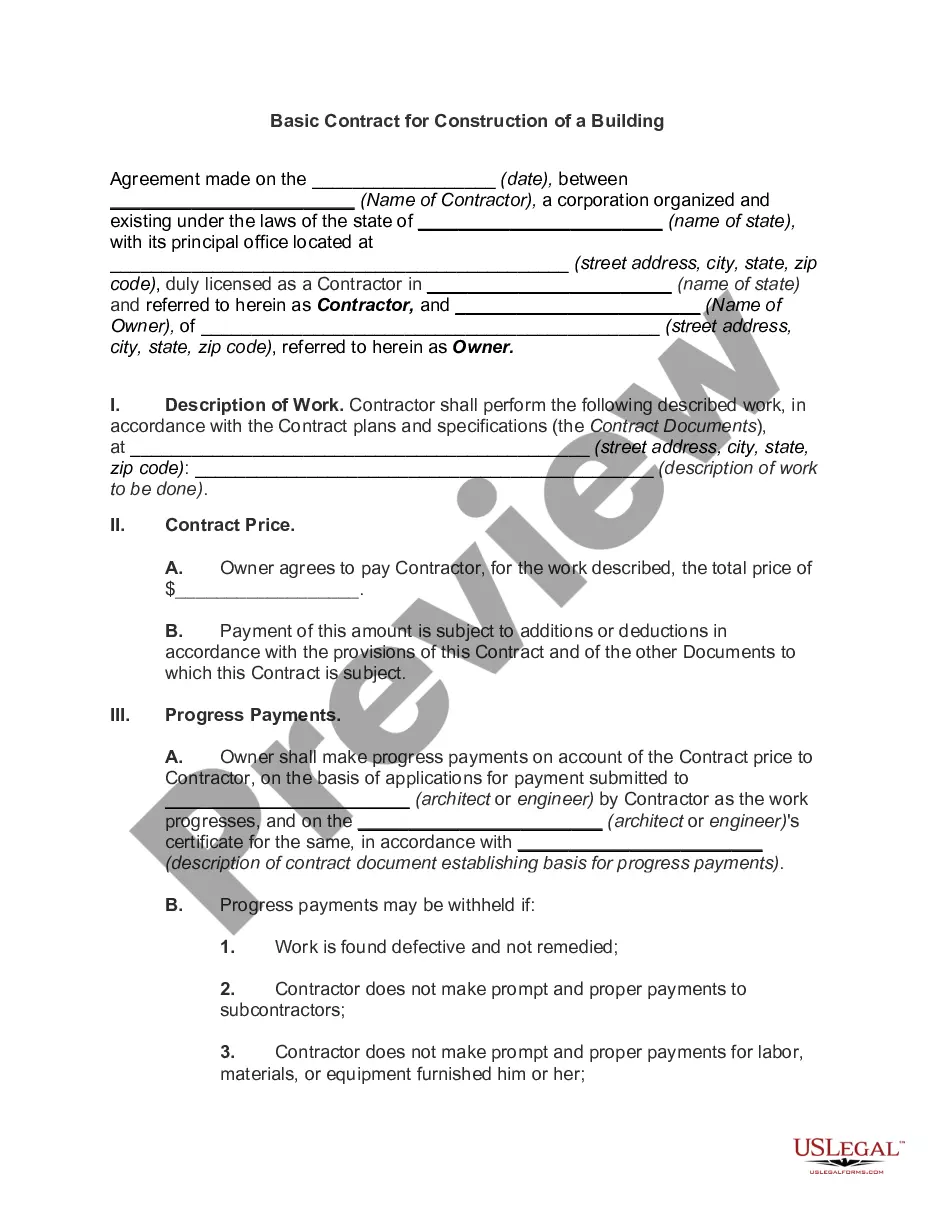
- Progress payment terms, including conditions for withholding payments.
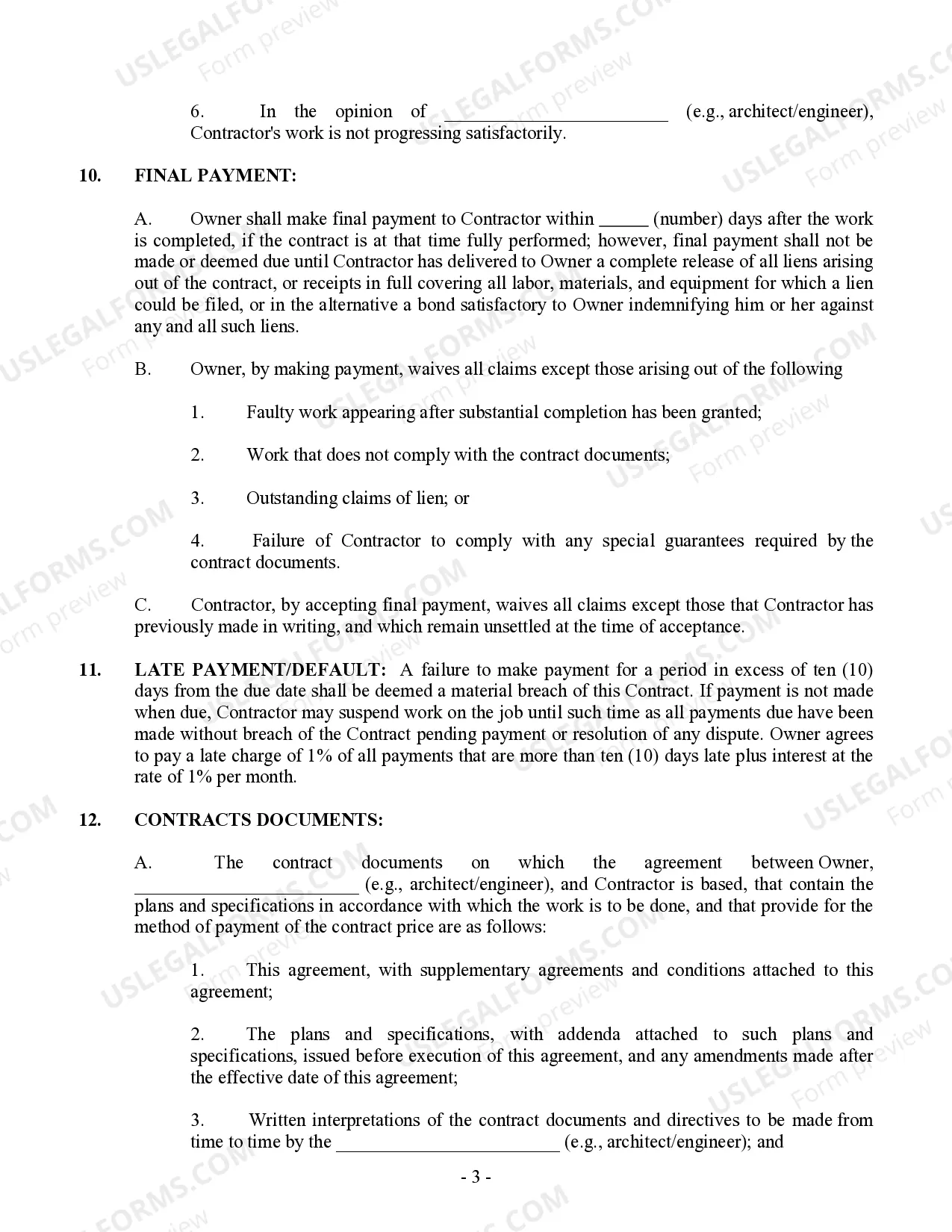
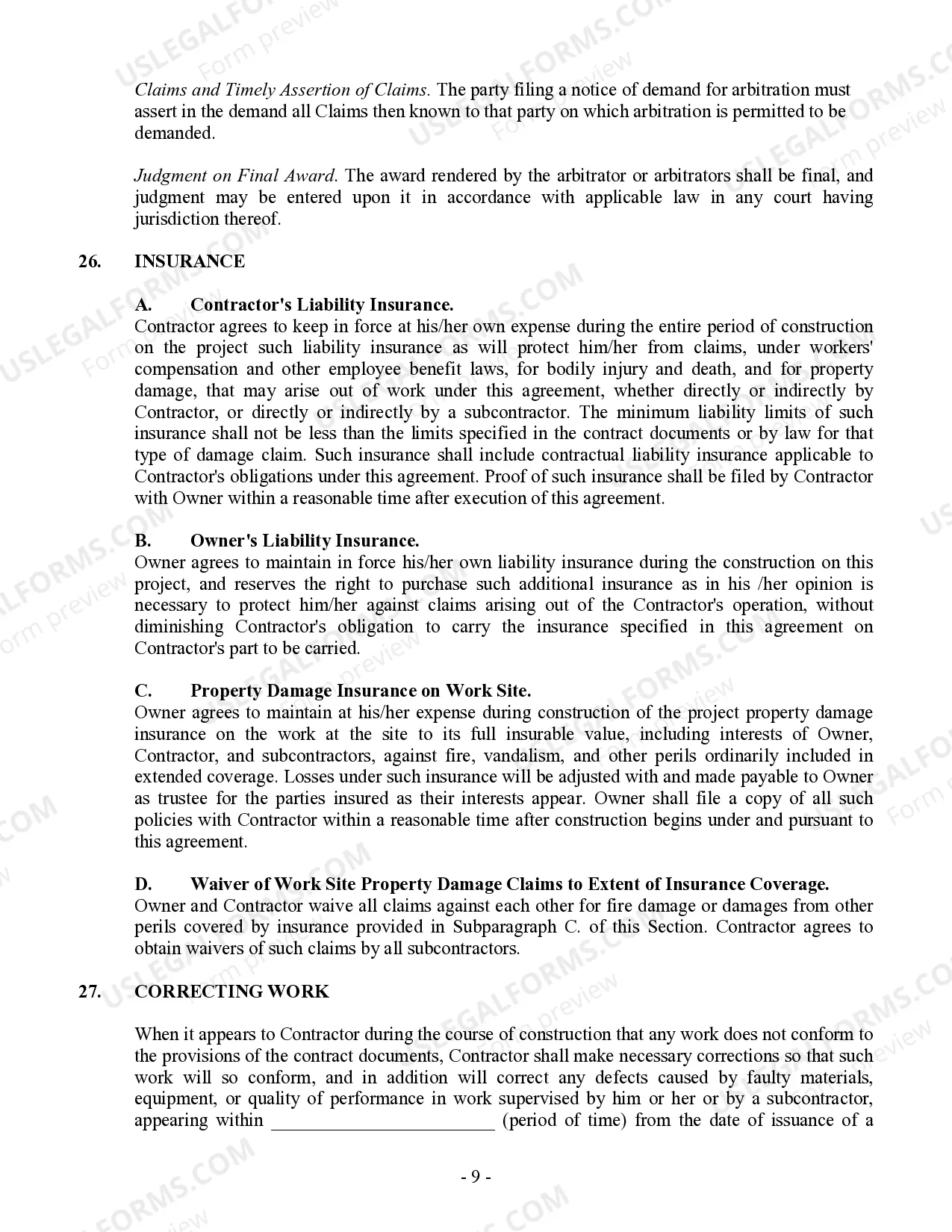
- Insurance and liability requirements for both parties.
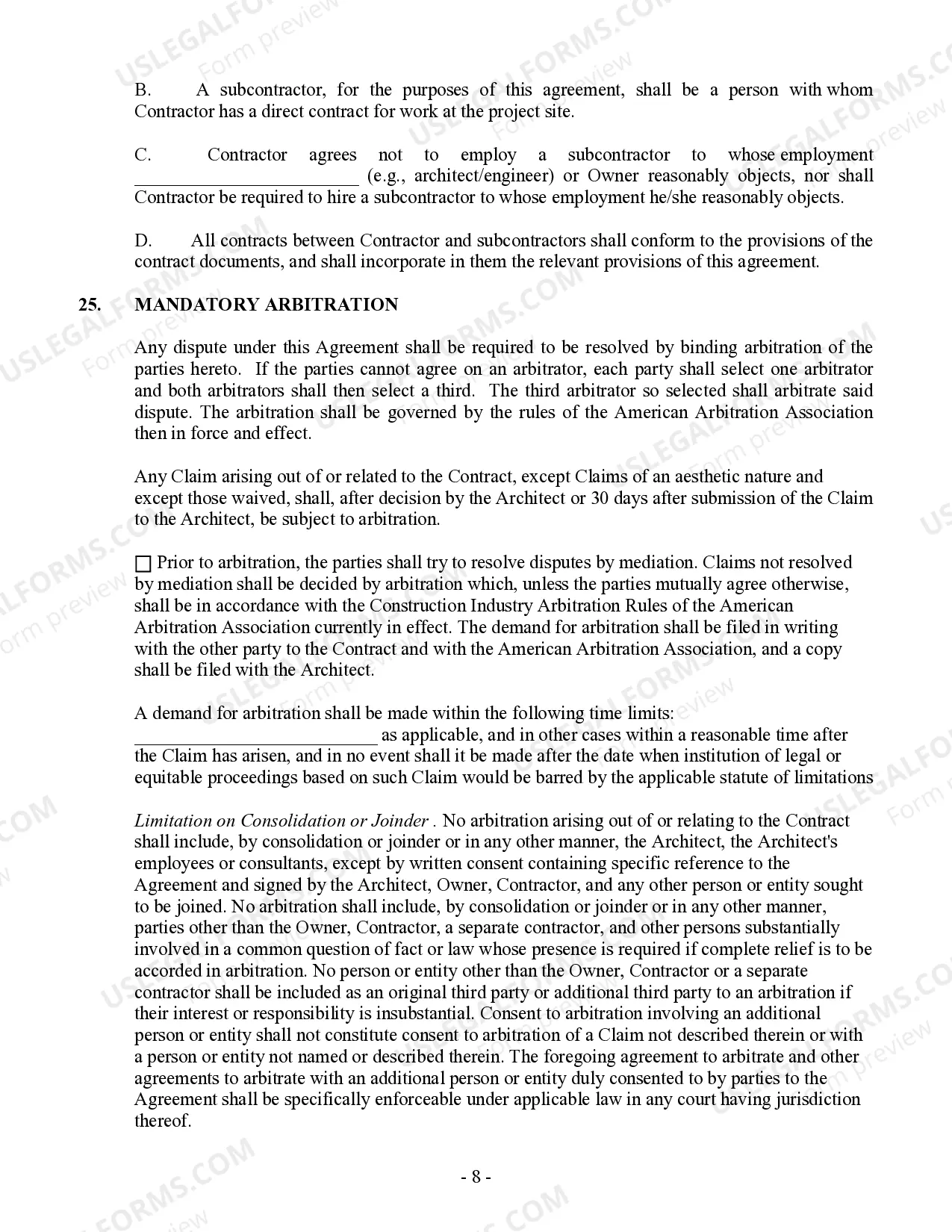
- Provisions for handling disputes through binding arbitration.

Common use cases
This form should be used when a property owner hires a contractor for a commercial construction project. It is essential in situations where contractual terms need to be clearly defined, such as project scope, payment terms, and responsibilities for permits and inspections. Use this contract to protect both parties by establishing legal obligations, safeguards, and procedures for resolving disputes.
Who this form is for
- Property owners looking to hire a contractor for commercial construction projects.
- Contractors seeking to formalize agreements with clients to clearly outline project terms.
- Real estate developers managing commercial properties who need comprehensive construction agreements.
Instructions for completing this form
- Identify the parties involved in the contract, including the property owner and the contractor.
- Specify the work site location and any applicable property boundary information.
- Outline the payment structure, including conditions for progress payments and retainage.
- Detail responsibilities for obtaining necessary permits and addressing soil conditions.
- Include terms for dispute resolution, including arbitration agreements.
Notarization requirements for this form
This form does not typically require notarization unless specified by local law. It is advisable to check with a legal professional to understand any additional local requirements that may apply.
Get your form ready online
Our built-in tools help you complete, sign, share, and store your documents in one place.
Make edits, fill in missing information, and update formatting in US Legal Forms—just like you would in MS Word.
Download a copy, print it, send it by email, or mail it via USPS—whatever works best for your next step.
Sign and collect signatures with our SignNow integration. Send to multiple recipients, set reminders, and more. Go Premium to unlock E-Sign.
If this form requires notarization, complete it online through a secure video call—no need to meet a notary in person or wait for an appointment.
We protect your documents and personal data by following strict security and privacy standards.

Make edits, fill in missing information, and update formatting in US Legal Forms—just like you would in MS Word.

Download a copy, print it, send it by email, or mail it via USPS—whatever works best for your next step.

Sign and collect signatures with our SignNow integration. Send to multiple recipients, set reminders, and more. Go Premium to unlock E-Sign.

If this form requires notarization, complete it online through a secure video call—no need to meet a notary in person or wait for an appointment.

We protect your documents and personal data by following strict security and privacy standards.
Common mistakes to avoid
- Failing to clearly define the work scope, leading to disputes over project expectations.
- Not specifying responsibilities for permits, which can result in legal issues or fines.
- Overlooking the inclusion of progress payment terms, causing cash flow problems.
Why use this form online
- Convenient access to a legally drafted template tailored to Washington State requirements.
- Easy to edit for specific project details without needing legal expertise.
- Downloadable format allows for immediate use and distribution to involved parties.
- Ensures reliability and accuracy, reducing the risk of errors in critical legal documents.
- The contract serves as a binding agreement between the property owner and contractor.
- It helps clarify expectations and responsibilities, reducing the risk of disputes.
- Compliance with Washington state laws ensures enforceability in court.
Summary of main points
- The Commercial Contract for Contractor is essential for regulating relationships between contractors and property owners in commercial projects.
- Clear definitions, responsibilities, and payment terms help prevent future disputes.
- This form must adhere specifically to the laws of Washington to be valid and enforceable.
Looking for another form?
Form popularity
FAQ
You need a license if you meet one or more of the following criteria: Your business requires city and state endorsements. You are doing business using a name other than your full name legal name. You plan to hire employees within the next 90 days.
Open a Business Bank Account This is a critical step that many new independent contractors miss. You must separate your personal money from your business money.Make sure that you are setting aside some money in your business bank account to help you pay quarterly taxes.
Avoid companies that require an upfront deposit of more than 10 percent. Try to include language in the contract that holds back a percentage of the total price, called a retainage, until you're sure the work was done well. A 10 percent retainage is common for residential remodeling work.
Can I give out Form 1099Misc as an individual and not as a registered business to someone who did freelance work for me this year.As a private person, you are not required to issue a form 1099-MISC.
Tax Does not collect retail sales tax on road work where the road is a city, county, or federal road. Roads for the state of Washington are subject to sales tax.Tax Contractor is defined by law as the consumer and must pay sales/use tax on all materials used, applied, or installed by him.
Be sure you need a contractor's license. Register your business with the WA Secretary of State. Register with the Department of Revenue. Get an EIN Number. Get bonded. Obtain proof of insurance. Submit your application.
Business and occupation tax: Washington's business and occupation (B&O) tax is levied on the gross receipts of business operations. This means there are no deductions for labor, materials, taxes or other costs of doing business.
Independent contractors must register with the Department of Revenue unless they: Make less than $12,000 a year before expenses; Do not make retail sales; Are not required to pay or collect any taxes administered by the Department of Revenue.
The term independent contractor describes the relationship between a client and a self-employed person who provides services as an autonomous business rather than as a full-time employee.They then transfer their bottom-line Schedule C business profit to Form 1040, Schedule SE, Self-Employment Tax.