Vermont Apartment Rules and Regulations
Overview of this form
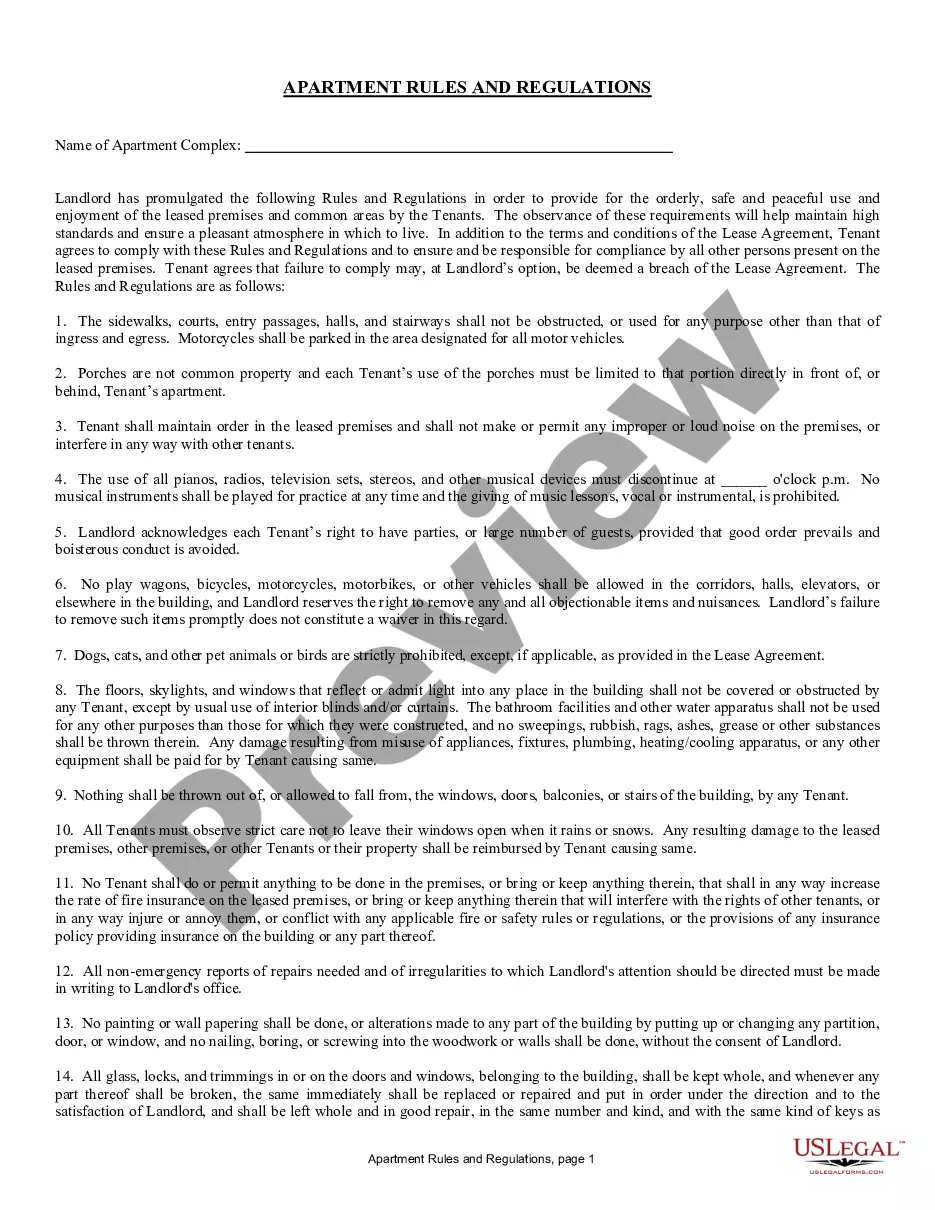
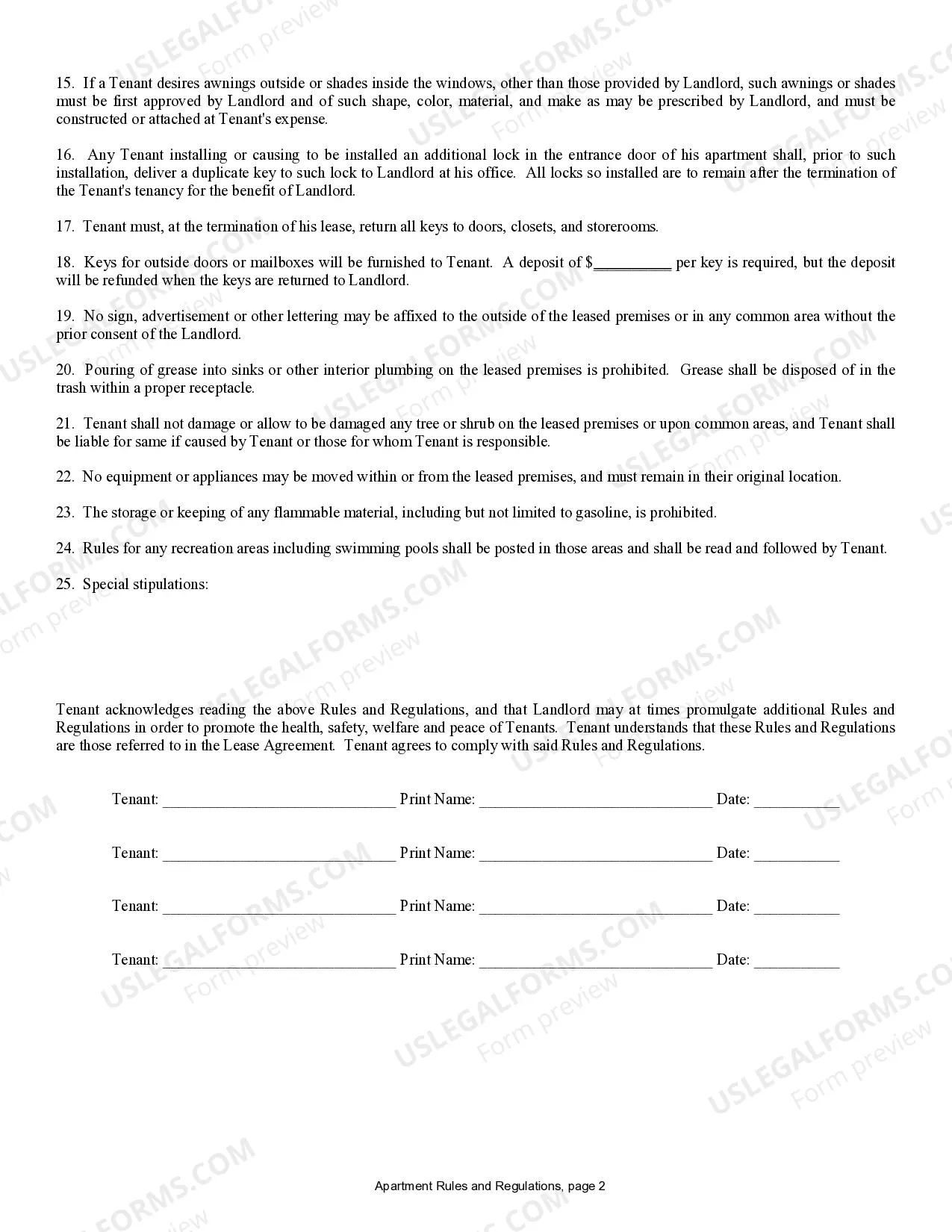
The Apartment Rules and Regulations form establishes the specific rules and guidelines that tenants must follow in an apartment complex. Unlike the Apartment Lease Agreement, which outlines the terms of tenancy, this form focuses on everyday conduct and responsibilities to maintain a harmonious living environment. It is essential for ensuring all residents understand and agree to the community standards set by the landlord.
Main sections of this form
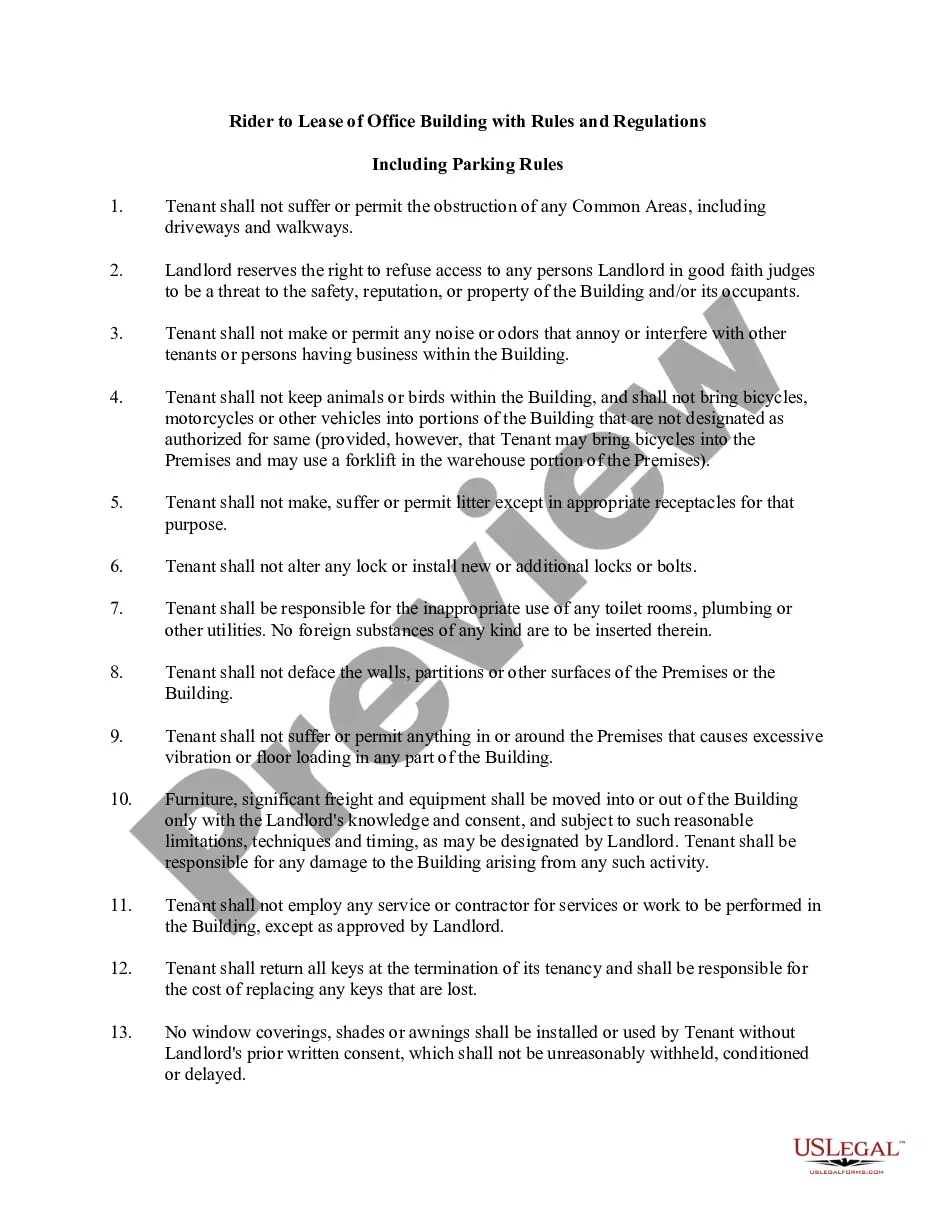
- Obstructions: Rules regarding the use of common areas, such as sidewalks and hallways.
- Noise control: Guidelines on acceptable noise levels and quiet hours.
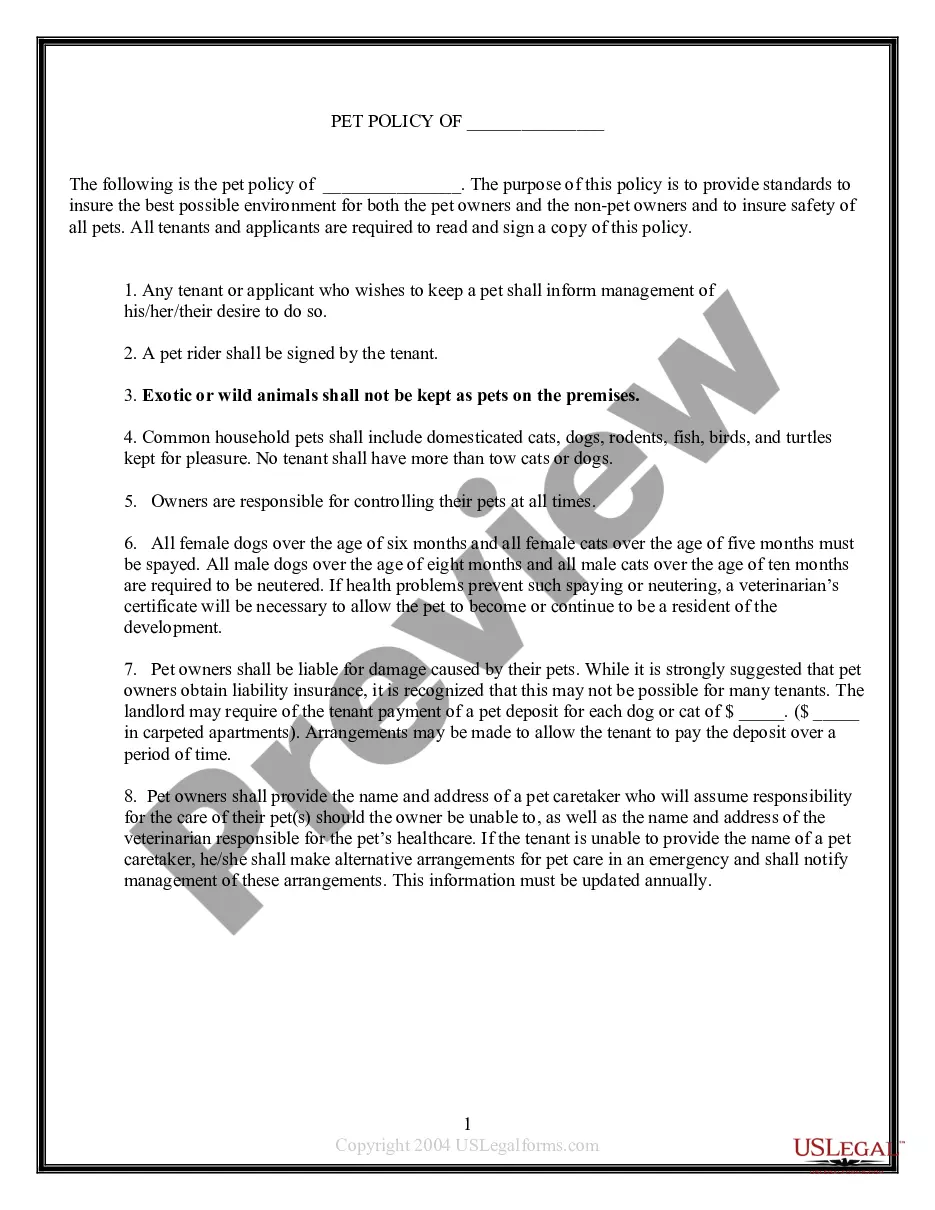
- Pet policies: Restrictions on pets within the premises.
- Maintenance: Procedures for reporting repairs and maintenance requests.
- Alterations: Rules against unauthorized changes to the property.
- Key management: Requirements for handling keys and locks.
When to use this document
This form is typically used when entering a rental agreement for an apartment. It helps inform tenants of the specific rules they are expected to follow, thus preventing misunderstandings and conflicts in communal living situations. Consider using this form whenever new tenants move in or when landlords wish to reinforce existing rules and regulations for all residents.
Who this form is for
- Landlords seeking to establish clear rules for tenants.
- Property managers responsible for enforcing community standards.
- Tenants looking for clarity on their responsibilities.
How to complete this form
- Identify the name of the apartment complex at the top of the form.
- Review each rule listed to ensure understanding and agreement.
- Fill in any blanks regarding time restrictions, deposits for keys, and names of tenants.
- All tenants should sign and date the form to indicate their acceptance of the rules.
- Provide a copy of the completed form to each tenant for their records.
Notarization requirements for this form
In most cases, this form does not require notarization. However, some jurisdictions or signing circumstances might. US Legal Forms offers online notarization powered by Notarize, accessible 24/7 for a quick, remote process.
Get your form ready online
Our built-in tools help you complete, sign, share, and store your documents in one place.
Make edits, fill in missing information, and update formatting in US Legal Forms—just like you would in MS Word.
Download a copy, print it, send it by email, or mail it via USPS—whatever works best for your next step.
Sign and collect signatures with our SignNow integration. Send to multiple recipients, set reminders, and more. Go Premium to unlock E-Sign.
If this form requires notarization, complete it online through a secure video call—no need to meet a notary in person or wait for an appointment.
We protect your documents and personal data by following strict security and privacy standards.

Make edits, fill in missing information, and update formatting in US Legal Forms—just like you would in MS Word.

Download a copy, print it, send it by email, or mail it via USPS—whatever works best for your next step.

Sign and collect signatures with our SignNow integration. Send to multiple recipients, set reminders, and more. Go Premium to unlock E-Sign.

If this form requires notarization, complete it online through a secure video call—no need to meet a notary in person or wait for an appointment.

We protect your documents and personal data by following strict security and privacy standards.
Common mistakes
- Failing to read and understand all rules before signing.
- Not filling in all required information, such as tenant names or time restrictions.
- Overlooking the need for all tenants to sign the form.
Why complete this form online
- Easy access to a legally compliant template drafted by attorneys.
- Immediate download for quick distribution to tenants.
- Ability to customize sections to meet specific needs and regulations.
Legal use & context
- Establishes clear expectations for tenant behavior, which can support eviction proceedings if rules are violated.
- Helps landlords maintain a safe and orderly living environment, which is essential for property management.
- Provides a legal basis for addressing tenant disputes related to non-compliance with regulations.
Quick recap
- The Apartment Rules and Regulations form is essential for maintaining a peaceful living environment.
- It clearly outlines tenant responsibilities that supplement the lease agreement.
- Using this form accurately can help prevent future conflicts between tenants and landlords.
Looking for another form?
Form popularity
FAQ
This includes keeping the property clean, safe and habitable. The landlord must adhere to all building codes, perform necessary repairs, maintain common areas, keep all vital services, such as plumbing, electricity, and heat, in good working order, must provide proper trash receptacles and must supply running water.
Under Vermont state law if a landlord is terminating a tenancy for none of the reasons explained above or for no given reason (called a termination for no cause in legal language), and the tenant is renting by the month, the tenant is entitled to at least 60 days written notice, or 21 days written notice if renting
Fundamental responsibilities of landlords include: providing and maintaining the property in a clean and reasonable standard; giving proper receipts and maintaining records of all transactions pertaining to the tenancy; paying council rates and taxes; maintaining locks to ensure the property's security; and lodging the
Landlords are required to provide heat during the months of October 31 through May 31. If the outside temperature is 55 degrees or below between AM and PM it must be at least 68 degrees in the apartment building and between PM. and 6 AM the inside temperature must be 62 degrees," Goldberg explained.
Vermont state law requires that before ending a tenancy a tenant must give the landlord notice in writing at least one full rental payment period prior to the move-out date, if there is no written rental agreement to the contrary.
In an eviction process for nonpayment of rent the landlord must begin by providing the tenant with a written termination notice giving the tenant at least 14 days to pay in full or to leave. The notice must specifically state how much rent is due.
TENANTS CAN BE EVICTED THROUGH A LEGAL COURT PROCCESS AT ANY TIME OF THE YEAR. THERE IS NO PROHIBITION ON WINTER EVICTIONS. BASIC RESPONSIBILITIES OF TENANTS UNDER VERMONT LAW 2022 Pay rent on time.
Yes. A tenant can be evicted at any time of year as long as the landlord has grounds to evict under the Residential Tenancies Act.