Virginia Last Will and Testament for Widow or Widower with Minor Children
What is this form?
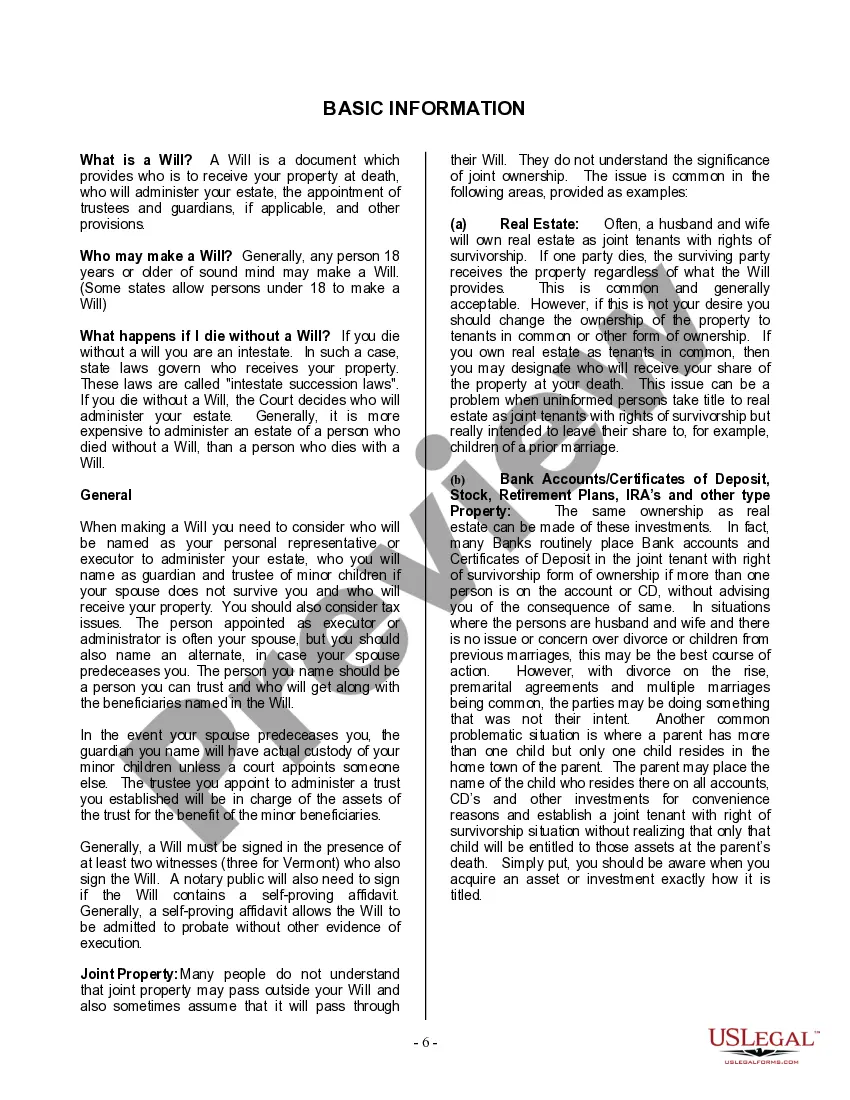
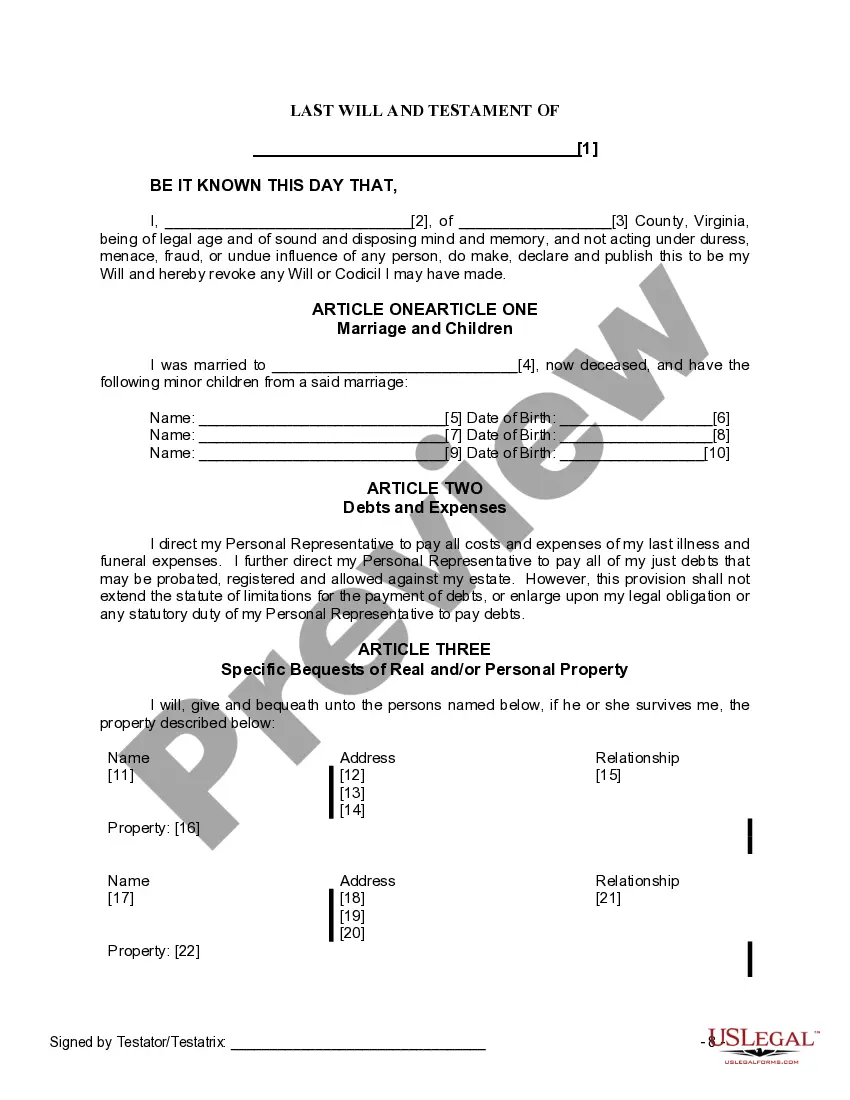
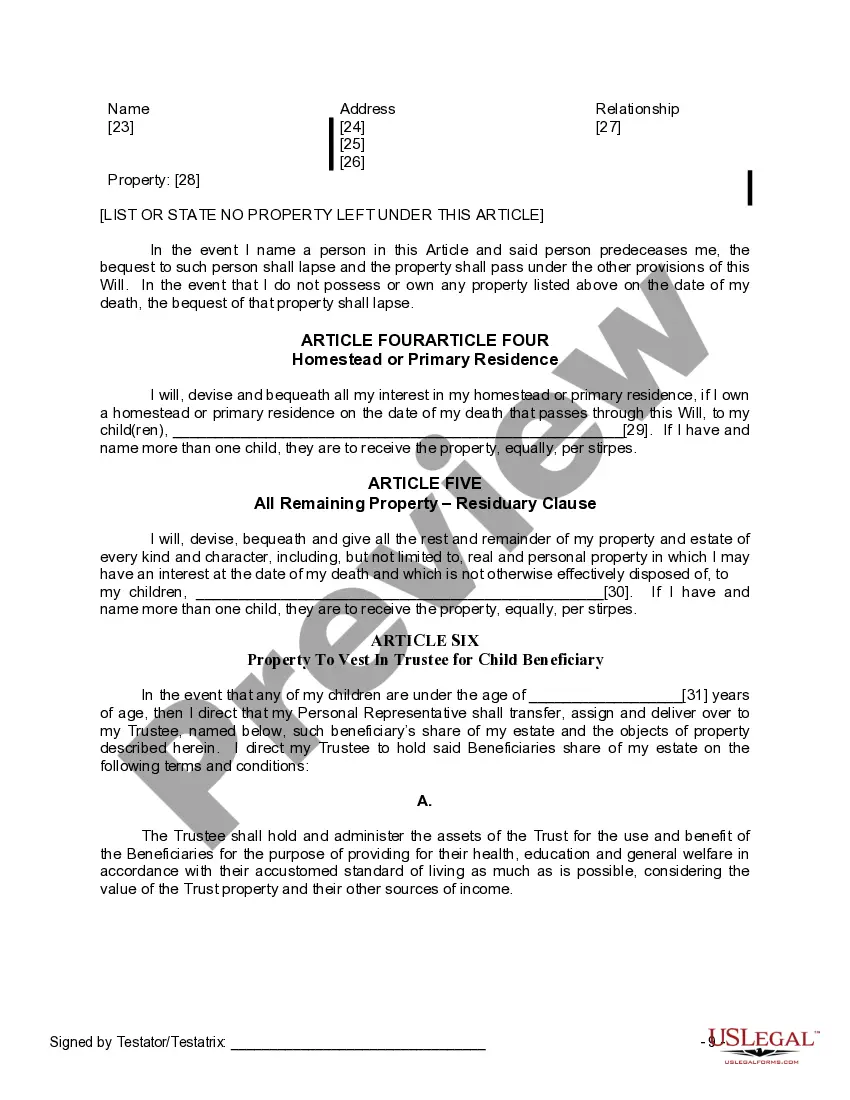
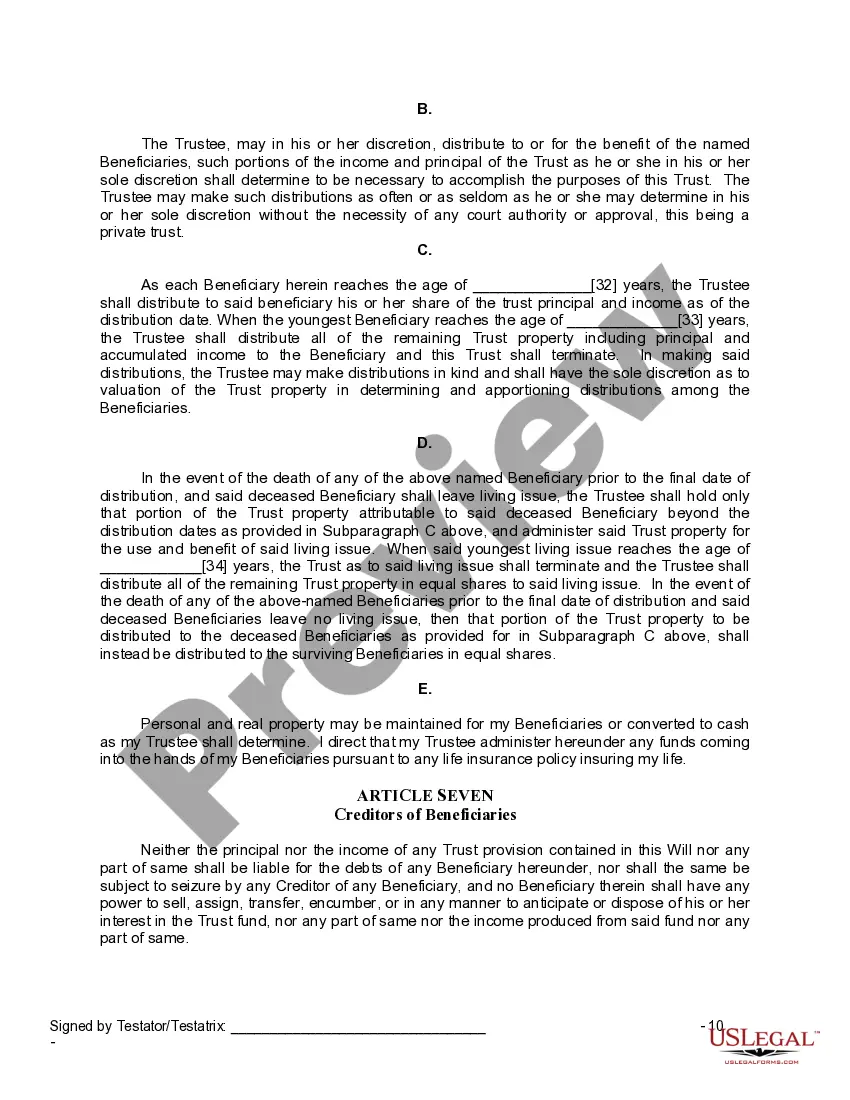
The Last Will and Testament for Widow or Widower with Minor Children is a legal document that outlines how a widow or widower's assets and responsibilities should be handled upon their death, particularly when they have minor children. This form allows you to designate a personal representative, specify beneficiaries, and appoint guardians and trustees for your minor children, ensuring they are cared for and that your wishes are followed. Unlike other wills, this form specifically addresses the needs of individuals who have lost a spouse and need to secure the future of their minor children.
Key parts of this document
- Appointment of a personal representative or executor to manage the estate.
- Designation of beneficiaries who will receive property and assets.
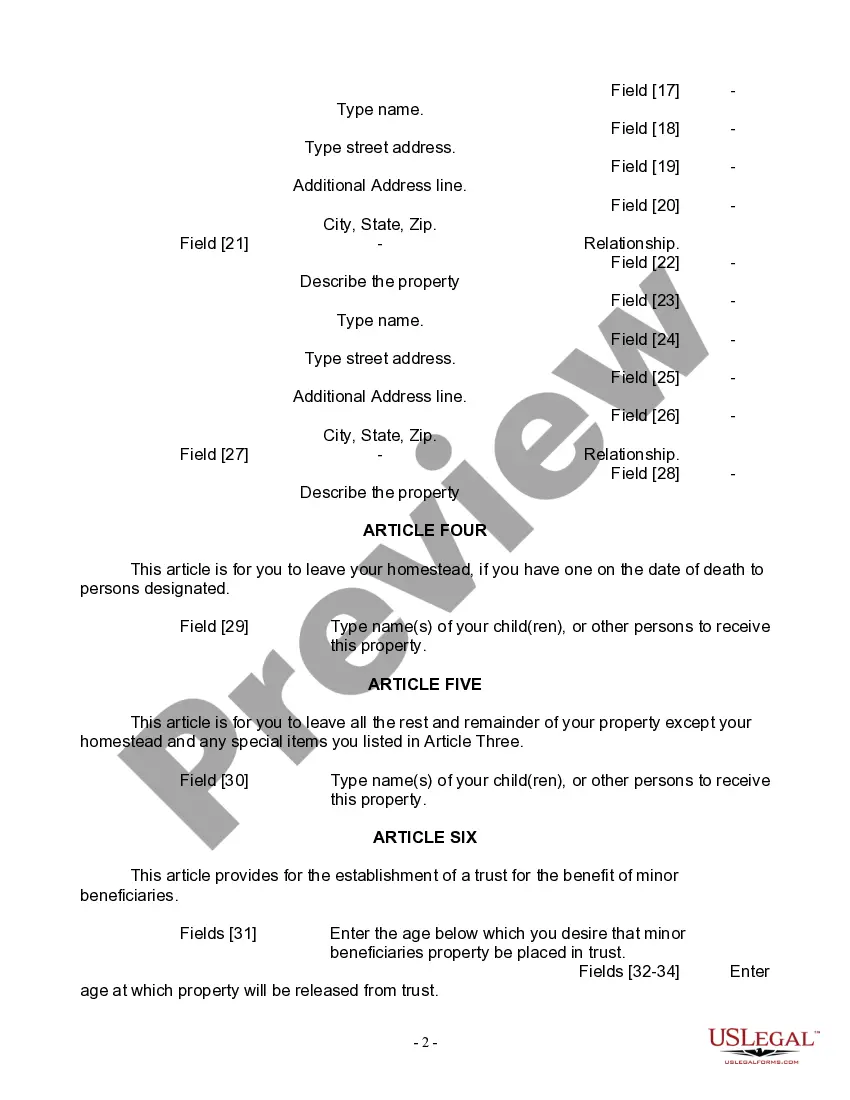
- Establishment of a trust for minor children's inheritances.
- Appointment of guardians for minor children in the event of the parent's passing.
- Provisions for funeral expenses and payment of debts.




Common use cases
This Last Will and Testament should be used when a widow or widower wants to ensure that their assets are distributed according to their wishes after their death. It's particularly important when minor children are involved, as it provides clear instructions for their care and financial support. Consider using this form if you have recently experienced the loss of a spouse and need to update your estate plans to reflect your current situation.
Who needs this form
- Individuals who are widowed or widowers and have minor children.
- Parents looking to provide for their children's future in the event of their passing.
- Those needing to designate a guardian for their minor children.
- Individuals wanting to secure their estate and specify how it should be distributed.
Completing this form step by step
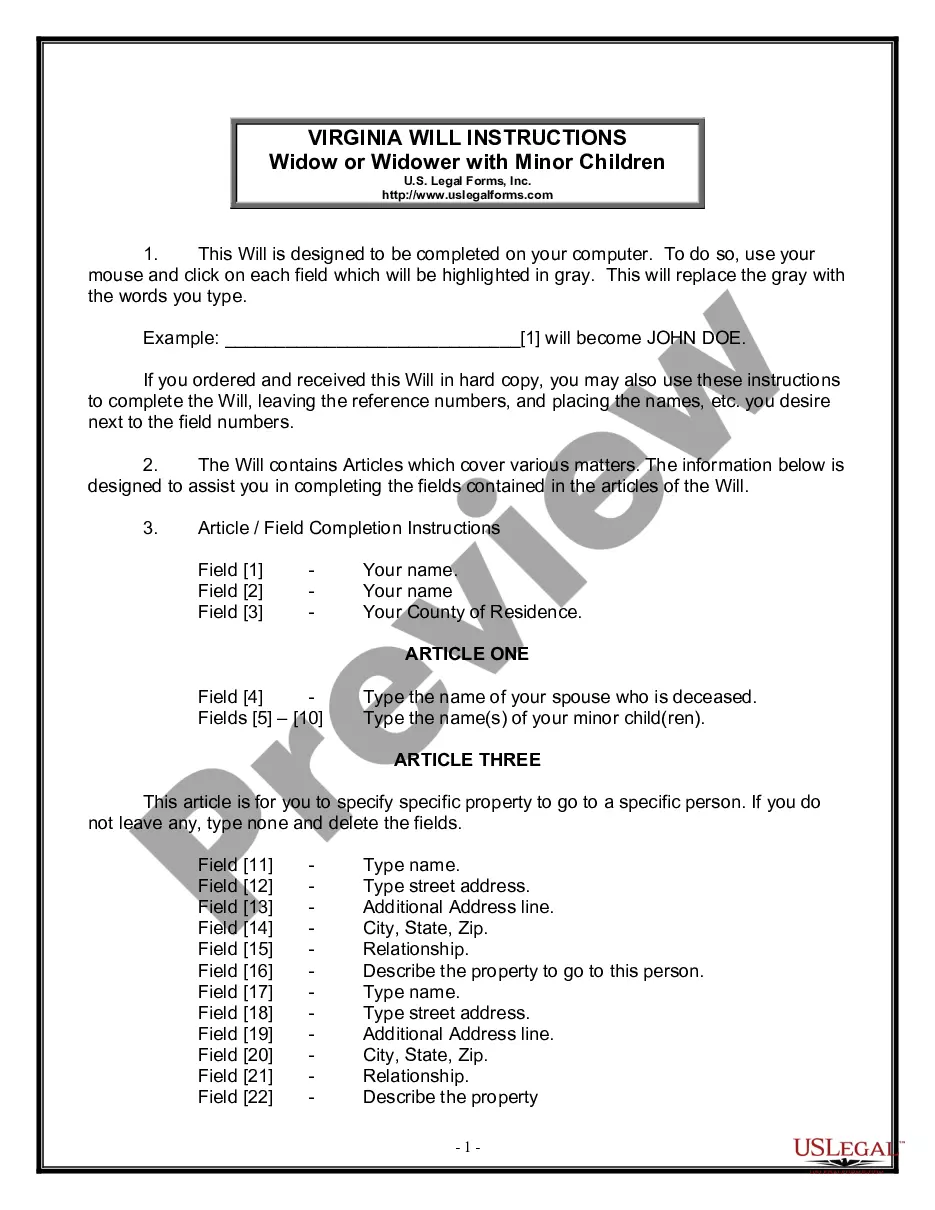
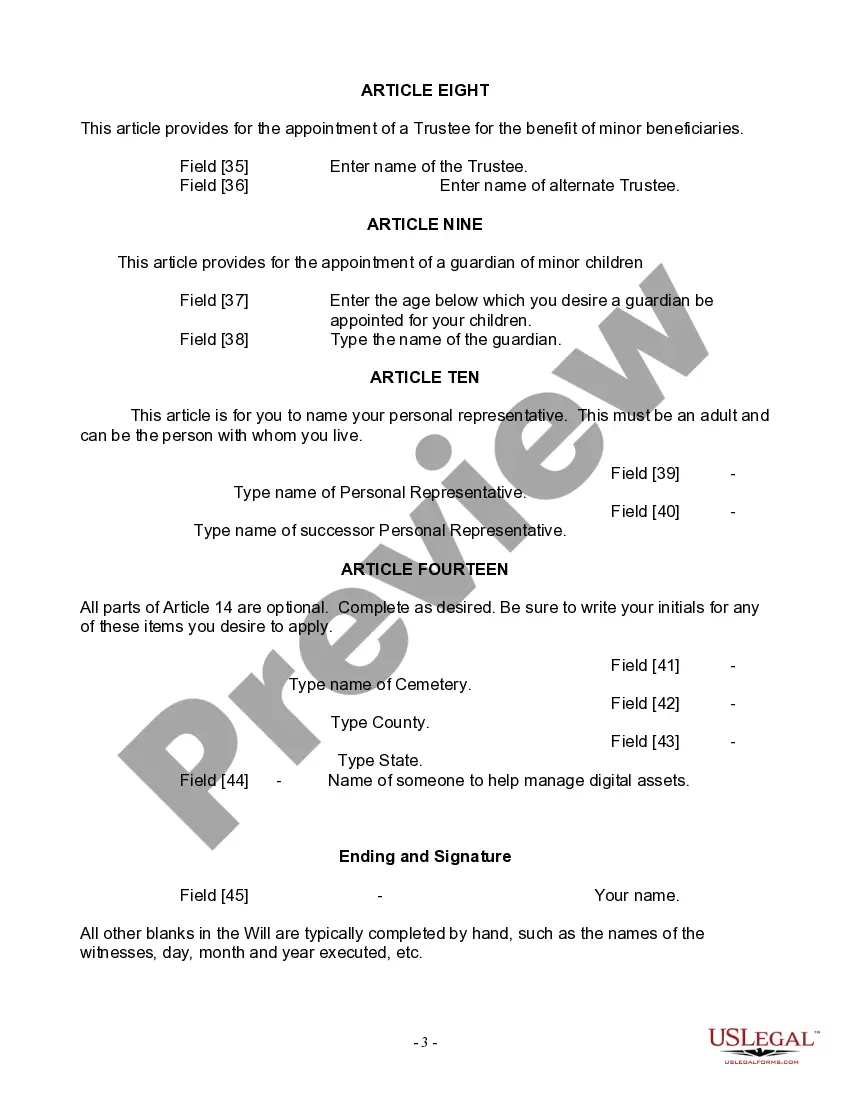
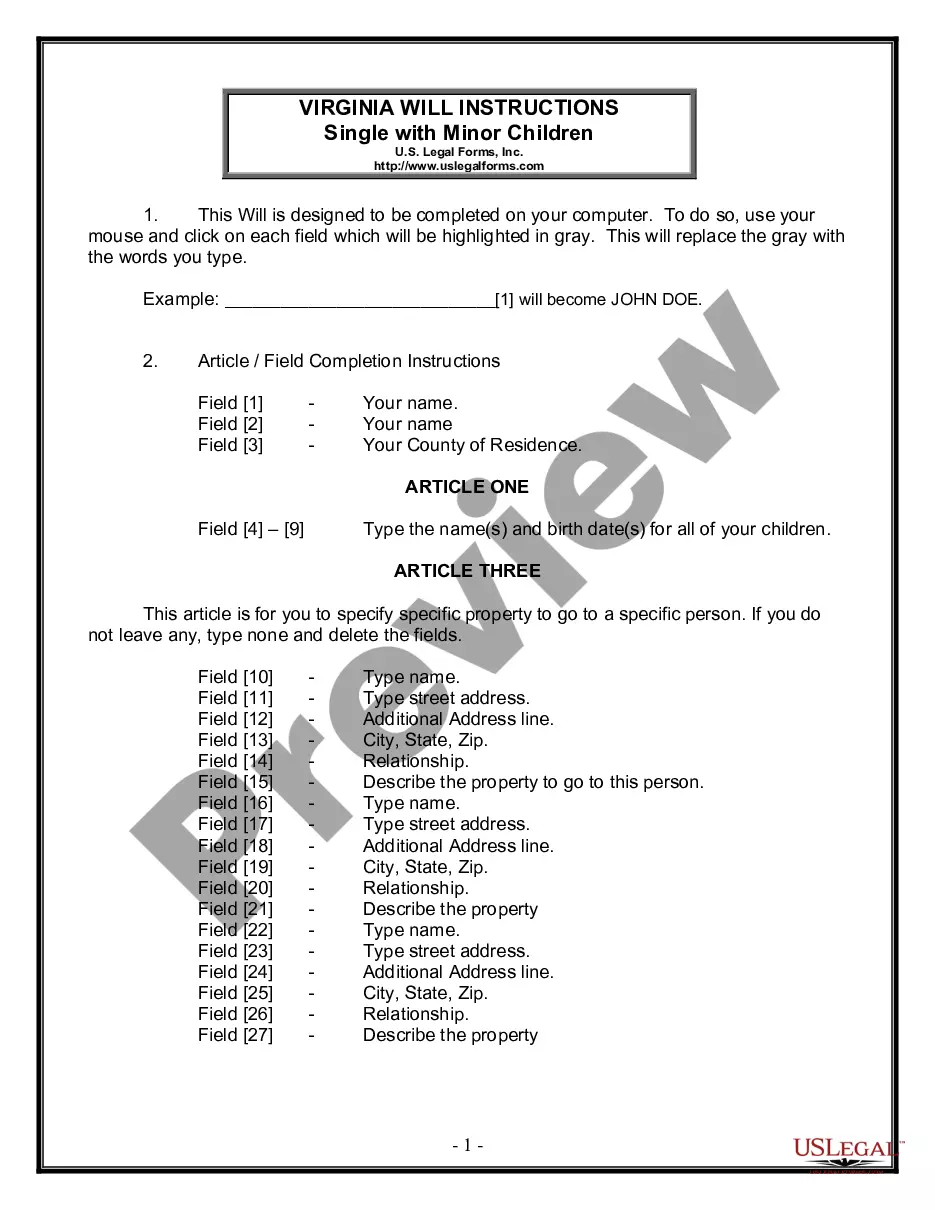
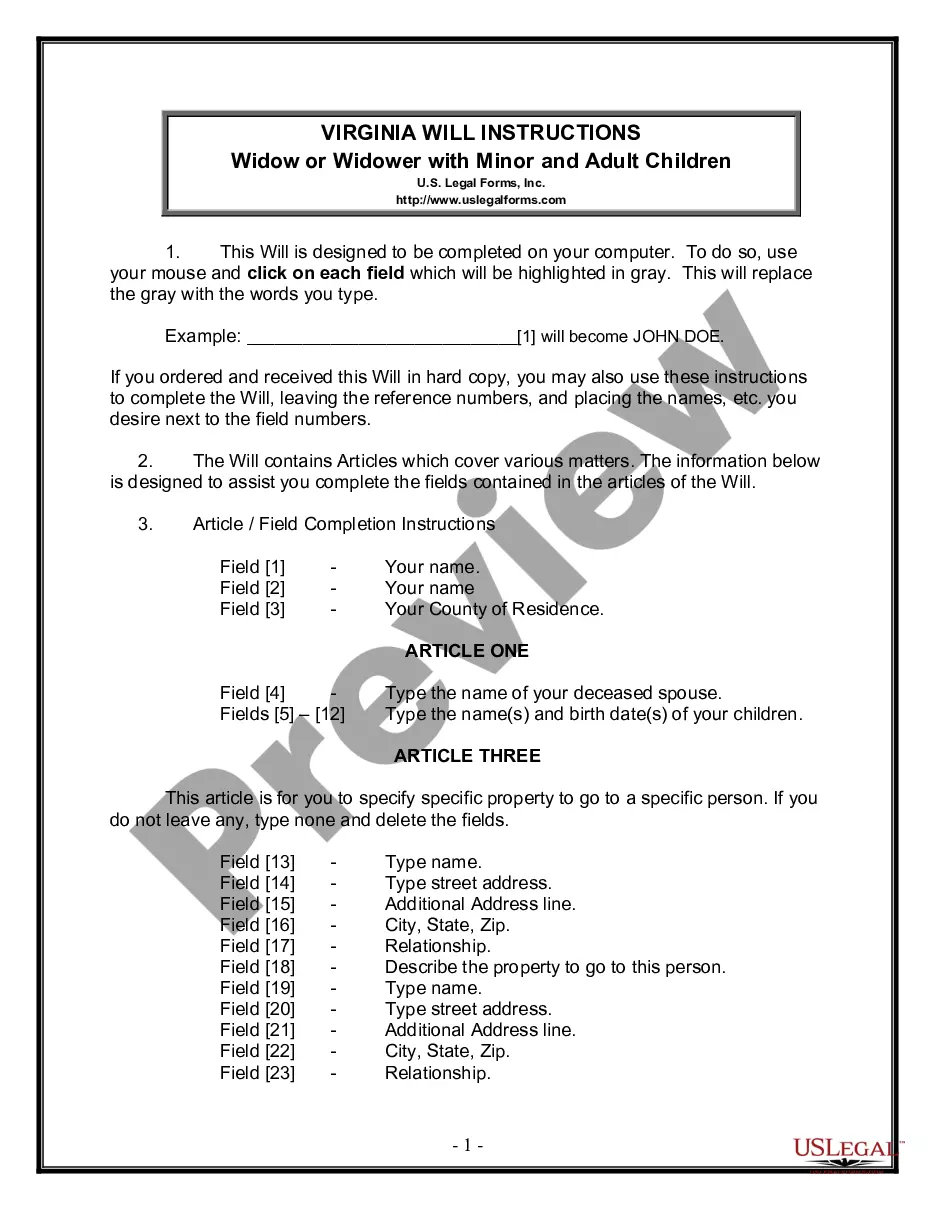
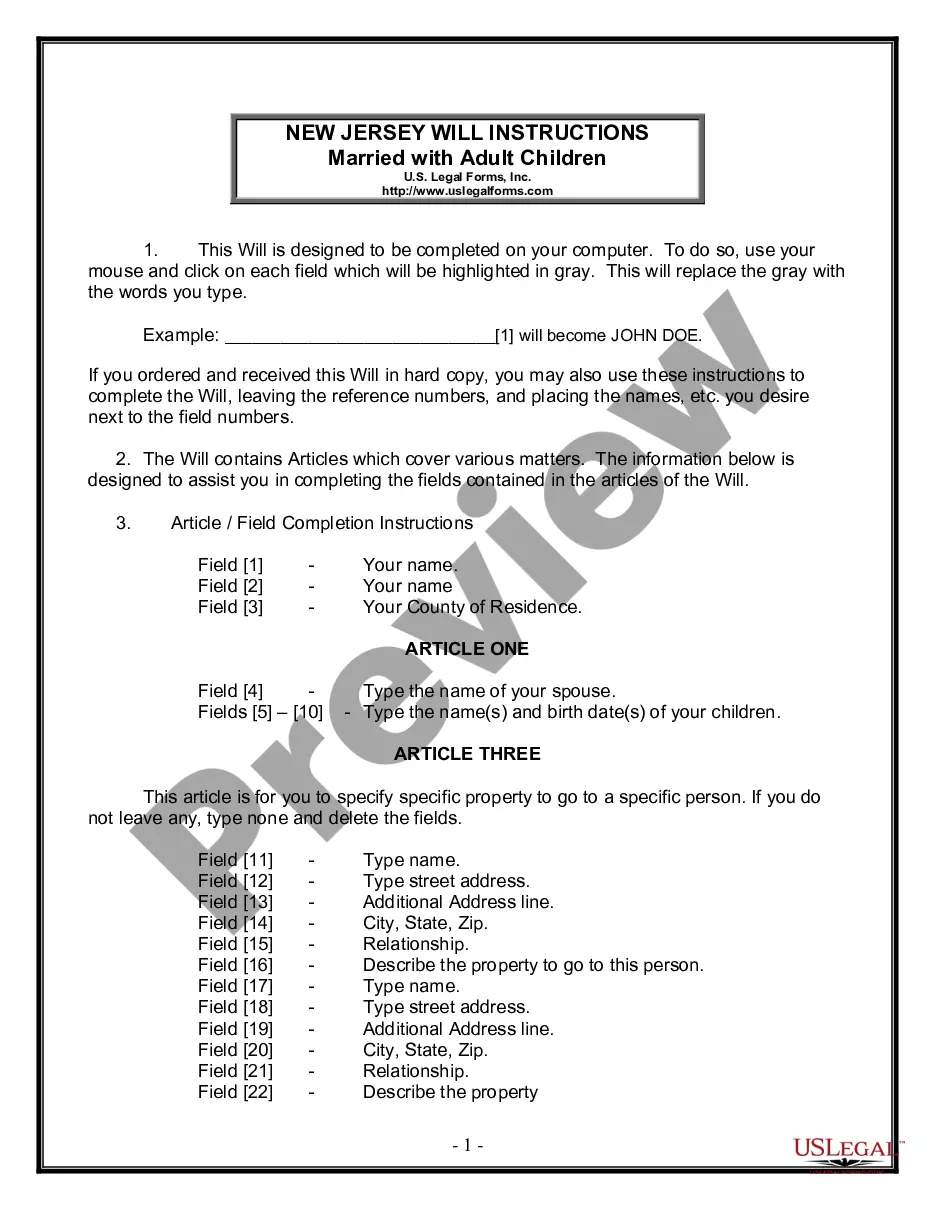
- Start by entering your full name and county of residence.
- Provide the name of your deceased spouse and your minor children.
- Specify any specific property you wish to bequeath to individuals.
- Choose a trustee to manage assets left to your minor children and detail how the trust should operate.
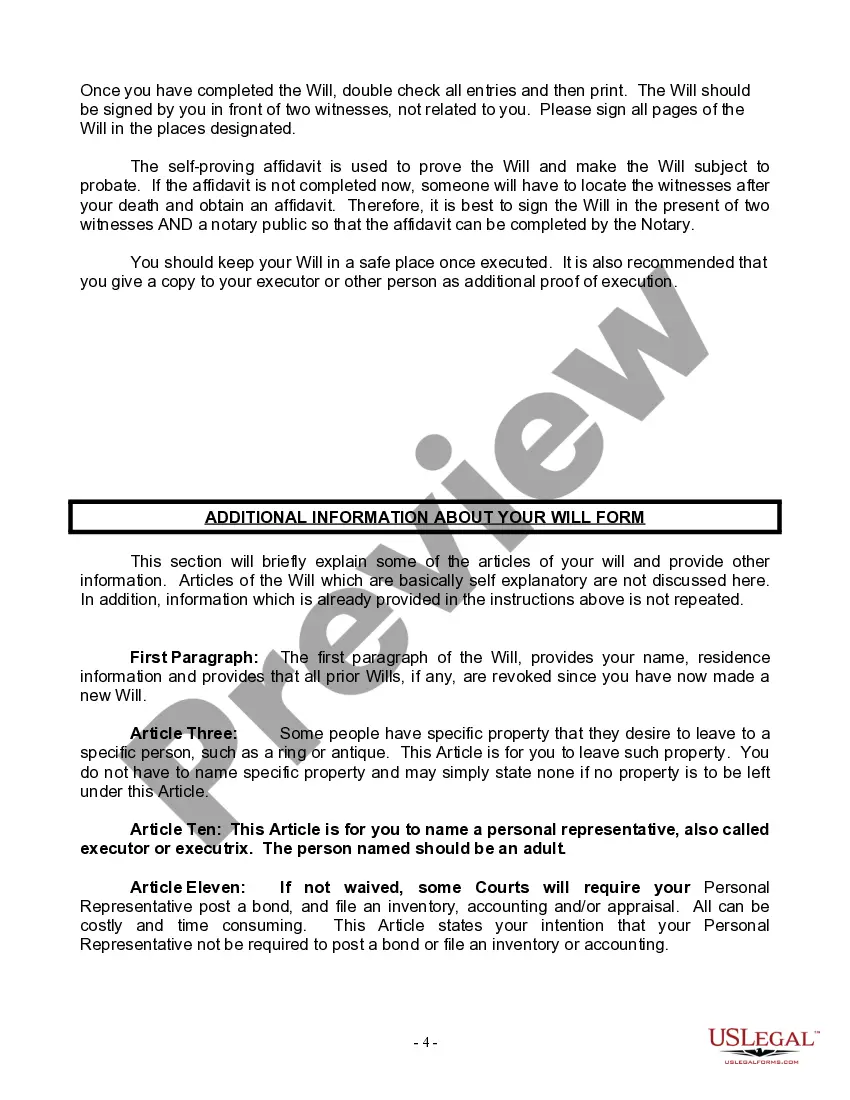
- Sign the will in front of two witnesses and include a notary public if required for the self-proving affidavit.
Does this form need to be notarized?
This document requires notarization to meet legal standards. US Legal Forms provides secure online notarization powered by Notarize, allowing you to complete the process through a verified video call, available 24/7.
Get your form ready online
Our built-in tools help you complete, sign, share, and store your documents in one place.
Make edits, fill in missing information, and update formatting in US Legal Forms—just like you would in MS Word.
Download a copy, print it, send it by email, or mail it via USPS—whatever works best for your next step.
Sign and collect signatures with our SignNow integration. Send to multiple recipients, set reminders, and more. Go Premium to unlock E-Sign.
If this form requires notarization, complete it online through a secure video call—no need to meet a notary in person or wait for an appointment.
We protect your documents and personal data by following strict security and privacy standards.

Make edits, fill in missing information, and update formatting in US Legal Forms—just like you would in MS Word.

Download a copy, print it, send it by email, or mail it via USPS—whatever works best for your next step.

Sign and collect signatures with our SignNow integration. Send to multiple recipients, set reminders, and more. Go Premium to unlock E-Sign.

If this form requires notarization, complete it online through a secure video call—no need to meet a notary in person or wait for an appointment.

We protect your documents and personal data by following strict security and privacy standards.
Mistakes to watch out for
- Failing to sign the will in front of the required witnesses.
- Not clearly specifying guardians or trustees for minor children.
- Omitting important details about specific properties or assets.
- Not obtaining notarization when required by state laws.
Benefits of using this form online
- Convenience of completing the form from home at your own pace.
- Editability allows you to make changes easily before finalizing your wishes.
- Access to professionally drafted templates created by licensed attorneys.
- Secure storage options for your completed will, ensuring it is safely kept.
Looking for another form?


Form popularity
FAQ
In Virginia, the signing of a will must generally be witnessed by two competent persons, who also must sign the will in front of the testator.Although the law does not require a will to be notarized, it is a highly recommended practice followed by most lawyers.
A self-proving will, is a will that has been certified and acknowledged in advance of probate. The affidavit contains sworn statements attesting that the testator signed their will freely and without any coercion.
In Virginia, the signing of a will must generally be witnessed by two competent persons, who also must sign the will in front of the testator.Although the law does not require a will to be notarized, it is a highly recommended practice followed by most lawyers.
Self-written wills are typically valid, even when handwritten, as long as they're properly witnessed and notarized, or proven in court. A handwritten will that is not witnessed or notarized is considered a holographic will. Not all states accept holographic wills .
You can make your own will in Virginia, using Nolo's do-it-yourself will software or online will programs. However, you may want to consult a lawyer in some situations. For example, if you think that your will might be contested or if you want to disinherit your spouse, you should talk with an attorney.
A holographic will is a handwritten will which can be valid in Virginia as long that it is either entirely in the testator's sole handwriting and is proven by two disinterested witnesses or it is signed by the testator in the presence of two competent witnesses who countersign the document.
Virginia is a common law property state. This means that in cases of intestacy, the estate is automatically inherited by the spouse.Therefore, if there is a surviving spouse, the spouse will receive the deceased's portion of all marital properties.
A person can expect for the probate process in Virginia to take anywhere from six months up to a year or more. Generally, there is a creditor period, so an estate cannot be completely distributed and closed prior to the expiration of the six-month period.
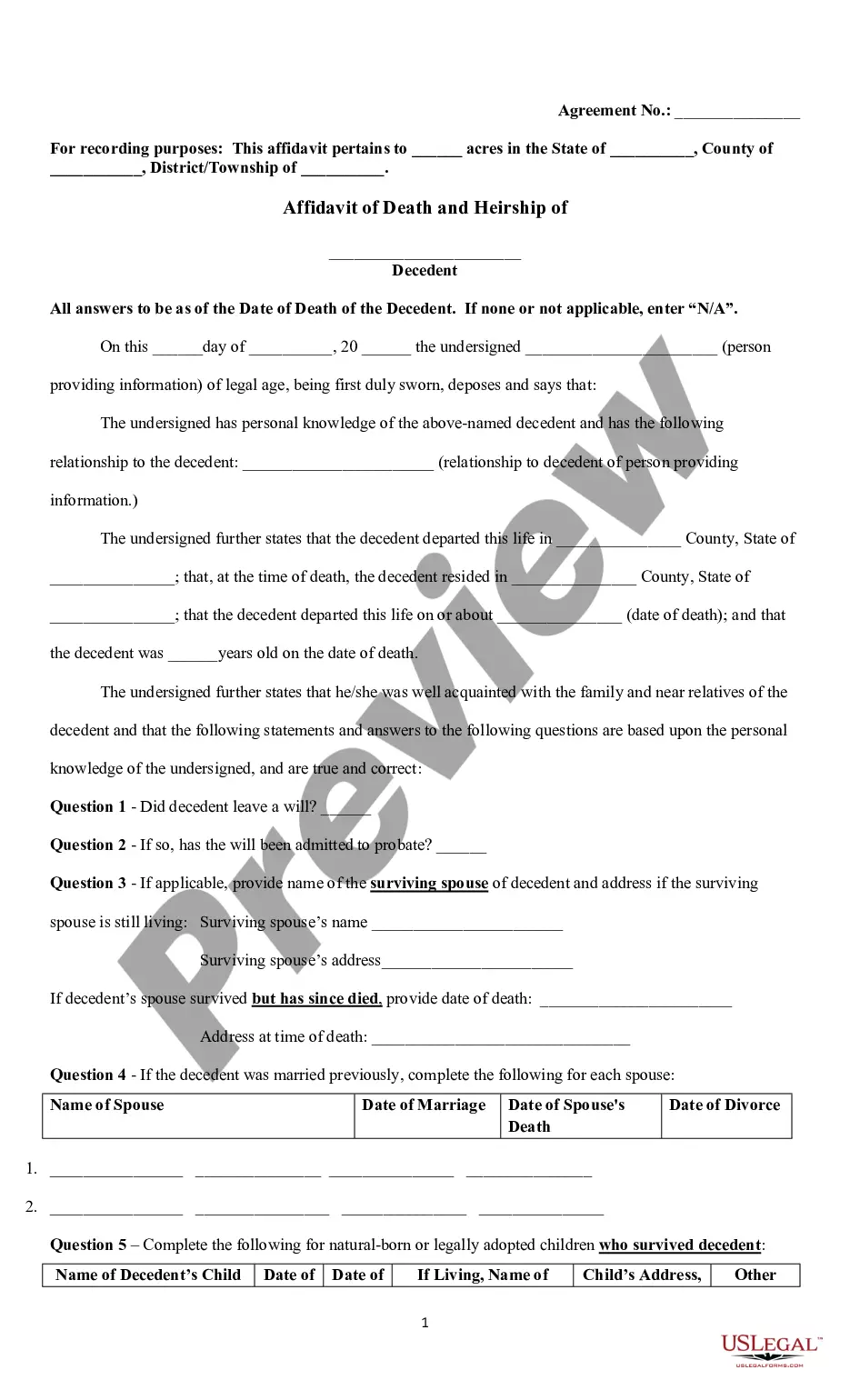
Heirs/Heirs at Law: the persons who would inherit the decedent's estate if the decedent died intestate, as determined by law at the time of the decedent's death.