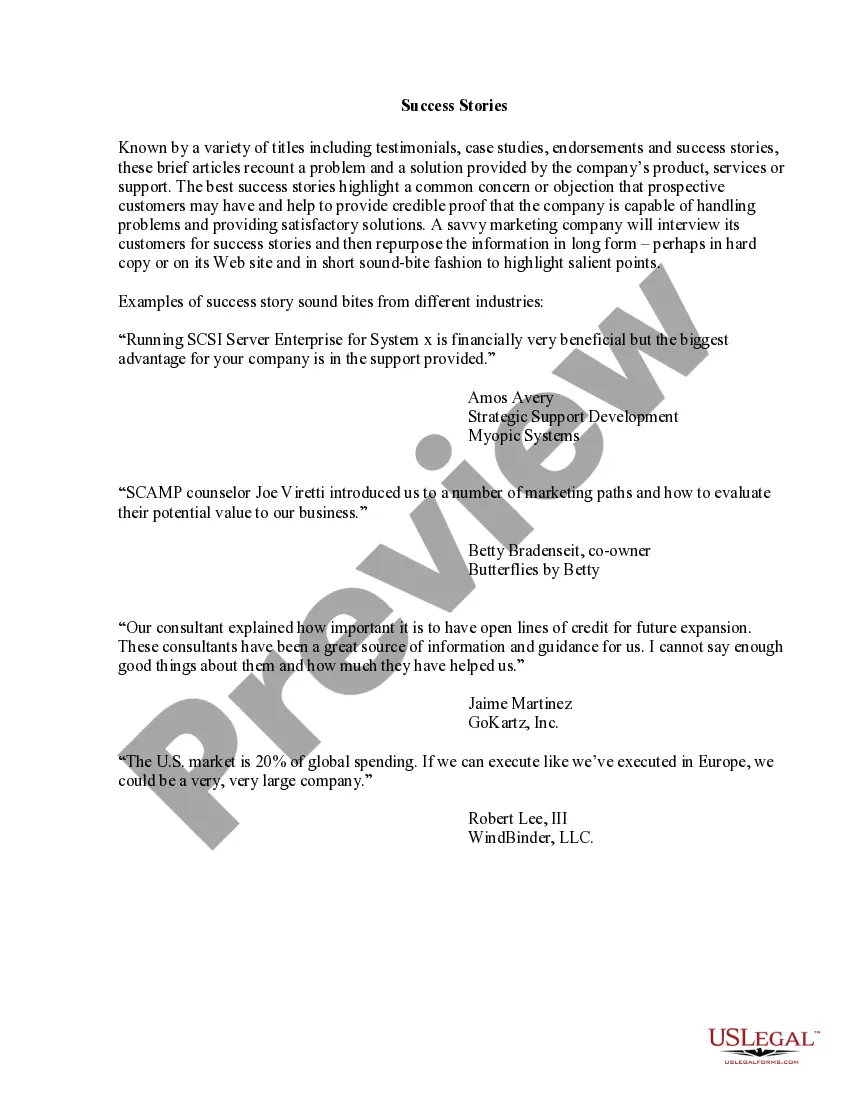
Virginia Inventory and Condition of Leased Premises for Pre Lease and Post Lease
What is this form?
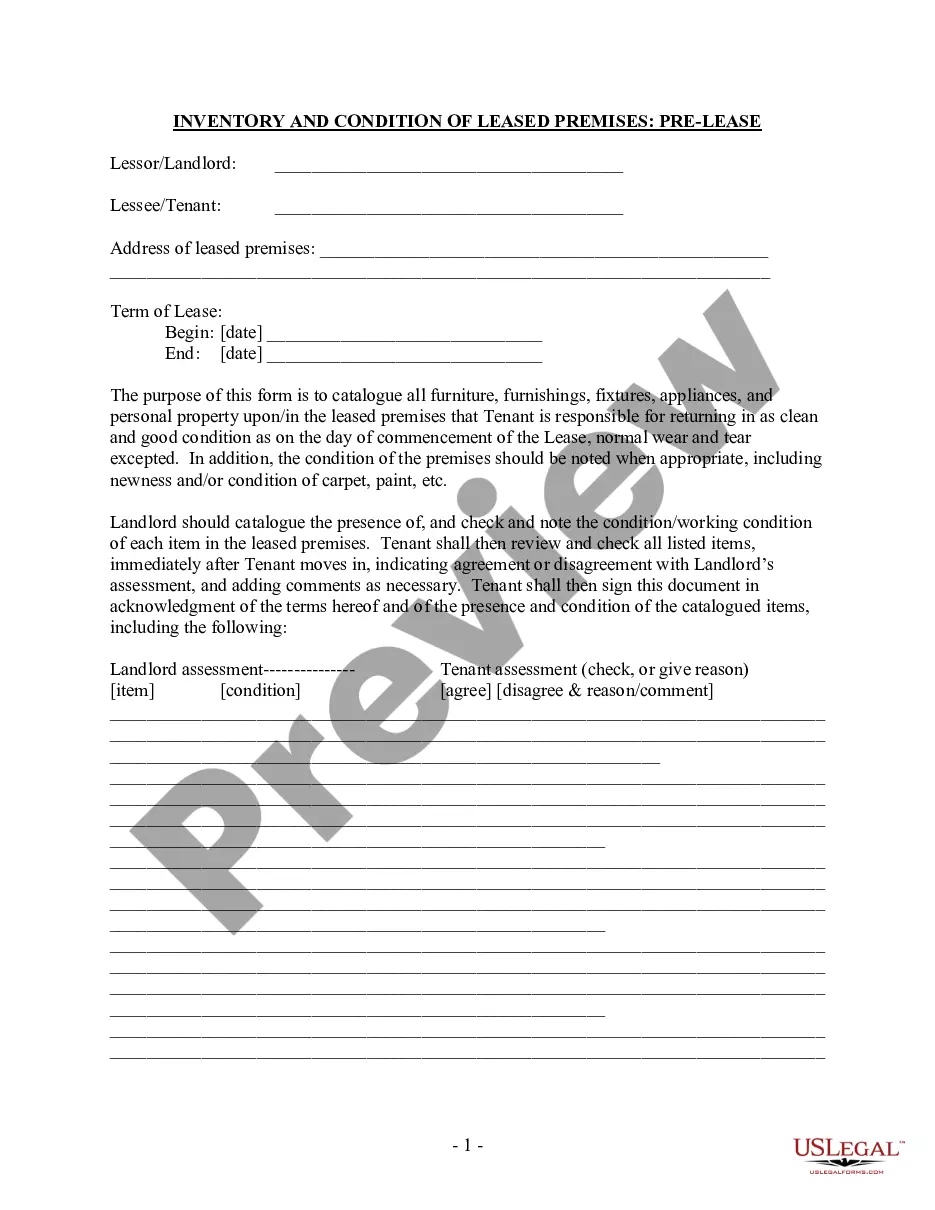
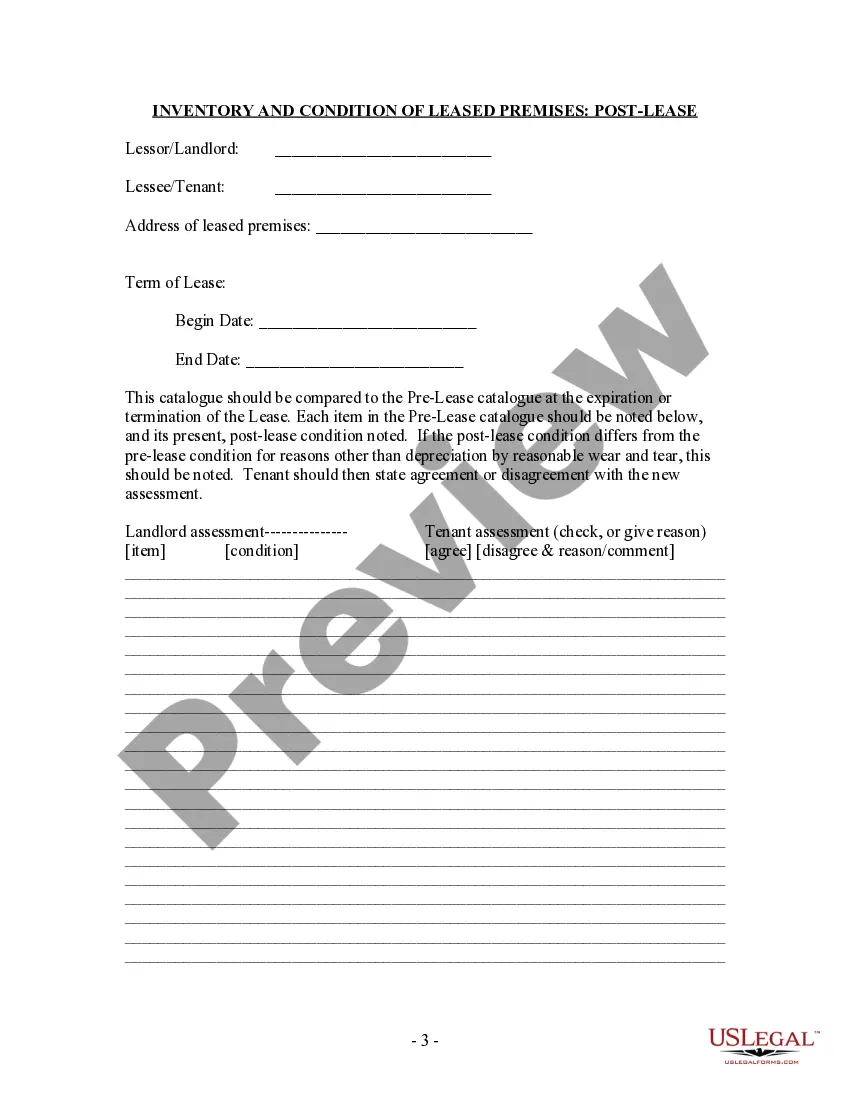
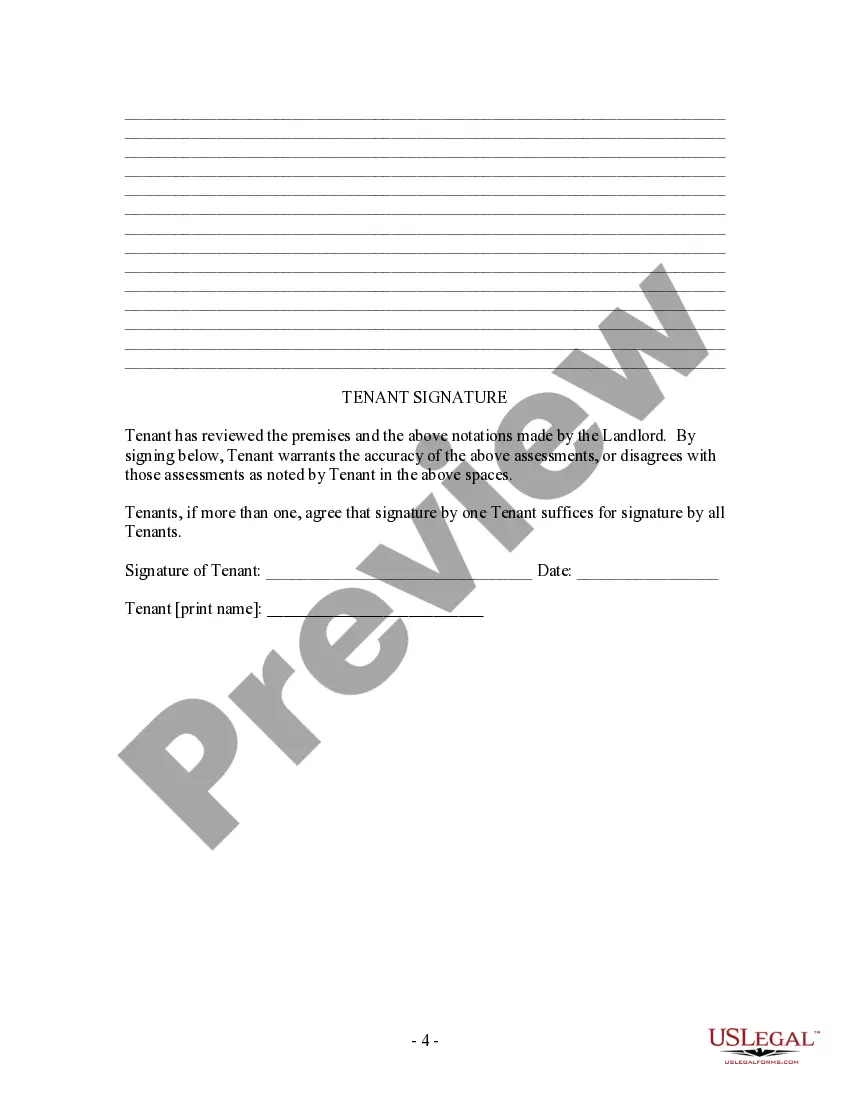
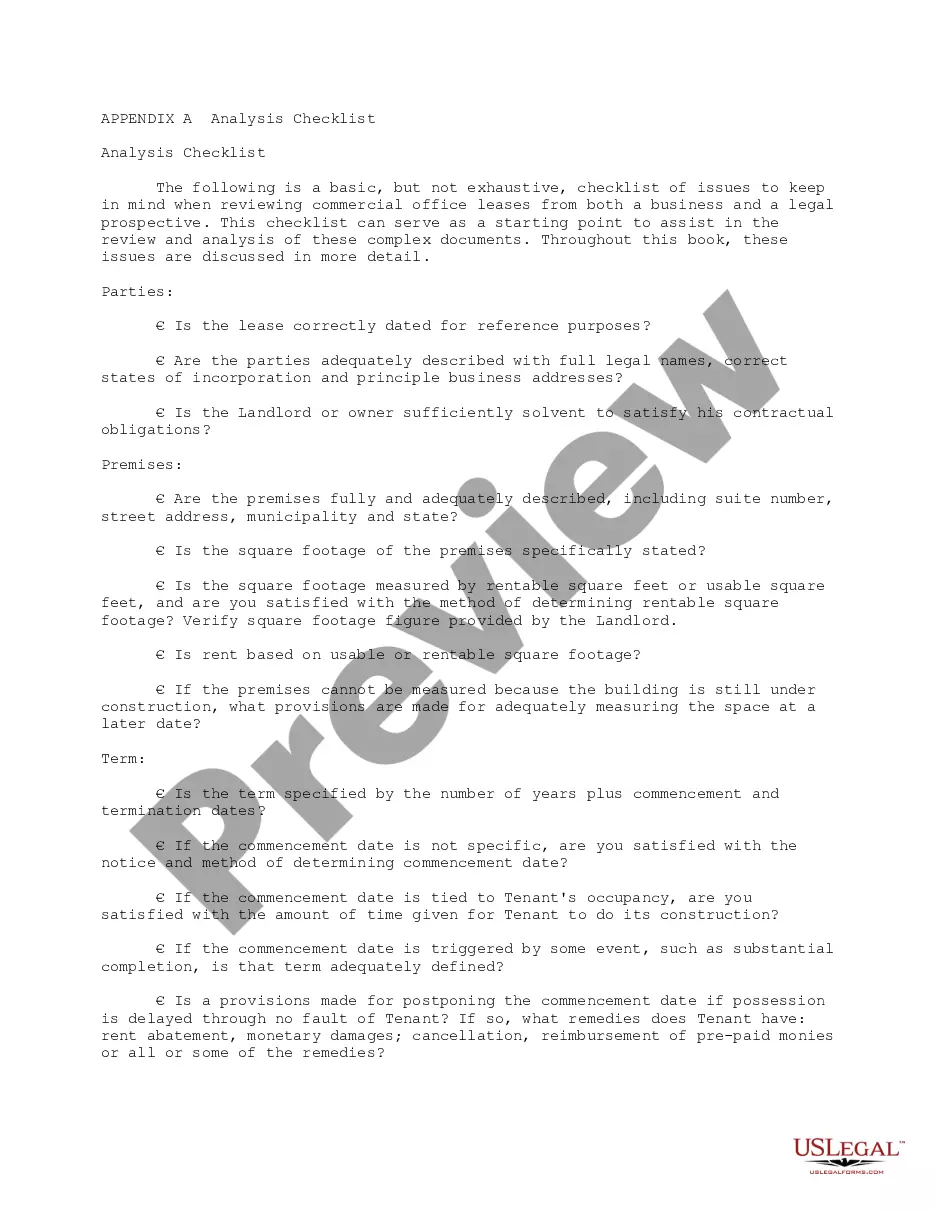
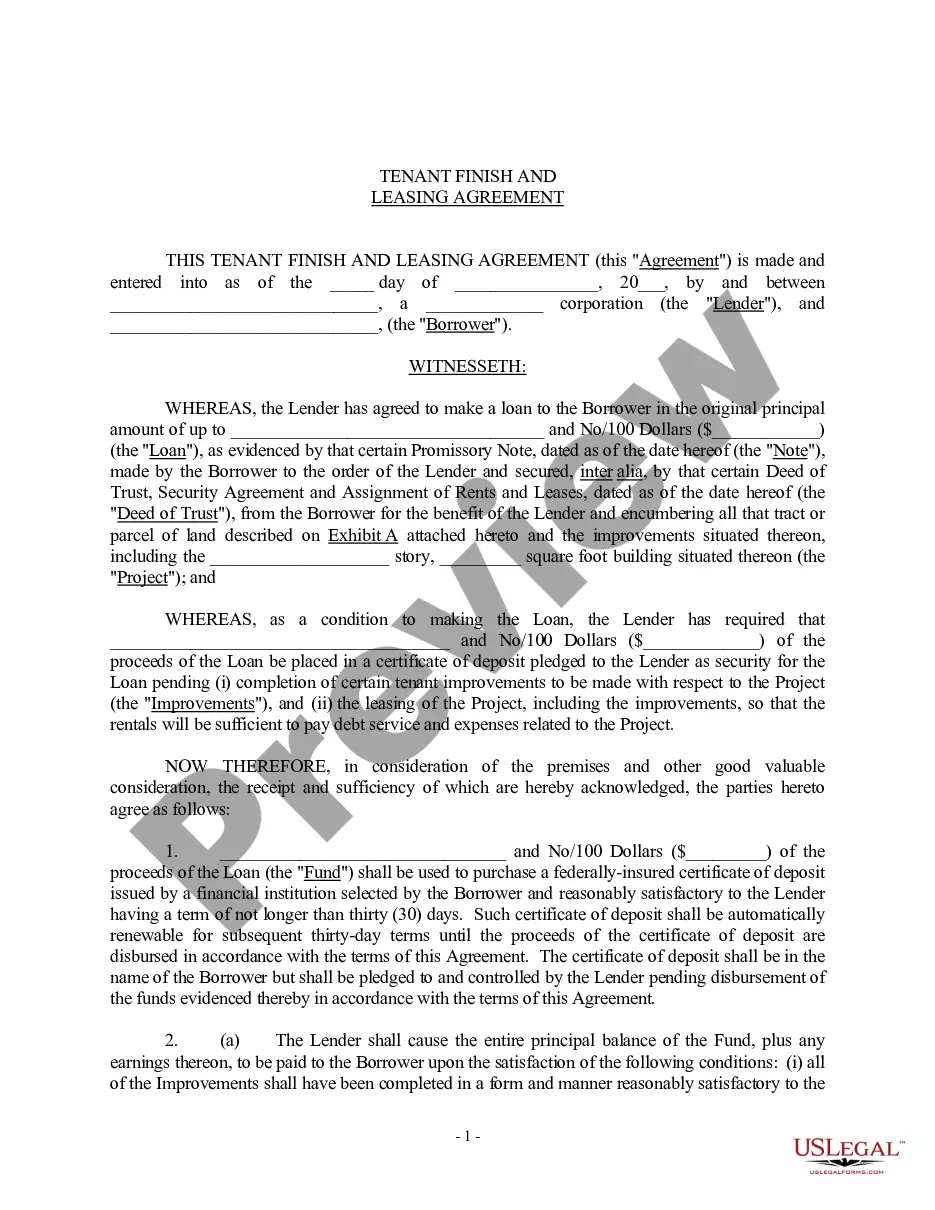
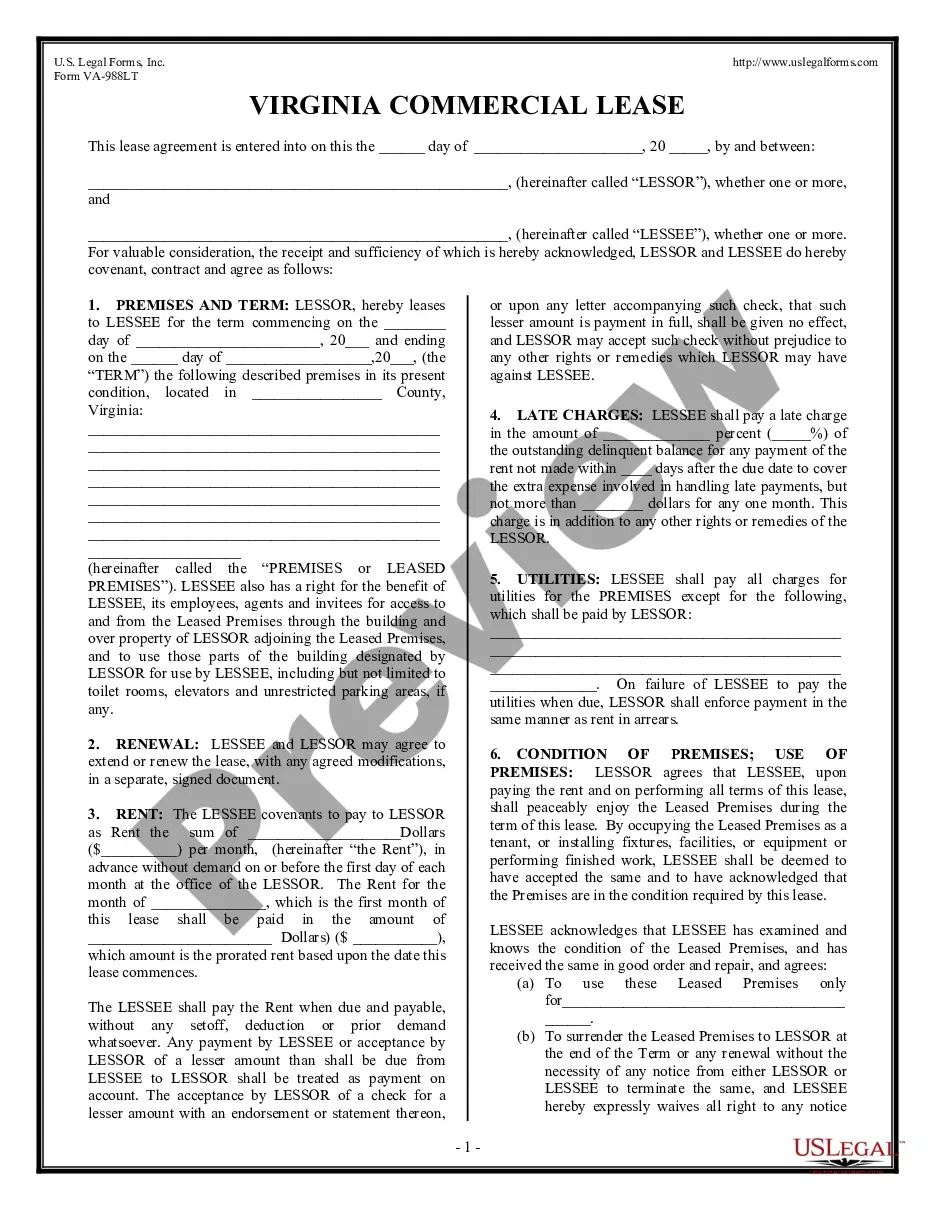
The Inventory and Condition of Leased Premises for Pre Lease and Post Lease is a legal document used by tenants and landlords to document the condition and inventory of a rental property before and after the lease term. This form serves to protect both parties by clearly defining the state of the property and its contents upon moving in and out, differentiating it from other rental agreements. It ensures that tenants return the property in good condition, accounting for normal wear and tear.
Key components of this form
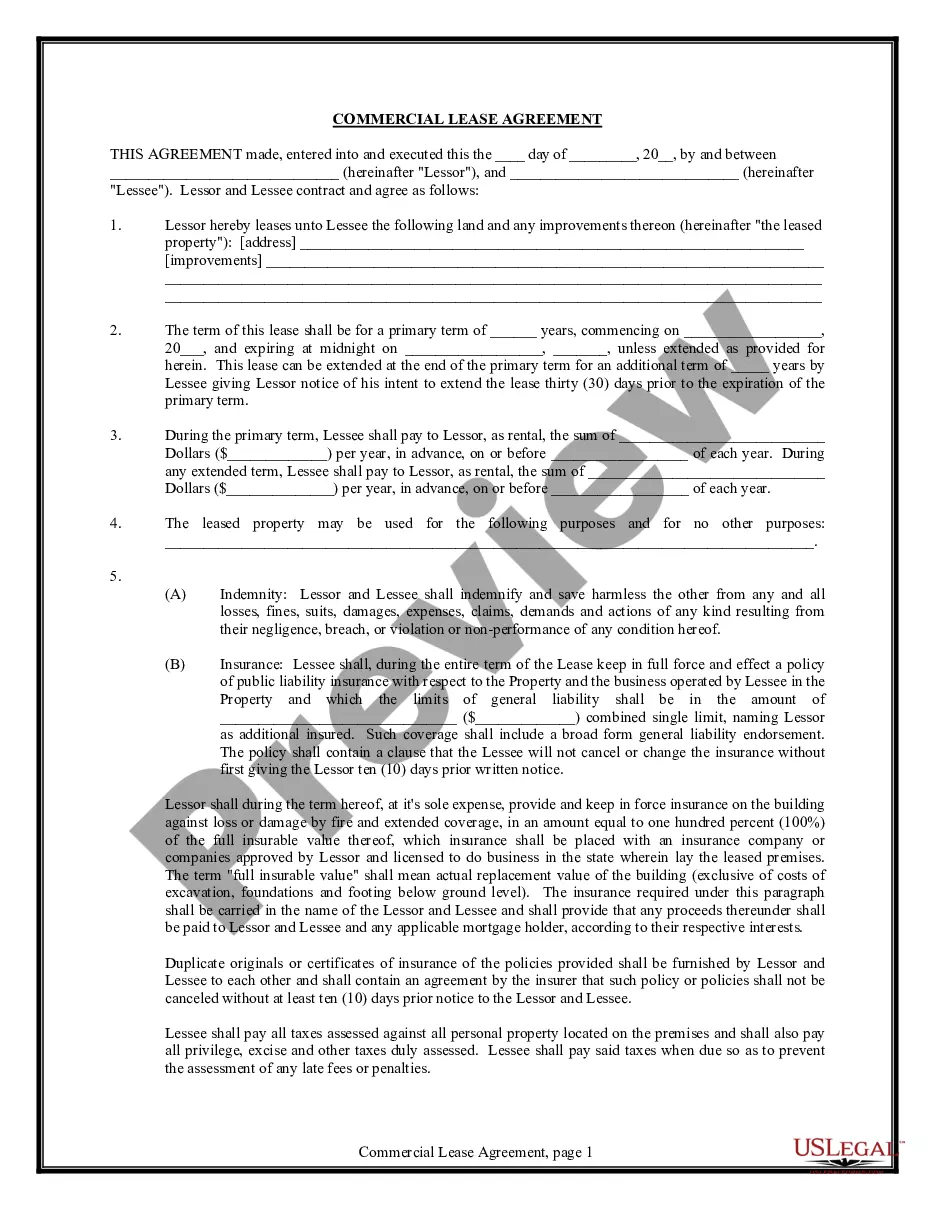
- Identification of lessor/landlord and lessee/tenant.
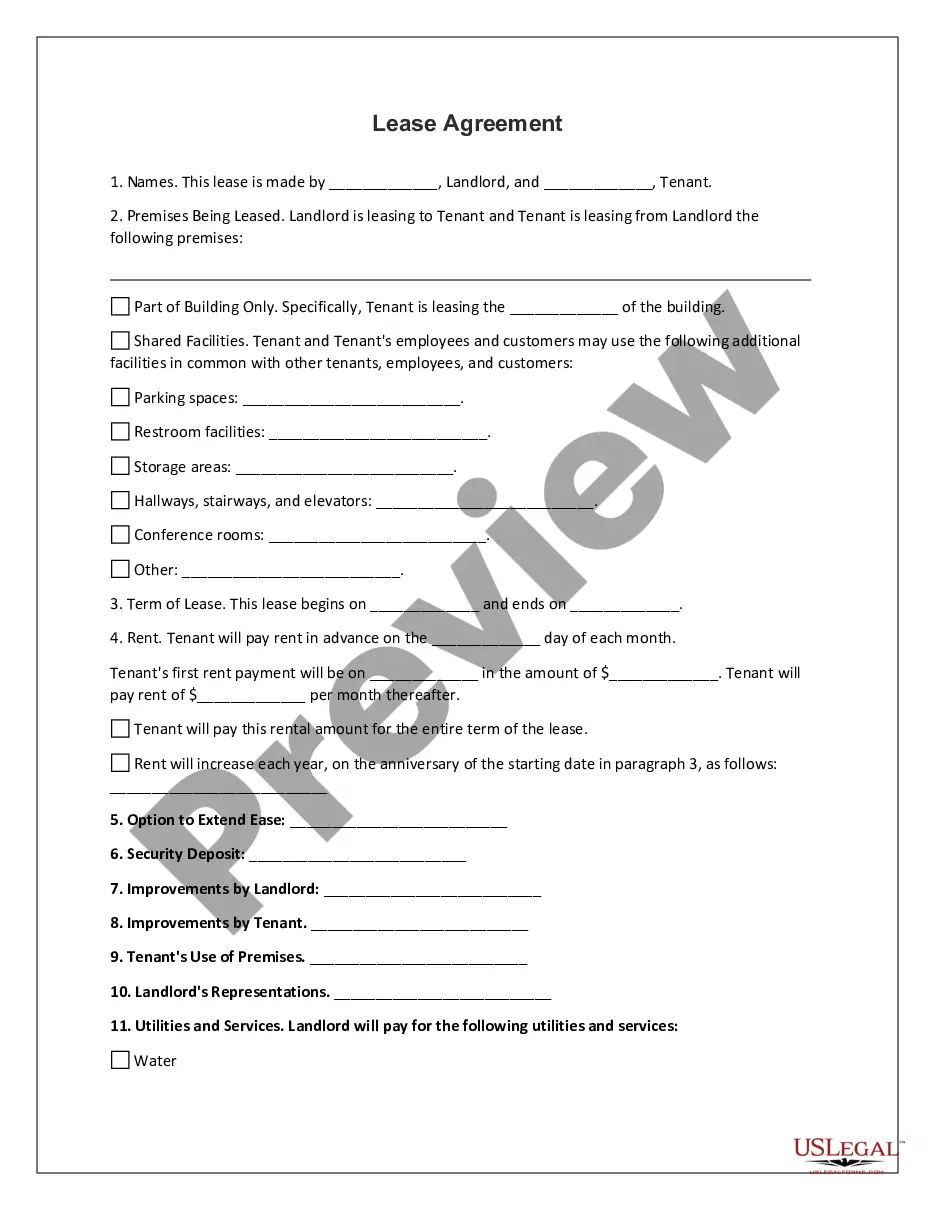
- Address of the leased premises and duration of the lease.
- Inventory of all furniture, fixtures, appliances, and their conditions.
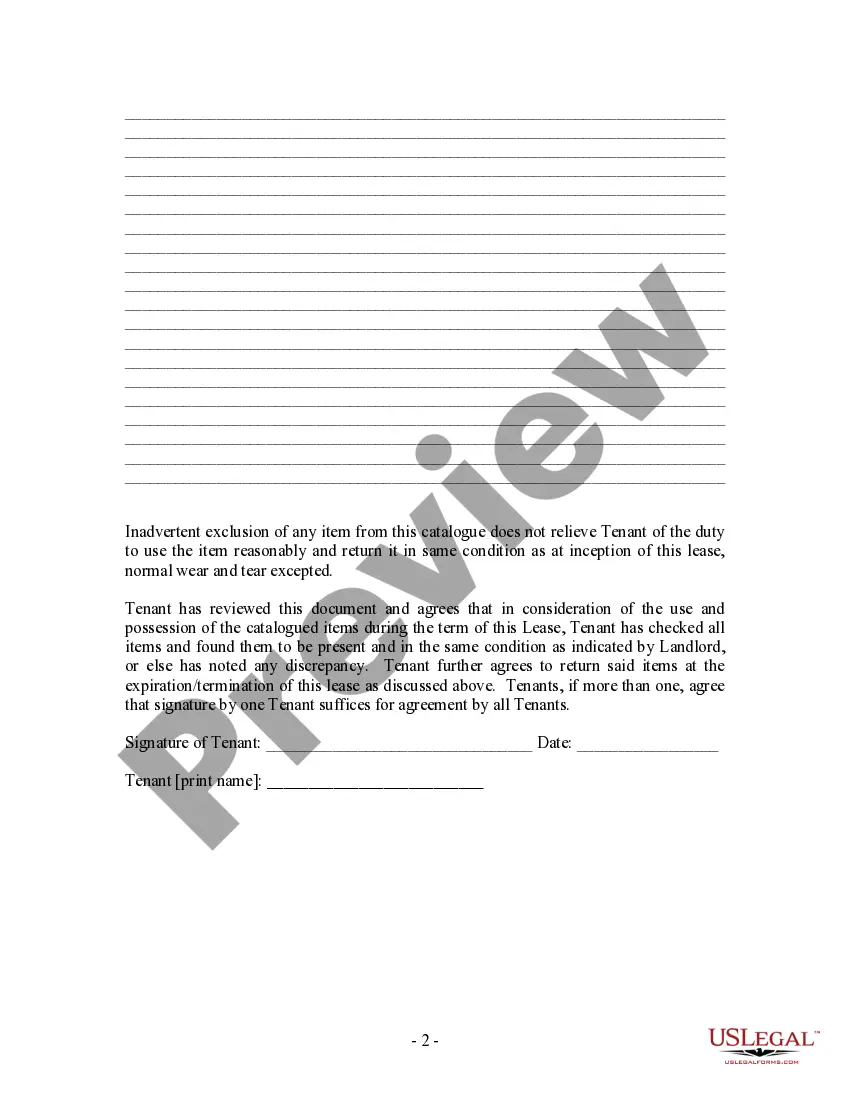
- Sections for landlord and tenant to assess and note discrepancies.
- Signatures of both parties to acknowledge agreement on the condition upon move-in and move-out.
When to use this document
This form is necessary when entering a lease agreement for rental property. It should be completed both at the beginning and end of the lease term. This document is particularly important for protecting the rights of both tenants and landlords, especially when there is significant furniture or personal property in the rental space. It is also useful in preventing disputes regarding the condition of the property and its contents during the lease term.
Who needs this form
This form is intended for:
- Landlords renting out residential or commercial properties.
- Tenants moving into a leased property.
- Property managers overseeing rental agreements.
- Anyone involved in a lease agreement needing to document property conditions.
How to complete this form
- Identify the parties involved by entering the landlord's and tenant's names.
- Provide the address of the leased premises and the lease term dates.
- Catalog all items present in the property, noting their initial condition based on the landlordâs assessment.
- Have the tenant review the inventory and indicate agreement or disagreement with any discrepancies.
- Both parties should sign the document to acknowledge their agreement on the inventory and condition.
Notarization guidance
Notarization is not commonly needed for this form. However, certain documents or local rules may make it necessary. Our notarization service, powered by Notarize, allows you to finalize it securely online anytime, day or night.
Get your form ready online
Our built-in tools help you complete, sign, share, and store your documents in one place.
Make edits, fill in missing information, and update formatting in US Legal Forms—just like you would in MS Word.
Download a copy, print it, send it by email, or mail it via USPS—whatever works best for your next step.
Sign and collect signatures with our SignNow integration. Send to multiple recipients, set reminders, and more. Go Premium to unlock E-Sign.
If this form requires notarization, complete it online through a secure video call—no need to meet a notary in person or wait for an appointment.
We protect your documents and personal data by following strict security and privacy standards.
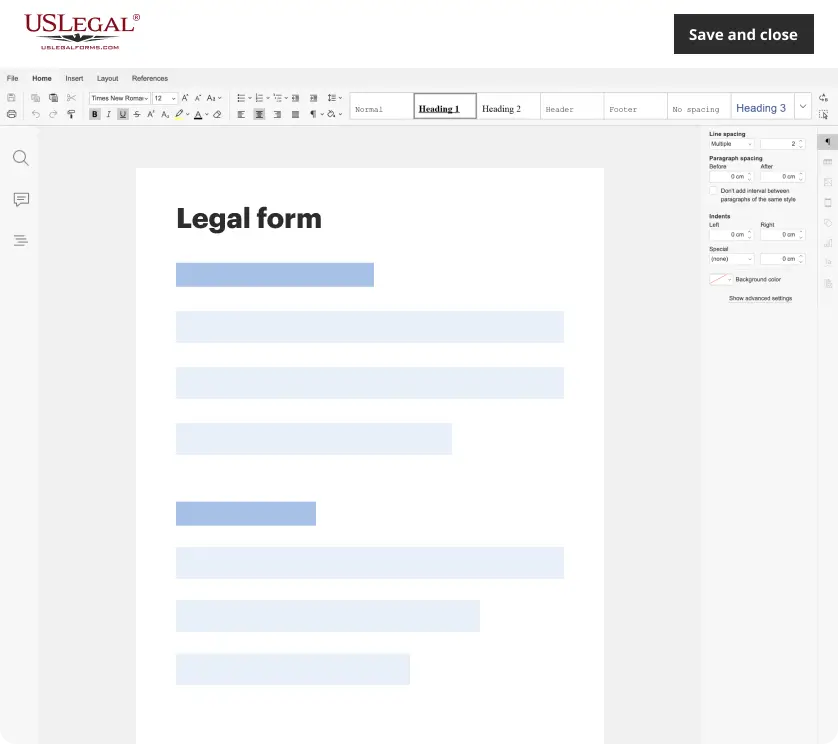
Make edits, fill in missing information, and update formatting in US Legal Forms—just like you would in MS Word.
Download a copy, print it, send it by email, or mail it via USPS—whatever works best for your next step.
Sign and collect signatures with our SignNow integration. Send to multiple recipients, set reminders, and more. Go Premium to unlock E-Sign.

If this form requires notarization, complete it online through a secure video call—no need to meet a notary in person or wait for an appointment.
We protect your documents and personal data by following strict security and privacy standards.
Typical mistakes to avoid
- Failing to write down all items present in the premises.
- Not specifying the condition of items clearly, leading to future disputes.
- Overlooking tenant comments on the condition after move-in.
- Not having both parties sign the form, which affects its enforceability.
Why use this form online
- Convenience of easy access and download from home.
- Editability allows for customization specific to your lease situation.
- Reliability of using a legally vetted form drafted by licensed attorneys.
- Instant availability without the need for an in-person consultation.
Legal use & context
- This form provides legal documentation of the condition of property for resolution of any disputes regarding damages.
- Enforceable in court if both parties agree to the assessments recorded.
- Helps in establishing accountability for damages beyond normal wear and tear at the end of the lease.
Main things to remember
- The Inventory and Condition of Leased Premises form is essential for documenting property condition before and after lease terms.
- Proper use of this form can prevent disputes between tenants and landlords.
- Ensure all items and conditions are thoroughly noted and agreed upon prior to moving in and out.
Looking for another form?

Form popularity
FAQ
The four types of inventory most commonly used are Raw Materials, Work-In-Progress (WIP), Finished Goods, and Maintenance, Repair, and Overhaul (MRO). When you know the type of inventory you have, you can make better financial decisions for your supply chain.
There are four main types of inventory: raw materials/components, WIP, finished goods and MRO.
Inventory is the goods and materials a business acquires, produces or manufactures, for the purpose of manufacturing, selling or exchanging. Also known as trading stock.
Inventory is an idle stock of physical goods that contain economic value, and are held in various forms by an organization in its custody awaiting packing, processing, transformation, use or sale in a future point of time.
Inventory is the array of finished goods or goods used in production held by a company. Inventory is classified as a current asset on a company's balance sheet, and it serves as a buffer between manufacturing and order fulfillment.
5 Basic types of inventories are raw materials, work-in-progress, finished goods, packing material, and MRO supplies. Inventories are also classified as merchandise and manufacturing inventory.
Average inventory formula: Take your beginning inventory for a given period of time (usually a month). Add that number to your end of period inventory (month, season, or year), and then divide by 2 (or 7, 13, etc). (Beginning of Month Inventory + End of Month Inventory) ÷ 2 = Average Inventory (Month)
Inventory refers to all the items, goods, merchandise, and materials held by a business for selling in the market to earn a profit. Example: If a newspaper vendor uses a vehicle to deliver newspapers to the customers, only the newspaper will be considered inventory. The vehicle will be treated as an asset.
There are two main types of inventory systems, the perpetual inventory system and the periodic inventory system.