Virginia Bill of Sale of Automobile and Odometer Statement
About this form
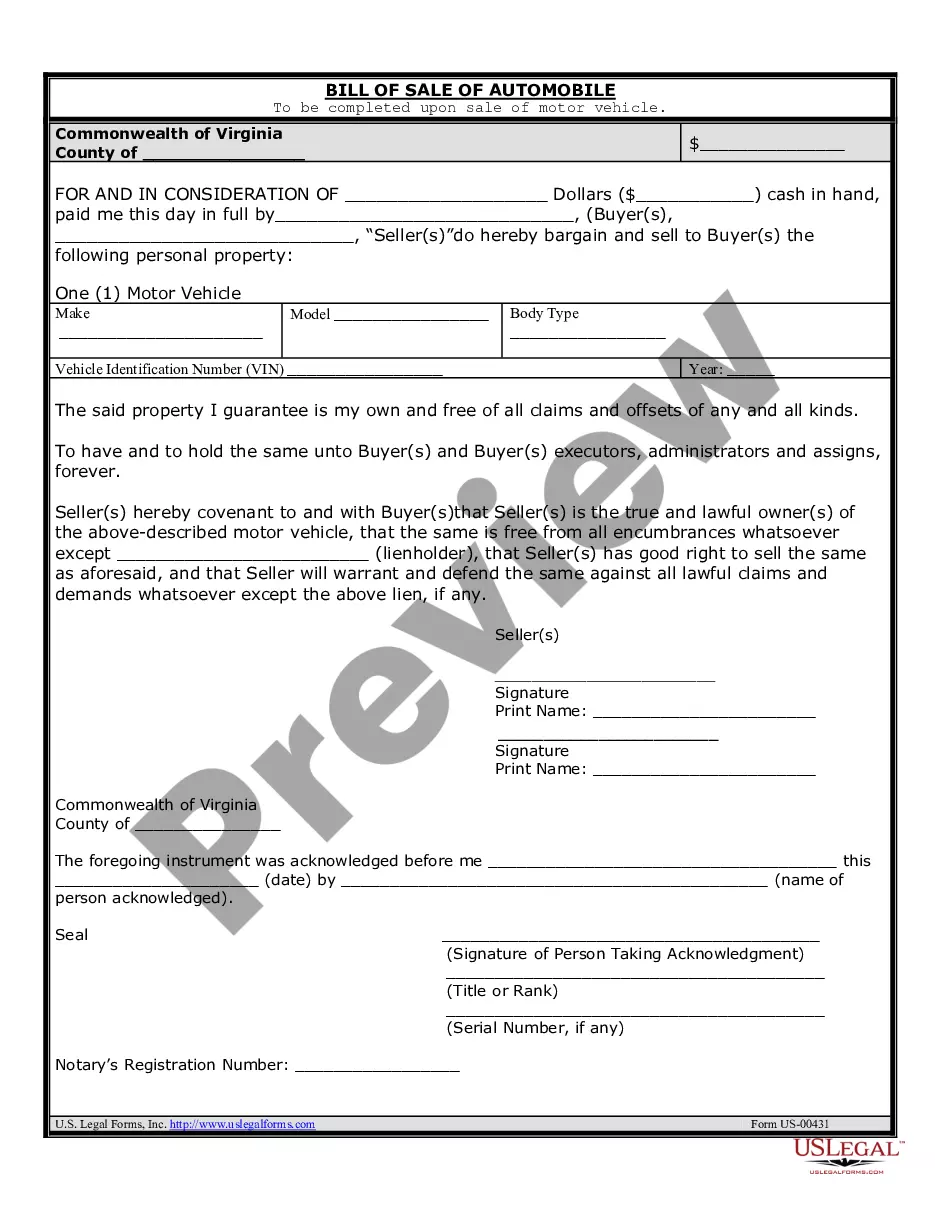
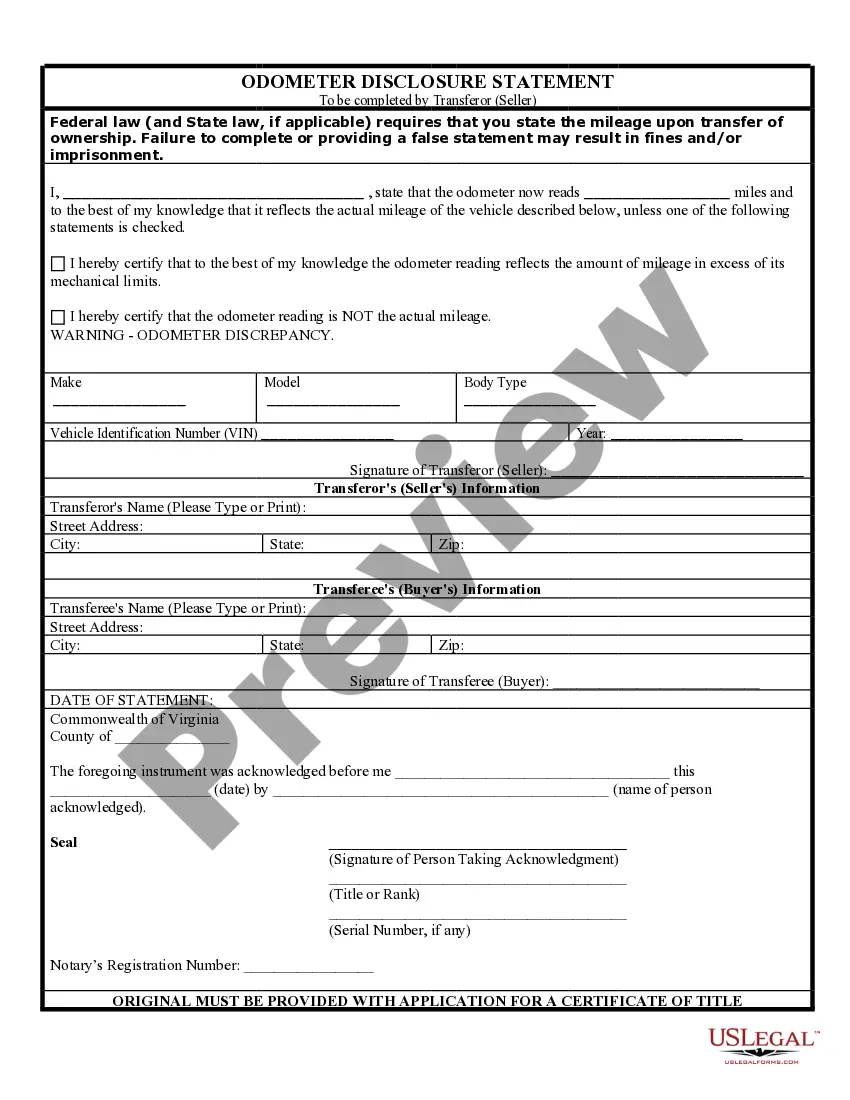
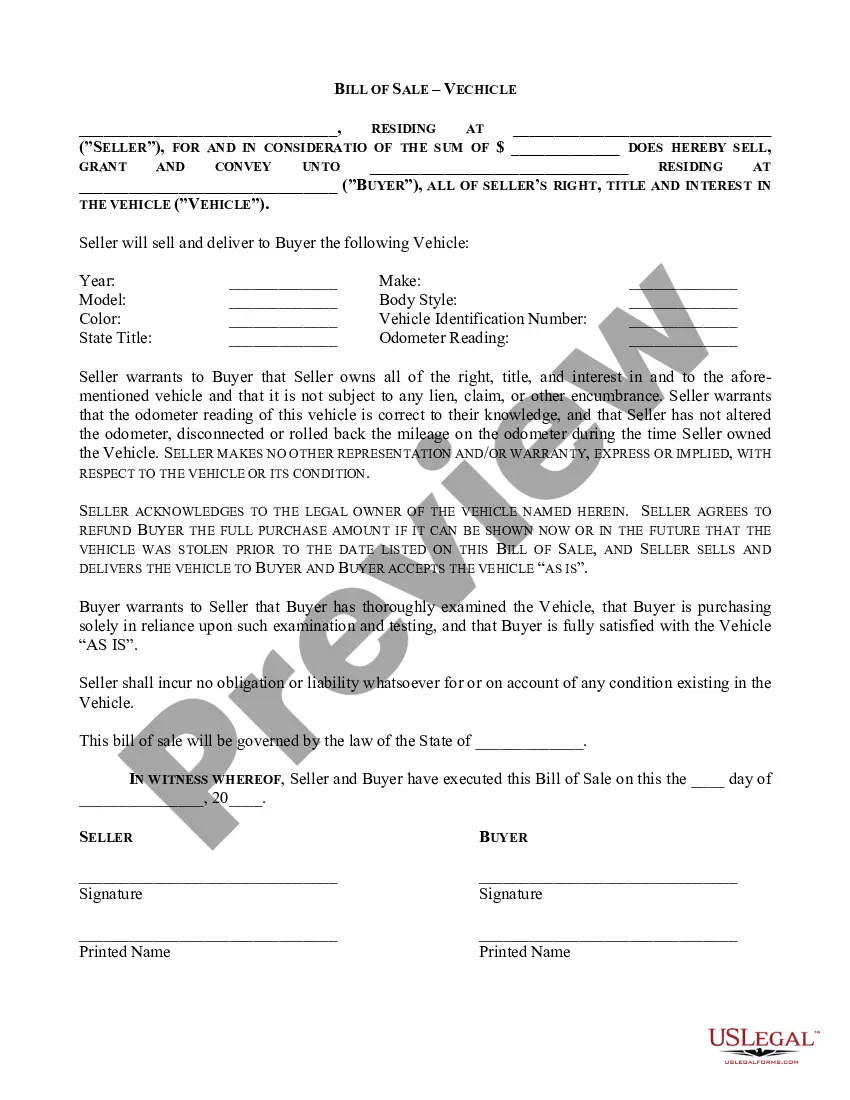
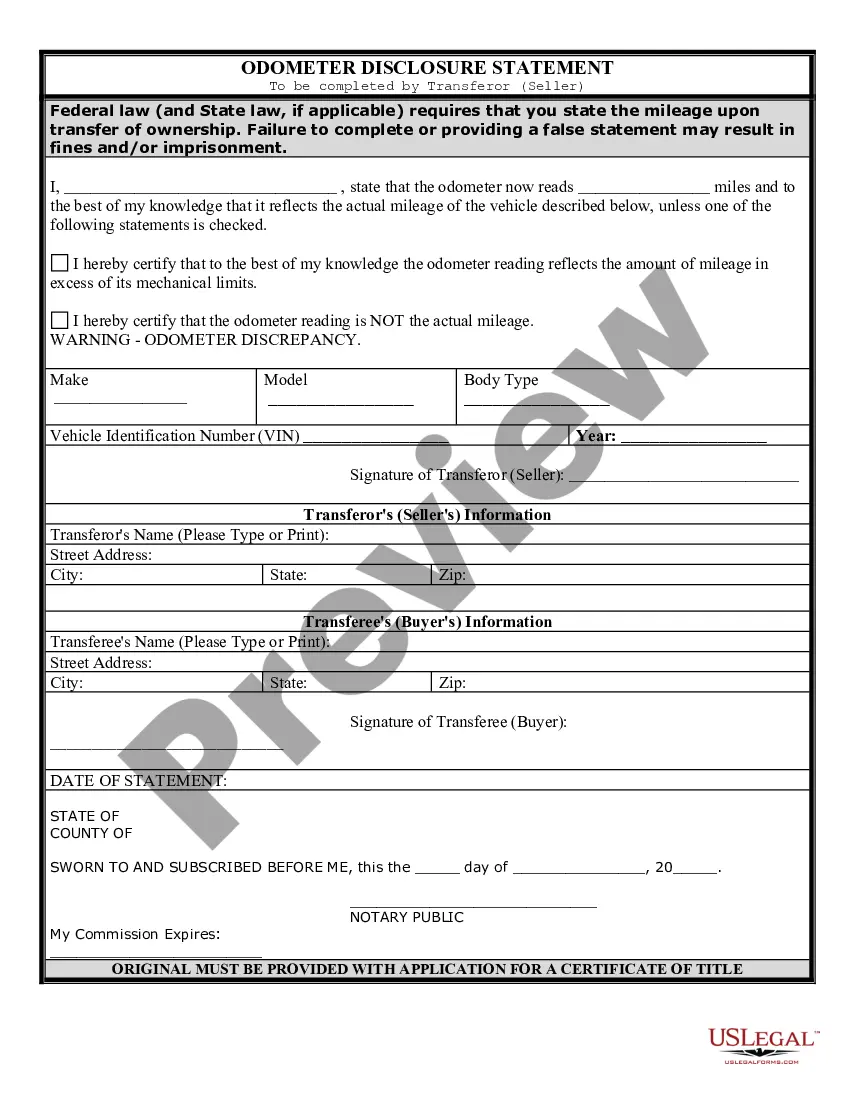
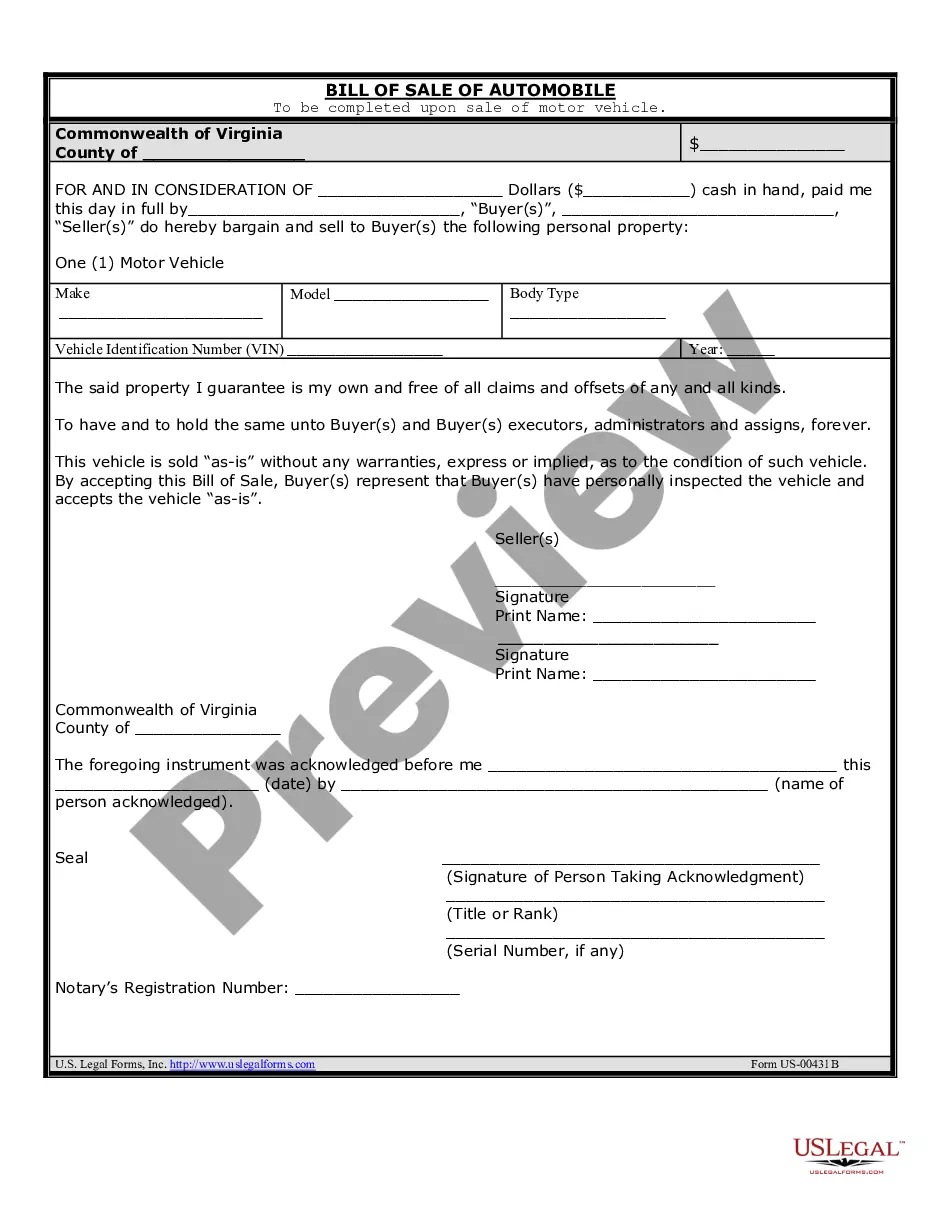
The Bill of Sale of Automobile is a legal document that formalizes the transfer of ownership of a motor vehicle from the seller to the buyer. This form includes essential details such as the vehicle's make, model, VIN (Vehicle Identification Number), and the sale price. It differs from other forms of sale as it also includes an Odometer Disclosure Statement, which is a federal requirement to disclose the vehicle's mileage at the time of sale, helping to prevent odometer fraud.
Form components explained
- Identification of the seller and buyer, including names and signatures.
- Details of the motor vehicle, including make, model, body type, year, and VIN.
- Statement of ownership by the seller and warranty against claims.
- Odometer Disclosure Statement, detailing the vehicle's mileage and condition.
- Notary acknowledgment for the signatures to ensure legal validity.
Situations where this form applies
This form should be used when selling or purchasing a motor vehicle. It is particularly important to complete this document when transferring ownership to legally document the sale, provide proof of ownership, and disclose the current mileage as mandated by law. Use this form whenever you exchange payment for a vehicle, whether it's between private parties or in a small sale scenario.
Who can use this document
- Individuals selling or buying a used automobile.
- Private sellers or buyers looking to document a vehicle sale legally.
- Anyone wanting to comply with legal requirements for transferring vehicle ownership.
Instructions for completing this form
- Identify the parties involved by filling in the names of the seller and buyer.
- Specify the sale price of the vehicle and document your payment method.
- Enter the details of the vehicle, including the make, model, year, and VIN.
- Complete the Odometer Disclosure Statement with the current mileage of the vehicle.
- Both parties must sign the form in the presence of a notary public to validate the transaction.
Does this document require notarization?
Yes, this form must be notarized to be legally valid. Notarization ensures that the signatures are verified and the document is properly executed. US Legal Forms offers integrated online notarization services, making it easy to complete this requirement securely through a video call at any time.
Get your form ready online
Our built-in tools help you complete, sign, share, and store your documents in one place.
Make edits, fill in missing information, and update formatting in US Legal Forms—just like you would in MS Word.
Download a copy, print it, send it by email, or mail it via USPS—whatever works best for your next step.
Sign and collect signatures with our SignNow integration. Send to multiple recipients, set reminders, and more. Go Premium to unlock E-Sign.
If this form requires notarization, complete it online through a secure video call—no need to meet a notary in person or wait for an appointment.
We protect your documents and personal data by following strict security and privacy standards.

Make edits, fill in missing information, and update formatting in US Legal Forms—just like you would in MS Word.

Download a copy, print it, send it by email, or mail it via USPS—whatever works best for your next step.

Sign and collect signatures with our SignNow integration. Send to multiple recipients, set reminders, and more. Go Premium to unlock E-Sign.

If this form requires notarization, complete it online through a secure video call—no need to meet a notary in person or wait for an appointment.

We protect your documents and personal data by following strict security and privacy standards.
Common mistakes to avoid
- Failing to input accurate vehicle details can lead to disputes over identity.
- Not providing complete odometer information may lead to legal penalties.
- Forgetting to have the document notarized, which is often required for validity.
Benefits of completing this form online
- Convenient access to legal forms from any location without needing to visit an attorney.
- Editable templates allow users to customize the form to fit their specific transaction.
- Instant download and printing options make it easy to complete the sale promptly.
Quick recap
- The Bill of Sale of Automobile serves as proof of the vehicle's transfer of ownership.
- It includes an Odometer Disclosure Statement to verify the mileage during the sale.
- Completing the form correctly ensures both parties are protected and meets legal requirements.
- Notarization is required for the form to have legal validity.
- This form is essential for private sales and dealer transactions alike.
Looking for another form?
Form popularity
FAQ
The full names and contact information of the buyer and seller. A statement that transfers ownership of the item from the seller to the buyer. A complete description of the item being purchased. A clause indicating the item is sold "as-is"
The date of the sale. A description of the car, including its: Year, make and model. The selling price of the car. If the car is a gift or partial gift, you should still create a bill of sale. Warranty information. The full names, addresses and signatures of the buyer and seller.
The date of the sale. A description of the car, including its: Year, make and model. The selling price of the car. If the car is a gift or partial gift, you should still create a bill of sale. Warranty information. The full names, addresses and signatures of the buyer and seller.
Step 1: Organize and gather all related vehicle documentation. Step 2: Transfer the Title. Step 3: Remove the seller's license plates from the vehicle. Step 4: Inform the Virginia DMV that you have sold, traded or donated the vehicle. Step 5: Cancel your insurance.
The names, contact information, and signatures of the buyer and seller. A full description of the vehicle. The vehicle identification number or VIN. The sales price. The purchase date.
When writing a bill of sale, make sure it contains: the seller's name and address, the buyer's name and address, a description of the item being sold and if it's for a vehicle make sure to include, the vehicle identification number, the date of transaction, the previous owner, the amount paid, the method of payment and
Bills of sale in Virginia, which can be drafted by hand if necessary, do not need to be notarized. However, each document should feature the following information in order to serve its purpose: The names, contact information, and signatures of the buyer and seller. A full description of the vehicle.
Can a Bill of Sale Be Handwritten? A bill of sale is a legal document that verifies you have sold your car and provides basic information about the vehicle or any other item and the terms of the sale.As, with any legal written document a bill of sale can be handwritten.
1Photo ID.2bill of sale.3Proof of insurance.4Inspection Certificate.5A title signed over to you.6Proof of residency that matches your ID.7Be prepared to pay all titling and/or registration fees.