Maryland Quitclaim Deed - Two Individuals to Two Individuals as Joint Tenants with the Right of Survivorship
Understanding this form
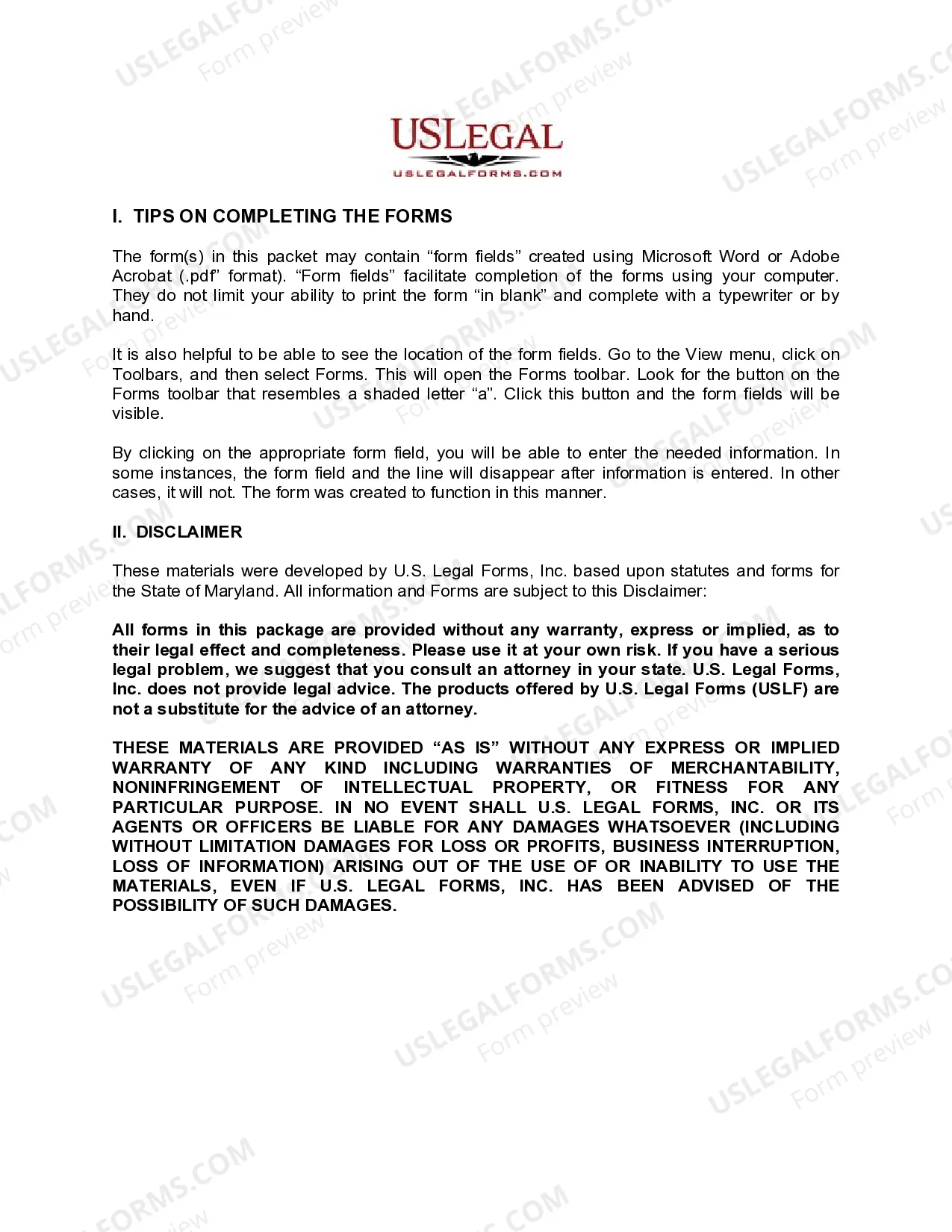
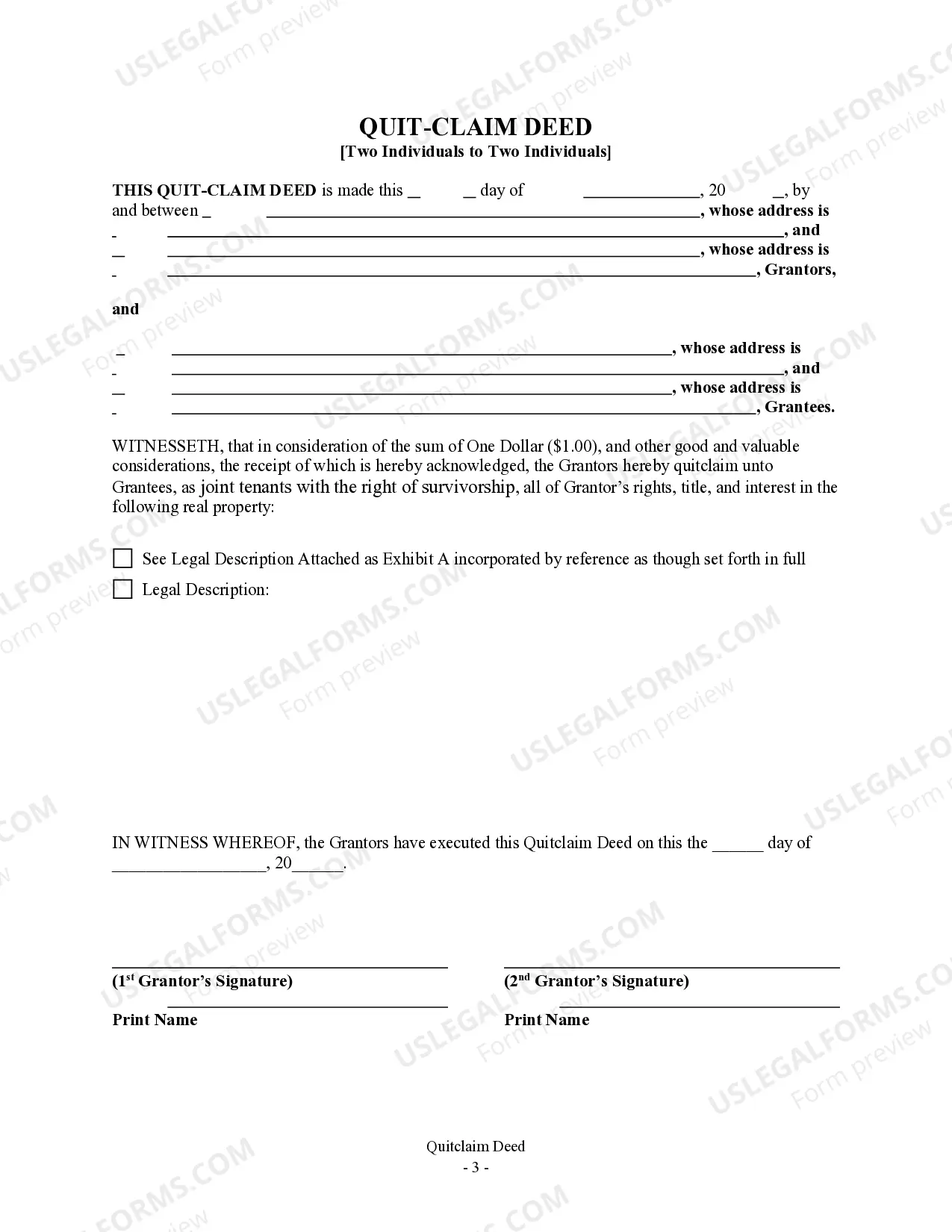
The Quitclaim Deed - Two Individuals to Two Individuals as Joint Tenants with the Right of Survivorship is a legal document that allows two individuals (the Grantors) to transfer their interest in a property to two other individuals (the Grantees). This deed is distinct from other types of property deeds, as it specifically conveys the property based on the principle of joint tenancy, meaning that both Grantees will hold equal shares in the property and have the right of survivorship. This means in the event of one Grantee's death, the surviving Grantee automatically inherits their share.
Key components of this form
- Details of the Grantors, including their names and signatures.
- Details of the Grantees, including their names, to whom the property interest is being transferred.
- A clear legal description of the property being conveyed.
- Statement indicating the transfer of interest is being made with the right of survivorship.
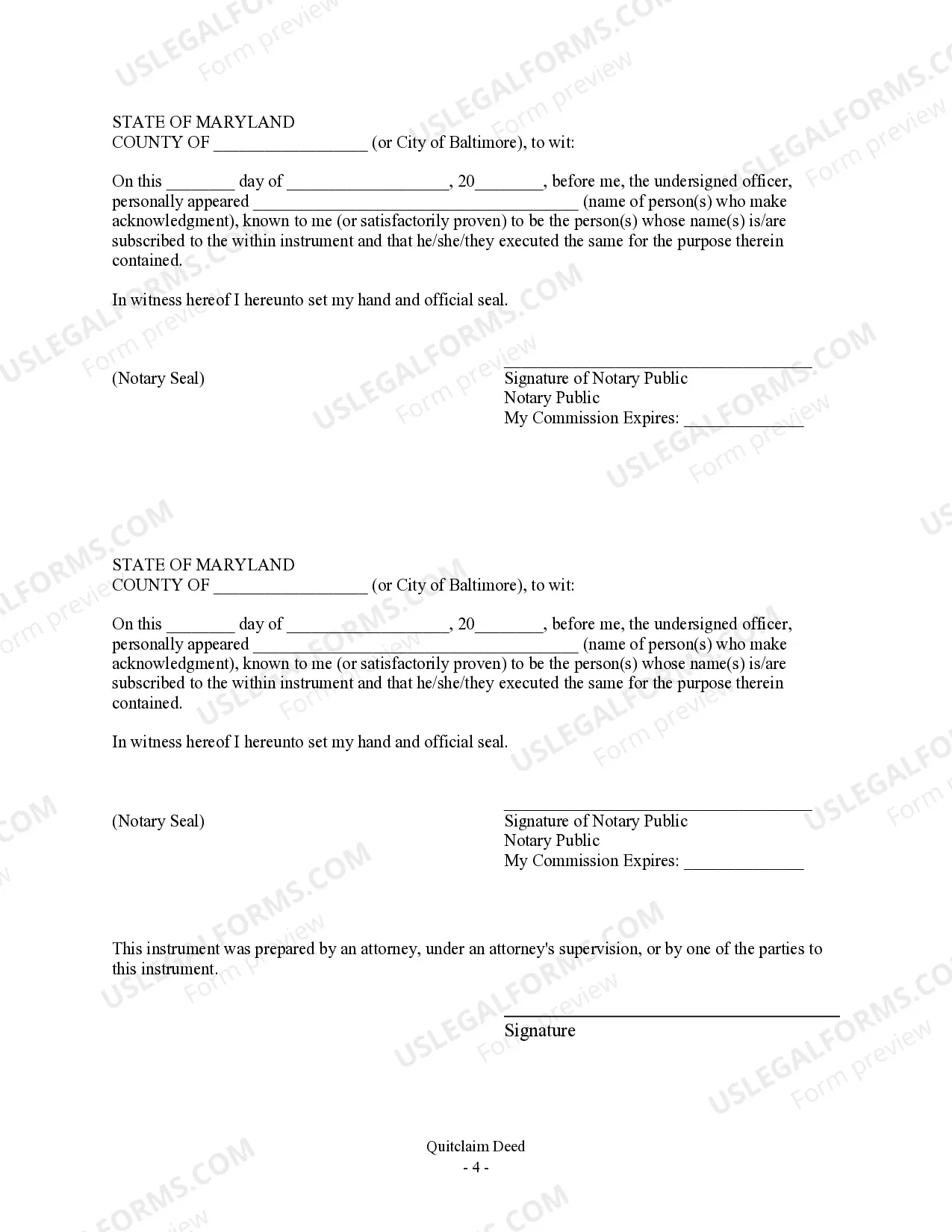
- A section for notarization to validate the document.




When to use this document
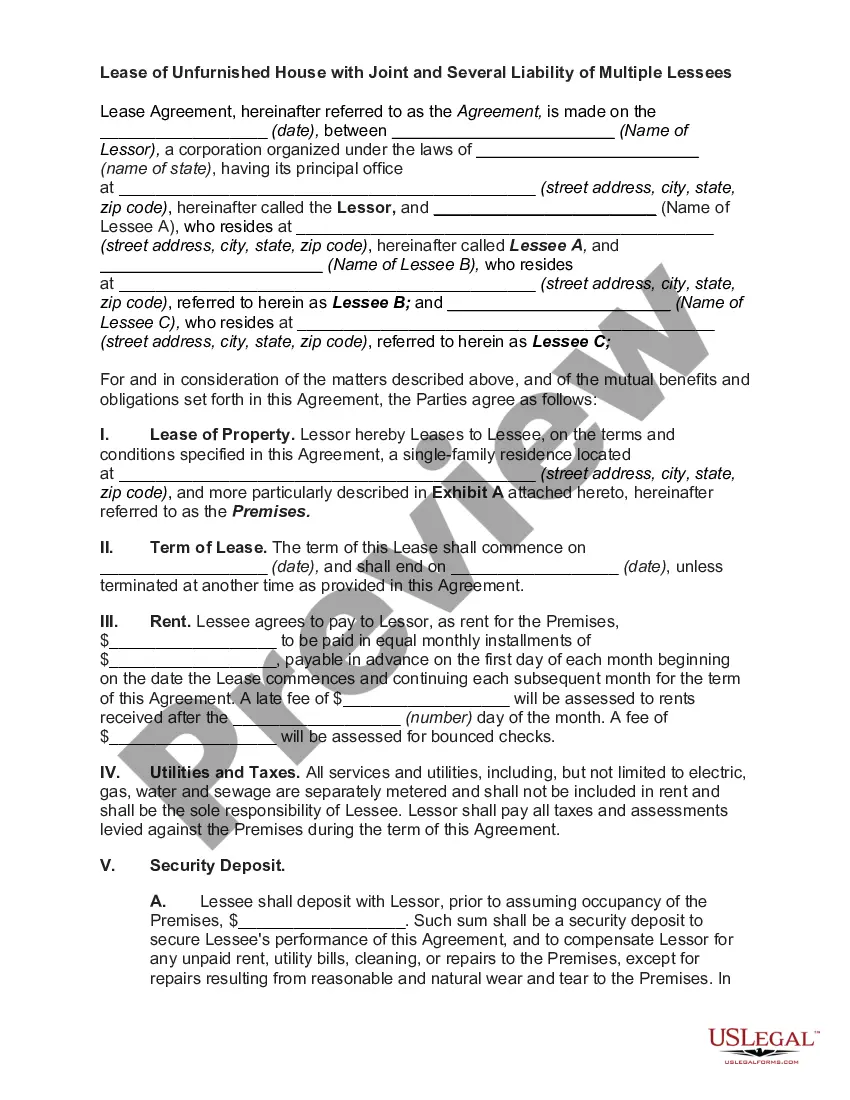
This Quitclaim Deed should be used when two individuals wish to transfer property rights to another pair of individuals, especially in scenarios where both parties are entering into a joint tenancy arrangement. It is commonly used in family situations, such as when parents want to ensure their property will pass to their children upon death or when couples want to combine their property holdings. It is essential in these situations to make the transfer clear and legally enforceable.
Who can use this document
- Individuals who own a property and wish to transfer their interests to other individuals.
- Couples wanting to establish joint tenancy with right of survivorship.
- Family members facilitating the transfer of property for inheritance purposes.
- Anyone looking to legally formalize the transfer of property interests without considering financial compensation or sale.
How to prepare this document
- Identify the Grantors: Fill in the names of the individuals transferring their interest in the property.
- Identify the Grantees: Enter the names of the individuals receiving the property interest.
- Describe the property: Clearly outline the legal description of the property being conveyed.
- Include the transfer terms: State that the property is transferred with the right of survivorship.
- Finalize with notarization: Ensure the document is signed in front of a notary public, which is necessary for legal validity.
Notarization requirements for this form
Yes, this form must be notarized to be legally valid. It is advisable to use a notary public to witness the signing, ensuring the authenticity of the document. U.S. Legal Forms offers integrated online notarization services, available 24/7, for your convenience.
Get your form ready online
Our built-in tools help you complete, sign, share, and store your documents in one place.
Make edits, fill in missing information, and update formatting in US Legal Forms—just like you would in MS Word.
Download a copy, print it, send it by email, or mail it via USPS—whatever works best for your next step.
Sign and collect signatures with our SignNow integration. Send to multiple recipients, set reminders, and more. Go Premium to unlock E-Sign.
If this form requires notarization, complete it online through a secure video call—no need to meet a notary in person or wait for an appointment.
We protect your documents and personal data by following strict security and privacy standards.

Make edits, fill in missing information, and update formatting in US Legal Forms—just like you would in MS Word.

Download a copy, print it, send it by email, or mail it via USPS—whatever works best for your next step.

Sign and collect signatures with our SignNow integration. Send to multiple recipients, set reminders, and more. Go Premium to unlock E-Sign.

If this form requires notarization, complete it online through a secure video call—no need to meet a notary in person or wait for an appointment.

We protect your documents and personal data by following strict security and privacy standards.
Avoid these common issues
- Failing to provide a complete legal description of the property.
- Not obtaining necessary signatures from all Grantors and Grantees.
- Neglecting to have the form notarized, which can render it invalid.
- Confusing joint tenancy with other forms of property ownership.
Advantages of online completion
- Convenient access: You can download the form from anywhere, at any time.
- Editability: Complete the form digitally, making corrections easy and reducing the chance of errors.
- Legal assurance: The forms are drafted by licensed attorneys to ensure compliance with state laws.
- Time-efficient: The digital format allows for quick completion and storage of your important legal documents.
- This form is legally binding once completed and notarized.
- It allows for seamless property transfer between parties with no warranty of title.
- Users must ensure that the form is properly executed in accordance with local laws to avoid disputes.
Main things to remember
- A Quitclaim Deed is used to transfer property ownership without guarantees.
- It is designed for joint tenants to facilitate smooth inheritance.
- Proper completion and notarization of the form are critical for legal validity.
Looking for another form?
Form popularity
FAQ
Jointly owned propertyProperty owned as joint tenants does not form part of a deceased person's estate on death. But the value of the deceased person's share of jointly owned property is included when calculating the value of the estate for Inheritance Tax purposes.
If you look at the registered title to your own jointly owned property and the text isn't shown on it, you own it as joint tenants. If it is there, you own it as tenants-in-common.This title is dealt with by Land Registry, Sample Town Office.
Step 1: Get a Notice200b200b200b of death f200b200borm. Step 2: Fill in Notice of de200bath form. Step 3: Create an electronic notice of Sale (eNOS) record. Step 4: Get a certified copy200b of the Death Certificate. Step 5: Get the origina200bl Certificate of Title or arrange for it to be produced by the bank.
In order to terminate a joint tenancy, one of the four unities must be destroyed. You may do this by conveying your joint tenancy interest to any third person. This can be done through gift or sale. Upon termination, a tenancy in common is formed between the third person and the remaining co-tenant(s).
Transfer By One Co-Owner- Where one of two or more co-owners of immovable property legally competent in that behalf transfers his share of such property or any interest therein, the transferee acquires, as to such share or interest, so far as is necessary to give effect to the transfer, the transferors right to joint
Joint tenancy is a form of property ownership normally associated with real estate. Each party in a joint tenancy has an equal interest in the propertythe financial obligations as well as any benefits.
Serve a written notice of the change (a 'notice of severance') on the other owners - a conveyancer can help you do this. Download and fill in form SEV to register a restriction without the other owners' agreement. Prepare any supporting documents you need to include.
You can apply to court to change your ex-partner's tenancy to your name, or remove their name from a joint tenancy. You can apply for a 'transfer of tenancy' if: your landlord refuses to change your tenancy. your tenancy doesn't allow a transfer.
The dangers of joint tenancy include the following: Danger #1: Only delays probate. When either joint tenant dies, the survivor usually a spouse or child immediately becomes the owner of the entire property. But when the survivor dies, the property still must go through probate.