Utah Assumption Agreement of Deed of Trust and Release of Original Mortgagors
Overview of this form
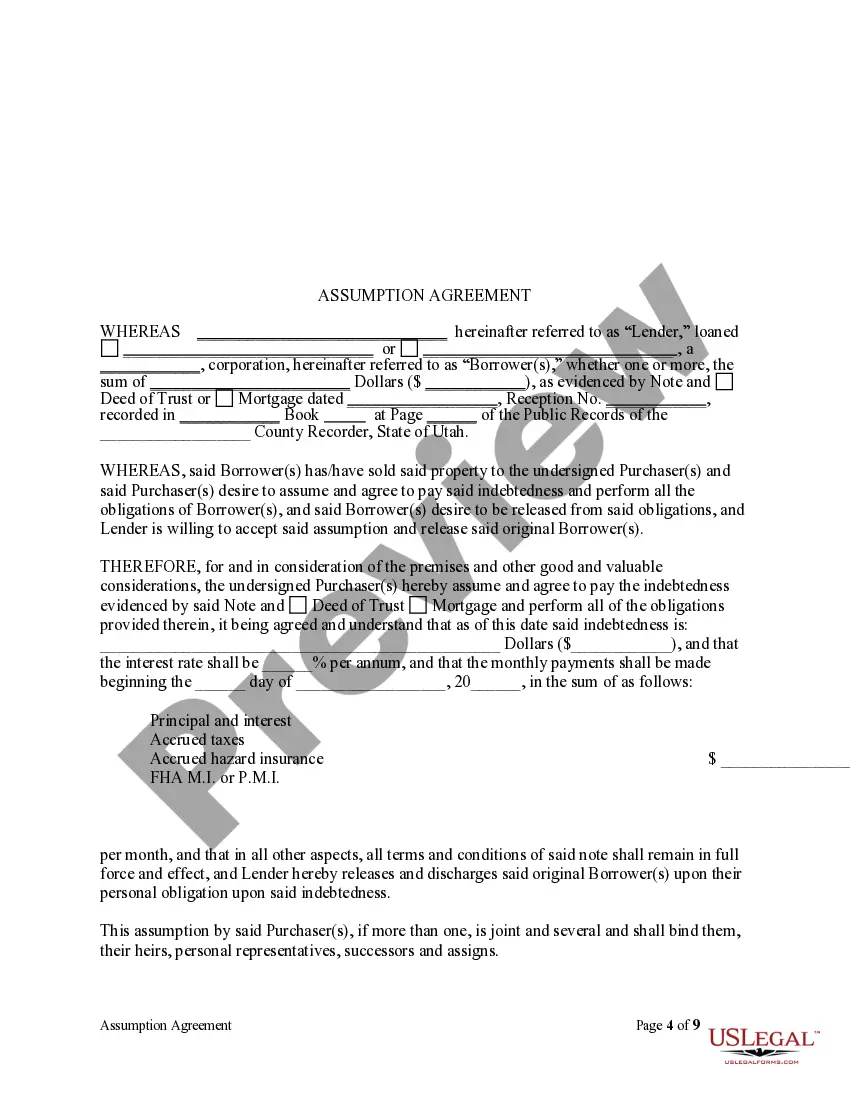
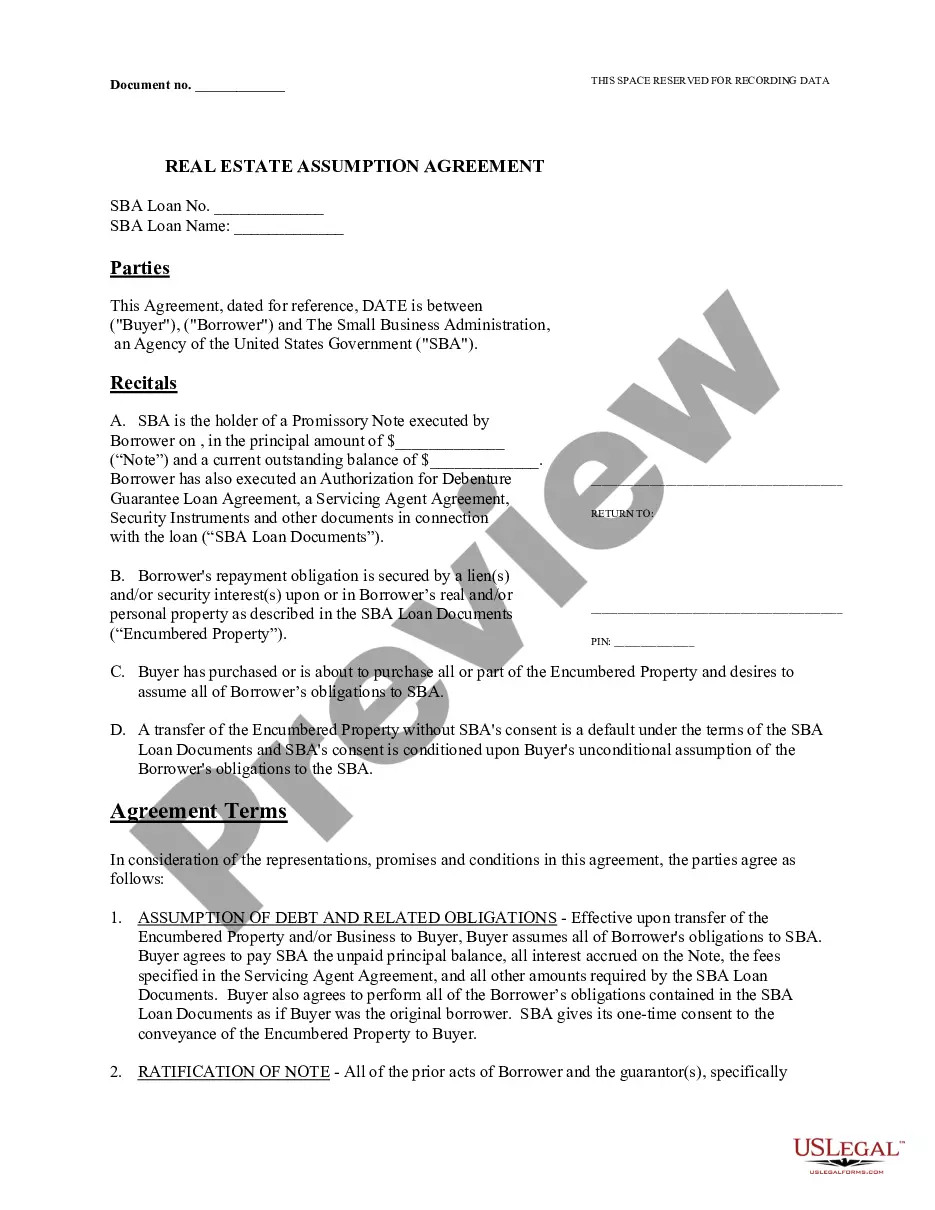
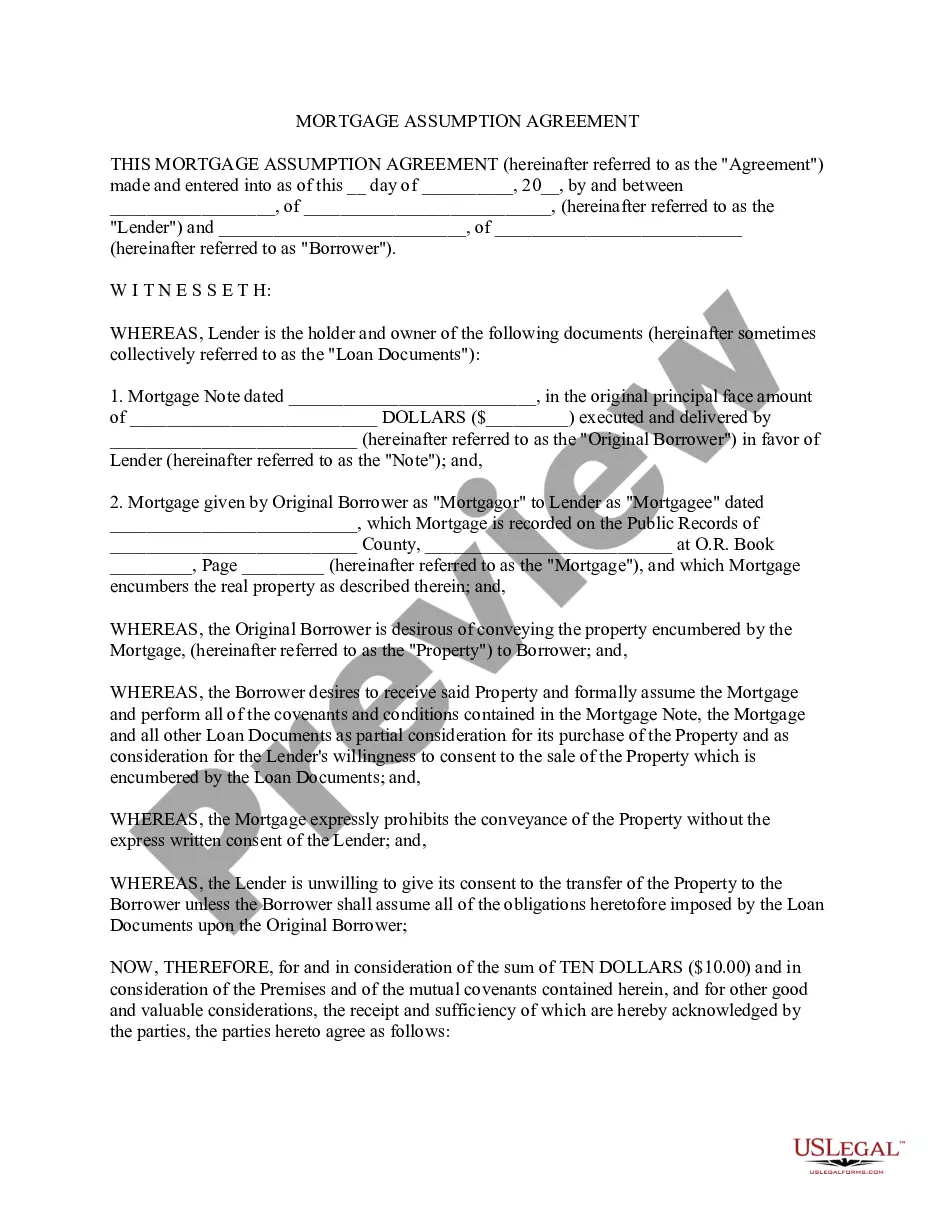
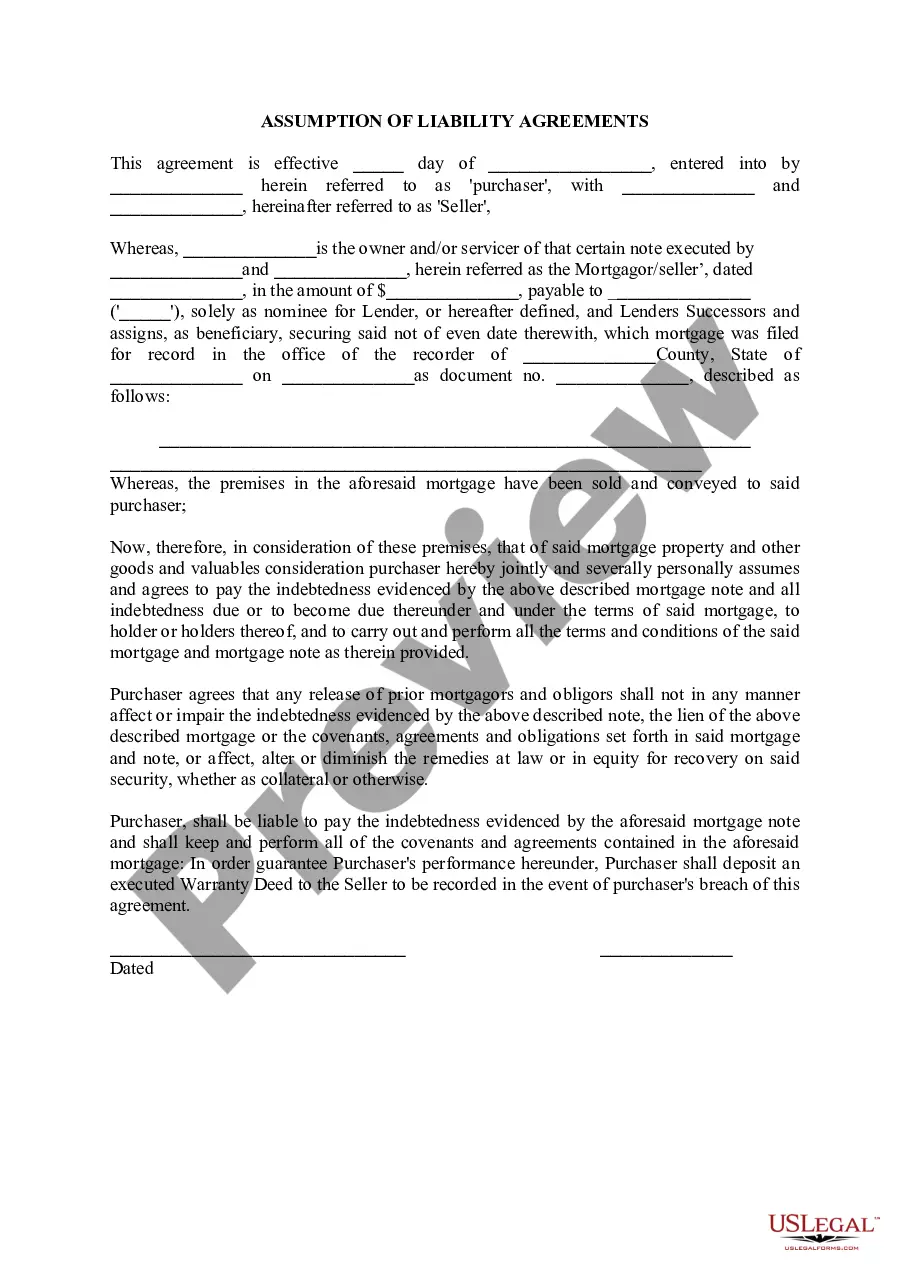
The Assumption Agreement of Deed of Trust and Release of Original Mortgagors is a legal document that allows new purchasers of a property to assume the responsibility for an existing mortgage. In this agreement, the new buyers agree to pay the debt owed to the lender, while the lender releases the original mortgagors from any future liability. This form is particularly useful in real estate transactions where the mortgage remains in place while the ownership of the property changes hands, distinguishing it from standard purchase agreements that may require full repayment of the loan.
Key components of this form
- Identification of the new purchasers and original mortgagors
- Details about the mortgage, including the total debt amount and interest rate
- Acknowledgment of the new purchaser's assumption of the debt
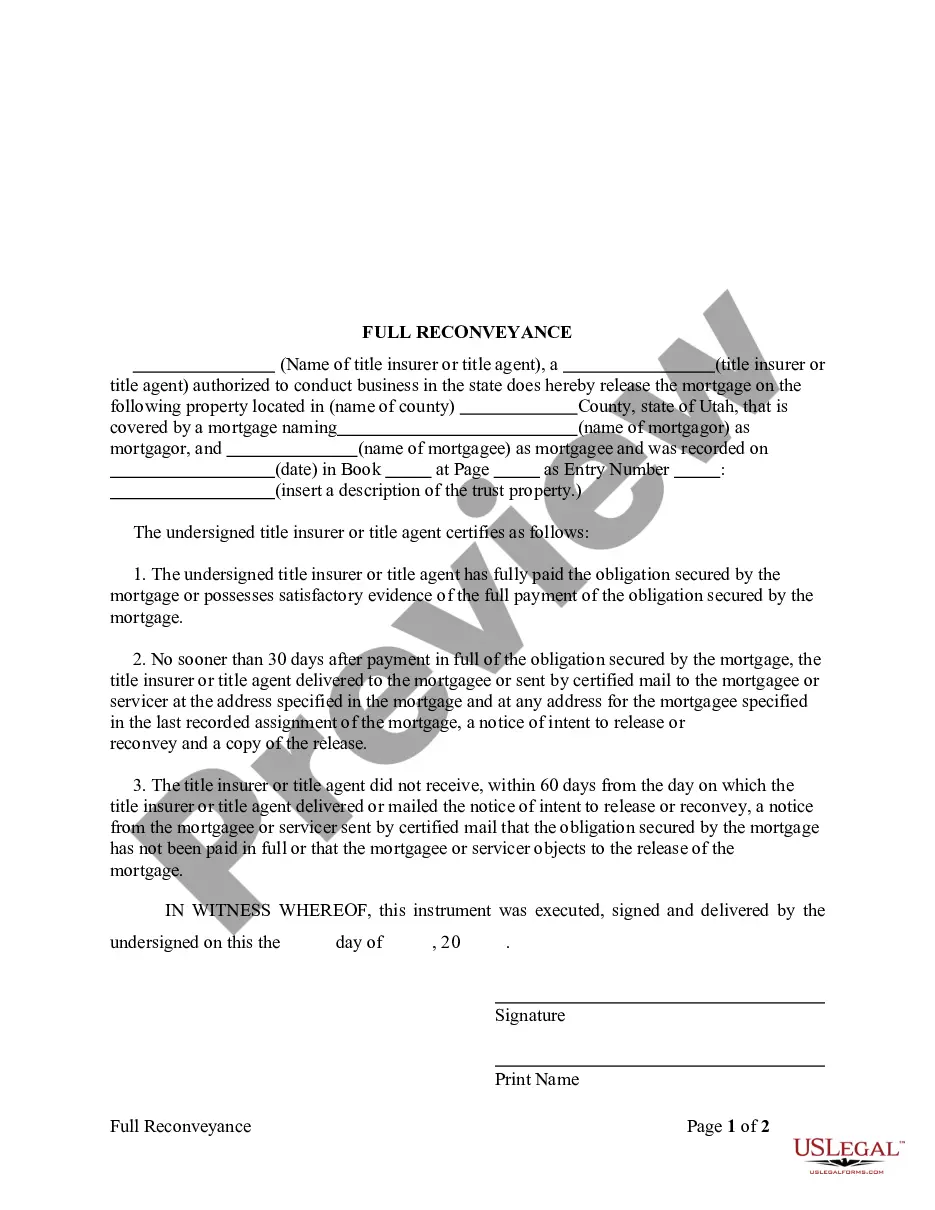
- Release clause for original mortgagors from the mortgage obligations
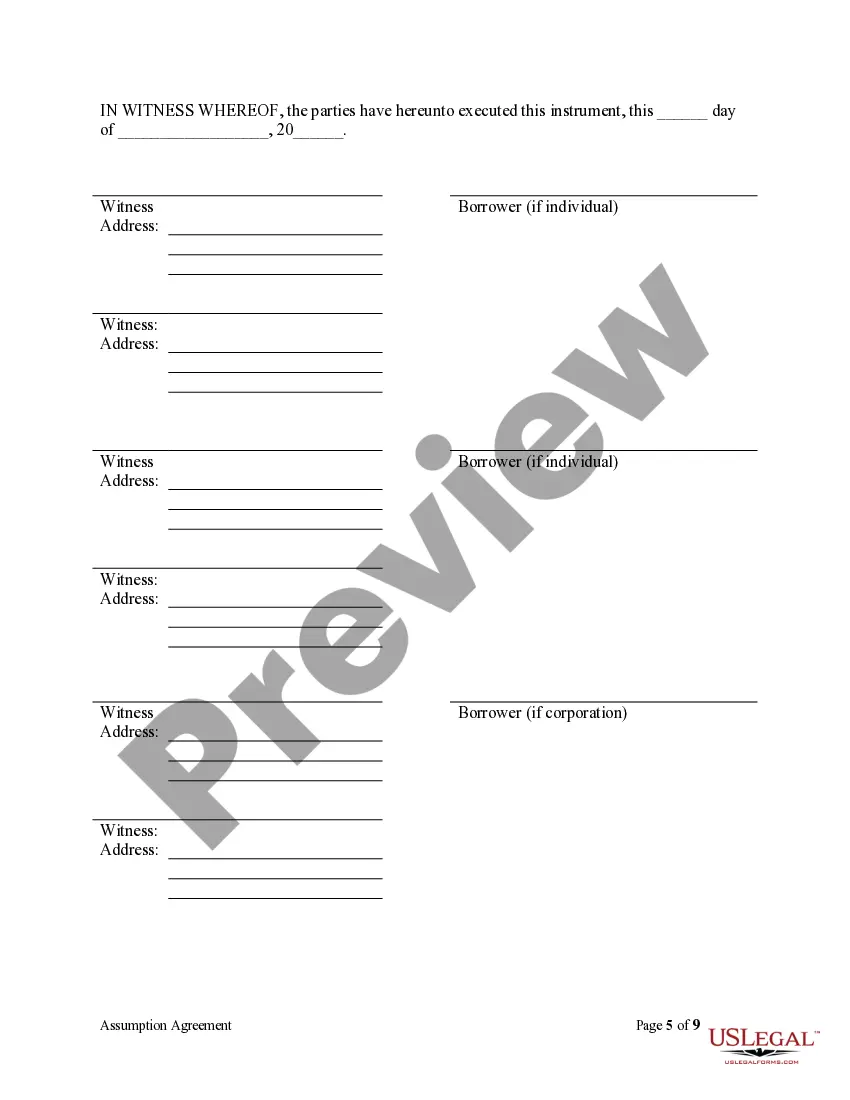
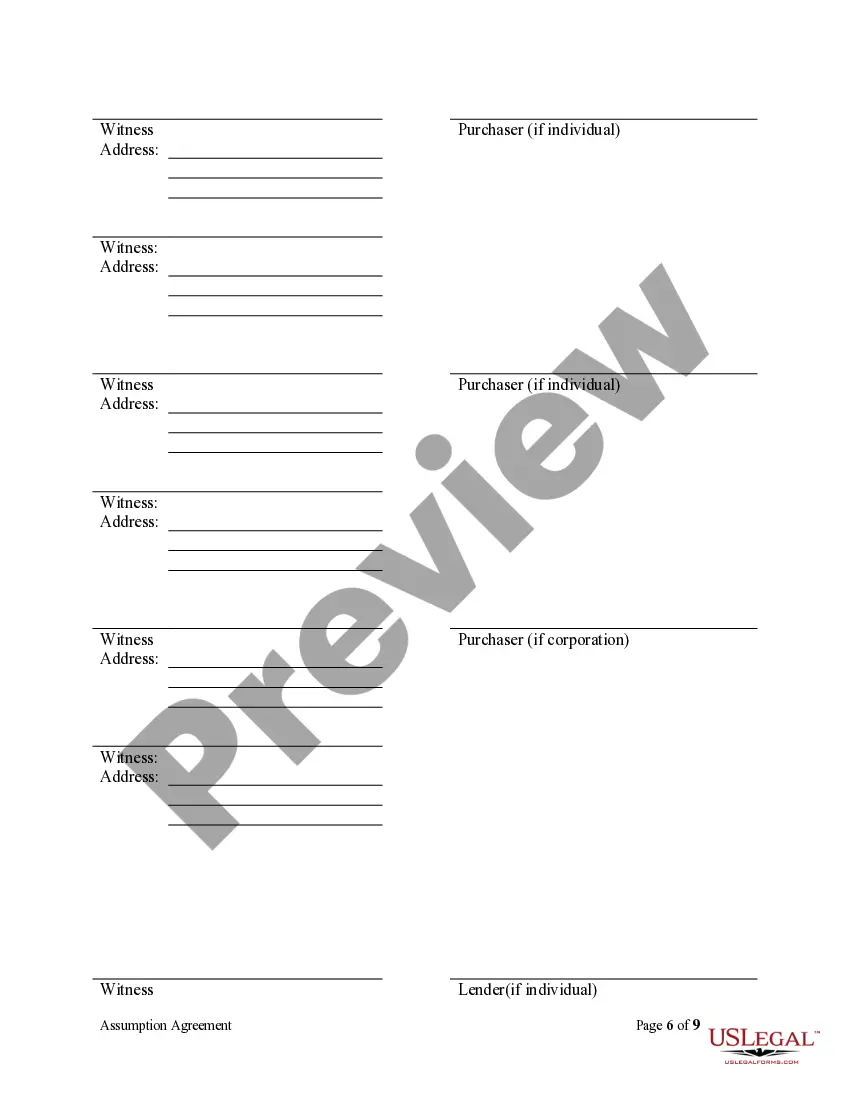
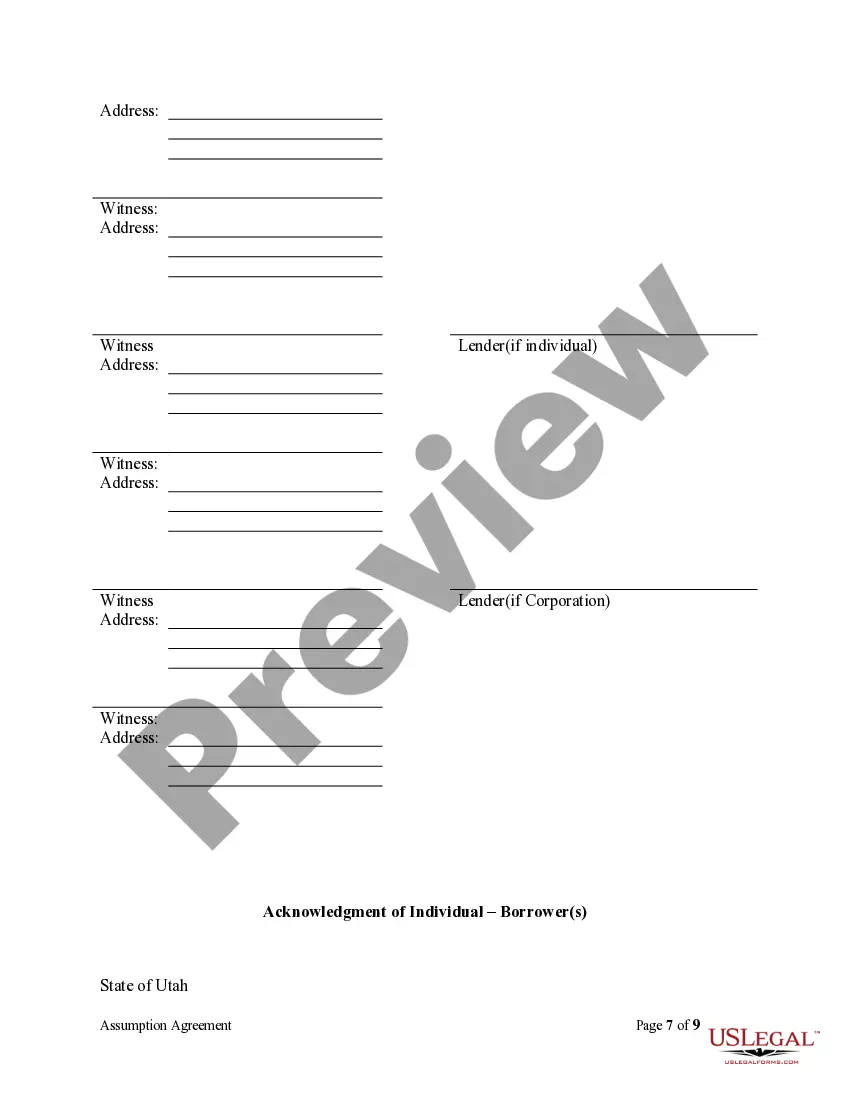
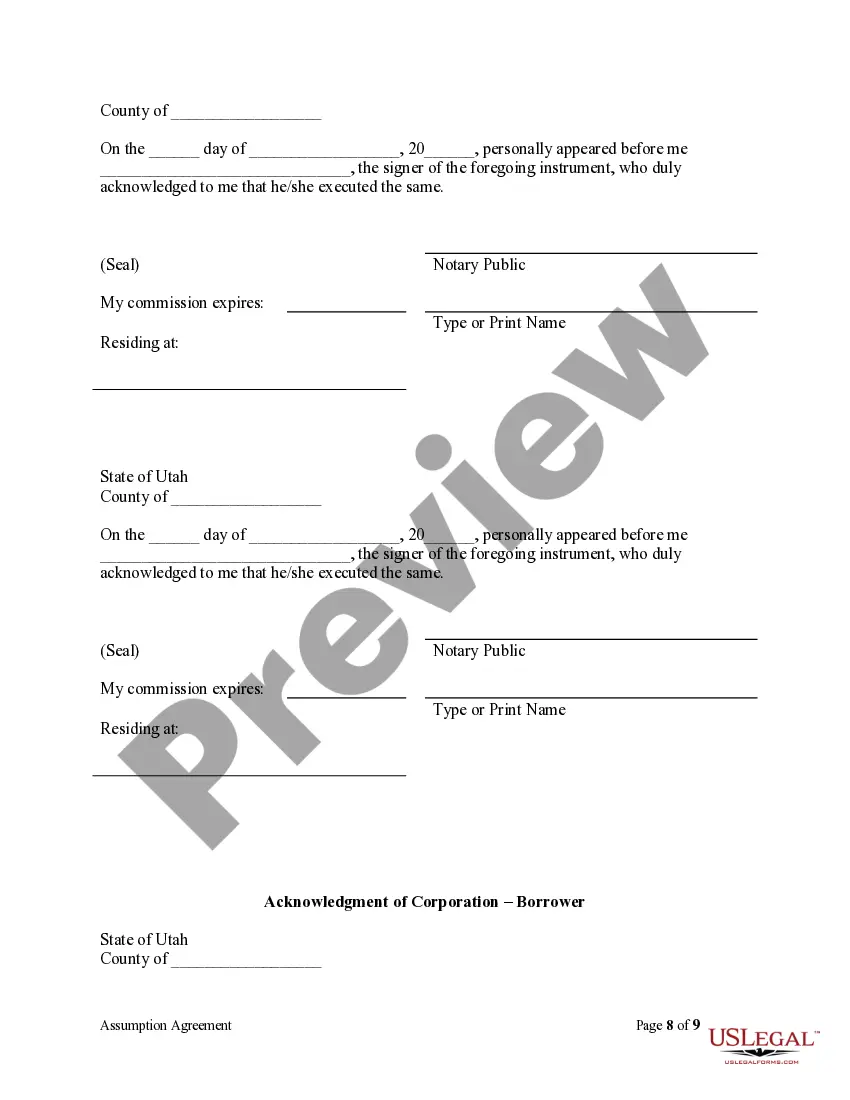
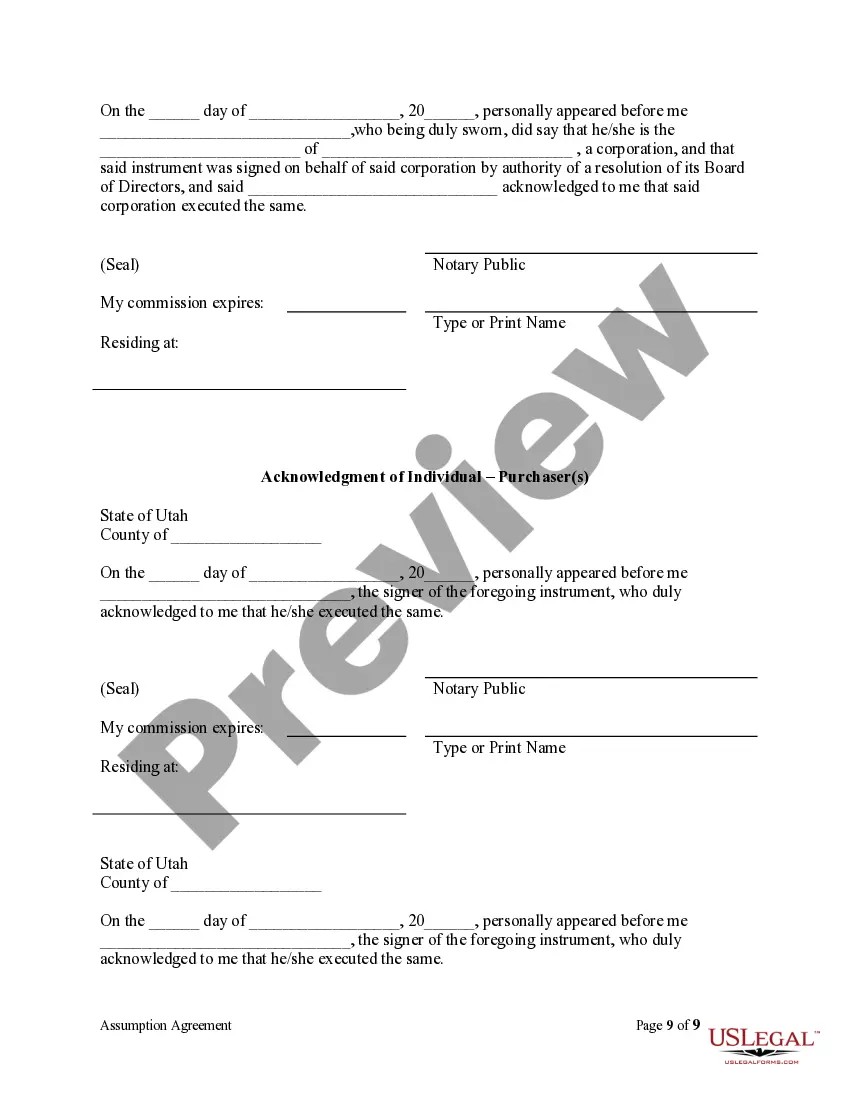
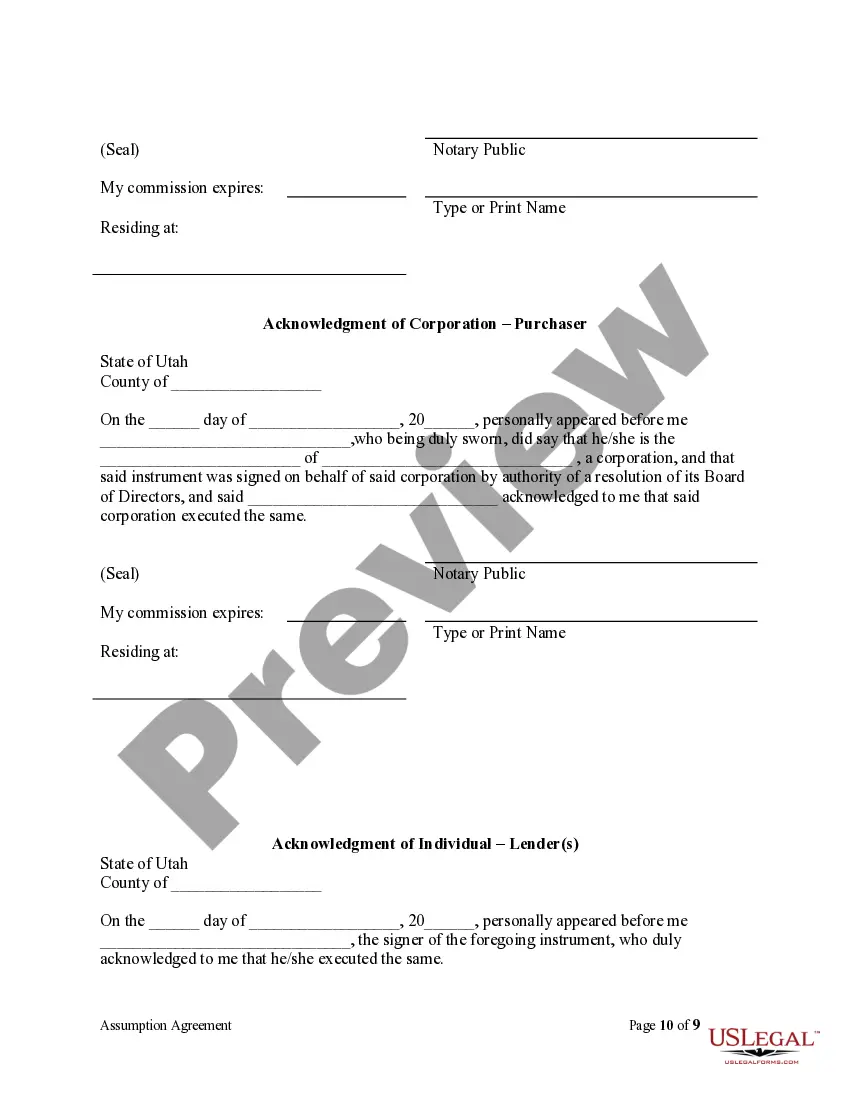
- Signature and acknowledgment sections for all parties involved

Common use cases
This form is needed when a property is being sold, and the buyers intend to assume the existing mortgage rather than take out a new loan. This is common in situations where the mortgage terms are favorable, or when buyers wish to avoid the costs and requirements associated with obtaining a new mortgage. It is particularly applicable in real estate transactions in the state of Utah.
Who can use this document
- New purchasers of a property who want to assume an existing mortgage
- Original mortgagors looking to be released from their mortgage obligations
- Lenders or mortgagees who need to formalize the assumption of debt
Instructions for completing this form
- Identify all parties involved, including the new purchasers and original mortgagors.
- Specify the details of the mortgage, such as the total debt amount and the applicable interest rate.
- Enter the monthly payment amounts, including principal, interest, taxes, and insurance.
- Ensure all parties review the document carefully before signing.
- Notarize the document if required, following the completion of signatures.
Does this form need to be notarized?
This form needs to be notarized to ensure legal validity. US Legal Forms provides secure online notarization powered by Notarize, allowing you to complete the process through a verified video call, available anytime.
Get your form ready online
Our built-in tools help you complete, sign, share, and store your documents in one place.
Make edits, fill in missing information, and update formatting in US Legal Forms—just like you would in MS Word.
Download a copy, print it, send it by email, or mail it via USPS—whatever works best for your next step.
Sign and collect signatures with our SignNow integration. Send to multiple recipients, set reminders, and more. Go Premium to unlock E-Sign.
If this form requires notarization, complete it online through a secure video call—no need to meet a notary in person or wait for an appointment.
We protect your documents and personal data by following strict security and privacy standards.

Make edits, fill in missing information, and update formatting in US Legal Forms—just like you would in MS Word.

Download a copy, print it, send it by email, or mail it via USPS—whatever works best for your next step.

Sign and collect signatures with our SignNow integration. Send to multiple recipients, set reminders, and more. Go Premium to unlock E-Sign.

If this form requires notarization, complete it online through a secure video call—no need to meet a notary in person or wait for an appointment.

We protect your documents and personal data by following strict security and privacy standards.
Mistakes to watch out for
- Not fully understanding the terms of the existing mortgage before agreeing to assume it.
- Failing to include all necessary signatures from all parties involved.
- Leaving essential fields blank, such as the debt amount or interest rate.
- Failing to notarize the document if required under state law.
Benefits of using this form online
- Immediate access to professionally drafted legal documents tailored to your needs.
- Edit fields easily using computer software, or print for hand completion.
- Reduce potential errors with clear instructions and formatted fields.
- Convenient download options that allow for quick and easy access.
Looking for another form?
Form popularity
FAQ
The deed of trust is currently used in Alabama, Alaska, Arkansas, Arizona, California, Colorado, District of Columbia, Georgia, Hawaii, Idaho, Iowa, Michigan, Minnesota, Mississippi, Missouri, Montana, Nevada, New Hampshire, North Carolina, Oklahoma, Oregon, Rhode Island, South Dakota, Tennessee, Texas, Utah, Virginia,
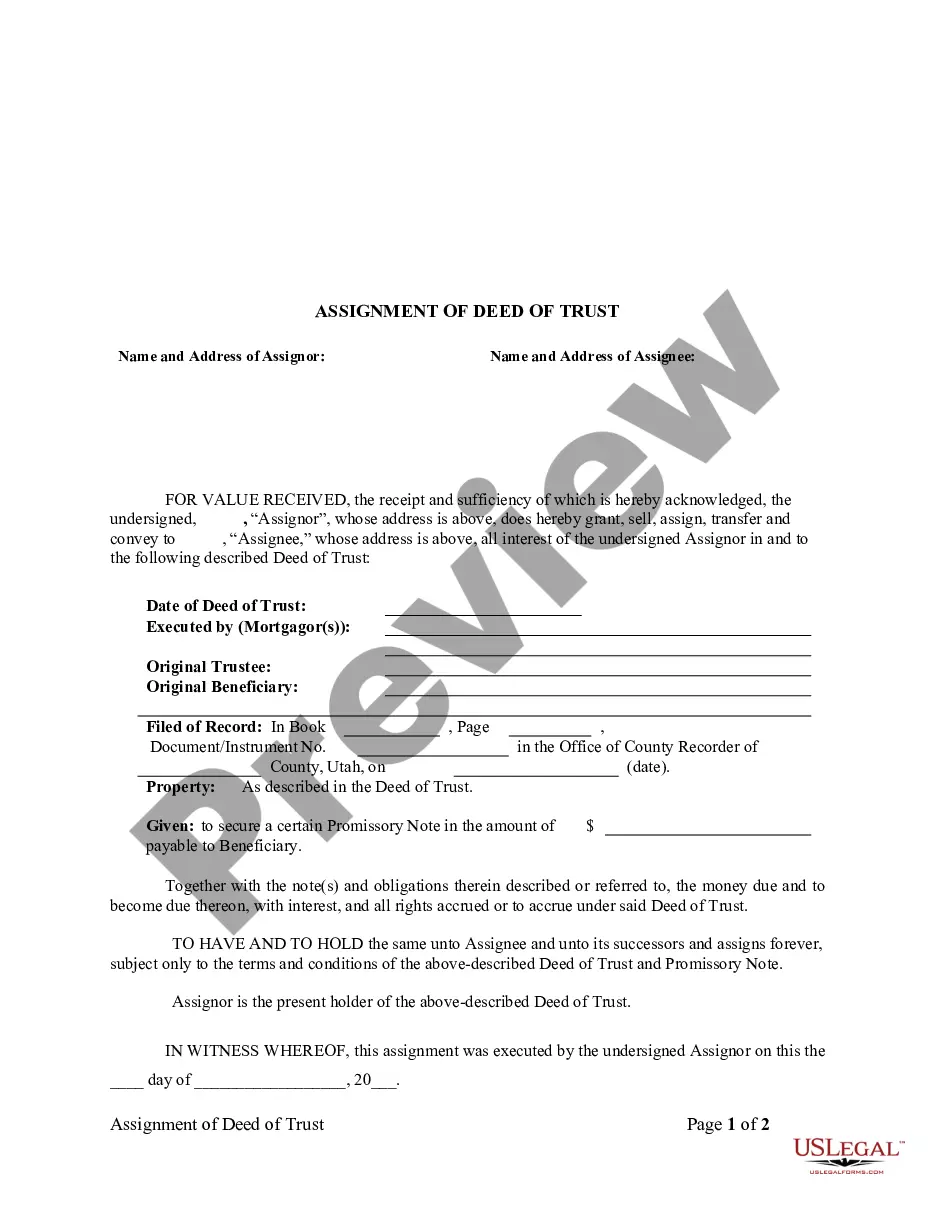
A deed of trust is a written instrument with three parties: The trustor, who is the borrower and homeowner. The beneficiary, who is the lender. The trustee, who is a third party such as an insurance company or escrow management agency that holds actual title to the property in trust for the beneficiary.
As you stated in your question, it is recorded among the land records, and your lender keeps the original. When you pay off the loan, the lender will return the deed of trust with the promissory note. This document is rather lengthy and quite legalistic.
Whether you have a deed of trust or a mortgage, they both serve to assure that a loan is repaid, either to a lender or an individual person. A mortgage only involves two parties the borrower and the lender. A deed of trust adds an additional party, a trustee, who holds the home's title until the loan is repaid.
Whether you have a deed of trust or a mortgage, they both serve to assure that a loan is repaid, either to a lender or an individual person. A mortgage only involves two parties the borrower and the lender. A deed of trust adds an additional party, a trustee, who holds the home's title until the loan is repaid.
In financed real estate transactions, trust deeds transfer the legal title of a property to a third partysuch as a bank, escrow company, or title companyto hold until the borrower repays their debt to the lender. Trust deeds are used in place of mortgages in several states.
A Deed of Trust is essentially an agreement between a lender and a borrower to give the property to a neutral third party who will serve as a trustee. The trustee holds the property until the borrower pays off the debt.The trustee, however, holds the legal title to the property.
They serve different purposes and are signed by different parties. The warranty deed transfers the property's ownership from the current owner to the new buyer, while the deed of trust ensures the lender has interest in the property in the event a buyer defaults on the loan.
The following states may use either Mortgage Agreements or Deed of Trusts: Colorado, Idaho, Illinois, Iowa, Maryland, Montana, Nebraska, Oklahoma, Oregon, Tennessee, Texas, Utah, Wyoming, Washington, and West Virginia.