Utah Revocable Living Trust for Husband and Wife with No Children
What is this form?
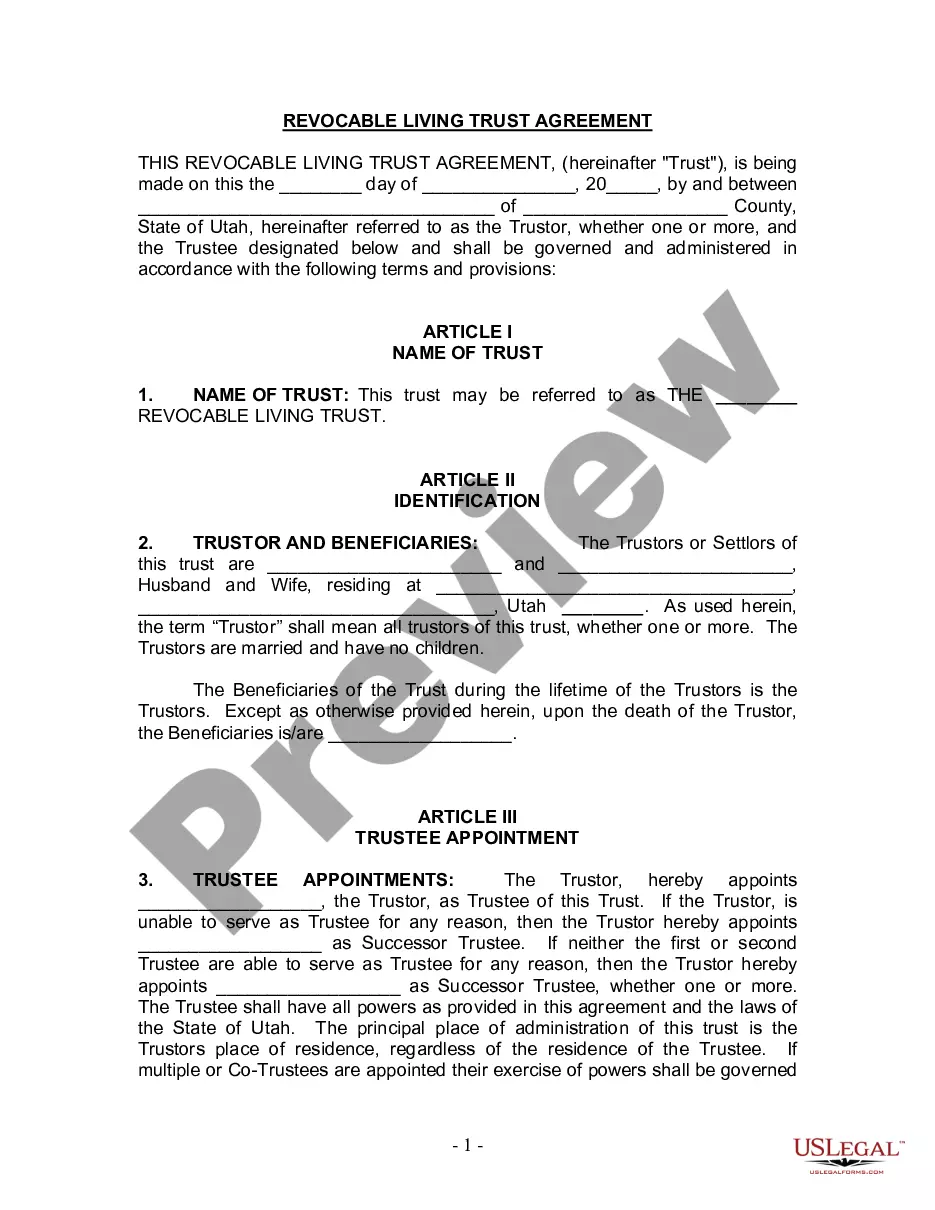
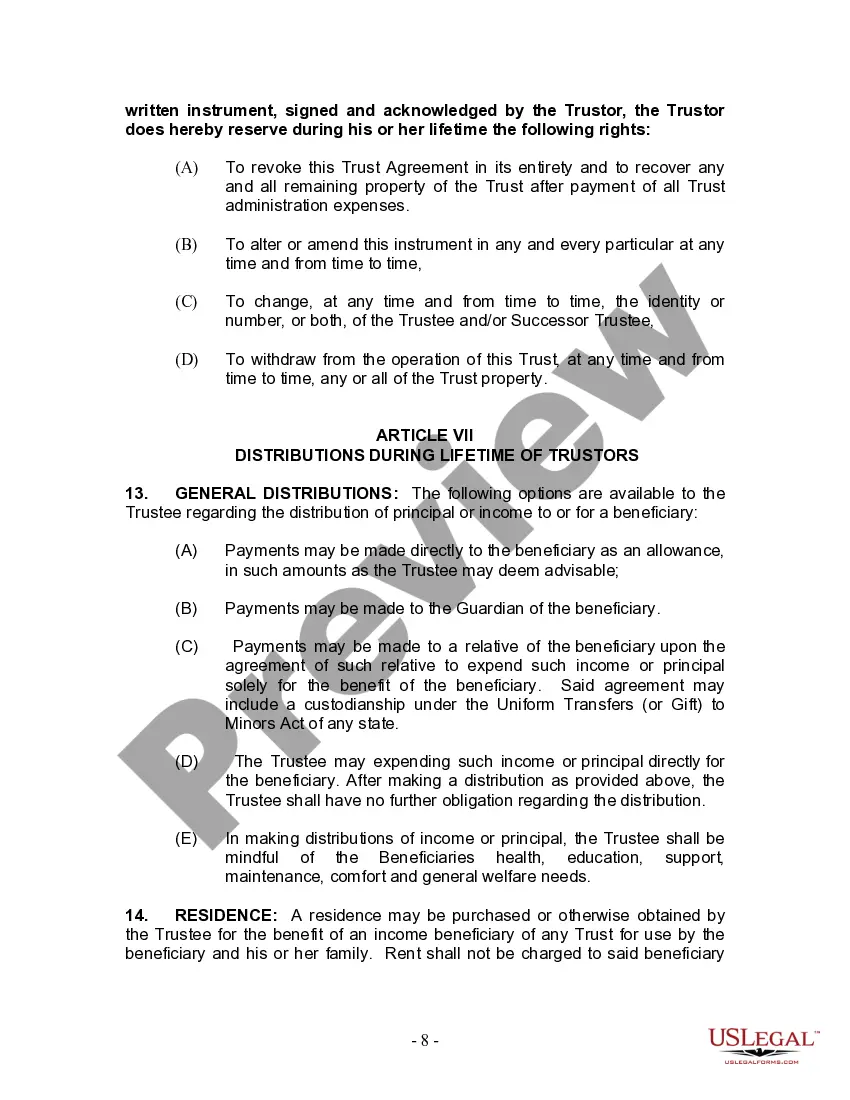
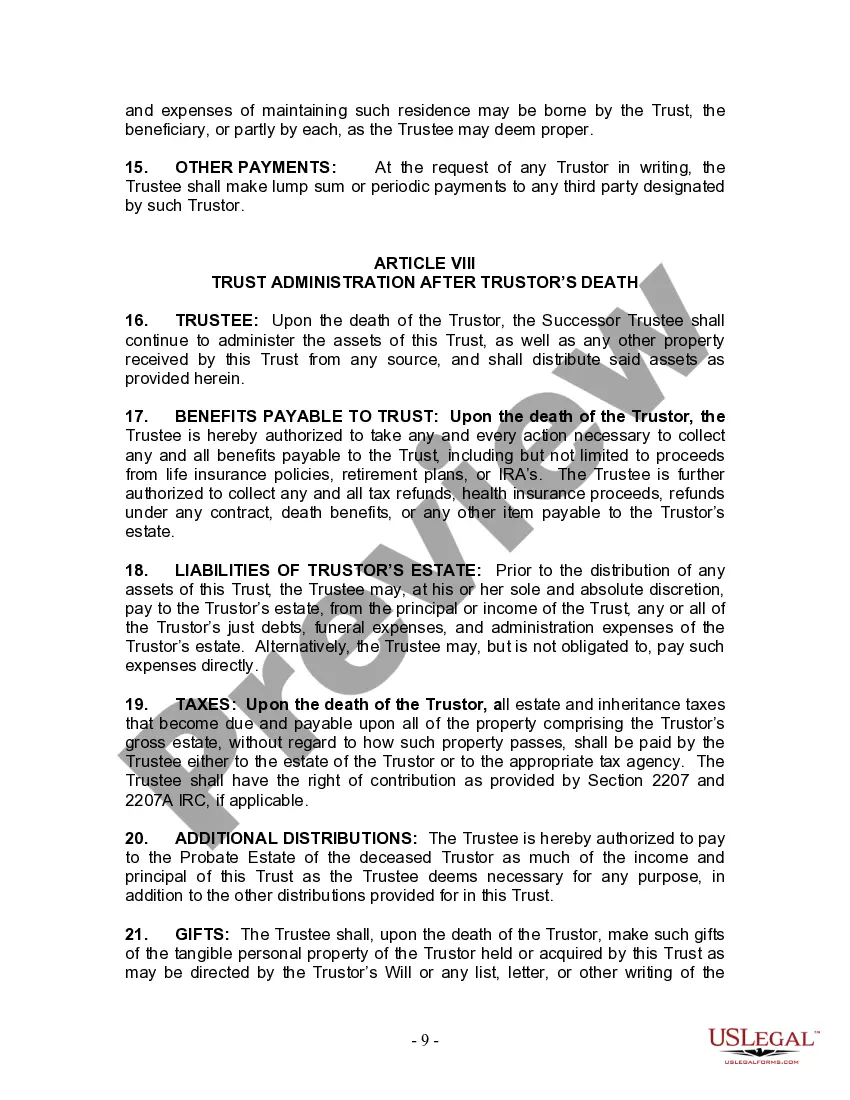
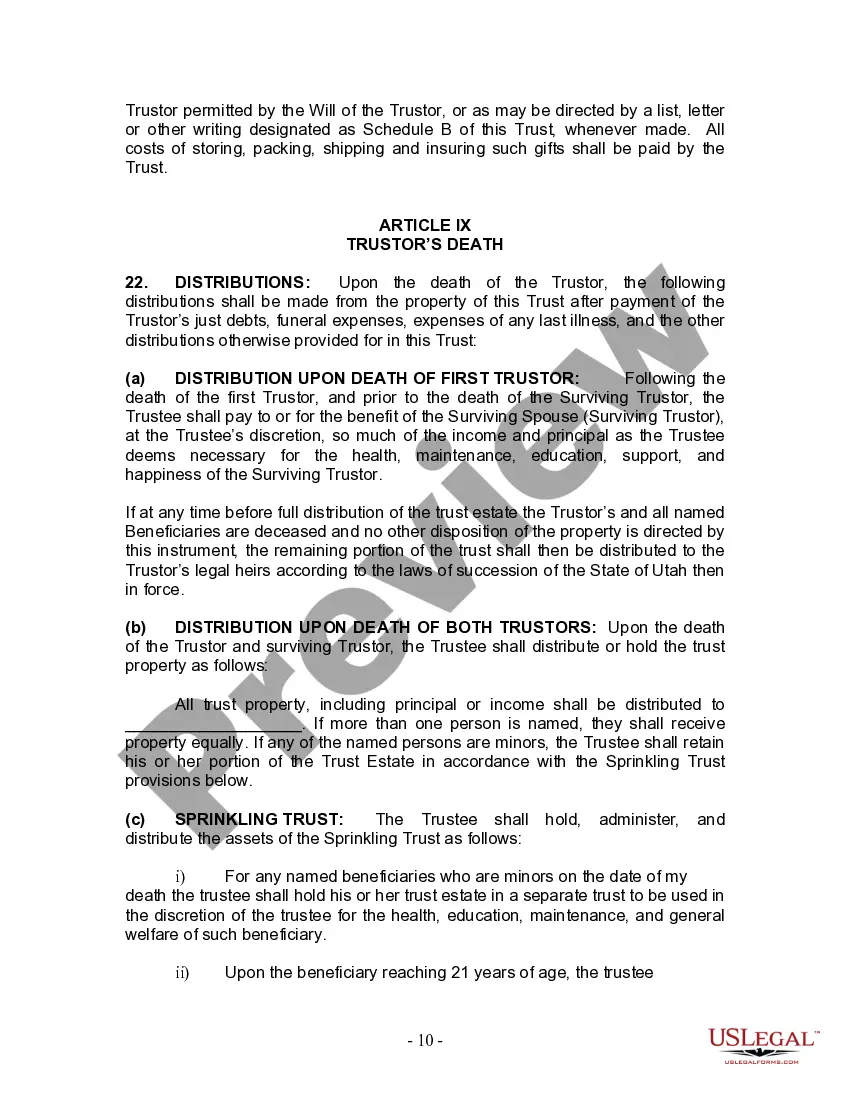
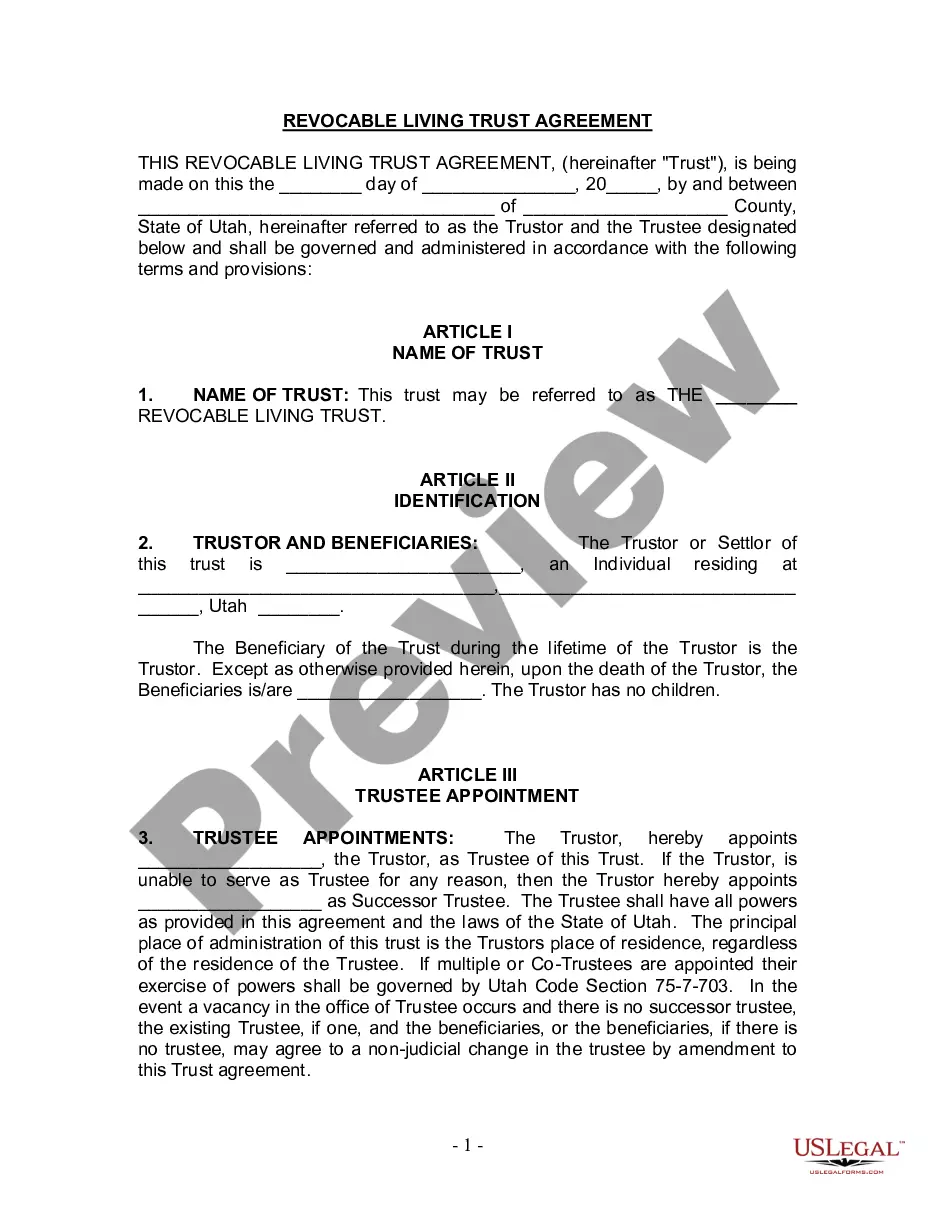
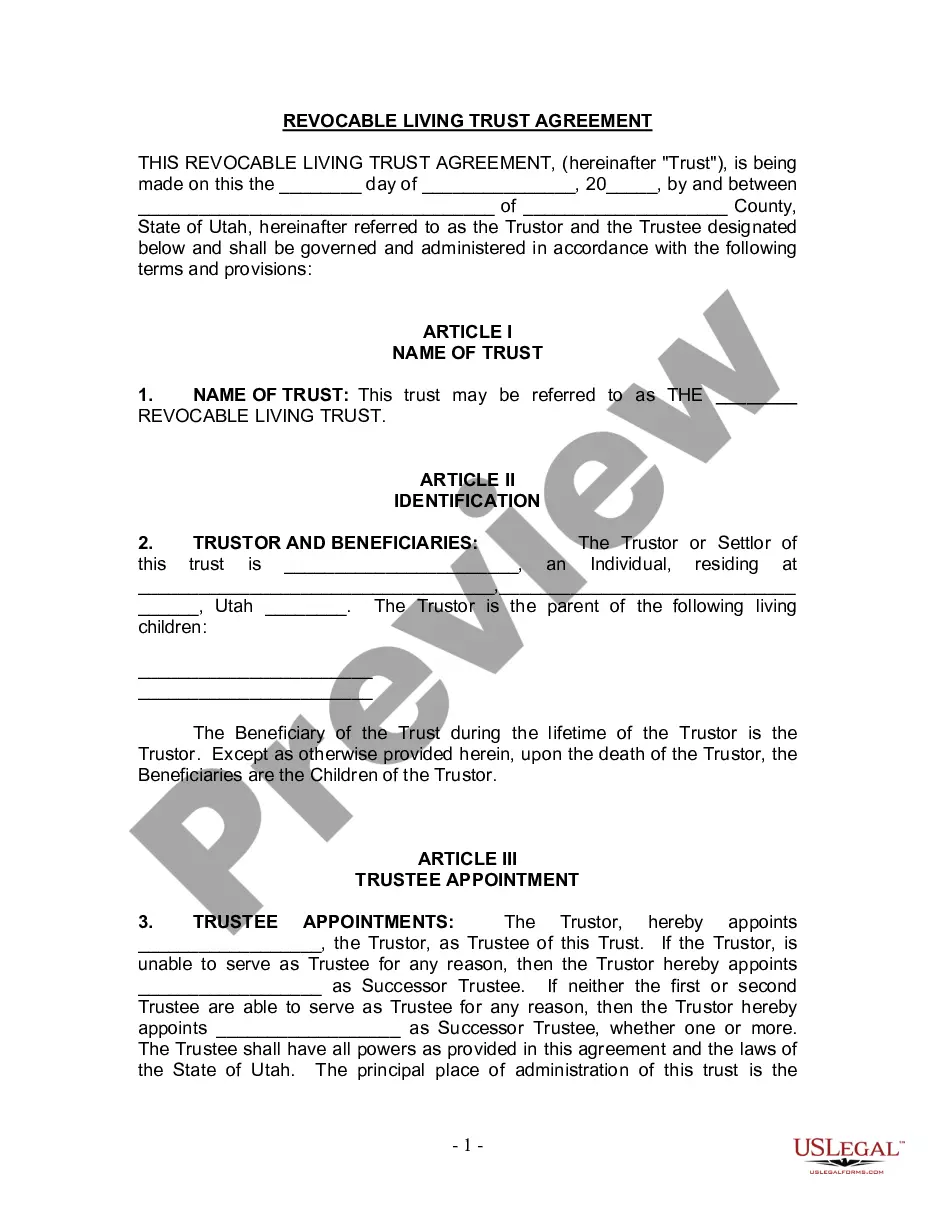
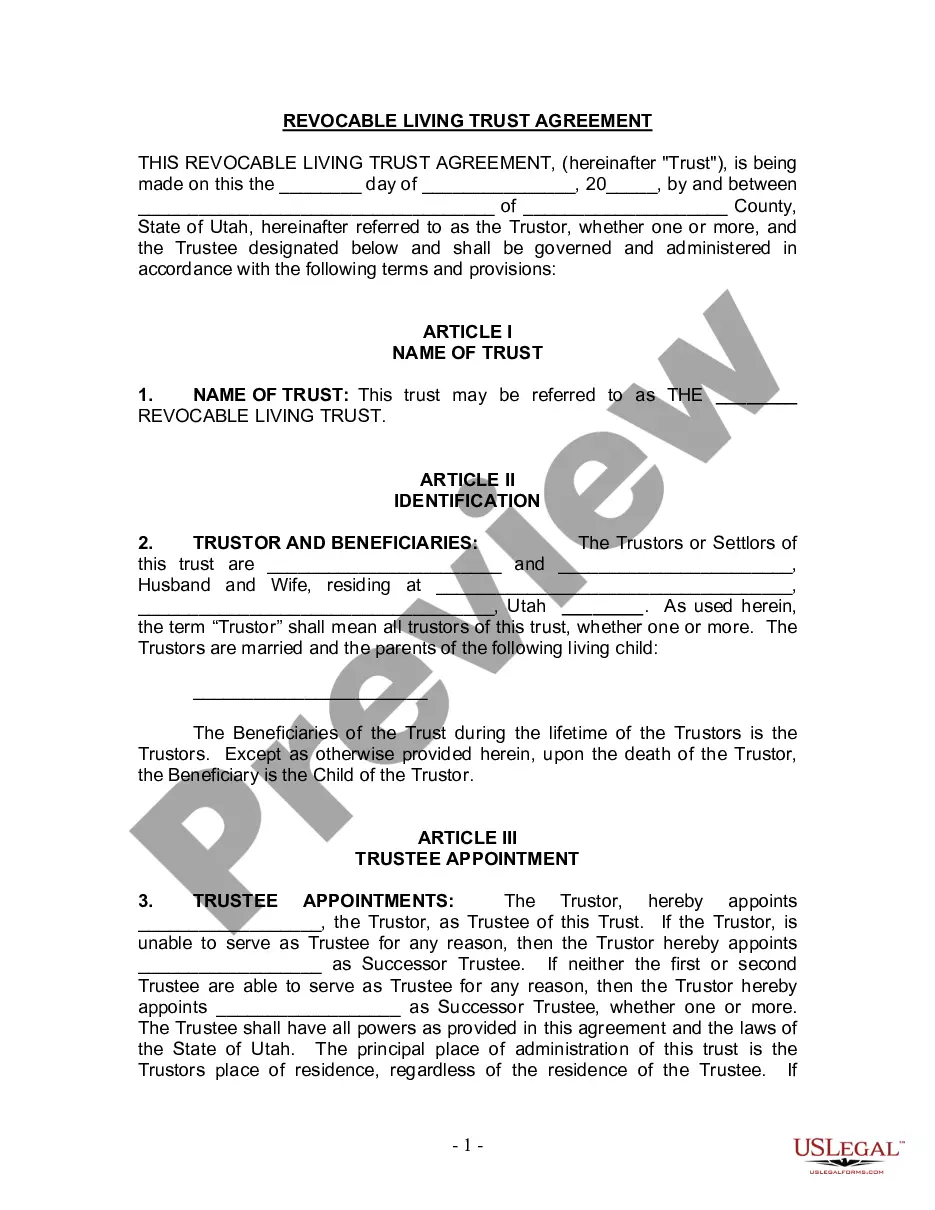
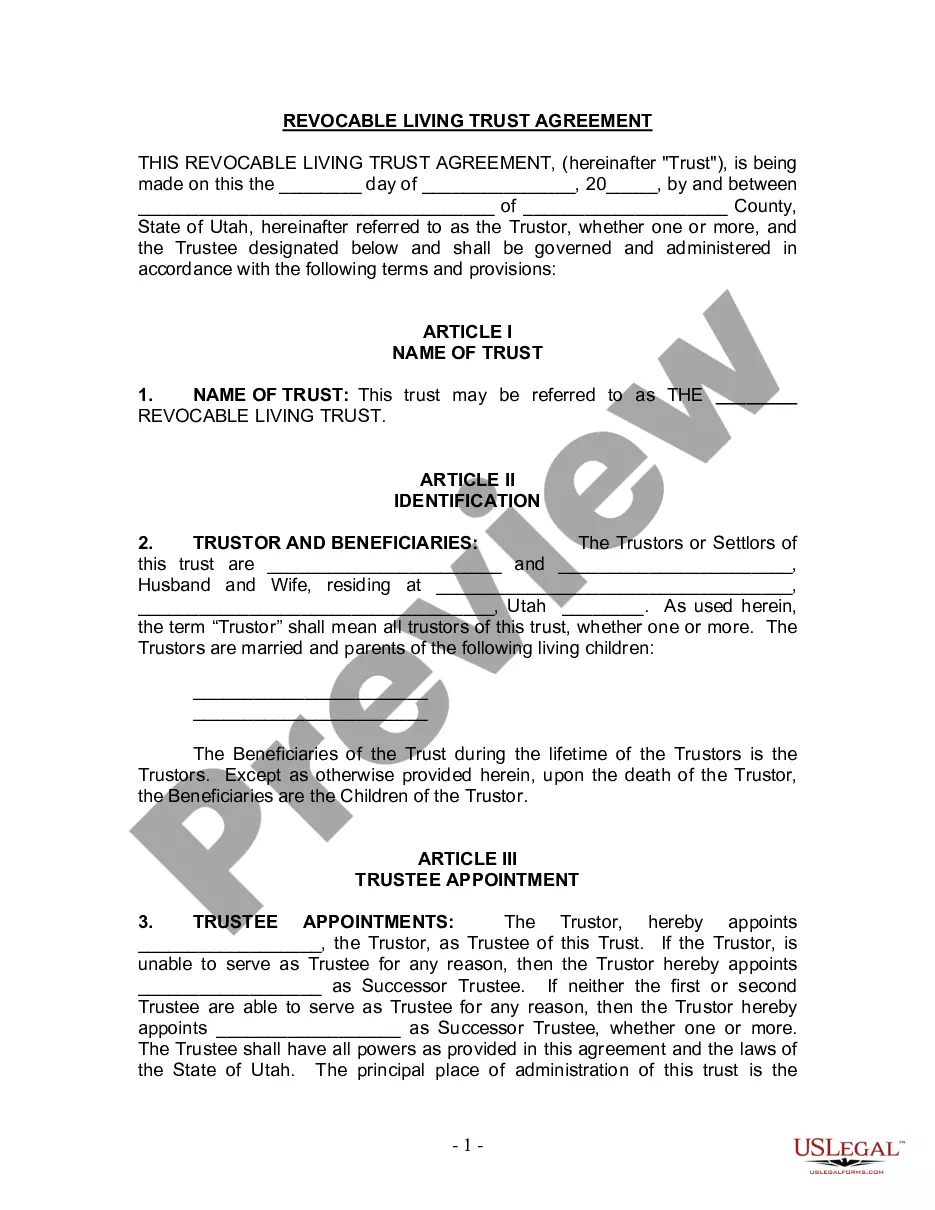
The Revocable Living Trust for Husband and Wife with No Children is a legal document that allows couples to create a trust during their lifetimes for effective estate planning. Unlike a standard will, this living trust helps avoid probate, ensuring that your assets are distributed according to your wishes upon your death. This form is tailored specifically for married couples without children, allowing them to manage and distribute their assets efficiently while retaining full control over their property during their lifetime.
Main sections of this form
- Identification of the Trustor(s), who are the husband and wife creating the trust.
- Appointment of a Trustee, typically one of the Trustors, and provisions for successor trustees.
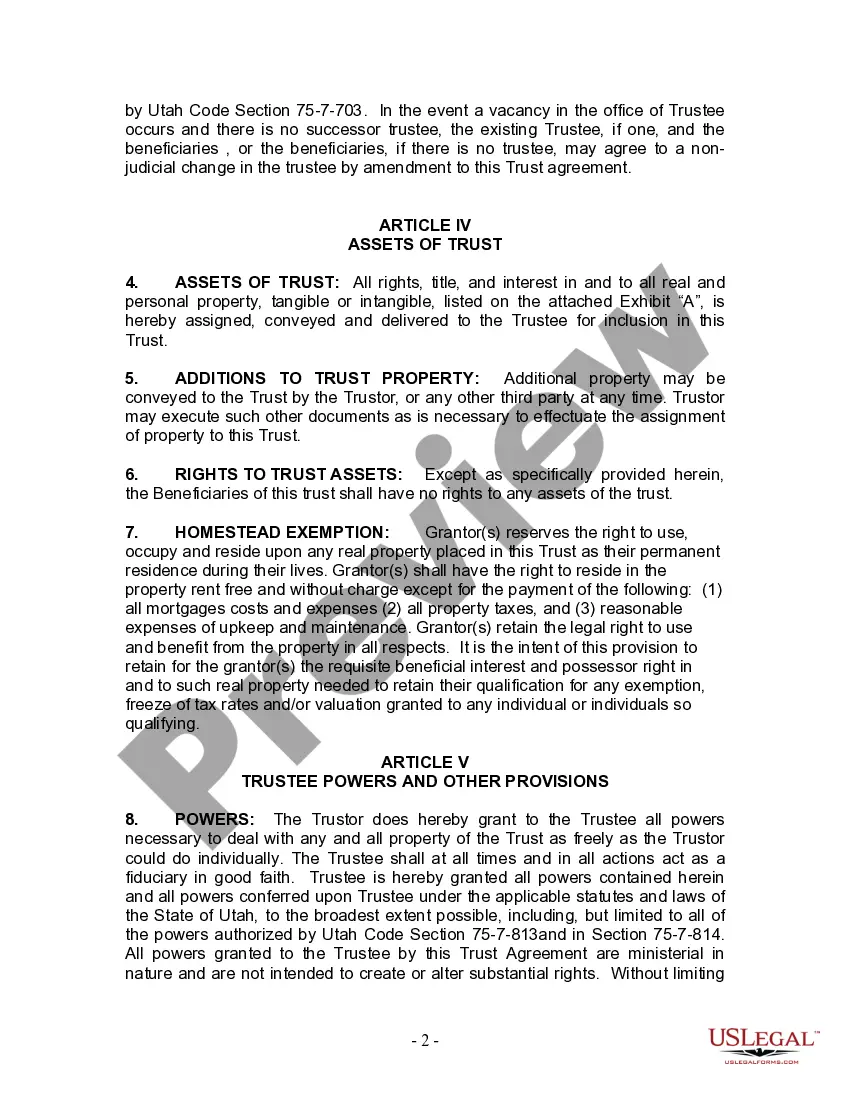
- Detailed asset management rules, including how to handle income and principal distributions.
- Specific instructions for distributing assets upon the death of the Trustor(s).
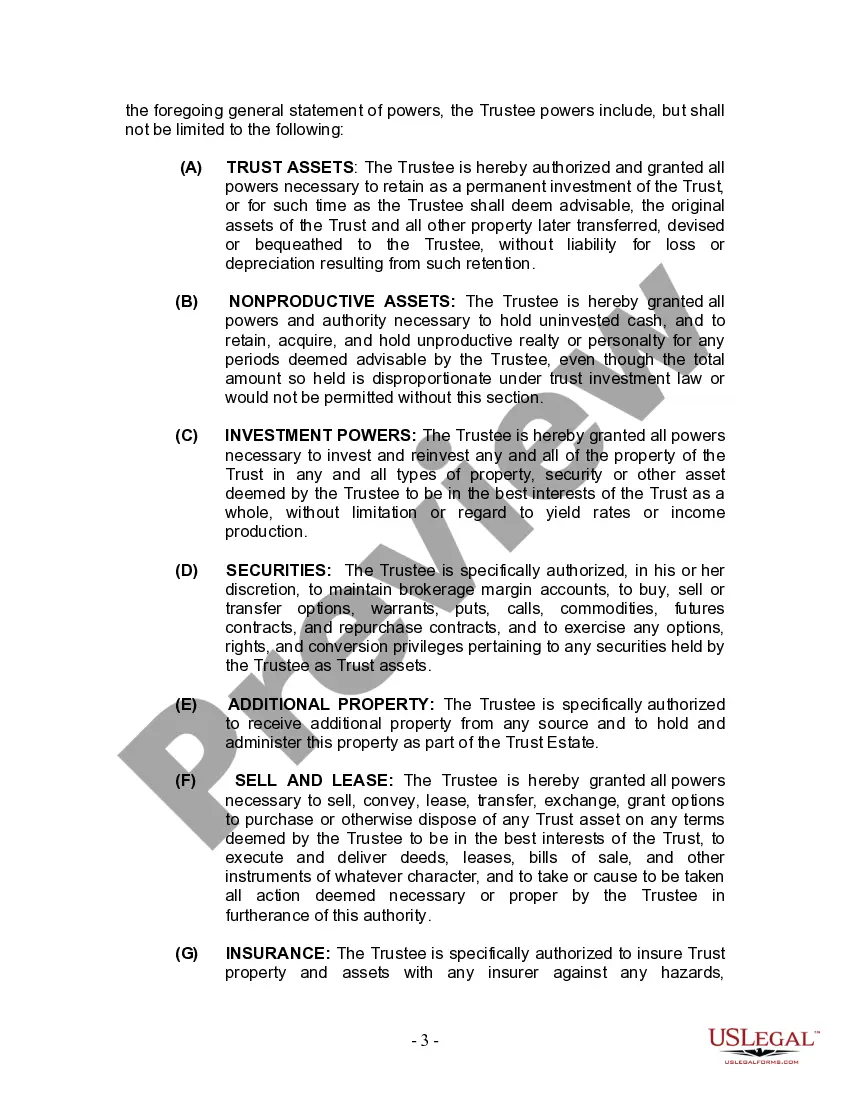
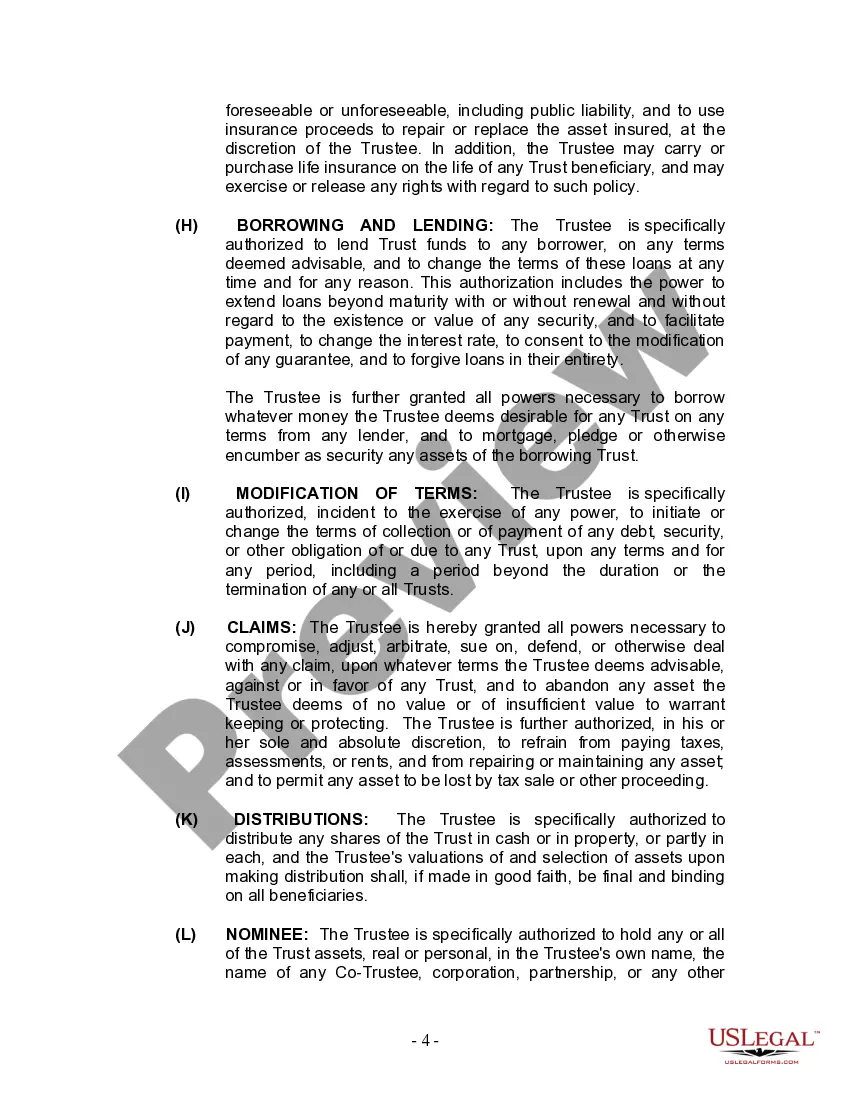
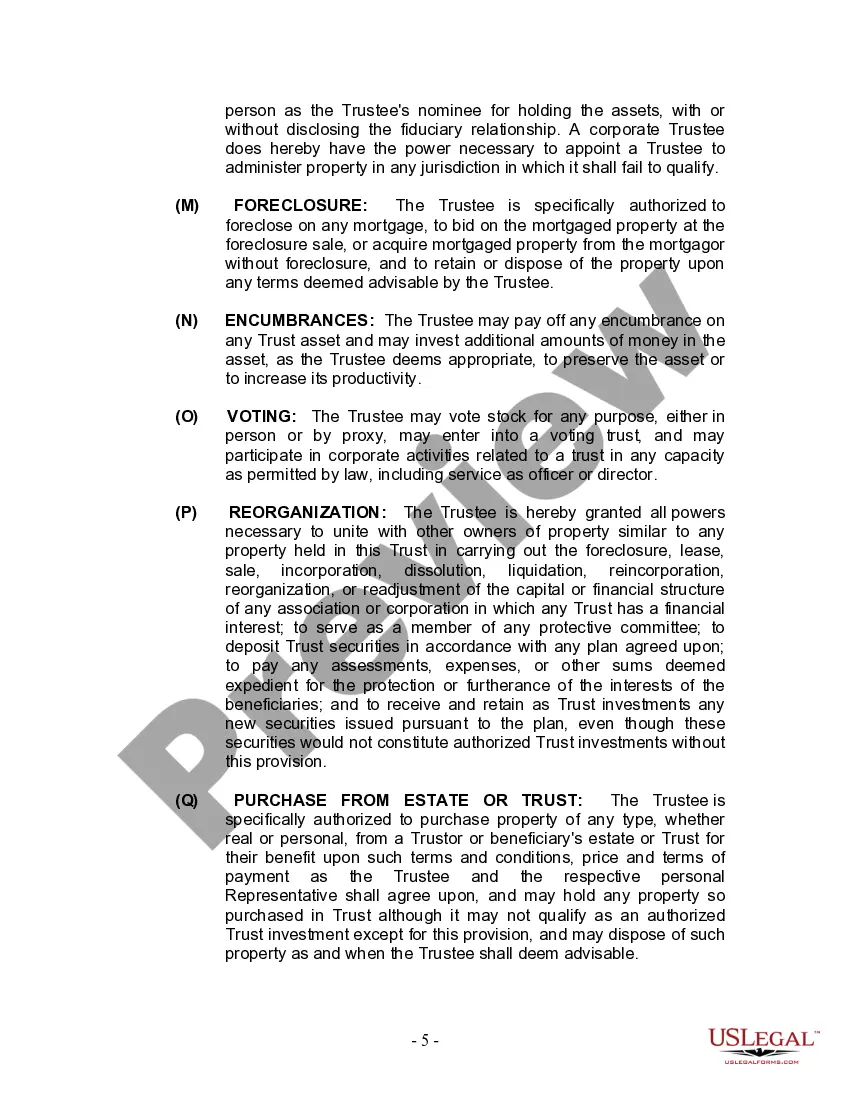
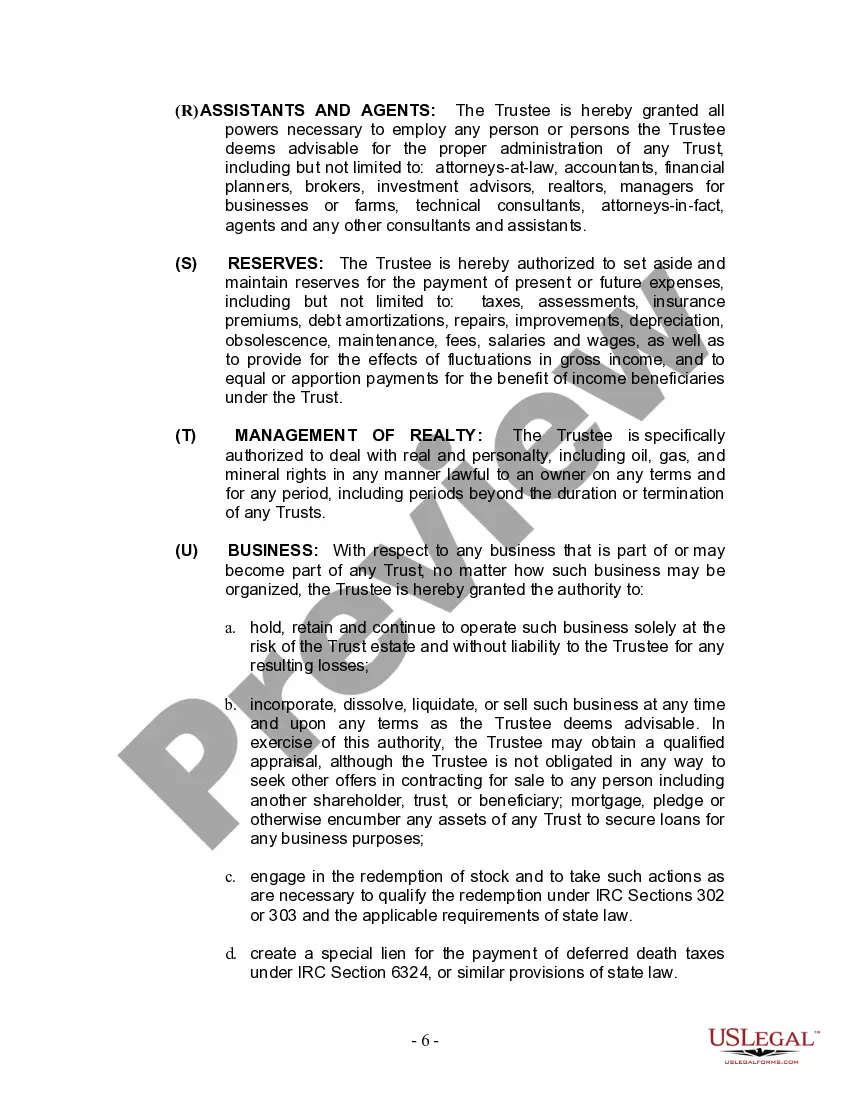
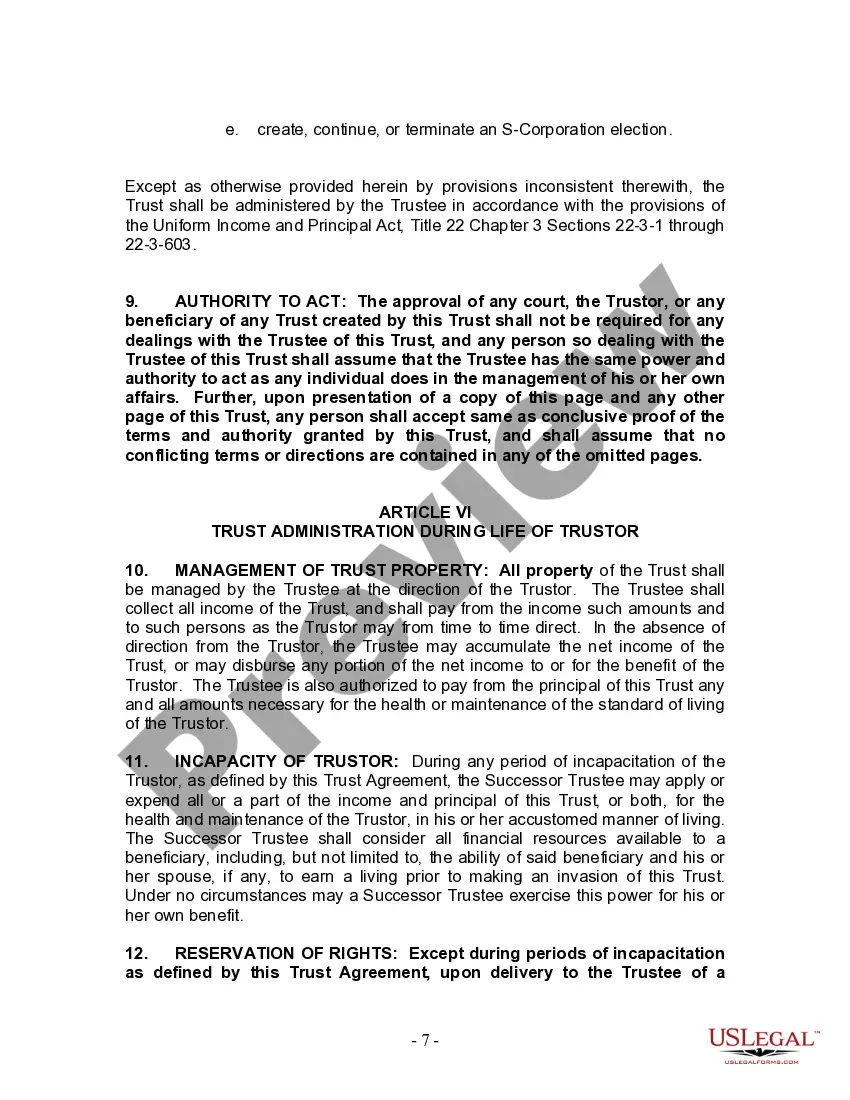
- Provisions for the managing and investment powers granted to the Trustee.


Common use cases
This revocable living trust should be used when a married couple wants to establish an estate plan that allows them to manage their assets during their lifetime while ensuring a seamless transition of their property after death. It is useful for couples without children who wish to avoid probate, minimize taxes, and dictate how their assets should be handled after their passing.
Intended users of this form
- Husbands and wives with no children who wish to manage their assets effectively.
- Couples wanting to establish a trust to avoid probate and simplify estate management.
- Individuals who desire control over how their assets are distributed after death.
How to complete this form
- Identify all parties involved by entering the names of the Trustors (husband and wife).
- Appoint a Trustee by designating one of the Trustors or another individual as the Trust's manager.
- Specify the assets to be included in the trust by listing them in the designated section.
- Determine how the assets will be distributed upon the death of the Trustor(s) within the agreement.
- Sign the agreement in front of a notary public to validate the trust.
Does this form need to be notarized?
To make this form legally binding, it must be notarized. Our online notarization service, powered by Notarize, lets you verify and sign documents remotely through an encrypted video session.
Get your form ready online
Our built-in tools help you complete, sign, share, and store your documents in one place.
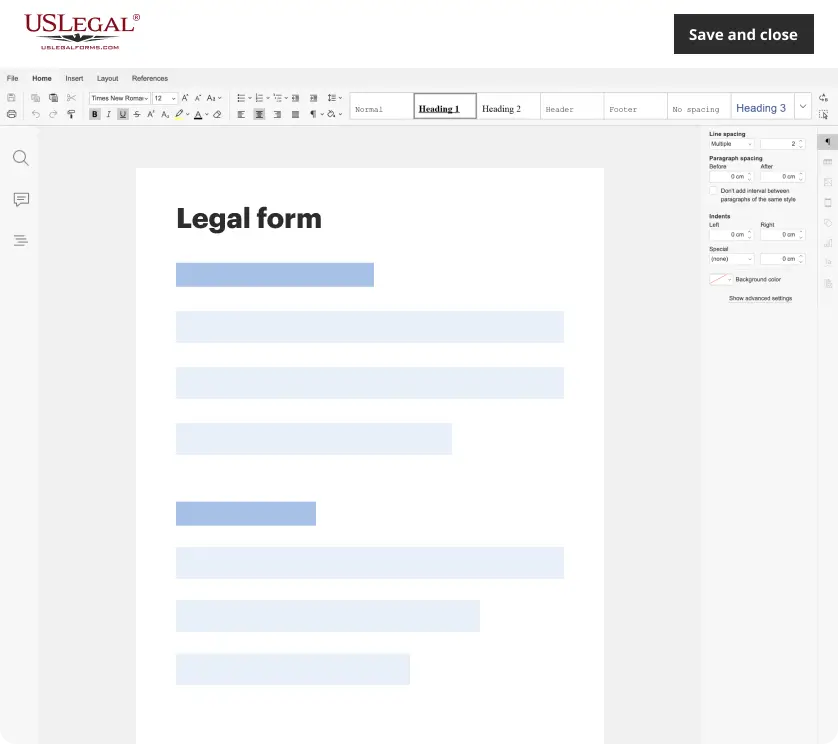
Make edits, fill in missing information, and update formatting in US Legal Forms—just like you would in MS Word.
Download a copy, print it, send it by email, or mail it via USPS—whatever works best for your next step.
Sign and collect signatures with our SignNow integration. Send to multiple recipients, set reminders, and more. Go Premium to unlock E-Sign.
If this form requires notarization, complete it online through a secure video call—no need to meet a notary in person or wait for an appointment.
We protect your documents and personal data by following strict security and privacy standards.
Make edits, fill in missing information, and update formatting in US Legal Forms—just like you would in MS Word.
Download a copy, print it, send it by email, or mail it via USPS—whatever works best for your next step.
Sign and collect signatures with our SignNow integration. Send to multiple recipients, set reminders, and more. Go Premium to unlock E-Sign.
If this form requires notarization, complete it online through a secure video call—no need to meet a notary in person or wait for an appointment.
We protect your documents and personal data by following strict security and privacy standards.
Mistakes to watch out for
- Failing to list all assets intended for the trust properly.
- Not designating a clear successor trustee.
- Leaving the trust unsigned or improperly notarized.
- Not reviewing the trust periodically to ensure it meets current needs and laws.
Why complete this form online
- Convenient access to customizable legal forms that can be tailored to personal needs.
- Edit and download the trust agreement at your convenience.
- Reliability, as the forms are prepared by licensed attorneys familiar with Utah law.
Key takeaways
- The revocable living trust provides asset management during your lifetime and directs asset distribution after your death.
- It simplifies estate management and avoids probate, making the process easier for your beneficiaries.
- Important details include designating a trustee and clearly stating the trust's terms for managing and distributing assets.
Looking for another form?

Form popularity
FAQ
Most married couples own most of their assets jointly. Assets owned jointly between husband and wife pass automatically to the survivor.This requires the will to be probated and an executor to be appointed in order to secure the assets. There are exceptions to the probate requirement for estates of $50,000 or less.
The Spouse Is the Automatic Beneficiary for Married People A federal law, the Employee Retirement Income Security Act (ERISA), governs most pensions and retirement accounts.
This law states that no matter what your will says, your spouse has a right to inherit one-third or one-half (depending on the state and sometimes depending on the length of the marriage) of your total estate. To exercise this right, your spouse has to petition the probate court to enforce the law.
Many married couples own most of their assets jointly with the right of survivorship. When one spouse dies, the surviving spouse automatically receives complete ownership of the property. This distribution cannot be changed by Will.
California is a community property state, which means that following the death of a spouse, the surviving spouse will have entitlement to one-half of the community property (i.e., property that was acquired over the course of the marriage, regardless of which spouse acquired it).
A "living trust" (also called an "inter vivos" trust by lawyers who can't give up Latin) is simply a trust you create while you're alive, rather than one that is created at your death under the terms of your will. The beneficiaries you name in your living trust receive the trust property when you die.
Without a living trust, our estate (everything we own) would go to probate. Probate is where the courts oversee having all of your affairs wrapped up after you die. As with all things governmental, probate can take a while, so your assets would be inaccessible for a time.
Under California law, a marriage automatically invalidates any pre-existing will or trust as to the new spouse's inheritance rights, unless the documents provide for a new spouse, or clearly indicate a new spouse will receive nothing.
Under California law, a marriage automatically invalidates any pre-existing will or trust as to the new spouse's inheritance rights, unless the documents provide for a new spouse, or clearly indicate a new spouse will receive nothing.