Utah Marital Domestic Separation and Property Settlement Agreement Minor Children no Joint Property or Debts where Divorce Action Filed
About this form
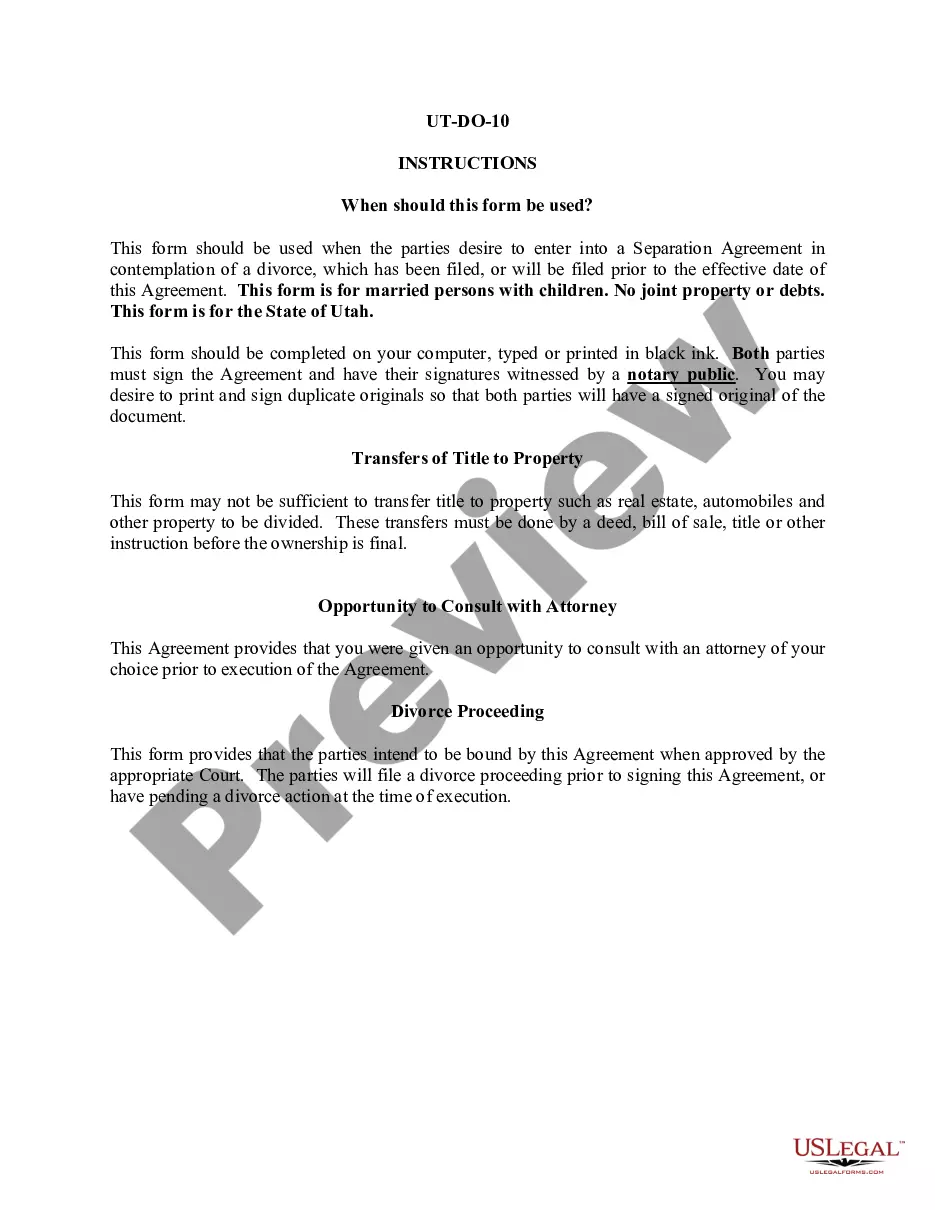
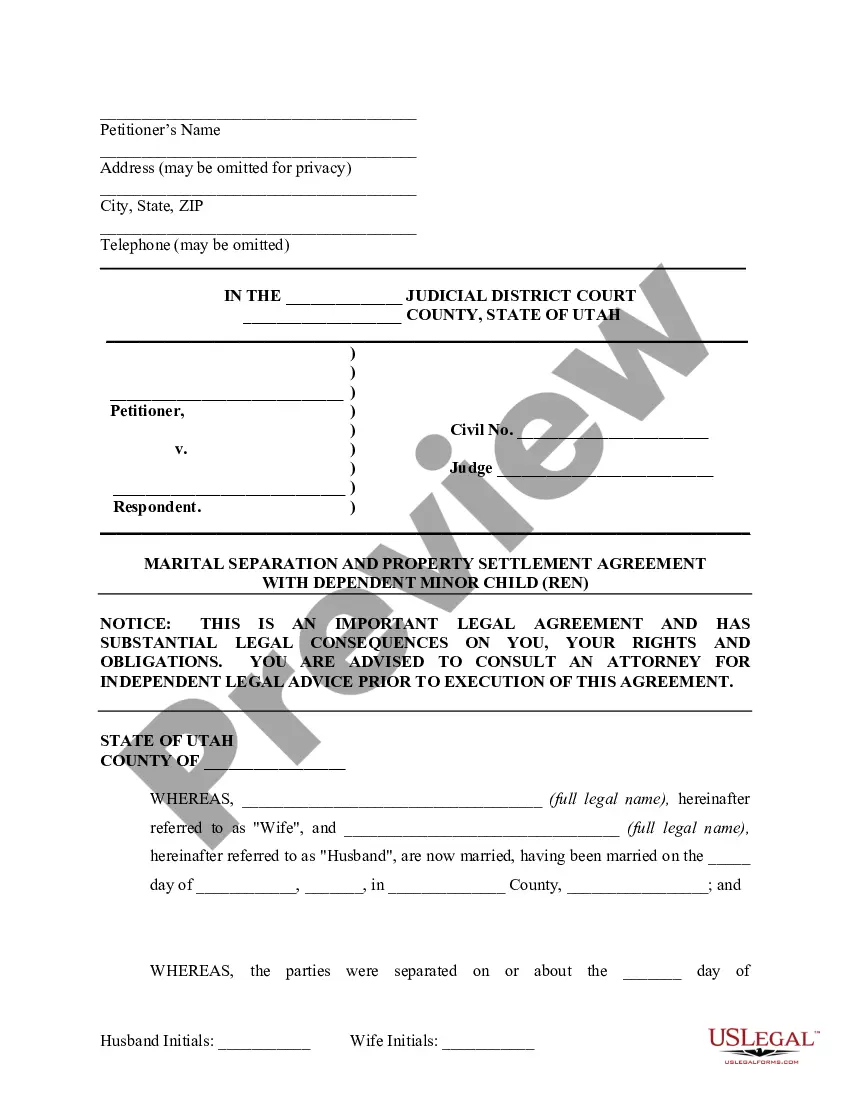
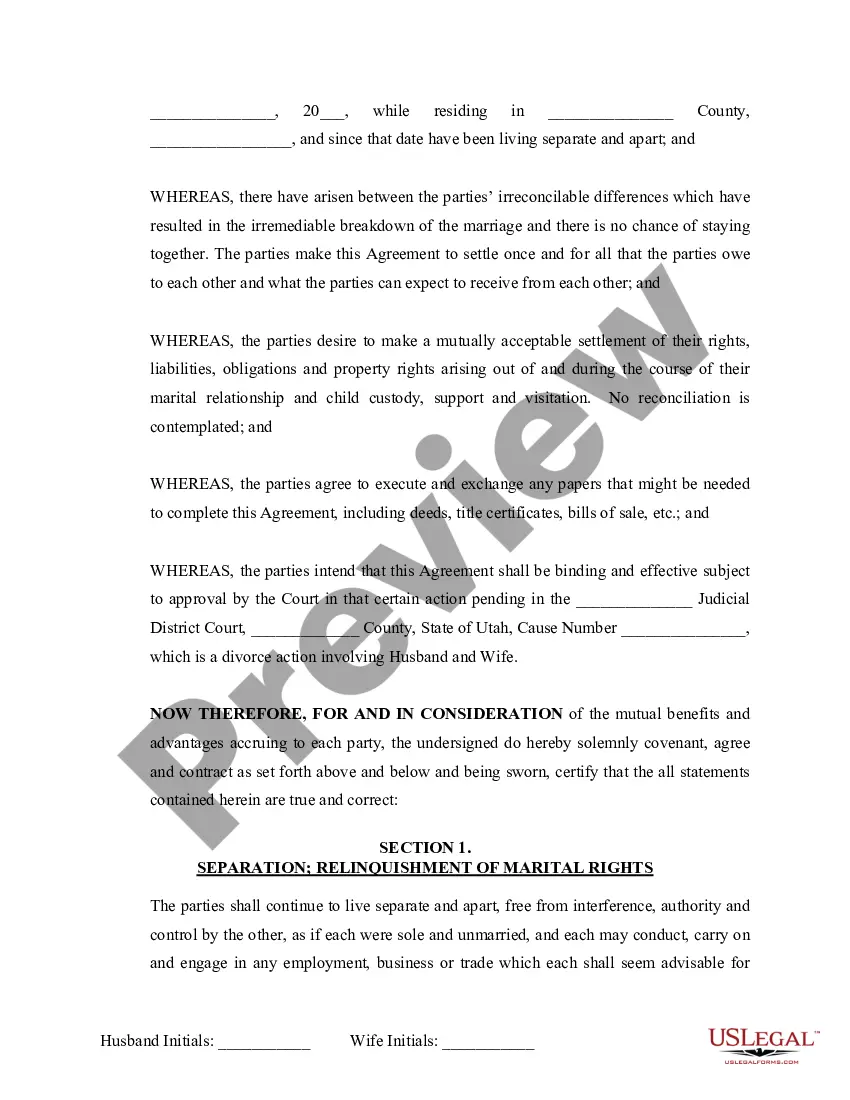
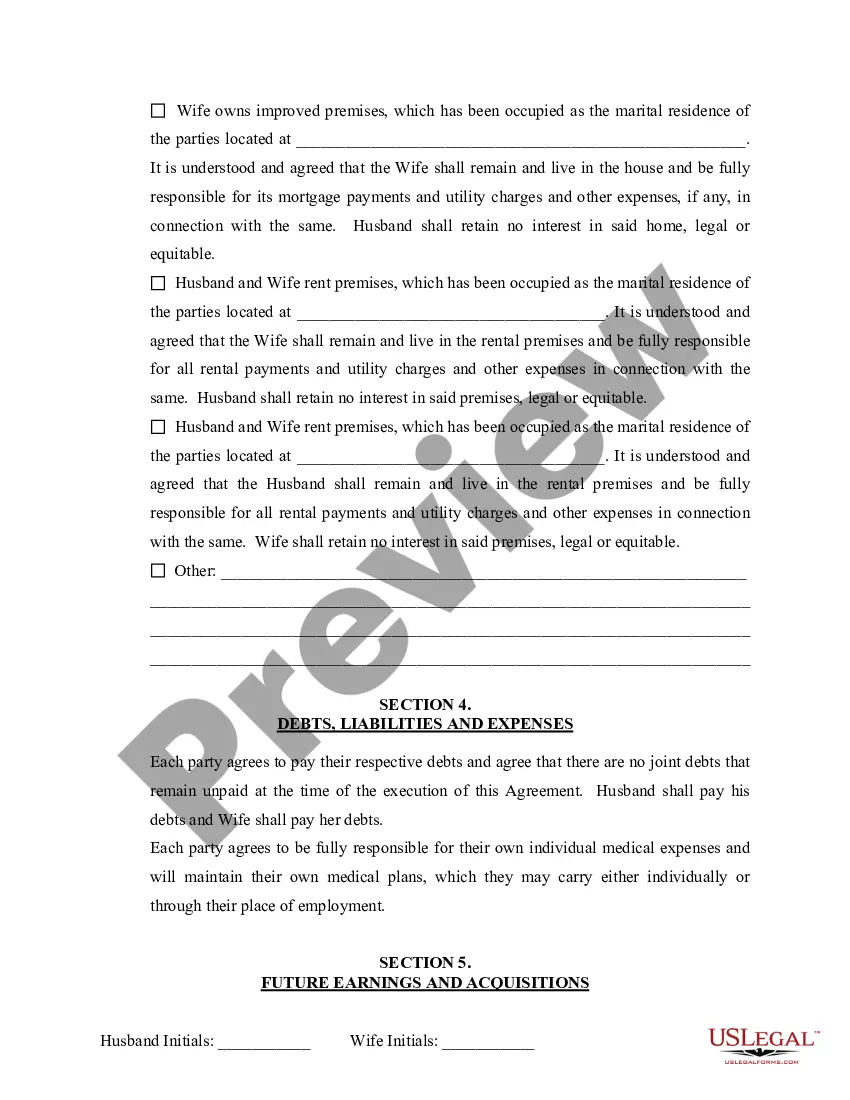
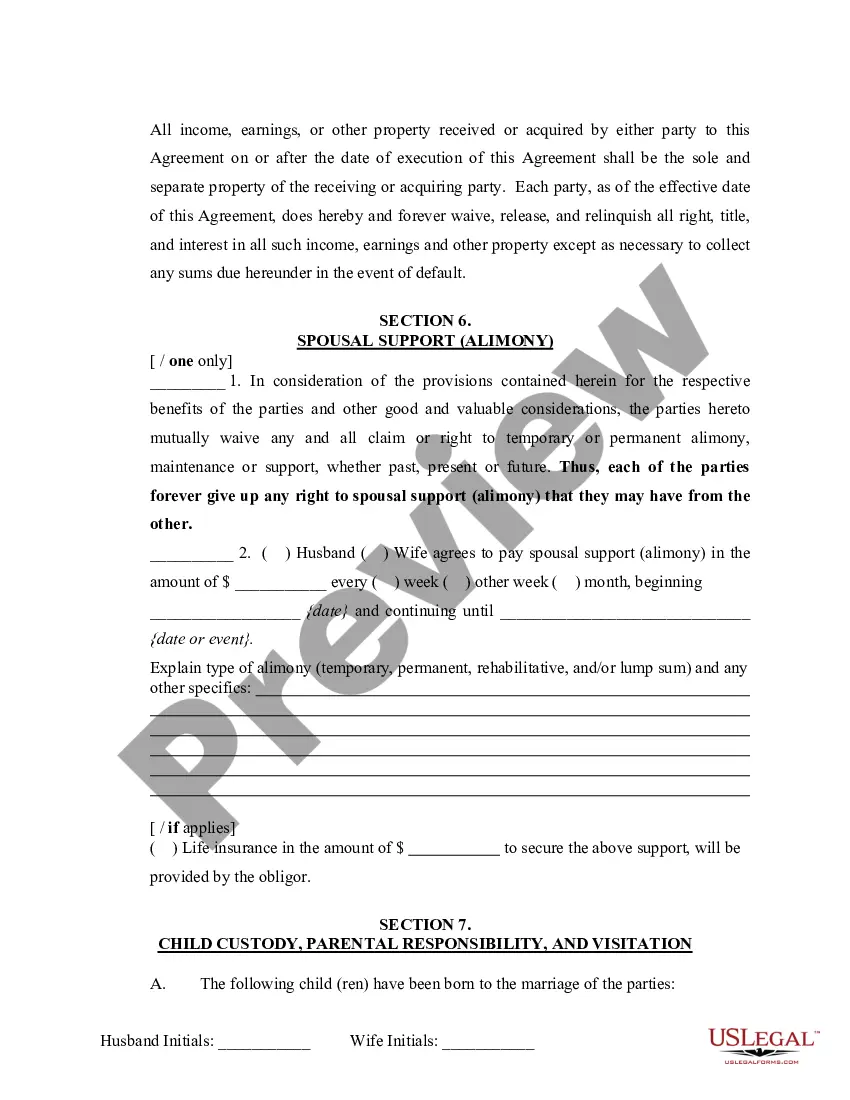
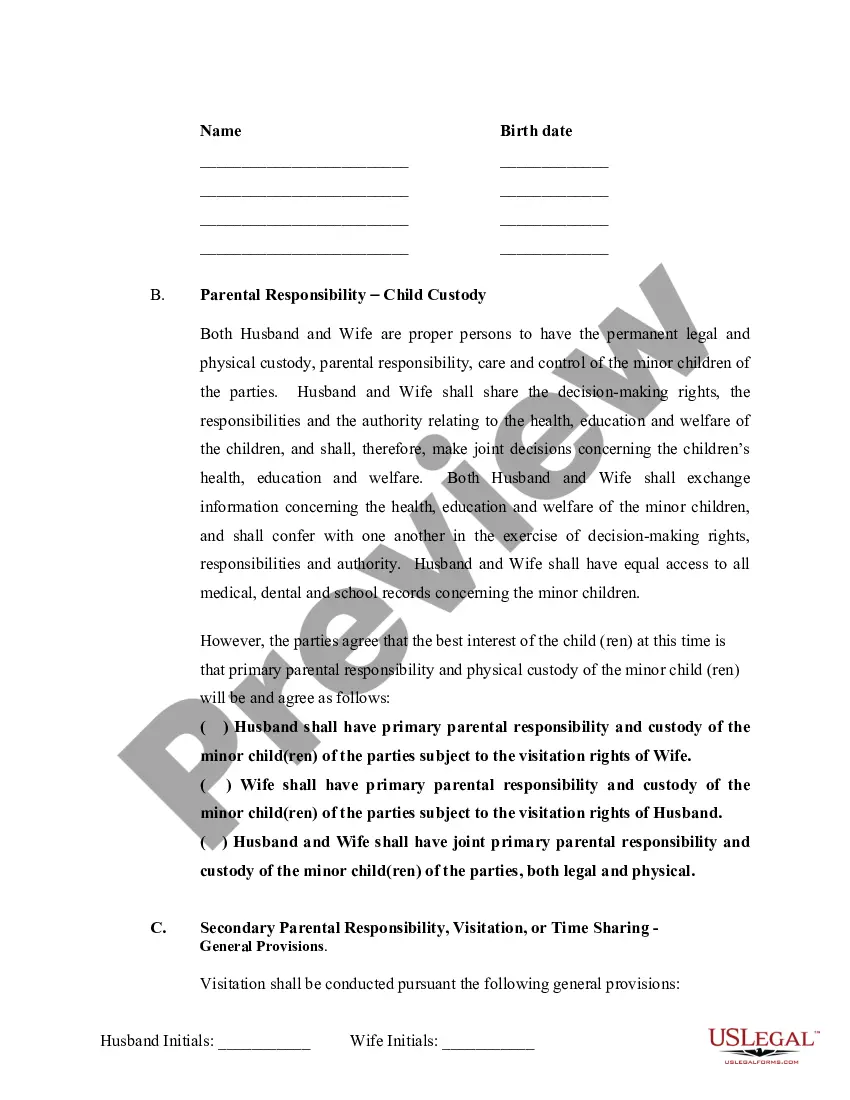
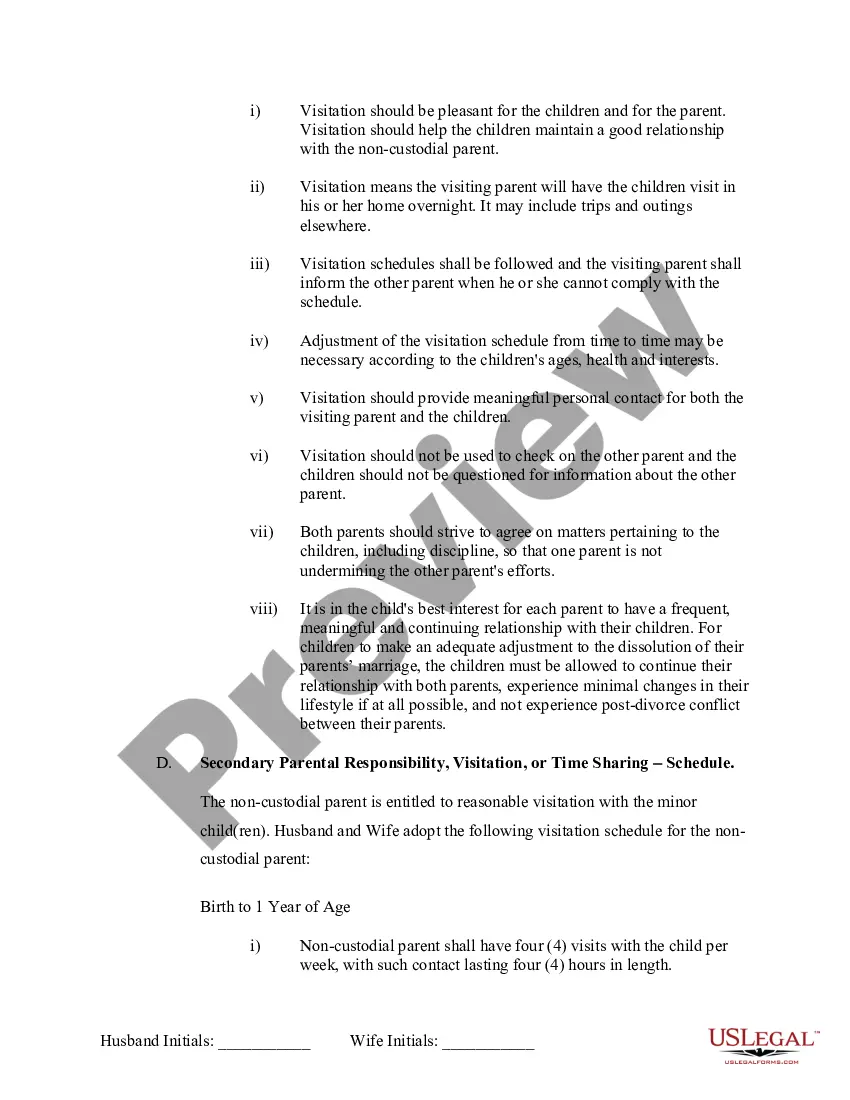
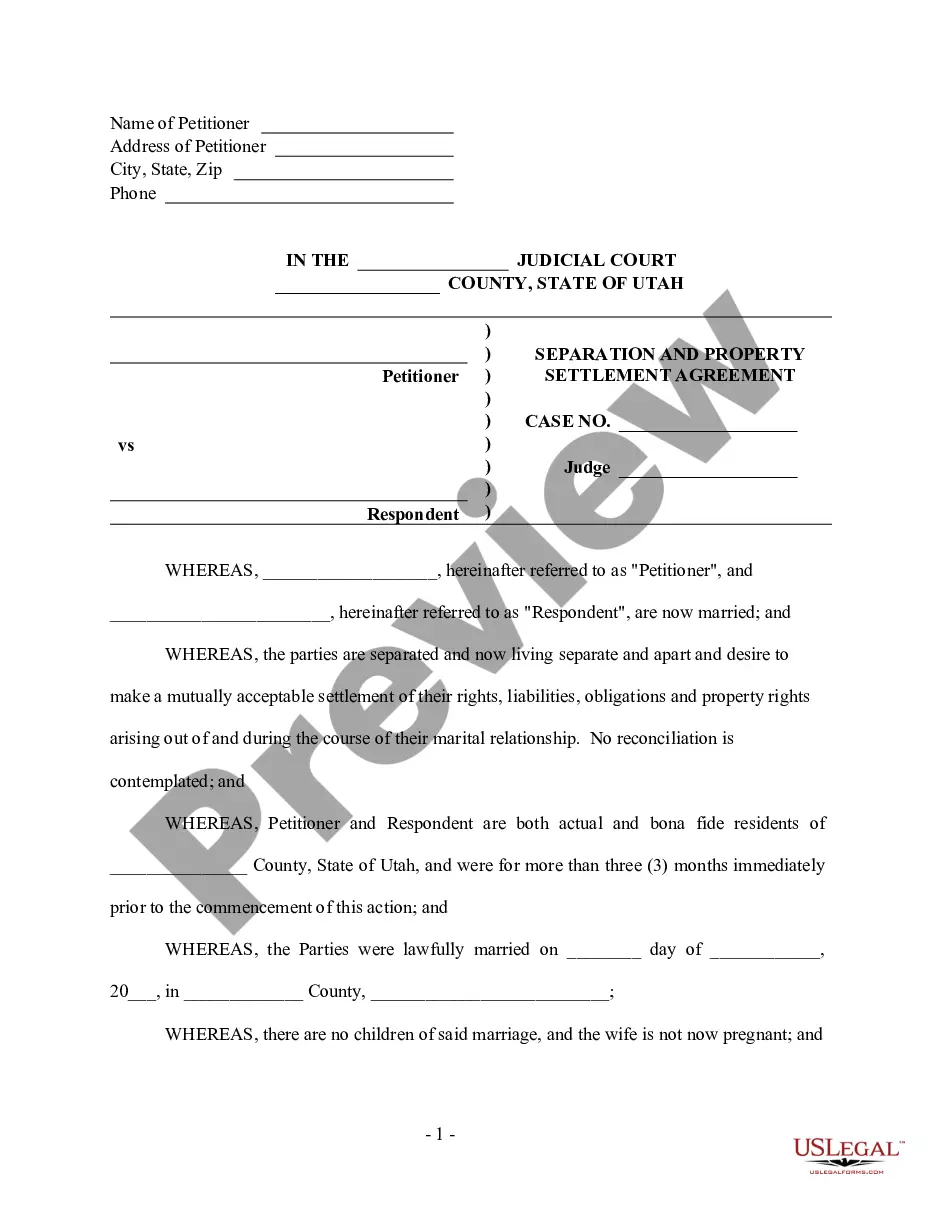
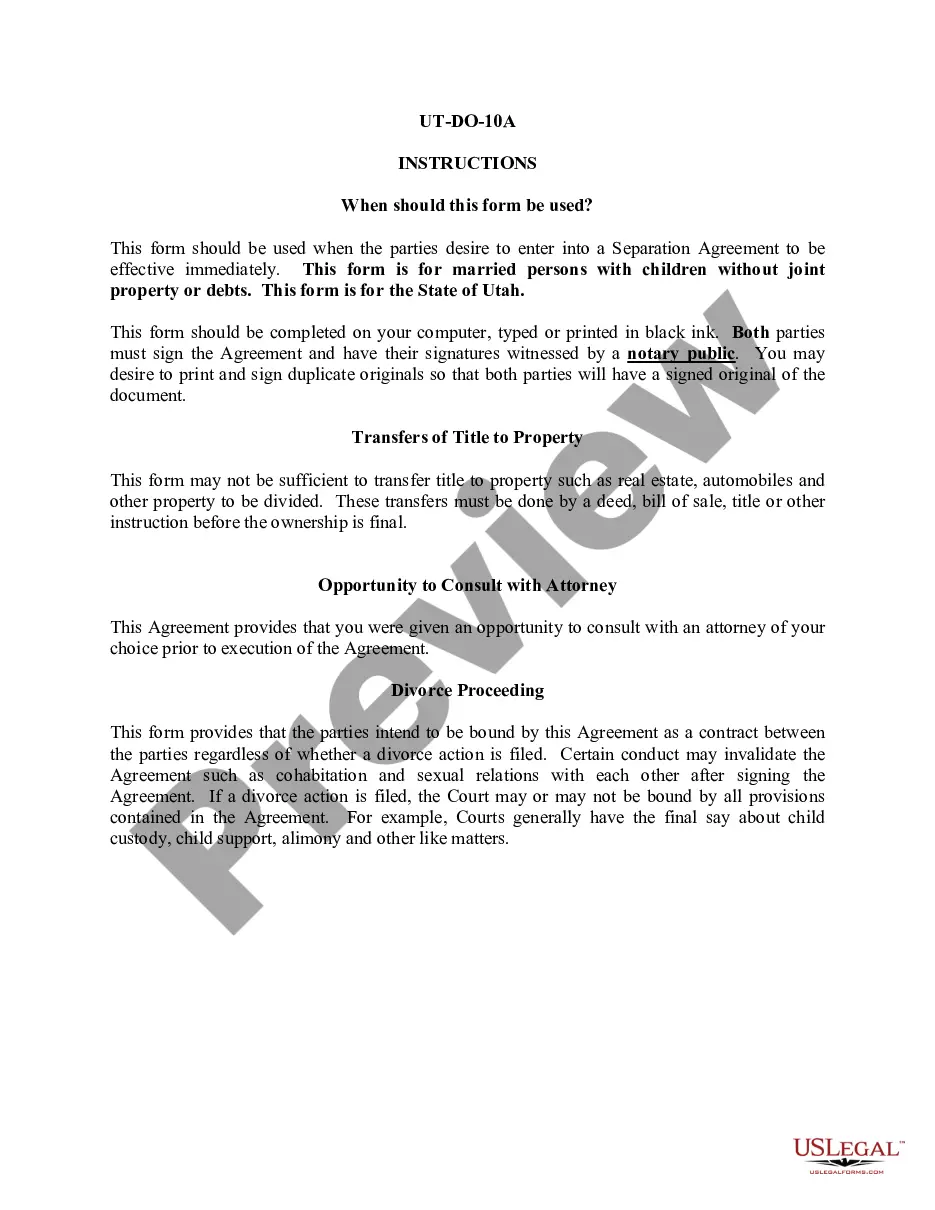
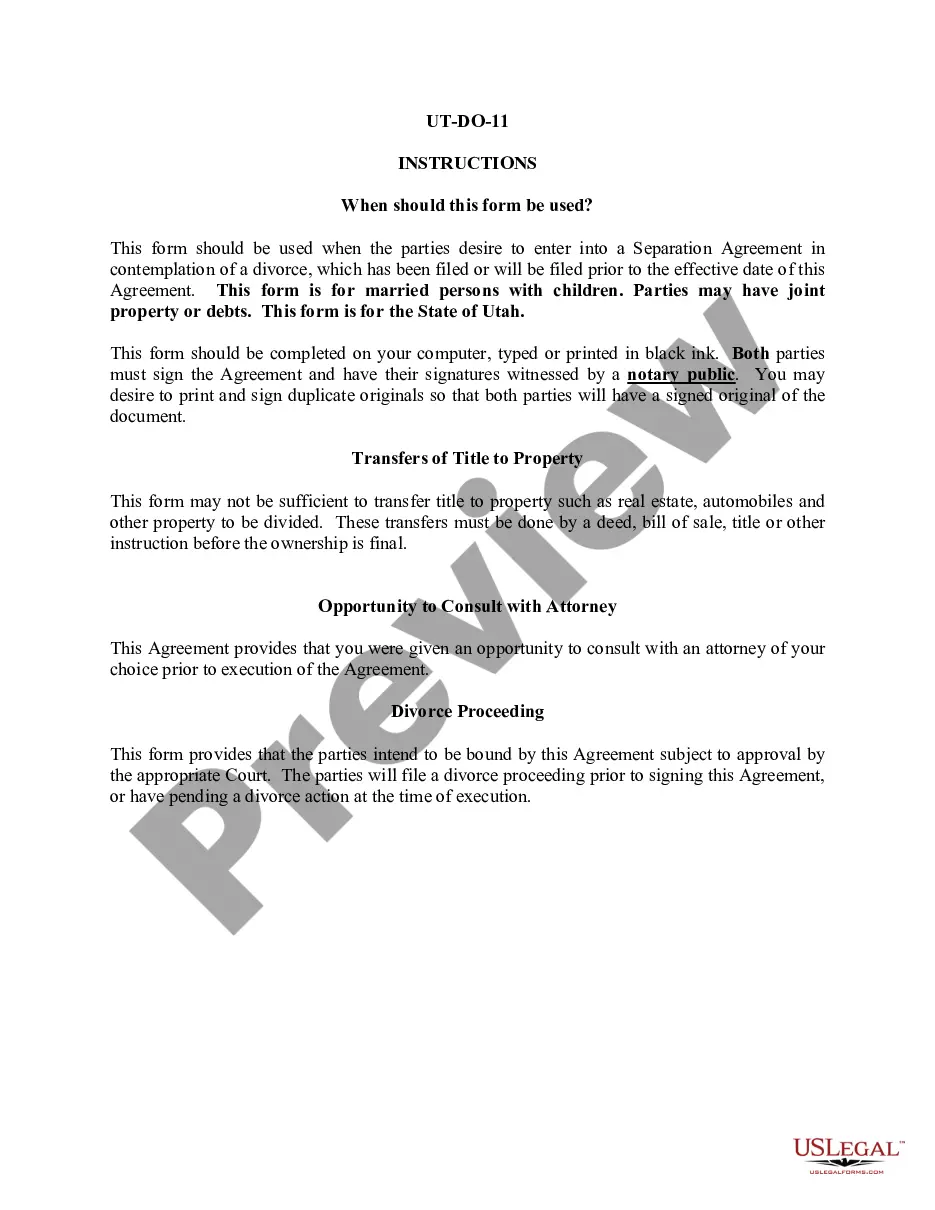
This Marital Domestic Separation and Property Settlement Agreement is a legally binding document tailored for couples with minor children who have filed for divorce. It addresses child custody, visitation rights, and child support, while clarifying that there are no joint property or debts between the parties. This form is distinct in its specific focus on families with children and the absence of shared property, differentiating it from other separation agreements.
Main sections of this form
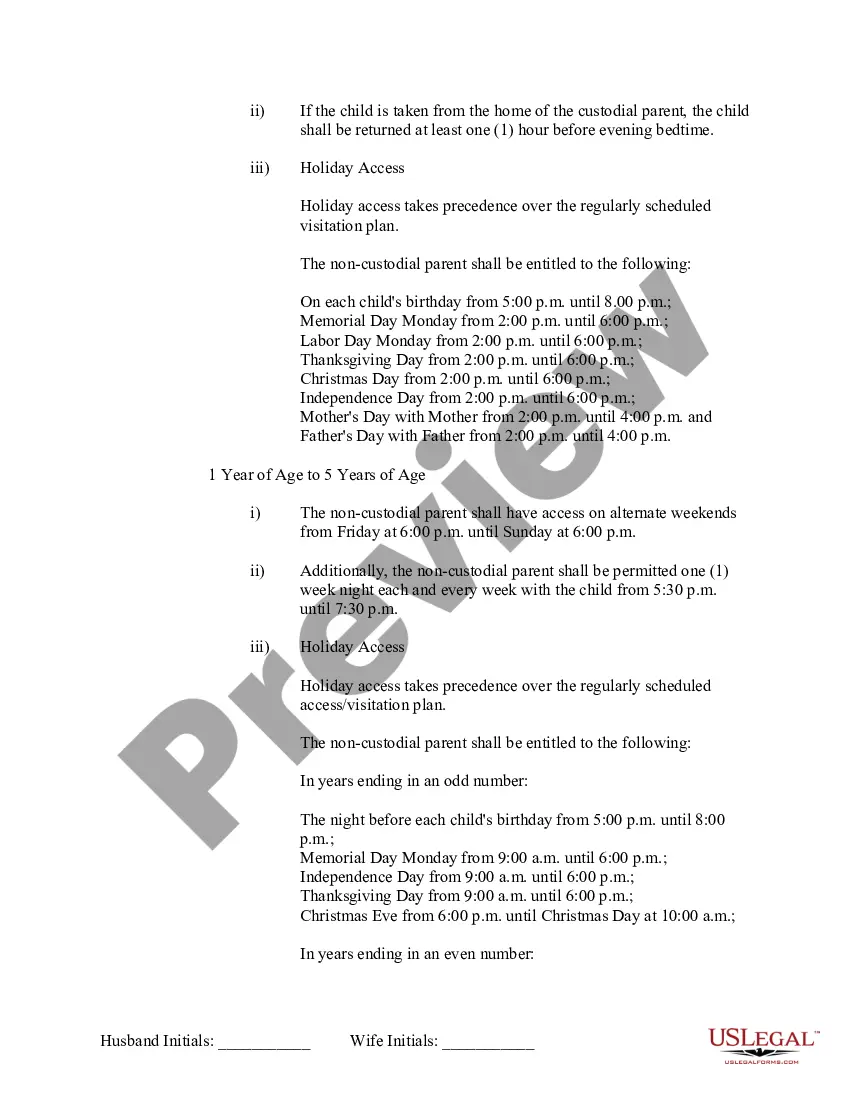
- Details regarding custody and visitation arrangements for minor children.
- Provisions for child support and any agreements concerning alimony.
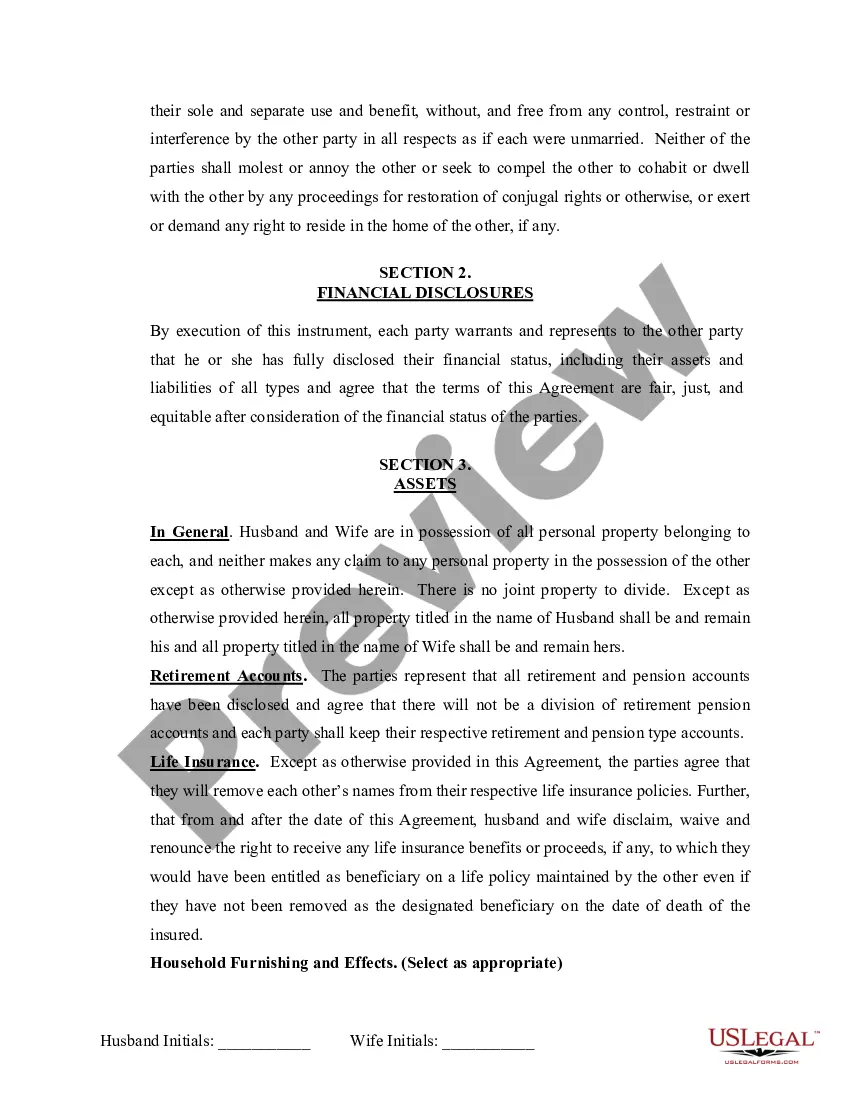
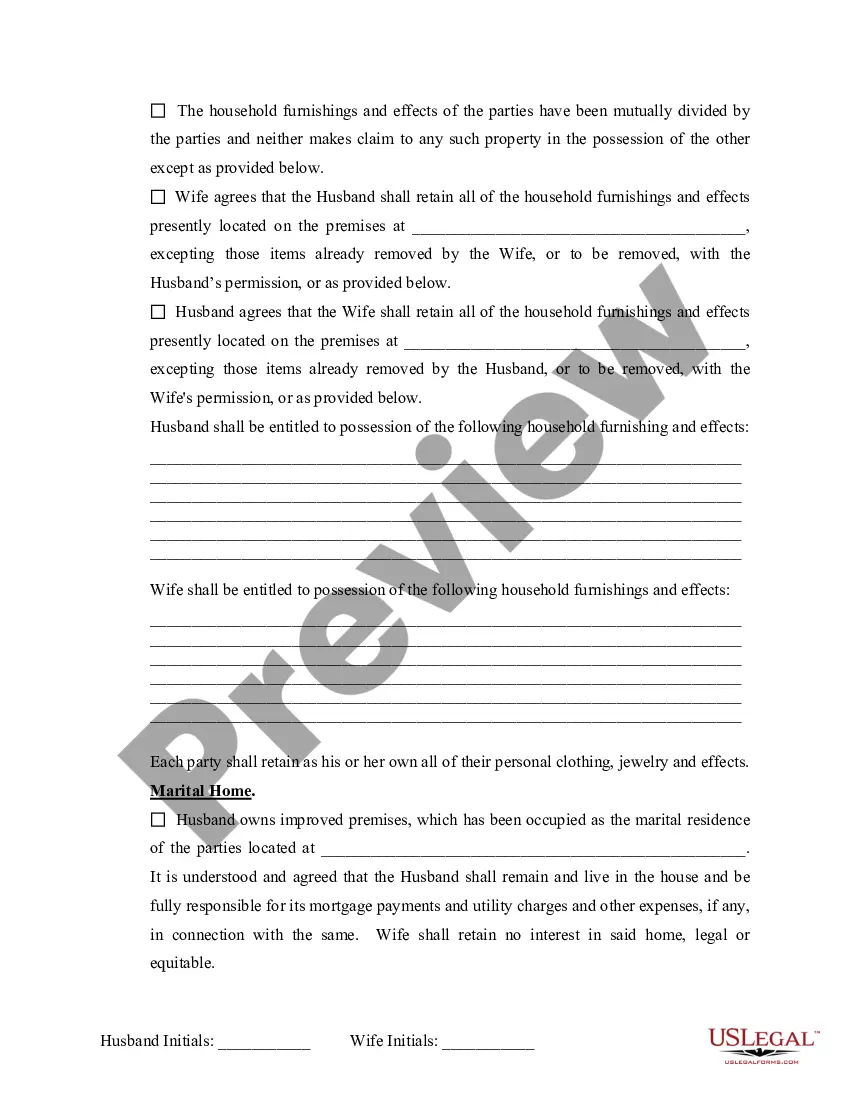
- Sections addressing the separation of assets, debts, and liabilities.
- Signature requirements for both parties along with notarization details.
- Clauses that affirm the absence of joint property or debts.

When this form is needed
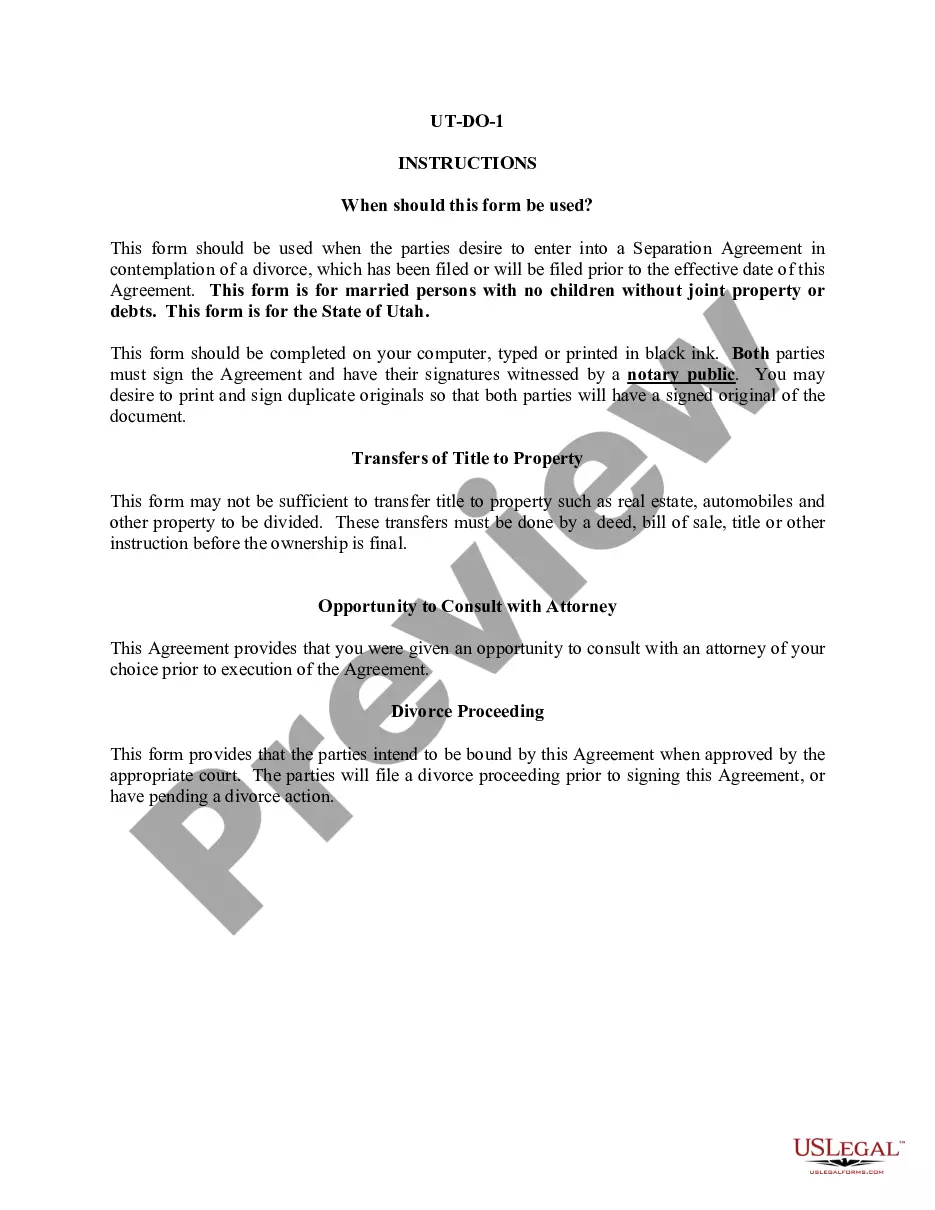
This form should be used when married individuals with minor children are contemplating a divorce and do not possess any joint property or debts. It is especially relevant during the divorce proceedings in the State of Utah, assisting in resolving custody and support issues prior to finalizing the divorce.
Intended users of this form
- Married couples residing in Utah with dependent minor children.
- Couples currently undergoing divorce proceedings without any joint assets or debts.
- Individuals looking to formalize arrangements regarding child custody and support.
Instructions for completing this form
- Identify and enter the full legal names of both parties, including any relevant address details.
- Specify the custody arrangements, visitation schedules, and child support amounts clearly.
- Detail any agreements regarding financial responsibilities, including alimony and debts.
- Ensure both parties sign the document in the presence of a notary public.
- Consider making duplicate originals for each party's records.
Notarization guidance
Yes, this form must be notarized to be legally valid. Each party's signature needs to be witnessed by a notary public, which can be easily accomplished through US Legal Formsâ integrated online notarization services, available 24/7, ensuring a secure and legal process without the need for travel.
Get your form ready online
Our built-in tools help you complete, sign, share, and store your documents in one place.
Make edits, fill in missing information, and update formatting in US Legal Forms—just like you would in MS Word.
Download a copy, print it, send it by email, or mail it via USPS—whatever works best for your next step.
Sign and collect signatures with our SignNow integration. Send to multiple recipients, set reminders, and more. Go Premium to unlock E-Sign.
If this form requires notarization, complete it online through a secure video call—no need to meet a notary in person or wait for an appointment.
We protect your documents and personal data by following strict security and privacy standards.

Make edits, fill in missing information, and update formatting in US Legal Forms—just like you would in MS Word.

Download a copy, print it, send it by email, or mail it via USPS—whatever works best for your next step.

Sign and collect signatures with our SignNow integration. Send to multiple recipients, set reminders, and more. Go Premium to unlock E-Sign.

If this form requires notarization, complete it online through a secure video call—no need to meet a notary in person or wait for an appointment.

We protect your documents and personal data by following strict security and privacy standards.
Mistakes to watch out for
- Failing to include complete and accurate information about children.
- Not specifying visitation schedules or terms of child support clearly.
- Overlooking signature and notarization requirements, which may invalidate the agreement.
- Neglecting to discuss and agree on financial responsibilities before execution.
Why complete this form online
- Convenient access allows users to download and fill the form at their pace.
- Editability enables customization to reflect unique situations and needs.
- Reliability, with templates drafted by licensed attorneys ensuring legal compliance.
Main things to remember
- This Agreement facilitates the separation process for married couples with minor children.
- Legal notarization is required for validity.
- Ensure both parties clearly understand and agree on custody and support arrangements.
- This form is tailored to comply with Utah state laws.
Looking for another form?



Form popularity
FAQ
Cohabitation is defined as two individuals that live together and are not married. According to the Utah Supreme Court case of Myers v. Myers, this is when two people are engaged in a romantic relationship and spend most or all of their time living together.
How property is divided in a divorce. Utah law requires an equitable division of marital property. Equitable means fair, which is not necessarily equal.For long-term marriages, equitable may mean a 50-50 split, or the court may decide that it is fair to give one party more or less than 50% of the property.
Only one spouse needs to file for a divorce. Utah is a no-fault divorce state, meaning divorce can be granted without proving who is guilty. Although, if there is serious fault by one spouse that evidence can be used to affect the ultimate judgment, such as in alimony awards or property divisions.
Is Utah a community property state? Utah is NOT a community property state, which means that marital property is not automatically divided 50/50 between the spouses in a divorce case.
Most state courts will automatically enter a divorce decree if the parties have been legally separated for a period of time, often one to two years, and meet the basic eligibility requirements.
Utah is a marital property state. Community property issues can arise in divorce proceedings and after the death of a spouse. When spouses divorce or die, spouses are often left with the daunting task of splitting up property and proceeds that were acquired during the marriage.
Couples seeking legal separation must resolve issues similar to that of divorce, including child custody and visitation, dividing up property and child support, and paying debts. A separation agreement is a legal binding contract signed by spouses, which is intended to resolve property, debt and child related issues.
Most trial separations run for about six months. If you're apart too much longer than that, your chances of ever getting back together diminish enormously.
One of the issues to be settled in a divorce is the division of property acquired during marriage. Utah law recognizes that both spouses contribute to the property acquired during the marriage, regardless of the income source.