Utah Letter from Landlord to Tenant for Failure to use electrical, plumbing, sanitary, heating, ventilating, air conditioning and other facilities in a reasonable manner
Understanding this form
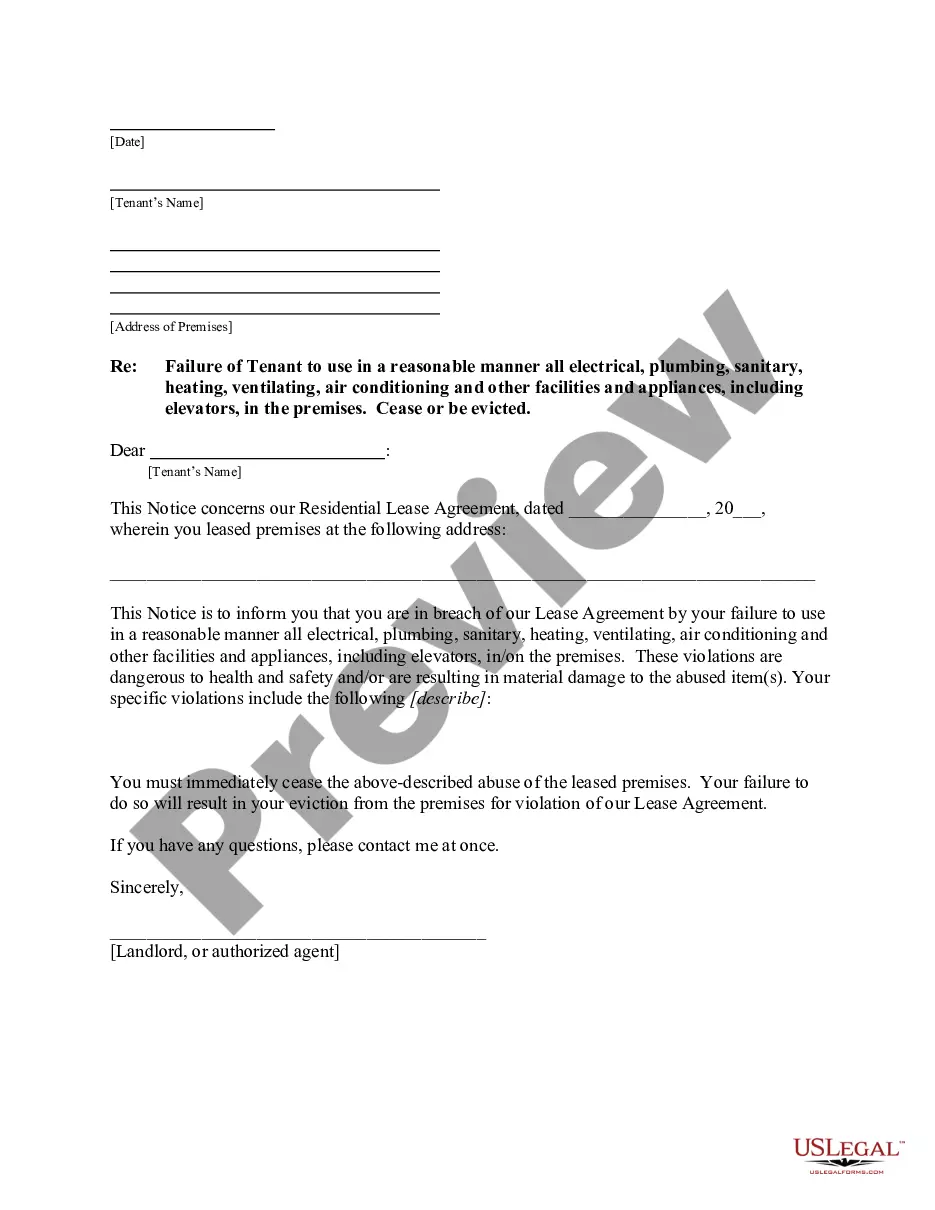
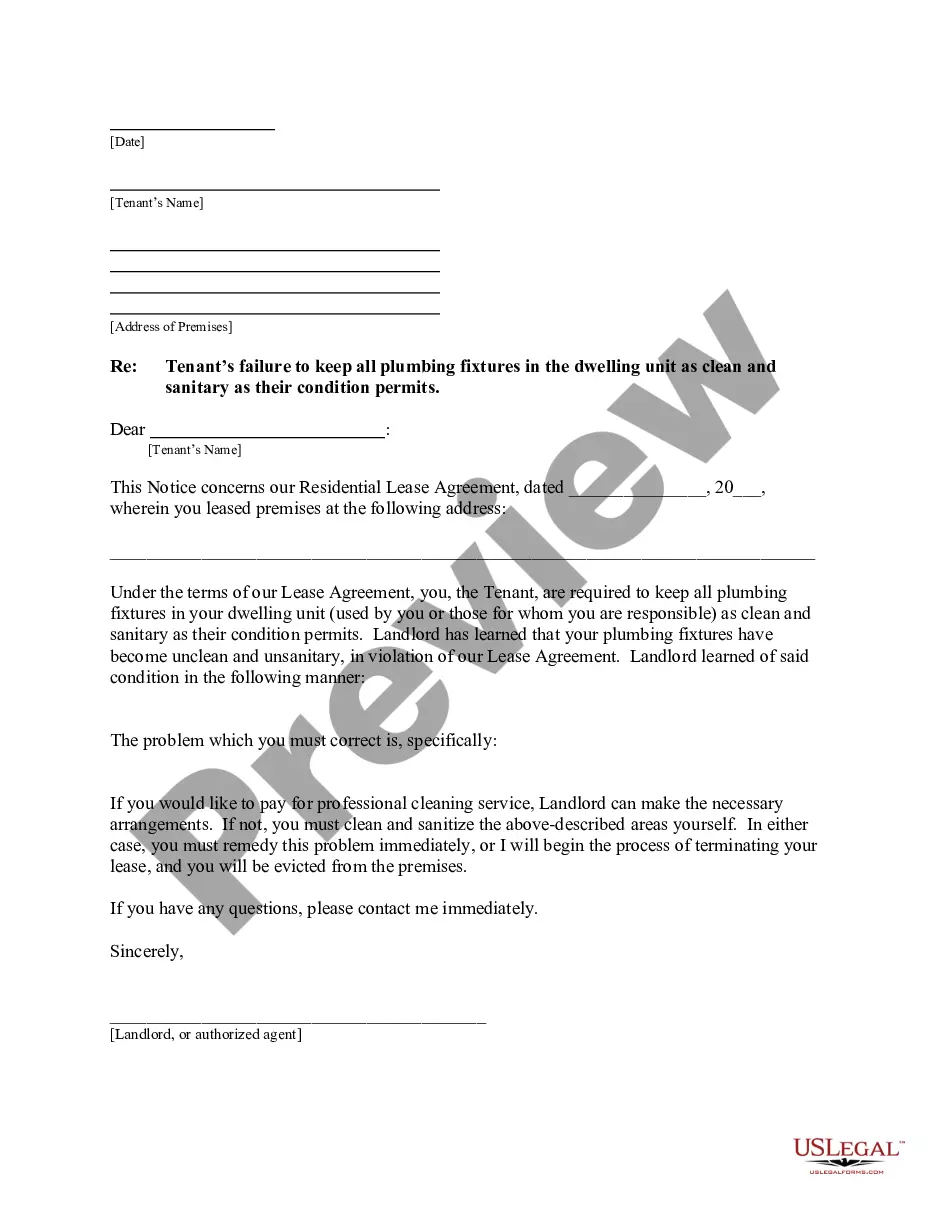
This form is a notice from a landlord to a tenant addressing the tenant's failure to use electrical, plumbing, sanitary, heating, ventilating, air conditioning, and other facilities in a reasonable manner. It serves as a warning that if the misuse continues, it could lead to eviction. This form is crucial for landlords to document issues with tenants' behavior regarding the use of provided facilities, distinguishing it from general eviction notices which may not specify the misuse of amenities.
Key components of this form
- Identification of the landlord and tenant.
- Description of the specific misuse of facilities.
- Statement indicating the potential consequences, including eviction.
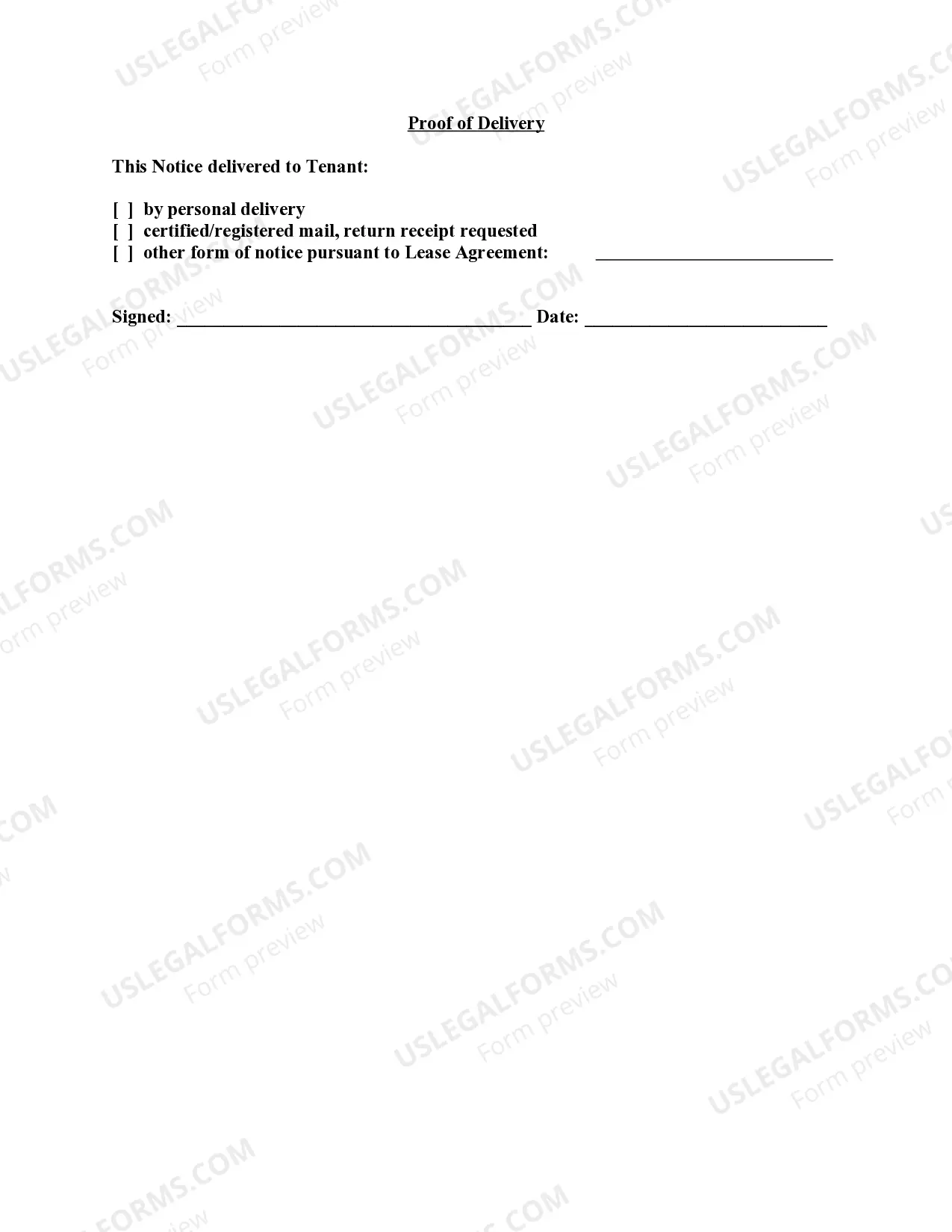
- Proof of delivery method to the tenant.


When to use this document
Who this form is for
- Landlords who are managing property rentals.
- Property management companies representing landlords.
- Tenants who wish to understand their rights related to facility use within a rental agreement.
How to complete this form
- Identify the landlord and tenant by entering their names and addresses.
- Describe the specific misuse of facilities, providing detailed examples.
- State the potential consequences of continued misuse, including possible eviction.
- Choose the method of delivery for the notice to the tenant.
- Sign the form indicating the landlord's agreement to its contents.
Is notarization required?
This form does not typically require notarization to be legally valid. However, some jurisdictions or document types may still require it. US Legal Forms provides secure online notarization powered by Notarize, available 24/7 for added convenience.
Get your form ready online
Our built-in tools help you complete, sign, share, and store your documents in one place.
Make edits, fill in missing information, and update formatting in US Legal Forms—just like you would in MS Word.
Download a copy, print it, send it by email, or mail it via USPS—whatever works best for your next step.
Sign and collect signatures with our SignNow integration. Send to multiple recipients, set reminders, and more. Go Premium to unlock E-Sign.
If this form requires notarization, complete it online through a secure video call—no need to meet a notary in person or wait for an appointment.
We protect your documents and personal data by following strict security and privacy standards.

Make edits, fill in missing information, and update formatting in US Legal Forms—just like you would in MS Word.

Download a copy, print it, send it by email, or mail it via USPS—whatever works best for your next step.

Sign and collect signatures with our SignNow integration. Send to multiple recipients, set reminders, and more. Go Premium to unlock E-Sign.

If this form requires notarization, complete it online through a secure video call—no need to meet a notary in person or wait for an appointment.

We protect your documents and personal data by following strict security and privacy standards.
Avoid these common issues
- Failing to include specific instances of usage violations.
- Not providing a clear warning regarding eviction consequences.
- Omitting signatures or dates, which can invalidate the notice.
Why use this form online
- Convenient access to legal templates that are easy to download.
- Editable to suit specific needs without complex legal jargon.
- Reliable documents drafted by licensed attorneys to ensure legal compliance.
Looking for another form?
Form popularity
FAQ
The big take-away is that in most circumstances a landlord cannot enter a property without agreement from the tenant. And If the landlord ignores the law and enters the property without permission, the tenant may be able to claim damages or gain an injunction to prevent the landlord doing it again.
Indiana. Indiana laws allow landlords to hold on to security deposits for 45 days to give them time to determine any damages caused by tenants. Colorado. Colorado is one of few states that allow landlords to access the rental property without an advance notice requirement. Georgia.
This question is about Utah Landlord Tenant RightsUtah is slightly landlord-friendly. The state does not have rent control and does not limit fees, but there are several business practices that landlords must abide by.
By the law, Utah tenants are required to abide in a certain way. They must follow certain procedures as outlined by the law as well. Tenants also have certain rights that they are entitled to, as well as things they are responsible for. The tenant has the right to dwell in a safe and sanitary housing unit.
Use Utah Legal Services to file an official report and receive legal assistance for your landlord complaint by visiting utahlegalservices.org. Visit utcourts.gov for information regarding your rights as a renter who is suing a landlord.
Generally, no. The landlord cannot raise the rent during a 12-month lease term. Once a year, HUD calculates the median gross income in each part of the U.S. LIHTC rent amounts are based upon this calculation. If the local average income increases, the LIHTC rent may be increased during the next 12-month lease term.
Restrictions on landlord's right to access rental property (Utah landlords must provide 24 hours' notice of entry unless the rental agreement specifies otherwise)