Kansas Complex Will with Credit Shelter Marital Trust for Large Estates
About this form
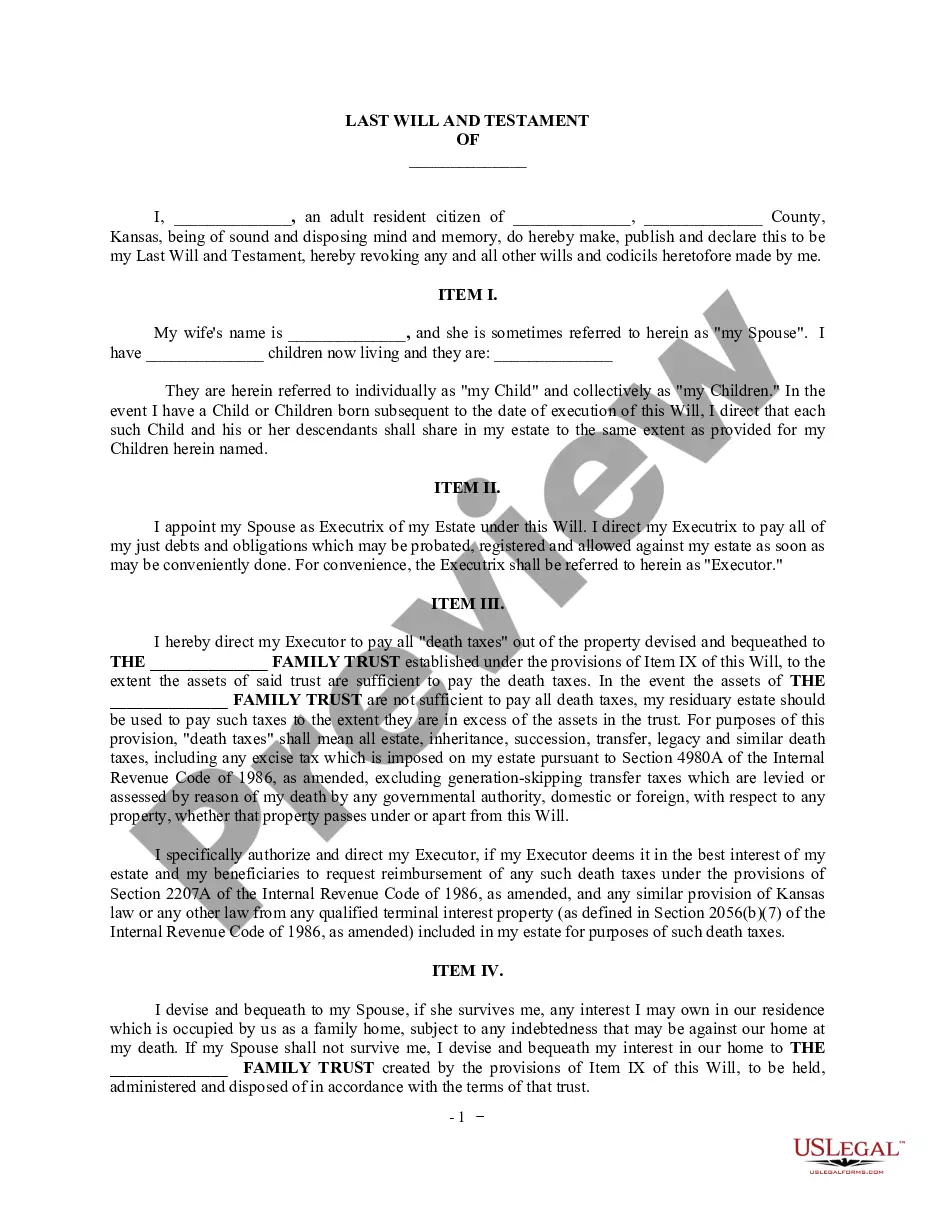
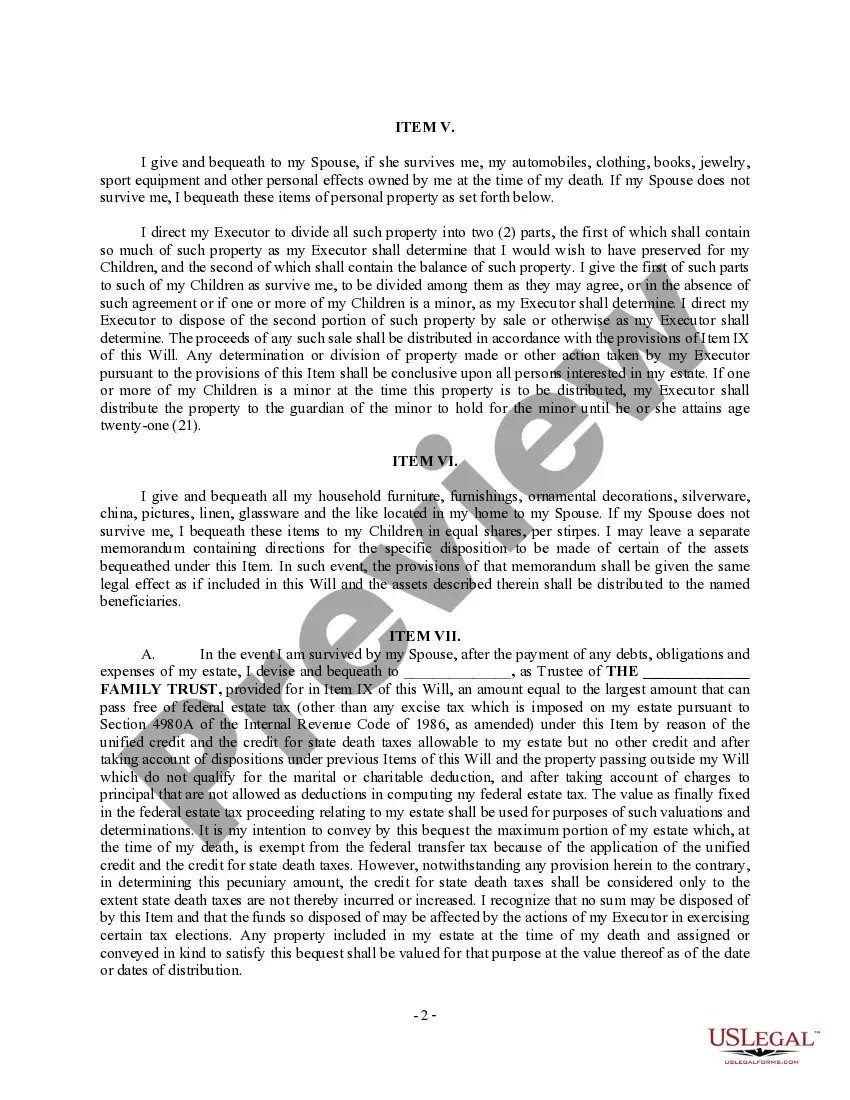
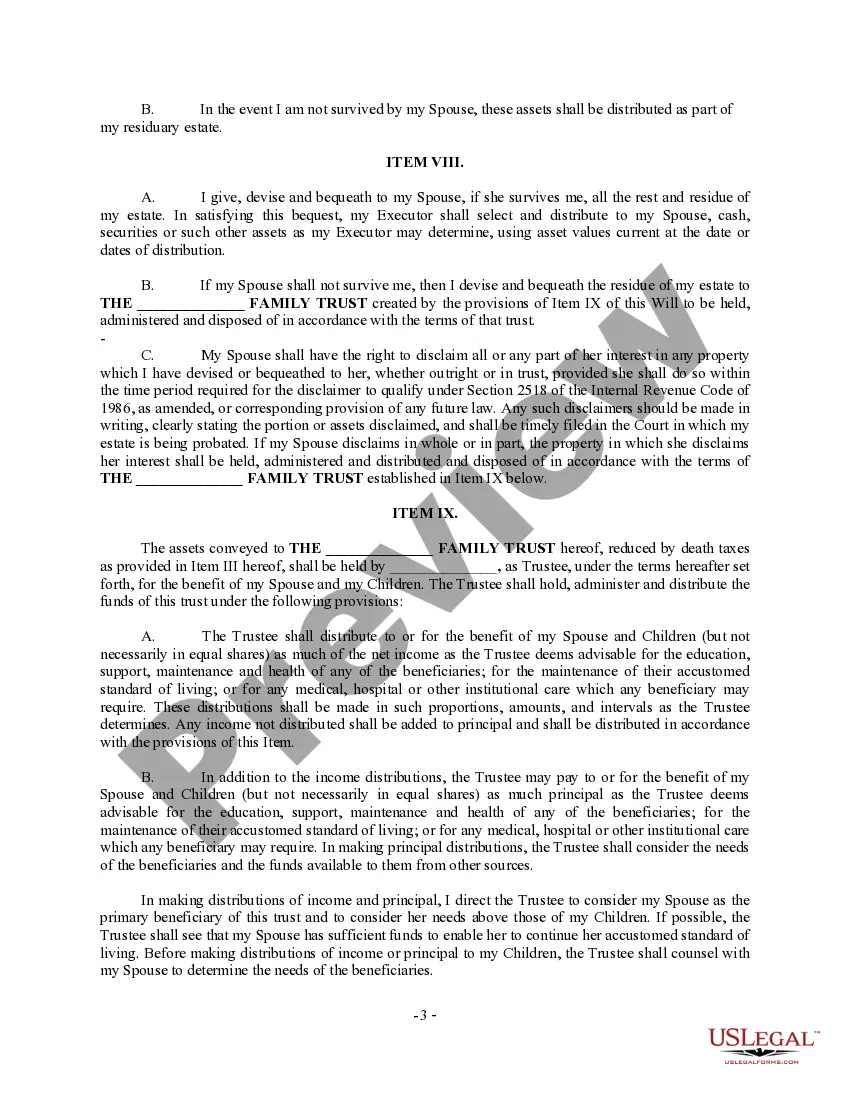
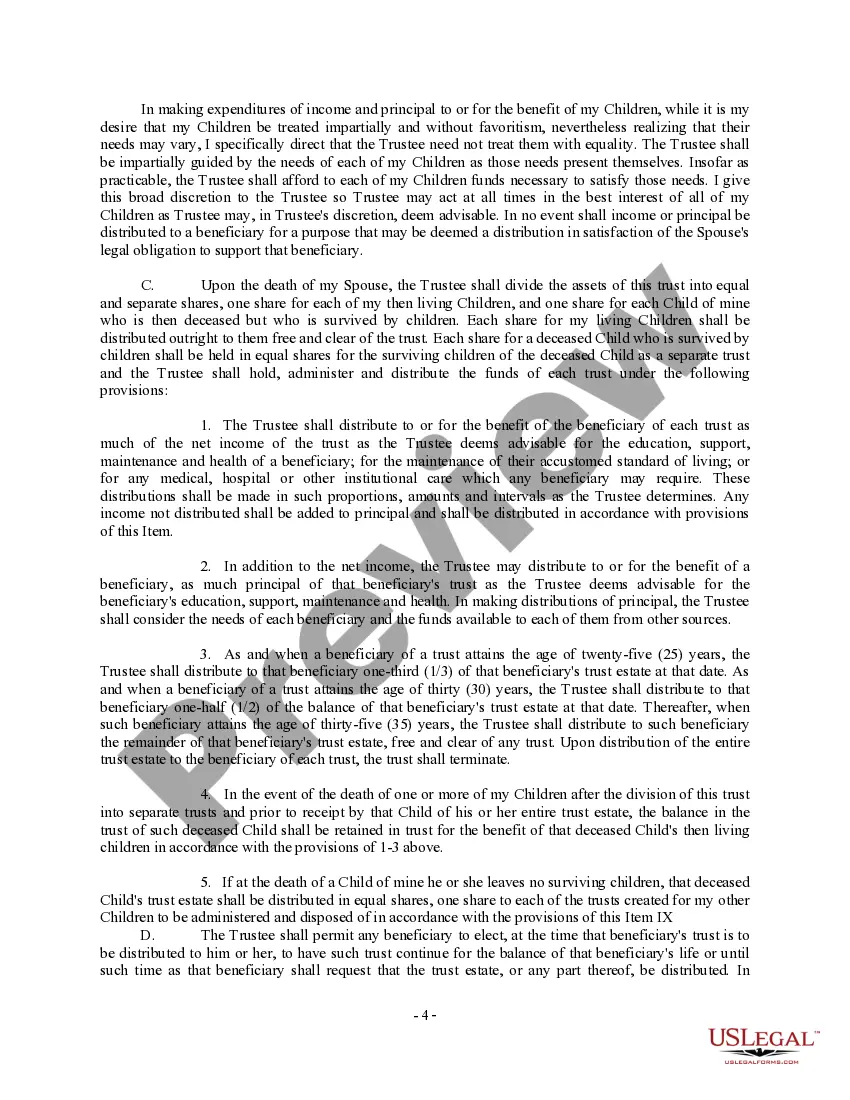
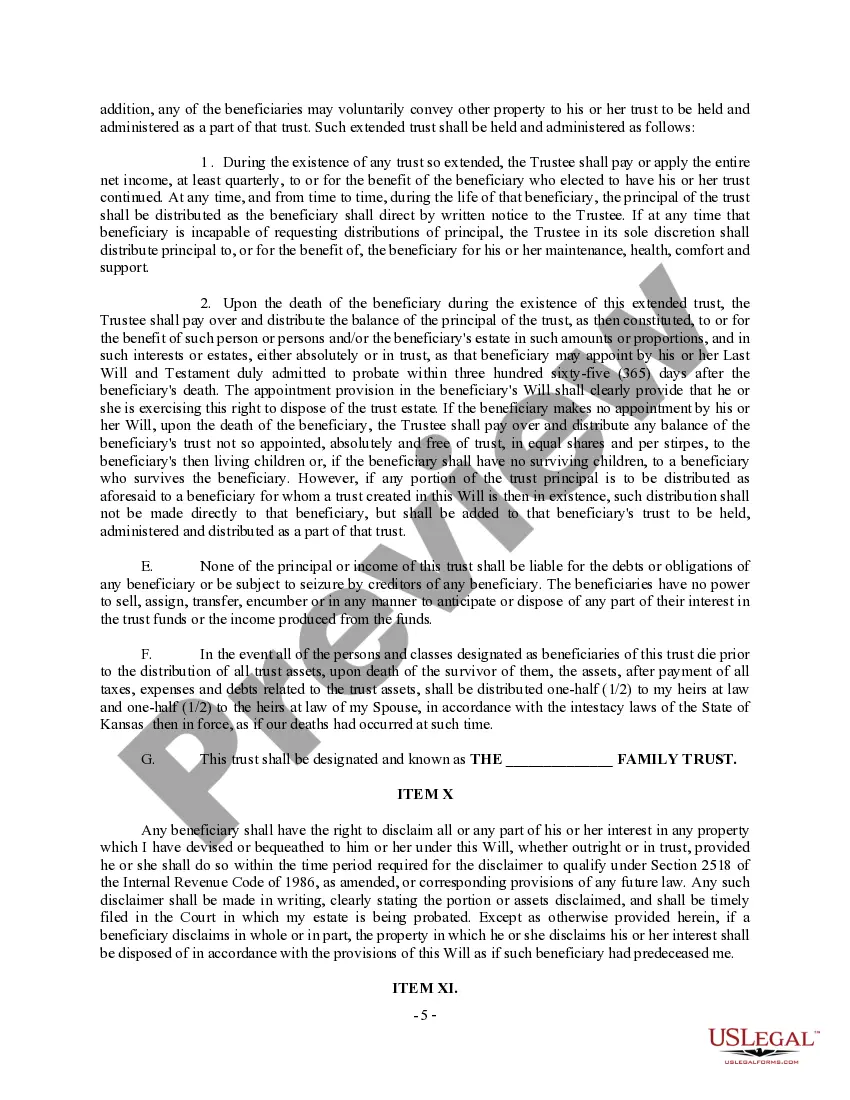
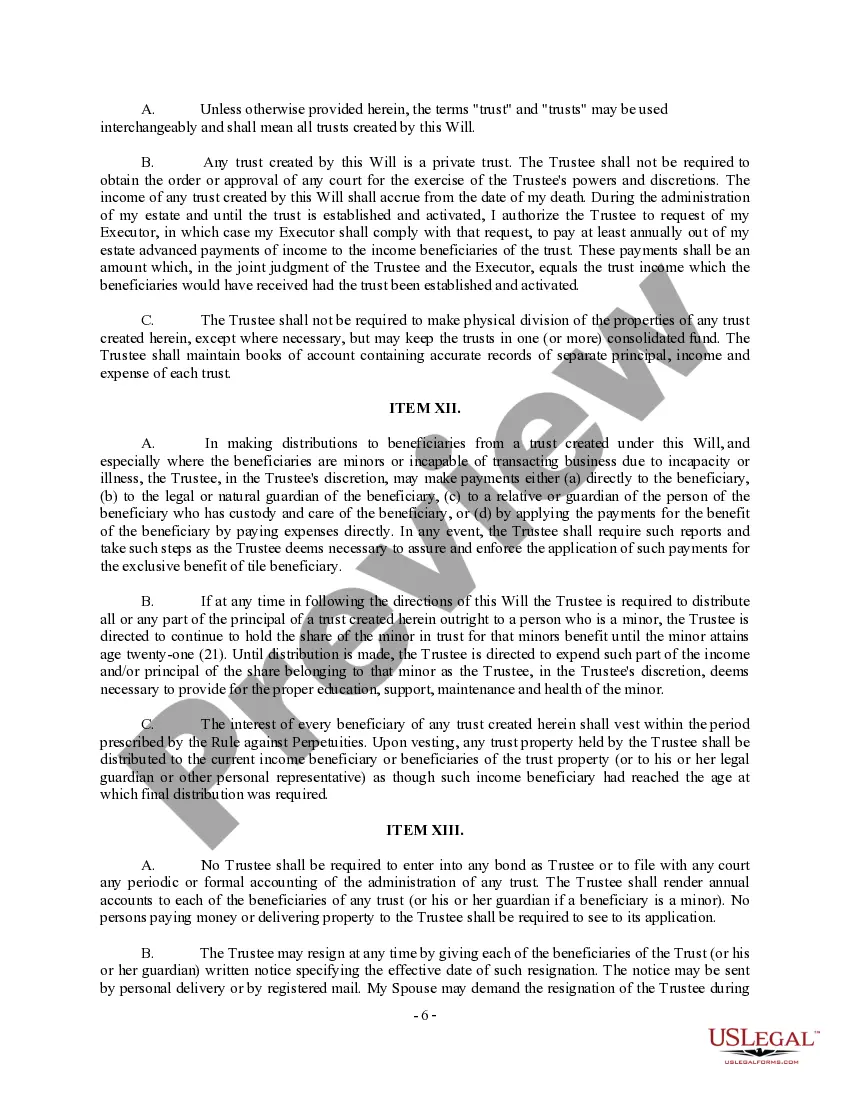
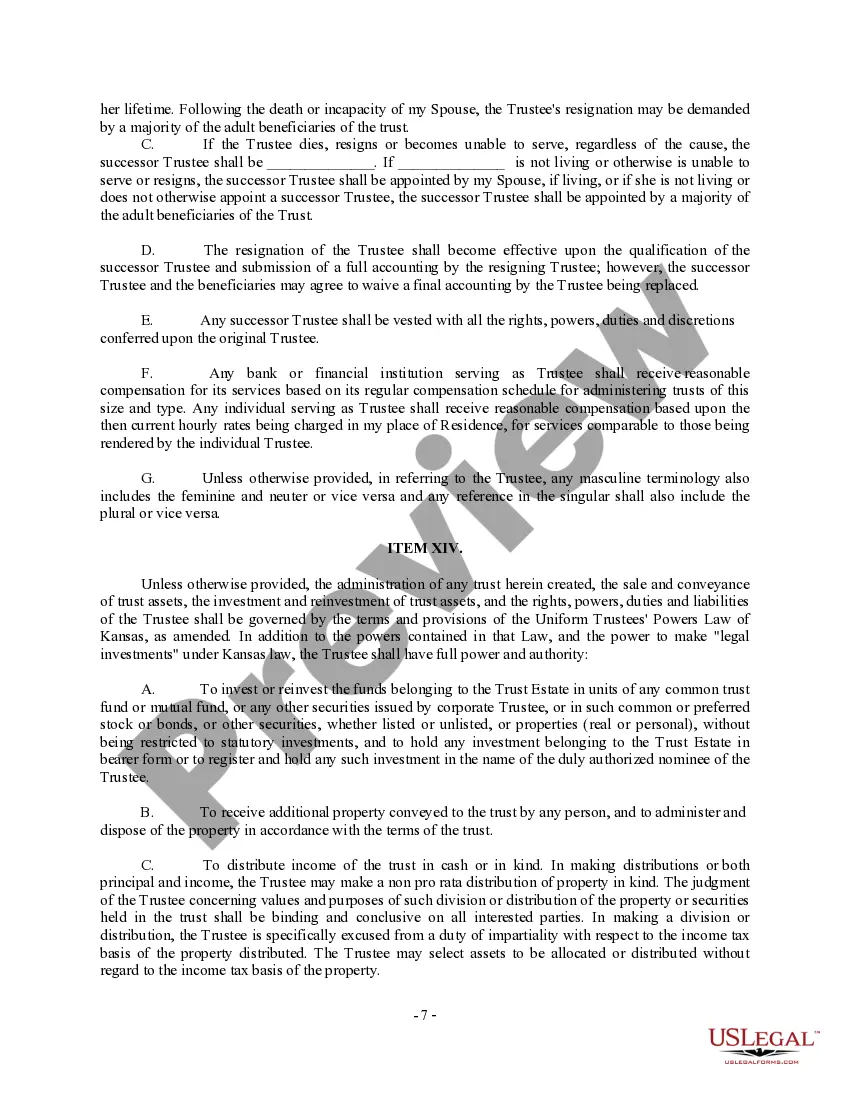
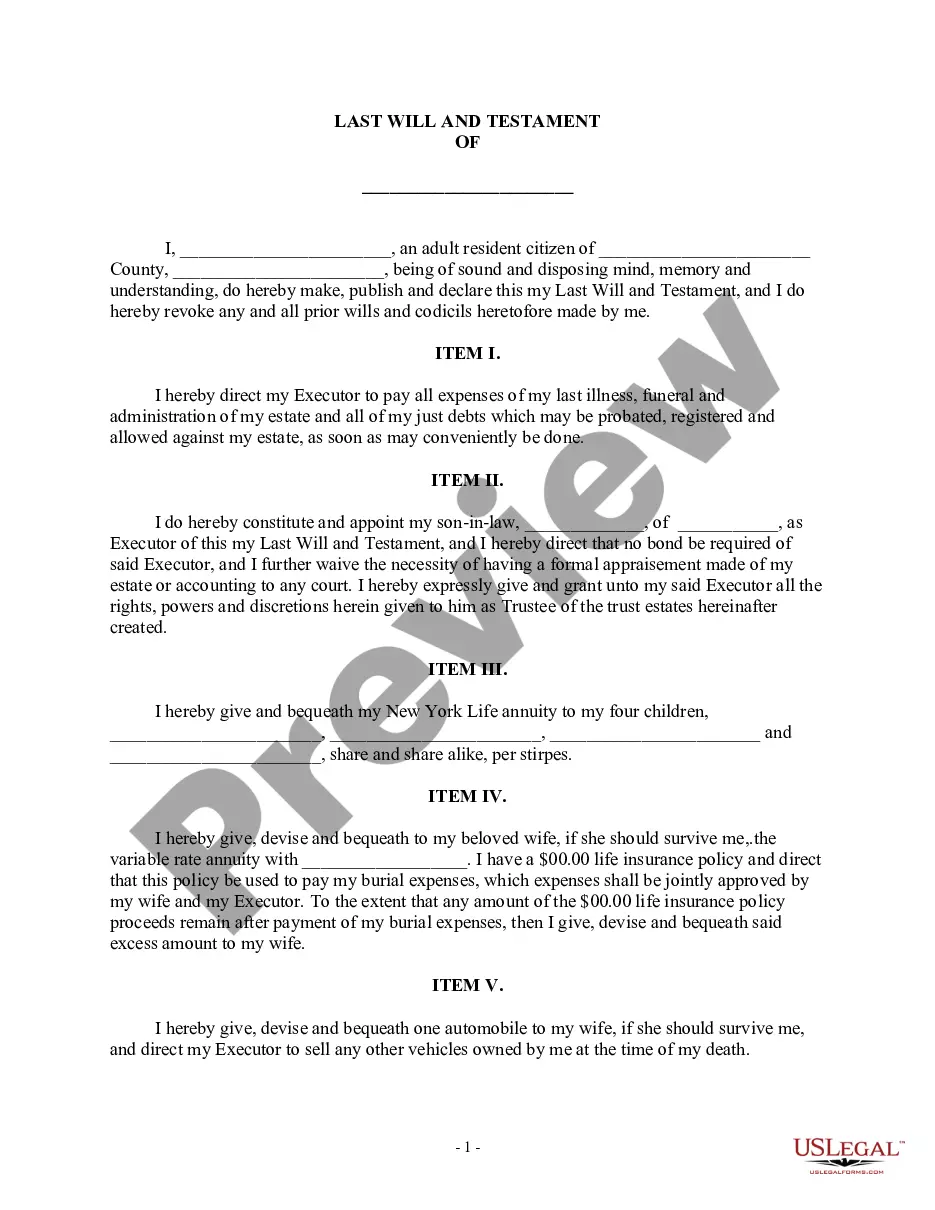
The Complex Will with Credit Shelter Marital Trust for Large Estates is a specialized legal document that provides a couple with a structured plan to maximize estate tax efficiency. This form ensures that a significant amount of property, specifically up to one million dollars as of 2001, can be transferred to a trust tax-free. The remainder of the estate can then pass to the surviving spouse without incurring estate taxes at the time of the first spouse's death. This distinguishes it from simpler wills, as it establishes a marital trust for wealth preservation and thoughtful asset distribution to heirs.
Main sections of this form
- Identification of the testator, spouse, and children.
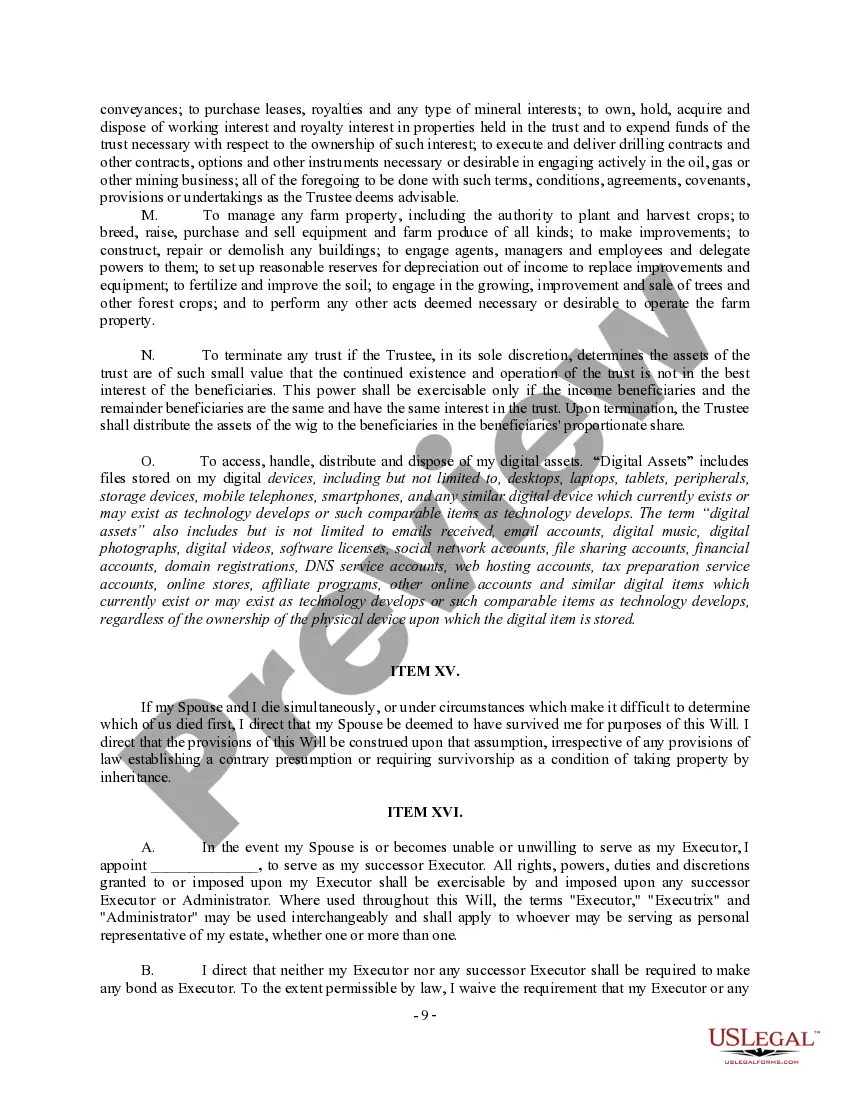
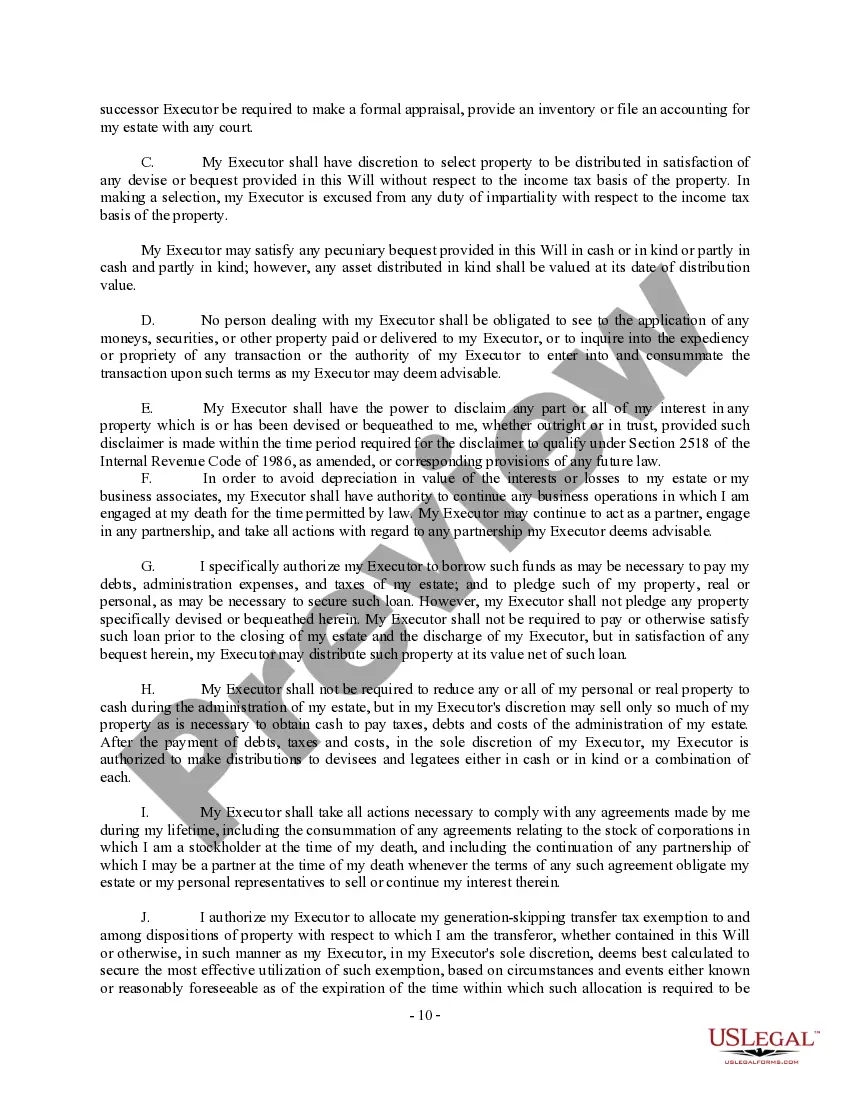
- Appointment of an executor to oversee estate management.
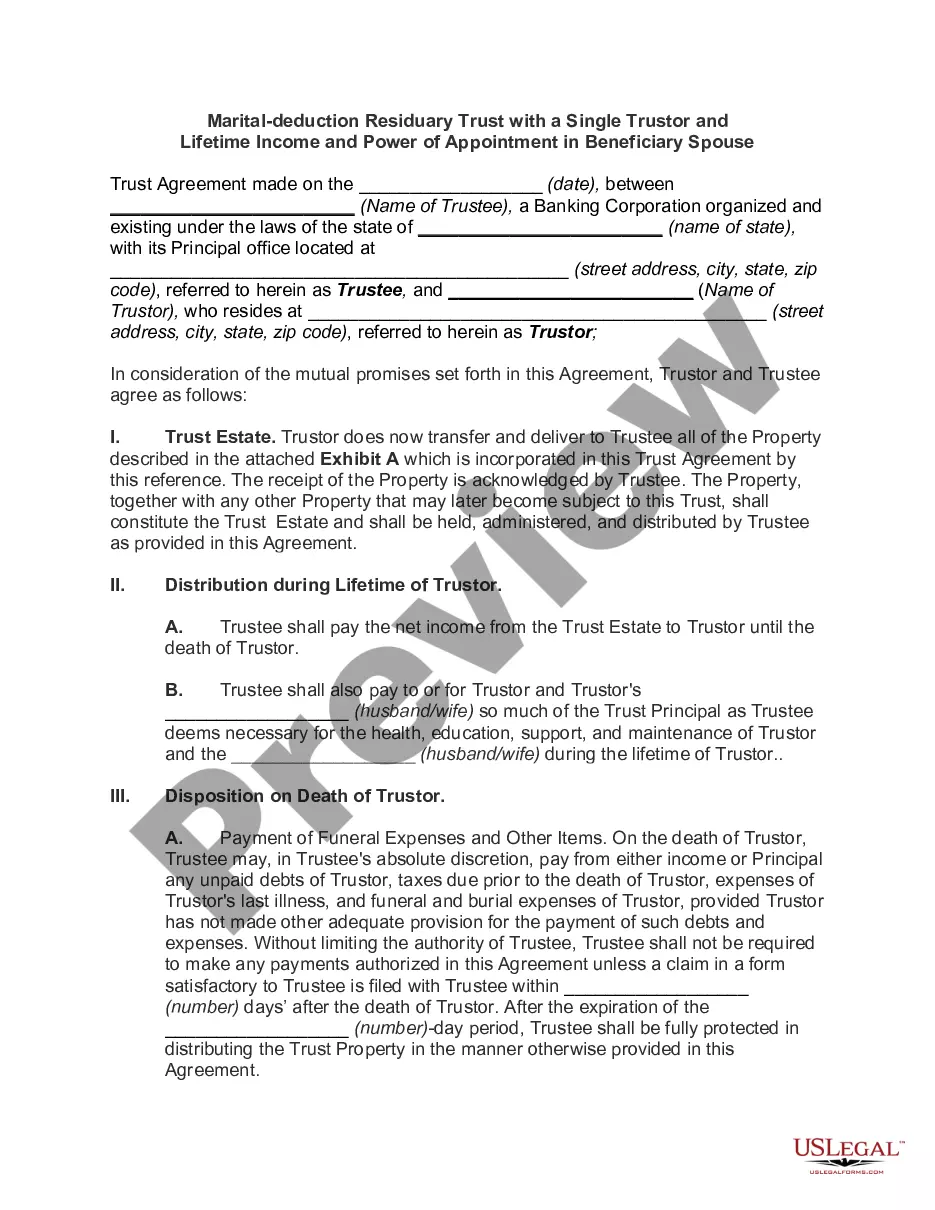
- Distribution of the estate to a trust and surviving spouse.
- Procedures for paying debts and taxes using trust assets.
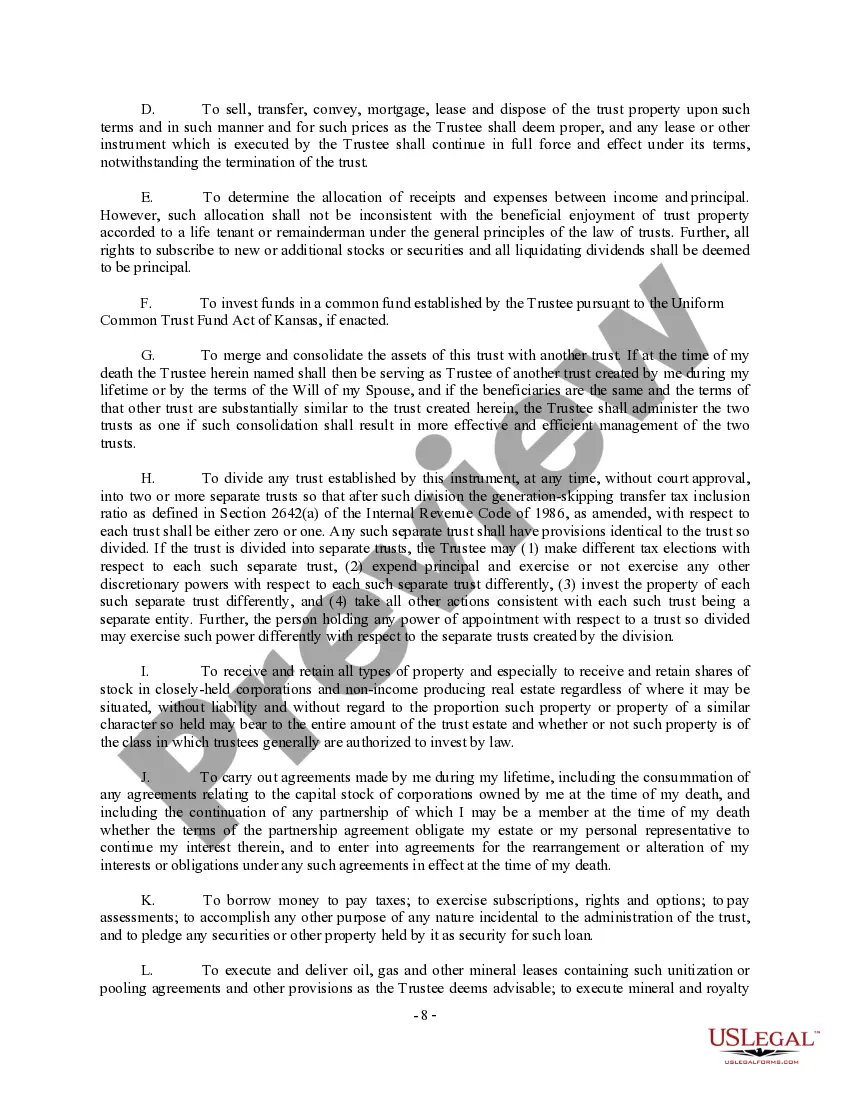
- Detailed provisions for managing the trust and its beneficiaries.




Common use cases
This form is essential for couples with substantial estates who wish to avoid or minimize estate taxes upon the death of one spouse. It is particularly valuable for individuals with assets exceeding the tax exemption threshold, as it facilitates tax-efficient transfers to heirs and helps maintain the financial well-being of the surviving spouse.
Who should use this form
- Married couples with a combined estate valued significantly above the federal exemption limit.
- Individuals wishing to ensure tax-free transfers to heirs.
- Those seeking to provide for their surviving spouse while planning for children or other beneficiaries.
- Anyone interested in establishing a trust to manage estate assets.
Completing this form step by step
- Identify the parties involved: the testator, spouse, and children.
- Appoint an executor responsible for managing the estate.
- Detail the distribution of property, including specifying amounts for trusts and individual beneficiaries.
- Sign the form in the presence of witnesses to ensure its validity.
- Consider notarization based on local laws if needed.
Does this form need to be notarized?
This document requires notarization to meet legal standards. US Legal Forms provides secure online notarization powered by Notarize, allowing you to complete the process through a verified video call, available 24/7.
Get your form ready online
Our built-in tools help you complete, sign, share, and store your documents in one place.
Make edits, fill in missing information, and update formatting in US Legal Forms—just like you would in MS Word.
Download a copy, print it, send it by email, or mail it via USPS—whatever works best for your next step.
Sign and collect signatures with our SignNow integration. Send to multiple recipients, set reminders, and more. Go Premium to unlock E-Sign.
If this form requires notarization, complete it online through a secure video call—no need to meet a notary in person or wait for an appointment.
We protect your documents and personal data by following strict security and privacy standards.

Make edits, fill in missing information, and update formatting in US Legal Forms—just like you would in MS Word.

Download a copy, print it, send it by email, or mail it via USPS—whatever works best for your next step.

Sign and collect signatures with our SignNow integration. Send to multiple recipients, set reminders, and more. Go Premium to unlock E-Sign.

If this form requires notarization, complete it online through a secure video call—no need to meet a notary in person or wait for an appointment.

We protect your documents and personal data by following strict security and privacy standards.
Common mistakes to avoid
- Failing to specify the trustee or executor correctly.
- Not updating the form when family circumstances change.
- Omitting necessary witness signatures, which can invalidate the will.
- Ignoring state-specific laws that may affect distribution and trust provisions.
Advantages of online completion
- Convenience of completing the form from home without needing to schedule an appointment.
- Editability allows for easy updates to reflect changing circumstances.
- Reliability of using templates crafted by licensed attorneys to ensure compliance with legal standards.
Looking for another form?


Form popularity
FAQ
A credit shelter trust is designed to hold assets up to the estate tax exemption limit, ensuring that these assets are not subject to estate taxes after the death of one spouse. This trust benefits the surviving spouse while preserving wealth for future generations. Implementing this with a Kansas Complex Will with Credit Shelter Marital Trust for Large Estates can enhance your estate planning strategy.
QTIP trusts are put to use in estate planning and are especially useful when beneficiaries exist from a previous marriage but the grantor dies before a subsequent spouse does. With a QTIP, estate tax is not assessed at the point of the first spouse's death, but is instead determined after the second spouse has passed.
A marital trust starts as a revocable living trust. A surviving spouse can be its trustee.
Also called an "A" trust, a marital trust goes into effect when the first spouse dies. Assets are moved into the trust upon death and the income that these assets generate go to the surviving spouseunder some arrangements, the surviving spouse can also receive principal payments.
Yes, the surviving spouse may serve as trustee of the credit shelter trust.All of the assets in the credit shelter trust, including any appreciation in value during the surviving spouse's lifetime, pass free of estate tax to the beneficiaries.
You can be trustee of your own living trust. If you are married, your spouse can be trustee with you. Most married couples who own assets together, especially those who have been married for some time, are usually co-trustees.
Trust B is irrevocable, the surviving spouse cannot change its terms. When one spouse dies the survivor must hire a lawyer or an accountant to determine how to best divide the couple's assets between the deceased spouse's irrevocable trust and the surviving spouse's revocable trust.
The "A Trust" is also commonly referred to as the "Marital Trust," "QTIP Trust," or "Marital Deduction Trust." The "B Trust" is also commonly referred to as the "Bypass Trust," "Credit Shelter Trust," or "Family Trust."
First, in a standard credit shelter trust, there is no step-up in basis at the death of the surviving spouse.Second, the credit shelter trust is a separate taxpayer and requires its own tax return, Form 1041.
Unlike with a QTIP trust, the surviving spouse typically has complete control over a marital trust, including use of the trust assets and final say on designating who the final beneficiaries are. A QTIP trust offers more control to the grantor but less control to the surviving spouse compared to marital trust.