Texas Mutual Wills package with Last Wills and Testaments for Married Couple with No Children
Understanding this form
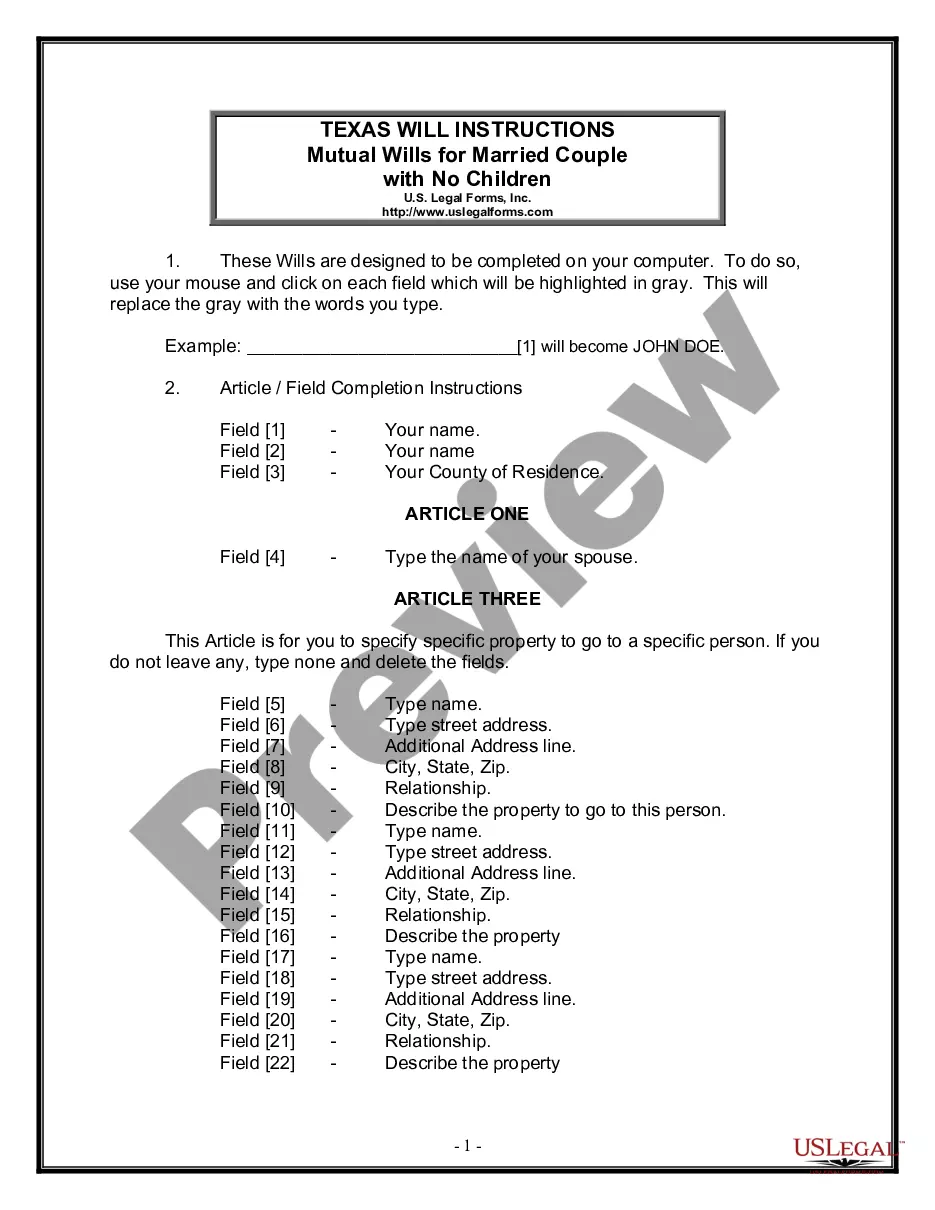
The Mutual Wills package with Last Wills and Testaments for Married Couple with No Children is a legal document designed for married couples who do not have children. This package includes two willsâone for each spouseâensuring that both partners can clearly outline their wishes regarding the distribution of their property after death. It addresses the appointment of personal representatives and designates how property will be divided, which sets it apart from other legal forms by specifically catering to married couples without children.
Main sections of this form
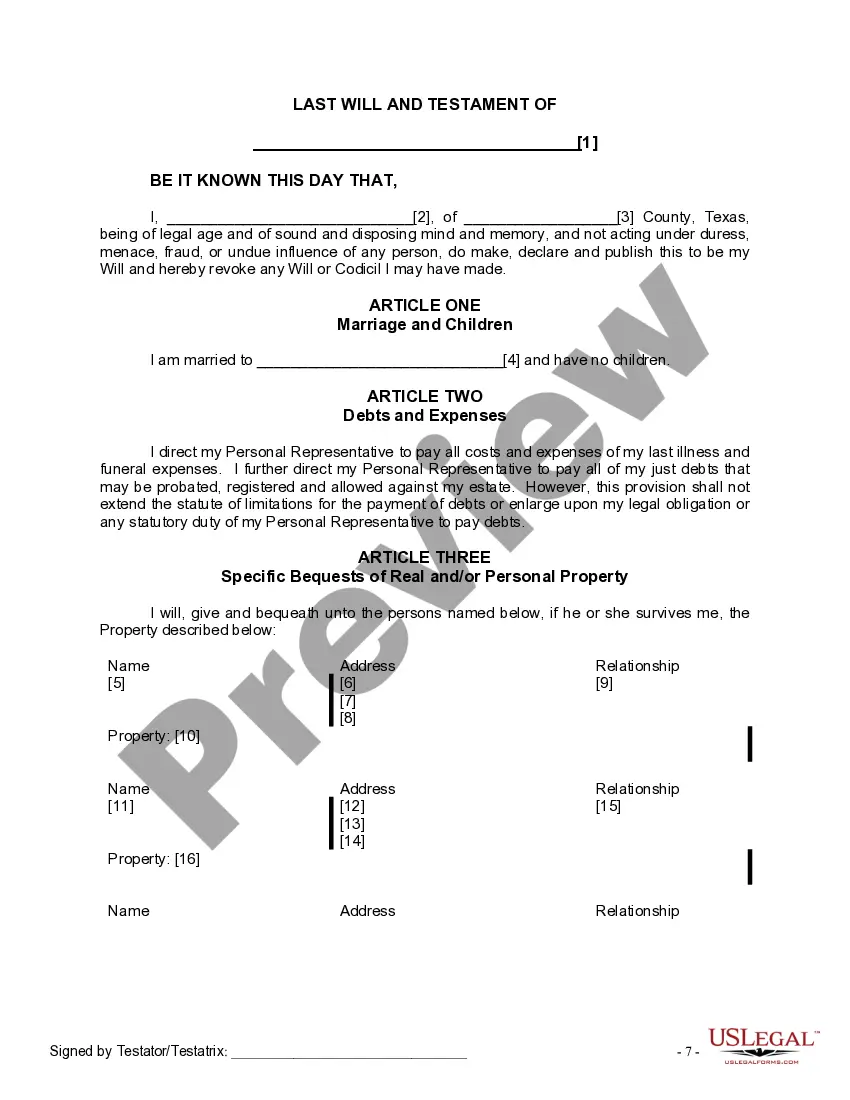
- Article One: Marriage and Children - States that the couple is married and has no children.
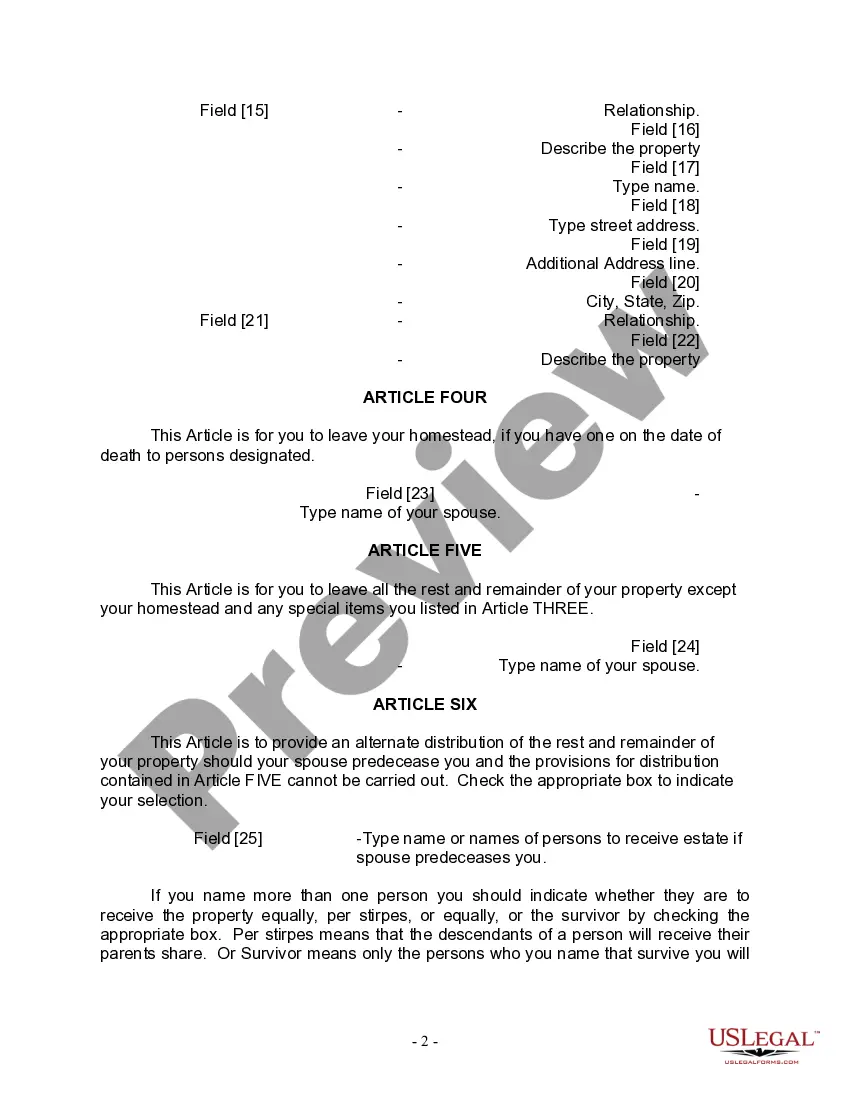
- Article Three: Specific Bequests - Allows the couple to leave specific property to designated individuals.
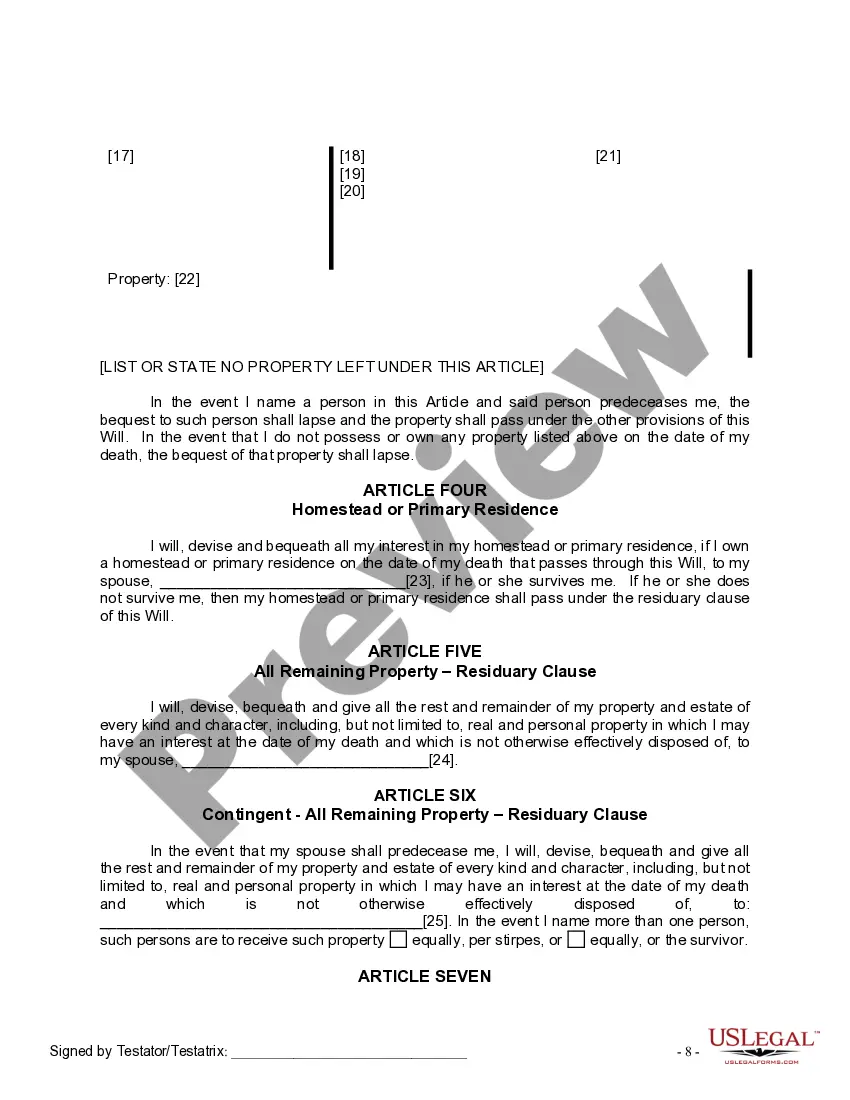
- Article Four: Homestead - Outlines provisions for the family home.
- Article Five: Residuary Clause - Distributes any remaining assets to the surviving spouse.
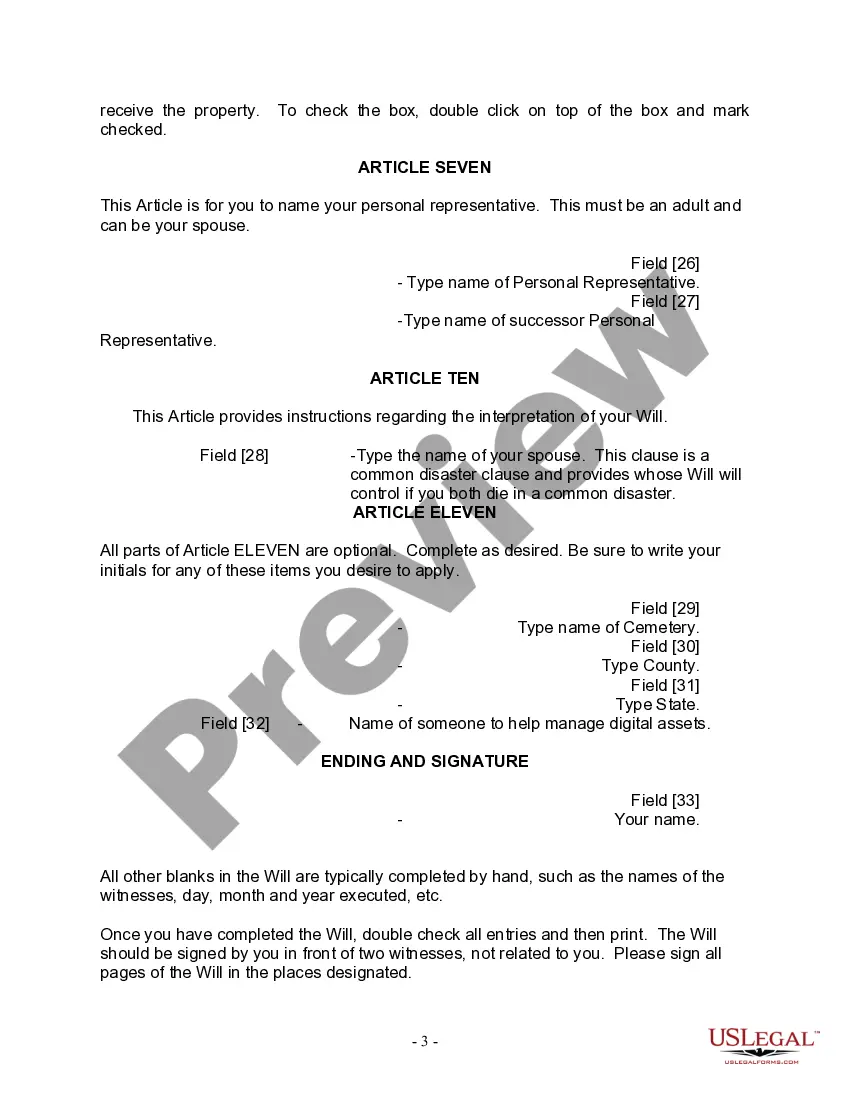
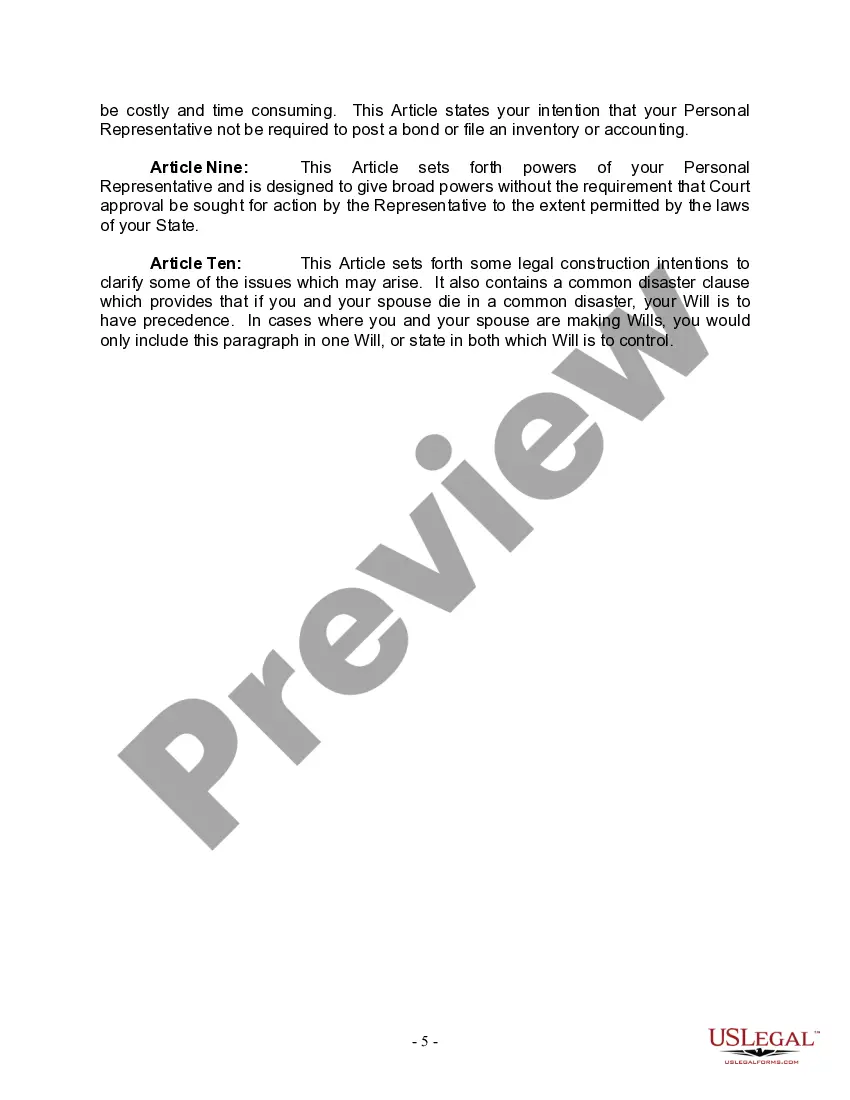
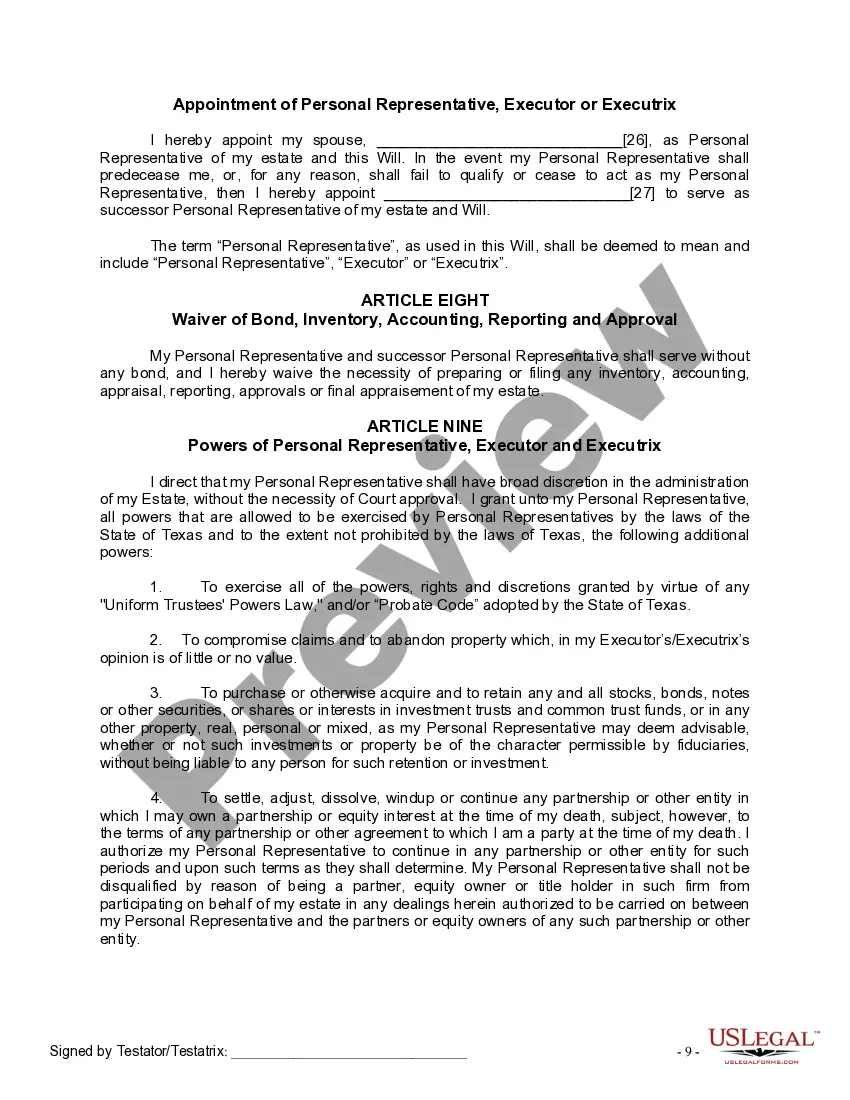
- Article Seven: Appointment of Personal Representative - Designates an executor to manage the estate.
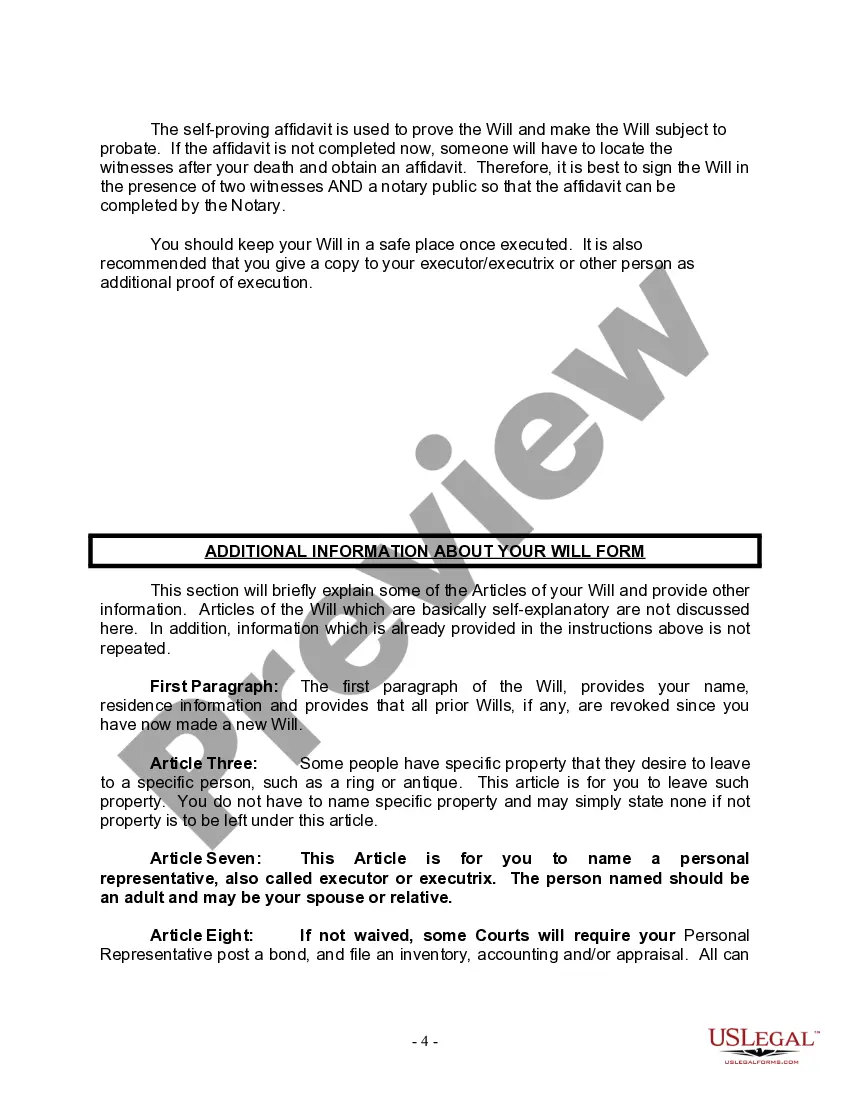
- Self-Proving Affidavit - Includes an affidavit for simplifying the probate process, if applicable.





When this form is needed
This Mutual Wills package is essential in situations where a married couple wants to ensure their assets are distributed according to their mutual wishes after one or both partners pass away. It is particularly useful for individuals who have no children and need to address their estate planning clearly and jointly. Additionally, couples entering marriage or those who have recently married without children should consider this package to formalize their intentions.
Who needs this form
Eligibility for this form includes:
- Married couples who do not have children.
- Couples looking to ensure their assets pass to each other in a clearly outlined manner.
- Individuals seeking a collaborative method to outline estate planning with a spouse.
How to complete this form
Steps to Complete This Form:
- Identify the parties: Enter the names of both spouses in the designated fields.
- Specify the property: Detail specific items and property to be distributed in Article Three.
- Enter spouse details: Include your spouse's name applicable to various articles throughout the will.
- Designate personal representatives: Choose a personal representative to manage estate affairs and enter their name.
- Final signatures: Ensure both spouses sign the wills in front of two witnesses and a notary public if including a self-proving affidavit.
Does this form need to be notarized?
Yes, this form must be notarized to be legally valid. It is recommended to sign the wills in the presence of two witnesses and a notary public to ensure all legal requirements are met, thereby facilitating the self-proving affidavit process.
Get your form ready online
Our built-in tools help you complete, sign, share, and store your documents in one place.
Make edits, fill in missing information, and update formatting in US Legal Forms—just like you would in MS Word.
Download a copy, print it, send it by email, or mail it via USPS—whatever works best for your next step.
Sign and collect signatures with our SignNow integration. Send to multiple recipients, set reminders, and more. Go Premium to unlock E-Sign.
If this form requires notarization, complete it online through a secure video call—no need to meet a notary in person or wait for an appointment.
We protect your documents and personal data by following strict security and privacy standards.
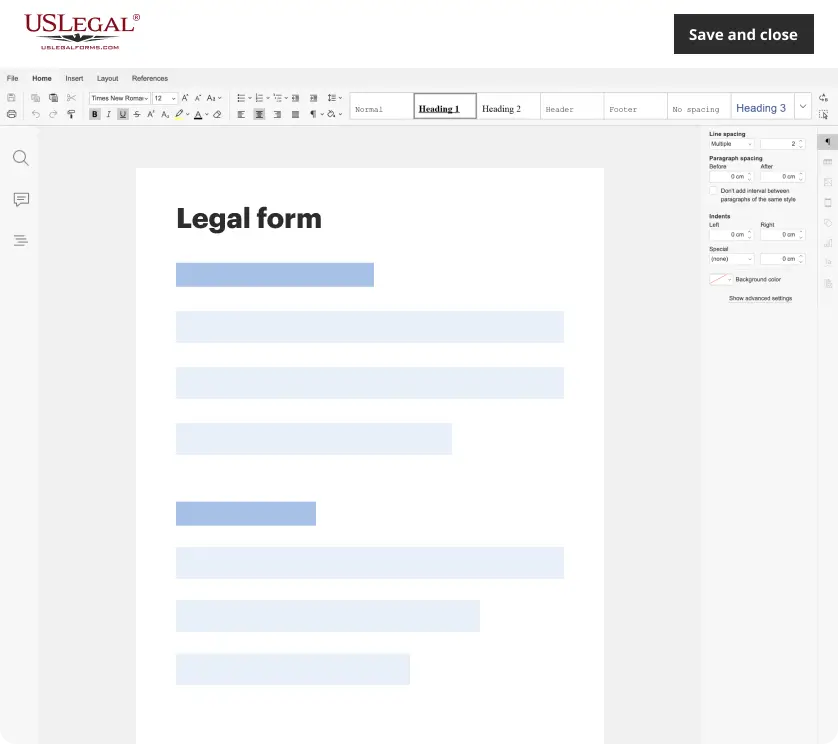
Make edits, fill in missing information, and update formatting in US Legal Forms—just like you would in MS Word.
Download a copy, print it, send it by email, or mail it via USPS—whatever works best for your next step.
Sign and collect signatures with our SignNow integration. Send to multiple recipients, set reminders, and more. Go Premium to unlock E-Sign.
If this form requires notarization, complete it online through a secure video call—no need to meet a notary in person or wait for an appointment.
We protect your documents and personal data by following strict security and privacy standards.
Typical mistakes to avoid
- Failing to sign the wills in front of two witnesses as required by state law.
- Not including a self-proving affidavit when one is needed for easier probate.
- Leaving blank fields or not clearly stating the intended distribution of assets.
Benefits of completing this form online
- Convenient online access allows for drafting and editing from home.
- Templates are prepared by licensed attorneys, ensuring compliance with legal standards.
- Immediate digital downloading allows for quick completion and filing.
Legal use & context
- This Mutual Wills package is recognized as a legally binding document when executed correctly in accordance with state laws.
- Failure to adhere to state-specific signing and witnessing requirements may render the will invalid.
Key takeaways
- Mutual wills provide a secure means for married couples without children to plan for asset distribution.
- It includes specific clauses addressing common scenarios affecting inheritance and property distribution.
- Proper completion requires signatures from witnesses, emphasizing the need for careful execution to avoid future disputes.
Looking for another form?
Form popularity
FAQ
Create the initial document. Start by titling the document Last Will and Testament" and including your full legal name and address. Designate an executor. Appoint a guardian. Name the beneficiaries. Designate the assets. Ask witnesses to sign your will. Store your will in a safe place.
While you can write your own last will and testament, it's very important to follow your state's requirements. If the court finds it invalid, someone other than your chosen executor could handle your estate and distribute your assets differently than you intended.
Property in a living trust. One of the ways to avoid probate is to set up a living trust. Retirement plan proceeds, including money from a pension, IRA, or 401(k) Stocks and bonds held in beneficiary. Proceeds from a payable-on-death bank account.
Their legal name. A physical addresses for named beneficiaries. Provide a description of the relationship to the testator. Enter the last four digits of the SSN for all persons named beneficiaries. Enter a list/descriptions of property that the testator shall provide per beneficiary.
In order to make a valid handwritten will in Texas, the entire document must be in your own handwriting. No one can write any part of it except for you and no part of it can be typed. You can write in cursive or print, but the entire will must be in your handwriting only.
No, in Texas, you do not need to notarize your will to make it legal. However, Texas allows you to make your will "self-proving" and you'll need to go to a notary if you want to do that. A self-proving will speeds up probate because the court can accept the will without contacting the witnesses who signed it.
Include personal identifying information. Include a statement about your age and mental status. Designate an executor. Decide who will take care of your children. Choose your beneficiaries. List your funeral details. Sign and date your Last Will and Testament.
Are 18 years of age or older, have been lawfully married, or. are a member of the armed forces of the United States.
No. You can make your own will in Texas, using Nolo's do-it-yourself will software or online will programs. However, you may want to consult a lawyer in some situations. For example, if you think that your will might be contested or if you want to disinherit your spouse, you should talk with an attorney.