Texas Lease Subordination Agreement
What this document covers
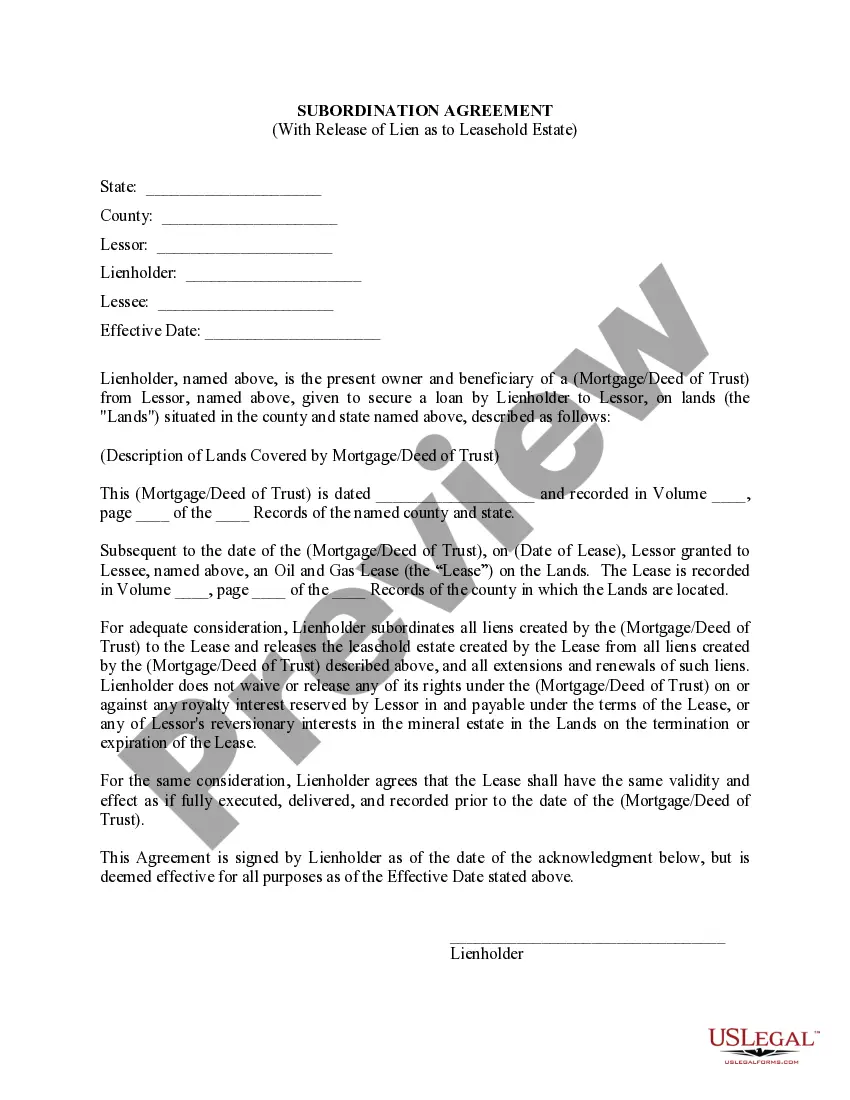
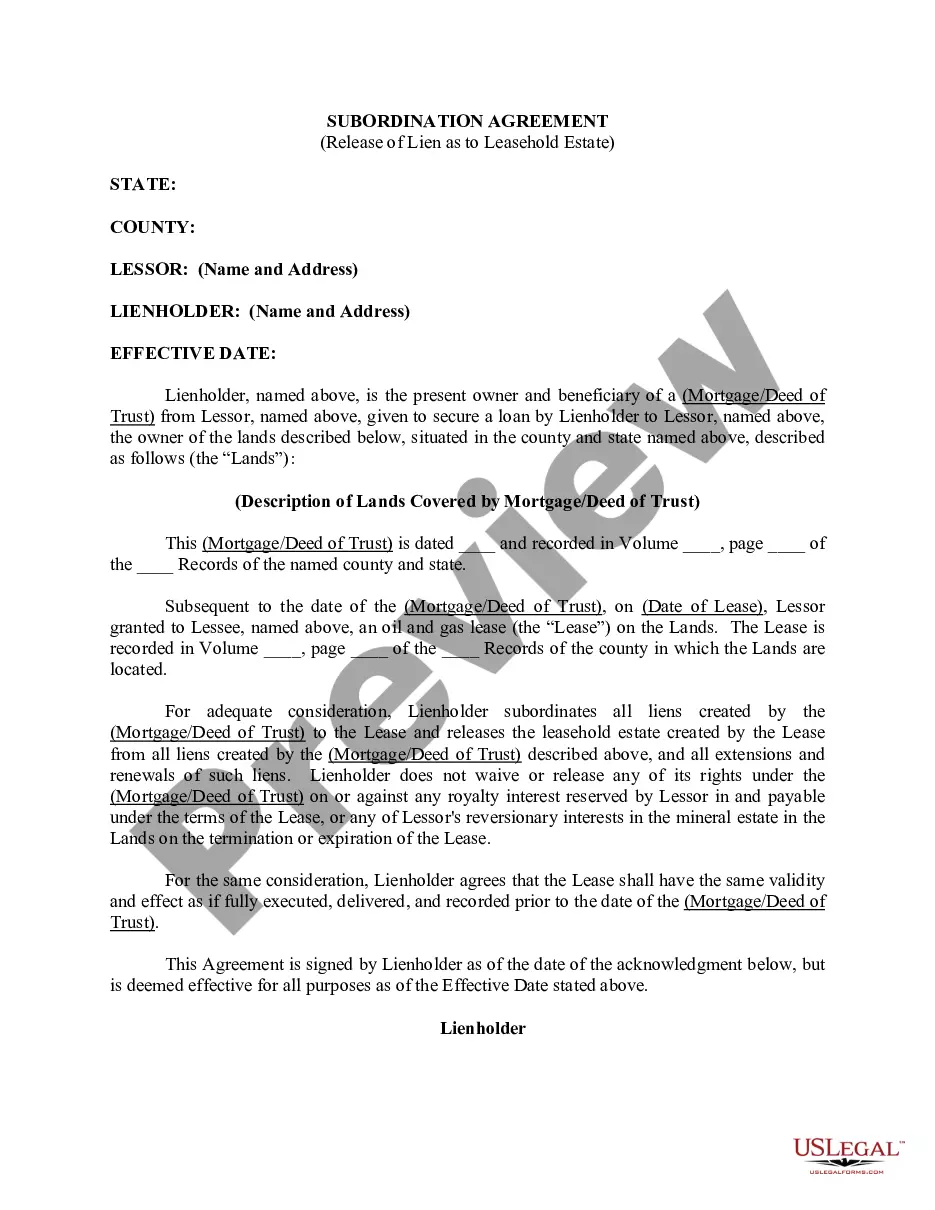
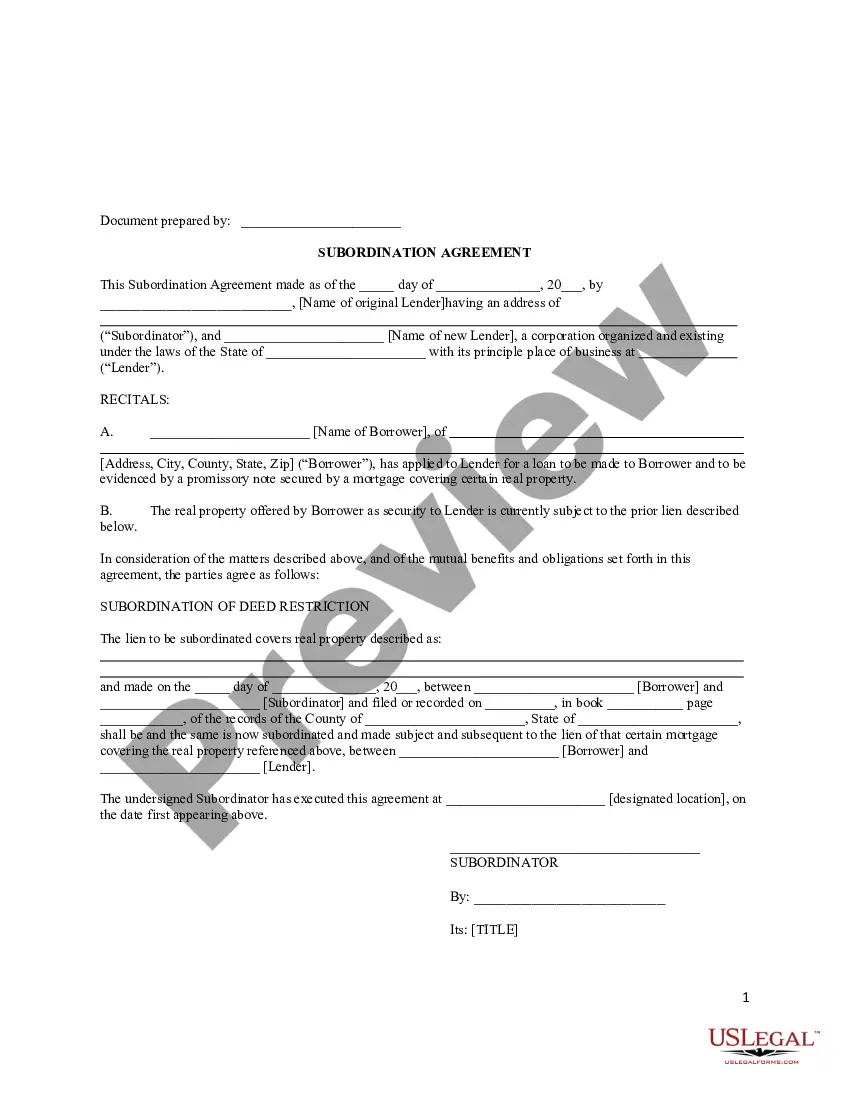
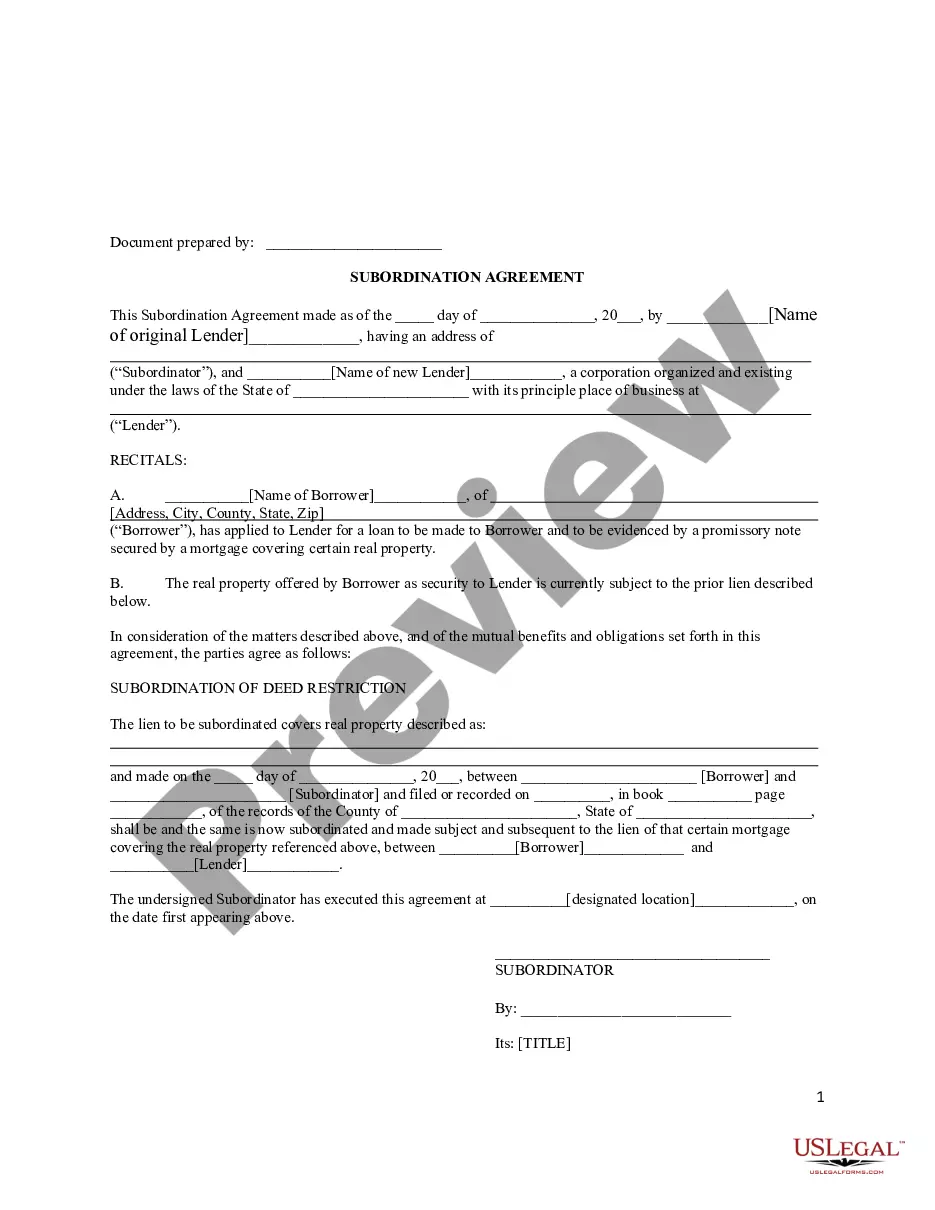
A Lease Subordination Agreement is a legal document that alters the priorities of liens associated with a property. It allows a lienholder's claim, typically attached to a mortgage or deed of trust, to be subordinated to an oil, gas, or mineral lease. This means that in cases of financial claims, the lease will take precedence over the original loan, allowing the lessee to operate without interference from the lender. This form is essential for property owners seeking to secure new financing options while maintaining their lease agreements.
Key parts of this document
- Parties Involved: Names and roles of the lessor, lienholder, and lessee.
- Property Description: Detailed description of the lands covered by the mortgage or deed of trust.
- Mortgage Details: Information regarding the original mortgage, including recording details.
- Lease Information: Specifics of the oil and gas lease, including its recording references.
- Subordination Clause: Statement confirming the subordination of the mortgage to the lease.
Situations where this form applies
This form should be used when a property owner wants to obtain a loan secured by the property while having an existing oil, gas, or mineral lease. It is crucial when the lender requires that their claim take precedence over other existing claims, enabling the owner to make improvements or repairs without risking financial disputes regarding lease agreements.
Intended users of this form
- Property owners who have a mortgage and wish to enter into an oil, gas, or mineral lease.
- Lenders who want to secure their investment by ensuring their claim is prioritized over existing leases.
- Lessee companies needing assurance that their lease agreements will remain valid despite existing liens.
Completing this form step by step
- Identify the parties: Enter the names of the lessor, lienholder, and lessee as applicable.
- Specify the property: Include a detailed description of the lands covered by the mortgage or deed of trust.
- Enter mortgage details: Fill in the original mortgage's date, volume, and page numbers from the county records.
- Provide lease information: Input the relevant details of the oil or gas lease and its recording references.
- Sign and date the agreement: Ensure that all parties acknowledge and date the agreement as specified.
Notarization guidance
To make this form legally binding, it must be notarized. Our online notarization service, powered by Notarize, lets you verify and sign documents remotely through an encrypted video session.
Get your form ready online
Our built-in tools help you complete, sign, share, and store your documents in one place.
Make edits, fill in missing information, and update formatting in US Legal Forms—just like you would in MS Word.
Download a copy, print it, send it by email, or mail it via USPS—whatever works best for your next step.
Sign and collect signatures with our SignNow integration. Send to multiple recipients, set reminders, and more. Go Premium to unlock E-Sign.
If this form requires notarization, complete it online through a secure video call—no need to meet a notary in person or wait for an appointment.
We protect your documents and personal data by following strict security and privacy standards.

Make edits, fill in missing information, and update formatting in US Legal Forms—just like you would in MS Word.

Download a copy, print it, send it by email, or mail it via USPS—whatever works best for your next step.

Sign and collect signatures with our SignNow integration. Send to multiple recipients, set reminders, and more. Go Premium to unlock E-Sign.

If this form requires notarization, complete it online through a secure video call—no need to meet a notary in person or wait for an appointment.

We protect your documents and personal data by following strict security and privacy standards.
Common mistakes to avoid
- Failing to accurately describe the property may lead to legal disputes.
- Not including recording details could complicate the enforceability of the agreement.
- Omitting signatures could render the form invalid for legal purposes.
Why use this form online
- Convenient access to a legally sound template that can be customized to fit specific needs.
- Editable format allows users to fill in relevant information easily before downloading.
- Reliable and provided by licensed attorneys, ensuring legal compliance and accuracy.
Legal use & context
- The Lease Subordination Agreement must comply with state laws governing real estate and liens.
- It serves to protect the interests of all parties by clarifying the priority of claims on the property.
- Failure to properly complete the agreement may result in disputes or enforceability issues in the future.
What to keep in mind
- The Lease Subordination Agreement is crucial for property owners wanting to lease mineral rights while maintaining financing.
- Proper completion, including accurate details of parties and property, is essential for legal enforceability.
- Consider consulting with a legal professional to ensure compliance with local regulations and avoid common mistakes.
Looking for another form?

Form popularity
FAQ
Prior to enactment of this law, it has been a common title requirement in Texas for lessees to seek and obtain subordination agreements from banks and other lien holders to minimize title risk for pooled drilling units incorporating encumbered leased interests.
A subordination agreement often comes up when a home has a first and a second mortgage, and the borrower wants to refinance the first mortgage. If you have two mortgages on your home and refinance the first loan, the refinancing lender might require a subordination agreement.
A subordination agreement is an instrument that allows a first lien or interest to be paid off and allows another first mortgage company to come in and be the first priority lien holder. It is very common for the borrower to pay subordination fees.
But as property values are going up and the demand for refinance isn't as much, it seems that the subordination process has gotten a little easier. Typically, it takes two to three weeks to get the resubordination paperwork through, and it is likely to set you back $200 to $300.
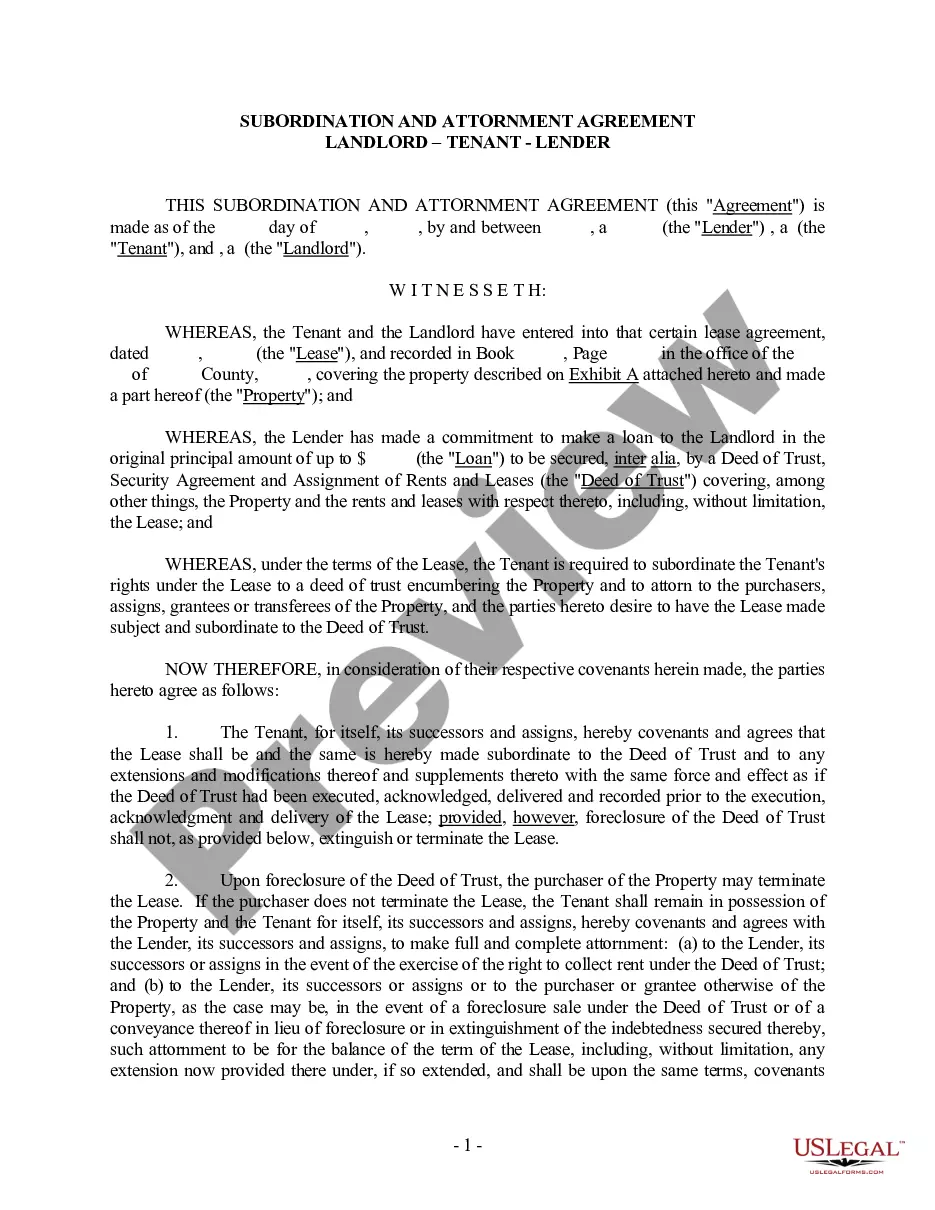
Subordination is the tenant's agreement that its interest under the lease will be subordinate to that of the lender.Attornment is the tenant's agreement to become the tenant of someone other than the original landlord and who has now taken title to the property.
When a Borrower wishes to refinance the property, they must request a subordination request to the Lender. The Lender will subordinate their loan only when there is no cash out as part of the refinance.
Despite its technical-sounding name, the subordination agreement has one simple purpose. It assigns your new mortgage to first lien position, making it possible to refinance with a home equity loan or line of credit. Signing your agreement is a positive step forward in your refinancing journey.
In the case of commercial property changing hands, an attornment clause in a subordination, non-disturbance, and attornment (SNDA) agreement requires the tenant to acknowledge a new owner as their landlord and to continue paying rent regardless of whether the property changes hands through a normal sale or a