Tennessee Warranty Deed for Husband and Wife Converting Property from Tenants in Common to Joint Tenancy
What this document covers
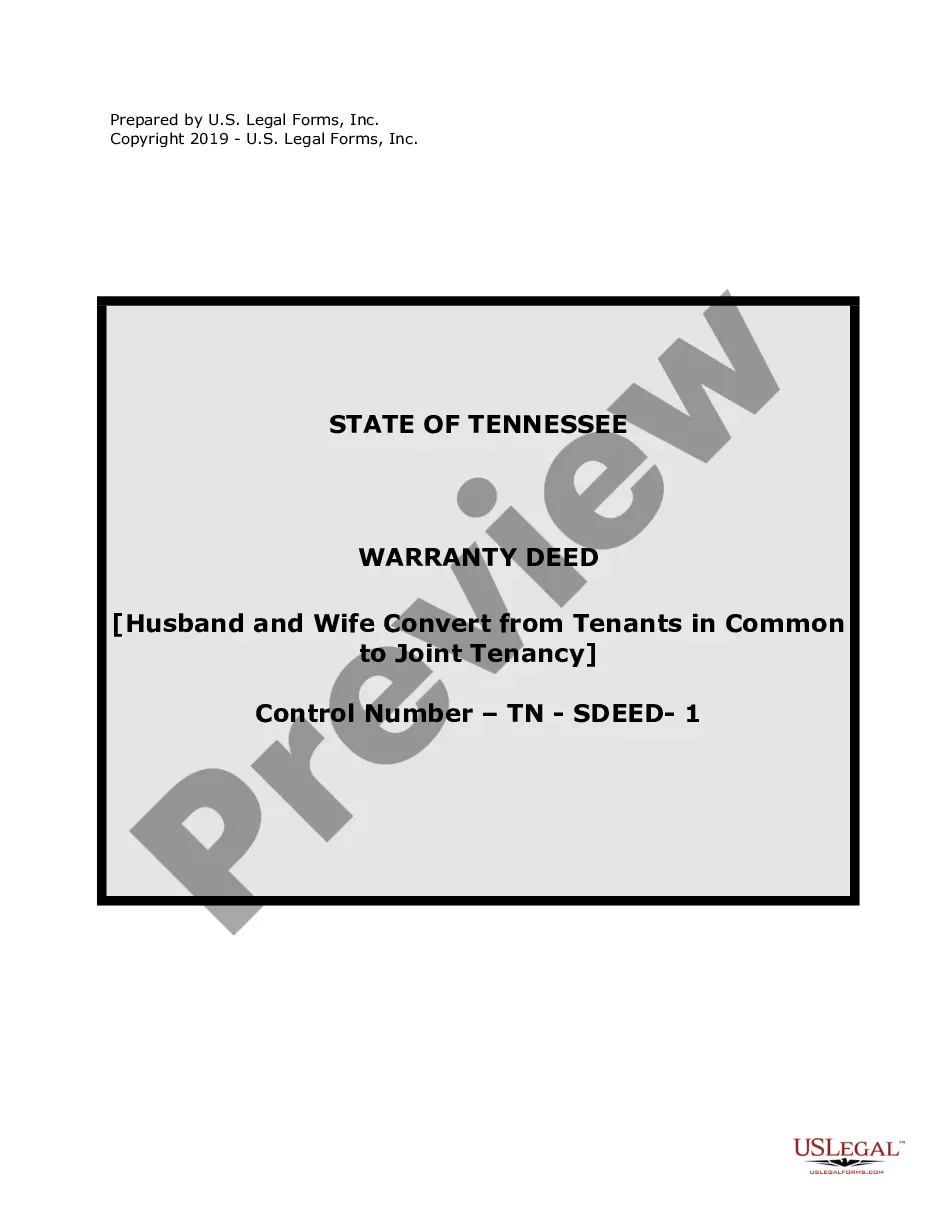
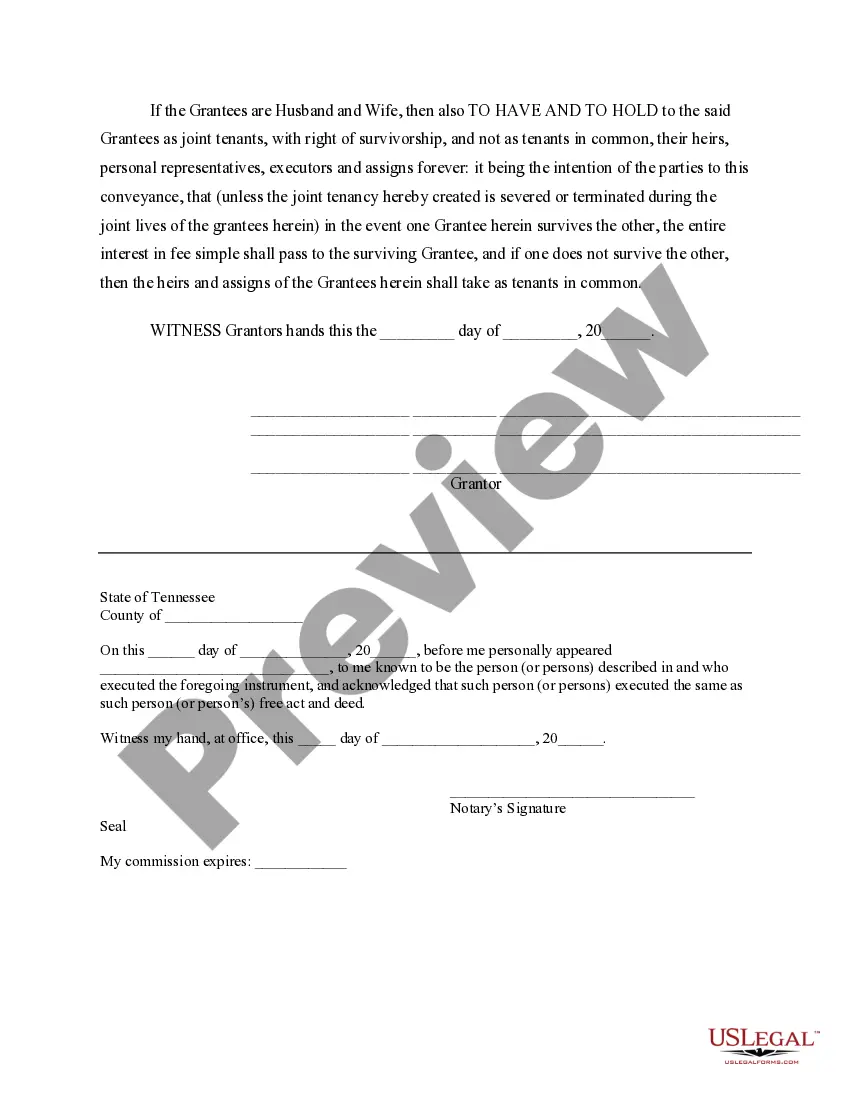
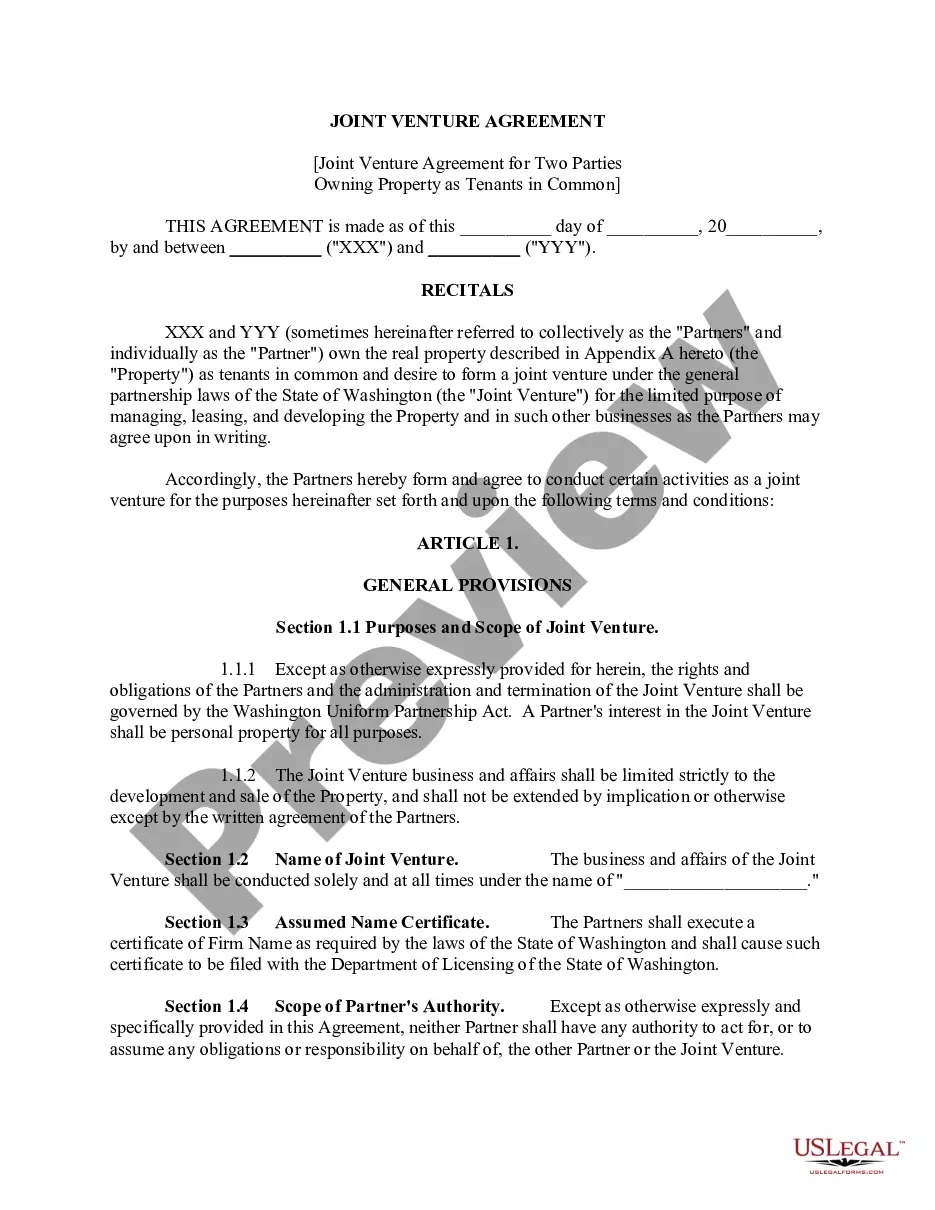
This Warranty Deed is a legal document that allows a husband and wife to convert their shared property ownership from tenants in common to joint tenancy. Unlike tenants in common, joint tenancy provides the right of survivorship, meaning that if one spouse passes away, the other automatically inherits the entire property. This form outlines the necessary provisions for such a transfer of ownership in a clear and legally binding manner.
Main sections of this form
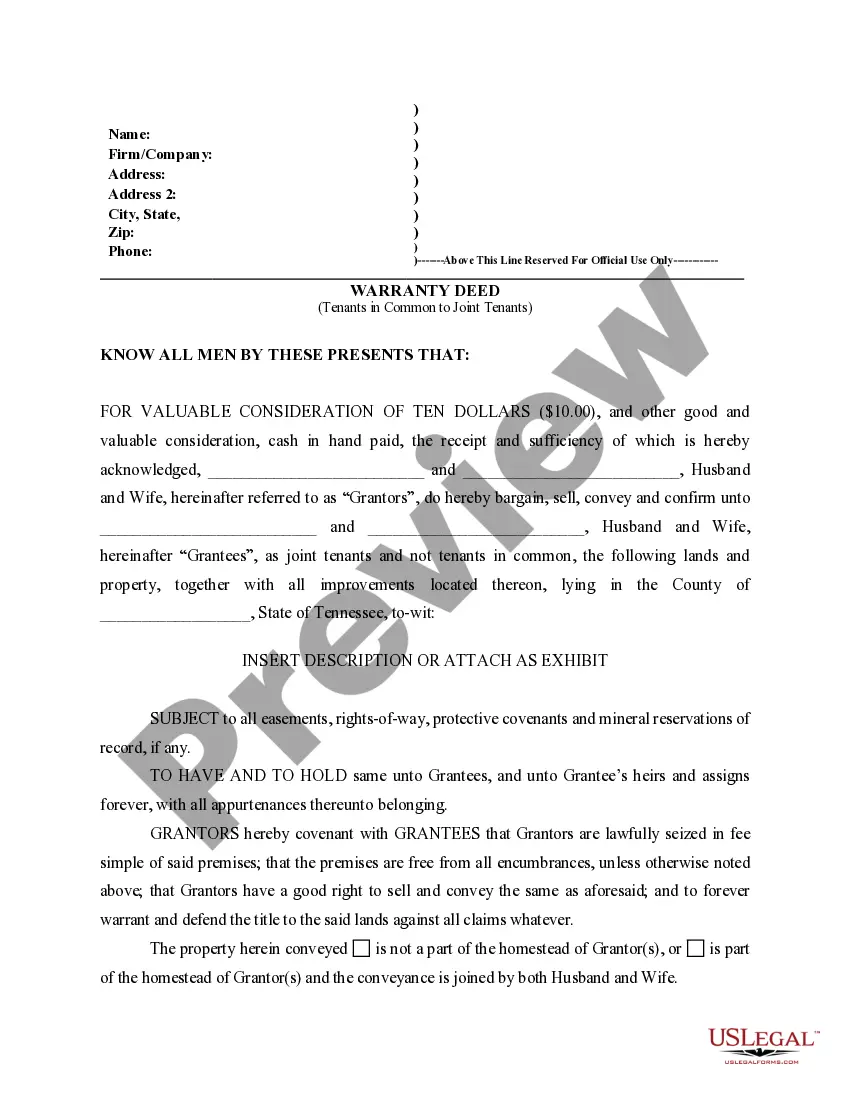
- Grantor and grantee information: Identifies the husband and wife transferring the property and the new joint tenants.
- Property description: Specifies the property being transferred, including any improvements and legal easements.
- Covenants: Assures that the property is free from encumbrances and that the grantors have the right to convey it.
- Right of survivorship: Establishes the intention for joint tenancy, allowing the surviving spouse to inherit the property automatically.
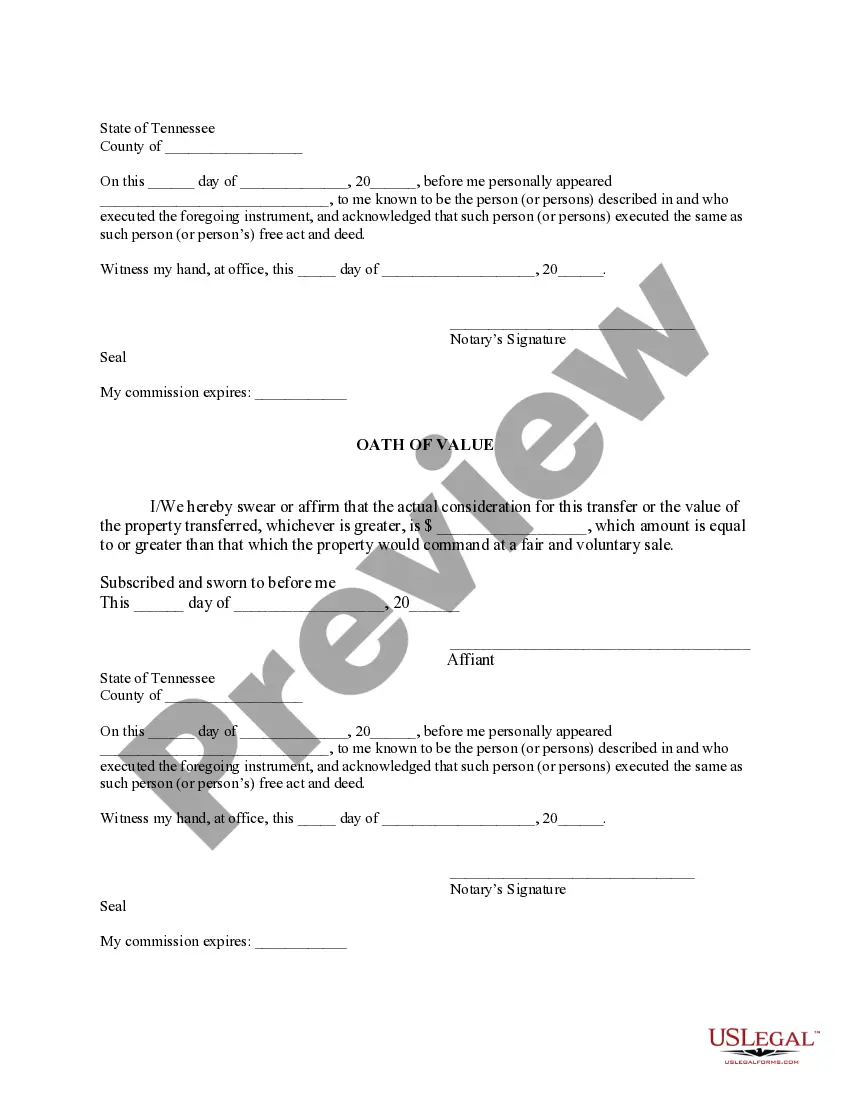
- Notary sections: Designated areas for notarization to validate the deed.



When this form is needed
This Warranty Deed should be used when a married couple currently owns property as tenants in common and wishes to change their ownership to joint tenancy. This may occur for estate planning purposes, simplifying the transfer of property upon death, or when both spouses want equal rights to the property without the need for probate court proceedings.
Who should use this form
- Married couples looking to change their property ownership type.
- Individuals managing estate planning for improved survivorship rights.
- Homeowners seeking to simplify the transfer of property upon death.
- Couples wanting to ensure they both have equal rights to the property.
Steps to complete this form
- Identify the parties involved: Enter the names of the husband and wife as grantors and the same or different spouses as grantees.
- Specify the property: Clearly describe the property being transferred, including its legal description and address.
- Enter the consideration: Typically, a nominal amount such as ten dollars should be stated to indicate value.
- Complete the covenants: Ensure that the grantors confirm their ability to convey the property and that it is free from encumbrances.
- Sign and date: Both grantors must sign the form in the designated areas, and a notary public will need to witness the signatures.
Is notarization required?
This form needs to be notarized to ensure legal validity. US Legal Forms provides secure online notarization powered by Notarize, allowing you to complete the process through a verified video call, available anytime.
Get your form ready online
Our built-in tools help you complete, sign, share, and store your documents in one place.
Make edits, fill in missing information, and update formatting in US Legal Forms—just like you would in MS Word.
Download a copy, print it, send it by email, or mail it via USPS—whatever works best for your next step.
Sign and collect signatures with our SignNow integration. Send to multiple recipients, set reminders, and more. Go Premium to unlock E-Sign.
If this form requires notarization, complete it online through a secure video call—no need to meet a notary in person or wait for an appointment.
We protect your documents and personal data by following strict security and privacy standards.

Make edits, fill in missing information, and update formatting in US Legal Forms—just like you would in MS Word.

Download a copy, print it, send it by email, or mail it via USPS—whatever works best for your next step.

Sign and collect signatures with our SignNow integration. Send to multiple recipients, set reminders, and more. Go Premium to unlock E-Sign.

If this form requires notarization, complete it online through a secure video call—no need to meet a notary in person or wait for an appointment.

We protect your documents and personal data by following strict security and privacy standards.
Typical mistakes to avoid
- Failing to include accurate property descriptions, which can lead to disputes or legal issues.
- Omitting the signatures of both spouses, which invalidates the deed.
- Not having the form notarized as required, which can affect the deed's enforceability.
- Incorrectly filling in the consideration amount, which must be stated accurately.
Why complete this form online
- Convenience: Downloadable format allows you to fill in the form at your convenience.
- Editability: Complete the form digitally or print it out for manual completion.
- Guidance: Pre-filled fields assist in ensuring you include all necessary information.
- Accessibility: Easy access from any device, allowing for safe storage and reuse.
Legal use & context
- This Warranty Deed is enforceable under Tennessee law, ensuring that property rights are clearly conveyed.
- The joint tenancy created by this form is recognized as a legitimate form of property ownership in Tennessee.
- Failure to properly execute this deed may result in disputes over property rights between the spouses or their heirs.
Key takeaways
- This form provides a legal mechanism for a husband and wife to convert property ownership from tenants in common to joint tenancy.
- Completing the form accurately is essential to avoid potential legal complications.
- Notarization is required for the deed to be legally effective.
Looking for another form?
Form popularity
FAQ
The most important difference between a tenancy by the entirety and a joint tenancy or tenancy in common is that a tenant by the entirety may not sell or give away his interest in the property without the consent of the other tenant.In a tenancy in common, persons may sell or give away their ownership interest.
For one, if property is held in tenancy by the entirety, neither spouse can transfer his or her half of the property alone, either while alive or by will or trust. It must go to the surviving spouse. This is different from joint tenancy; a joint tenant is free to break the joint tenancy at any time.
Tenancy by the entirety, another joint-owned property option, is when the parties are husband and wife. In this case, each spouse has an equal and undivided interest in the property. If one spouse dies, the full title of the property automatically passes to the surviving spouse.
When a tenant by the entirety dies, the surviving tenant immediately takes full ownership of the property. This is the right of survivorship. It prevents the property in question from going into probate. However, in the case that both tenants die at the same time, the property usually will go to probate instead.
The death of one spouse: As mentioned above, a tenancy by the entirety creates a right of survivorship which means when one spouse dies, that person's share in the property is automatically transferred to the surviving spouse. This eliminates the need for probate. The mutual agreement of each spouse.
Look on the deed itself. If after the owner's names it reads as "Tenants in Common" then that's what it is; if there is no notation the law will presume that it is as tenants in common.
Property held in joint tenancy, tenancy by the entirety, or community property with right of survivorship automatically passes to the survivor when one of the original owners dies. Real estate, bank accounts, vehicles, and investments can all pass this way. No probate is necessary to transfer ownership of the property.
If a home is owned by only one person then it is not registered with the Land Registry as either Joint Tenants or Tenants in Common. It is registered as a Sole Owner, you can only be a joint tenant or tenant in common if there is more than one owner of the property.
Primary tabs. A type of shared ownership of property, where each owner has an undivided interest in the property. This type of ownership creates a right of survivorship, which means that when one owner dies, the other owners absorb the deceased owner's interest.