Tennessee Small Business Startup Package
Understanding this form package
The Tennessee Small Business Startup Package is a comprehensive set of downloadable legal forms that assist entrepreneurs in launching their new businesses in Tennessee. Unlike other generic startup resources, this package is specifically tailored to meet the legal and operational needs of small business owners in Tennessee, providing essential documents and templates that simplify the startup process.
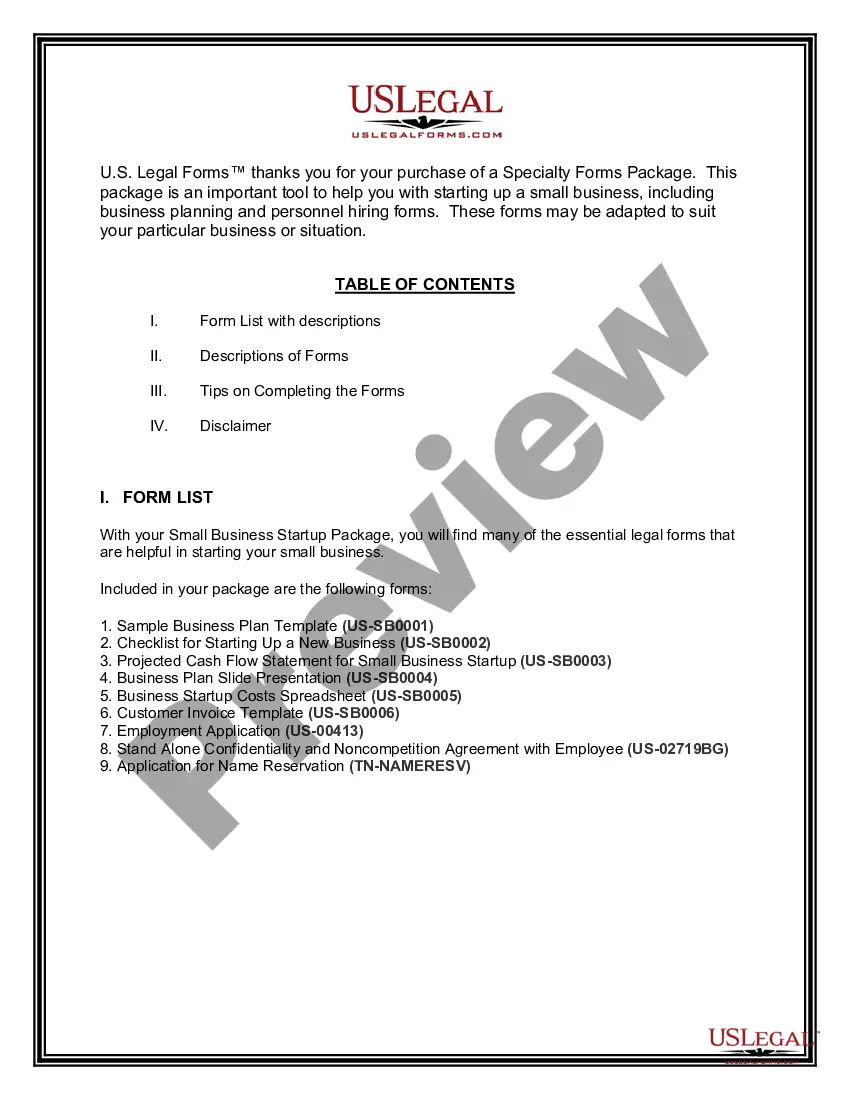
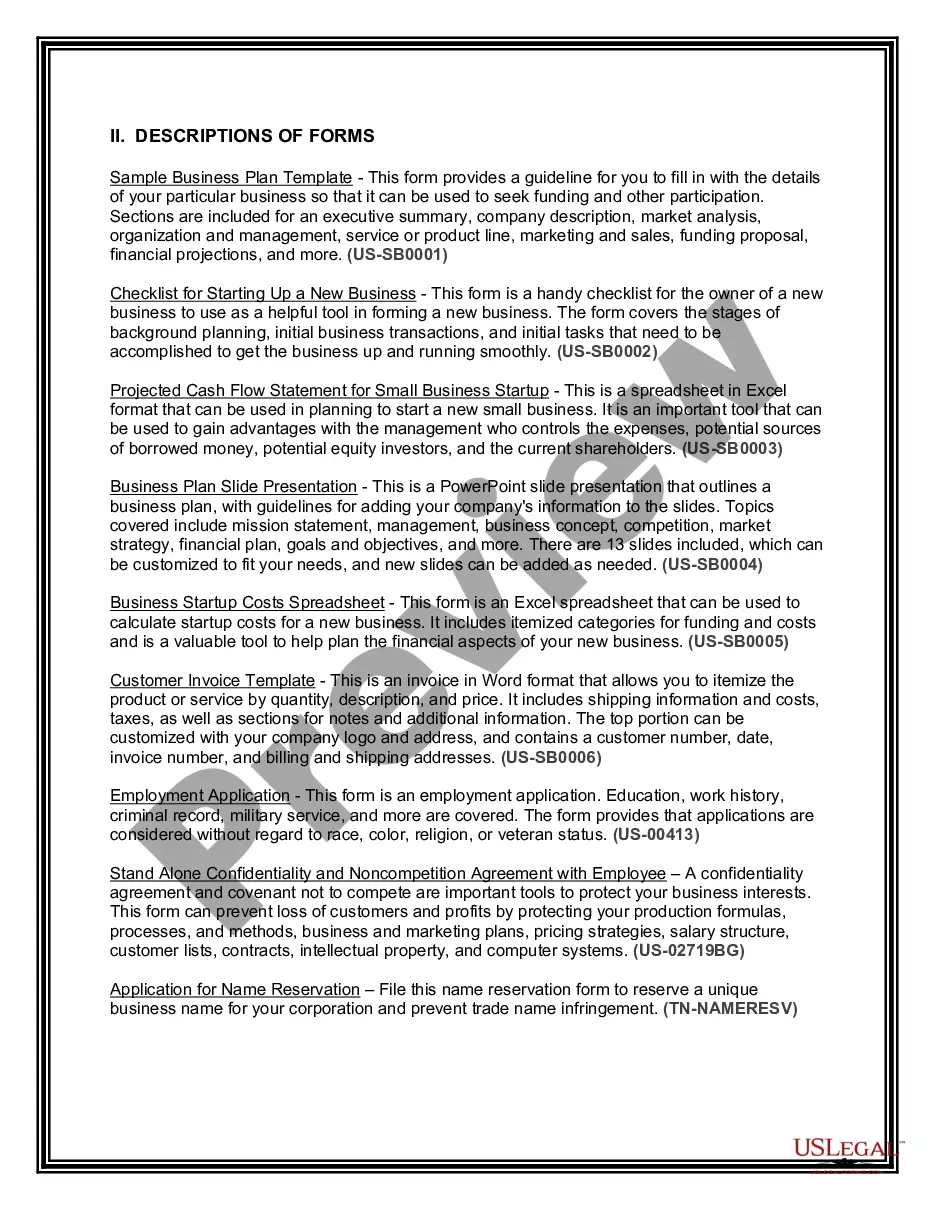
Forms provided in this package
When to use this document
This package is ideal for individuals planning to start a small business in Tennessee. You should consider using it when:
- You need to develop a structured business plan to attract investors or secure funding.
- You are unsure about the steps to take for legally setting up your business.
- You require templates for essential documents such as invoices, employee applications, and confidentiality agreements.
- You want to efficiently track your startup costs and projected cash flow.
- You need guidance on reserving a business name and navigating other legal formalities.
Who should use this form package
- Entrepreneurs looking to start a small business in Tennessee.
- Individuals who have little to no experience with business formation.
- Business owners who need organized templates and checklists to guide them through the startup process.
- Investors or stakeholders seeking clear and professional business plans from potential business owners.
How to prepare this document
- Review the included forms to understand their purposes and requirements.
- Begin with the Sample Business Plan Template by outlining your business concept and filling in the relevant details.
- Use the Checklist for Starting Up a New Business to ensure all necessary tasks are completed.
- Complete the Projected Cash Flow Statement and Business Startup Costs Spreadsheet to assess your financial needs.
- Prepare your Customer Invoice Template for ongoing transactions with clients.
- File the Application for Name Reservation to secure your desired business name.
Notarization guidance for this package
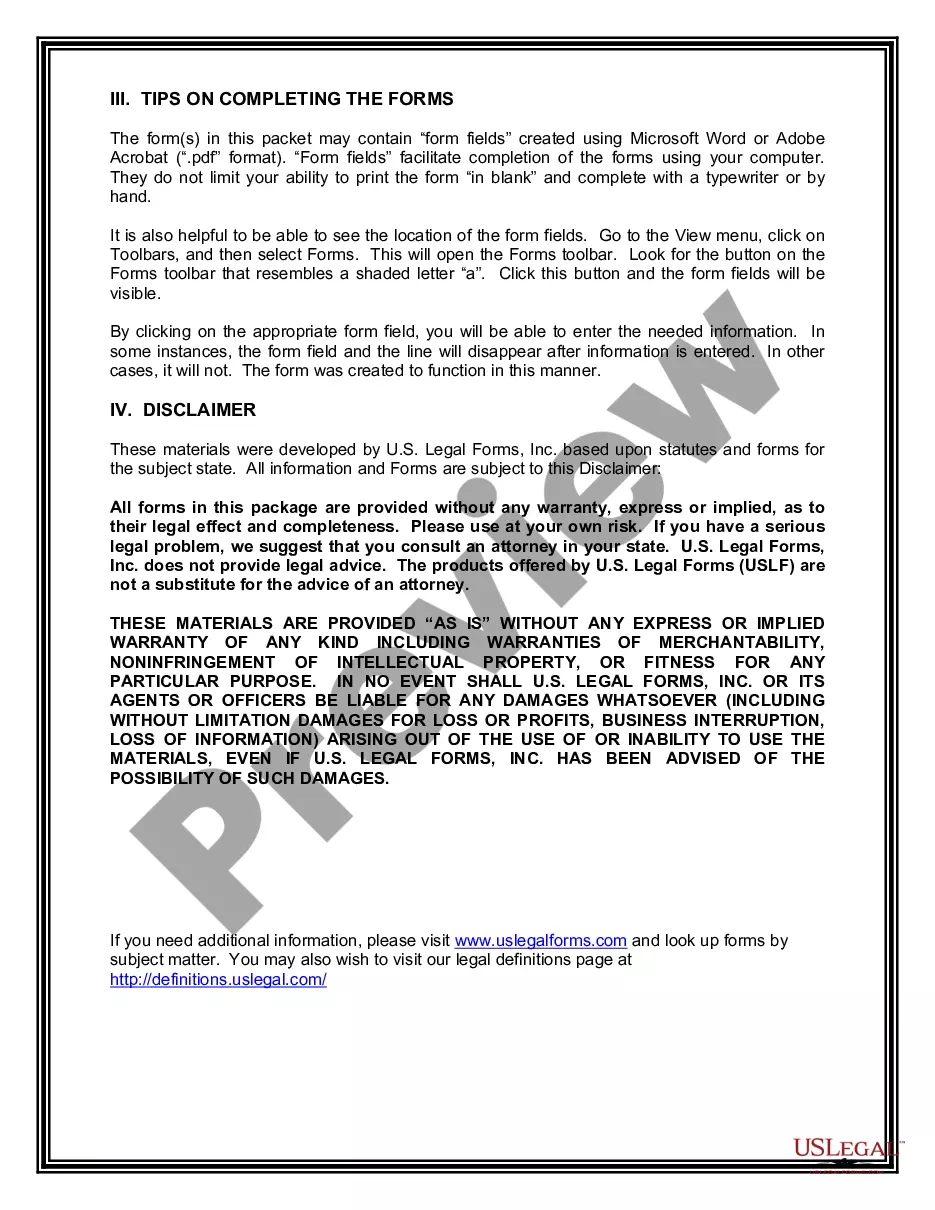
Notarization is generally not required for forms in this package. However, specific circumstances or local laws may require it. You can complete notarization remotely through US Legal Forms, powered by Notarize, with 24/7 availability.
Get your form ready online
Our built-in tools help you complete, sign, share, and store your documents in one place.
Make edits, fill in missing information, and update formatting in US Legal Forms—just like you would in MS Word.
Download a copy, print it, send it by email, or mail it via USPS—whatever works best for your next step.
Sign and collect signatures with our SignNow integration. Send to multiple recipients, set reminders, and more. Go Premium to unlock E-Sign.
If this form requires notarization, complete it online through a secure video call—no need to meet a notary in person or wait for an appointment.
We protect your documents and personal data by following strict security and privacy standards.

Make edits, fill in missing information, and update formatting in US Legal Forms—just like you would in MS Word.

Download a copy, print it, send it by email, or mail it via USPS—whatever works best for your next step.

Sign and collect signatures with our SignNow integration. Send to multiple recipients, set reminders, and more. Go Premium to unlock E-Sign.

If this form requires notarization, complete it online through a secure video call—no need to meet a notary in person or wait for an appointment.

We protect your documents and personal data by following strict security and privacy standards.
Avoid these common issues
- Failing to thoroughly complete each section of the business plan template.
- Not keeping accurate records when tracking startup costs.
- Overlooking the Checklist for Starting Up a New Business, leading to missed essential tasks.
- Using a business name that is already in use, resulting in legal complications.
Benefits of completing this package online
- Convenience: Access and download forms anytime, anywhere.
- Editable Formats: Fill in the documents digitally to save time and effort.
- Reliable Resources: All forms are drafted by licensed attorneys, ensuring legal compliance and usefulness.
Legal use & context
- All forms included in this package are designed to comply with Tennessee state laws, providing a framework for legal business operations.
- Using the forms correctly ensures better protection for your business and minimizes legal risks.
Quick recap
- This package offers essential legal forms to simplify starting a small business in Tennessee.
- Careful completion of the forms increases your chances of a successful business launch.
- Consulting with a qualified attorney can help clarify specific legal requirements as needed.
Looking for another form?
Form popularity
FAQ
Tennessee's excise tax, which effectively is an income tax, is a flat 6.5% tax on net earnings from doing business in the state.
Choose a Business Idea. Decide on a Legal Structure. Choose a Name. Create Your Business Entity in Tennessee. Apply for Licenses and Permits. Pick a Business Location and Check Zoning. File and Report Taxes. Obtain Insurance.
How much does it cost to form an LLC in Tennessee? The Tennessee Secretary of State charges $50 per LLC member included in the filing, with a minimum total fee of $300. The filing fee cannot exceed $3,000 for the Articles of Organization. A convenience fee will also be charged when paying online by credit card.
Step 1: Choose a Business Idea. Step 2: Write a Business Plan. Step 3: Select a Business Entity. Step 4: Register a Business Name. Step 5: Get an EIN. Step 6: Open a Business Bank Account. Step 7: Apply for Business Licenses & Permits. Step 8: Find Financing.
Please note: A separate $15 business license registration fee must be paid to the county and/or municipal clerk for each new business. Once you register for business tax, please contact the individual county and/or municipal clerk to arrange for payment of this required fee and to obtain your business license.
Step 1: Choose a Business Idea. Step 2: Write a Business Plan. Step 3: Select a Business Entity. Step 4: Register a Business Name. Step 5: Get an EIN. Step 6: Open a Business Bank Account. Step 7: Apply for Business Licenses & Permits. Step 8: Find Financing.
The cost to start a Tennessee limited liability company (LLC) is $50 per member (minimum of $300 and a maximum of $3,000). This fee is paid to the Tennessee Secretary of State when filing the LLC's Articles of Organization.
The regulatory and tax environment in Tennessee attracts and promotes small businesses. In comparison with other U.S. states, tax and regulatory burdens are low, experts say. There is no broad-based wage and salary income tax for sole proprietors and other entrepreneurs.
Analyze your organization's needs. Make sure you have a solid understanding of the: Research various types of foundations. Look for funding matches. Compile a list of prospects. Review and refine your list. Select the most appropriate funding prospects.