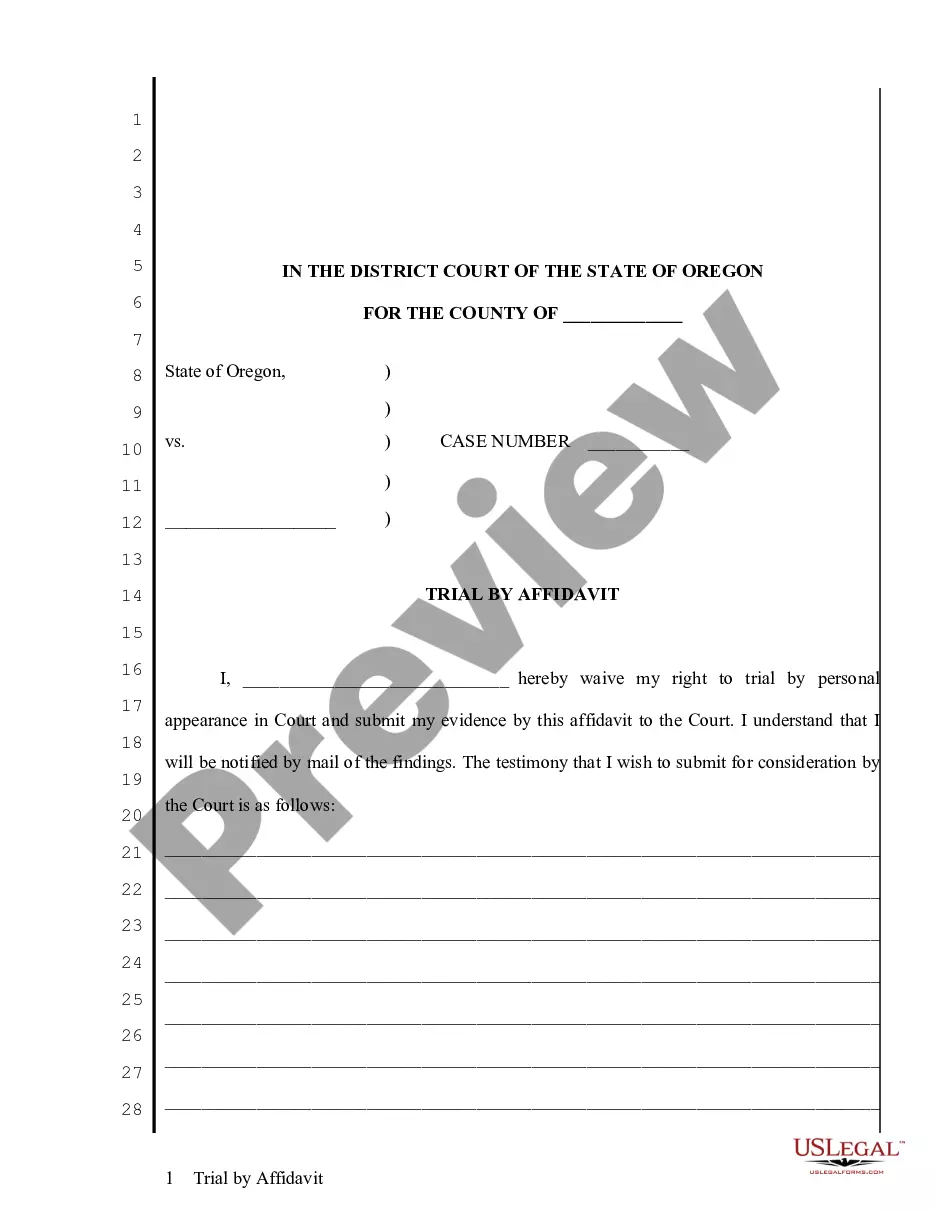
Tennessee Inventory and Condition of Leased Premises for Pre Lease and Post Lease
About this form
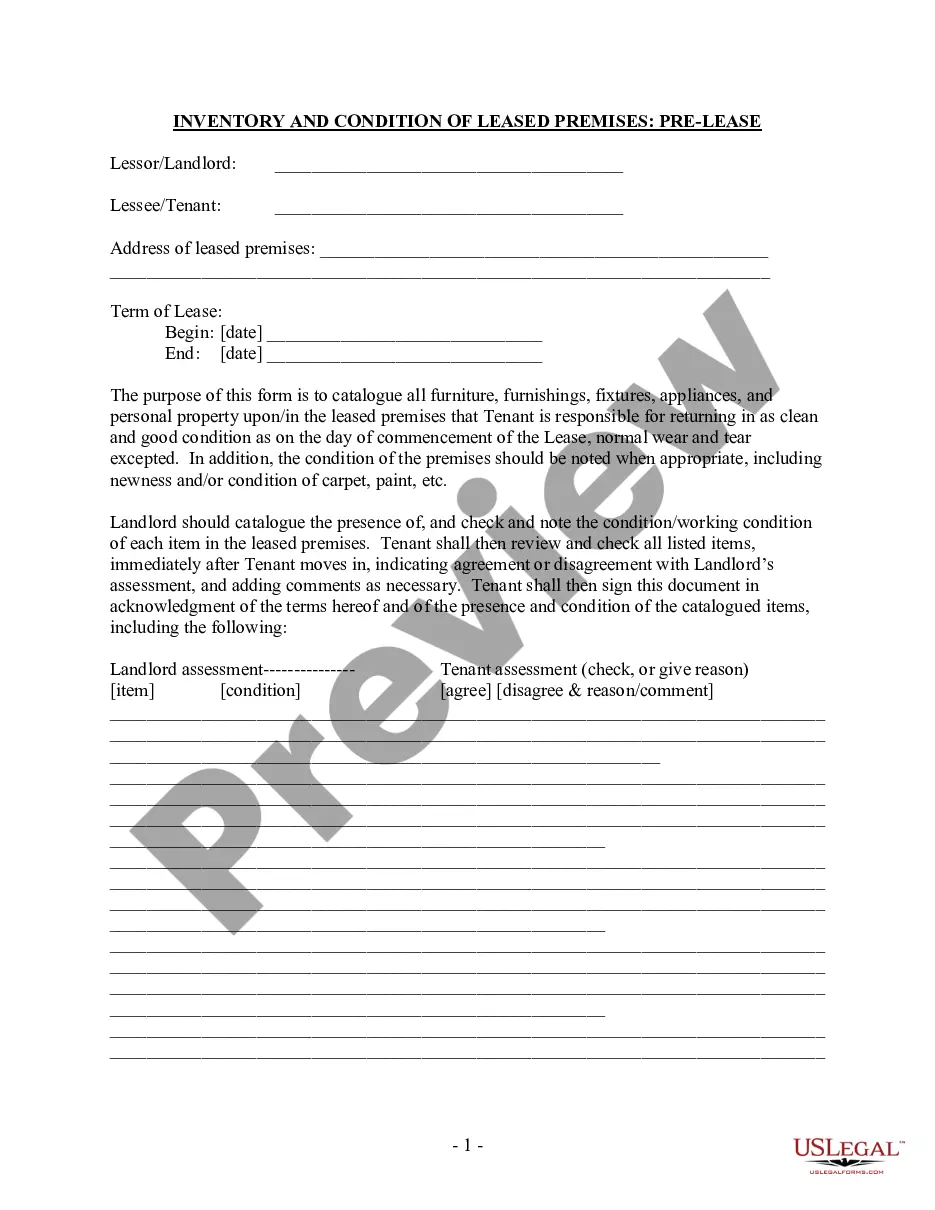
The Inventory and Condition of Leased Premises for Pre Lease and Post Lease is a crucial document for tenants and landlords. This form provides a detailed inventory of the leased propertyâs condition, including all furniture, fixtures, and appliances, before and after the lease period. This inventory helps both parties establish the state of the property and any items included in the rental at the start and end of the lease, ensuring that disputes are minimized over security deposits and damages.
Main sections of this form
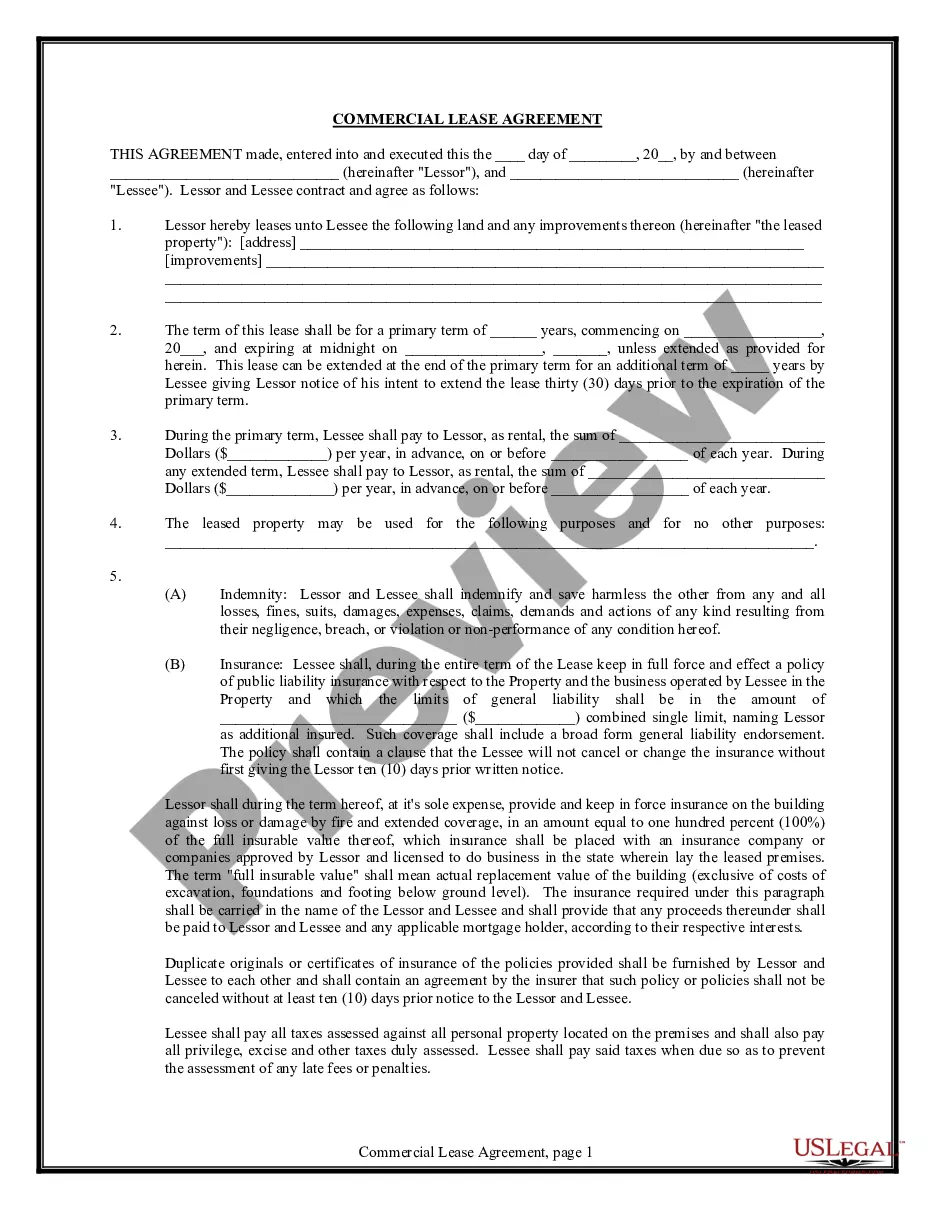
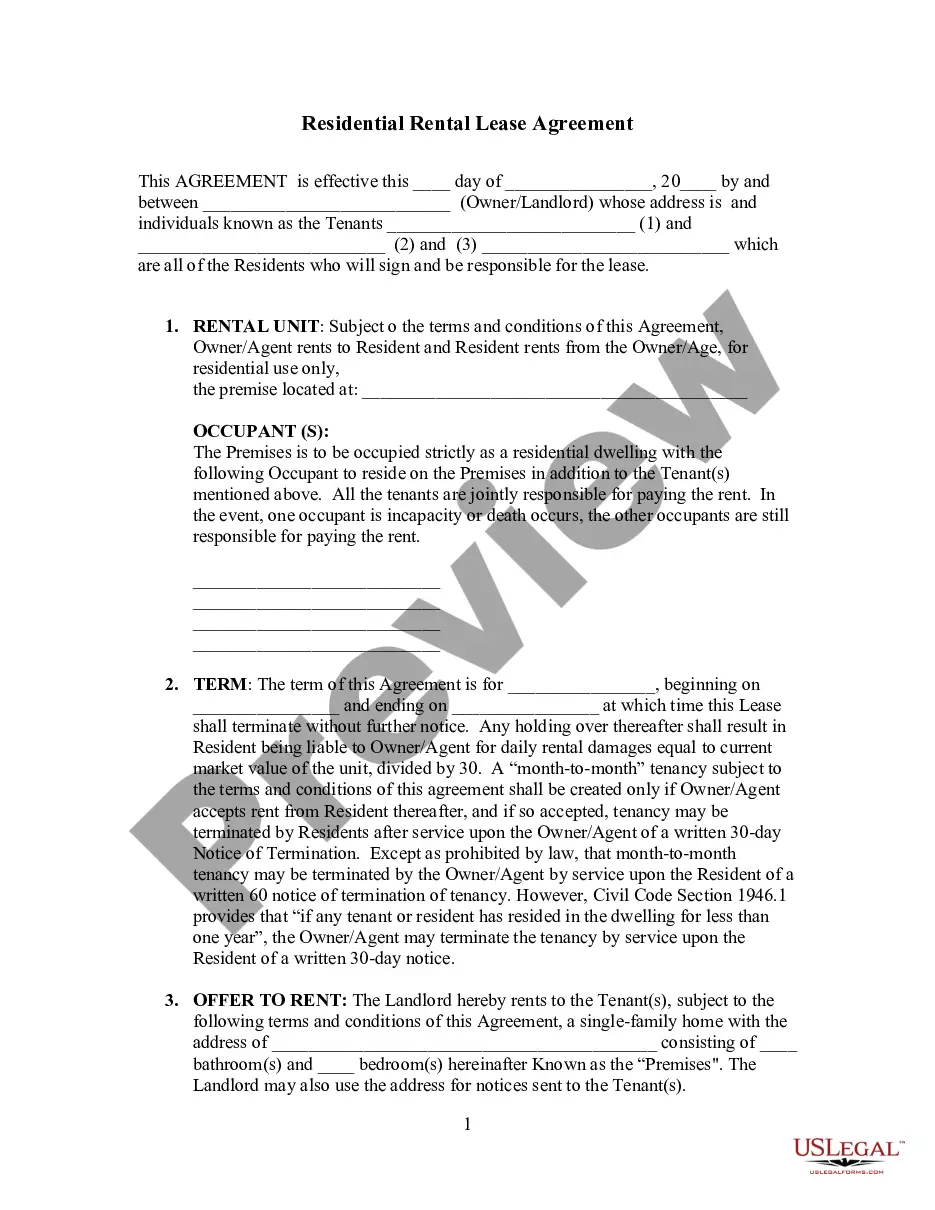
- Identification of the landlord (lessor) and tenant (lessee).
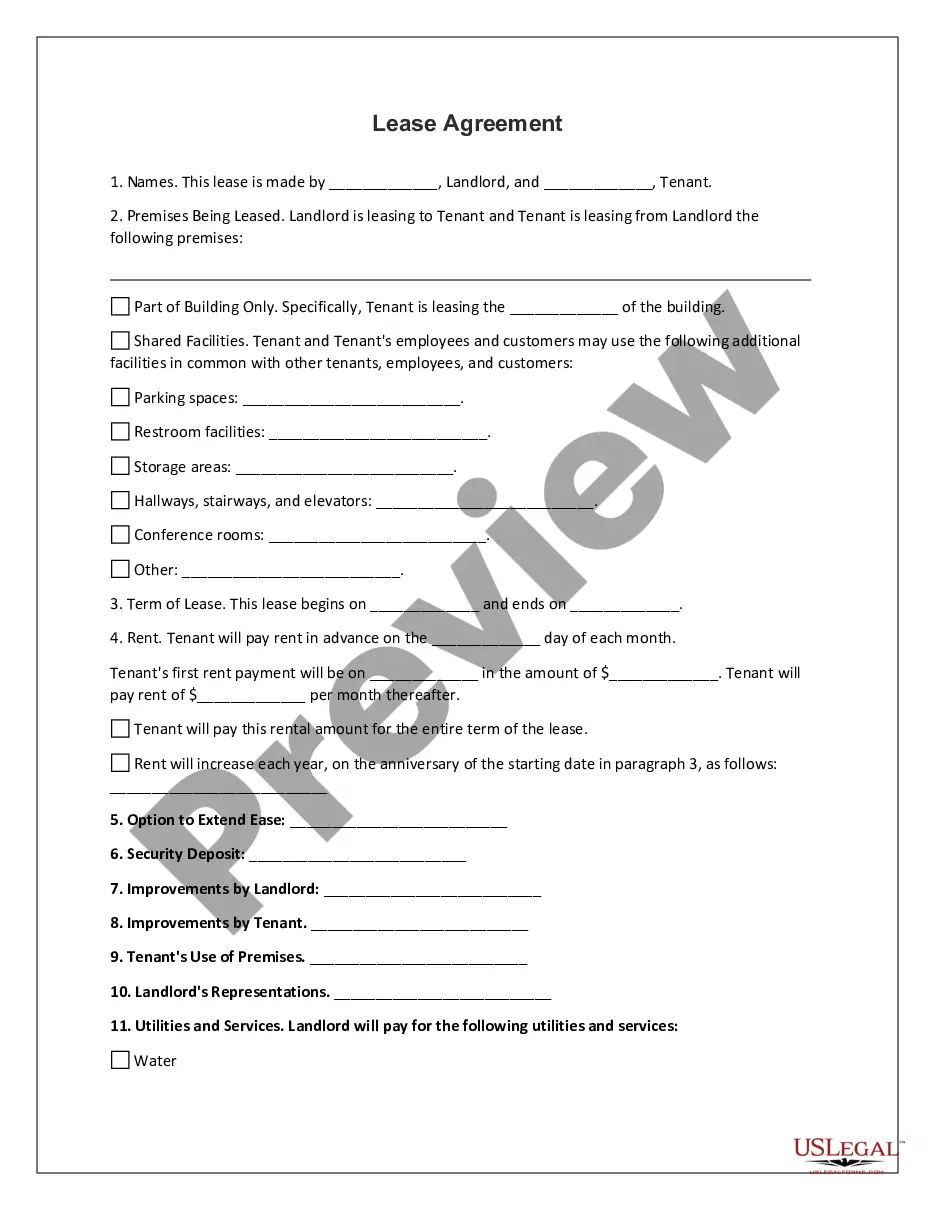
- Address of the leased premises.
- Lease term dates, indicating the start and end of the lease.
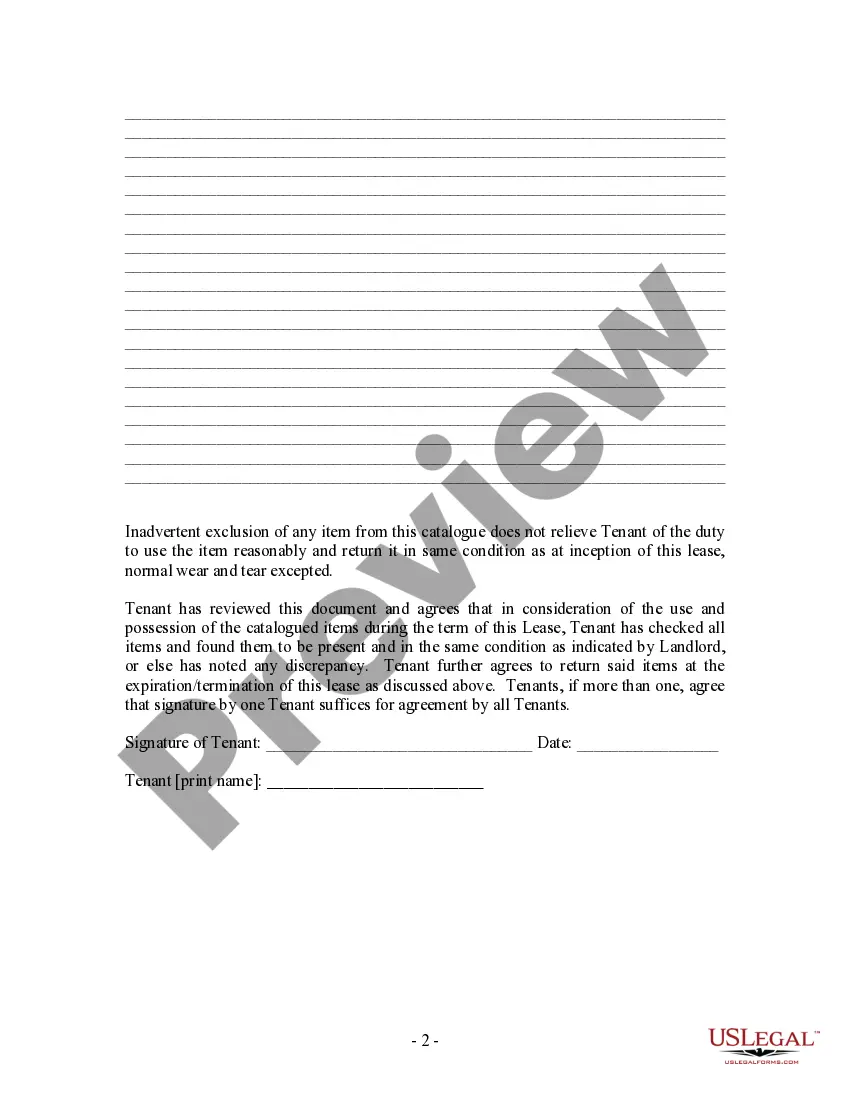
- Catalog of items present in the property along with their conditions.
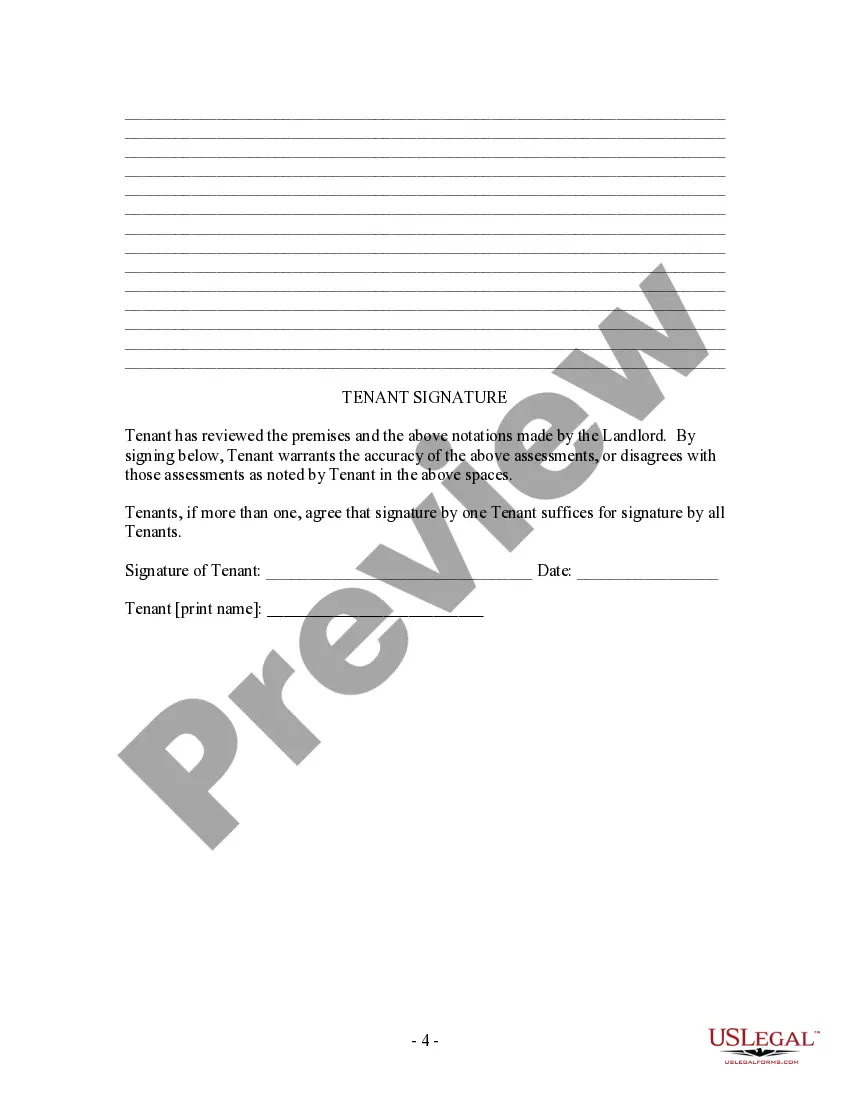
- Review section for the tenant to agree or disagree with the landlord's assessments.
- Signature lines for both landlord and tenant to acknowledge the document.
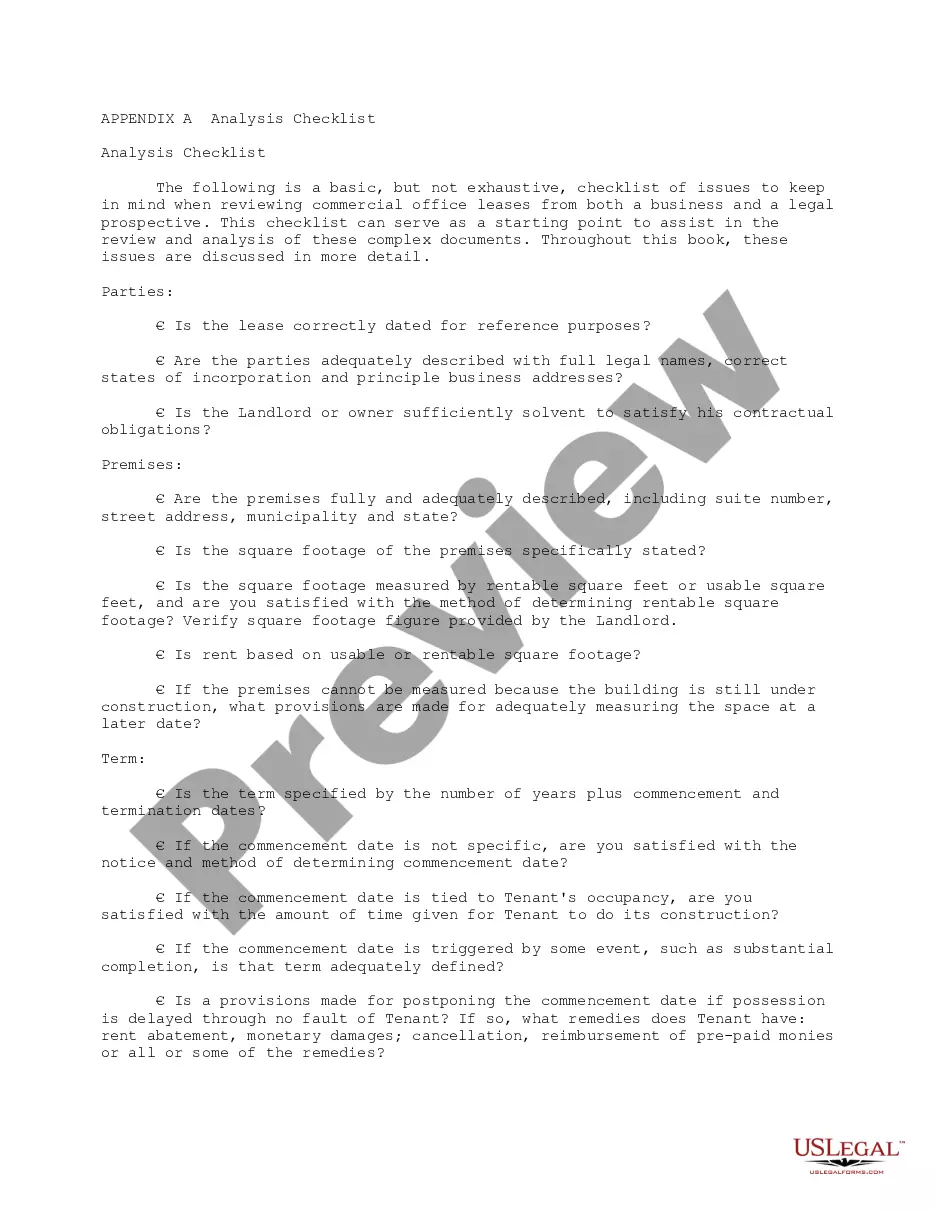
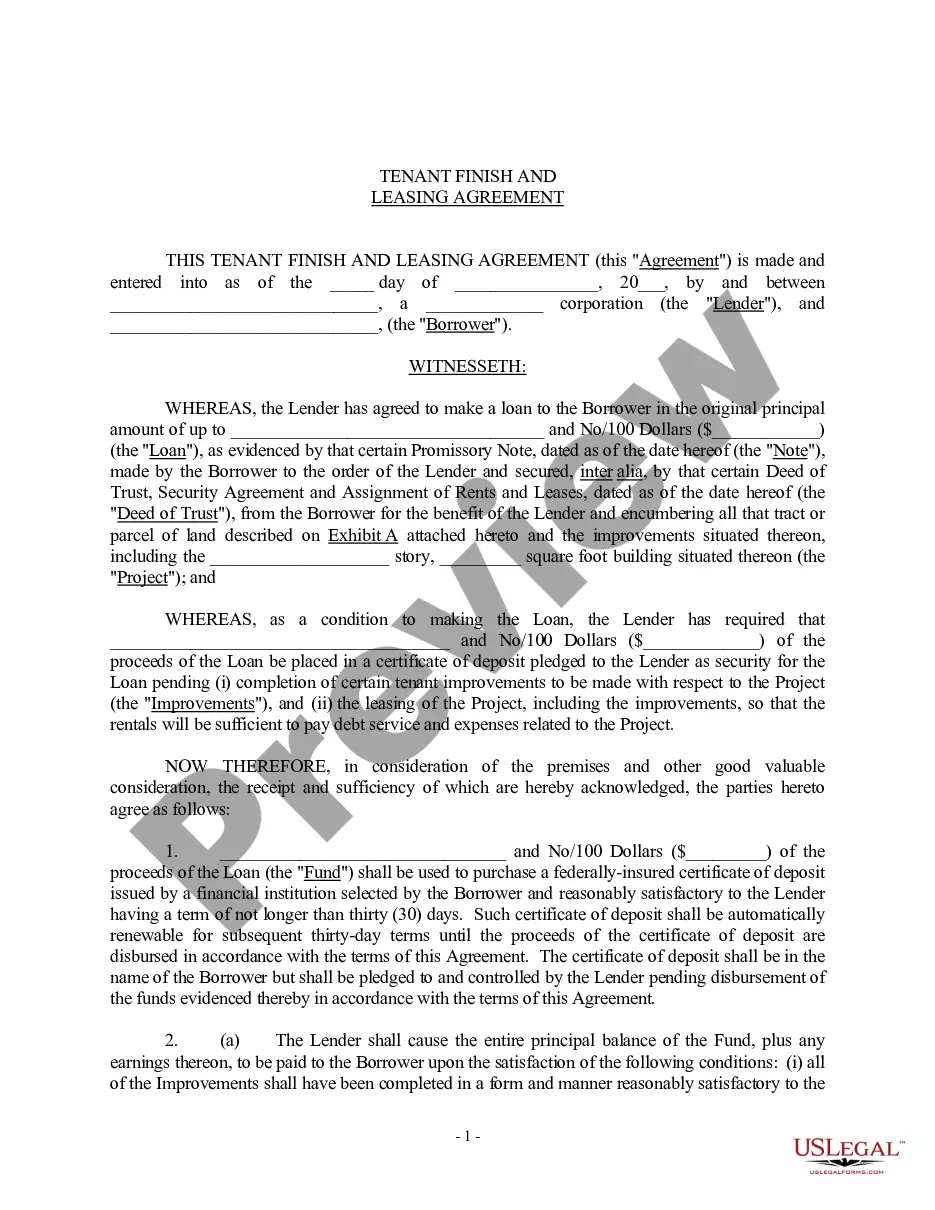
Situations where this form applies
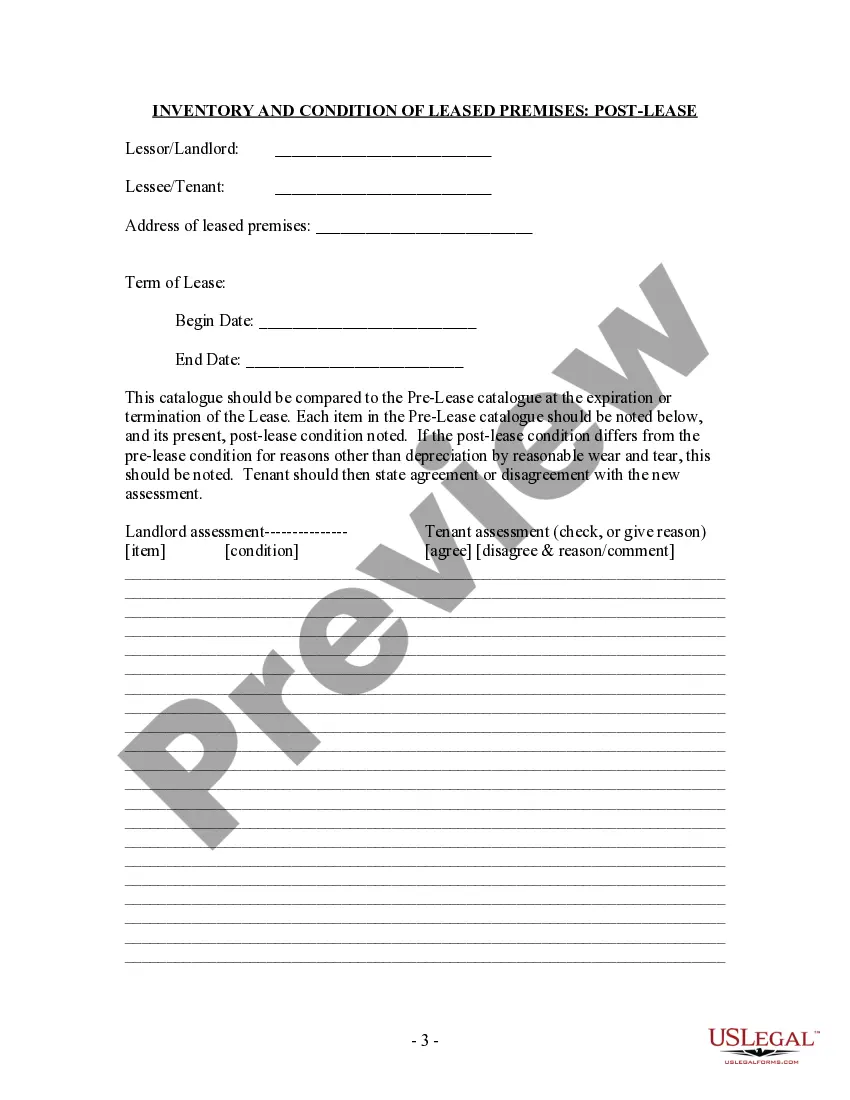
This form should be used before a tenant moves into a property (pre-lease) to document the initial condition of the premises and all included items. It is also necessary after the tenant vacates the property (post-lease) to record any changes in the condition of the premises and items. This documentation is essential for resolving disputes regarding security deposits and ensuring both parties have a clear agreement on the condition of the leased property throughout the rental period.
Who can use this document
This form is intended for:
- Landlords who want to document the condition of their rental property.
- Tenants who wish to protect themselves against unfair claims for damages.
- Property managers involved in the leasing process.
- Anyone leasing or renting residential property, ensuring clarity and accountability on both sides.
How to complete this form
- Begin by entering the names of the landlord and tenant at the top of the form.
- Specify the address of the leased premises along with the start and end dates of the lease.
- Catalog all items within the property, assessing their condition before the tenant moves in.
- Have both the landlord and tenant review the condition of each item, marking agreements or disagreements.
- Ensure that both parties sign and date the document to acknowledge their agreement on the assessments made.
Notarization requirements for this form
This form does not typically require notarization unless specified by local law. Both parties can sign the form to validate it, making it legally binding.
Get your form ready online
Our built-in tools help you complete, sign, share, and store your documents in one place.
Make edits, fill in missing information, and update formatting in US Legal Forms—just like you would in MS Word.
Download a copy, print it, send it by email, or mail it via USPS—whatever works best for your next step.
Sign and collect signatures with our SignNow integration. Send to multiple recipients, set reminders, and more. Go Premium to unlock E-Sign.
If this form requires notarization, complete it online through a secure video call—no need to meet a notary in person or wait for an appointment.
We protect your documents and personal data by following strict security and privacy standards.

Make edits, fill in missing information, and update formatting in US Legal Forms—just like you would in MS Word.

Download a copy, print it, send it by email, or mail it via USPS—whatever works best for your next step.

Sign and collect signatures with our SignNow integration. Send to multiple recipients, set reminders, and more. Go Premium to unlock E-Sign.

If this form requires notarization, complete it online through a secure video call—no need to meet a notary in person or wait for an appointment.

We protect your documents and personal data by following strict security and privacy standards.
Common mistakes to avoid
- Failing to fill out the entire inventory, resulting in disputes about missing items.
- Not noting the condition of all items, which can lead to misunderstandings.
- Ignoring the need for both parties to sign the document, making it unenforceable.
Why complete this form online
- Convenient access to a legally vetted document that saves time and effort.
- Editable format that allows customization based on specific terms of the lease.
- Instant availability and no need for physical paperwork which streamlines the rental process.
Legal use & context
- This form serves as a critical piece of evidence in any disputes regarding property condition.
- Completing this form helps clarify responsibilities for property maintenance and return conditions.
- The assessments made within the document can impact security deposit returns significantly.
Quick recap
- The Inventory and Condition of Leased Premises form is essential for managing tenant-landlord relations.
- It serves to document all items and their conditions both before and after the lease term.
- Using this form can help prevent disputes over security deposits and property damages.
- Completing the form involves both parties reviewing and agreeing on the condition of the property and its contents.
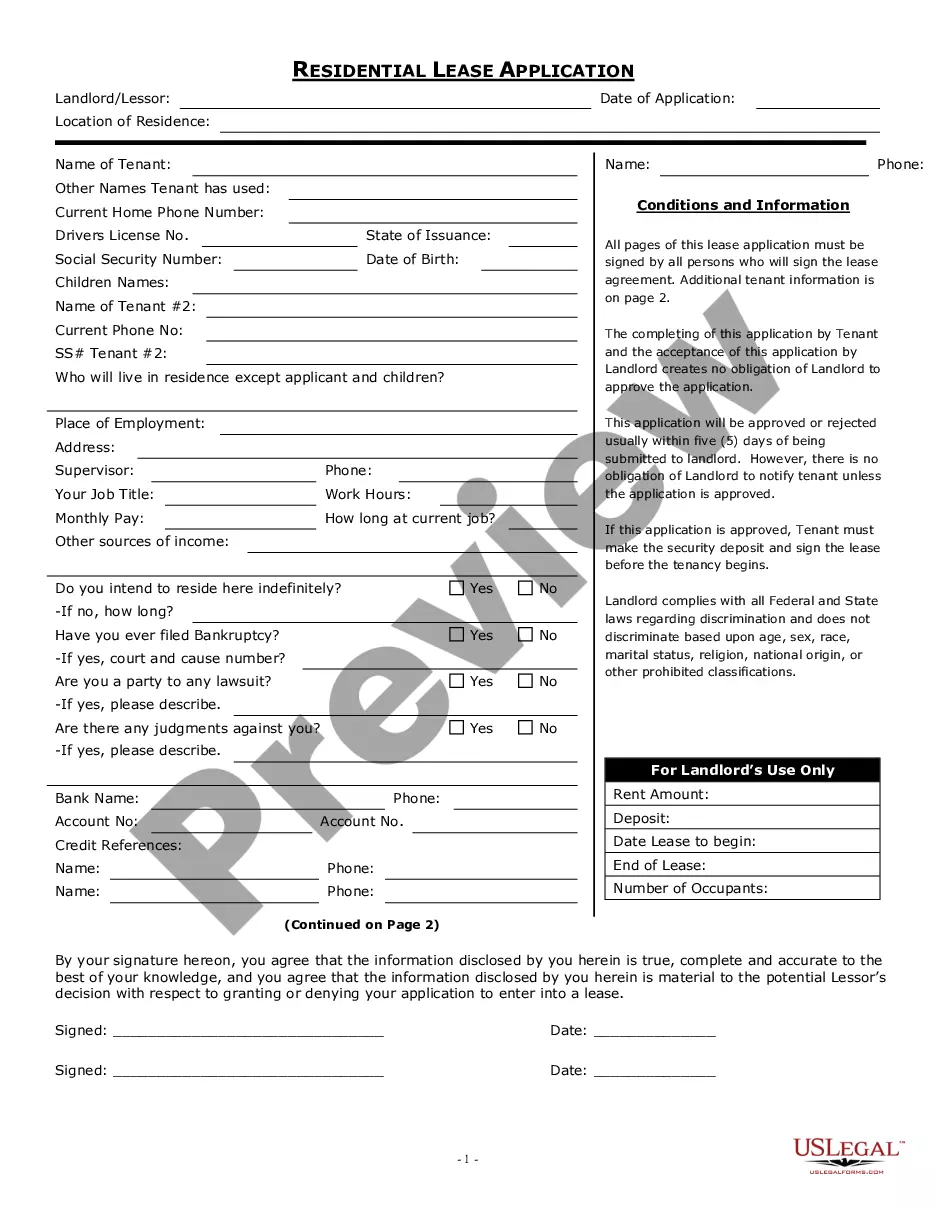
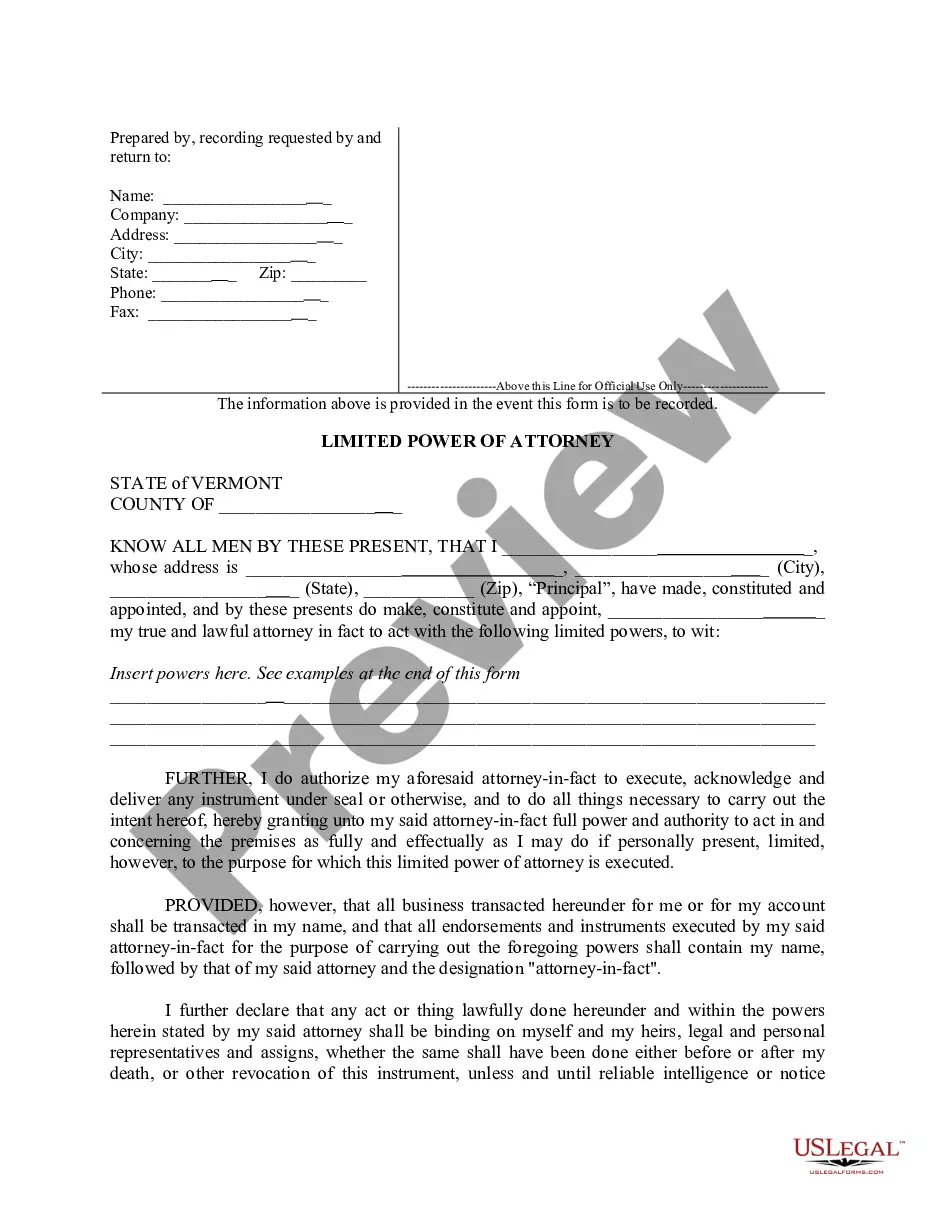
Looking for another form?
Form popularity
FAQ
As a tenant in a private rented property, your tenancy agreement (which should be co-signed by you and your landlord before you move in) provides you with a number of rights: The right to live in a property that's safe and in a good state of repair.The right to be protected from unfair rent and unfair eviction.
The Virginia Residential Landlord and Tenant Act (VRLTA), Sections 55.1-1200 through 55.1-1262 of the Code of Virginia, establishes the rights and obligations of residential landlords and tenants in the Commonwealth, but only the courts can enforce those rights and obligations.
Although renters must abide by the Homeowners' Association rules, they still have rights under the law. The property owner must also follow their home state's Landlord-Tenant Laws that include the Fair Housing Act and Fair Credit Reporting Act.
A landlord cannot evict a tenant without an adequately obtained eviction notice and sufficient time. A landlord cannot retaliate against a tenant for a complaint. A landlord cannot forego completing necessary repairs or force a tenant to do their own repairs.A landlord cannot remove a tenant's personal belongings.
A renter is a person who pays rent in other to use something that to belongs to someone else be it a house, room or even a car. But a tenant can be a renter, free occupier or a caretaker of someone's property eg.
As a renter in Virginia, you have legal protections under the Virginia Residential Landlord and Tenant Act (VRLTA) that include the right to: A fair application fee. A fair security deposit. A decent and safe place to live.
Laws About a Renters Right to Privacy Once a tenant has possession of a property, the landlord may not interfere with this right. It's, therefore, the landlord's responsibility to ensure he or she does not enter the rental unit without proper notice (usually 24 48 hours, except in emergencies).
As per law tenant can not claim any right over the property, as you renew the agreement with him after every 11 month hence no need to worry, tenant can not do any act against you or your property.If the tenant stops paying the rent then you may file a suit for his eviction.