Ohio Paternity Law and Procedure Handbook
About this form
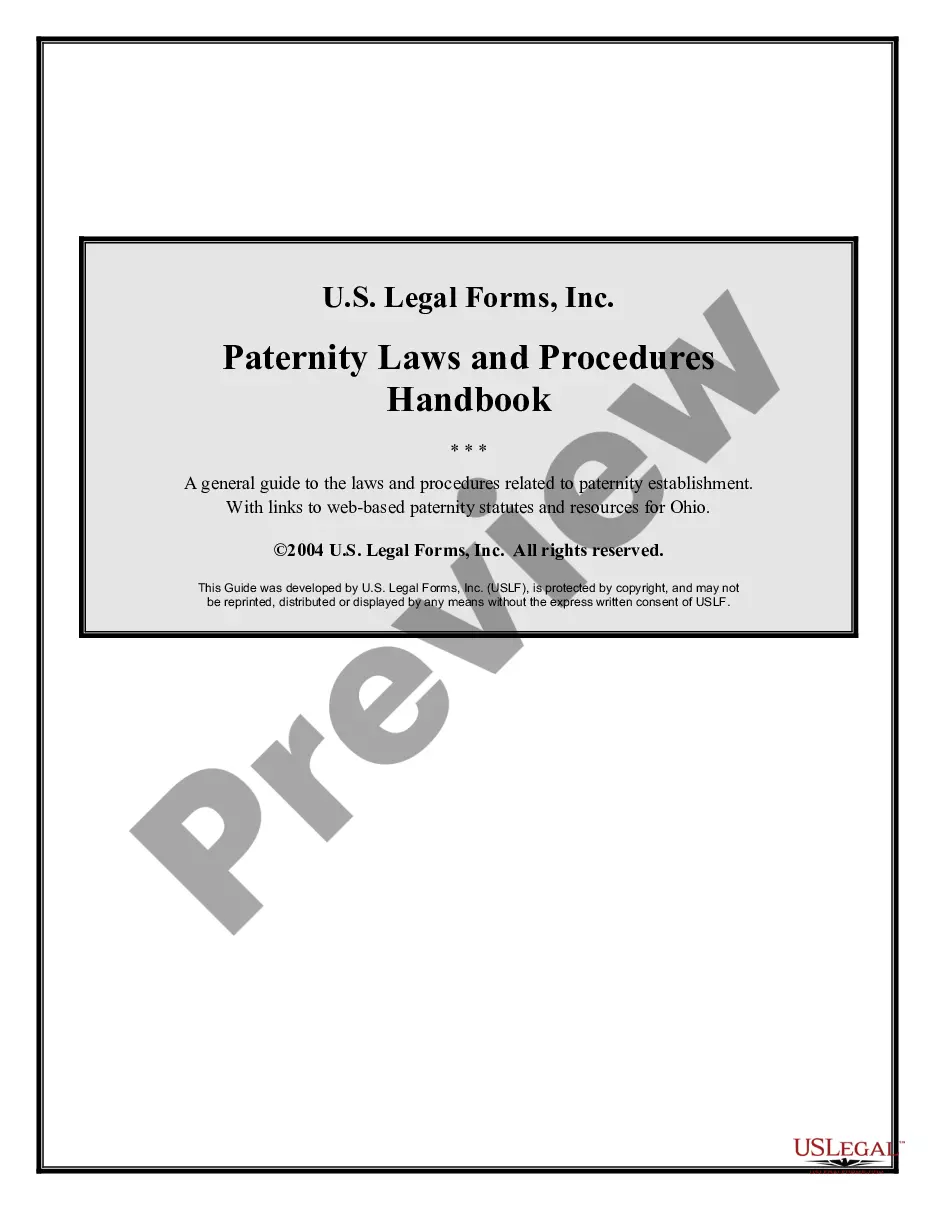
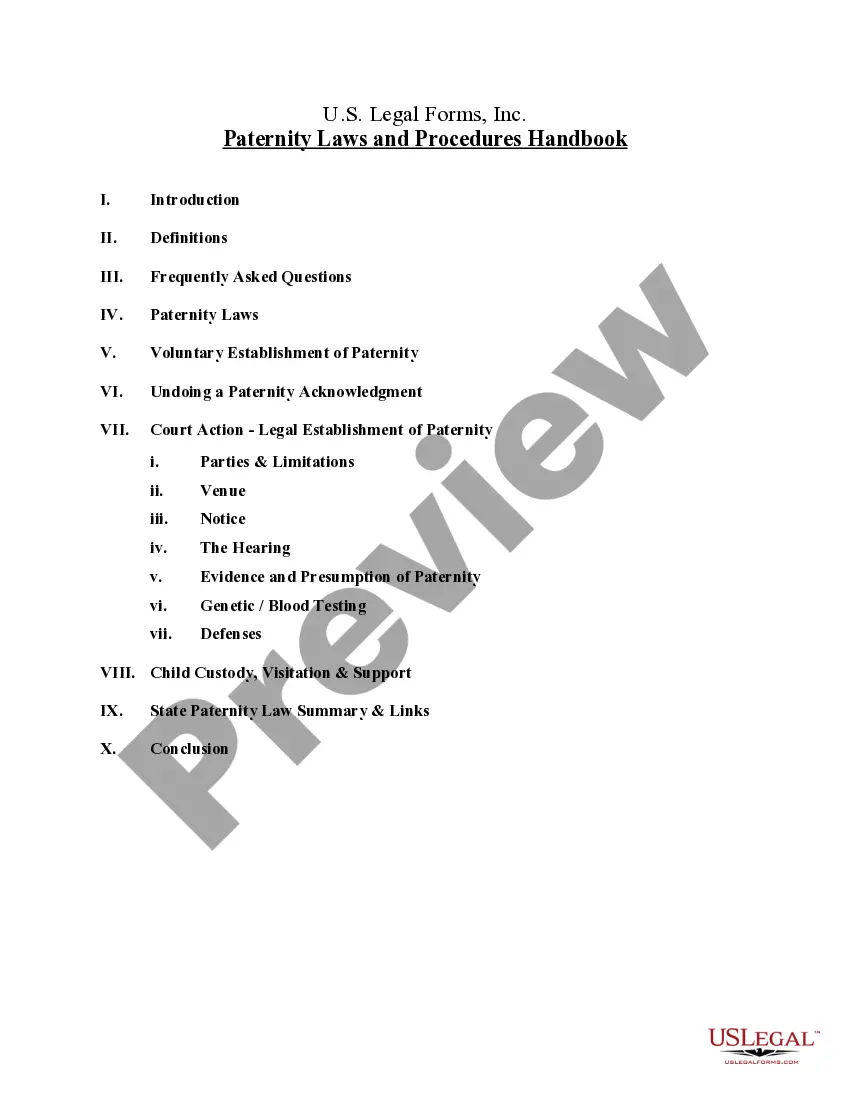
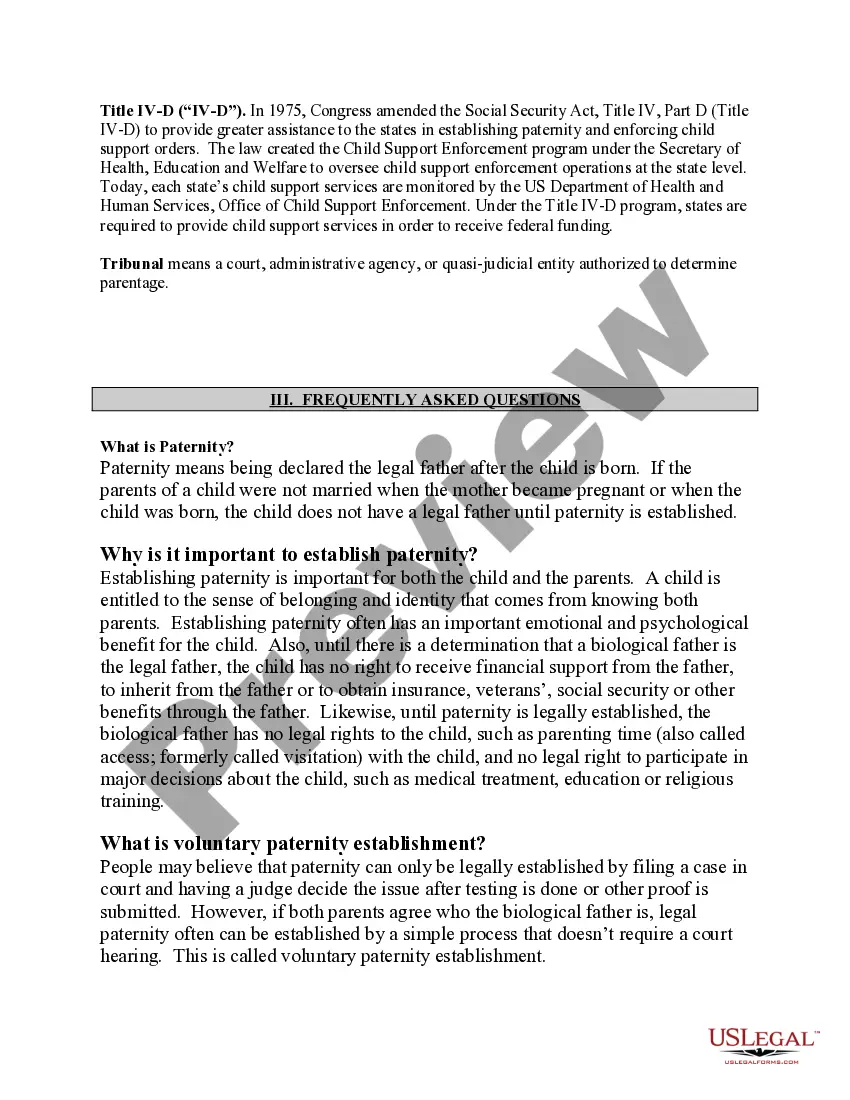
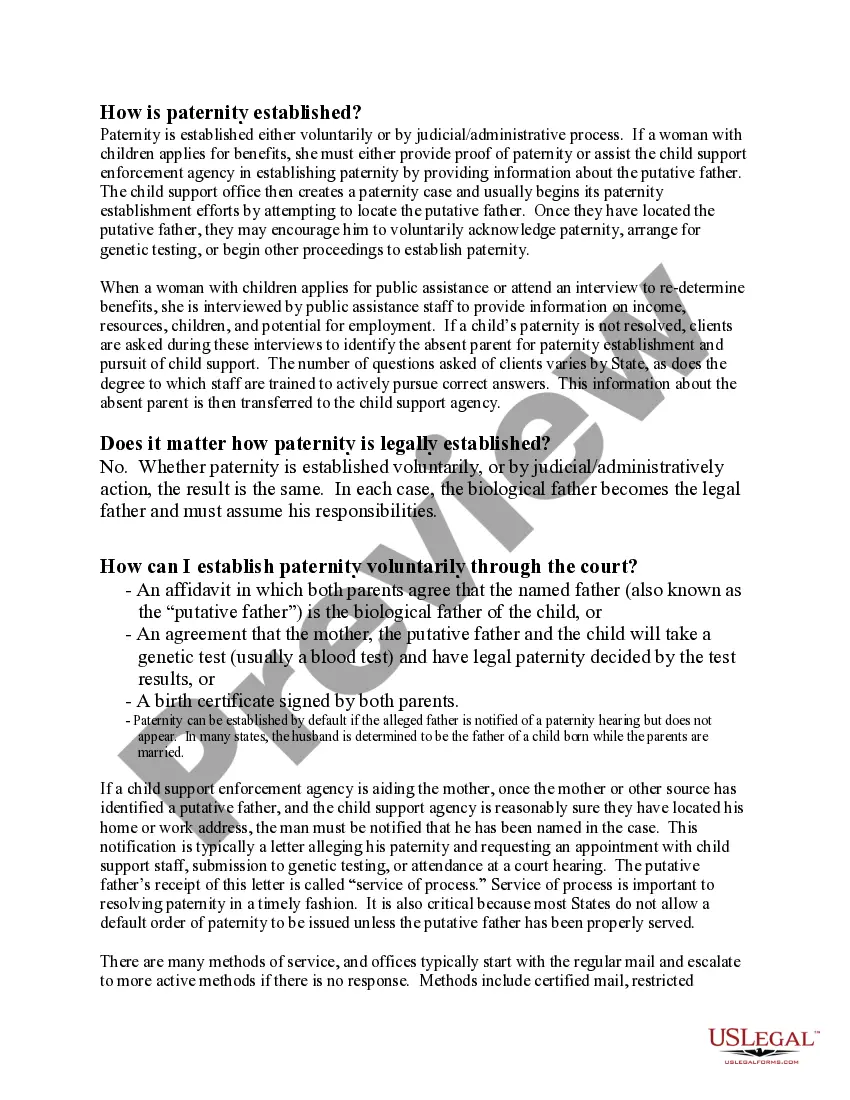
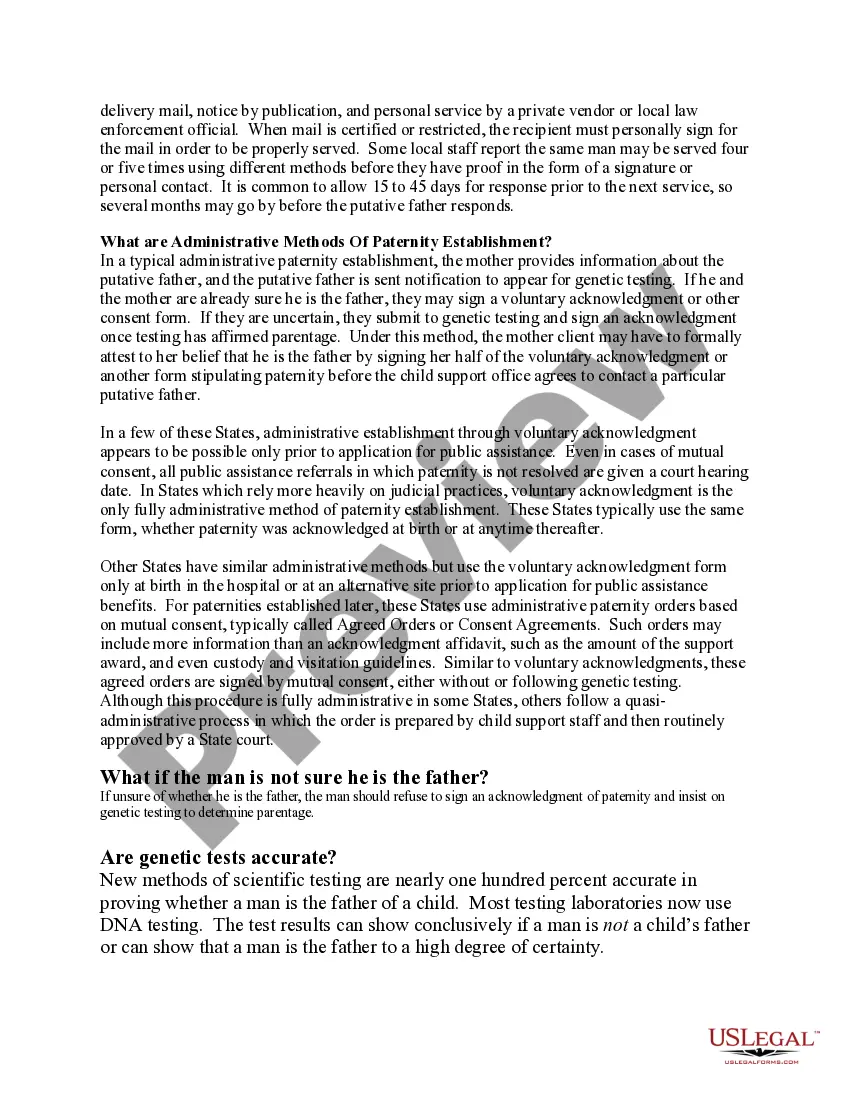
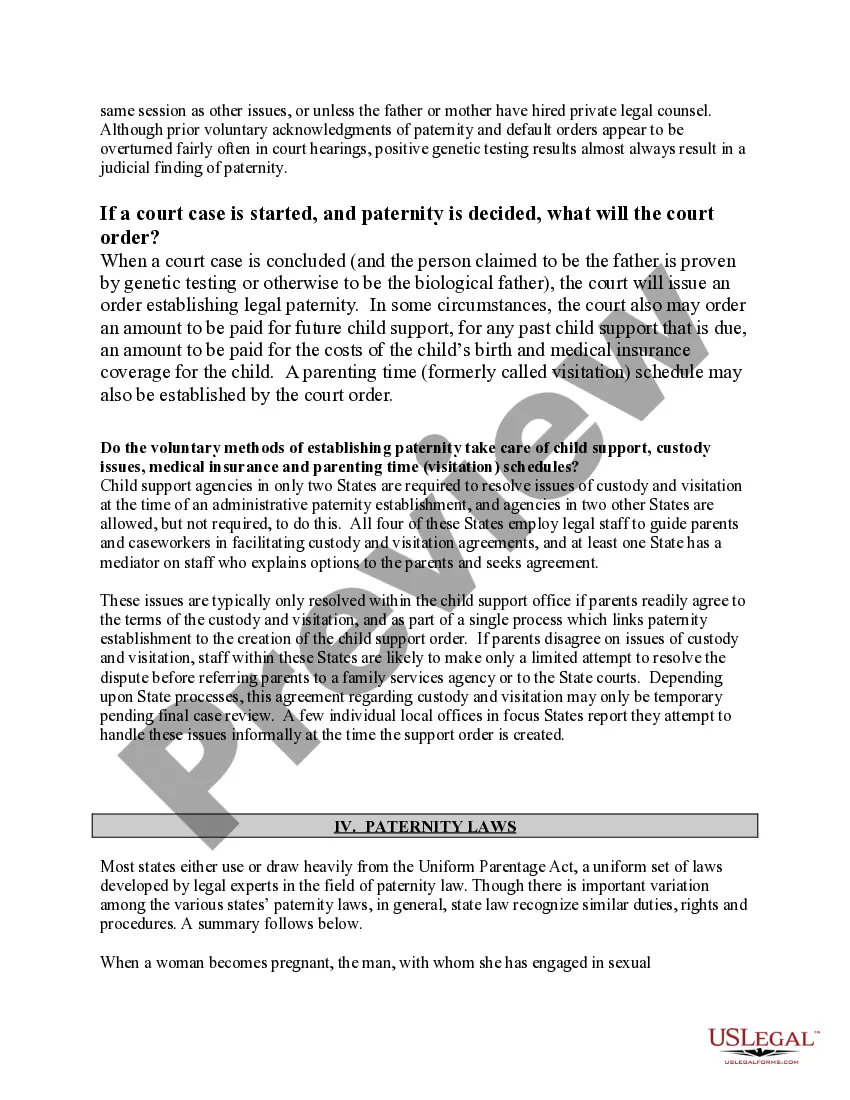
The Paternity Law and Procedure Handbook is a comprehensive guide designed to help individuals understand the laws and procedures surrounding the establishment of paternity in the United States. This handbook is essential for unmarried parents seeking to clarify the legal relationship between a father and a child. It distinguishes itself from other resources by offering state-specific information, including laws governing voluntary acknowledgment and the court process for establishing paternity. By providing clear and accessible explanations, this handbook empowers users to navigate the complexities of paternity establishment confidently.
What’s included in this form
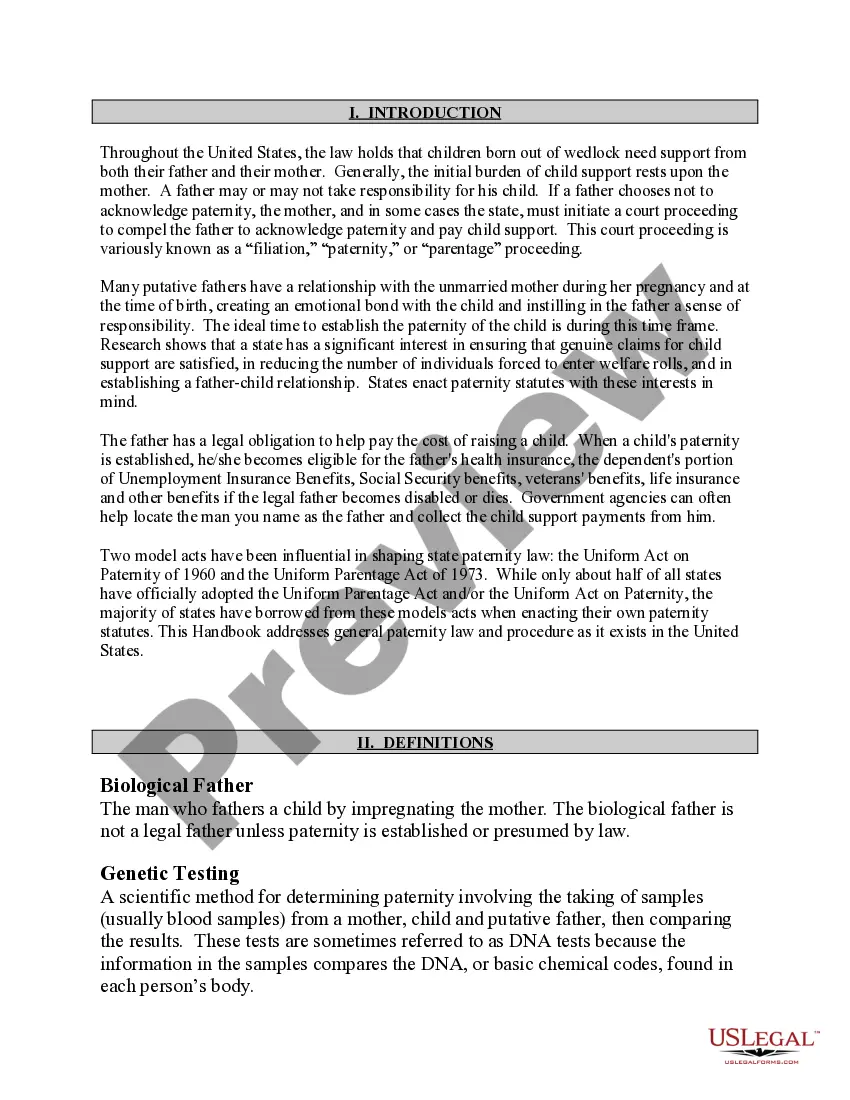
- Introduction to paternity laws and their significance.
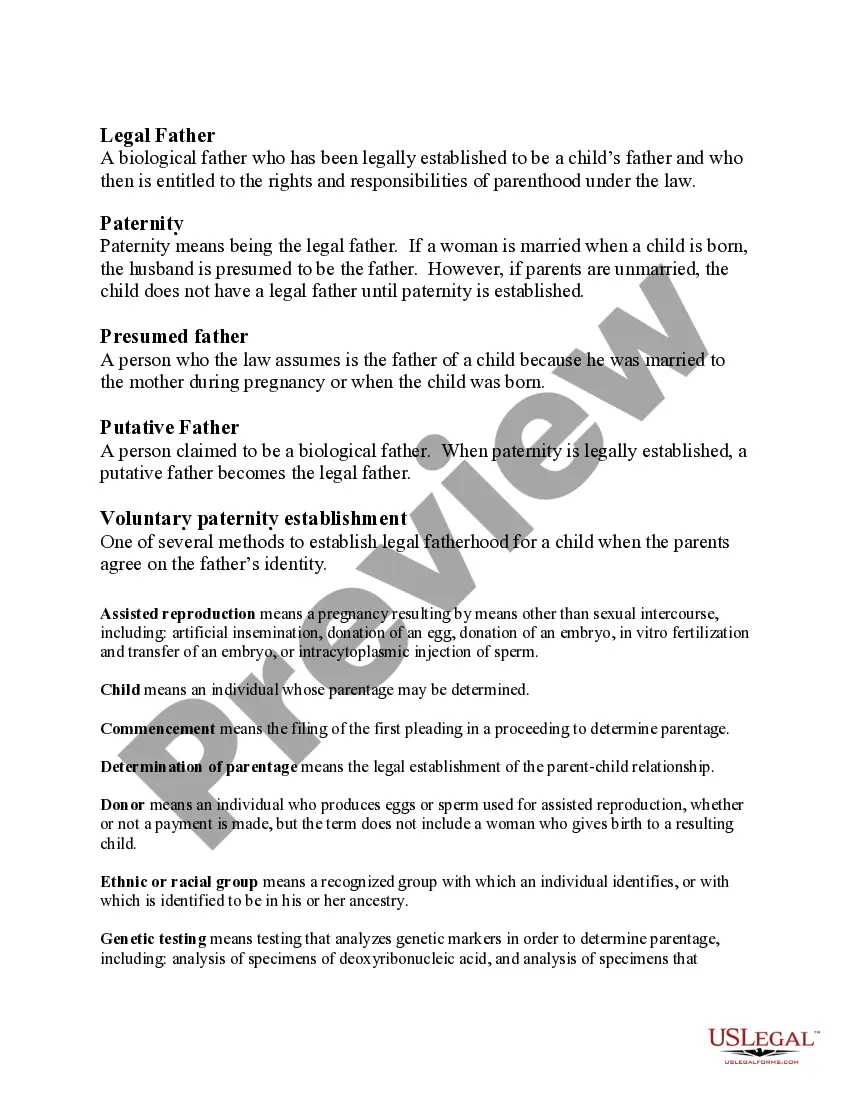
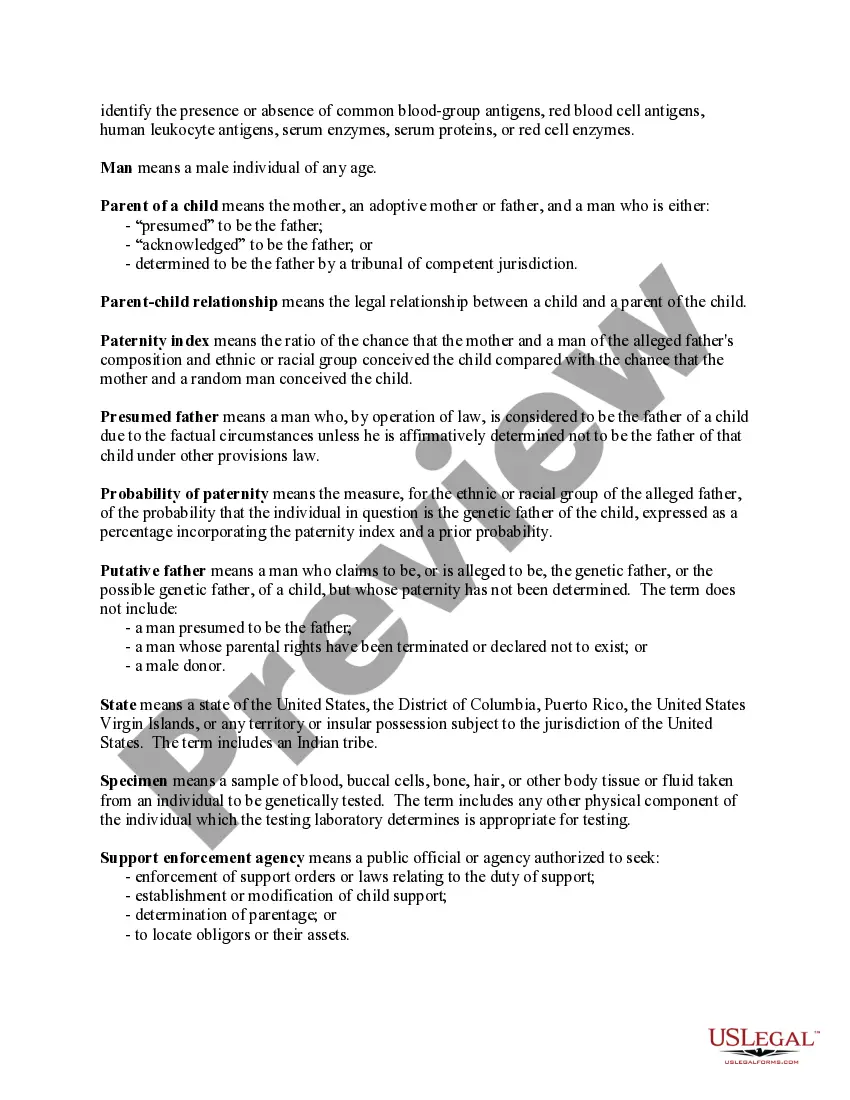
- Definitions of relevant terms, including biological father, legal father, and putative father.
- Discussion on voluntary establishment of paternity and court processes.
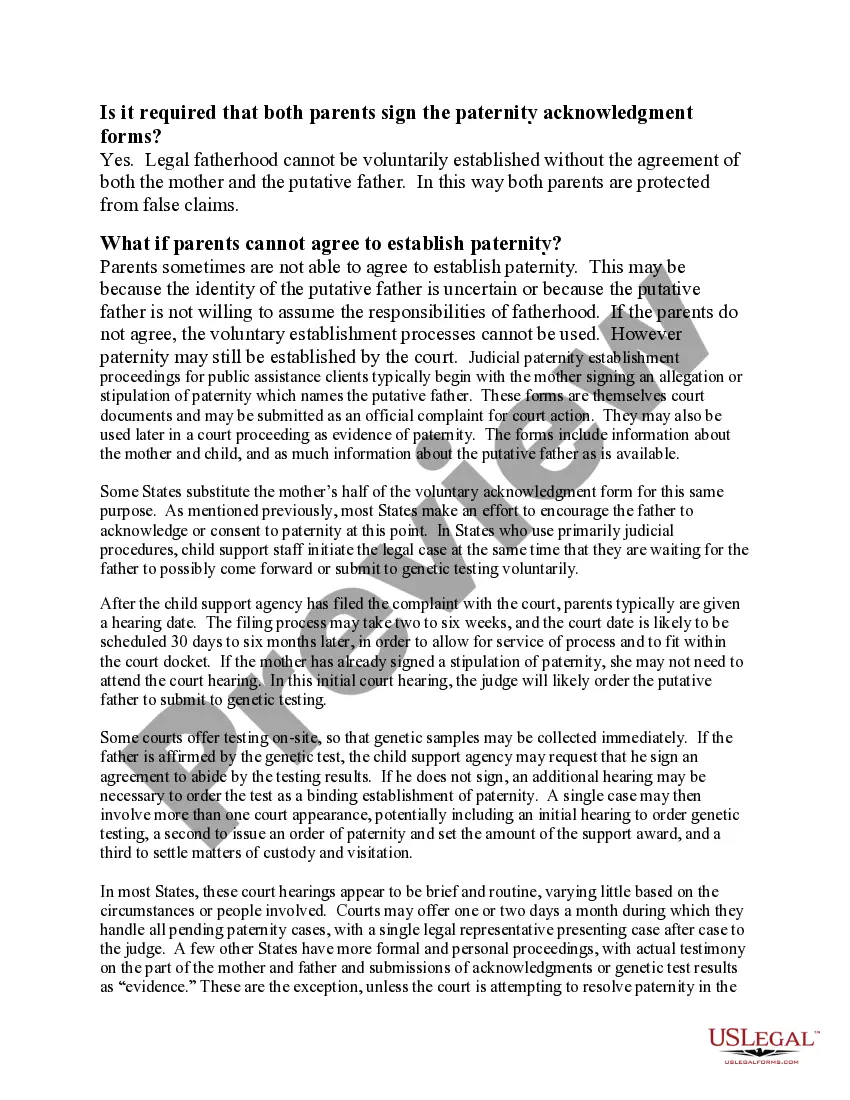
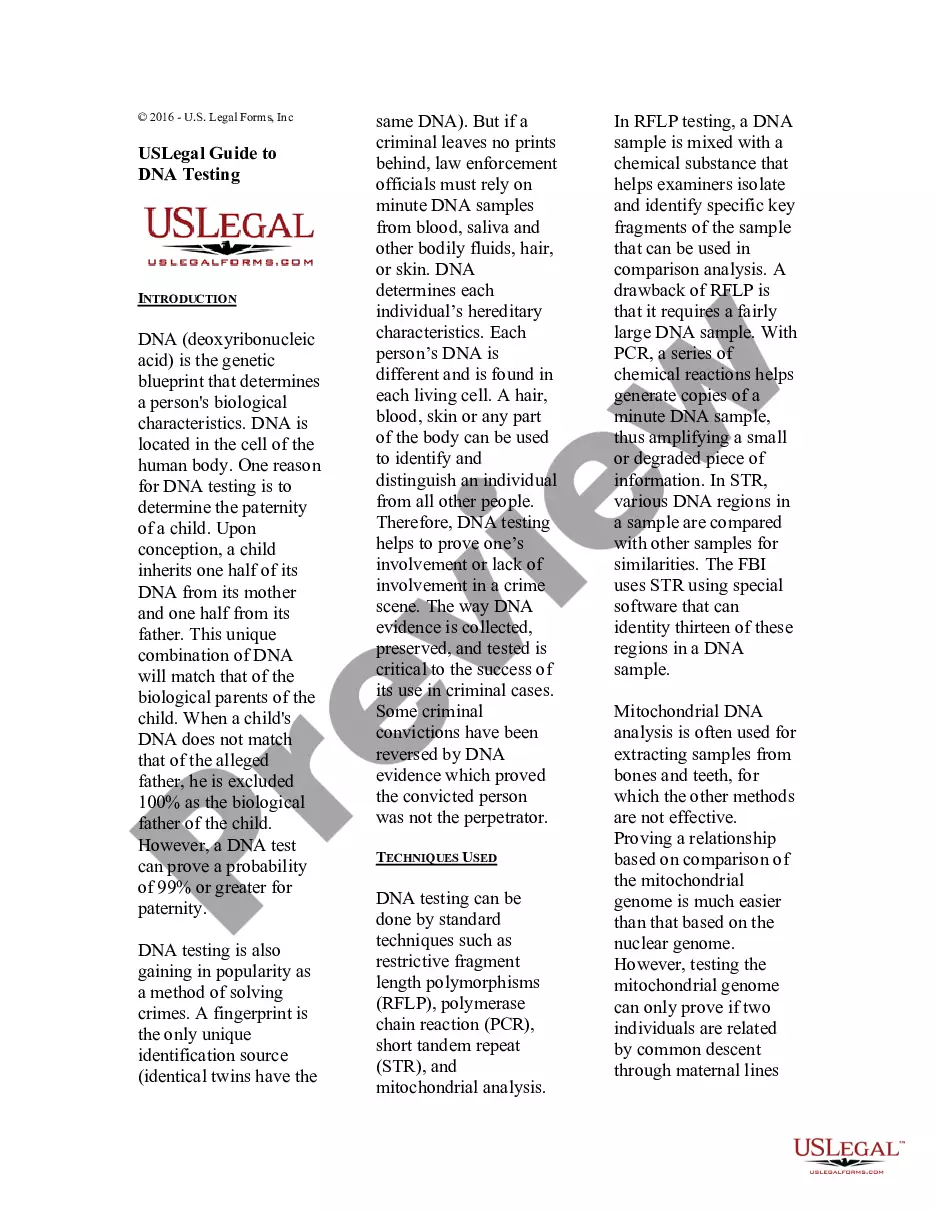
- Overview of genetic testing procedures and implications.
- State-specific summaries of paternity laws and resources.


When this form is needed
This handbook is useful in scenarios such as when a child is born to unmarried parents, when a father is uncertain about his paternity status, or when establishing child support is necessary. It also serves as a critical resource for parents looking to clarify rights and responsibilities regarding child custody and support, especially when disputes arise over paternity acknowledgment.
Who should use this form
- Unmarried parents seeking to establish legal paternity for their child.
- Fathers who are unsure of their paternity status and want to clarify their legal obligations.
- Individuals needing guidance on the legal processes related to child support and custody.
- Legal advocates or professionals assisting clients in paternity matters.
Instructions for completing this form
- Review the handbook sections relevant to your state to understand specific laws and procedures.
- Identify if a voluntary acknowledgment of paternity is applicable in your situation.
- Gather necessary information regarding both parents and the child, including birth details.
- Consider genetic testing if paternity is disputed or uncertain.
- Follow the outlined steps in your state's paternity establishment process as detailed in the handbook.
Is notarization required?
Notarization is not commonly needed for this form. However, certain documents or local rules may make it necessary. Our notarization service, powered by Notarize, allows you to finalize it securely online anytime, day or night.
Get your form ready online
Our built-in tools help you complete, sign, share, and store your documents in one place.
Make edits, fill in missing information, and update formatting in US Legal Forms—just like you would in MS Word.
Download a copy, print it, send it by email, or mail it via USPS—whatever works best for your next step.
Sign and collect signatures with our SignNow integration. Send to multiple recipients, set reminders, and more. Go Premium to unlock E-Sign.
If this form requires notarization, complete it online through a secure video call—no need to meet a notary in person or wait for an appointment.
We protect your documents and personal data by following strict security and privacy standards.

Make edits, fill in missing information, and update formatting in US Legal Forms—just like you would in MS Word.

Download a copy, print it, send it by email, or mail it via USPS—whatever works best for your next step.

Sign and collect signatures with our SignNow integration. Send to multiple recipients, set reminders, and more. Go Premium to unlock E-Sign.

If this form requires notarization, complete it online through a secure video call—no need to meet a notary in person or wait for an appointment.

We protect your documents and personal data by following strict security and privacy standards.
Typical mistakes to avoid
- Failing to understand the legal definitions of terms such as putative father or legal father.
- Assuming paternity can always be established without formal processes.
- Neglecting to seek genetic testing when unsure of paternity.
- Overlooking state-specific requirements and guidelines pertinent to paternity establishment.
Benefits of using this form online
- Convenient access to essential paternity law information and resources at any time.
- Editable sections allow for personal circumstances to be considered when reviewing the content.
- Reliable, attorney-drafted content ensures that users are guided by expert legal standards.
Legal use & context
- Establishing paternity is fundamental for securing child support and benefits.
- Without legal paternity, children may lose out on essential resources such as health insurance and inheritances.
- Paternity laws vary by state, making it essential to reference the handbook for state-specific procedures.
Quick recap
- The Paternity Law and Procedure Handbook is an invaluable resource for understanding paternity laws in the U.S.
- Establishing paternity is crucial for securing child support and parental rights.
- State-specific resources within the handbook provide tailored guidance for users.
- Utilizing genetic testing can provide clarity in paternity disputes.
Looking for another form?






Form popularity
FAQ
Under Ohio law, unmarried mothers automatically have sole custody of their children, even after paternity is established.Until such orders are issued by the court, unmarried fathers have only the right to pay child support.
In Ohio, if a woman is married at the time of birth or at any time during the 300 days prior to birth, the husband is presumed to be the natural father of the child unless paternity is established for the biological father.
Ohio Child Supports Laws 2019 The Ohio Department of Job and Family Services is in the process of rewriting the table that is used to calculate child support. However, the minimum monthly child support payment per child will now be $80 per month (it used to be $50 per month).
If one parent removes the child to a second or unknown location, in order to deny visitation of the other parent, even without a standing custody decision, it is considered parental kidnapping.
For unmarried parents in Ohio, paternity can be established in one of three ways:Paternity affidavits can be completed in the hospital at the time of birth or afterwards at your local registrar (health department) or county child support enforcement agency (CSEA).
Can an unmarried mother take her child and leave California without the father's permission? Generally speaking, yes, unless the father of the child asserts his rights in a paternity action.
If you are paying the minimum monthly amount: The minimum amount of child support per month will increase from $50 to $80. If you don't make much money: You might pay less. If you make $8,400 or less each year, you would pay the minimum monthly amount of $80.
(Ohio Revised Code Section 3109.042). Under this law, your child's mother has legal custody of your child without having to go to court.
Yes, if the father of the child is unable to establish paternity, than the mother is awarded sole custody and can move if she pleases. If the father wishes to have visitation rights, he then must also obtain a court order.