Oregon Assignment of Lease and Rent from Borrower to Lender
Overview of this form
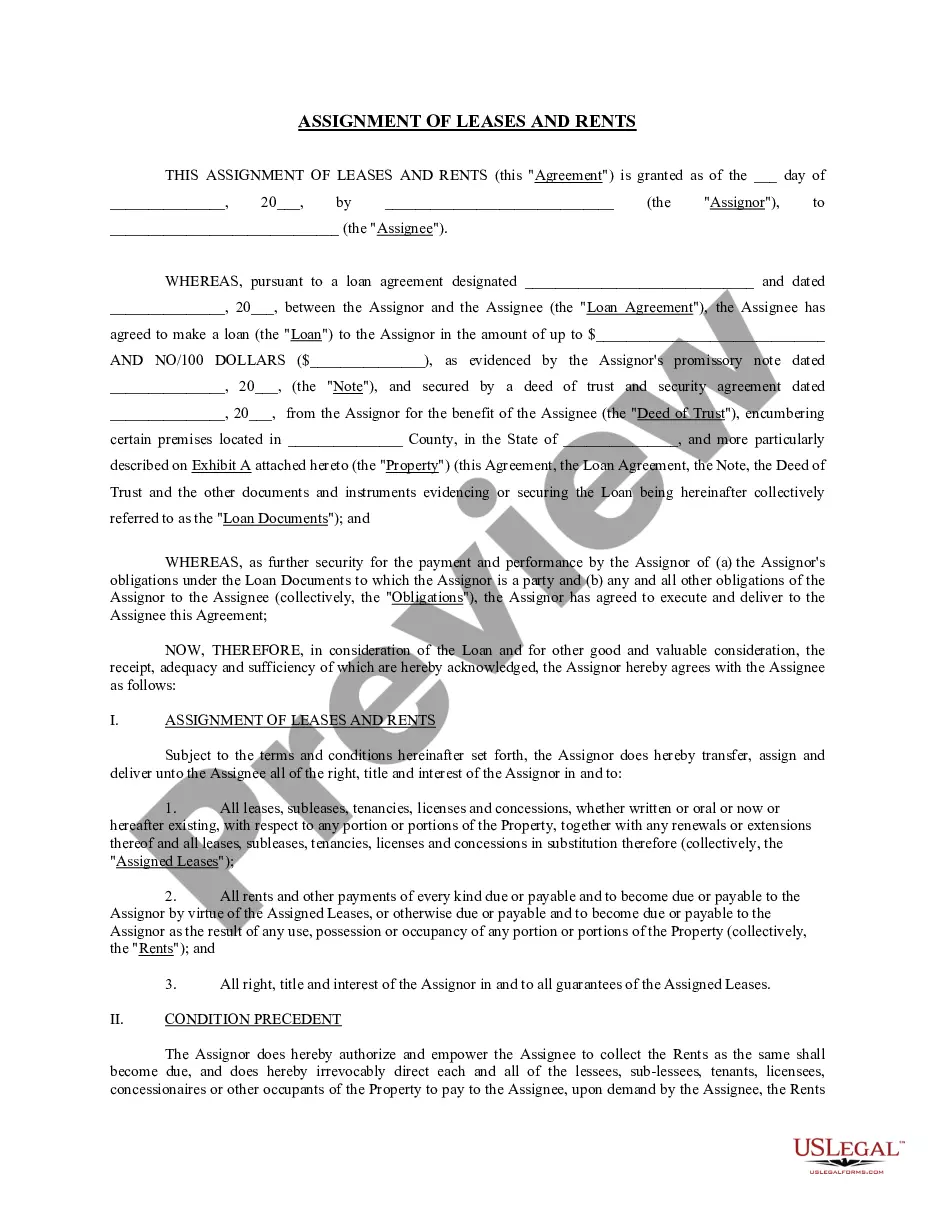
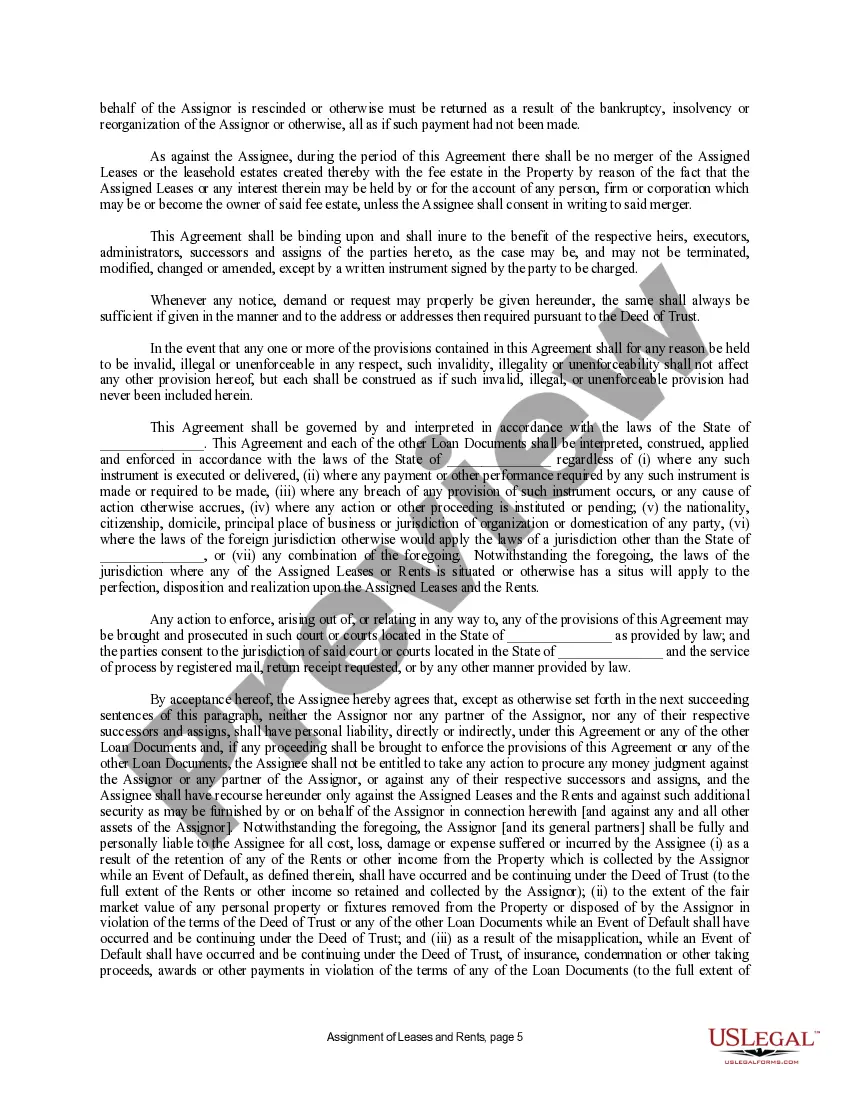
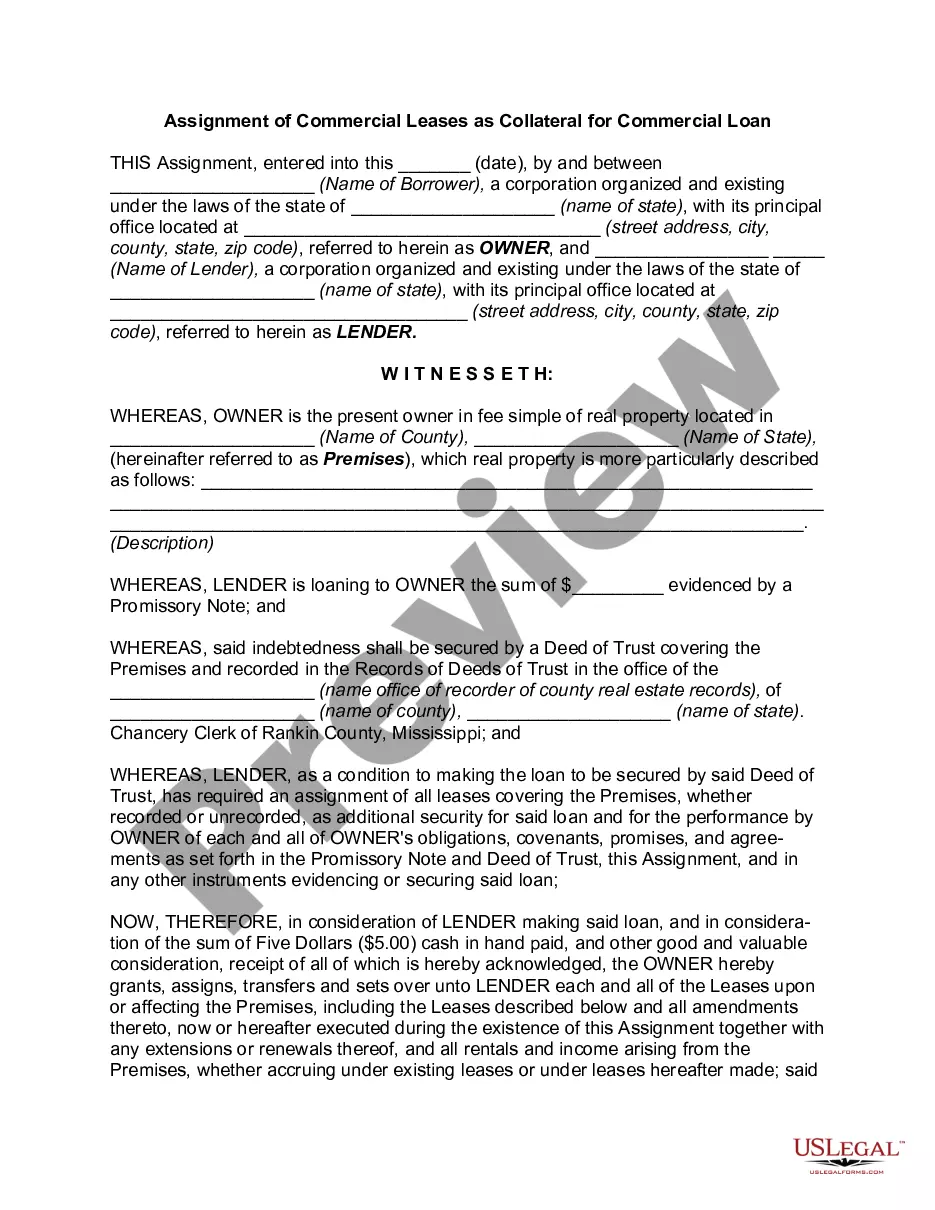
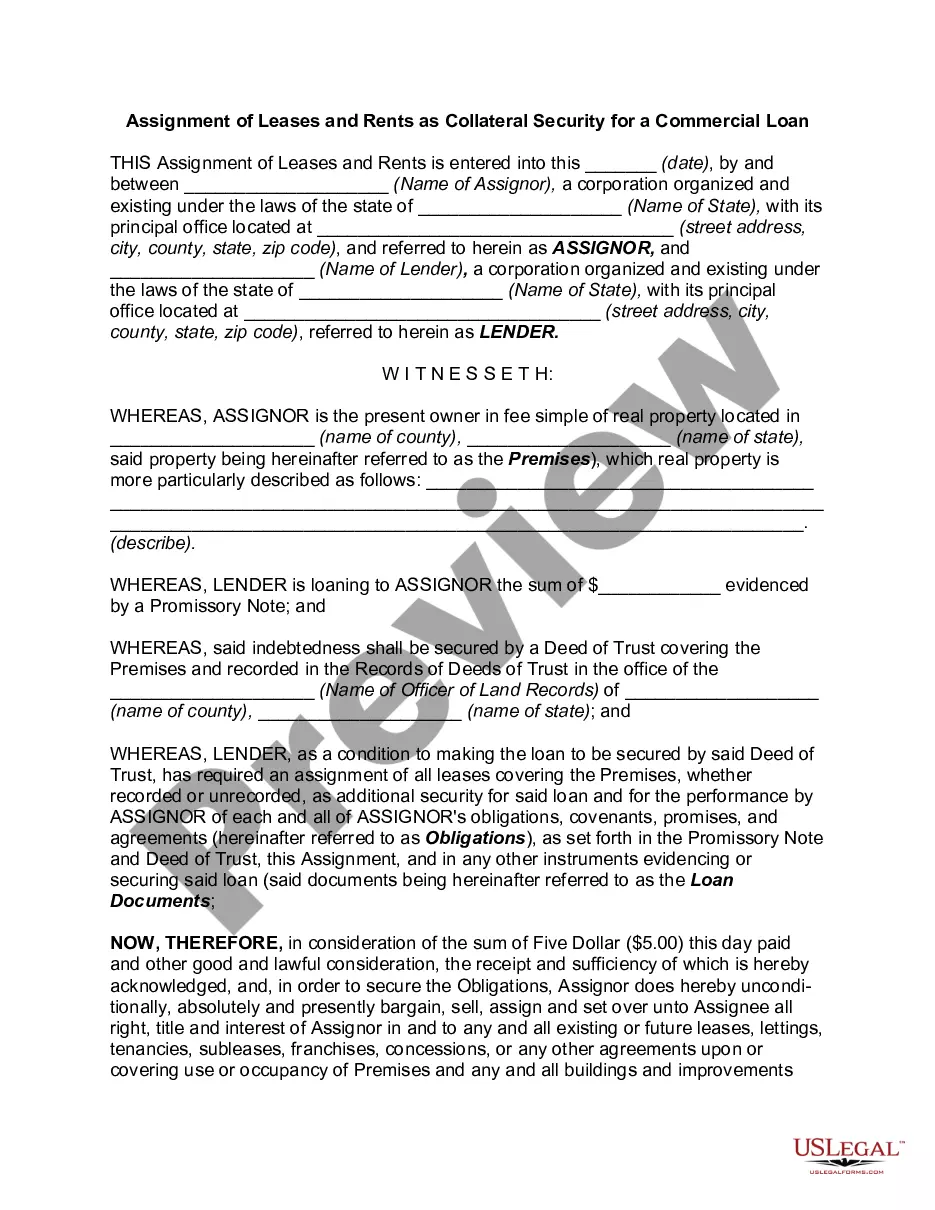
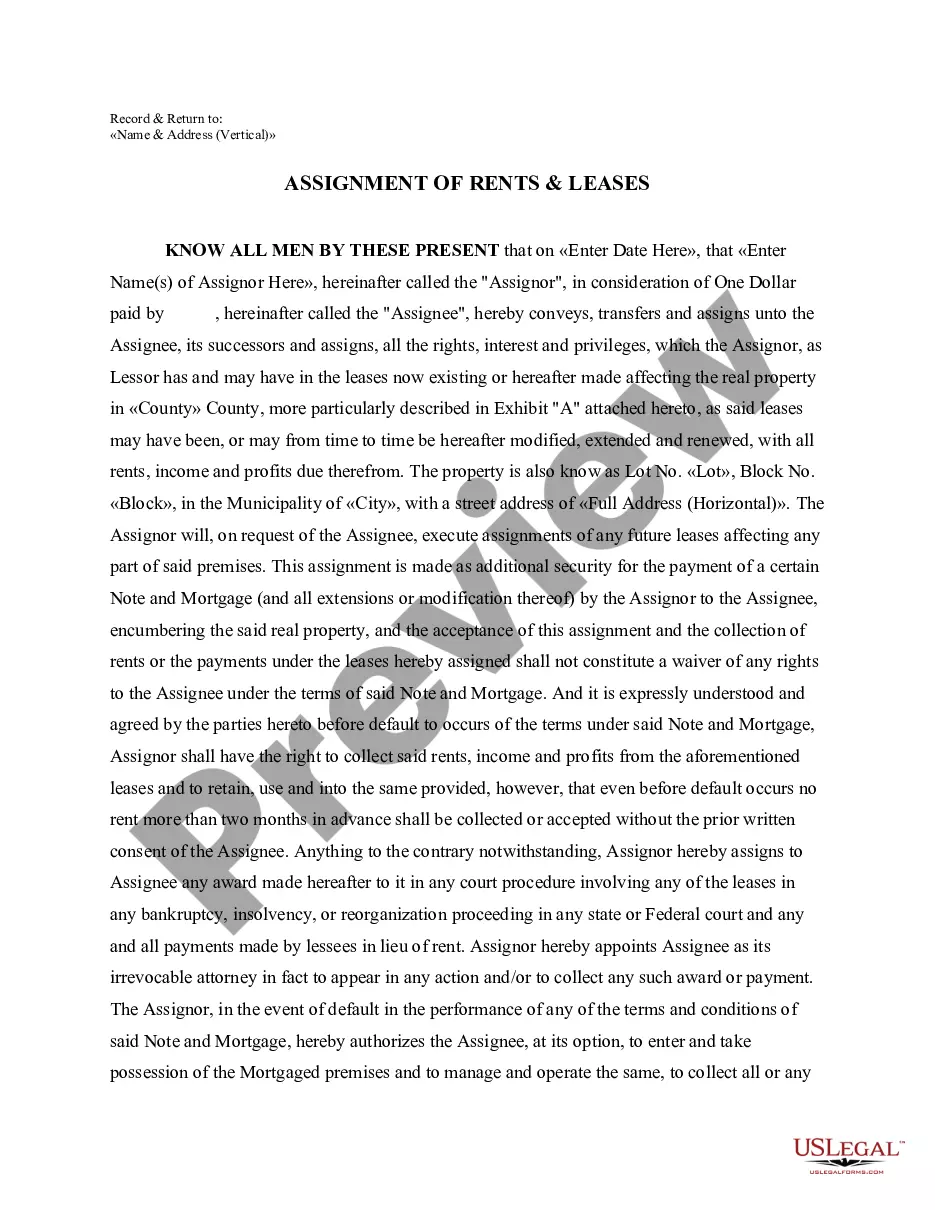
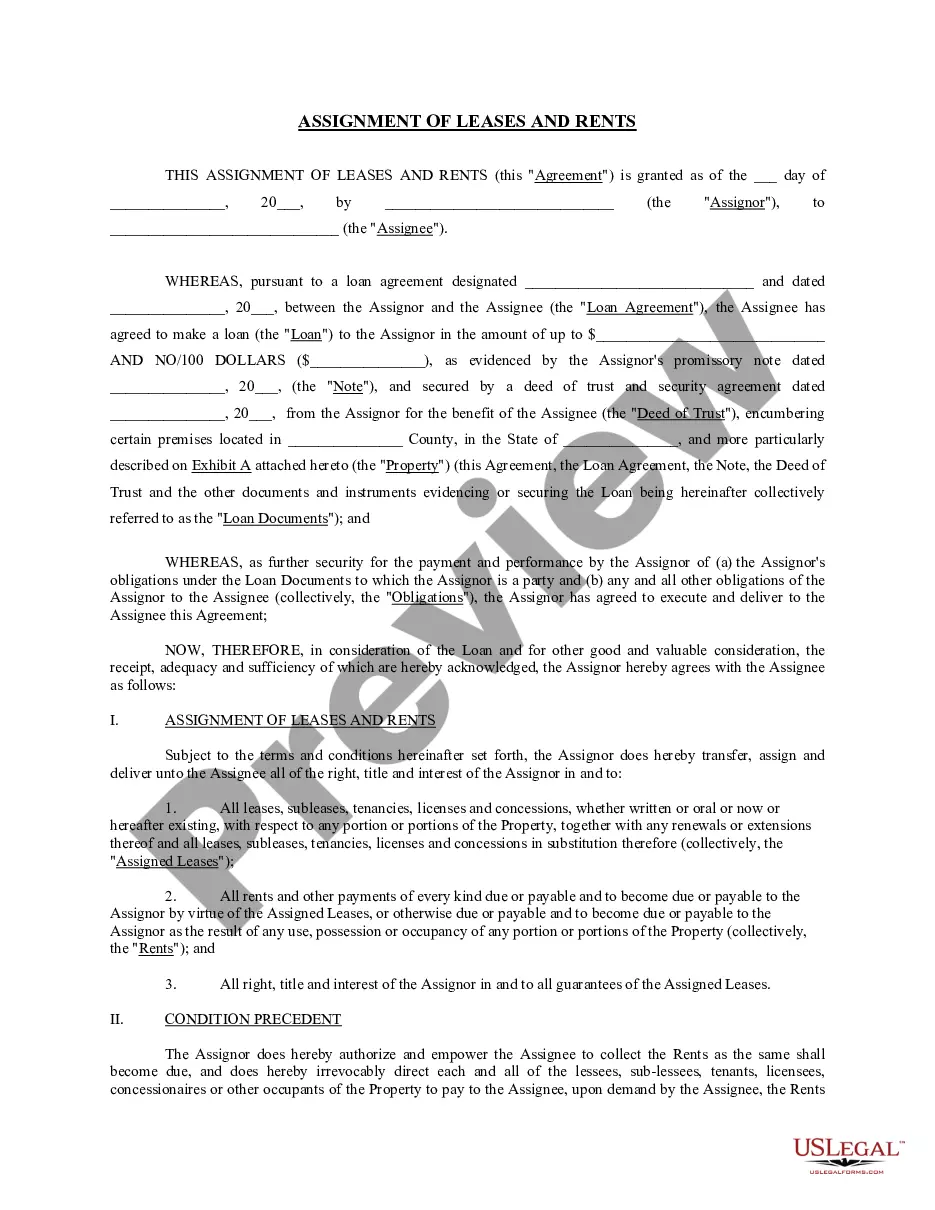
The Assignment of Lease and Rent from Borrower to Lender is a legal document that facilitates the transfer of leases and rents from a borrower (the Assignor) to a lender (the Assignee). This agreement serves to secure a loan arrangement, where the lender extends credit to the borrower backed by the rights to collect rents from the property described. Unlike other property transfer documents, this form focuses specifically on the assignment of rental income and lease rights, rather than the physical property itself.
Main sections of this form
- Identification of parties: Assignor and Assignee information.
- Loan particulars: Details regarding the loan agreed between the parties.
- Property description: Legal details of the property involved in the assignment.
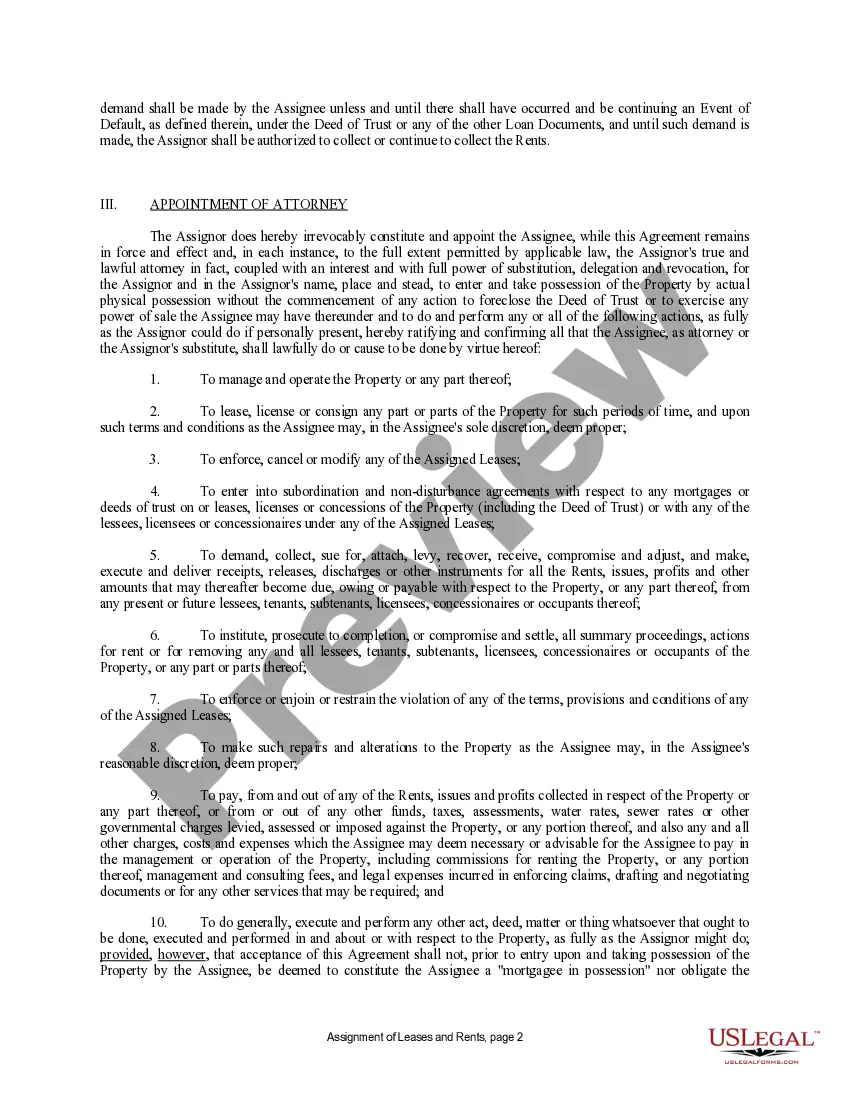
- Transfer of rights: Specific assignment of leases and rents to the Assignee.
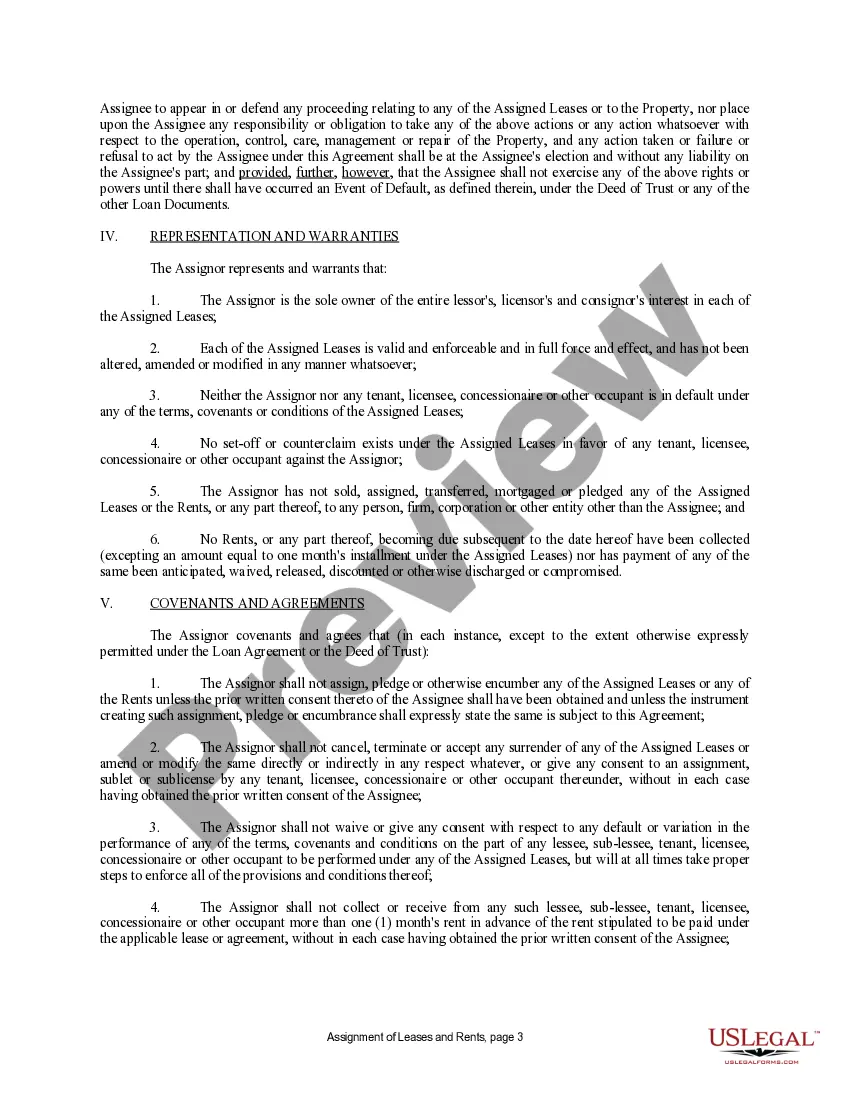
- Conditions for collection: Terms under which the Assignee can collect rents.
- Representations and warranties: Assurances provided by the Assignor regarding the leased properties.

When to use this document
This form is used when a borrower wants to secure a loan by assigning their rights to collect rents from property leases to the lender. Scenarios may include refinancing an existing loan, obtaining a new loan against property, or restructuring financial obligations where rental income can be used as collateral. It is crucial in situations where the borrower may have difficulty meeting repayment obligations and seeks an arrangement that allows the lender to receive rental income directly.
Who should use this form
- Property owners who are borrowing money and want to secure their loan with rental income.
- Lenders seeking a formal agreement to secure loans with collateral tied to lease agreements.
- Real estate investors needing to arrange financing while ensuring they can manage their property rental income.
- Business owners who rent commercial properties and intend to use rental income for funding.
Completing this form step by step
- Identify the parties: Enter the names of the Assignor (borrower) and Assignee (lender).
- Specify the property: Provide a detailed description of the property involved in the lease.
- Enter loan details: Fill in the amount of the loan and any pertinent dates.
- Document the leases: List all current leases applicable to the property.
- Sign and date: Ensure both parties have signed the document in the appropriate areas.
Does this form need to be notarized?
This form does not typically require notarization unless specified by local law. However, it is always a good practice to have it notarized to enhance its legal significance and provide evidence of the parties' identities.
Get your form ready online
Our built-in tools help you complete, sign, share, and store your documents in one place.
Make edits, fill in missing information, and update formatting in US Legal Forms—just like you would in MS Word.
Download a copy, print it, send it by email, or mail it via USPS—whatever works best for your next step.
Sign and collect signatures with our SignNow integration. Send to multiple recipients, set reminders, and more. Go Premium to unlock E-Sign.
If this form requires notarization, complete it online through a secure video call—no need to meet a notary in person or wait for an appointment.
We protect your documents and personal data by following strict security and privacy standards.

Make edits, fill in missing information, and update formatting in US Legal Forms—just like you would in MS Word.

Download a copy, print it, send it by email, or mail it via USPS—whatever works best for your next step.

Sign and collect signatures with our SignNow integration. Send to multiple recipients, set reminders, and more. Go Premium to unlock E-Sign.

If this form requires notarization, complete it online through a secure video call—no need to meet a notary in person or wait for an appointment.

We protect your documents and personal data by following strict security and privacy standards.
Common mistakes
- Failing to provide accurate property descriptions, which can lead to legal disputes.
- Not obtaining signatures from both the Assignor and Assignee, making the agreement voidable.
- Overlooking state-specific requirements that need to be addressed for legal compliance.
- Neglecting to properly document all relevant leases and rental agreements associated with the property.
Benefits of using this form online
- Convenience: Easily fill out and personalize the form from home or your office.
- Editability: Quickly make changes as needed without the hassle of printing and rewriting.
- Reliability: Access to templates reviewed by legal professionals to ensure accuracy.
- Speed: Instant download allows for rapid completion and submission of necessary agreements.
Legal use & context
- This form is recognized as a legal method of securing a loan with rental income.
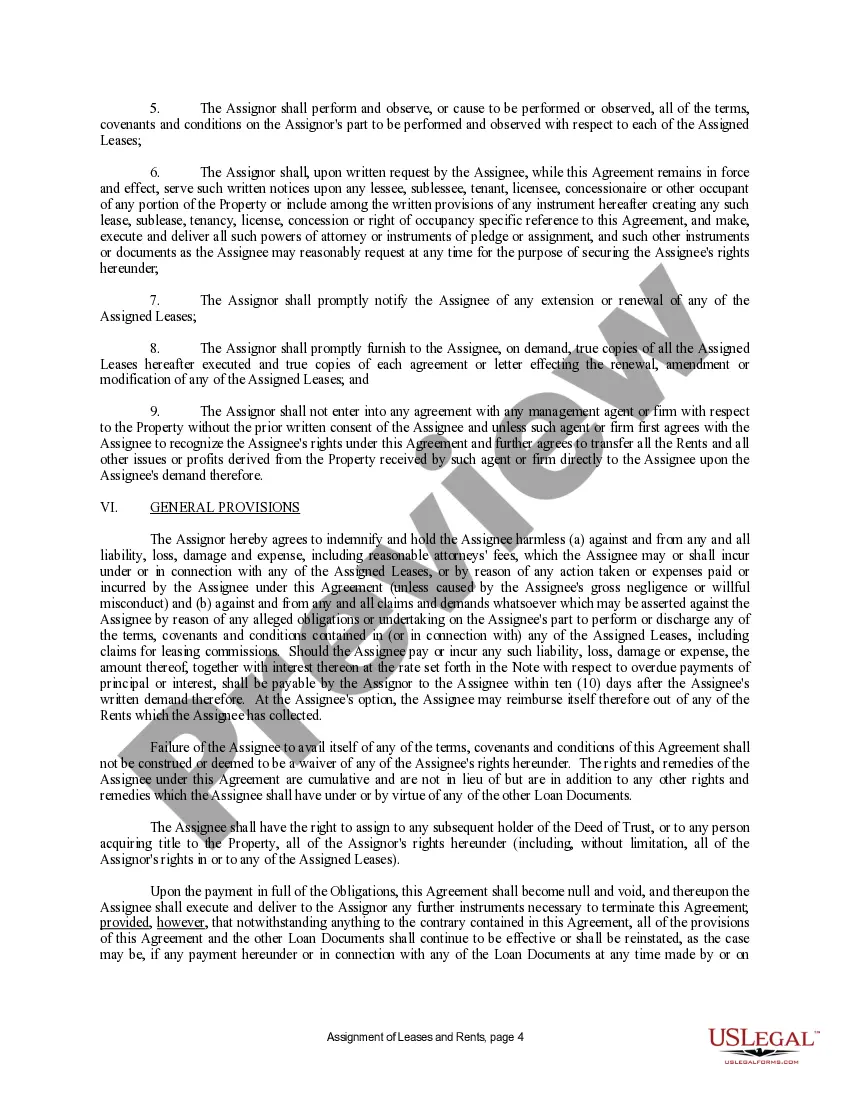
- It defines the rights and obligations of the Assignor and Assignee regarding rental collections.
- Properly completing the form can prevent disputes related to rent payments and lease agreements.
Looking for another form?

Form popularity
FAQ
A deed of trust with assignment of rents acts as extra security for the lender. It gives the lender the right to collect any rents that the property generates if you don't make your loan payments.Without your permission, your lender would be unable to collect the rents from the tenants to pay off the mortgage default.
For commercial lending purposes, an assignment of leases assigns the debtor's rights, as landlord under a lease or leases, to the creditor for the collection of rent as additional security for a debt or other obligation.
An assignment of mortgage gives the loan seller's rights under the mortgage, including the right to foreclose if the borrower doesn't make payments, to the new owner of the loan.
Definition of "Assignment of Rent" An Assignment of Rent is a document needed when a mortgaged property is being rented. It enables the lender to collect the rent if the mortgage is defaulted upon.
Sometimes called Assignment of Leases, Rents and Profits or simply Assignment of Rents, this is a document attached to a mortgage loan agreement which entitles the lender to any income (from leases, rents, etc.) derived from the property once the owner defaults on the loan.
Definition of "Assignment of Rent" An Assignment of Rent is a document needed when a mortgaged property is being rented. It enables the lender to collect the rent if the mortgage is defaulted upon.
A mortgage lender can transfer a mortgage to another company using an assignment agreement.Many banks and mortgage lenders sell outstanding loans in order to free up money to lend to new borrowers, and use an assignment of mortgage to legally grant the loan obligation to the new mortgage holder.
An assignment transfers all of the original mortgagee's interest under the mortgage or deed of trust to the new bank. Generally, the mortgage or deed of trust is recorded shortly after the mortgagors sign it and, if the mortgage is subsequently transferred, each assignment is to be recorded in the county land records.