Tennessee Warranty Deed from Corporation to Corporation
What this document covers
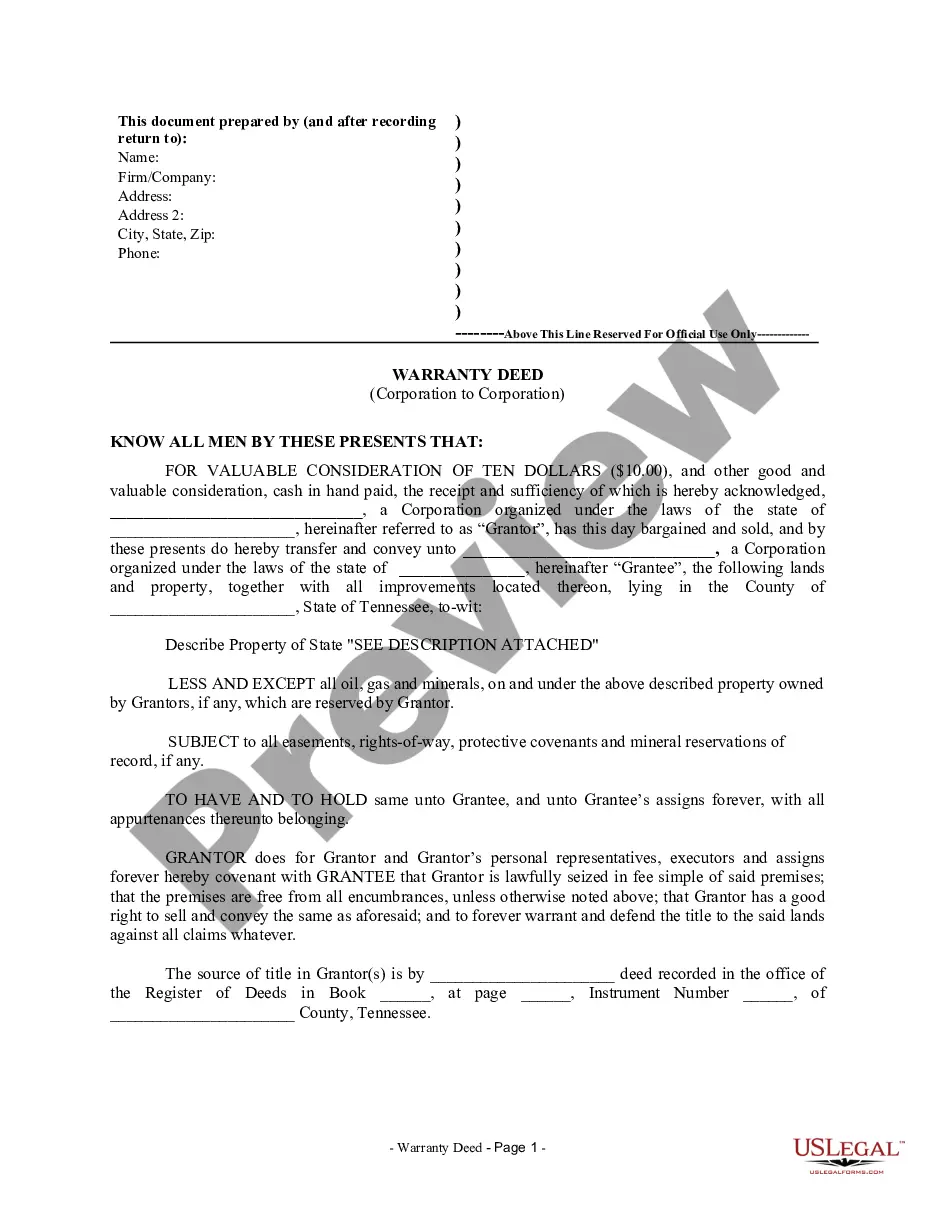
The Warranty Deed from Corporation to Corporation is a legal document in which one corporation (the Grantor) transfers ownership of property to another corporation (the Grantee). This form ensures that the Grantor warrants the title of the property, meaning they guarantee that there are no legal claims against it, except for specified exceptions. It is crucial for corporations involved in property transactions, as it legally establishes ownership while reserving rights related to oil, gas, and minerals under the property, if applicable.
What’s included in this form
- Description of the property being transferred.
- Reservation of oil, gas, and mineral rights by the Grantor.
- Legal covenants ensuring the Grantor holds title and can convey it.
- Details of the previous deed for title verification.
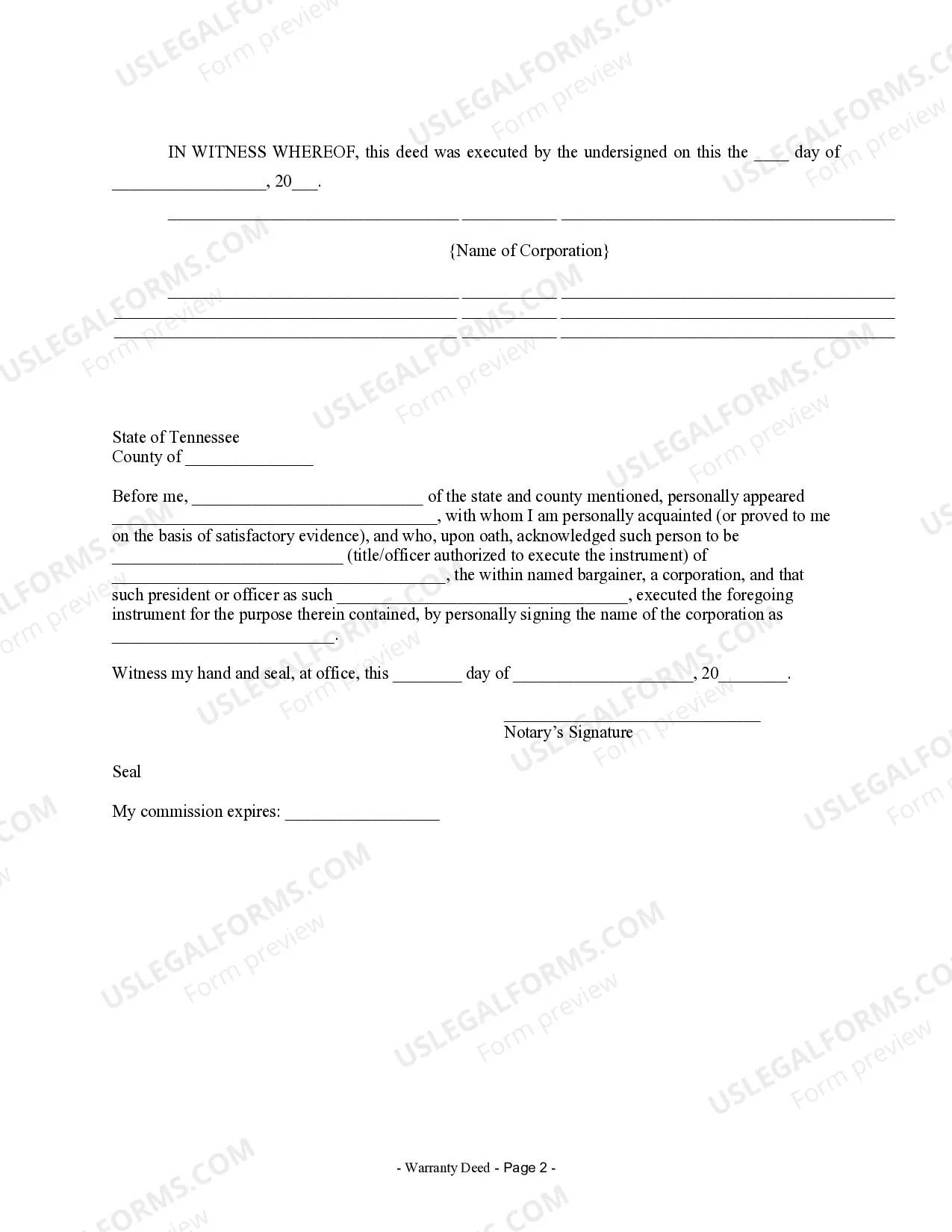
- Signature section for corporate representatives and notarization information.



When to use this form
This form should be used when a corporation wishes to transfer property ownership to another corporation. Typical scenarios include business mergers, acquisitions, or when one corporation sells property to another. It is essential to use this form to ensure that both parties are legally protected and that the transaction adheres to relevant property laws.
Intended users of this form
- Corporations engaged in real estate transactions.
- Corporate legal teams responsible for property management.
- Business executives involved in mergers and acquisitions.
- Attorneys assisting corporations with property transfers.
Instructions for completing this form
- Identify the Grantor and Grantee by providing their corporate names.
- Specify the property being conveyed, including relevant legal descriptions.
- Detail any reservations for oil, gas, and minerals, if applicable.
- Have the authorized corporate officer sign the deed.
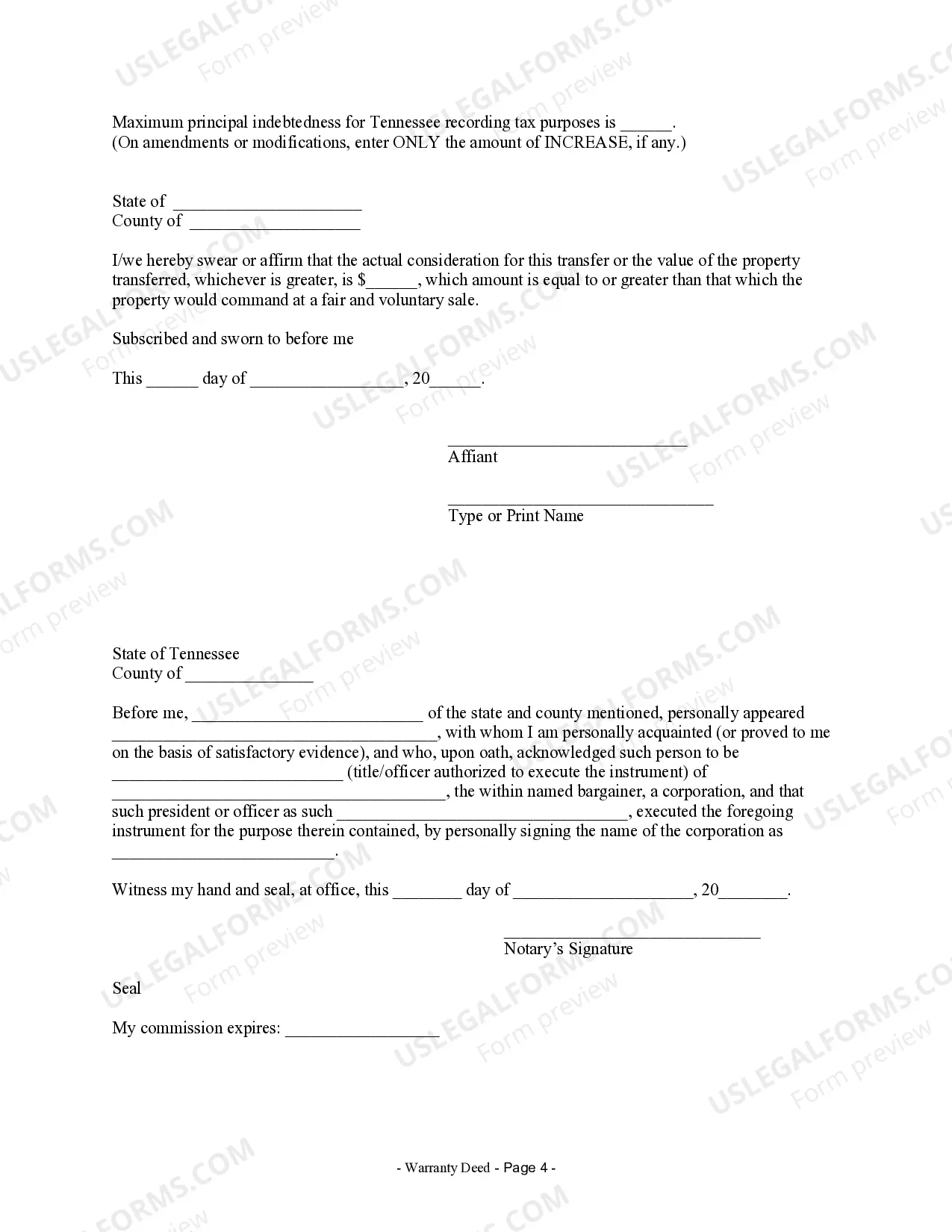
- Seek notarization of the document for legal validity.
Notarization guidance
To make this form legally binding, it must be notarized. Our online notarization service, powered by Notarize, lets you verify and sign documents remotely through an encrypted video session.
Get your form ready online
Our built-in tools help you complete, sign, share, and store your documents in one place.
Make edits, fill in missing information, and update formatting in US Legal Forms—just like you would in MS Word.
Download a copy, print it, send it by email, or mail it via USPS—whatever works best for your next step.
Sign and collect signatures with our SignNow integration. Send to multiple recipients, set reminders, and more. Go Premium to unlock E-Sign.
If this form requires notarization, complete it online through a secure video call—no need to meet a notary in person or wait for an appointment.
We protect your documents and personal data by following strict security and privacy standards.

Make edits, fill in missing information, and update formatting in US Legal Forms—just like you would in MS Word.

Download a copy, print it, send it by email, or mail it via USPS—whatever works best for your next step.

Sign and collect signatures with our SignNow integration. Send to multiple recipients, set reminders, and more. Go Premium to unlock E-Sign.

If this form requires notarization, complete it online through a secure video call—no need to meet a notary in person or wait for an appointment.

We protect your documents and personal data by following strict security and privacy standards.
Common mistakes to avoid
- Failing to accurately describe the property, which can lead to disputes.
- Not including necessary reservations for minerals, if applicable.
- Omitting signatures from authorized representatives.
- Neglecting to notarize the document, which may affect its validity.
Advantages of online completion
- Convenience of downloading and printing from any location.
- Editability to ensure accurate information is inputted.
- Access to professionally drafted templates reviewed by licensed attorneys.
- Time-saving compared to drafting a document from scratch.
Looking for another form?
Form popularity
FAQ
To make the form legally binding, you must sign it in front of a notary public. You must then file your signed and notarized deed with the county office that's in charge of recording property documents. Once the grantee signs the warranty deed, he/she legally has ownership and claim to the property.
In order to convey any real property or an interest in property in Tennessee, the deed must be in writing, acknowledged by the grantor, and registered in the county where the property is located. The Annotated Code of Tennessee allows for the transfer of real property through the usage of a variety of deeds.
It is possible to transfer the ownership of a property to a family member as a gift, meaning no money exchanges hands. This differs to a Transfer of Equity, where the owner remains on the title and simply adds someone else to it.
Two of the most common ways to transfer property in a divorce are through an interspousal transfer deed or quitclaim deed. When spouses own property together, but then one spouse executes an interspousal transfer or a quitclaim deed, this is known as transmutation.
Retrieve your original deed. Get the appropriate deed form. Draft the deed. Sign the deed before a notary. Record the deed with the county recorder. Obtain the new original deed.
Tennessee deed forms convey interest in property from one party (the Grantor) to another (the Grantee). The documents can be prepared by anyone as long as the required information is written in the deed as outlined in § 66-5-103.
Contrary to normal expectations, the Deed DOES NOT have to be recorded to be effective or to show delivery, and because of that, the Deed DOES NOT have to be signed in front of a Notary Public. However, if you plan to record it, then it does have to be notarized as that is a County Recorder requirement.
Failure to record a deed effectively makes it impossible for the public to know about the transfer of a property. That means the legal owner of the property appears to be someone other than the buyer, a situation that can generate serious ramifications.
Corporate warranty deeds offer the seller's guarantee to the buyer in regards to the validity of the chain of title. Generally, special warranty deeds only protect against problems occurring since the seller purchased the property.