Tennessee Electrical Contract for Contractor
What this document covers
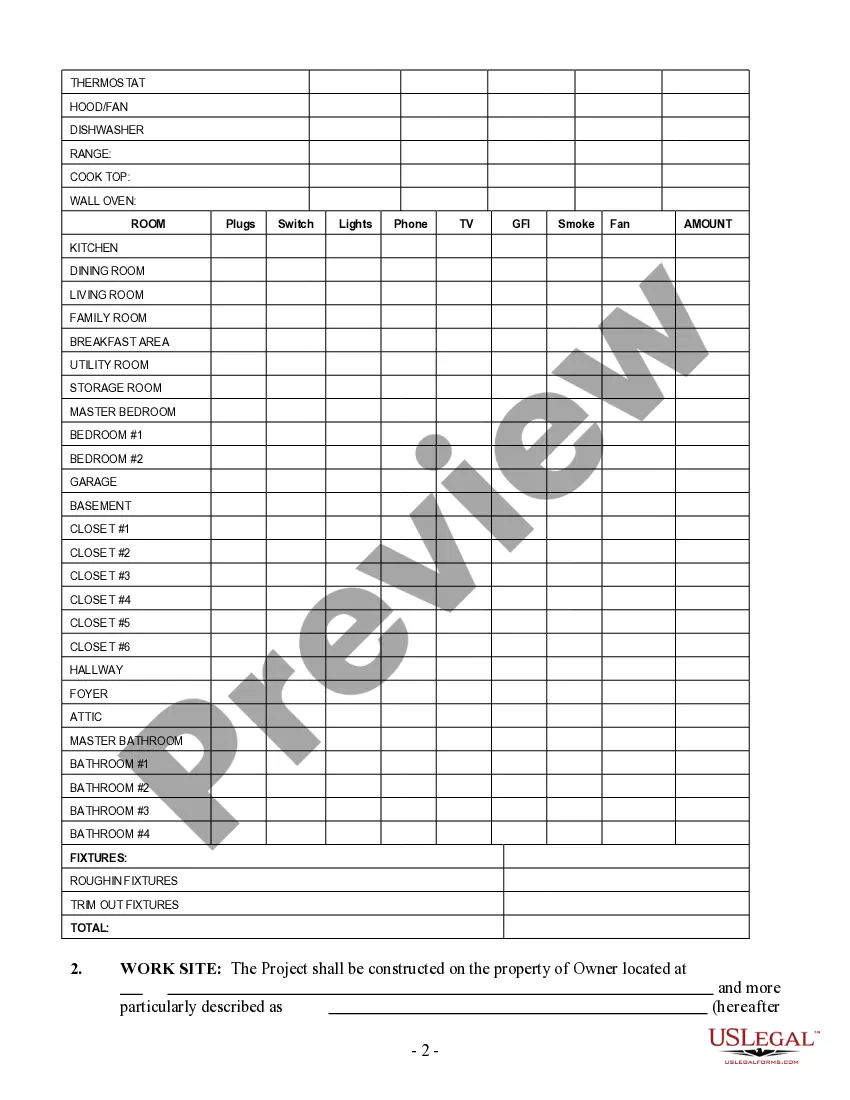
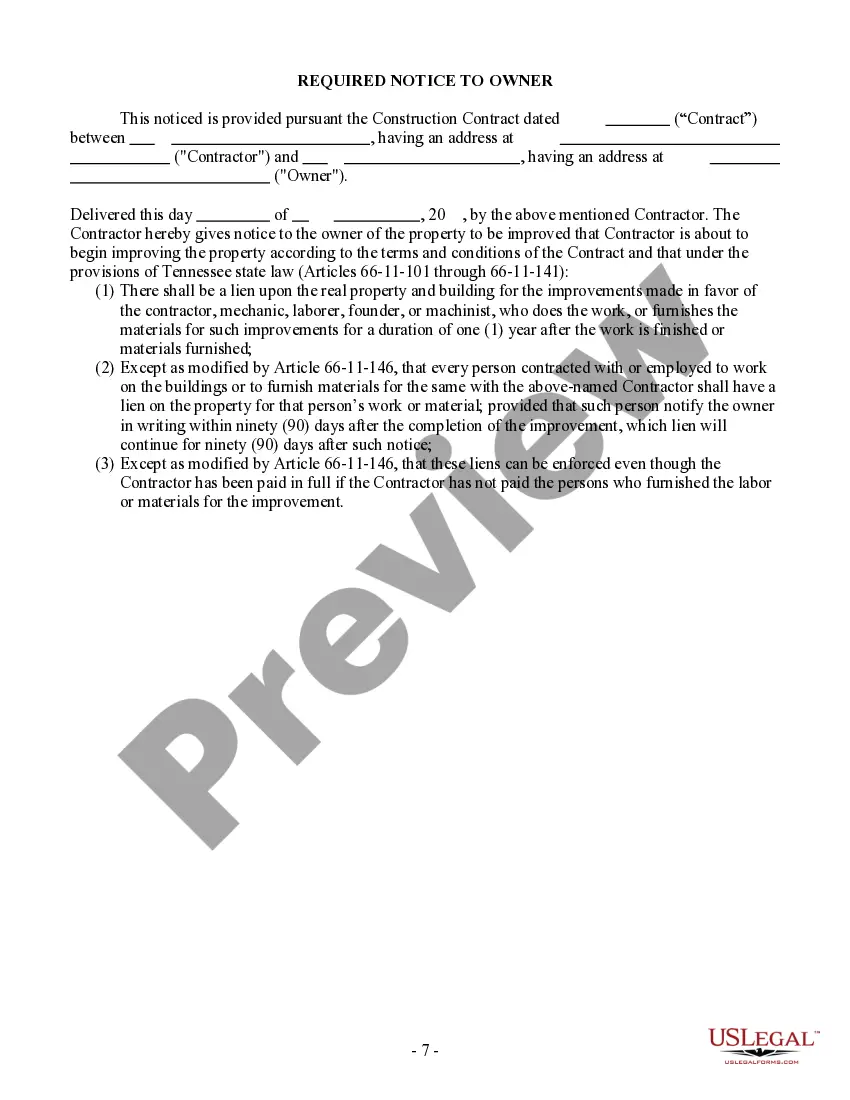
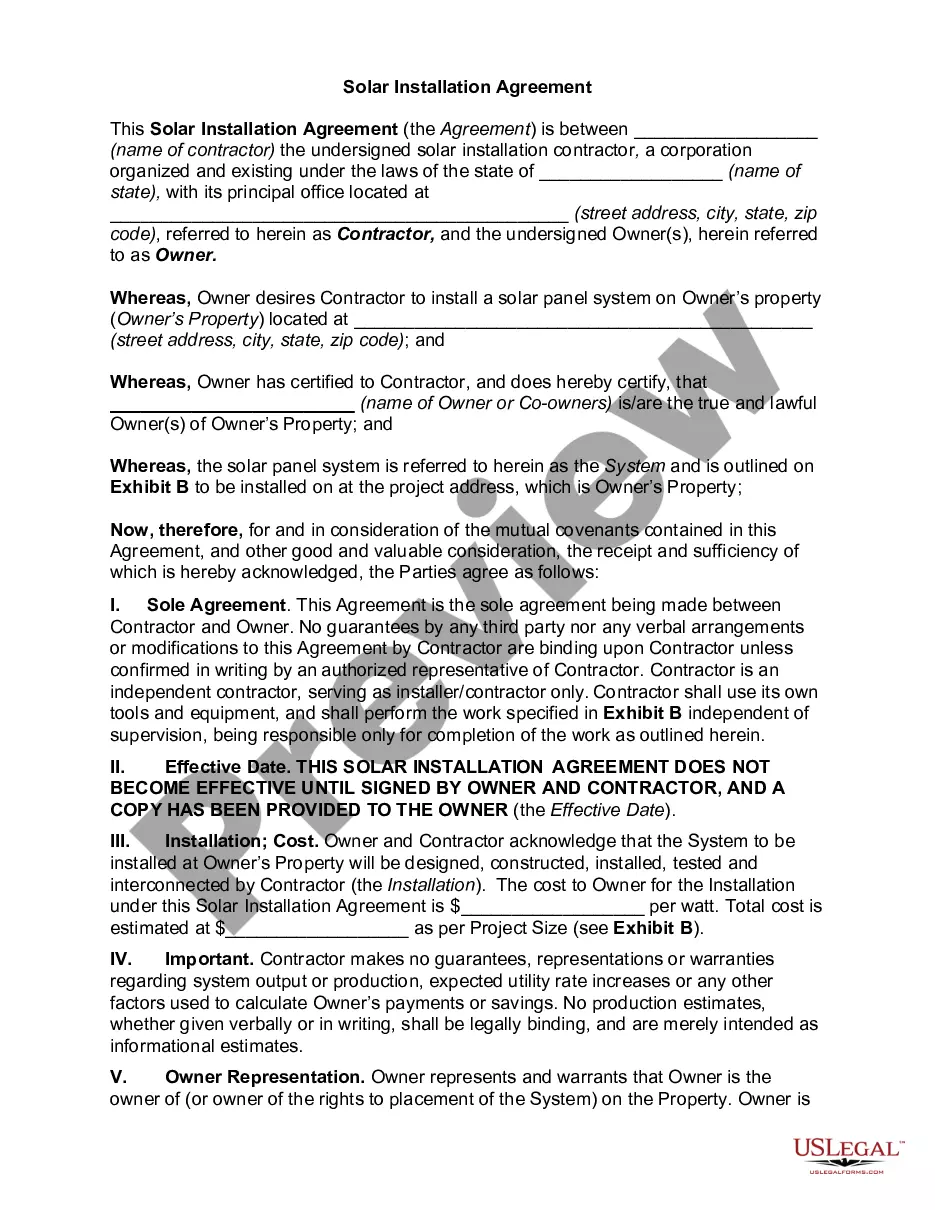
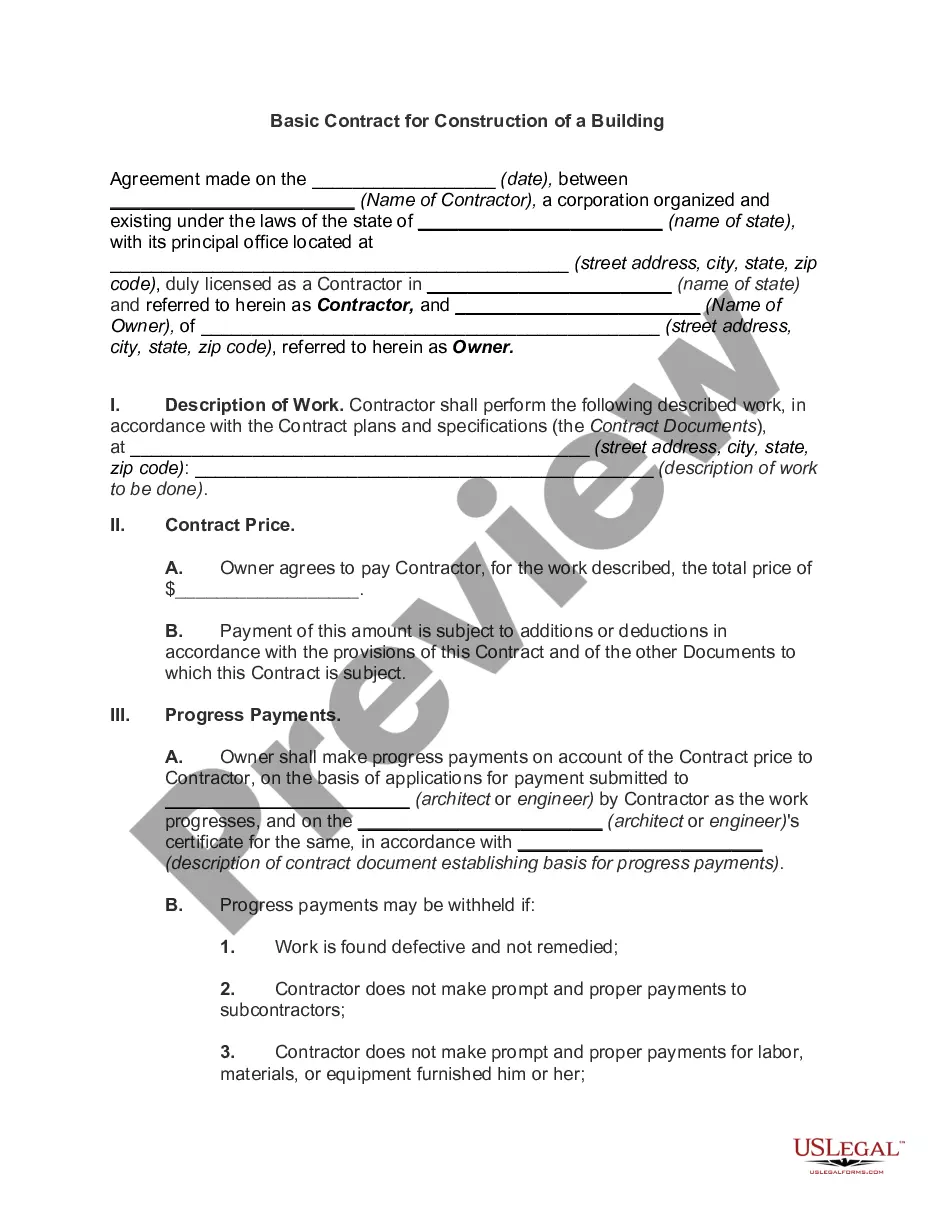
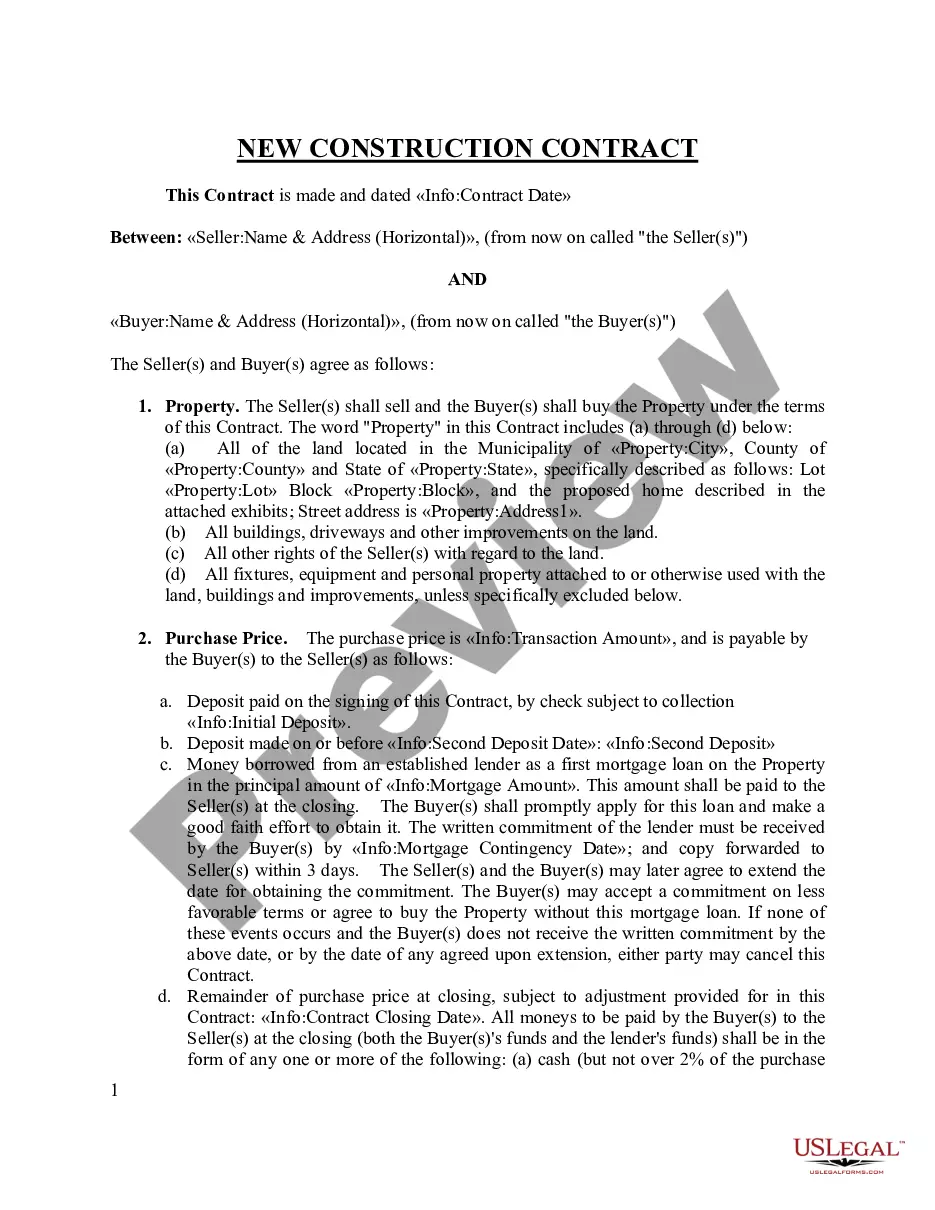
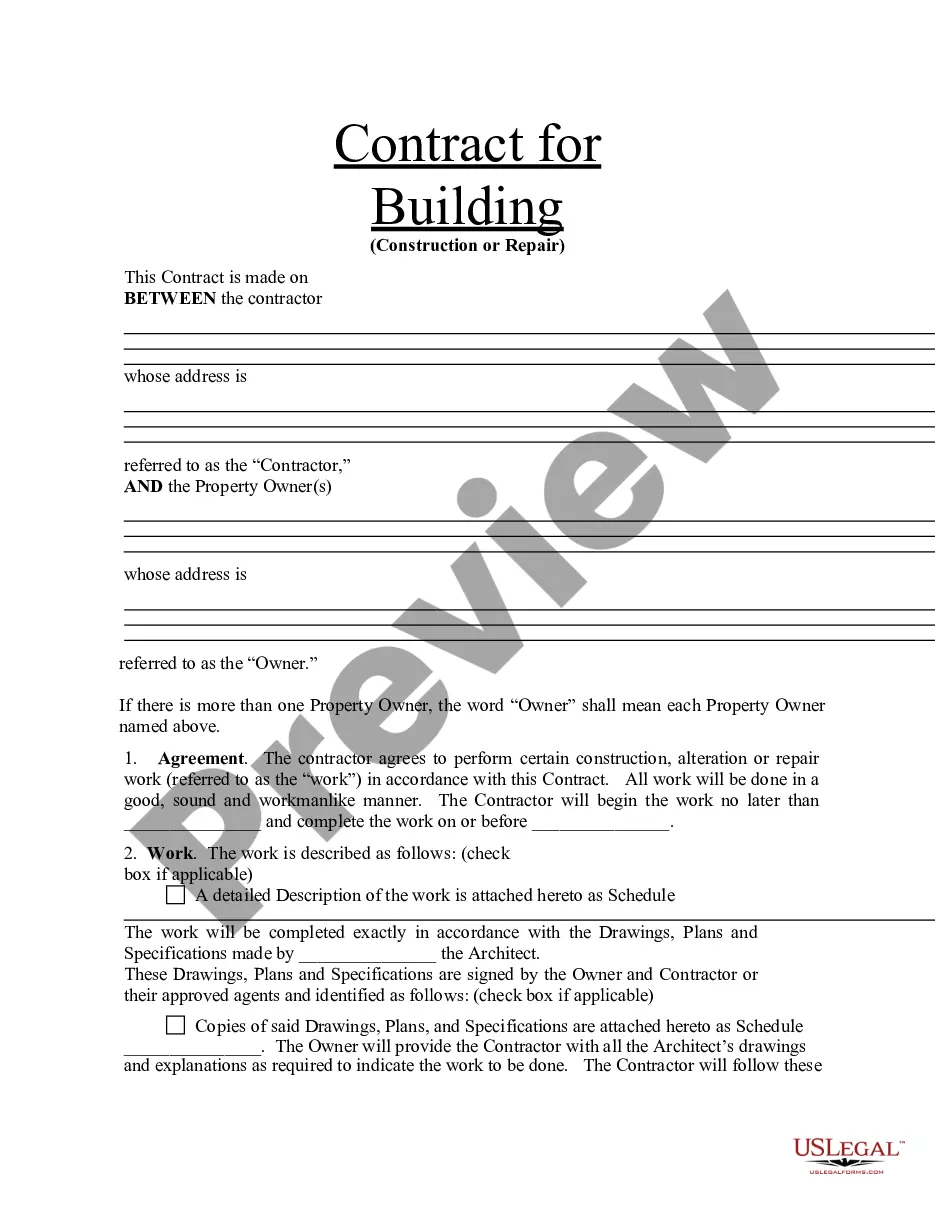
The Electrical Contract for Contractor is a legal agreement between electrical contractors and property owners. It outlines the terms of a project, including payment arrangements and responsibilities regarding change orders, permits, insurance, and more. This contract is specifically designed to comply with the laws of the State of Tennessee, offering a structured and clear way to define both parties' obligations and expectations during a construction project.
Form components explained
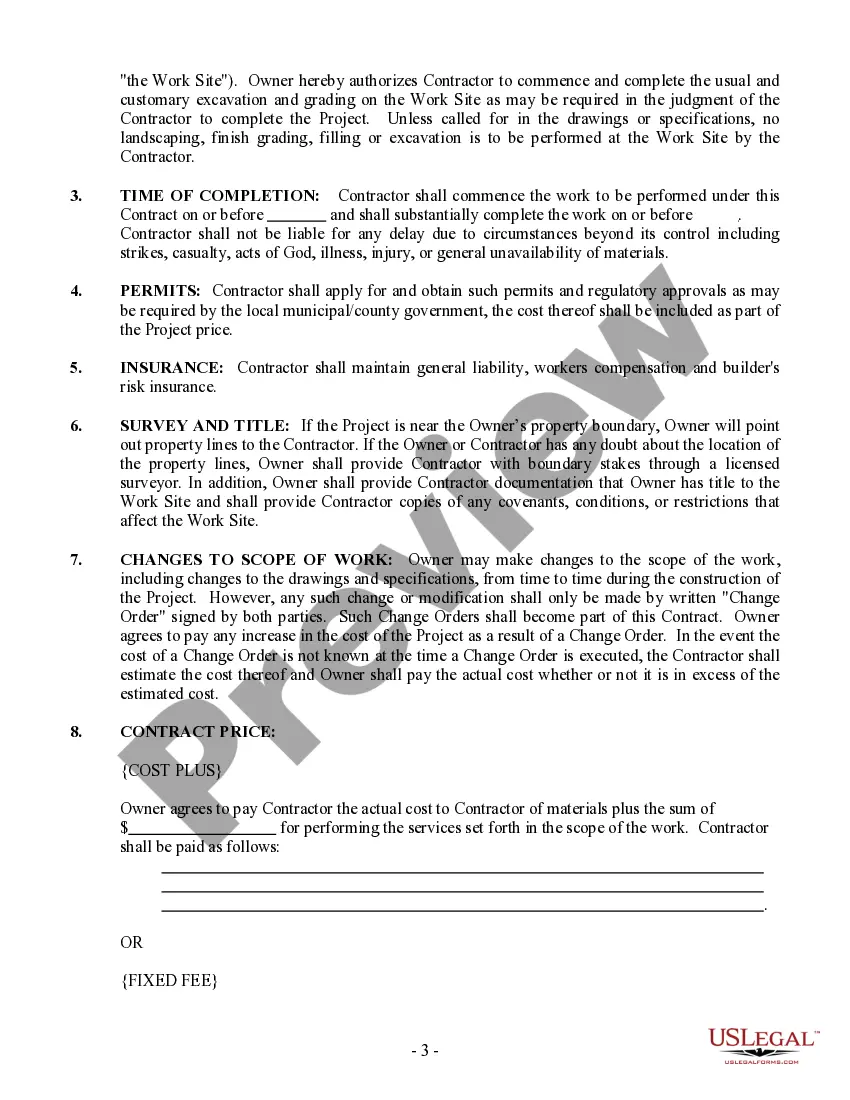
- Permits: Specifies that the contractor must obtain all necessary permits as part of the project cost.
- Insurance: Requires the contractor to maintain general liability and other essential insurances.
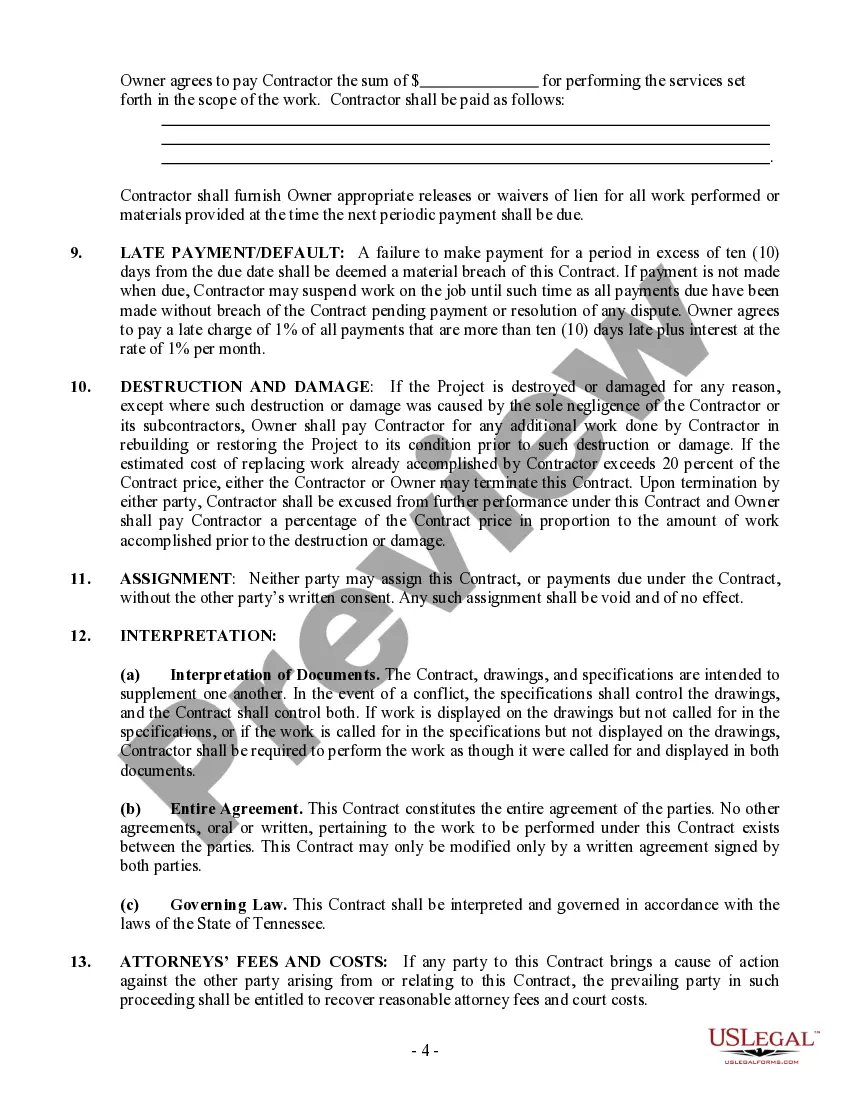
- Changes to Scope of Work: Details how changes can be made through a written Change Order, impacting project costs.
- Destruction and Damage: Outlines responsibilities if the project is damaged and the process for termination under certain conditions.
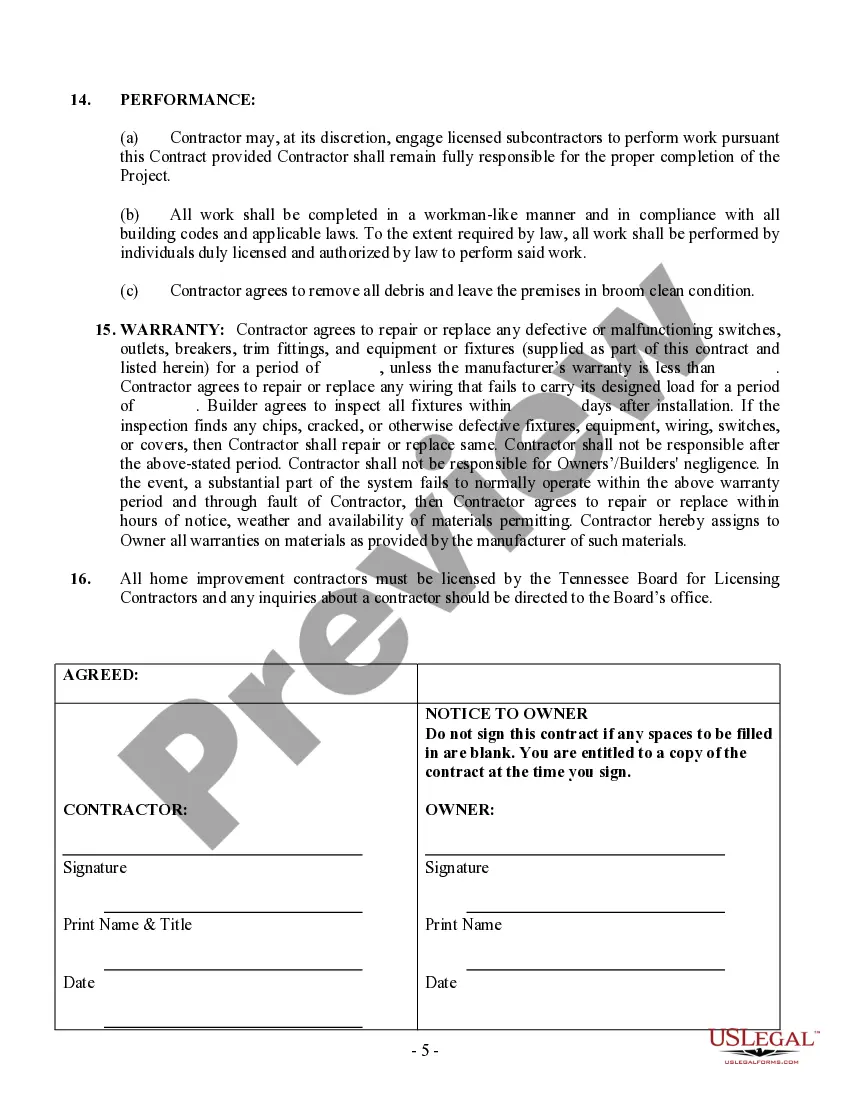
- Performance: Ensures work is done properly and in compliance with applicable laws and codes.


Situations where this form applies
This form should be used when planning electrical work between a contractor and a property owner, especially when clarity on payment arrangements, project changes, and responsibilities is needed. It is appropriate for both residential and commercial projects that involve electrical installation, repairs, or upgrades in Tennessee.
Who needs this form
- Electrical contractors seeking a formal agreement for services.
- Property owners who want to clearly define the terms of electrical work.
- Those involved in projects requiring adherence to local building codes and regulations.
Completing this form step by step
- Identify the parties: Clearly state the names and addresses of the contractor and the property owner.
- Specify the project: Detail the scope of electrical work to be performed, including any specific requirements.
- Enter payment details: Decide whether the payment will be a fixed fee or a cost-plus arrangement and document it.
- Include permit information: Identify any necessary permits and confirm that the contractor will obtain them.
- Sign the contract: Both parties must sign and date the contract to make it legally binding.
Is notarization required?
Notarization is generally not required for this form. However, certain states or situations might demand it. You can complete notarization online through US Legal Forms, powered by Notarize, using a verified video call available anytime.
Get your form ready online
Our built-in tools help you complete, sign, share, and store your documents in one place.
Make edits, fill in missing information, and update formatting in US Legal Forms—just like you would in MS Word.
Download a copy, print it, send it by email, or mail it via USPS—whatever works best for your next step.
Sign and collect signatures with our SignNow integration. Send to multiple recipients, set reminders, and more. Go Premium to unlock E-Sign.
If this form requires notarization, complete it online through a secure video call—no need to meet a notary in person or wait for an appointment.
We protect your documents and personal data by following strict security and privacy standards.

Make edits, fill in missing information, and update formatting in US Legal Forms—just like you would in MS Word.

Download a copy, print it, send it by email, or mail it via USPS—whatever works best for your next step.

Sign and collect signatures with our SignNow integration. Send to multiple recipients, set reminders, and more. Go Premium to unlock E-Sign.

If this form requires notarization, complete it online through a secure video call—no need to meet a notary in person or wait for an appointment.

We protect your documents and personal data by following strict security and privacy standards.
Common mistakes
- Failing to obtain necessary permits before work begins.
- Not addressing potential changes or modifications adequately in the contract.
- Overlooking the need for insurance coverage specifics.
- Neglecting to sign the contract or obtain signatures from both parties.
Advantages of online completion
- Convenient access: Download and complete the form anytime, anywhere.
- Editability: Easily customize the form to fit specific project needs and details.
- Reliability: The form is prepared by licensed attorneys, ensuring legal compliance and appropriateness for use.
Summary of main points
- The Electrical Contract for Contractor ensures clarity and protection for both parties in the electrical work agreement.
- It is important to fully understand the terms, especially regarding changes and damage liabilities.
- Using this form can help prevent misunderstandings and disputes during the project.
Looking for another form?





Form popularity
FAQ
Step 1 (Testing - Exam and Reciprocal Information) All must pass the "Business and Law" exam Step 2 (Financial Statement) Step 3 (Reference Letter and Insurance) Step 4 (Corporations. Step 5 (Application, Signatures, and Notarize) Step 6 (Submit Application & $250 fee)
Tennessee. A handyman in Tennessee is not required to hold a state license unless the job they are working on is worth more than $25,000. A home improvement license is required for remodeling jobs worth between $3,000 and $24,999.
To become a journeyman-level electrician, you will need at least two to three years of experience at an apprenticeship and to pass a licensure exam. In Knoxville and Memphis, you will need to pass a local exam to become a journeyman. For everywhere else in the state, you will need to pass the LLE exam.
The Home Improvement license is required by law to perform remodeling to existing residential homes, where the cost is more than $3,000 to less than $25,000 ($25,000 and up require a "Contractor's" license).
Class III Qualified to tender for works whose estimated cost does not exceed Rs. 10.00 Lakhs. Class IV Qualified to tender for works whose estimated cost does not exceed Rs. 5.00 Lakhs.
Class B General Building Contractor The principal business is in connection with any structure built, being built, or to be built, requiring in its construction the use of at least two unrelated building trades or crafts.
A homeowner of the residential property may perform work themselves ( individual use), without a contractor's license, as long as the residential structure is not open to the public; or for sale, lease or rent). Allowed one homeowner permit once every two (2) years.
A Tennessee contractor's license is required BEFORE bidding or offering a price, for projects $25,000 and up (includes materials and labor), as a prime (general) contractor; and also subcontractors performing electrical, mechanical, plumbing, HVAC, roofing and masonry are also required to be licensed as a contractor,