South Dakota Life Documents Planning Package, including Will, Power of Attorney and Living Will
Overview of this form package
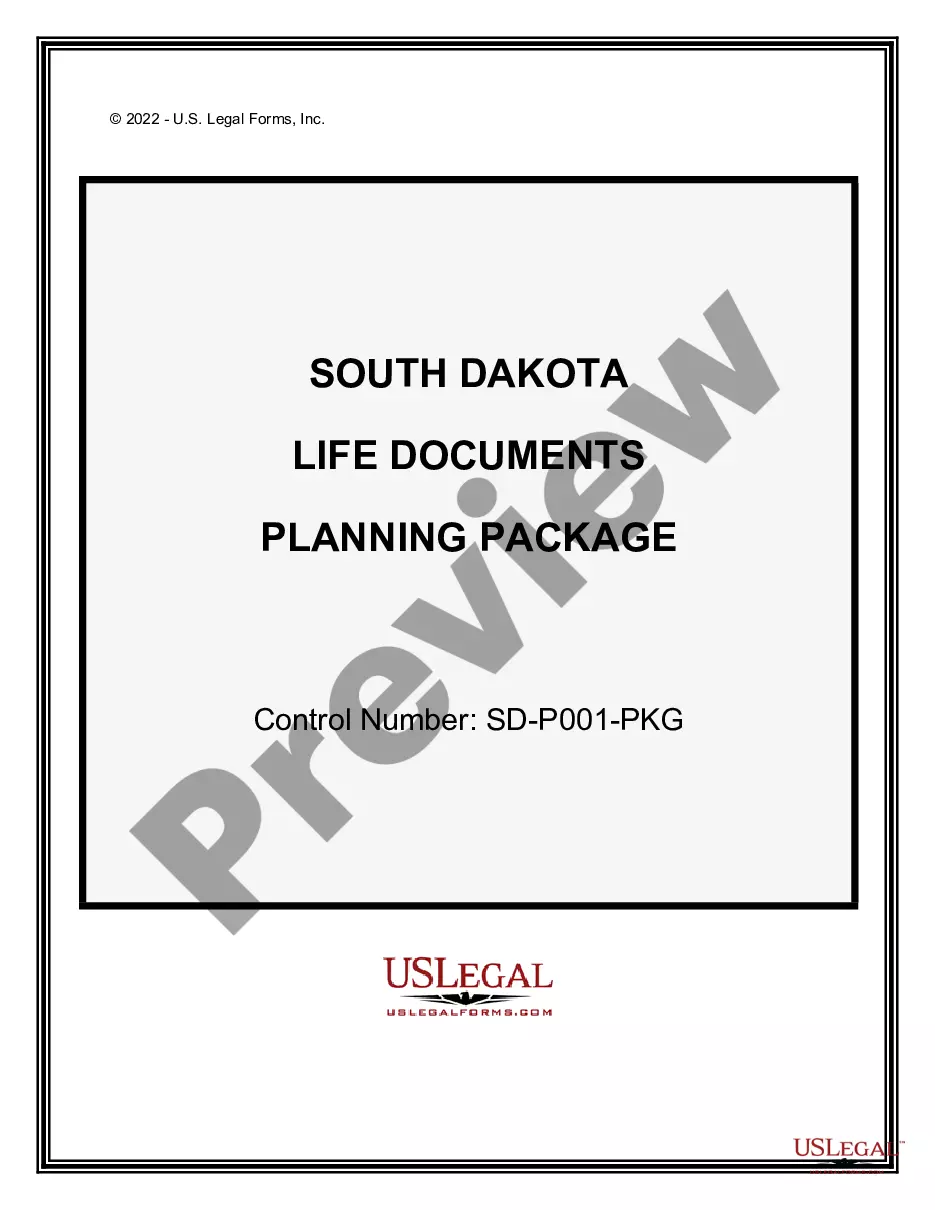
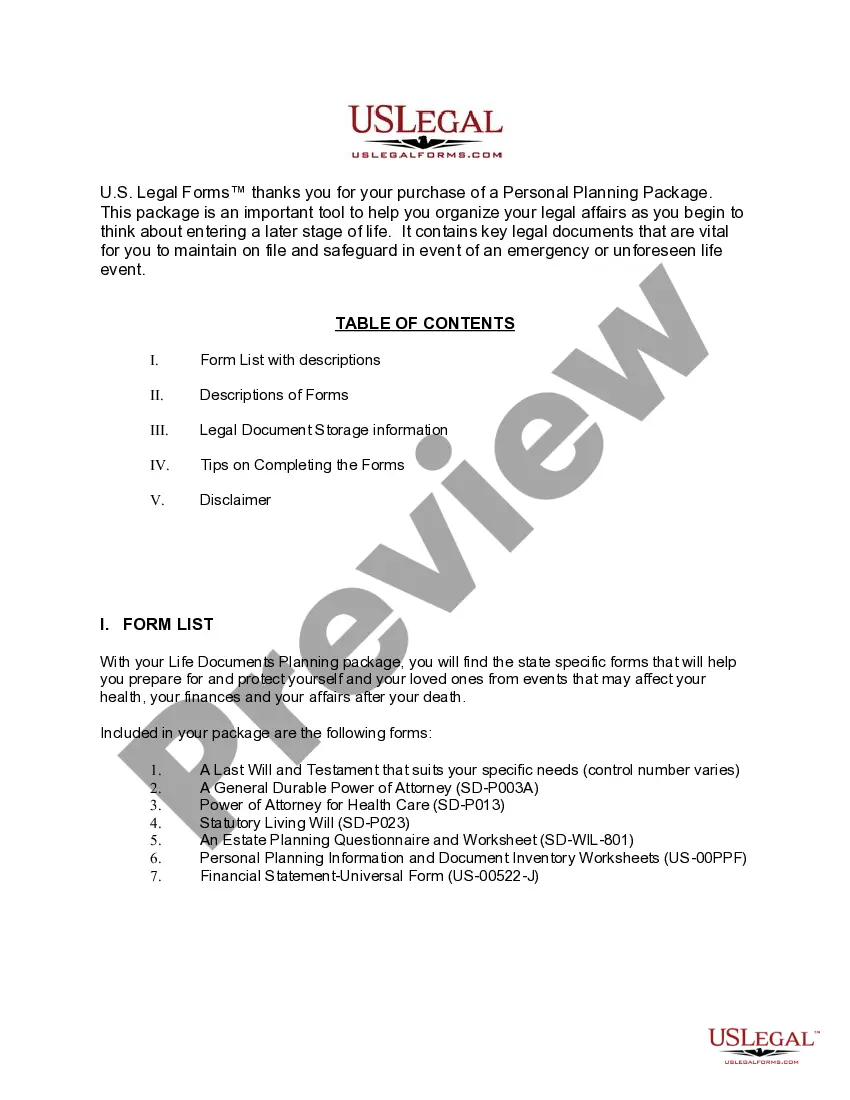
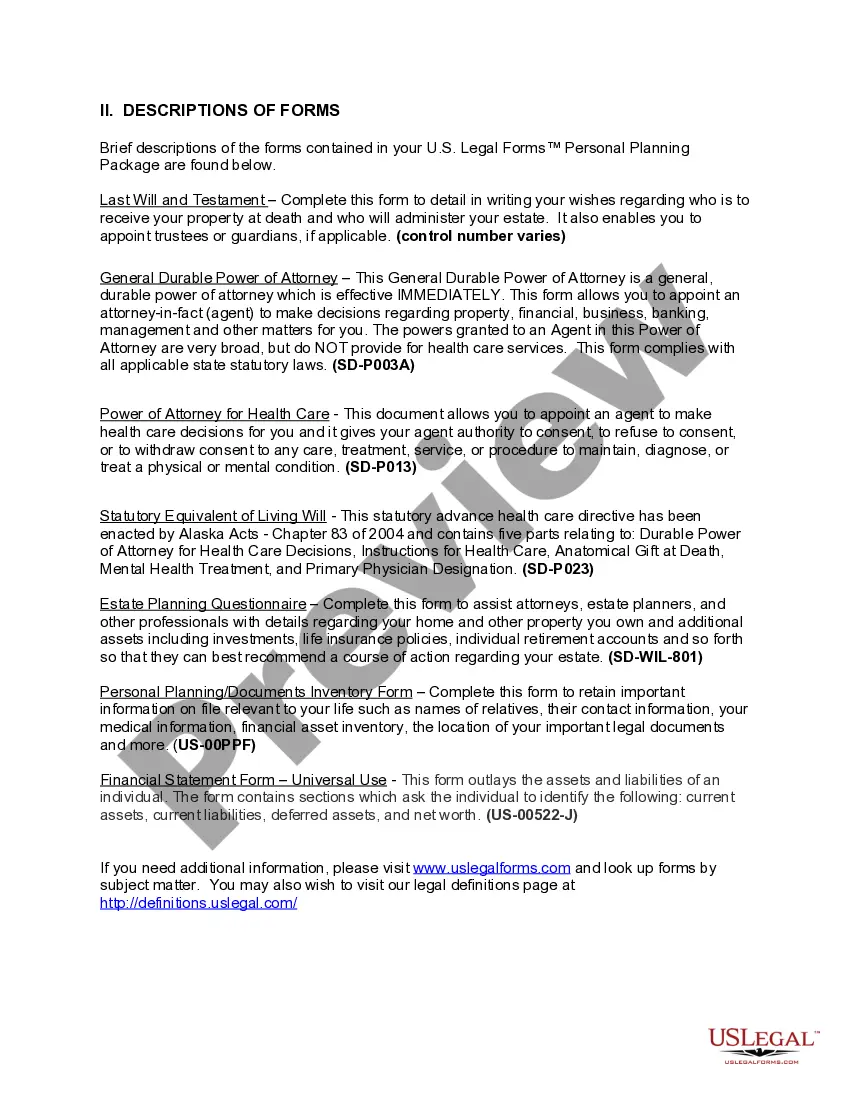
The South Dakota Life Documents Planning Package is a comprehensive set of legal forms designed to help individuals plan for important life events. This package includes essential documents such as a last will, powers of attorney, and a living will, all tailored to South Dakota laws. Unlike generic legal templates, these forms are specifically crafted to meet the unique legal requirements of South Dakota, ensuring that your personal arrangements are legally valid and customizable to your needs.
Forms provided in this package
- Last Will and Testament
- General Durable Power of Attorney for Property and Finances or Financial Effective Immediately
- Power of Attorney for Health Care - Durable Power of Attorney for Healthcare
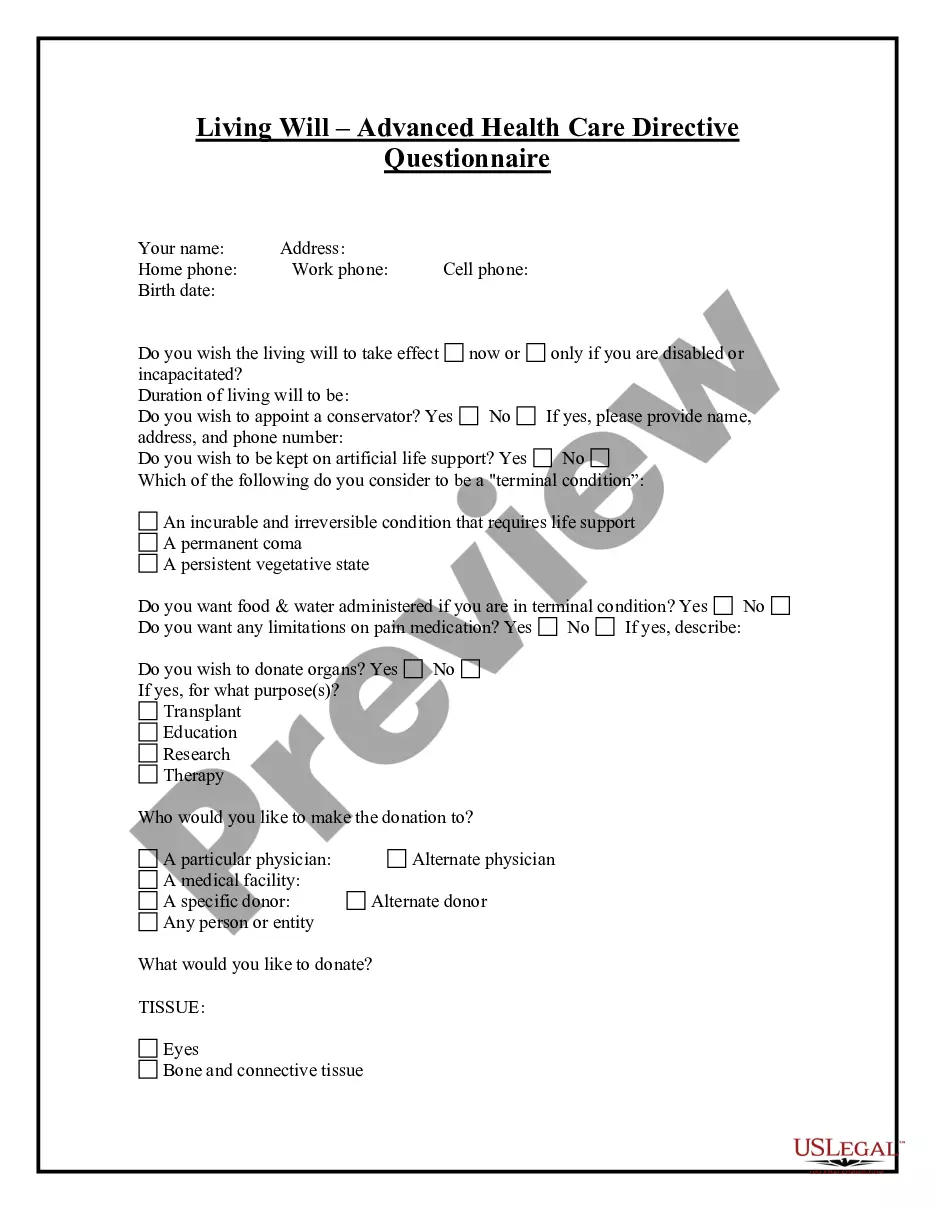
- Statutory Living Will
- Estate Planning Questionnaire and Worksheets
- Sample Letter for Request for Free Credit Report Allowed by Federal Law
- Personal Planning Information and Document Inventory Worksheets - A Legal Life Document
- Estate Planning Questionnaire

When to use this document
Consider using the South Dakota Life Documents Planning Package in the following situations:
- When you want to outline your wishes regarding the distribution of your assets after your death.
- If you need to appoint someone to manage your financial affairs in case you become incapacitated.
- When you wish to designate a trusted individual to make healthcare decisions on your behalf when you are unable to do so.
- If you want to ensure that your wishes regarding medical treatment are respected in the event of a terminal illness.
- When gathering important information for your personal and estate planning needs.
Who this form package is for
- Individuals looking to prepare their estate plan.
- Parents wanting to safeguard their childrenâs future through guardianship designations.
- Adults planning for potential health care decisions that may arise in the future.
- Anyone wanting to ensure their financial and medical wishes are documented and communicated.
Steps to complete these forms
- Review the included forms and identify which ones you need based on your personal situation.
- Fill out the forms using accurate and up-to-date information.
- Have your signature witnessed or notarized, if required by state law.
- Store your completed documents in a safe place, and inform a trusted individual about their location.
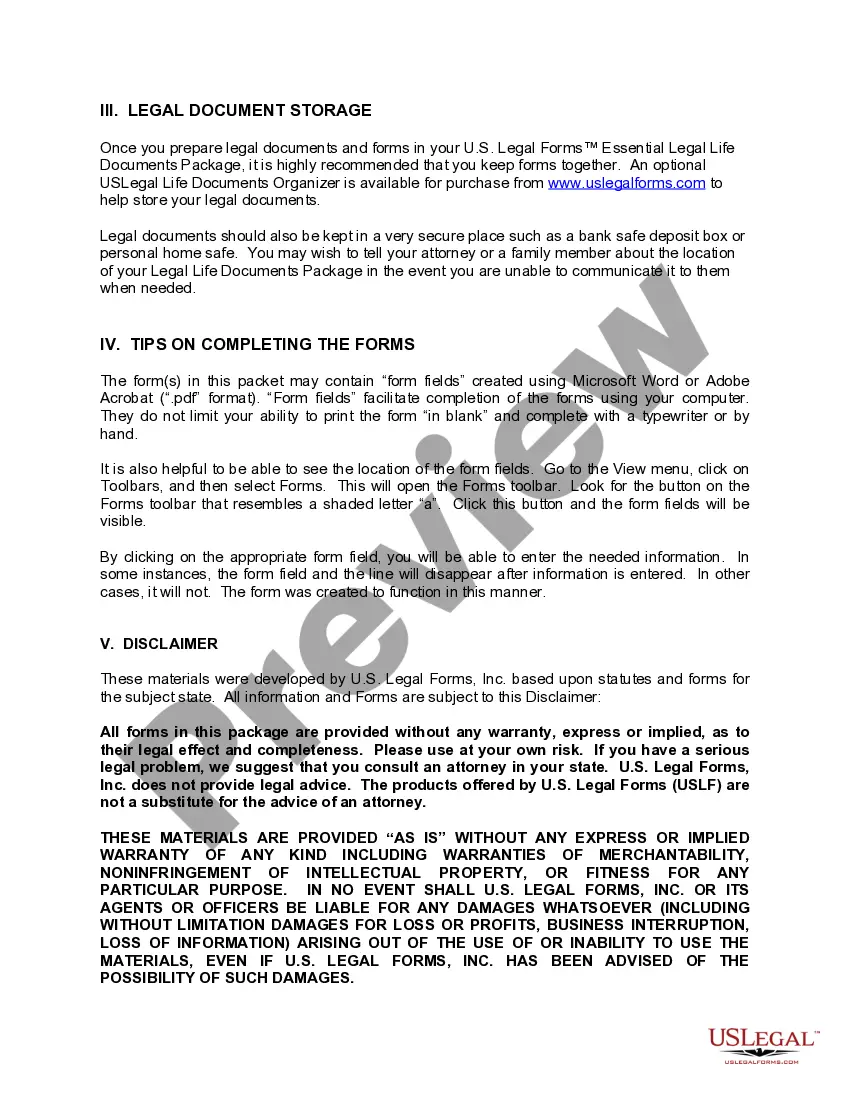
- Regularly review and update the forms as necessary to reflect any changes in your circumstances.
Notarization requirements for forms in this package
Forms in this package typically do not require notarization unless required by South Dakota law. However, certain documents, such as a last will or powers of attorney, may need to be notarized to ensure legal validity. It is advisable to review each form carefully for specific requirements and instructions.
Get your form ready online
Our built-in tools help you complete, sign, share, and store your documents in one place.
Make edits, fill in missing information, and update formatting in US Legal Forms—just like you would in MS Word.
Download a copy, print it, send it by email, or mail it via USPS—whatever works best for your next step.
Sign and collect signatures with our SignNow integration. Send to multiple recipients, set reminders, and more. Go Premium to unlock E-Sign.
If this form requires notarization, complete it online through a secure video call—no need to meet a notary in person or wait for an appointment.
We protect your documents and personal data by following strict security and privacy standards.

Make edits, fill in missing information, and update formatting in US Legal Forms—just like you would in MS Word.

Download a copy, print it, send it by email, or mail it via USPS—whatever works best for your next step.

Sign and collect signatures with our SignNow integration. Send to multiple recipients, set reminders, and more. Go Premium to unlock E-Sign.

If this form requires notarization, complete it online through a secure video call—no need to meet a notary in person or wait for an appointment.

We protect your documents and personal data by following strict security and privacy standards.
Typical mistakes to avoid
- Failing to sign the forms where required.
- Not having witnesses or notarization when necessary.
- Leaving forms incomplete or filled out incorrectly.
- Not storing documents securely or informing trusted individuals about their whereabouts.
Why complete this package online
- Convenience of accessing and downloading forms from home at any time.
- Ability to edit the forms digitally, ensuring clarity and legibility.
- Confidence in using state-specific forms that meet local legal requirements.
- Guidance provided throughout the package to help you understand how to complete each document.
Summary of main points
- The South Dakota Life Documents Planning Package includes essential legal forms tailored to state laws.
- It is designed to help individuals make informed decisions and document their wishes regarding asset distribution and health care.
- Completing and storing these documents properly can provide peace of mind for you and your loved ones.
Looking for another form?




Form popularity
FAQ
Living will. A living will is a written, legal document that spells out medical treatments you would and would not want to be used to keep you alive, as well as your preferences for other medical decisions, such as pain management or organ donation. In determining your wishes, think about your values.
You can give a person complete authority to make all decisions, or limit them significantly to make only specific decisions.If you want specificity, it is better to do that in your living will, which the person with a durable power of attorney cannot override.
Step 1 Download Your Living Will. Download in Adobe PDF, Microsoft Word (. Step 2 Health Care Directive. Step 3 Life Support. Step 4 Life-Sustaining Treatment. Step 5 End of Life Wishes. Step 6 Medical Power of Attorney. Step 7 Witness Acknowledgment. Step 8 Notary Acknowledgment.
A breathing machine, CPR, and artificial nutrition and hydration are examples of life-sustaining treatments. Living willAn advance directive that tells what medical treatment a person does or doesn't want if he/she is not able to make his/her wishes known.
You can get the forms in a doctor's office, hospital, law office, state or local office for the aging, senior center, nursing home, or online. When you write your advance directive, think about the kinds of treatments that you do or don't want to receive if you get seriously hurt or ill.
Talk to your agent. Talk to the person or persons you want to make decisions for you so they: Write your personal directive. You have 2 options: Sign it. You and a witness have to sign the personal directive to make it a legal document. Give out copies.
The name and contact information of your healthcare agent/proxy. Answers to specific questions about your preferences for care if you become unable to speak for yourself. Names and signatures of individuals who witness your signing your advance directive, if required.
An advance directive is a set of instructions someone prepares in advance of ill health that determines his healthcare wishes. A living will is one type of advance directive that becomes effective when a person is terminally ill.
The living will. Durable power of attorney for health care/Medical power of attorney. POLST (Physician Orders for Life-Sustaining Treatment) Do not resuscitate (DNR) orders. Organ and tissue donation.