South Carolina Last Will and Testament for a Widow or Widower with Adult and Minor Children
Overview of this form
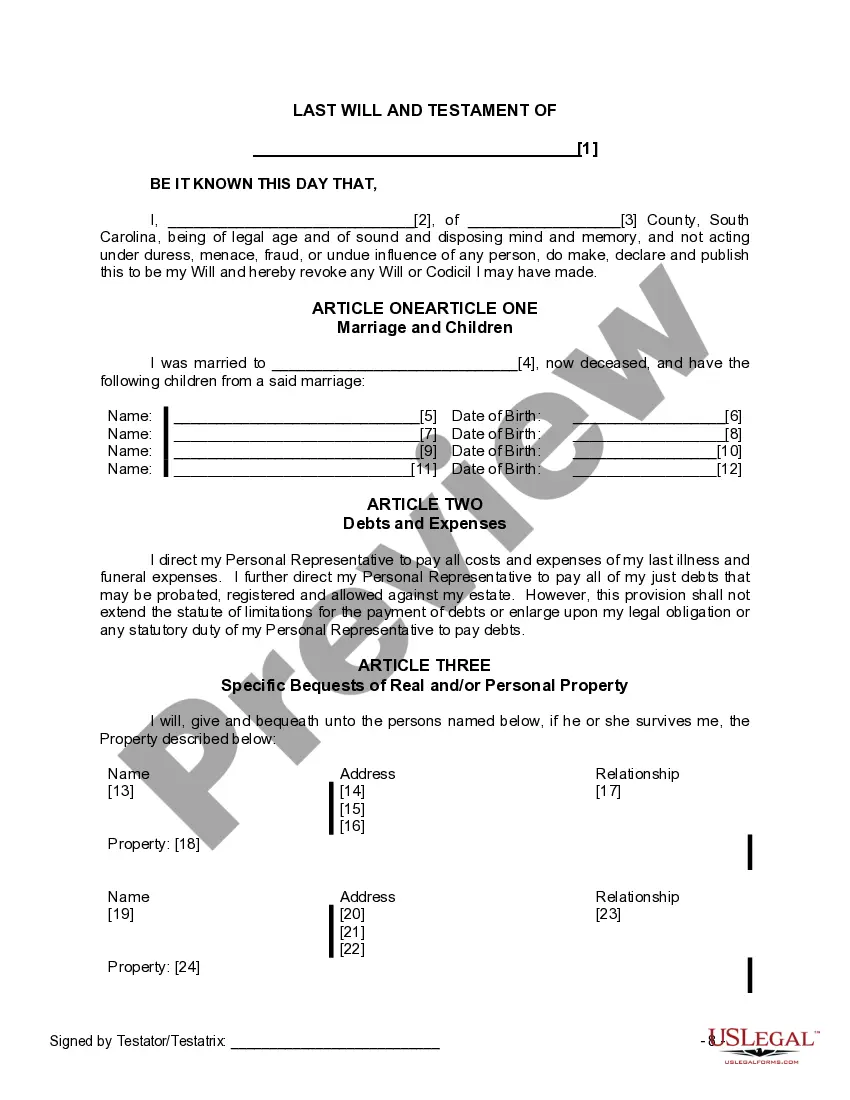
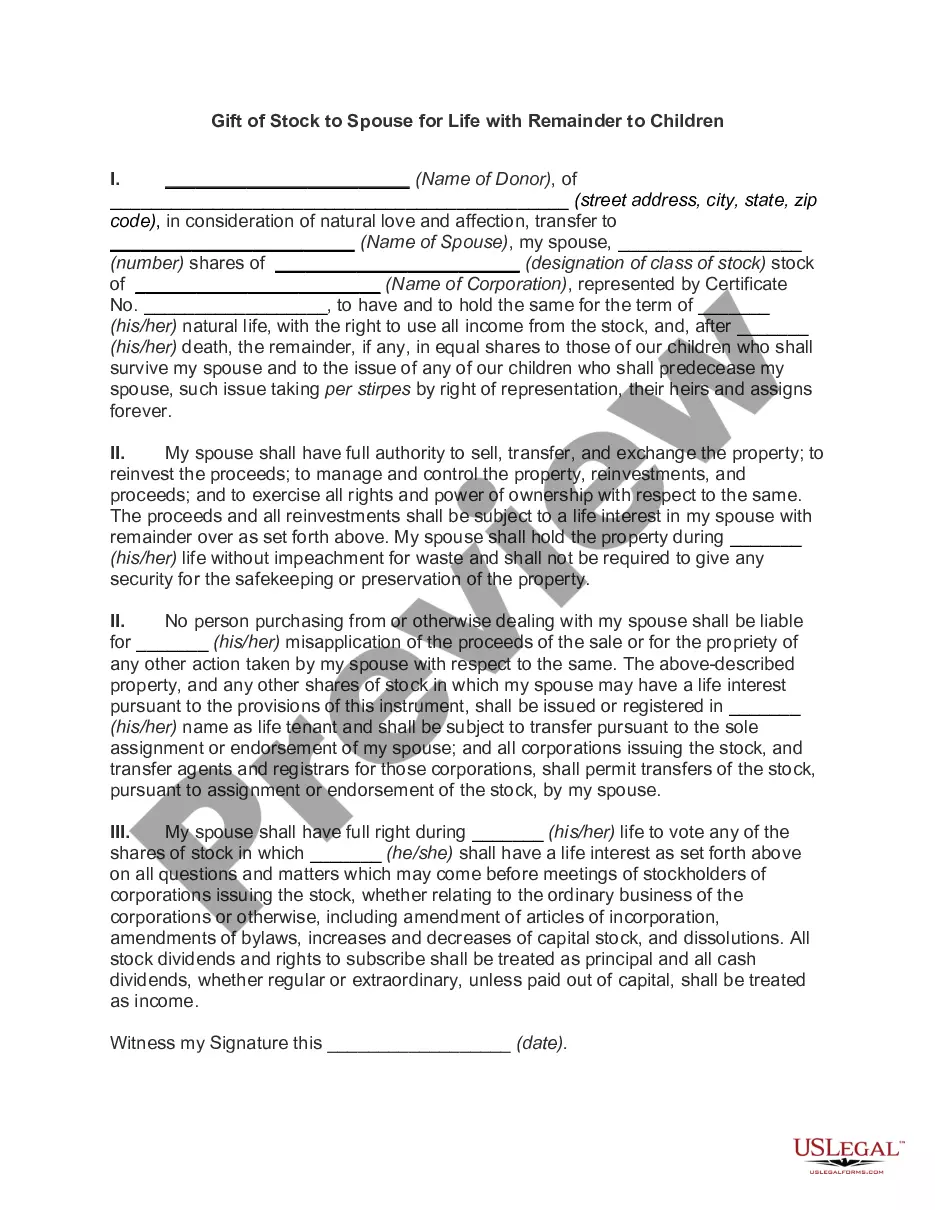
The Last Will and Testament for a Widow or Widower with Adult and Minor Children is a legal document that outlines how a widow or widower wishes to distribute their assets after death. This form allows for the appointment of a personal representative, the designation of beneficiaries for both adult and minor children, and includes provisions for managing assets left to minors through a designated trustee. This form is essential for ensuring that your wishes are clearly documented, providing peace of mind to you and your family during a difficult time.
Key parts of this document
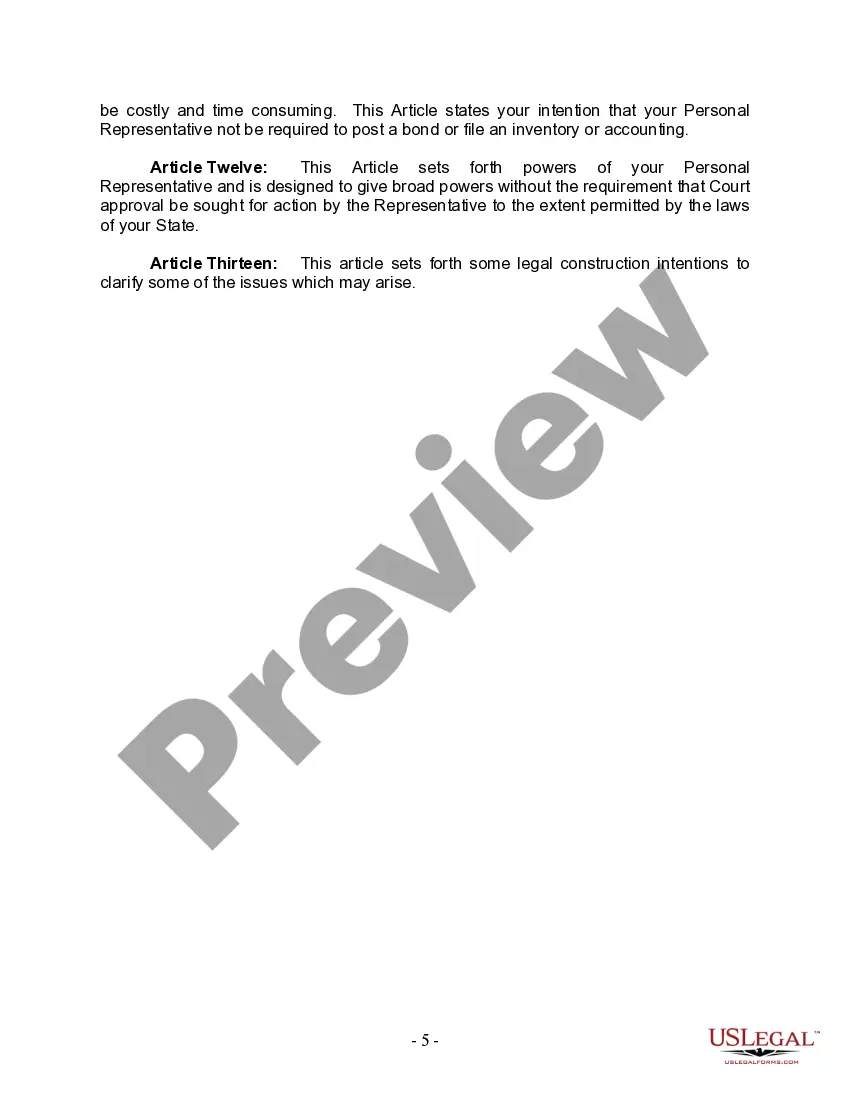
- Appointment of a personal representative or executor to manage the estate.
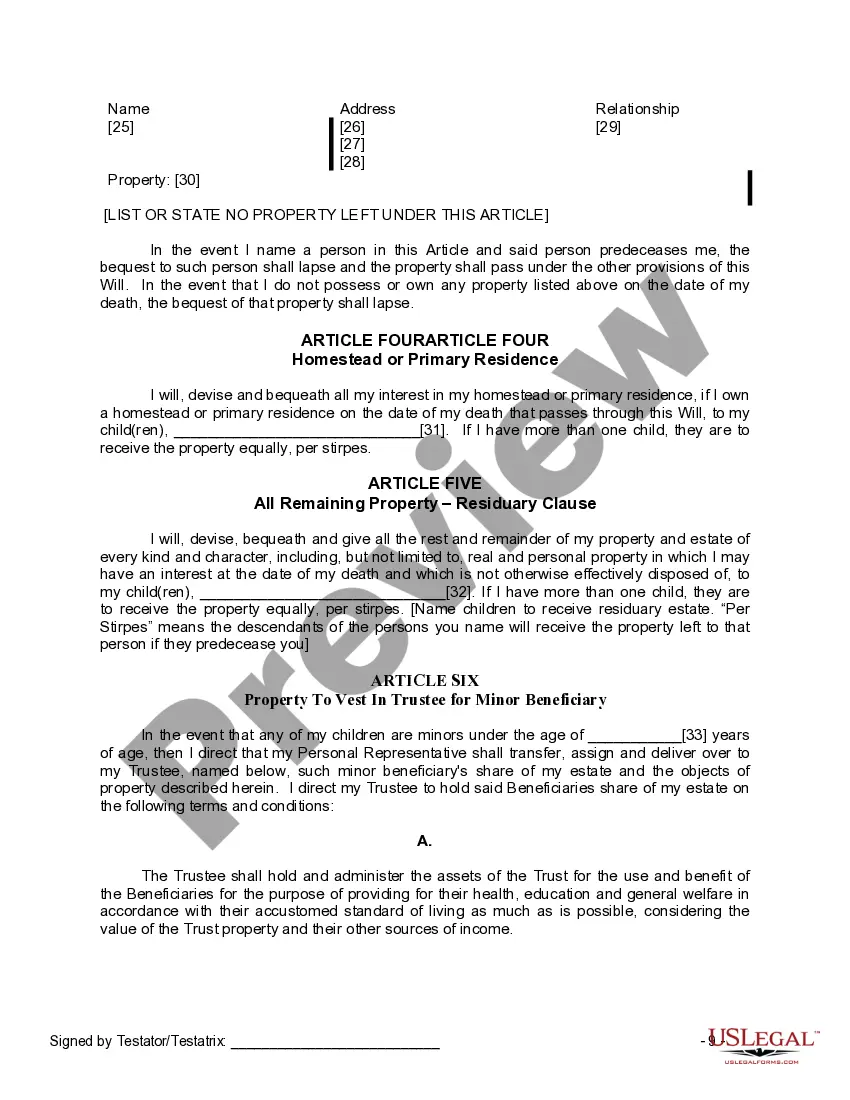
- Specification of who will inherit your property, including both adult and minor children.
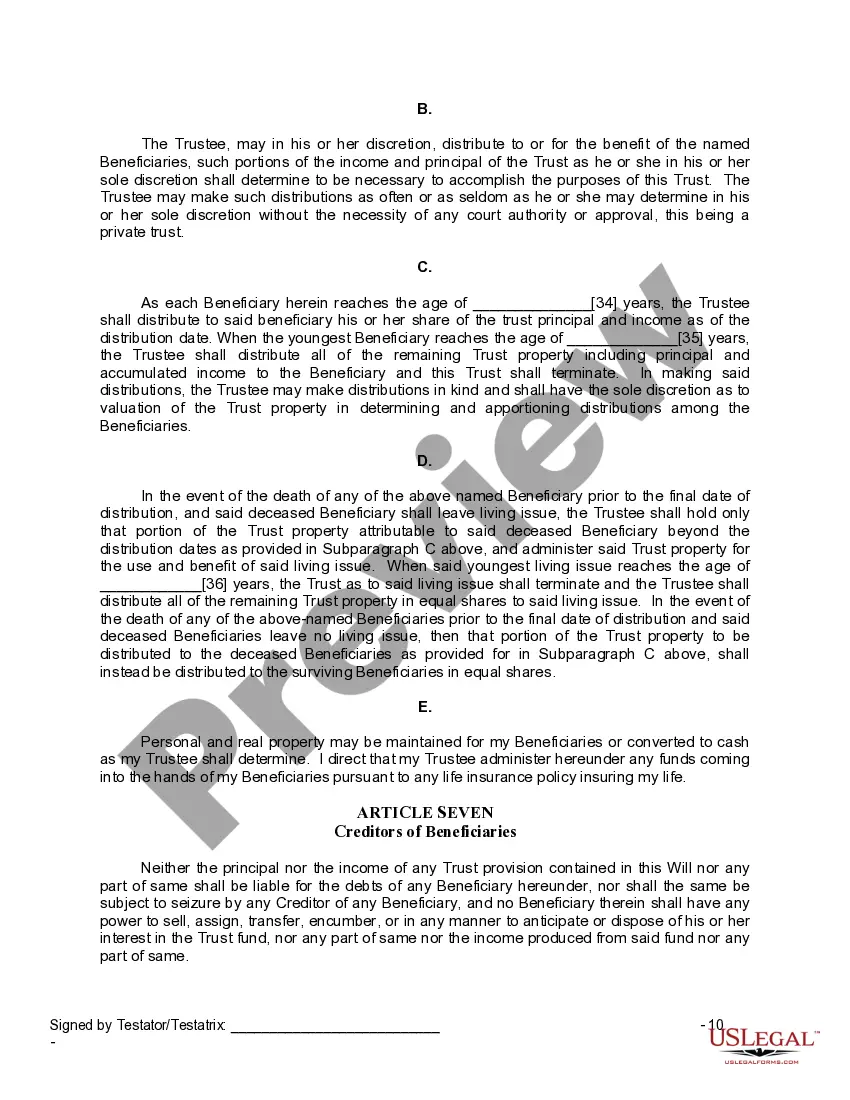
- Establishment of a trust for assets designated for minor children.
- Identification of guardians for minor children in the event of the parent's death.
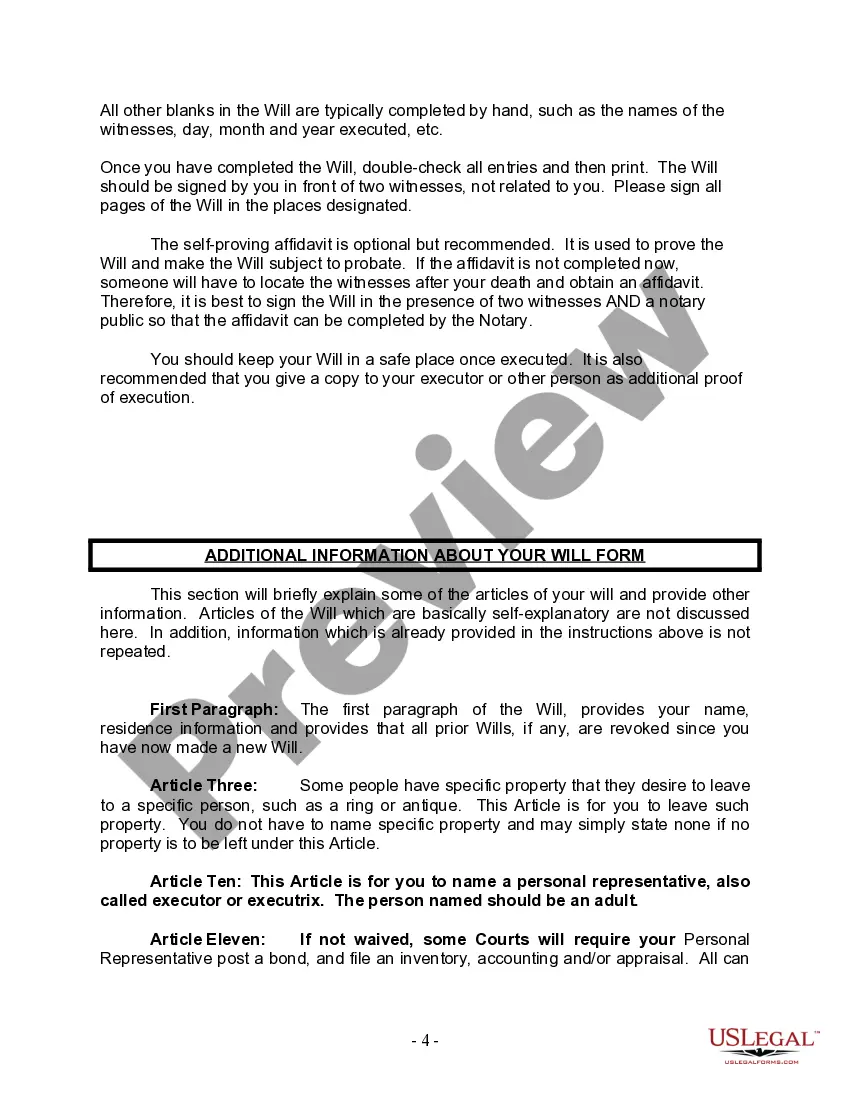
- Detailed instructions for signing and witnessing the will to ensure legal validity.



Situations where this form applies
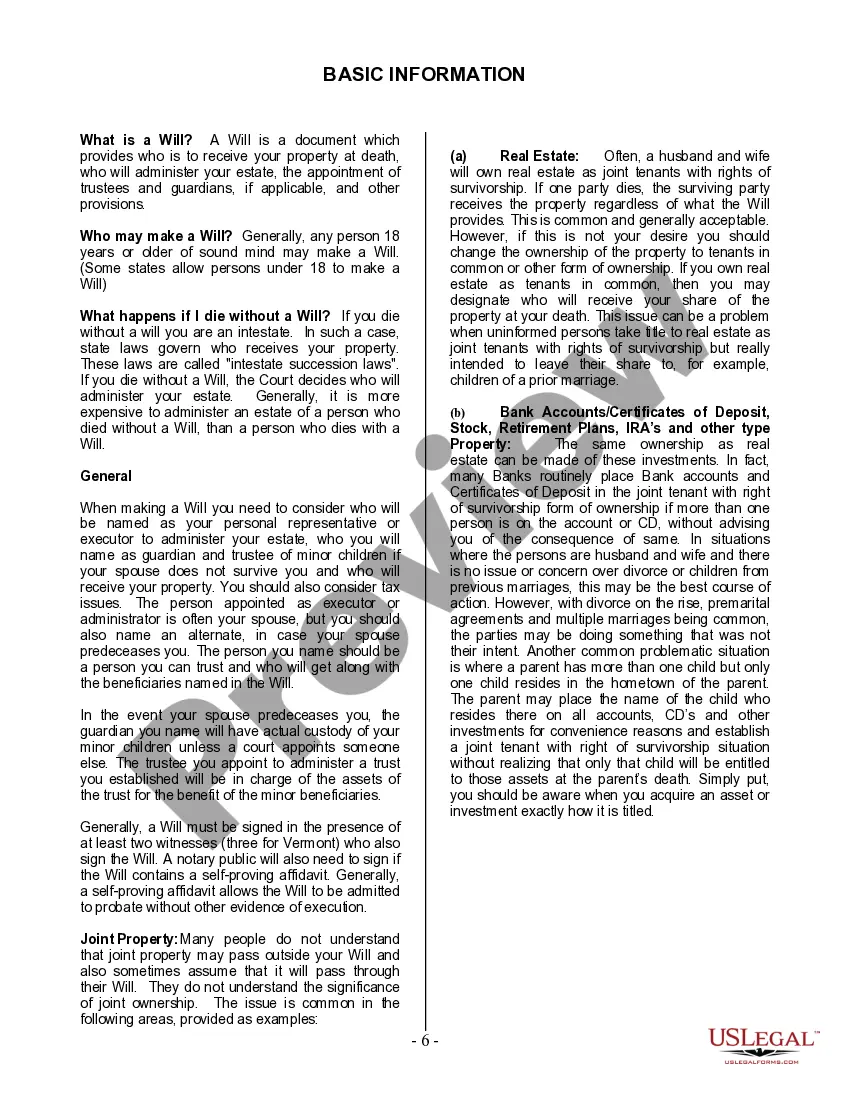
This form is suitable for a widow or widower with both adult and minor children who wants to clarify their wishes regarding property distribution after death. You should consider using this form if you are looking to ensure that your assets are divided according to your wishes, establish a trust for minor children, or select a guardian for them. Additionally, this will help prevent disputes among family members and ensure a smoother probate process.
Who should use this form
- Widows or widowers with children, both adult and minor.
- Individuals seeking to clarify their wishes regarding the distribution of property.
- Parents wanting to appoint a guardian for their minor children in the event of their passing.
- Those looking to establish a trust for minor children to manage their inheritance responsibly.
How to prepare this document
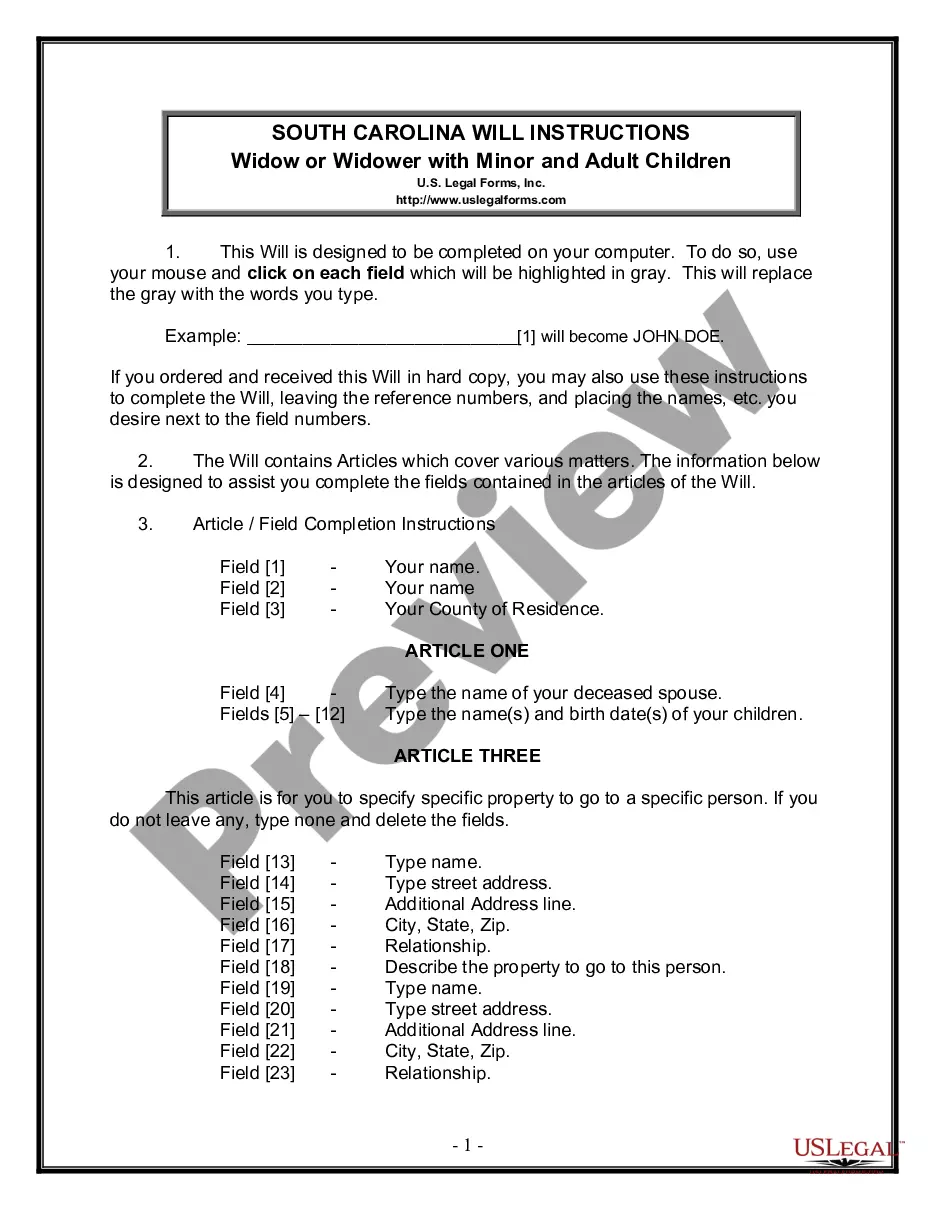
- Enter your name and county of residence at the beginning of the form.
- Specify the name of your deceased spouse and the names and birthdates of your children.
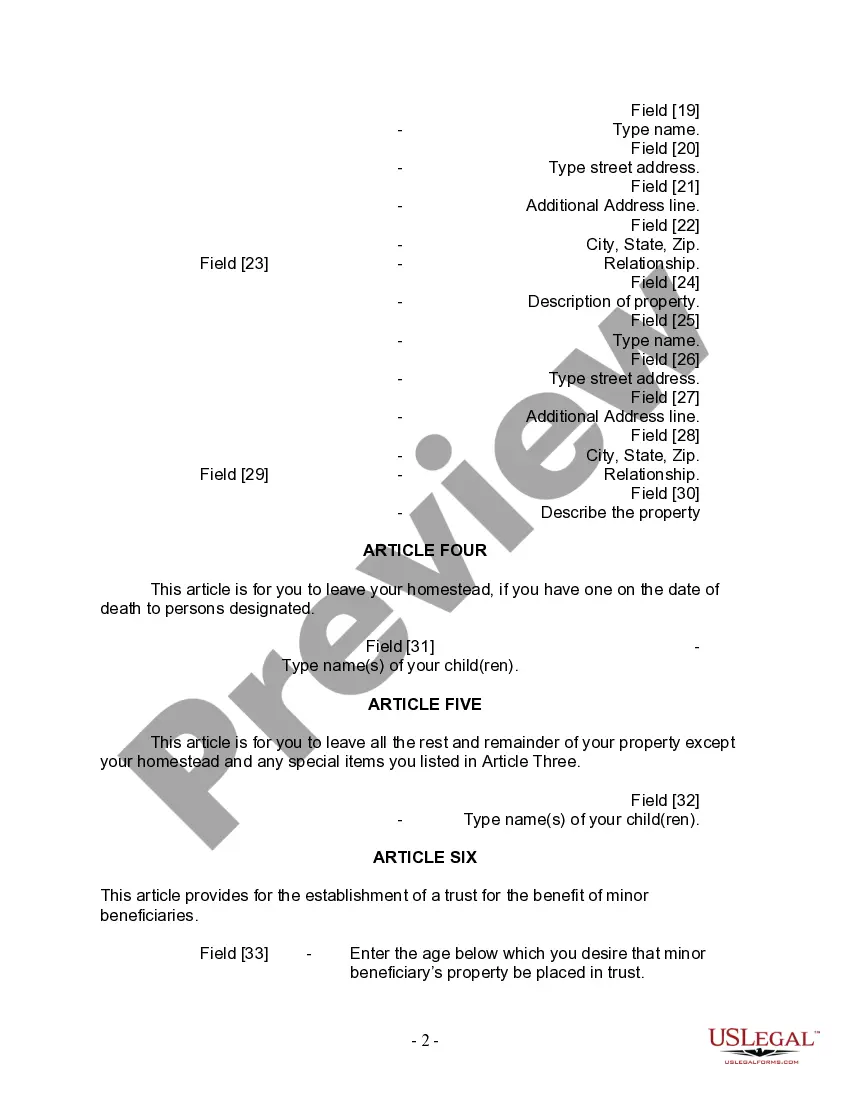
- Detail any specific bequests you wish to make, including names and descriptions of property.
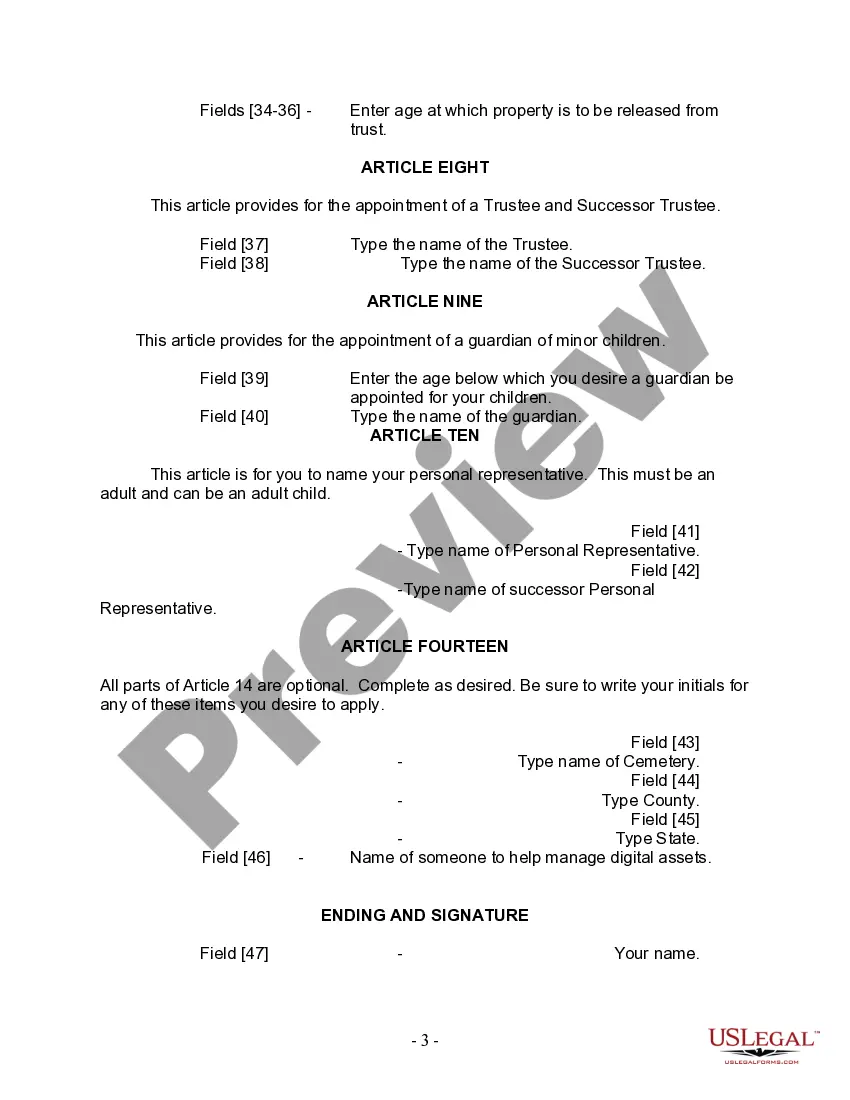
- Designate a personal representative and optionally, a successor personal representative.
- Sign the completed will in the presence of two witnesses, who are not related or beneficiaries.
Notarization guidance
Yes, this form must be notarized to be legally valid if it follows a self-proving affidavit statute in your state. This allows the will to be admitted to probate without further evidence of execution. US Legal Forms offers integrated online notarization, available twenty-four hours a day via secure video call, ensuring you can complete your will without unnecessary travel.
Get your form ready online
Our built-in tools help you complete, sign, share, and store your documents in one place.
Make edits, fill in missing information, and update formatting in US Legal Forms—just like you would in MS Word.
Download a copy, print it, send it by email, or mail it via USPS—whatever works best for your next step.
Sign and collect signatures with our SignNow integration. Send to multiple recipients, set reminders, and more. Go Premium to unlock E-Sign.
If this form requires notarization, complete it online through a secure video call—no need to meet a notary in person or wait for an appointment.
We protect your documents and personal data by following strict security and privacy standards.

Make edits, fill in missing information, and update formatting in US Legal Forms—just like you would in MS Word.

Download a copy, print it, send it by email, or mail it via USPS—whatever works best for your next step.

Sign and collect signatures with our SignNow integration. Send to multiple recipients, set reminders, and more. Go Premium to unlock E-Sign.

If this form requires notarization, complete it online through a secure video call—no need to meet a notary in person or wait for an appointment.

We protect your documents and personal data by following strict security and privacy standards.
Typical mistakes to avoid
- Failing to have the will signed in the presence of the required witnesses.
- Not specifying guardians for minor children or trustees for assets left to them.
- Leaving the document unsigned or improperly dated.
- Overlooking state-specific requirements for notarization or witnessing.
Advantages of online completion
- Conveniently fill out the form from your computer, ensuring accuracy and speeding up the process.
- Edit the document as needed before finalizing, reducing errors commonly found in handwritten forms.
- Access expert legal templates drafted by licensed attorneys, providing peace of mind regarding legal validity.
- Download and store your completed will securely for easy access when needed.
What to keep in mind
- This Last Will and Testament is tailored for widows or widowers with adult and minor children.
- It provides clarity on asset distribution, guardianship, and trusts for minor beneficiaries.
- Proper execution is crucial, including witness signatures and potential notarization.
- Using this form online simplifies the process with immediate access and clear instructions.
Looking for another form?
Form popularity
FAQ
1) Yes, she means grandmother has full rights in her husband's property. 2) You also have rights in ancestral property. 3) Please check the WILL is registered or not with registrar and yes your grandmother has rights to make of her share WILL, but you have to check whether WILL is valid or not.
Handwritten wills prepared in South Carolina are not legal. However, a holographic will created in another state may be valid in South Carolina.
A. You don't have to have a lawyer to create a basic will you can prepare one yourself. It must meet your state's legal requirements and should be notarized.A do-it-yourself will that's poorly drafted can save you money but create a mess for your heirs when you're gone.
In most situations, a will template is an easy and inexpensive way to make sure your wishes are known and carried out. Most people can get everything they need by using a will template, with little cost or hassle.
A widow's will must meet her state's standards in order to be considered legally valid. Typically, this means the will must be in writing and signed. States generally require the signatures of two neutral witnesses who watch the widow sign the document, and a notary may also be required.
You can make your own will in South Carolina, using Nolo's do-it-yourself will software or online will programs. However, you may want to consult a lawyer in some situations. For example, if you think that your will might be contested or if you want to disinherit your spouse, you should talk with an attorney.
Include personal identifying information. Include a statement about your age and mental status. Designate an executor. Decide who will take care of your children. Choose your beneficiaries. List your funeral details. Sign and date your Last Will and Testament.
Yes, under some circumstances. If no consideration is provided for the mutual wills, except the mutual agreement of the spouses, either spouse can change the will prior to the death of the first spouse.After the first spouse dies, however, the surviving spouse cannot change the will.
All wills must be property signed and witnessed to be effective. For example, South Carolina requires two witnesses for a will to be valid. A notary is not sufficient, or even required.Another reason is that having an interested witness may invalidate the bequest to the beneficiary who serves as a witness.