South Carolina Last Will and Testament for Divorced Person Not Remarried with Adult and Minor Children
About this form
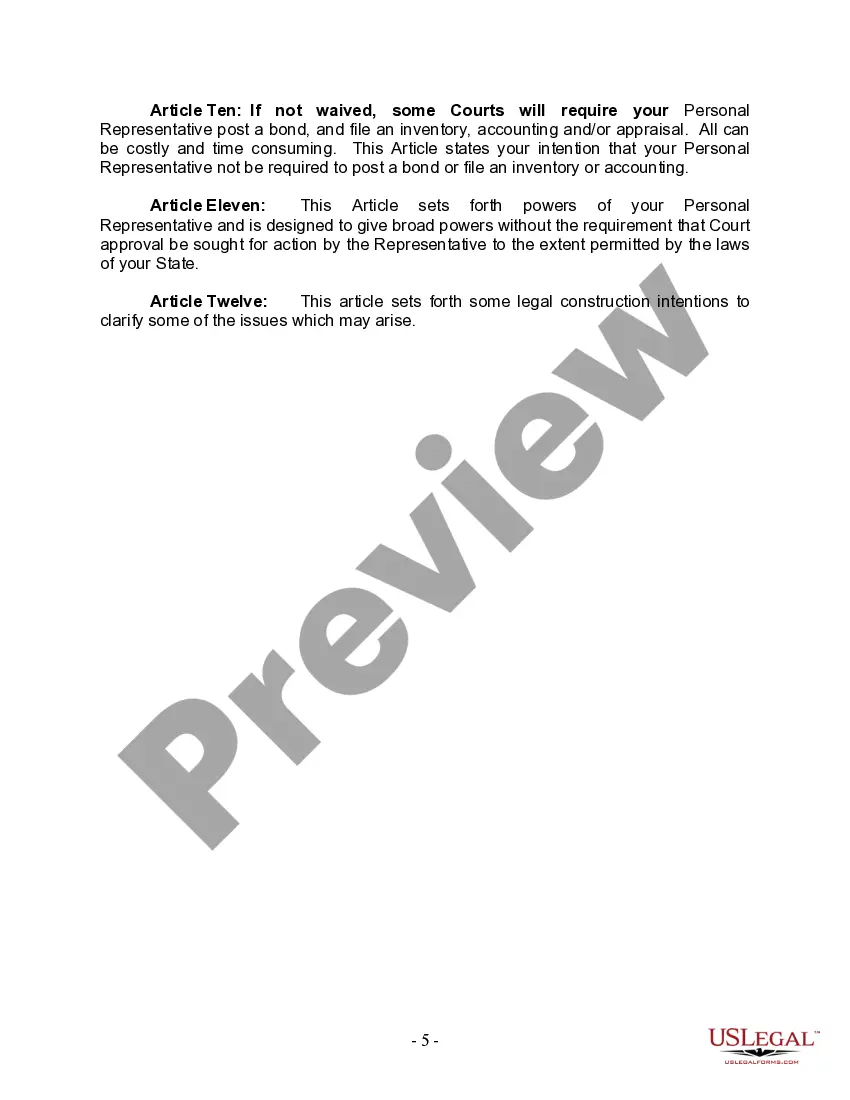
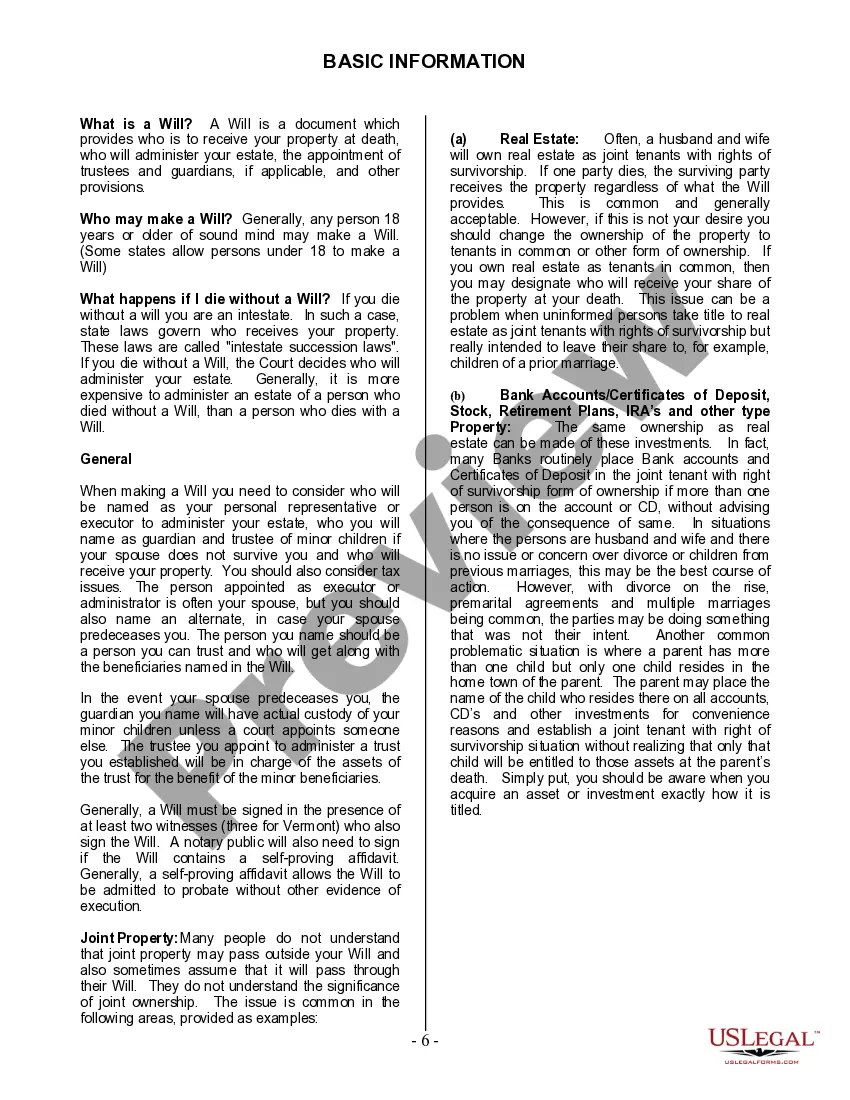
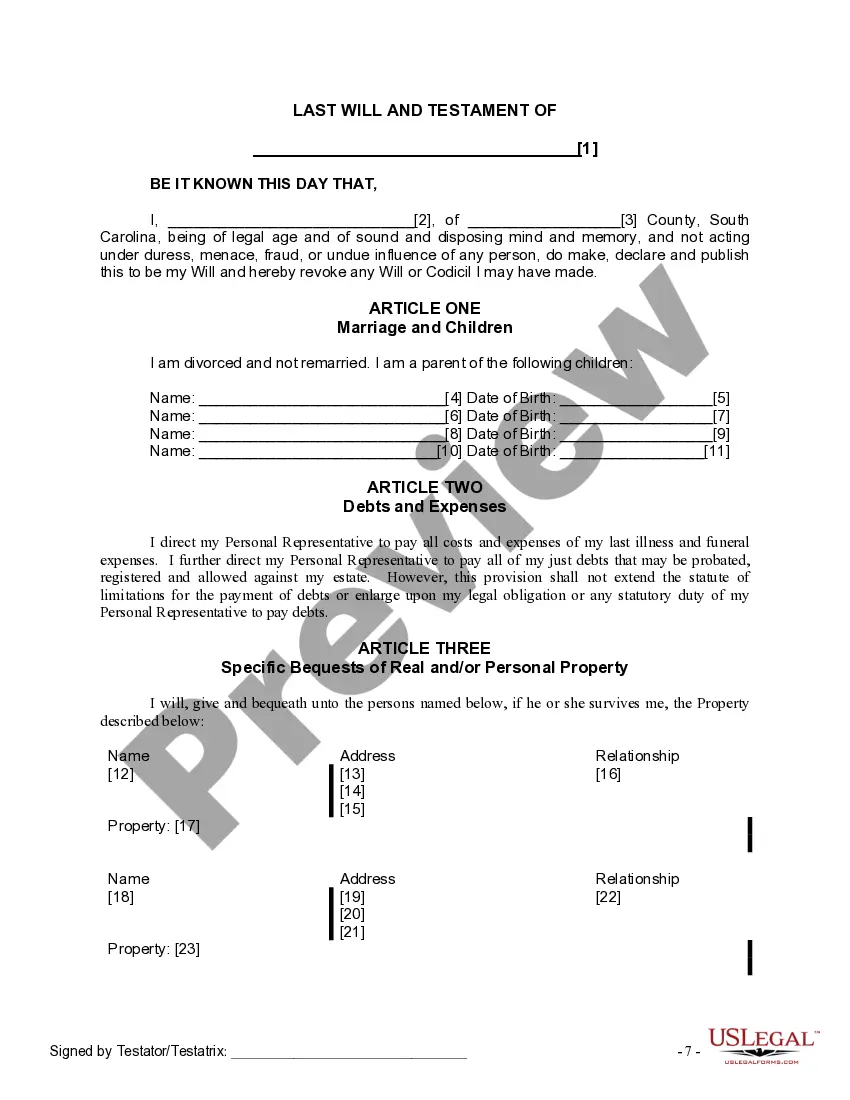
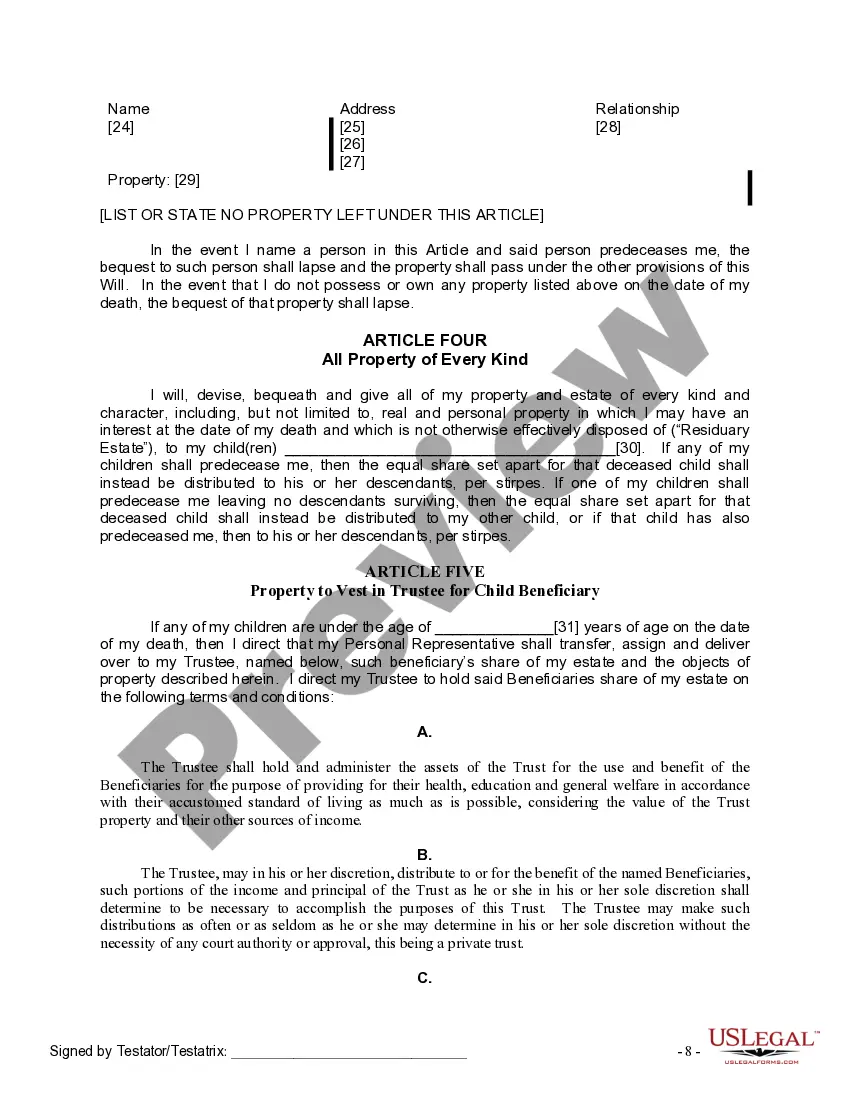
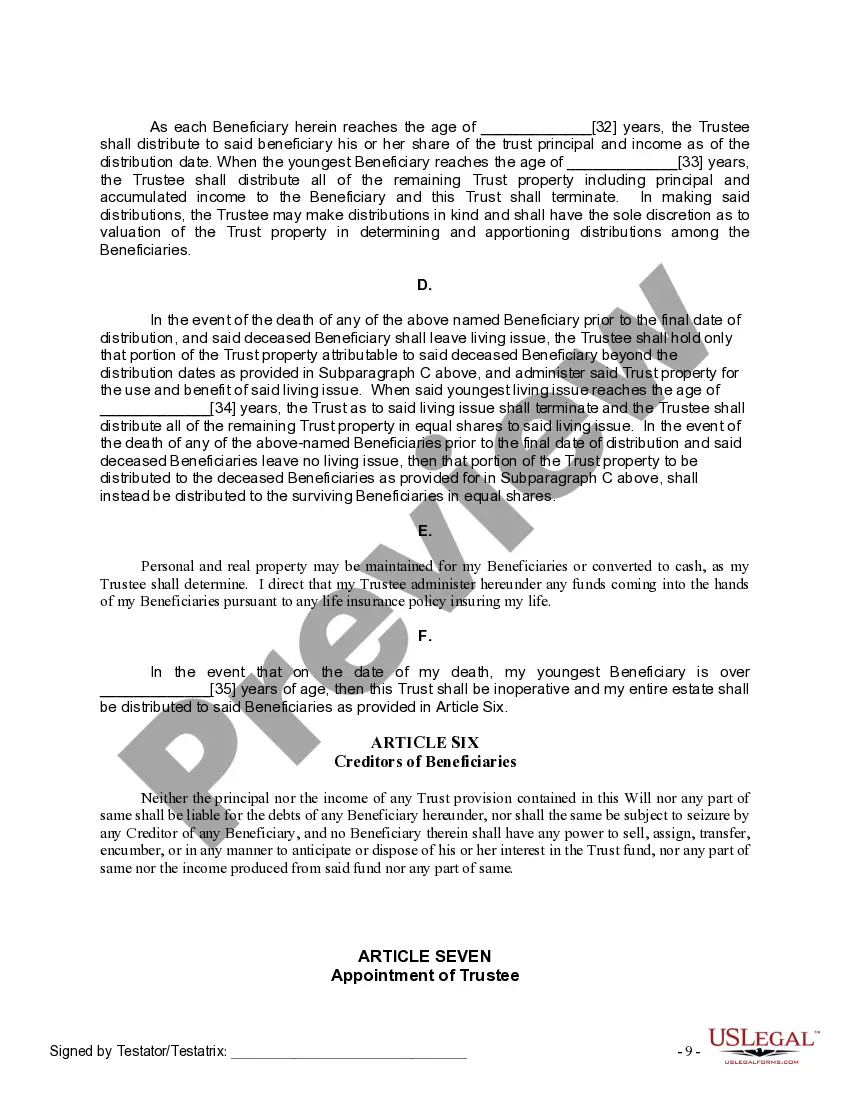
This form is a Last Will and Testament for a divorced person who has not remarried and has both adult and minor children. It serves to outline how your estate will be distributed upon your passing, appoint a personal representative, and establish provisions for the care of minor children through trusts. Unlike other wills, this form specifically accommodates the unique situations of individuals who are divorced and have not remarried.
What’s included in this form
- Appointment of a personal representative or executor to manage the estate.
- Designation of beneficiaries, including adult and minor children.
- Specific provisions for transferring property to named individuals.
- Creation of a trust for minor children's inheritance until they reach a specified age.
- Provisions for appointing guardians for minor children.
- Self-proving affidavit to simplify the probate process.




Common use cases
This form is needed when a divorced individual wants to ensure that their wishes regarding the distribution of their estate are documented and legally binding. It is particularly important for those with minor children to provide for their care and financial support after the parent's death. You should consider using this form if you are planning your estate and wish to avoid intestacy laws, which may not reflect your personal wishes.
Intended users of this form
- Individuals who are divorced and not remarried.
- Parents with adult and minor children.
- Anyone wanting to establish a clear plan for their estate distribution and guardianship of their minor children.
- Those wishing to simplify the probate process with a self-proving will.
Instructions for completing this form
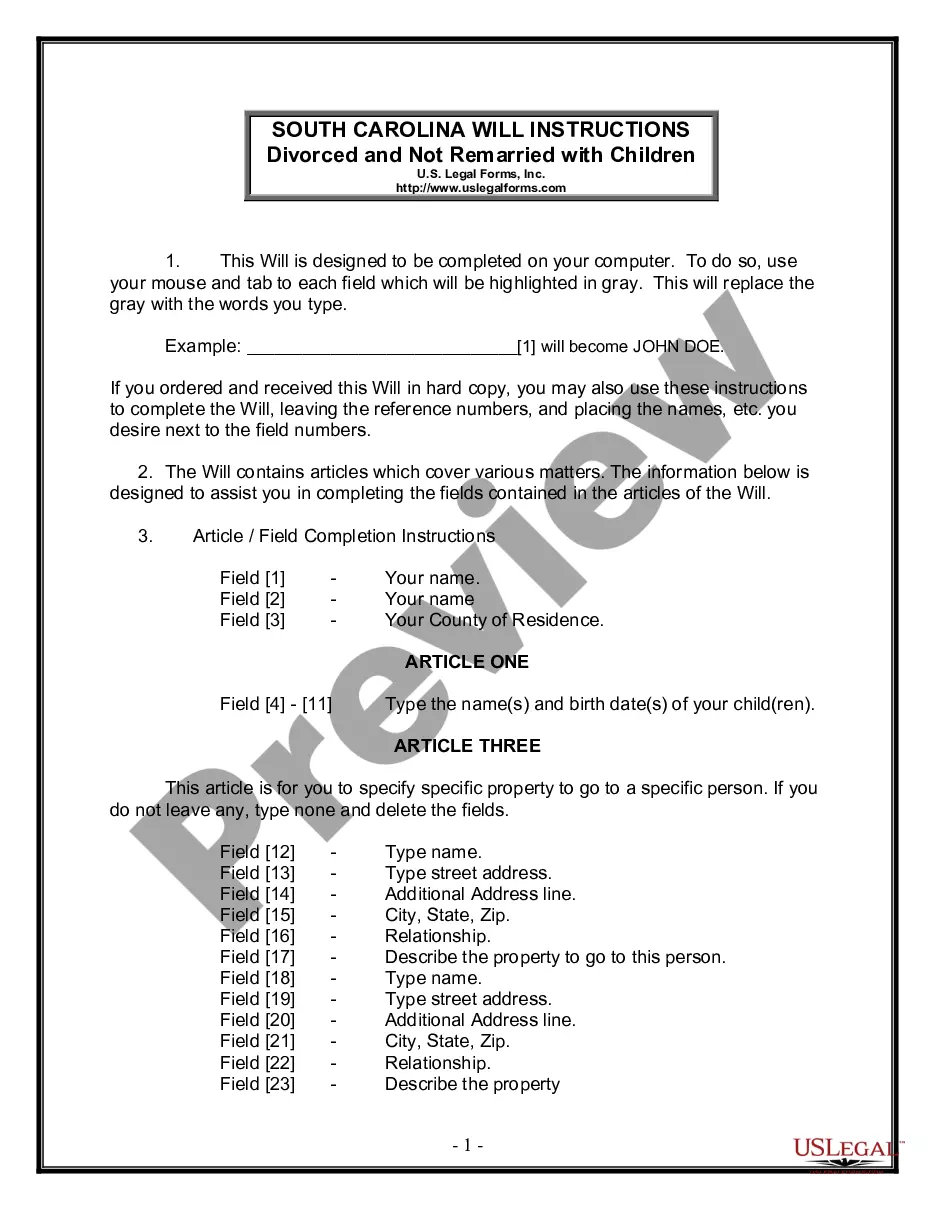
- Identify yourself by entering your name and county of residence.
- List the names and birth dates of your children in the designated fields.
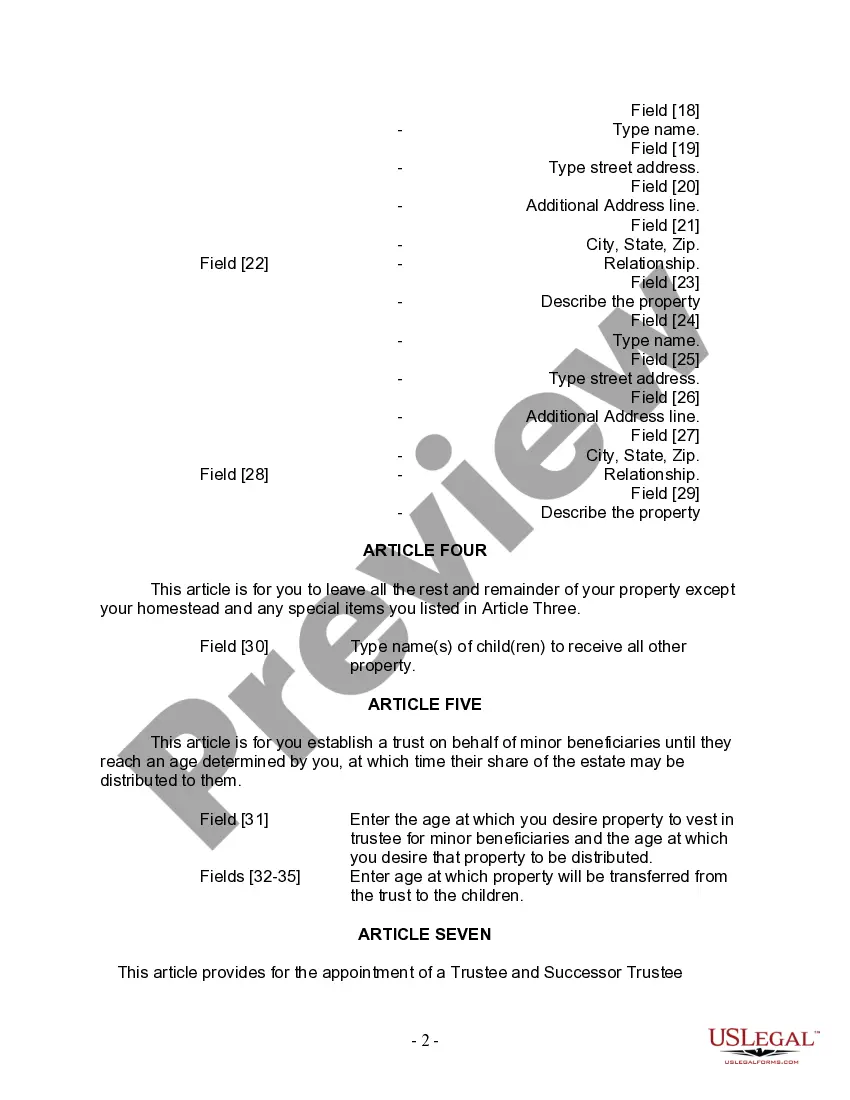
- Specify any specific property gifts you wish to allocate to individuals and provide their details.
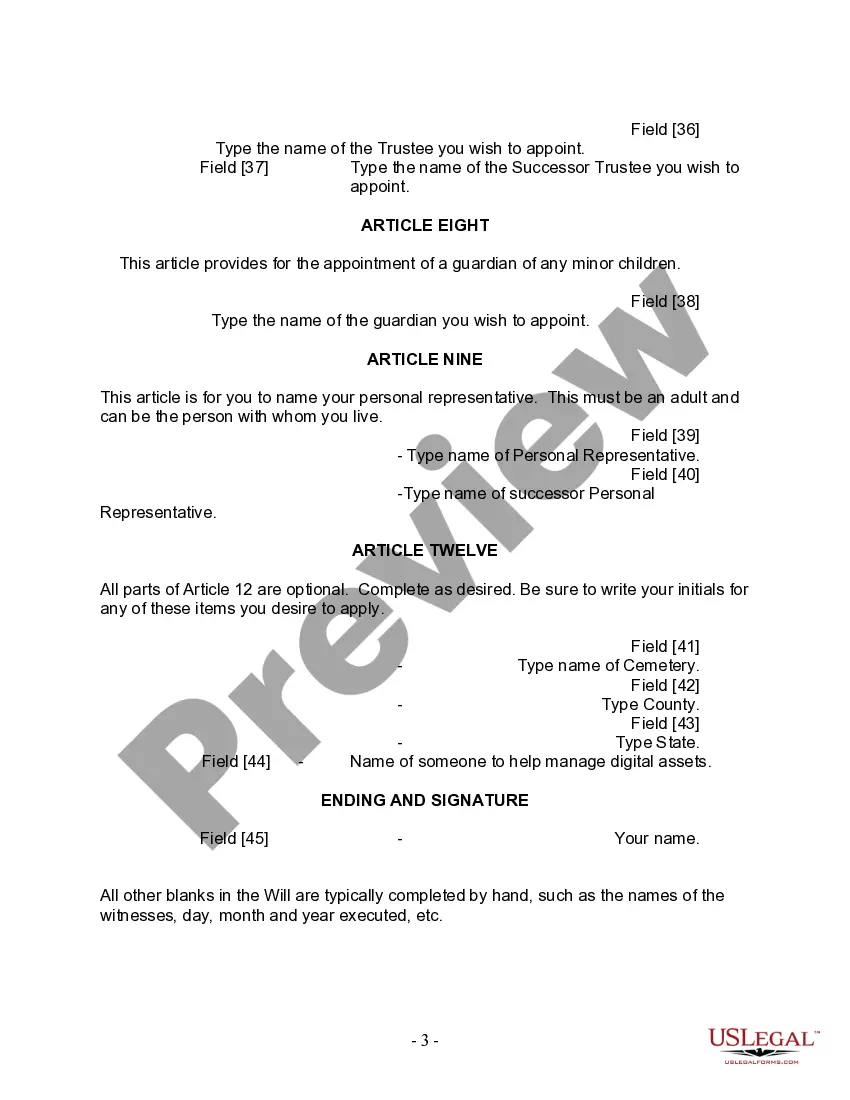
- Designate a personal representative and any alternate representatives who will administer your estate.
- Include provisions for trusts to manage property left for your minor children until they reach the desired age.
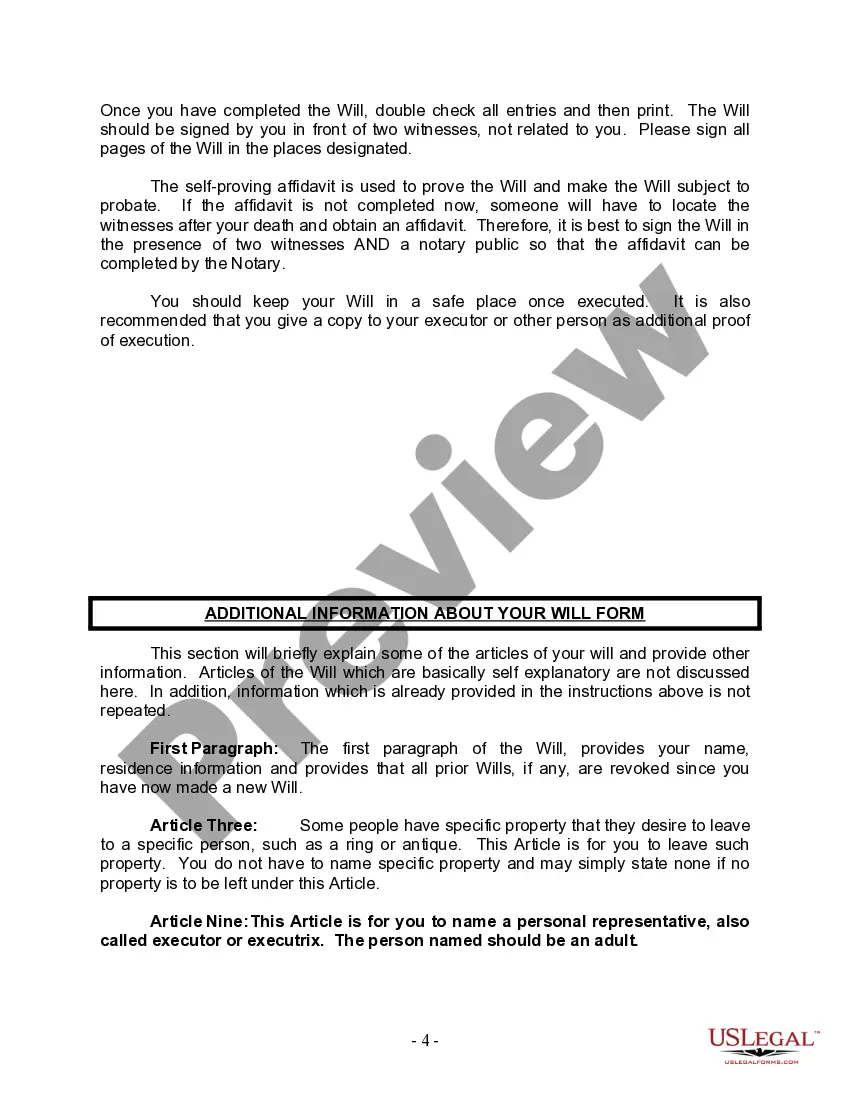
- Sign the will in the presence of two witnesses and a notary public if a self-proving affidavit is included.
Does this form need to be notarized?
This document requires notarization to meet legal standards. US Legal Forms provides secure online notarization powered by Notarize, allowing you to complete the process through a verified video call, available 24/7.
Get your form ready online
Our built-in tools help you complete, sign, share, and store your documents in one place.
Make edits, fill in missing information, and update formatting in US Legal Forms—just like you would in MS Word.
Download a copy, print it, send it by email, or mail it via USPS—whatever works best for your next step.
Sign and collect signatures with our SignNow integration. Send to multiple recipients, set reminders, and more. Go Premium to unlock E-Sign.
If this form requires notarization, complete it online through a secure video call—no need to meet a notary in person or wait for an appointment.
We protect your documents and personal data by following strict security and privacy standards.

Make edits, fill in missing information, and update formatting in US Legal Forms—just like you would in MS Word.

Download a copy, print it, send it by email, or mail it via USPS—whatever works best for your next step.

Sign and collect signatures with our SignNow integration. Send to multiple recipients, set reminders, and more. Go Premium to unlock E-Sign.

If this form requires notarization, complete it online through a secure video call—no need to meet a notary in person or wait for an appointment.

We protect your documents and personal data by following strict security and privacy standards.
Mistakes to watch out for
- Failing to have the will signed by two witnesses or not notarizing when required.
- Leaving out significant assets or beneficiaries, leading to unintentional exclusions.
- Not updating the will after major life changes such as additional children or changes in financial status.
- Assuming that verbal wishes are sufficient; only written wills are legally binding.
Benefits of completing this form online
- Convenience of completing the form from home without needing to visit an attorney.
- Editability allowing you to revise your will as your situation changes.
- Access to professional templates drafted by licensed attorneys ensuring legal compliance.
- Immediate download capability so you can begin planning your estate right away.
Looking for another form?
Form popularity
FAQ
A Will must meet the legal requirements set forth by the state in order for it to be valid. Most states will also accept a Will that was executed in another state if the document is a valid Will under that state's law.In South Carolina, any person of sound mind and not a minor make a Will.
A will can be contested on the grounds that it was not properly drafted, signed or witnessed in accordance with the applicable requirements. Lack of capacity: Under South Carolina probate law, the person making or changing a will is required to have a certain mental competency for the change to be considered valid.
In simple terms, you can create a handwritten document solely in your own handwriting and signed by you which can serve as your last will and testament. It's important to emphasize that no portion of the document may be typewritten and no witnesses or notaries are required.
Handwritten wills prepared in South Carolina are not legal. However, a holographic will created in another state may be valid in South Carolina.
Signature: The will must be signed by the testator or by someone else in the testator's name in his presence, by his direction. Witnesses: A South Carolina will must be signed by at least two individuals, each of whom witnessed the signing of the will or the testator's acknowledgement of the signature or of the will.
A will and your assets are public information once filed in the South Carolina probate court. A trust is private and prevents your assets from being tied up in the probate process.
A proceeding to contest an informally probated will and appointment if the contest is successful, may be commenced within the later of twelve months from informal probate or three years from decedent's death. These limitations do not apply to proceedings to construe wills or to determine heirs of an intestate.
You can make your own will in South Carolina, using Nolo's do-it-yourself will software or online will programs. However, you may want to consult a lawyer in some situations. For example, if you think that your will might be contested or if you want to disinherit your spouse, you should talk with an attorney.