Michigan Agreement for Delayed or Partial Rent Payments
About this form
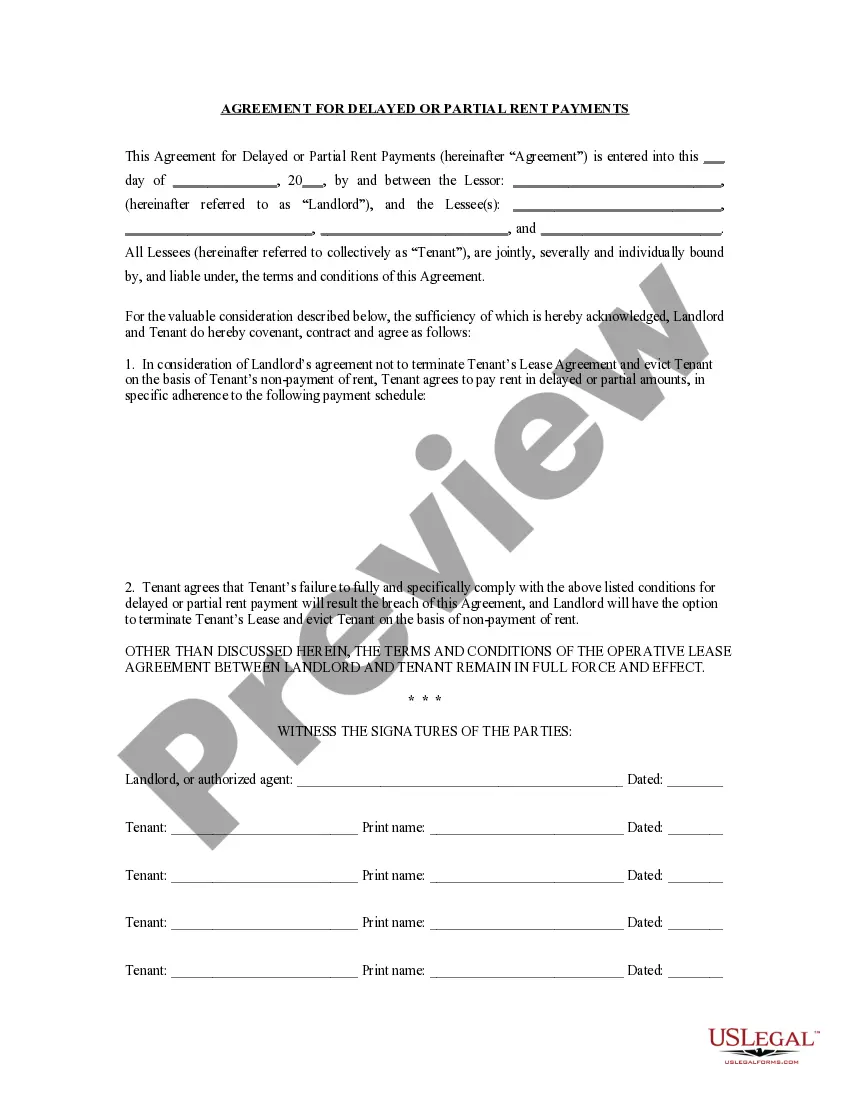
The Agreement for Delayed or Partial Rent Payments is a legal document between a landlord and tenant. It outlines specific deadlines and conditions for when a tenant can make delayed or reduced rent payments. This agreement is essential to protect both the landlord's rights and the tenant's ability to manage their payment obligations without risking eviction due to temporary financial difficulties.
Key parts of this document
- Date of the agreement
- Identification of the landlord and tenants involved
- Payment schedule outlining the terms of delayed or partial payments
- Statement of mutual understanding regarding the lease agreement
- Signatures of all parties for agreement validity

When this form is needed
This form is useful when a tenant is unable to pay their rent in full on the due date due to financial hardship. Landlords and tenants may use this to create a clear plan for future payments. It helps avoid misunderstandings and provides legal protection for both parties in the event of a dispute over payment terms.
Who needs this form
- Landlords who are willing to accept delayed or partial rent payments.
- Tenants experiencing temporary financial difficulties needing flexibility in their payment schedule.
- Both parties who wish to formalize their agreement to prevent potential eviction proceedings due to non-payment.
Completing this form step by step
- Identify the parties involved: Fill in the names of the landlord and tenants.
- Specify the date of the agreement: Enter the day, month, and year at the top of the document.
- Detail the payment terms: Clearly outline the agreed-upon payment schedule for delayed or partial payments.
- Ensure mutual consent: Both parties should read and understand the remaining lease terms that remain in effect.
- Sign the agreement: All parties should sign and date the document to confirm their agreement to the terms.
Is notarization required?
In most cases, this form does not require notarization. However, some jurisdictions or signing circumstances might. US Legal Forms offers online notarization powered by Notarize, accessible 24/7 for a quick, remote process.
Get your form ready online
Our built-in tools help you complete, sign, share, and store your documents in one place.
Make edits, fill in missing information, and update formatting in US Legal Forms—just like you would in MS Word.
Download a copy, print it, send it by email, or mail it via USPS—whatever works best for your next step.
Sign and collect signatures with our SignNow integration. Send to multiple recipients, set reminders, and more. Go Premium to unlock E-Sign.
If this form requires notarization, complete it online through a secure video call—no need to meet a notary in person or wait for an appointment.
We protect your documents and personal data by following strict security and privacy standards.

Make edits, fill in missing information, and update formatting in US Legal Forms—just like you would in MS Word.

Download a copy, print it, send it by email, or mail it via USPS—whatever works best for your next step.

Sign and collect signatures with our SignNow integration. Send to multiple recipients, set reminders, and more. Go Premium to unlock E-Sign.

If this form requires notarization, complete it online through a secure video call—no need to meet a notary in person or wait for an appointment.

We protect your documents and personal data by following strict security and privacy standards.
Common mistakes to avoid
- Failing to include specific payment deadlines.
- Not having all parties sign the agreement.
- Neglecting to clarify the consequences of missing a payment schedule.
- Using vague language that could lead to misunderstandings.
Why use this form online
- Easy access: Download and complete the form from anywhere at any time.
- Editable: Tailor the document to meet the specific needs of both parties.
- Quick turnaround: Streamline the process to address rental payment issues promptly.
Main things to remember
- The Agreement for Delayed or Partial Rent Payments protects tenants facing financial difficulties while ensuring landlords retain their rights.
- It formalizes the understanding between landlords and tenants regarding payment modifications effectively.
- Proper completion and understanding of this form can help prevent lease termination and possible eviction.
Looking for another form?
Form popularity
FAQ
The 554.134 law in Michigan refers to regulations surrounding the rights of tenants regarding rent payment. This law establishes guidelines for late payments and notice requirements before eviction. Understanding the implications of the Michigan Agreement for Delayed or Partial Rent Payments is crucial for navigating these laws effectively. For further clarity on this matter, consider reviewing resources on USLegalForms, which offer detailed information tailored to Michigan residents.
You can obtain a copy of a lease agreement from several sources, including your landlord or property manager, local real estate offices, or online legal platforms. It's essential to have a clear lease to understand your rights and obligations as a tenant. For those in Michigan, the Michigan Agreement for Delayed or Partial Rent Payments may be included in your lease documents, which you can easily access through platforms like USLegalForms.
In Michigan, rent is typically considered late if it is not received by the due date specified in the lease agreement. If rent remains unpaid for seven days after the due date, the landlord may initiate eviction proceedings. Using a Michigan Agreement for Delayed or Partial Rent Payments can help tenants negotiate arrangements with their landlords, potentially preventing eviction during difficult times.
If a tenant fails to provide a 30-day notice, they may still be responsible for rent during that period. The landlord can refer to the Michigan Agreement for Delayed or Partial Rent Payments to enforce the terms of the rental agreement. Understanding these obligations is vital for both tenants and landlords to maintain a good relationship and avoid legal complications.
In Michigan, a landlord typically must provide a tenant with at least 30 days' notice to move out, especially in cases of termination of tenancy. The specifics might vary depending on the reason for the eviction, so it is essential to refer to the relevant laws and rental agreements, such as the Michigan Agreement for Delayed or Partial Rent Payments. Proper notice helps ensure compliance and avoids conflict.
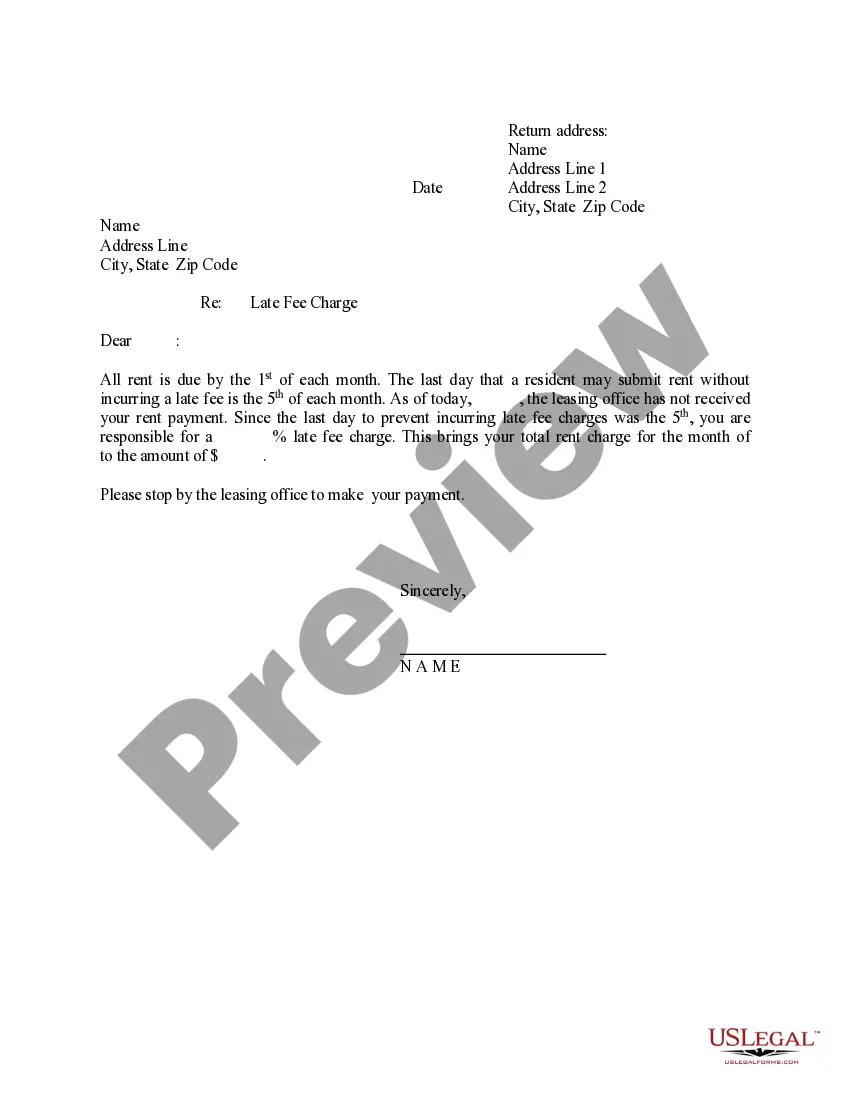
To write a late rent payment letter, start by stating the tenant's name, the rental property's address, and the amount due. Mention the terms of the Michigan Agreement for Delayed or Partial Rent Payments to remind the tenant of their obligations. Be clear about the consequences of continued non-payment while maintaining a professional and understanding tone.
In Michigan, the grace period for paying rent is typically five days after the due date, but this may vary depending on your rental agreement. If you use the Michigan Agreement for Delayed or Partial Rent Payments, ensure it outlines any grace period clearly. A well-defined agreement helps tenants understand their responsibilities while giving landlords clear recourse in case of late payments.
MCL 554.134 refers to the Michigan Compiled Laws that govern the rights and responsibilities of landlords and tenants regarding rental agreements. It is crucial to understand this law when creating or signing a Michigan Agreement for Delayed or Partial Rent Payments. This legal framework ensures that both parties are aware of their obligations, which can minimize potential disputes.
Filling out a monthly rental agreement involves several steps to ensure clarity and compliance with local laws. First, gather essential information such as names of all parties, property details, and the rent amount. Next, refer to the Michigan Agreement for Delayed or Partial Rent Payments to include any provisions for potential payment adjustments, should financial challenges arise. Using a reliable platform like US Legal Forms can simplify this process, providing templates that guide you through each section to create a comprehensive rental agreement.
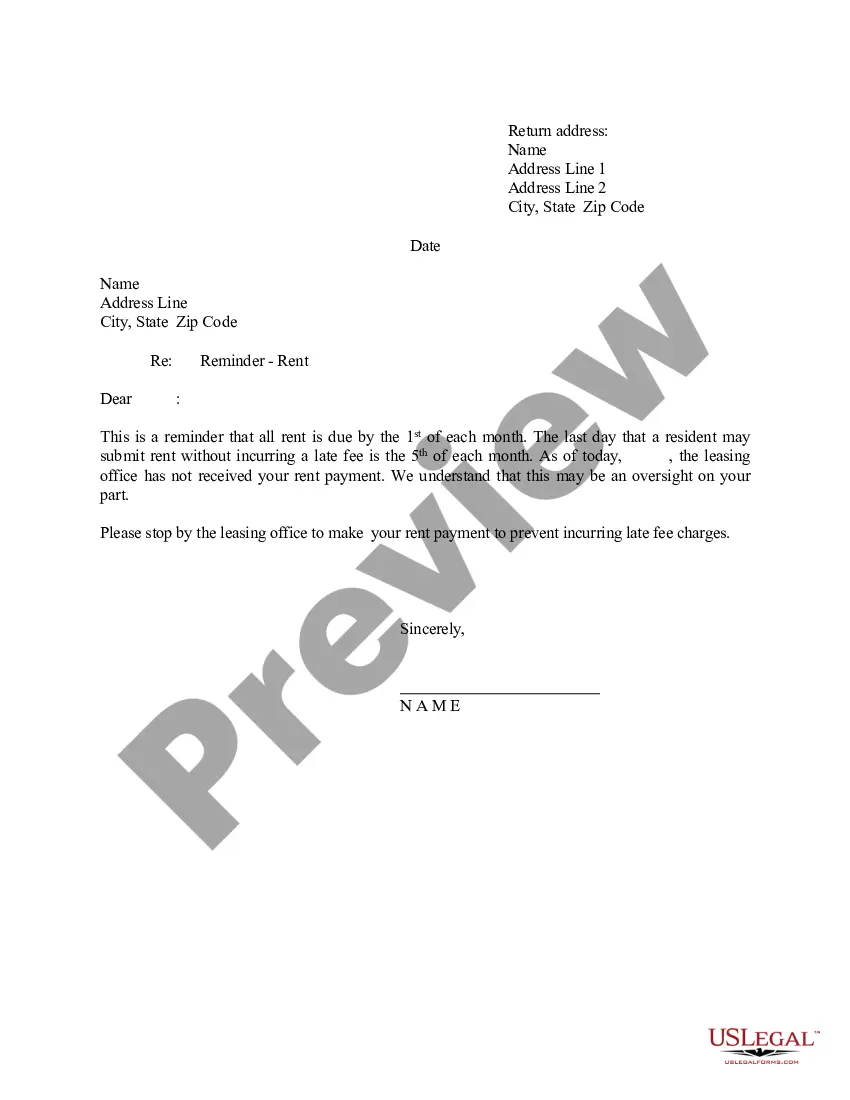
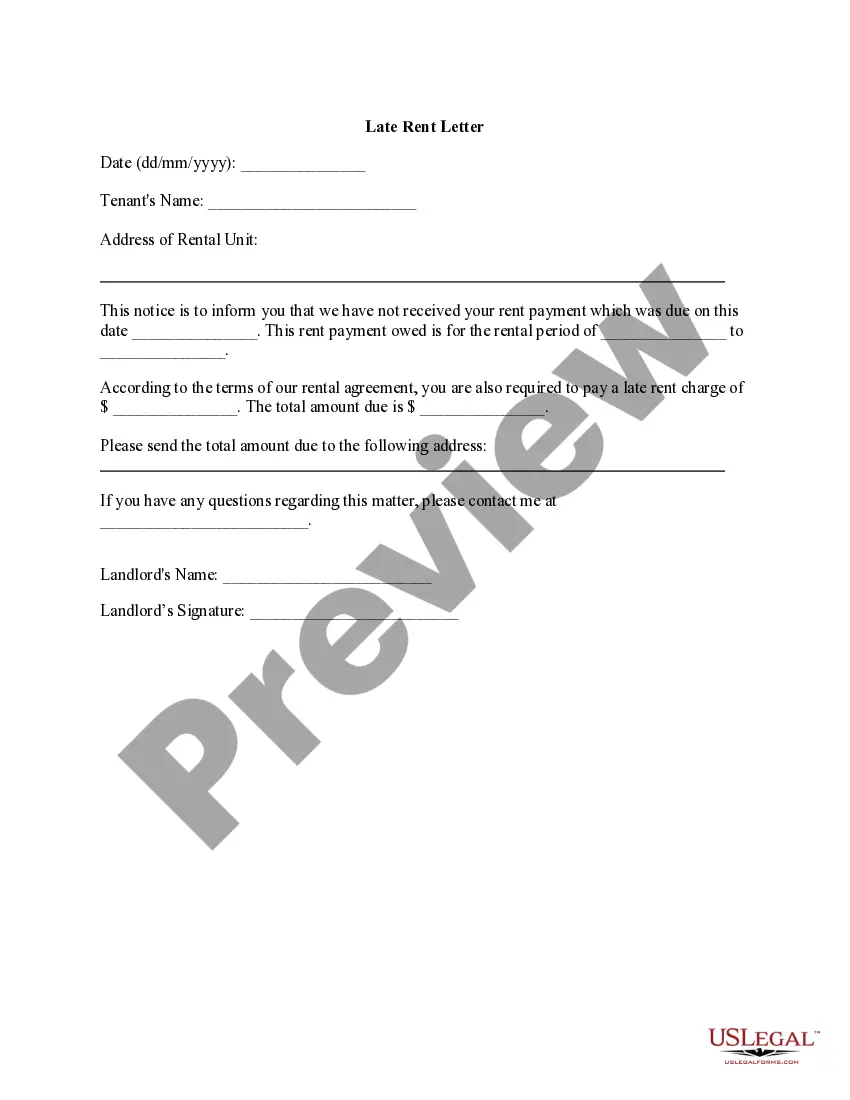
A late rent payment notice is a formal communication from the landlord to the tenant, indicating that the rent due date has passed without payment. For instance, a landlord might send a notice that includes details such as the amount owed, the date it was due, and any late fees that may apply. Additionally, the notice may reference the Michigan Agreement for Delayed or Partial Rent Payments, outlining options for tenants to address any financial hardships they may face. This document serves as an effective reminder and a prompt for tenants to take necessary action.